




- Processed Food
- Cereal Bars Market
Cereal Bars Market Size, Share, Growth, and Regional Forecast, 2026 to 2033
Cereal Bars Market by Product Type (Granola Bars, Energy & Performance Bars, Protein Bars, Others), Nature (Organic, Conventional), Sales Channel (Supermarkets & Hypermarkets, Specialty Stores, Convenience Stores, Online retail, Others), and Regional Analysis, 2026 - 2033

Cereal Bars Market Share and Trends Analysis
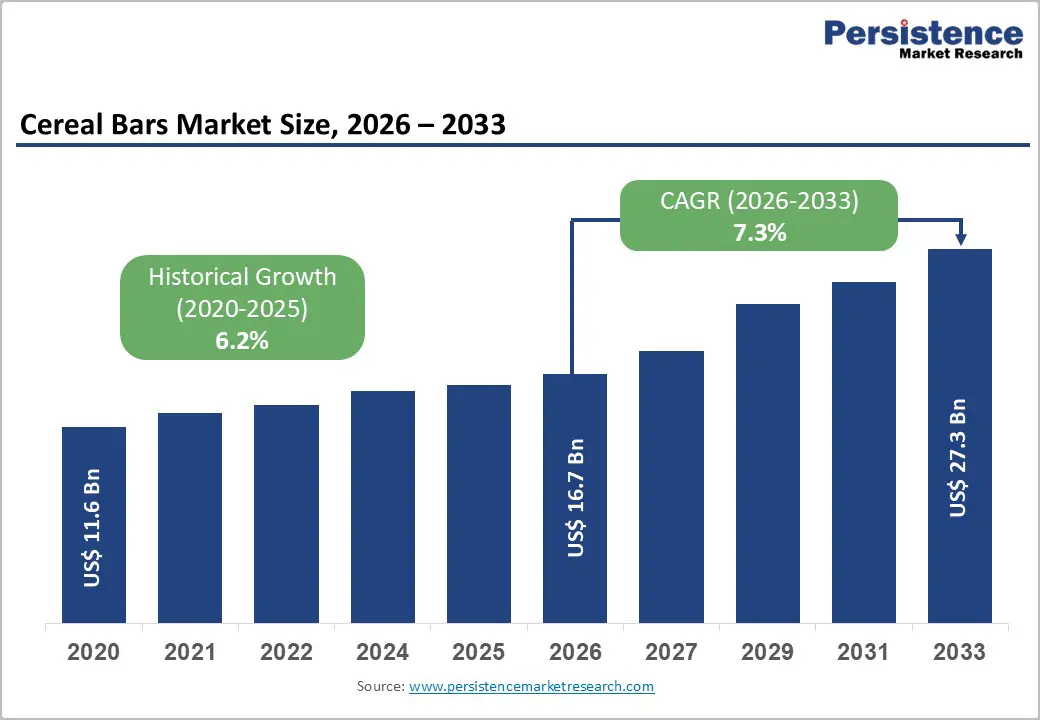
The global cereal bars market size is expected to be valued at US$ 16.7 billion in 2026 and projected to reach US$ 27.3 billion by 2033, growing at a CAGR of 7.3% between 2026 and 2033.
The market is predominantly driven by the accelerating global transition toward on-the-go nutritional solutions and the rising consumer preference for healthy snack alternatives over traditional confectionery. Increasing health literacy among the urban population has shifted demand toward products that offer specific functional benefits, such as high fiber, low sugar, and sustained energy release. Furthermore, significant investments from global leaders such as General Mills and PepsiCo Inc. in clean-label ingredients and sustainable packaging have bolstered consumer trust, while the rapid expansion of e-commerce platforms has ensured that artisanal and organic variants reach a broader audience.
Key Industry Highlights:
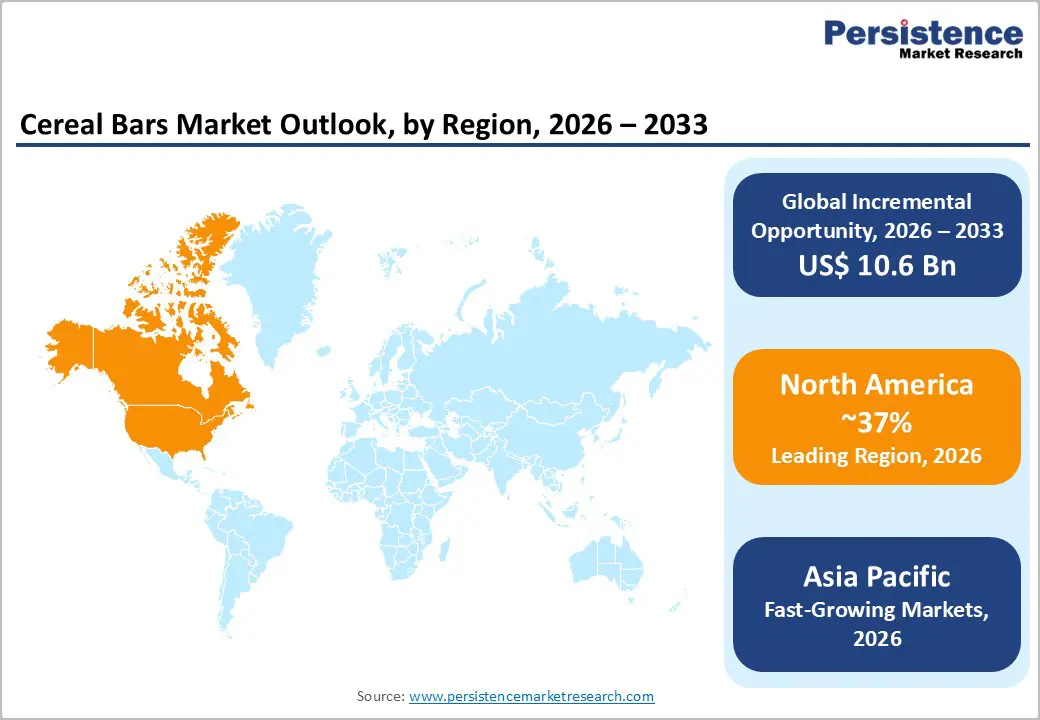
- Leading Region: North America held a 37% market share in 2025, driven by a mature snacking culture and the high presence of major industry players in the United States.
- Fastest Growing Region: Asia Pacific is the fastest growing region through 2033, fueled by increasing disposable incomes and the rapid adoption of Western dietary habits in China and India.
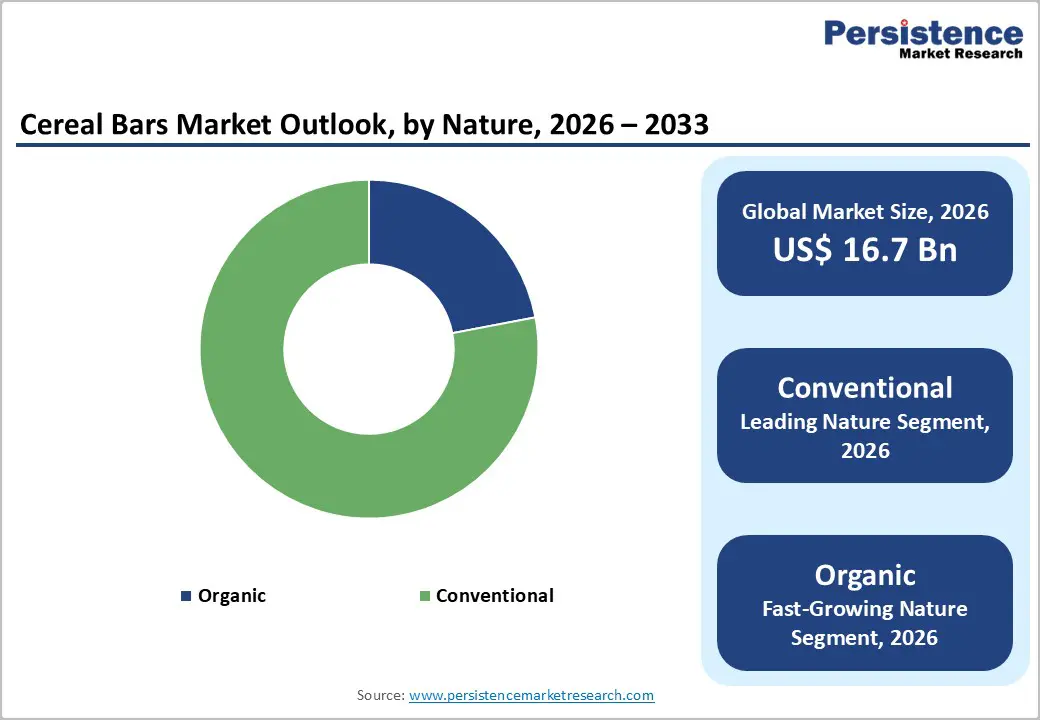
- Leading Nature Segment: Conventional nature products held 78% of the market in 2025, benefiting from mass market accessibility and large-scale production capabilities.
- Fastest Growing Nature Segment: Organic cereal bars are growing at the highest rate, as health-conscious consumers in developed economies prioritize pesticide-free and clean label credentials.
- Key Opportunity: The integration of cereal bars into Personalized Nutrition and subscription-based e-commerce models offers a high-margin avenue for artisanal brands.
| Key Insights | Details |
|---|---|
| Global Cereal Bars Market Size (2026E) | US$ 16.7 Bn |
| Market Value Forecast (2033F) | US$ 27.3 Bn |
| Projected Growth (CAGR 2026 to 2033) | 7.3% |
| Historical Market Growth (CAGR 2020 to 2025) | 6.2% |
Market Dynamics
Driver - Growing Urbanization and Demand for On-the-Go Convenience
Urban living is reshaping global eating behavior in measurable ways, creating structural tailwinds for the cereal bars market. The accelerating shift toward dense metropolitan lifestyles has intensified time scarcity, especially among working professionals and students. According to the United Nations’ World Urbanization Prospects 2025, a growing share of the global population now resides in urban environments, reinforcing demand for portable, ready-to-eat nutrition. Cereal bars have strategically positioned themselves within this convenience gap by offering portion-controlled energy, minimal preparation, and easy on-the-go consumption.
Beyond convenience, manufacturers are strengthening category relevance through functional positioning and nutritional fortification. Products enriched with whole grains, fiber, protein, and essential vitamins are increasingly marketed as credible breakfast substitutes rather than mere snacks. This evolution is particularly evident in North America and Europe, where breakfast skipping and between-meal snacking behaviors remain high. As brands continue to innovate around satiety, clean labels, and lifestyle alignment, cereal bars are steadily transitioning from impulse purchases to routine dietary staples, supporting sustained market expansion globally.
Restraints - Sugar Content Concerns and Stringent Labeling Regulations
The market faces significant headwinds due to growing public health concerns regarding the high sugar and calorie density of several mass market cereal bars. Health organizations, including the World Health Organization, have frequently highlighted that many bars marketed as healthy often contain as much sugar as chocolate bars. This has led to stricter labeling mandates in the European Union and the United States, requiring transparent disclosure of added sugars. In 2025, the implementation of front of pack warning labels in several regions led to a temporary dip in sales for conventional brands. Manufacturers are now forced to invest heavily in R&D to reformulate products using natural sweeteners like stevia or monk fruit, which can increase production costs and impact profit margins.
Opportunity - Personalization and the Rise of Niche Lifestyle Formulations
Precision nutrition is rapidly transforming the cereal bars landscape from mass-market snacking into a high-margin, niche-driven category. The growing consumer focus on individualized health goals has opened a substantial revenue window for keto-friendly, vegan, gluten-free, and low-glycemic cereal bar formulations. Millennials and Gen Z consumers, in particular, are demonstrating strong willingness to pay premium prices for products aligned with specific dietary lifestyles, metabolic goals, and ethical preferences.
Looking ahead, integration with subscription-based wellness platforms and personalized nutrition ecosystems is expected to accelerate. Brands experimenting with customizable flavor bundles, macro-targeted bars, and biometrics-informed nutrient profiles are positioning themselves for the emerging elite wellness segment. This hyper-personalization wave also enables manufacturers to strengthen direct-to-consumer engagement through online retail channels, reducing dependence on traditional shelf competition. Companies that combine data-driven nutrition, flexible manufacturing, and digital community building are likely to unlock disproportionate growth opportunities in the evolving global cereal bars market.
Category-wise Analysis
Product Type Insights
Granola Bars remained the leading segment, capturing a significant share of the market due to their long standing perception as a wholesome, whole grain snack. These bars are a staple in household pantries and are favored by parents as a school snack for children. However, Energy & Performance Bars are identified as the fastest growing product type for the period 2026-2033. This growth is driven by the global expansion of gym culture and the rising participation in endurance sports. Athletes and outdoor enthusiasts are increasingly seeking bars with specialized carb-to-protein ratios and electrolyte enrichment. Additionally, the Protein Bars segment is seeing a surge in mainstream adoption as a satiety tool for weight management, further diversifying the market landscape.
Nature Insights
The conventional segment held a dominant share of 78% in 2025, benefiting from wide availability, competitive pricing, and established distribution networks in mass market retail. Most leading brands like General Mills utilize conventional ingredients to maintain scale and affordability. Conversely, the Organic segment is the fastest growing nature category. This trajectory is fueled by the growing group of eco conscious consumers in Europe and North America who prioritize biodiversity and pesticide free farming. European retailers are increasingly allocating dedicated shelf space to certified organic snacks, while North American consumers are showing a high willingness to pay a premium for USDA Organic and Non GMO Project Verified seals, sustaining the segment’s double digit growth.
Regional Insights
North America Cereal Bars Market Trends and Insights
North America continues to function as the commercial nerve center of the global cereal bars market, supported by deeply embedded snacking habits and strong health-oriented spending. Holding roughly 37% share in 2025, the region benefits from high product awareness, extensive retail penetration, and frequent between-meal consumption patterns. The United States remains the primary growth engine, with the protein bars segment expanding rapidly within the fitness and active lifestyle community. Weekly nutritional bar usage among American adults underscores the category’s transition from occasional snack to routine dietary inclusion.
Regulatory direction from the U.S. Food and Drug Administration on the use of healthy claims is reshaping product positioning, pushing brands toward higher fiber, lower sugar, and cleaner-label formulations. At the same time, North America is leading sustainability adoption, with manufacturers advancing recyclable wrappers and responsible sourcing commitments. Coupled with mature cold-chain logistics and fast-growing urban delivery networks, the region is expected to remain highly influential in shaping premiumization and functional innovation trends.
Asia Pacific Cereal Bars Market Trends and Insights
Asia Pacific is identified as the fastest growing regional market, projected to expand at a high CAGR through 2033. This growth is underpinned by rising disposable incomes and rapid urbanization in China, India, and ASEAN countries. In 2025, the modernization of retail formats in the region has led to a surge in cereal bar visibility in Convenience Stores and gas stations. The region’s youth population is increasingly adopting Western dietary habits, viewing cereal bars as a trendy and healthy snack option during work or travel.
Manufacturing advantages in Asia Pacific, including lower labor costs and proximity to raw material sources like rice and tropical fruits, allow local companies to produce cost effective alternatives to global brands. In 2024, the region witnessed a surge in specialized startups focusing on millet based and ethnic flavored cereal bars to cater to local palates. While China remains a vital consumption base, the high penetration of mobile payments and social commerce in urban centers is further accelerating the retail accessibility of premium cereal bar products across the continent.
Competitive Landscape
Competitive intensity in the cereal bars market is rising as scale-driven multinationals and agile niche brands pursue distinct growth playbooks. The category remains structurally fragmented, with companies such as General Mills, Kellanova, and PepsiCo leveraging global distribution muscle, category management strength, and promotional budgets to defend leadership in mainstream and conventional segments. In contrast, emerging players and artisanal manufacturers are carving out premium space through organic credentials, functional positioning, and differentiated flavor innovation targeting health-focused consumers.
Strategic differentiation is increasingly anchored in texture engineering, clean-label reformulation, and influencer-led brand building. The rapid shift toward direct-to-consumer engagement via social commerce and subscription wellness platforms is reshaping go-to-market economics. Meanwhile, R&D pipelines are incorporating AI-driven demand sensing and advanced extrusion optimization to improve nutritional density and mouthfeel. As competitive pressures intensify, the market is likely to witness continued consolidation, with larger players acquiring high-growth niche brands to accelerate portfolio premiumization.
Key Developments:
- In December 2025, Mars, Incorporated announced the successful completion of its acquisition of Kellanova, strengthening its global snacking and cereals portfolio and expanding scale across key international markets.
- In August 2025, Kellogg’s expanded its UK snacking lineup with the launch of Kellogg’s High Protein Bars and Oaties Bars, targeting the growing demand for convenient, protein-fortified snack options.
- In March 2025, Vybey extended its presence in the snacking category with the launch of Complete Nutrition bar range, its new plant-based protein bars.
Companies Covered in Cereal Bars Market
- General Mills
- PepsiCo Inc.
- Mars, Incorporated
- Mondelez International
- The Hershey Company
- Nestlé S.A.
- Post Holdings Inc.
- Simply Good Foods
- Otsuka Holdings
- Glanbia plc
- Nature's Sunshine Products
- Premier Foods plc
- Others
Frequently Asked Questions
The global cereal bars market is projected to be valued at US$ 16.7 Bn in 2026.
Growing Urbanization and Demand for On-the-Go Convenience is driving demand for Cereal Bars market.
The Global Cereal Bars market is poised to witness a CAGR of 7.3% between 2026 and 2033.
Personalization and the Rise of Niche Lifestyle Formulations is creating opportunity for key players in the Cereal Bars market.
Key industry leaders include Nestlé S.A., General Mills, PepsiCo Inc., Mars, Incorporated, Mondelez International, Glanbia plc, and Others.


