




- Processed Food
- Caviar Market
Caviar Market Size, Share, and Growth Forecast, 2026 - 2033
Caviar Market by Species Type (Beluga, Osetra, Sevruga, Sterlet, Hackleback/Other Sturgeon), Form Type (Fresh, Frozen, Dried/Pressed/Pasteurized), and Regional Analysis for 2026 - 2033

Caviar Market Size and Trends Analysis
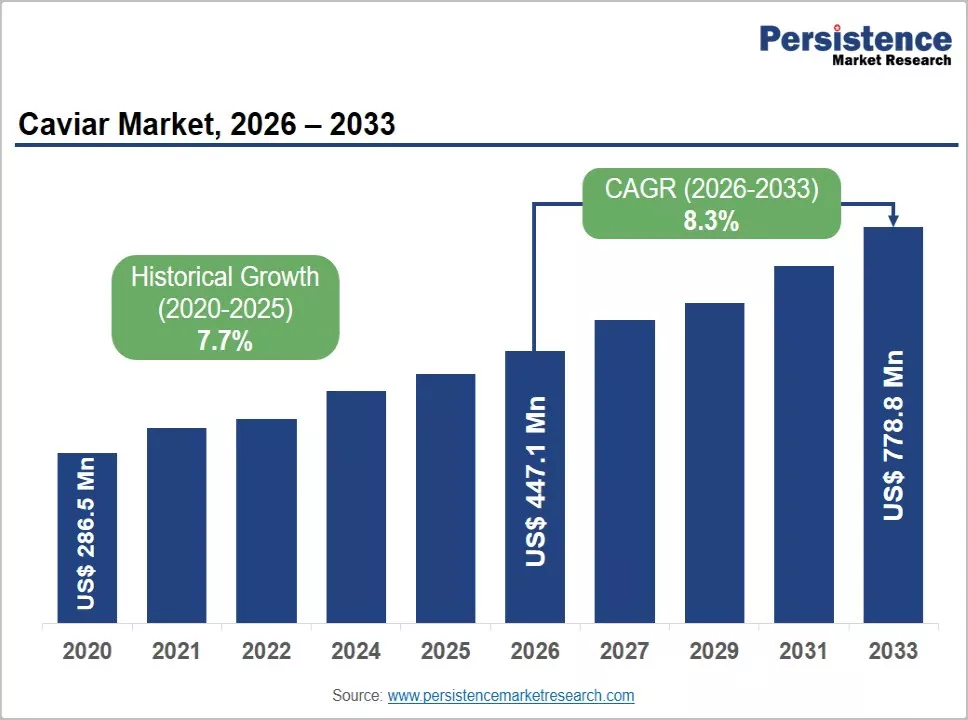
The global caviar market size is likely to be valued at US$447.1 million in 2026 and is expected to reach US$778.8 million by 2033, growing at a CAGR of 8.3% during the forecast period from 2026 to 2033, driven by growing reliance on sturgeon aquaculture, stricter traceability requirements, and sustained demand for premium seafood across luxury dining and hospitality.
According to CITES, aquaculture accounted for more than 95% of legal international caviar trade, highlighting the industry's transition toward captive production and sustainable supply. In 2026, the CITES Trade Database continues to provide official international trade records for CITES-listed sturgeon and caviar, supporting greater transparency in species identification, origin, and trade monitoring.
Key Industry Highlights:
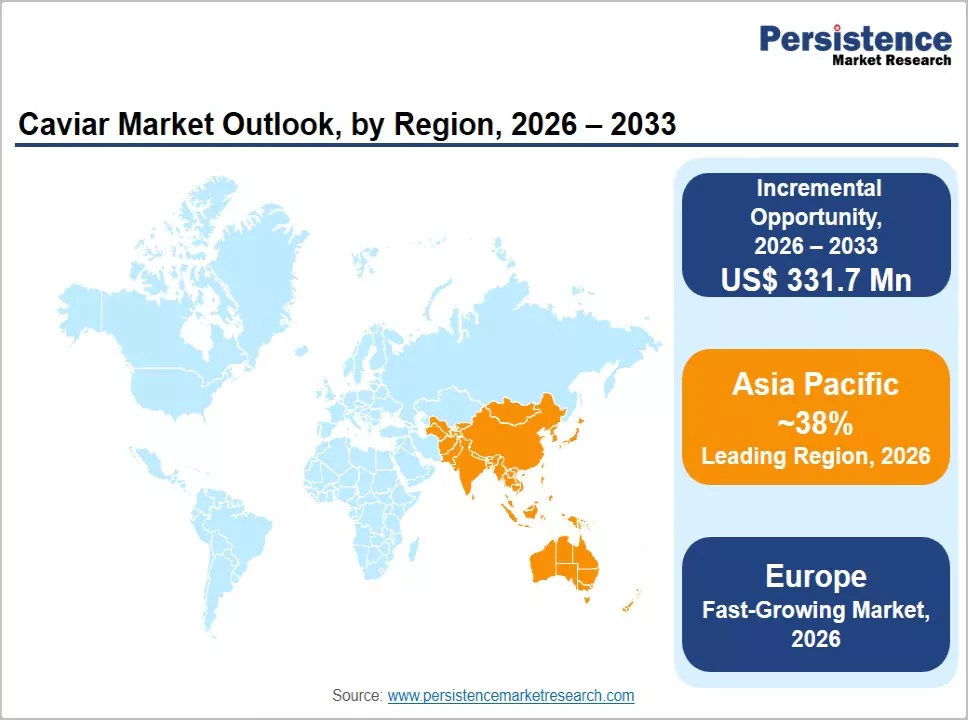
- Leading Region: Asia Pacific is anticipated to be the leading region, accounting for a market share of 38% in 2026, driven by China’s production scale, rising premium consumption, and expanding luxury hospitality.
- Fastest-growing Region: Europe is likely to be the fastest-growing region, supported by established gourmet-food culture, luxury dining, and strong aquaculture production.
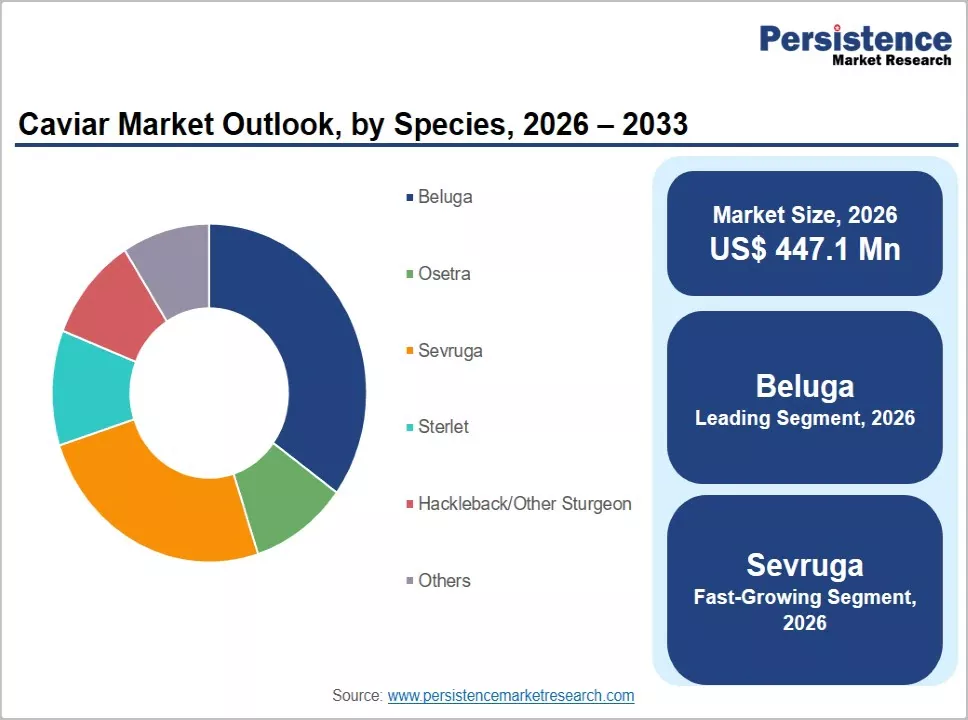
- Leading Species Type: Beluga is projected to represent the leading species type in 2026, accounting for 37% of the revenue share, for its premium positioning, distinctive texture, and strong demand in luxury dining.
- Leading Form Type: Fresh caviar is anticipated to be the leading form type, accounting for over 49% of the revenue share in 2026, supported by consumer preference for traditional texture, freshness, and premium culinary applications.
- Key Opportunity: Expansion of sustainable sturgeon aquaculture, premium product innovation, traceable sourcing, and wider luxury retail, foodservice, and online distribution can broaden caviar consumption.
DRO Analysis
Driver - Rising Luxury Consumption and Hospitality Demand
Luxury consumption remains a central driver of the caviar market as affluent consumers, fine dining restaurants, luxury hotels, premium airlines, and high-end gifting channels seek distinctive products. Caviar’s heritage, rarity, presentation value, and association with celebratory dining support recurring demand across premium hospitality and specialty retail.
Growth in international tourism and upscale culinary experiences also creates opportunities for chefs to incorporate caviar into tasting menus, appetizers, and signature dishes. Farmed sturgeon has improved supply consistency, allowing premium brands to serve broader markets while maintaining quality positioning. These trends strengthen demand for differentiated species, fresh formats, and carefully packaged products.
Demand is also being reinforced by the expansion of premium foodservice and digital purchasing channels. Specialty caviar producers increasingly combine direct-to-consumer websites, curated gifting programs, restaurant partnerships, and refrigerated delivery to reach consumers beyond traditional luxury stores. Product storytelling around species, farming origin, processing, and sustainability can strengthen perceived authenticity and support premium purchasing decisions.
Restraint - Long Biological Production Cycles and Biological Constraints
Long biological production cycles remain a structural restraint because female sturgeon require several years of growth before producing harvestable roe. FAO documentation notes that Siberian sturgeon females generally mature later than males, while annual egg availability can vary because females do not spawn every year. This creates planning challenges for farms, limits rapid responses to sudden demand increases, and ties working capital to lengthy production periods.
Biological constraints are compounded by species conservation requirements, specialized husbandry, and strict handling procedures. Sturgeon are subject to extensive international conservation controls, making traceability, species identification, documentation, and compliant trade important throughout the supply chain. FAO guidance also highlights the importance of broodstock management, maturity assessment, sanitation, water quality, feeding, and careful processing.
Opportunity - Technological Convergence in Farming and Processing
Technological convergence across aquaculture, broodstock management, processing, packaging, and quality monitoring creates opportunities for the caviar market. Modern hatchery practices increasingly use tools such as ultrasound for noninvasive sexing and maturity assessment, while controlled environmental conditions can improve production management.
Recirculating aquaculture systems, automated water monitoring, precision feeding, and data-based farm management can support more consistent sturgeon growth and resource efficiency. Digital traceability can additionally connect farm records with species identification, processing, labeling, and distribution information. These technologies can help producers manage biological variability, improve operational visibility, strengthen sustainability credentials, and expand reliable supply for premium domestic and international markets.
Processing innovation offers another opportunity by improving preservation, texture, safety, and distribution flexibility without weakening caviar’s premium characteristics. A 2025 study on Swedish farmed sturgeon compared cold-water pH-adjusted processing with mild hot-water treatment and found meaningful differences in texture, appearance, and odor characteristics, demonstrating how processing conditions influence product quality.
Category-wise Analysis
Species Type Insights
Beluga is expected to lead, accounting for 37% of revenue in 2026, due to its strong luxury positioning, large pearl size, delicate flavor, and association with high-end gastronomy. Its distinctive sensory profile makes it particularly attractive to premium restaurants, luxury hotels, specialty retailers, and affluent consumers seeking traditional caviar experiences. For example, The Caviar Co. offers farmed Beluga caviar positioned within its premium product portfolio.
Sevruga is likely to represent the fastest-growing segment, supported by broader aquaculture availability, comparatively accessible positioning, and demand for flavorful caviar suitable for restaurants, catering, specialty retail, and premium home consumption. Its smaller pearls and distinctive briny character provide chefs with an alternative to higher-priced traditional varieties, encouraging applications across appetizers, seafood dishes, and tasting menus. Petrossian markets Sevruga caviar within its range of traditional sturgeon caviar.
Form Type Insights
Fresh caviar is projected to lead the market, capturing around 49% of the revenue share in 2026, supported by strong consumer and chef preference for its delicate texture, characteristic appearance, and minimally processed eating experience. Fresh formats remain particularly important in luxury restaurants, hotels, specialty seafood stores, and premium gifting, where presentation and sensory quality strongly influence purchasing decisions. Tsar Nicoulai Caviar offers fresh farm-raised caviar products through specialty retail and direct-to-consumer channels.
Frozen caviar is likely to be the fastest-growing form type due to improved preservation technologies, longer distribution windows, and expanding international trade. Freezing enables producers and distributors to manage inventory more flexibly while reaching markets where refrigerated logistics can be challenging or costly. For example, Russian Caviar House offers frozen caviar products as part of its broader sturgeon caviar portfolio.
Regional Insights
North America Caviar Market Trends
North America is likely to be a significant global market for caviar in 2026, supported by premium dining, luxury retail, sustainable aquaculture, and growing consumer interest in traceable farmed caviar. In the U.S., domestic farms are expanding production using controlled aquaculture systems. Tsar Nicoulai has strengthened U.S. farmed caviar production through California-based sturgeon farming and sustainable practices.
U.S. Caviar Market Trends
The U.S. is expected to dominate the regional market, accounting for approximately 80% of the market share in 2026, driven by fine-dining restaurants, luxury hotels, specialty food retailers, and affluent consumers. Domestic sturgeon farming is increasingly important for maintaining reliable supply. According to the 2023 USDA Census of Aquaculture, the U.S. had 20 sturgeon farms, with California and Florida each accounting for six farms. Caviar production was reported by farms across several states.
Canada Caviar Market Trends
Canada is likely to be a significant regional market for caviar, holding approximately 20% of the market share in 2026, supported by premium seafood consumption and specialized sturgeon aquaculture. British Columbia is an important location for land-based sturgeon farming. Canadian producers are increasingly focusing on integrated operations that combine sturgeon farming, meat, and caviar production. In September 2026, U.S.-based Caviar & Caviar acquired Northern Divine Aquafarms in British Columbia.
Europe Caviar Market Trends
Europe is likely to be the fastest-growing region, driven by established aquaculture expertise, premium gastronomy, luxury foodservice, and growing interest in sustainable production methods. Germany remains an important sturgeon-farming country, while the U.K. benefits from luxury restaurants and specialist caviar retailers. European producers are also developing non-lethal harvesting and organic production approaches to differentiate premium products.
U.K. Caviar Market Trends
The U.K. is likely to be a significant caviar market, accounting for 15% of Europe’s market share in 2026, supported by demand from luxury restaurants, hotels, gourmet retailers, and specialist suppliers. Domestic production is also developing alongside imports from established European producers. Exmoor Caviar is an example of a British producer operating a domestic sturgeon farm and supplying the hospitality sector. Sustainability is gaining importance among U.K. caviar suppliers as consumers and chefs increasingly seek traceable alternatives to traditional wild-sourced products.
Germany Caviar Market Trends
Germany is anticipated to dominate the regional market, accounting for around 37% of Europe’s market share in 2026. The country has an established aquaculture base that supports domestic caviar production and premium seafood markets. Germany is among Europe’s recognized producers of farmed caviar, with companies increasingly focusing on traceability, controlled farming conditions, and sustainable production practices. Research and technological advancements are also supporting alternative approaches to conventional sturgeon harvesting.
Asia Pacific Caviar Market Trends
The Asia Pacific region is anticipated to lead the market, accounting for 38% of the global market share in 2026. Growth is supported by large-scale sturgeon aquaculture, rising consumption of luxury foods, and expanding international exports. China is particularly significant, with well-established sturgeon farming and processing infrastructure, while India is developing a smaller but increasingly visible premium caviar market. China’s Kaluga Queen has expanded its international distribution network and supplies premium caviar to several overseas markets.
China Caviar Market Trends
China is projected to dominate the regional market, accounting for around 30% of the market share in 2026. Large-scale aquaculture operations provide substantial production capacity for both domestic consumption and exports. Kaluga Queen has developed an integrated production chain covering sturgeon breeding, farming, processing, and caviar distribution. In June 2026, its parent company passed the Hong Kong Stock Exchange listing hearing, marking a significant development for China’s caviar industry.
India Caviar Market Trends
India is expected to account for approximately 22% of the Asia Pacific market in 2026, driven by luxury hospitality, gourmet retail, and growing exposure to international cuisine. Demand is primarily concentrated among affluent urban consumers and high-end restaurants. Mumbai and other major metropolitan markets are witnessing greater availability of imported caviar through gourmet stores and specialty retailers. Recent market coverage also indicates growing consumer interest in chilled caviar and other premium imported foods.
Competitive Landscape
The global caviar market exhibits a moderately fragmented structure, driven by the presence of established luxury caviar brands, specialized sturgeon farms, regional aquaculture producers, and premium seafood companies. Competition is increasingly shaped by the expansion of farmed sturgeon caviar, sustainability, traceability, product quality, and international distribution.
With key leaders, including Kaluga Queen, Petrossian S.A., Agroittica Lombarda S.p.A., Caviar House & Prunier, and Caviar de Riofrio, companies are strengthening their positions across premium retail, restaurants, hospitality, and international markets. These players compete through expansion of sturgeon farming capacity, development of premium and sustainable caviar varieties, quality differentiation, geographic expansion, and stronger relationships with luxury restaurants and specialty retailers.
Key Industry Developments:
- In February 2026, McDonald’s partnered with Paramount Caviar to launch limited-edition McNugget Caviar kits featuring premium Baerii sturgeon caviar. The online-only launch connected caviar with casual dining and Valentine’s Day consumption, demonstrating how premium caviar can be introduced through unconventional food pairings and mainstream consumer brands.
- In June 2026, Adam Handling launched Ahrelia Caviar, targeting consumers seeking premium caviar at more accessible price points. The launch supports market expansion by making high-end caviar more approachable beyond traditional luxury dining.
Companies Covered in Caviar Market
- The Caviar Co.
- Black River Caviar
- Russian Caviar House
- L’Osage Caviar Company
- Tsar Nicoulai Caviar
- Sasanian Caviar
- Caviar Blanc
- Sepehr Dad Caviar GmbH
- Caviar Creator
- Labeyrie Fine Foods
- Petrossian
- Agroittica Lombarda
Frequently Asked Questions
The global caviar market is projected to reach US$447.1 million in 2026.
Growing demand for premium foods, luxury dining, sustainable farmed caviar, and expanding sturgeon aquaculture drive the caviar market.
The caviar market is expected to grow at a CAGR of 8.3% from 2026 to 2033.
Expansion of sustainable sturgeon farming, premium product innovation, emerging-market penetration, and wider distribution through luxury retail and foodservice offer key opportunities.
The Caviar Co., Black River Caviar, Russian Caviar House, and L’Osage Caviar Company are the leading players.


