




- Food Ingredients & Additives
- Dietary Fibers Market
Dietary Fibers Market Size, Share, Growth, and Regional Forecast, 2026 to 2033
Dietary Fibers Market by Product Type (Soluble Dietary Fiber, Insoluble Dietary Fibers), Source (Fruits & Vegetables, Legumes, Cereals & Grains, Others), Application (Food & Beverages, Dietary Supplements, Pharmaceuticals, Animal Feed), and Regional Analysis 2026 - 2033

Dietary Fibers Market Share and Trends Analysis
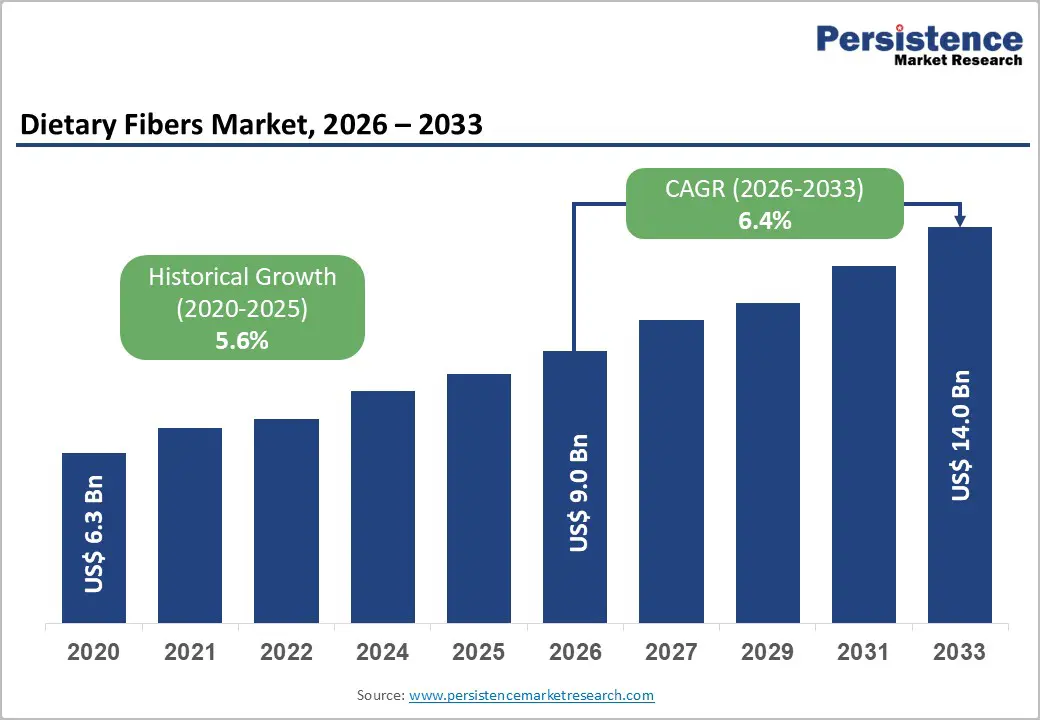
The global dietary fibers market is estimated to grow from US$ 9.0 billion in 2026 to US$ 14.0 billion by 2033. The market is projected to record a CAGR of 6.4% during the forecast period from 2026 to 2033.
The global dietary fibers market is experiencing steady growth, driven by rising awareness of digestive health, increasing demand for functional foods, and higher dietary supplement intake. North America dominates due to strong nutraceutical adoption, while Asia-Pacific is the fastest-growing region, supported by rapid urbanization, changing dietary habits, and increasing health-conscious consumers.
Key Industry Highlights:
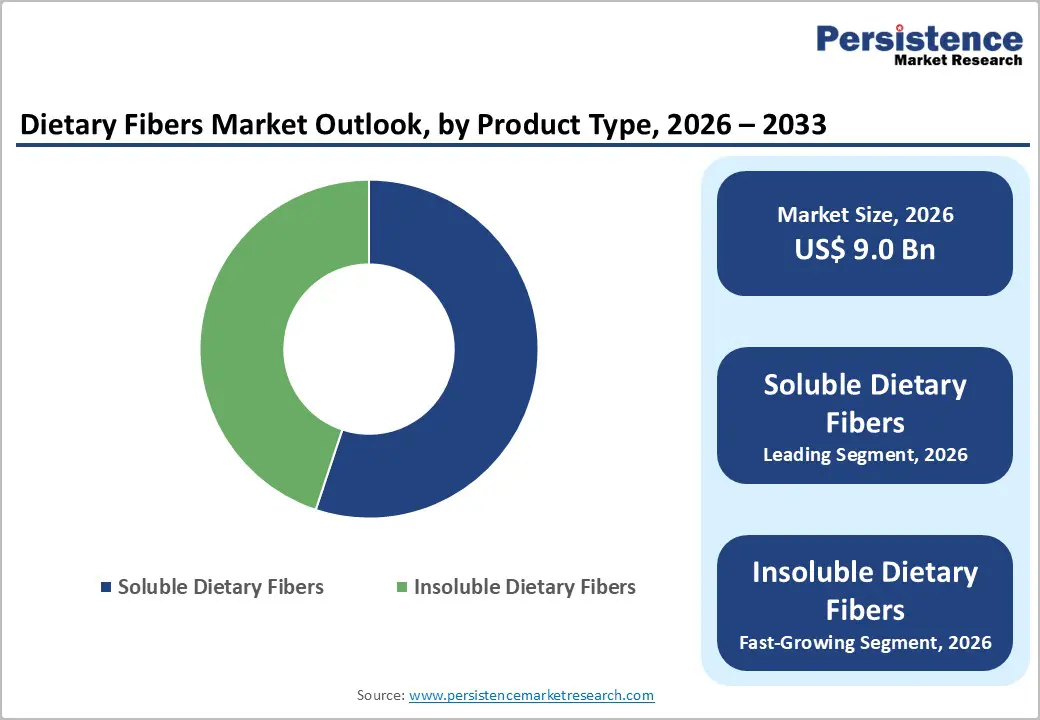
- Dominant Product: Soluble dietary fibers held the largest share 55.1% in 2025, driven by strong demand in functional foods, beverages, and nutraceutical applications.
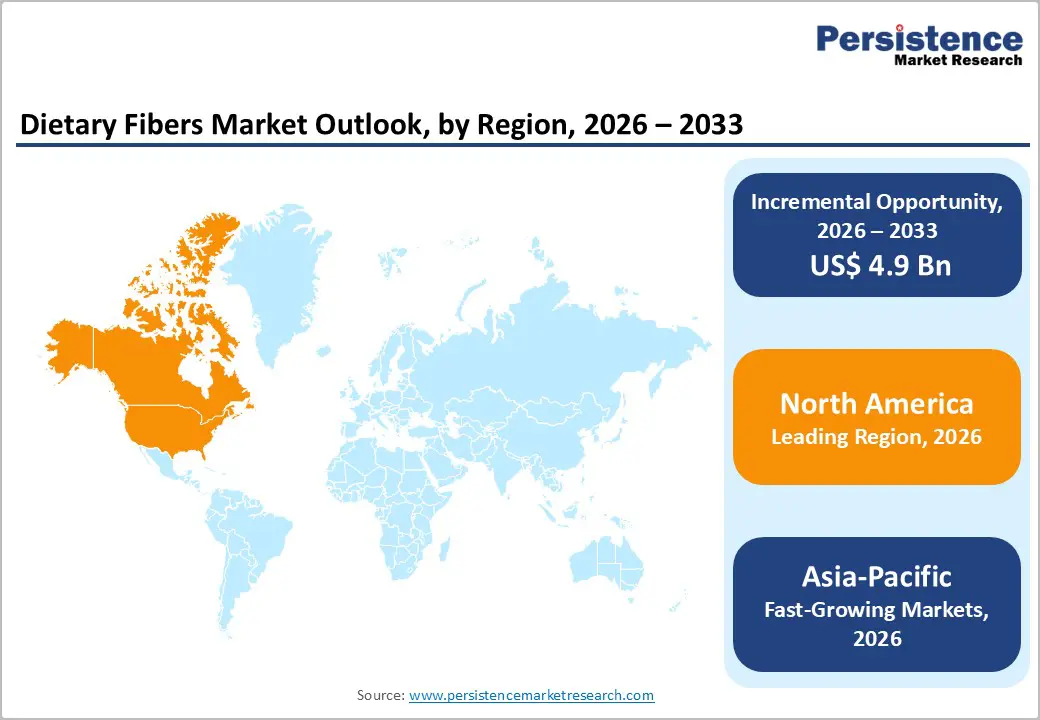
- Regional Leadership: North America led the market in 2025 with 34.2% share, supported by high fiber supplement consumption and strong health awareness.
- Growth Indicators: Growth is driven by increasing awareness of digestive health, rising demand for functional foods, growing supplement intake, and preventive healthcare trends.
- Market Opportunity: Opportunities exist in personalized nutrition, expansion in Asia-Pacific, innovation in plant-based fibers, clean-label products, and wider use in pharmaceuticals and food applications.
| Key Insights | Details |
|---|---|
| Global Dietary Fibers Market Size (2026E) | US$ 9.0 Bn |
| Market Value Forecast (2033F) | US$ 14.0 Bn |
| Projected Growth (CAGR 2026 to 2033) | 6.4% |
| Historical Market Growth (CAGR 2020 to 2025) | 5.6% |
Market Dynamics
Driver: Rising Awareness of Digestive and Gut Health
Rising awareness of digestive and gut health is a major driver for the dietary fibers market, supported by strong clinical and public health recommendations. Organizations such as the WHO and FAO recommend a minimum intake of 25 g/day of dietary fiber for adults to maintain proper bowel function and reduce disease risk. Fiber plays a key physiological role in improving gut motility, supporting microbiome health, and preventing constipation. Scientific evidence shows that high-fiber diets are associated with reduced risks of cardiovascular disease, diabetes, and obesity, making fiber a critical component of preventive healthcare strategies. This increasing clinical validation has significantly boosted consumer awareness globally.
At the population level, the gap between recommended and actual intake further strengthens demand. For instance, average fiber intake in the U.S. is only 16 g/day, far below recommended levels (25-38 g/day). This deficiency has led governments and health agencies to classify fiber as a “nutrient of concern.” As awareness campaigns emphasize gut health, microbiome balance, and chronic disease prevention, consumers are actively shifting toward fiber-rich foods and supplements. This behavioral shift is directly translating into increased demand for dietary fibers across functional foods, beverages, and nutraceutical applications.
Restraint: High Cost of Specialty and Functional Fibers
The high cost of specialty and functional fibers acts as a key restraint in the Dietary Fibers Market, particularly in price-sensitive regions. Advanced fibers such as inulin, resistant starches, and prebiotic fibers require complex extraction, purification, and processing technologies, increasing production costs. Unlike naturally occurring fibers in whole foods, these functional ingredients must meet strict quality, solubility, and stability standards for use in food and pharmaceutical applications. Additionally, variability in raw material sources such as fruits, cereals, and legumes can further increase procurement and processing expenses.
From a consumption perspective, cost-related barriers limit accessibility and adoption. Public health data indicates that most populations already struggle to meet basic fiber intake recommendations, often relying on staple foods rather than premium functional products. For example, despite strong recommendations of 25-38 g/day fiber intake, actual consumption remains significantly lower , partly due to affordability and dietary patterns. Furthermore, excessive reliance on supplements or fortified foods may increase overall dietary costs. This economic gap between recommended intake and affordable sources restricts market penetration, especially in developing economies where consumers prioritize cost over functional benefits.
Opportunity: Rising Demand for Clean-Label and Natural Ingredients
The growing demand for clean-label and natural ingredients presents a strong opportunity for the dietary fibers market. Consumers are increasingly preferring minimally processed, plant-based ingredients derived from fruits, vegetables, whole grains, and legumes. Scientific literature confirms that dietary fiber is naturally sourced from plant-based foods and is associated with multiple health benefits, including improved digestion and reduced chronic disease risk. This aligns well with clean-label trends, where consumers seek transparency, natural sourcing, and fewer artificial additives in food products.
Additionally, global dietary guidelines emphasize obtaining fiber from whole foods rather than synthetic supplements. Health authorities recommend fiber-rich diets not only for digestion but also for weight management and metabolic health. This is accelerating innovation in natural fiber ingredients such as oat fiber, fruit fiber, and plant-based prebiotics. As consumers increasingly associate “natural” with “healthy,” food manufacturers are reformulating products to include recognizable fiber sources. This trend is particularly strong in functional foods, beverages, and plant-based diets, creating significant growth opportunities for clean-label dietary fiber solutions worldwide.
Category-wise Analysis
By Product Type Insights
Soluble dietary fibers dominate the market with 55.1% share in 2025, due to their well-established clinical benefits in managing cardiovascular health, blood glucose levels, and gut microbiota. Health authorities such as the World Health Organization recommend adequate fiber intake to reduce risks of chronic diseases, including heart disease and diabetes. Soluble fibers help lower LDL cholesterol and improve glycemic control by slowing digestion and nutrient absorption. Additionally, studies indicate most populations consume significantly less than the recommended 25-30 g/day fiber, increasing demand for convenient fiber-enriched products. Their high solubility and functional properties make them ideal for use in beverages, supplements, and processed foods, further strengthening their widespread adoption and market dominance globally.
By Source, Cereals & Grains dominate the Dietary Fibers Market
Cereals and grains dominate the dietary fibers market because they are the most widely consumed and accessible fiber sources globally. Staple foods such as wheat, rice, and oats form the foundation of daily diets, particularly in regions like India and other developing economies. According to the Food and Agriculture Organization, cereals contribute a significant portion of total daily calories and nutrient intake, including fiber. Grain-based foods are cost-effective and consumed in large volumes, ensuring consistent fiber intake compared to fruits or specialty sources. The high content of insoluble fiber, especially in bran, supports digestive health, making cereals the primary and most scalable source driving market dominance.
Regional Insights
North America Dietary Fibers Market Trends
North America Dietary Fibers Market holds approximately 35% market share in the Global Dietary Fibers Market, supported by rising preventive healthcare awareness, expanding functional food consumption, and growing preference for digestive wellness products. Consumers increasingly seek fiber-enriched bakery products, cereals, beverages, dairy alternatives, and nutritional supplements aligned with balanced lifestyle trends. Demand for clean-label ingredients, plant-based nutrition, and sugar-reduction formulations is strengthening commercial growth across food and beverage industries. Manufacturers are actively investing in oat fiber, chicory root fiber, resistant starch, and fruit-derived fiber innovation to support product diversification. Expansion of personalized nutrition and gut-health-focused dietary habits continues accelerating fiber ingredient demand across mainstream retail and functional nutrition categories.
U.S. Dietary Fibers Market Trends
U.S. Dietary Fibers Market is shaped by strong consumer focus on digestive health, weight management, and functional nutrition. Fiber-fortified snacks, high-fiber breakfast cereals, protein bars, and low-sugar beverages are gaining strong traction among health-conscious consumers. Food manufacturers are increasingly using soluble and prebiotic fibers to improve nutritional profiles and support sugar-reduction strategies. Rising popularity of gut microbiome wellness, sports nutrition products, and plant-based meal solutions is further strengthening dietary fiber incorporation across packaged food categories. Innovation in clean-label formulations and convenient functional foods continues supporting long-term market expansion.
Canada Dietary Fibers Market Trends
Canada Dietary Fibers Market is driven by rising preference for natural wellness products, increasing consumption of fiber-rich plant-based foods, and growing awareness regarding digestive balance. Consumers are actively seeking oat fiber, barley fiber, flaxseed ingredients, and fruit-based functional foods associated with heart health and daily nutrition support. Demand for minimally processed ingredients and sustainable food sourcing is encouraging manufacturers to expand clean-label fiber applications across bakery, beverages, and dairy-alternative products. Growing interest in preventive nutrition, healthy aging, and holistic wellness lifestyles is further supporting stronger adoption of dietary fiber ingredients across Canadian food and supplement industries.
Asia Pacific Dietary Fibers Market Trends
Asia Pacific Dietary Fibers Market is expected to grow at a CAGR of 7.9%, driven by rising digestive health awareness, increasing functional food consumption, and expanding demand for plant-based nutritional ingredients across urban populations. Consumers are increasingly incorporating fiber-rich beverages, fortified dairy alternatives, cereals, and nutritional snacks into everyday diets to support balanced wellness routines. Rapid growth in preventive healthcare trends, modern retail infrastructure, and health-focused food innovation is accelerating demand for soluble fibers, resistant starches, and prebiotic ingredients across the region. Manufacturers are also expanding clean-label and natural fiber formulations tailored toward changing dietary preferences and evolving wellness lifestyles.
Chima Dietary Fibers Market Trends
China Dietary Fibers Market is shaped by rising interest in gut-health nutrition, healthy aging, and low-sugar functional food innovation. Consumers increasingly prefer oat fiber beverages, prebiotic dairy products, high-fiber bakery foods, and nutrition-focused snack products associated with digestive balance and weight management. Rapid expansion of functional beverage categories and modern health-focused retail formats is strengthening dietary fiber integration across packaged foods. Domestic manufacturers are actively investing in fruit fiber extraction, resistant dextrin production, and customized fiber blends tailored toward personalized nutrition trends. Strong demand for preventive healthcare products among aging populations continues supporting long-term commercial expansion across the Chinese dietary fibers industry.
India Dietary Fibers Market Trends
India Dietary Fibers Market is influenced by rising awareness regarding digestive wellness, increasing consumption of fortified packaged foods, and expanding demand for plant-based nutrition products. Consumers are actively seeking fiber-enriched atta, millet snacks, digestive beverages, and probiotic food products aligned with healthier eating habits. Growing popularity of Ayurvedic wellness concepts and traditional grain-based nutrition is strengthening demand for natural dietary fiber ingredients across functional foods and supplements. Food manufacturers are increasingly introducing high-fiber biscuits, breakfast cereals, and convenient healthy snacks targeted toward urban middle-class consumers. Expansion of e-commerce grocery platforms and wellness-driven retail channels is further supporting stronger visibility of fiber-rich products across Indian markets.
Japan Dietary Fibers Market Trends
Japan Dietary Fibers Market is influenced by growing preference for balanced nutrition, healthy aging support, and scientifically formulated functional foods. Consumers actively seek fiber-rich beverages, fermented products, konjac-based foods, and digestive wellness supplements compatible with convenient lifestyles. Demand for low-calorie nutritional solutions and portion-controlled functional foods is encouraging manufacturers to incorporate soluble fibers into beverages, soups, dairy products, and meal replacements. Innovation in precision nutrition, premium wellness ingredients, and clean-label functional snacks is strengthening category diversification across Japanese retail channels. Rising focus on longevity, metabolic wellness, and digestive comfort continues accelerating demand for advanced dietary fiber formulations across health-conscious consumer groups.
Competitive Landscape:
The dietary fibers market is competitive, led by key players focusing on product innovation, functional benefits, and application expansion. Companies prioritize developing soluble and specialty fibers, enhancing production capacity, ensuring regulatory compliance, and strengthening distribution networks to meet rising demand across functional foods, beverages, dietary supplements, and pharmaceutical applications globally.
Key Industry Developments:
- In September 2025, Archer Daniels Midland Company announced that its Fibersol® ingredient had been approved by the Therapeutic Goods Administration (TGA) as an active ingredient for health products in Australia. The approval marked a significant regulatory milestone, enabling Fibersol® to be used in listed therapeutic goods, including dietary supplements.
- In October 2025, the World Agricultural Innovation Conference (WAFI) held in Beijing highlighted dietary fiber innovation as a key focus area connecting agriculture, nutrition, and health industries.
- In July 2024, Ingredion Incorporated announced the launch of its VERSAFIBE dietary fibers, expanding its portfolio of multifunctional food ingredients. The newly introduced fibers were designed to improve texture, moisture retention, and fiber enrichment across applications such as bakery, snacks, and processed foods.
Companies Covered in Dietary Fibers Market
- ADM
- Cargill, Incorporated
- Kerry Group plc.
- Ingredion
- Roquette Frères
- BENEO GmbH
- Tate & Lyle
- Tereos
- DuPont
- Nexira
- J. RETTENMAIER & SÖHNE GMBH + CO KG
- Herbafood Ingredients GmbH
- Ceamsa
- Grain Processing Corporation
- Nutri-Pea
- Anhui Elite Industrial Co, Ltd
- Others
Frequently Asked Questions
The global dietary fibers market is projected to be valued at US$ 9.0 Bn in 2026.
Rising digestive health awareness, functional food demand, supplement consumption, preventive healthcare trends, and clean-label preferences.
The global Dietary Fibers Market is poised to witness a CAGR of 6.4% between 2026 and 2033.
Rising food demand, gut health awareness, clean label trends, and expansion in supplements and pharmaceuticals.
ADM, Cargill, Incorporated, Kerry Group plc., Ingredion, Roquette Frères, BENEO GmbH.


