

According to the World Health Organization (WHO), more than 874 million women of reproductive age worldwide use modern contraceptive methods. It highlights the growing role of contraception in improving public health and helping individuals make informed reproductive choices. As healthcare institutions continue to prioritize reproductive wellness, manufacturers are introducing innovative products that are safer, more effective, and increasingly personalized.
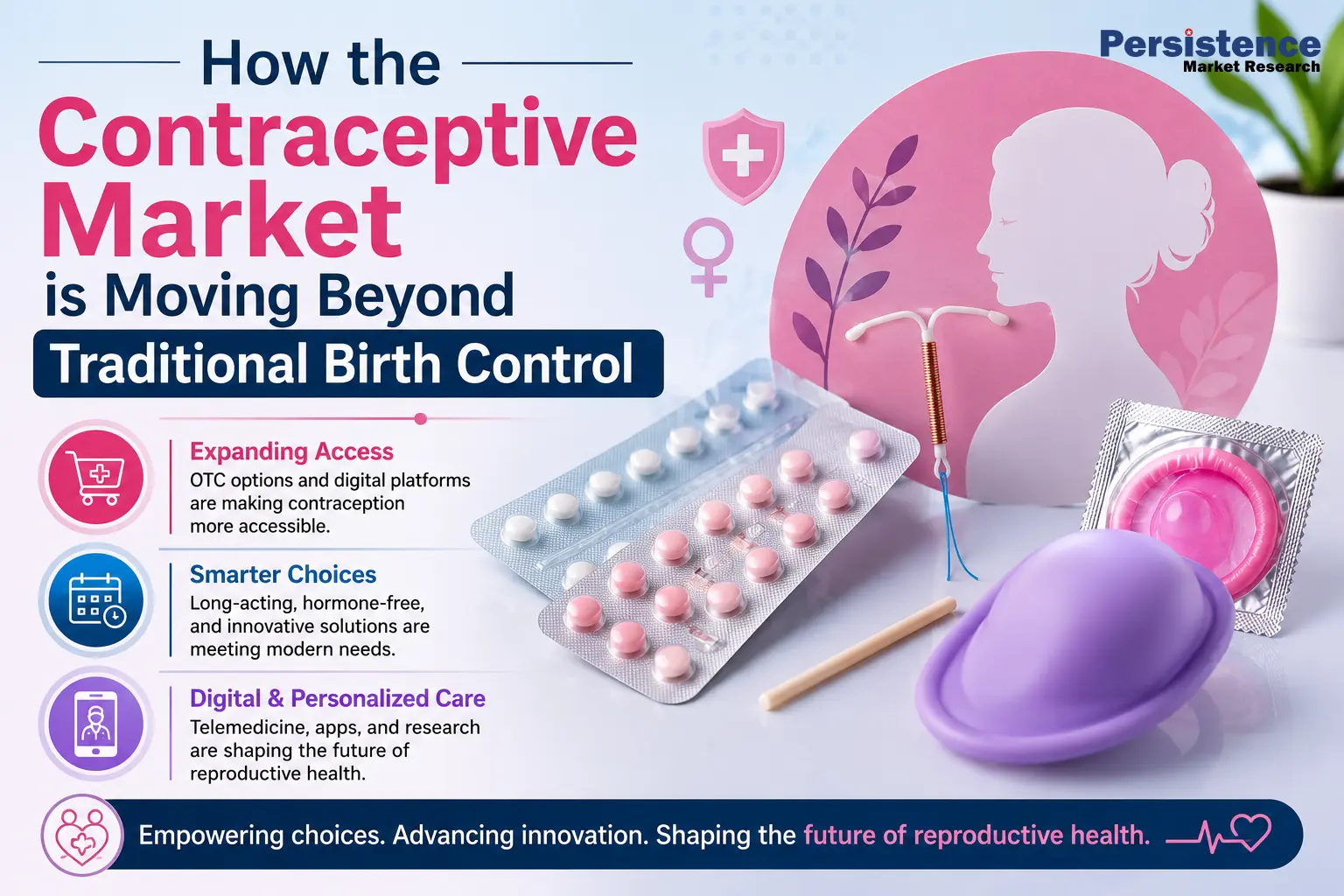
The contraceptive market includes oral contraceptive pills, condoms, intrauterine devices (IUDs), contraceptive implants, injectables, emergency contraceptives, and other family planning solutions used across hospitals, pharmacies, and retail channels. As consumer expectations continue to evolve, manufacturers are focusing on improving accessibility, expanding product choices, and integrating digital healthcare technologies to support better reproductive health outcomes.
Growing Awareness is Accelerating Contraceptive Adoption
Growing awareness of reproductive health has become one of the strongest growth drivers for the contraceptive market. Governments, healthcare organizations, and non-governmental agencies are investing heavily in educational campaigns to improve awareness of modern contraceptive methods and reduce unintended pregnancies.
The impact extends far beyond healthcare. Countries with greater access to contraception often experience lower maternal mortality, improved educational opportunities for women, and increased female workforce participation. As more women pursue higher education and professional careers, many are choosing to delay pregnancy, creating sustained demand for reliable and long-term contraceptive solutions.
Recognizing these changing demographics, manufacturers are expanding awareness initiatives while strengthening their presence across emerging markets where contraceptive adoption remains relatively low. For instance, WHO and the United Nations Population Fund (UNFPA) have continued supporting national family planning programs across low- and middle-income countries. They have been promoting awareness of modern contraceptive options and improving access through public health systems.
Over-the-Counter Access is Expanding Consumer Reach
Making contraceptives easy to access is becoming just as important as developing new products. A major example of this shift came in 2023, when the U.S. Food and Drug Administration (FDA) approved Opill as the country's first over-the-counter daily oral contraceptive. By eliminating the need for a prescription, the approval marked a significant step toward improving access, particularly for individuals facing barriers to healthcare services.
This milestone demonstrates how regulators are increasingly supporting consumer-friendly healthcare solutions. It is also encouraging manufacturers to develop products that are easy to distribute through retail pharmacies and digital healthcare platforms while improving convenience for consumers.
Long-Acting Contraceptives are Reshaping Family Planning
Long-Acting Reversible Contraceptives (LARCs), including hormonal intrauterine devices (IUDs), copper IUDs, and contraceptive implants, are witnessing surging adoption across healthcare networks. Unlike oral contraceptive pills that require daily adherence, LARCs provide protection for several years following a single procedure. Their high effectiveness, reduced risk of missed doses, and long-term cost benefits make them an attractive option for both healthcare providers and patients.
Modern consumers now prefer healthcare products that simplify everyday life. Just as wearable health devices reduce the need for constant monitoring, long-acting contraceptives reduce the burden of daily medication while improving treatment adherence. This trend is encouraging manufacturers to develop small implants, easy insertion techniques, and products offering extended protection, while simultaneously investing in physician training programs to improve patient outcomes.
Hormone-Free Innovation is Diversifying Product Development
Today's consumers are more informed than ever before. Before choosing a contraceptive method, many individuals research products through healthcare websites, online communities, and digital health platforms to better understand effectiveness and potential side effects.
Growing concerns regarding hormonal side effects, including mood changes, headaches, irregular bleeding, and weight fluctuations, have increased interest in non-hormonal alternatives such as copper IUDs and other emerging technologies. This shift is prompting pharmaceutical companies to diversify their research pipelines by investing in innovative hormone-free contraceptive solutions that provide effective pregnancy prevention while addressing evolving consumer expectations.
Digital Healthcare is Simplifying Contraceptive Care
Digital healthcare is transforming the way reproductive health services are delivered. Telemedicine consultations, online pharmacies, and mobile applications now allow consumers to consult healthcare professionals, receive prescriptions, and purchase contraceptive products without visiting a clinic. The rapid expansion of telemedicine following the COVID-19 pandemic permanently changed patient expectations. Convenience, privacy, and accessibility have become major purchasing factors, particularly among younger consumers.
The digital transformation extends beyond telemedicine. One notable example is Natural Cycles, the first FDA-cleared birth control app that uses fertility tracking and advanced algorithms to help women identify fertile and non-fertile days. The platform provides consumers with a non-hormonal family planning option while demonstrating how digital health technologies are expanding the contraceptive ecosystem and creating new opportunities beyond traditional contraceptive products. Hence, pharmaceutical companies are partnering with digital healthcare providers and FemTech companies to improve patient engagement, expand distribution channels, and strengthen long-term customer relationships.
Male Contraceptive Research is Opening New Growth Opportunities
For decades, contraceptive innovation has focused primarily on women. However, this landscape is beginning to change. One of the most closely watched developments is YCT-529, a non-hormonal male contraceptive pill developed by YourChoice Therapeutics in collaboration with researchers at the University of Minnesota. The pill has successfully completed early-stage human safety trials. Although further clinical studies are required before commercialization, its progress demonstrates the increasing momentum behind male contraceptive research and the industry's growing focus on expanding contraceptive options for men.
Increasing public interest in shared reproductive responsibility is encouraging pharmaceutical companies to invest more heavily in male contraceptive technologies, including pills, injections, reversible gels, and non-hormonal therapies. Successful commercialization could create an entirely new product category while significantly expanding the addressable market.
Sustainability is Influencing Product Innovation
As sustainability becomes a growing priority across the healthcare sector, contraceptive manufacturers are adopting environmentally responsible practices. Environmental sustainability is gradually becoming an important purchasing consideration, especially among younger consumers.
Manufacturers are exploring recyclable packaging, reducing plastic usage, improving manufacturing efficiency, and adopting environmentally responsible production practices. Although clinical effectiveness remains the primary purchasing factor, sustainability is constantly strengthening brand reputation and influencing consumer loyalty. For example, Reckitt has continued extending recyclable packaging and plastic reduction initiatives across its Durex portfolio as part of its broad sustainability commitments.
The Contraceptive Market is Entering a New Era of Reproductive Healthcare
The contraceptive market is evolving far beyond traditional birth control. Artificial intelligence, digital healthcare, personalized medicine, and next-generation contraceptive technologies are changing how reproductive healthcare is delivered.
Future innovation is expected to focus on longer-lasting contraceptives, personalized treatment options, non-hormonal therapies, digital health integration, and male contraceptive solutions. As governments continue expanding family planning initiatives and consumers demand more convenient healthcare experiences, manufacturers that successfully combine scientific innovation with accessibility and patient-centric design will likely be best positioned to lead the next phase of market growth.
According to Persistence Market Research, the North America contraceptive drugs market is projected to grow from US$3.0 billion in 2026 to US$5.4 billion by 2033, registering a CAGR of 8.8% between 2026 and 2033. The report attributes this growth to increasing reproductive health awareness, expanding availability of over-the-counter contraceptives, and rising adoption of long-acting as well as hormone-free contraceptive methods.
The future of contraception is no longer defined solely by pregnancy prevention. Instead, it is centered on empowering individuals with safer, smarter, and more personalized reproductive healthcare solutions. It is predicted to create new opportunities for manufacturers to innovate and expand their market presence.


