




- Healthcare Services
- Umbilical Cord Blood Banking Market
Umbilical Cord Blood Banking Market Size, Share, Growth, and Regional Forecast, 2026 to 2033
Umbilical Cord Blood Banking Market by Treatment Type (Sample Collection & Transportation, Sample Processing, Sample Analysis, Sample Preservation & Storage), Condition Type (Alzheimer’s Disease, Parkinson’s Disease, Lewy Body Dementia, Frontotemporal Dementia, Metabolic Disorder, Bone Marrow Failure Syndrome, Leukemia, Immune Deficiencies, Lymphoma, Others), and Regional Analysis from 2026 to 2033

Umbilical Cord Blood Banking Market Size and Trend Analysis
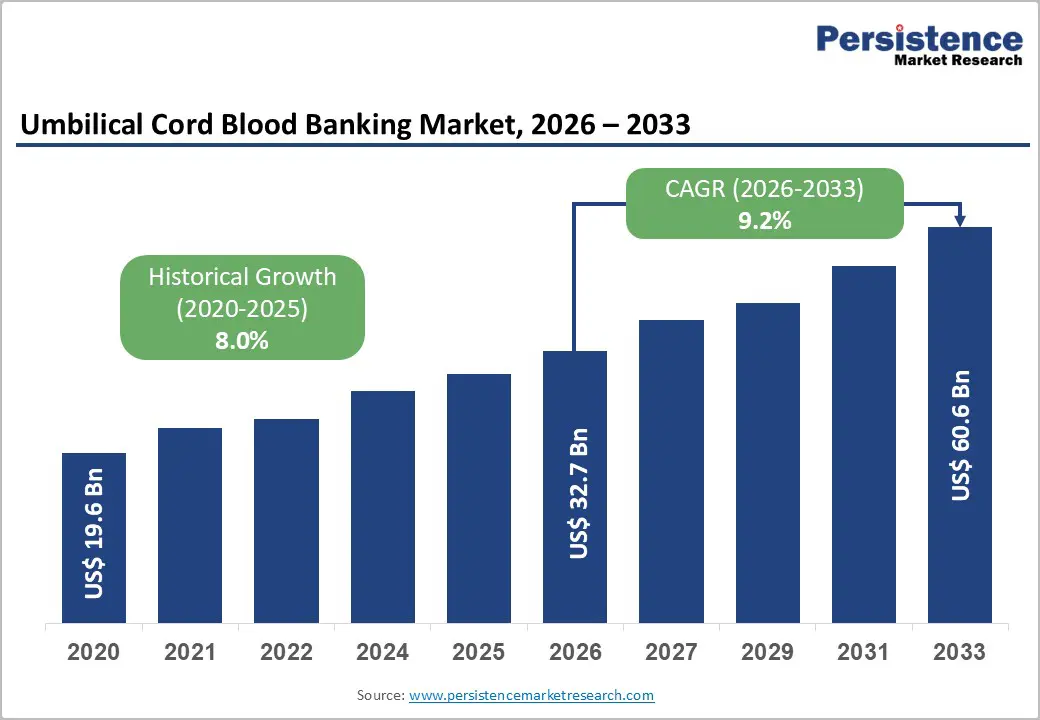
The global umbilical cord blood banking market is estimated to grow from US$ 32.7 Bn in 2026 to US$ 63.2 Bn by 2033. The market is projected to record a CAGR of 9.2% from 2026 to 2033.
The market is growing steadily, fueled by aging populations, rising disease prevalence, and better diagnosis rates. North America leads, driven by advanced healthcare infrastructure, high treatment adoption, and strong R&D. Asia-Pacific is the fastest-growing region, supported by expanding healthcare access, rising awareness, and increased investment in neurological care.
Key Industry Highlights
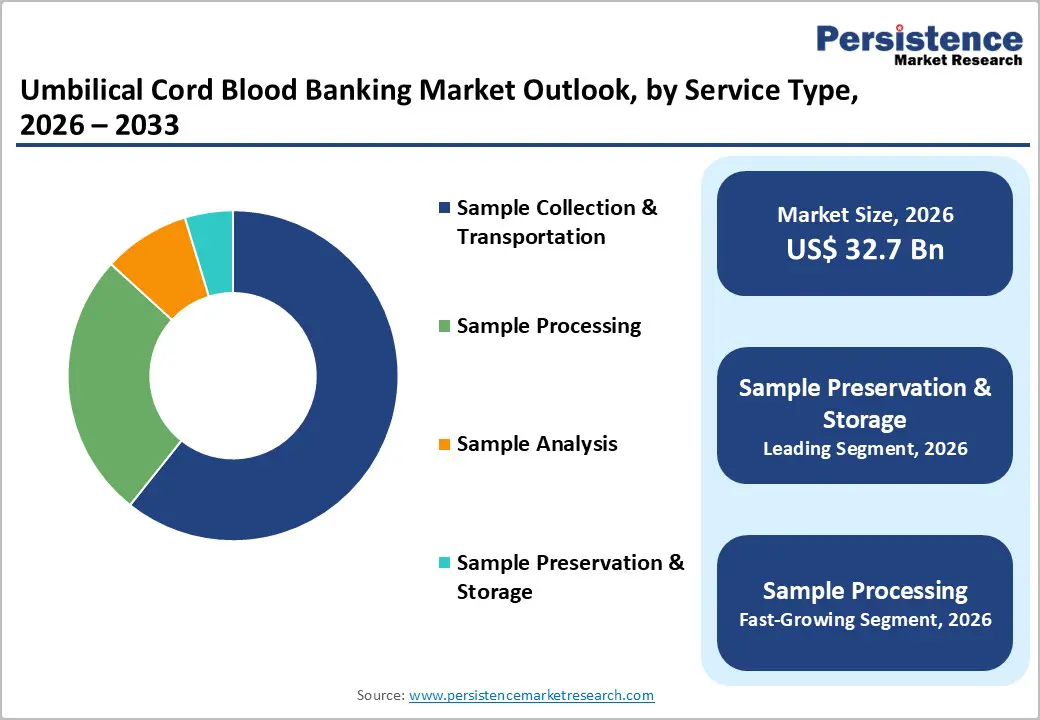
- Dominant Segment: Sample preservation and storage services accounted for 47.0% share of the umbilical cord blood banking market, driven by increasing demand for long-term cryopreservation of cord blood and tissue, advanced storage technologies ensuring cell viability, and rising consumer preference for private banking to secure potential future therapeutic use.
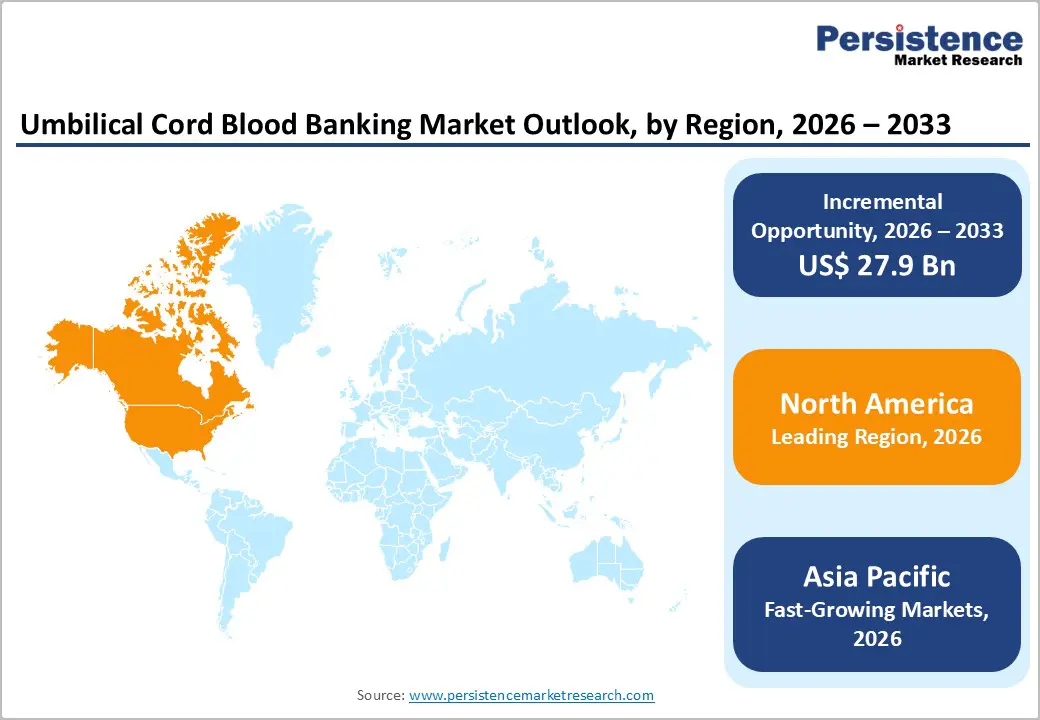
- Dominant Region: North America led the market in 2025 with 37.7% share, supported by advanced healthcare infrastructure, strong R&D, high treatment adoption, and favorable regulatory frameworks. Asia-Pacific emerged as the fastest-growing region, driven by expanding healthcare access, rising awareness of stem cell therapies, and growing investment in biotechnology and cord blood facilities.
- Market Drivers: Growth is driven by increasing awareness of cord blood benefits, rising prevalence of hematological and genetic disorders, global population aging, improving healthcare infrastructure, and advancements in stem cell research and storage technologies.
- Market Opportunity: Key opportunities include the expansion of public and private cord blood banks, the development of allogeneic stem cell therapies, the integration of regenerative medicine applications, enhanced storage and processing technologies, and growing adoption in emerging markets with unmet healthcare needs.
| Global Market Attributes | Key Insights |
|---|---|
| Umbilical Cord Blood Banking Market Size (2026E) | US$ 32.7 Bn |
| Market Value Forecast (2033F) | US$ 60.6 Bn |
| Projected Growth (CAGR 2026 to 2033) | 9.2% |
| Historical Market Growth (CAGR 2020 to 2025) | 8.0% |
Market Dynamics
Driver - Rising prevalence of hematological and genetic disorders
Hematological and genetic disorders represent a substantial global health burden that underpins demand for cord blood banking, given the therapeutic utility of hematopoietic stem cells. Approximately 7% of the global population carries clinically significant hemoglobinopathies such as thalassemia and sickle cell disease, translating to over 270 million carriers worldwide. These conditions contribute to chronic anemia and elevated mortality in early childhood, with 300,000 children born with sickle cell disease each year. In India alone, an estimated 32,400 babies are born annually with serious hemoglobin disorders, including thalassemia and related genetic anemias. Early identification and treatment planning, including potential stem cell transplantation, are key drivers of cord blood banking enrollment.
Beyond inherited genetic disorders, hematologic malignancies such as leukemia and lymphoma further increase market relevance. Global data show that leukemia accounts for hundreds of thousands of cases annually, with age-standardized prevalence rates exceeding 40 per 100,000 individuals in high-income regions like North America. Over 40,000 umbilical cord blood transplants have been performed worldwide for hematologic, immune, and metabolic disorders since the first successful procedure in 1988; this reflects recognition of cord blood’s value in hematopoietic stem cell transplantation when matched donors are scarce. The growing incidence of blood cancers, combined with documented transplant utilization of cord blood units, reinforces the importance of accessible banking services.
Restraints - Limited public awareness in emerging markets
In many emerging markets, basic awareness of umbilical cord blood banking remains low, limiting uptake of both private and public banking services. A study of pregnant women in India, a key emerging market, found that only 26.5% of participants correctly understood what umbilical cord blood banking meant, and just 16% were aware of public banking options. Additionally, fewer than one-quarter (22.4%) knew the primary clinical indications for banking, and only 18.1% knew the likelihood of needing stored cord blood in the future. This knowledge gap directly reduces informed decision-making among prospective parents.
The lack of structured public education and inconsistent information delivery further restrains market growth. In a separate Indian regional survey, 63% of mothers were unaware of umbilical cord blood banking altogether, and 65% were unsure of its usefulness, while only a minority recognized correct clinical applications for stored stem cells. These gaps exist despite recommendations by medical bodies urging accurate public education about utility and limitations. Limited awareness among both the general population and health providers in emerging markets thus curtails participation in cord blood banking and dampens demand for related services.
Opportunity - Integration with regenerative medicine
Umbilical cord blood holds a reservoir of multipotent stem cells beyond traditional hematopoietic applications, offering theoretical potential for regenerative medicine. Research shows cord blood contains stem and progenitor cells capable of differentiation into hematopoietic, neural, endothelial, and epithelial tissues, suggesting applicability across cardiovascular, neurologic, and orthopedic conditions. In vitro and animal studies have demonstrated tissue repair and improved organ function with cord blood-derived cells, and controlled clinical investigations are underway for conditions like cerebral palsy and type 1 diabetes. This expanding scientific interest strengthens the argument that regenerative medicine represents a tangible future growth area for cord blood banking services.
With more than 140 million babies born globally each year, umbilical cord blood represents a uniquely abundant, ethically accessible source of regenerative cells that are collected at birth with minimal risk. Routine cryopreservation preserves cellular viability, and cord blood units have supported over 40,000 hematopoietic transplants worldwide, demonstrating both feasibility and clinical utility. As regenerative medicine research accelerates into mechanisms for immune modulation, tissue regeneration, and cell therapy platforms, the strategic integration of cord blood banking with regenerative applications could unlock broader therapeutic use cases and motivate greater participation from parents and healthcare systems.
Category-wise Analysis
By Service Type, Sample Preservation & Storage Dominates the Umbilical Cord Blood Banking Market
Sample Preservation & Storage dominates with a 47.0% share in 2025, as it is the core service ensuring the long-term viability and therapeutic potential of collected cord blood. Cord blood contains hematopoietic and progenitor stem cells that require immediate cryogenic preservation to maintain functionality for transplantation or future therapies. Globally, over 780,000 units are stored in private banks and more than 400,000 in public banks, highlighting the volume of samples needing secure, long-term storage. Cryopreservation at ultra-low temperatures using controlled-rate freezing and liquid nitrogen ensures stem cell viability for decades, with successful recovery documented even after long-term storage. Consequently, this service segment consistently captures the largest market share, reflecting ongoing demand to safeguard valuable biological assets for current and future medical applications.
By Storage option, Private UCB Banks dominate due to exclusive family access, higher awareness, and extensive cryopreservation infrastructure
Private umbilical cord blood banks dominate the market because most families choose exclusive, family-reserved storage, driven by perceived future health security and the personalization of medical care. Globally, private banks account for roughly 55-68 % of all cord blood units stored, with over 7 million units held in private facilities as of recent estimates, reflecting strong consumer uptake of paid storage solutions. Families choose private banking to secure immediate access to their child’s cord blood stem cells for potential future autologous or family use, rather than relying on public registry availability. Private banks also invest substantially in marketing, advanced cryopreservation infrastructure, and flexible service plans to attract expectant parents, whereas public banks often face funding and awareness constraints, limiting collection volumes and donor participation.
Regional Insights
North America Umbilical Cord Blood Banking Market Trends
North America dominates the umbilical cord blood banking market with 37.7% share in 2025, ue to its advanced healthcare infrastructure, high parental awareness, and strong institutional support. The region accounts for approximately 38-40 % of global cord blood banking services, with the United States leading in both private and public storage units, supported by widespread hospital collaborations and established regulatory frameworks that enhance consumer confidence and participation. In the U.S., major registries like the C.W. Bill Young Cell Transplantation Program list hundreds of thousands of cord blood units, reflecting a mature ecosystem for donor recruitment and transplantation support. Government initiatives and insurance-backed storage plans further bolster adoption, while Canada and Mexico contribute to a comprehensive network of banks that leverage advanced processing, cryopreservation technologies, and clinical research activity.
Europe Umbilical Cord Blood Banking Market Trends
Europe is an important region in the umbilical cord blood banking market due to its high prevalence of aging populations, strong public health infrastructure, and coordinated government strategies for neurological care. According to Alzheimer Europe, nearly 10 million people live with dementia across European countries, and projections indicate this will rise significantly as populations age. The European Brain Council reports that neurological disorders, including dementia and movement disorders, account for the highest overall disease burden in Europe, with substantial direct and indirect costs to health systems. Europe’s well-developed healthcare systems ensure broad access to diagnostics, pharmacological treatments, and multidisciplinary care programs, reinforcing treatment uptake. Additionally, strong policy frameworks and research collaborations across the EU support clinical innovation and standardized care pathways, underscoring Europe’s strategic significance in the global market.
Asia-Pacific Umbilical Cord Blood Banking Market Trends
Asia-Pacific is the fastest-growing region in the umbilical cord blood banking market, driven by rapidly expanding healthcare access, rising awareness of stem cell therapies, and high birth rates. The region accounts for over 20-25 % of globally stored cord blood units, supported by improving institutional delivery rates and maternal-newborn healthcare infrastructure, which enable greater collection opportunities. Growing health awareness and increasing disposable incomes among families drive uptake of both private and public banking services. Additionally, government initiatives in countries such as India, China, and Japan promote awareness, encourage donations, and provide regulatory support. With Asia accounting for roughly half of global births, the region offers a substantial base for cord blood collection and long-term market growth.
Market Competitive Landscape
The umbilical cord blood banking market is highly competitive, driven by innovation in stem cell preservation, regenerative therapies, and personalized healthcare. Strategic collaborations, clinical advancements, expanded storage capabilities, and government-supported programs enhance differentiation. Adoption of advanced cryopreservation technologies, digital tracking, and public awareness initiatives further strengthens competitiveness and supports global market growth in cord blood collection and therapeutic applications.
Key Industry Developments:
- In July 2025, Cord Blood Registry® reported that its families had led the way in using stored cord blood stem cells, with more than 750 units released for therapeutic and investigational use by the end of 2024. This milestone highlighted increasing use of banked newborn stem cells by families for approved hematopoietic transplants and regenerative medicine research, underscoring the clinical relevance of cord blood banking.
Companies Covered in Umbilical Cord Blood Banking Market
- AbbVie Inc.
- Acorda Therapeutics Inc.
- Acadia Pharmaceuticals Inc.
- Amgen Inc.
- Amneal Pharmaceuticals Inc.
- AstraZeneca Plc
- Axovant Gene Therapies
- Bausch Health Companies Inc.
- Biogen Inc.
- Bristol-Myers Squibb Company
- Eisai Co., Ltd.
- Eli Lilly and Company
- F. Hoffmann-La Roche Ltd.
- GlaxoSmithKline plc
- H. Lundbeck A/S
- Others
Frequently Asked Questions
The global umbilical cord blood banking market is projected to be valued at US$ 32.7 Bn in 2026.
Rising genetic disorders, growing awareness, stem cell advancements, supportive infrastructure, and expanding births drive growth.
The global umbilical cord blood banking market is poised to witness a CAGR of 9.2% between 2026 and 2033.
Expansion in emerging markets, regenerative medicine integration, allogeneic therapies, advanced storage, and public-private partnerships.
Cord Blood Registry Systems, Cryo-Cell International, Smart Cells International, Caladrius Biosciences, Esperite N.V., ATCC.


