




- Food Ingredients & Additives
- Roasted Grain Ingredients Market
Roasted Grain Ingredients Market Size, Share, Trends, Growth, and Regional Forecast, 2025 to 2032
Roasted Grain Ingredients Market by Product Type (Barley, Soybean, Wheat, Corn, Others), by Nature (Organic, Conventional), Form (Whole, Split, Flour), End-user (Beverages, Bakery, Convenience Foods, Animal Feed, Others), and Regional Analysis from 2025 to 2032

Roasted Grain Ingredients Market Share and Trends Analysis
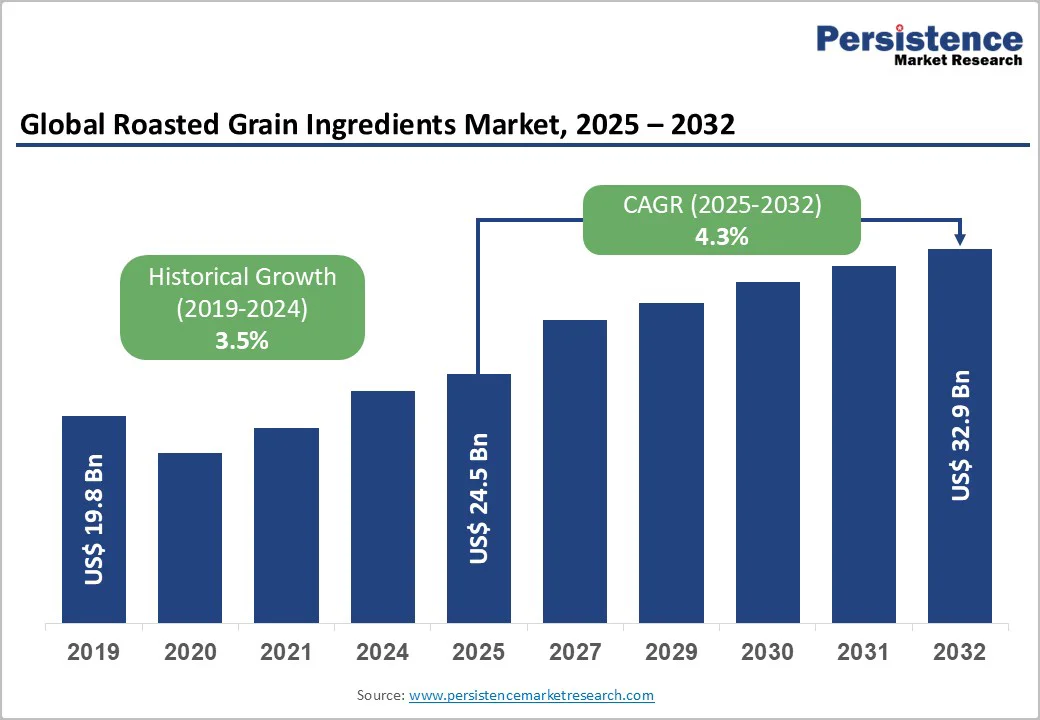
The global roasted grain ingredients market size is valued at US$ 24.5 billion in 2025 and projected to reach US$ 32.9 billion growing at a CAGR of 4.3% during the forecast period from 2025 to 2032.
The global roasted grain ingredients market is evolving rapidly, driven by the surge in plant-based innovation, sustainable sourcing, and growing consumer preference for authentic, natural flavors. The bakery and food additives industries adapt to clean-label and premiumization trends, and roasted grain ingredients are emerging as essential components for both functional and indulgent formulations across regions.
Key Industry Highlights
- Leading Country: The U.S. dominates the market, fueled by strong demand from craft brewers and non-dairy beverage innovators integrating roasted barley and wheat extracts for richer taste and nutritional value. Strategic collaborations and advancements in roasting technology are enhancing flavor precision and production scalability.
- Fastest-Growing Country: Growth in China is driven by the expanding consumption of roasted barley and buckwheat-based tea and wellness beverages. Rising health awareness and traditional flavor adoption are shaping the country’s beverage innovation landscape.
- Dominant Product Type Segment: Barley maintains leadership due to its balanced flavor, enzyme strength, and adaptability across brewing, bakery, and plant-based applications. Its roasted aroma and texture appeal make it indispensable in malt-based and functional beverage formulations.
- Emerging Nature Segment: Organic - Organic roasted grain ingredients are witnessing accelerating growth as manufacturers and consumers prioritize chemical-free sourcing, traceability, and higher nutritional retention. This trend is reinforced by eco-certifications and sustainable farming practices, enhancing market credibility.
- Market Driver: The popularity of roasted grain-based drinks, especially in craft brewing and functional beverage categories, is propelling market expansion, as consumers increasingly seek distinctive roasted flavor profiles and healthier drink options.
- Market Opportunity: Feed palatability enhancement through customized roasted aroma profiles presents new potential for ingredient manufacturers. Precision roasting and sensory optimization are opening pathways into premium livestock and pet nutrition.
- Key Developments: In October 2025, the U.S. Grains & BioProducts Council led a trade mission to promote U.S. malt and barley exports in Southeast Asia’s growing brewing markets. In March 2025, Siemer Milling Company partnered with STAR to launch a conservation-based rewards program. In October 2024, Muntons secured £83.8 million in sustainability-linked funding from HSBC UK to advance its low-carbon operations.
| Key Insights | Details |
|---|---|
| Global Roasted Grain Ingredients Market Size (2025E) | US$ 24.5 Bn |
| Market Value Forecast (2032F) | US$ 32.9 Bn |
| Projected Growth (CAGR 2025 to 2032) | 4.3% |
| Historical Market Growth (CAGR 2019 to 2024) | 3.5% |
Market Dynamics
Driver - High Popularity of Roasted Grain-Based Drinks Improves Growth Prospects
High demand from craft brewers is expected to drive the growth of the global roasted grain ingredients market. Roasted malt offers a variety of tastes, textures, and flavors to beer, which boosts its appeal among craft brewers. Craft brewing has become very popular among consumers because it provides diverse qualities and flavors at competitive prices.
Craft brewers are eager to deliver a better beer experience and are inclined to use roasted barley and wheat malt. Roasted malt can produce different colors and flavor profiles in the final product, helping brewers enhance their product quality.
Additionally, the presence of flavors such as chocolate, coffee, caramel, and others makes roasted malt very appealing to brewers. For instance, Proximity Malt, a leading malt producer in the United Kingdom, offers a range of roasted malt products for craft and home brewing.
Restraints - Fluctuating Price of Grains Due to Climate Change and Crop Yield Instability Impact Production Costs
Volatile climatic conditions have emerged as a significant disruptor to the global roasted grain ingredients market, driving irregularities in grain supply and price fluctuations. Erratic rainfall patterns, prolonged droughts, and extreme weather events are impacting key grain-producing regions, leading to inconsistent crop yields and reduced availability of quality raw materials.
Manufacturers face rising production costs as they struggle to secure stable grain supplies for malted barley, wheat, and other roasted varieties. This cost pressure often cascades through the value chain, influencing pricing strategies and profit margins. Additionally, uncertainty in global grain trade due to shifting weather zones and geopolitical disruptions further intensifies the challenge, restraining scalability and long-term investment confidence among producers.
Opportunity - Feed palatability enhancement using roasted aroma profiles
An emerging opportunity in the global roasted grain ingredients market lies in leveraging roasted aroma profiles to enhance feed palatability. Controlled roasting unlocks complex Maillard reaction compounds that improve flavor depth, aroma, and texture appeal in animal feeds. Livestock and pet nutrition manufacturers are exploring these ingredients to boost feed intake, reduce waste, and improve overall animal performance.
Startups and ingredient formulators can differentiate through precision roasting technologies that customize aroma intensity based on species preference. As consumer expectations for animal welfare and natural feed additives rise, roasted grains with optimized sensory characteristics present a compelling value proposition bridging functionality, sustainability, and sensory science in next-generation feed formulations.
Category-wise Analysis
By Product Type, barley holds a dominant position in the global Roasted Grain Ingredients market
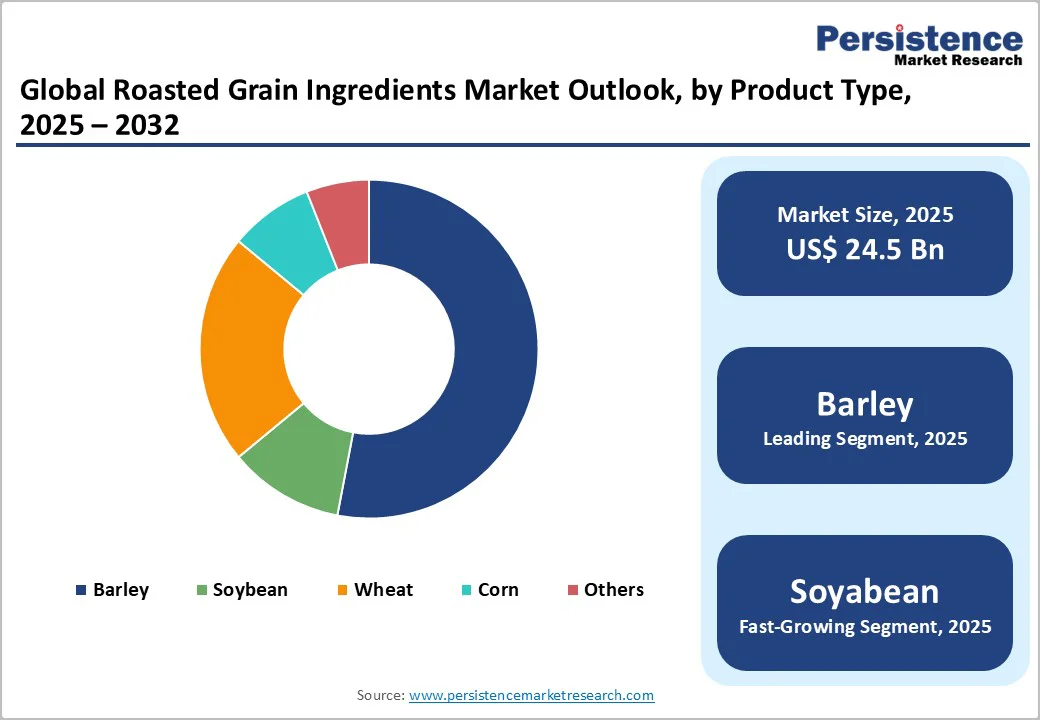
Barley holds approx. 53% market share as of 2024, maintaining its dominance in the global roasted grain ingredients market due to its balanced flavor profile, versatility, and strong demand in brewing, bakery, and plant-based applications. Its high enzyme activity and appealing roasted aroma make it a preferred choice for malt-based beverages and flavor enhancers.
Soybeans are gaining traction for their protein density and nutty roasted character in nutritional blends. Wheat continues to see consistent use for its mild taste and smooth texture, ideal for baked goods and breakfast cereals. Corn, with its caramelized sweetness when roasted, finds rising application in snack coatings and flavor bases, widening its utility across the global processed food segment.
By Nature, organic Roasted Grain Ingredients are expected to show promising growth during the forecast period
Organic roasted grain ingredients are projected to grow at a CAGR of 5.8% during the forecast period in the global roasted grain ingredients market, driven by the surge in clean-label demand and consumer trust in traceable, chemical-free sourcing. The expanding organic certification network and stricter food safety standards are encouraging food and beverage manufacturers to reformulate with certified organic grains such as barley, wheat, and corn.
Consumers associate organic roasting with richer aroma, higher nutrient retention, and better digestive compatibility, aligning with the broader move toward mindful consumption. Growing retail penetration of organic snacks, malt-based drinks, and bakery items further amplifies this trend, positioning organic roasted grains as a core ingredient in premium and sustainable food innovation.
Region-wise Insights
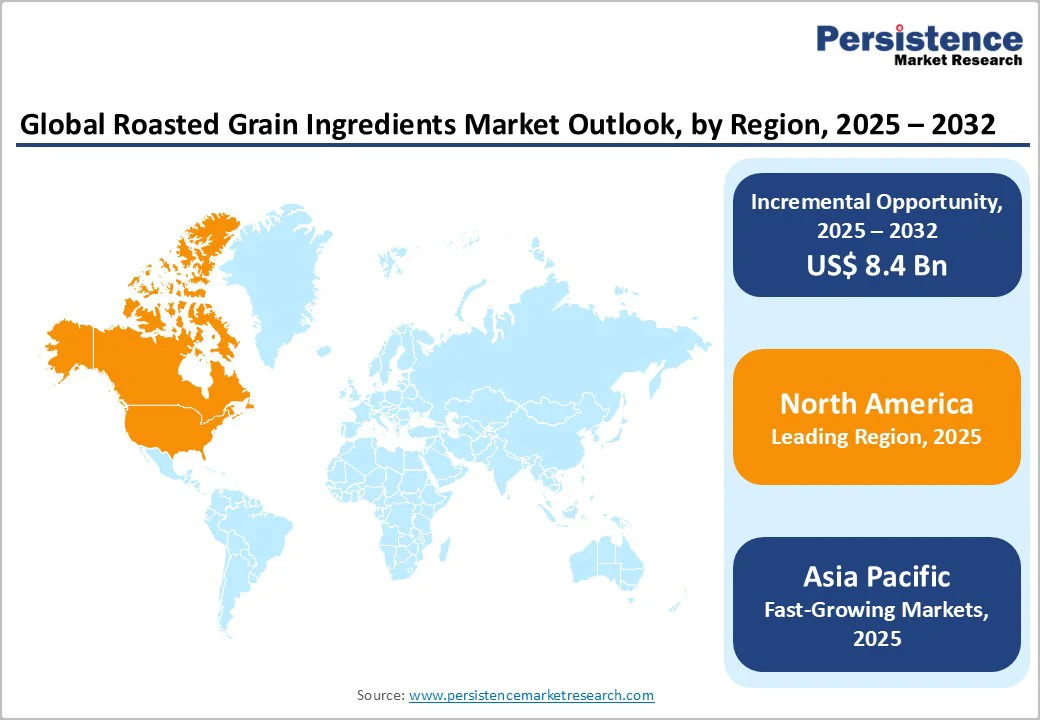
North America Roasted Grain Ingredients Market Trends
The North America roasted grain ingredients market is undergoing a phase of transformation as consumers increasingly seek plant-based, functional, and authentic flavor solutions. In the U.S., ingredient producers are partnering with craft brewers and alternative beverage makers to integrate roasted barley and wheat derivatives that deliver richer sensory experiences and improved nutritional value.
In Canada, food processors are incorporating roasted grain flours into bakery and snack formulations to enhance aroma, color, and texture naturally. Established players such as Briess Malt & Ingredients Co. and Siemer Milling Company are strengthening production networks, while emerging startups emphasize artisanal roasting precision and regenerative grain sourcing.
The region’s broader shift toward premium, transparent, and sustainably processed ingredients continues to drive product innovation and differentiation.
Asia Pacific Roasted Grain Ingredients Market Trends
Asia Pacific Roasted Grain Ingredients Market is expected to grow at a CAGR of 6.3% driven by rising demand for functional beverages, traditional flavor innovation, and clean-label nutrition. In China, roasted barley and buckwheat are increasingly used in tea blends and wellness drinks appealing to health-aware urban consumers.
India is witnessing demand from breakfast cereal and snack manufacturers incorporating roasted millets and grains for enhanced texture and aroma. Japan and South Korea are advancing the use of roasted rice and barley in caffeine-free beverages and confectionery products.
Local players are investing in advanced roasting technologies and fermentation-based flavor enhancement. The region’s shift toward healthier lifestyles and authentic, grain-derived taste experiences continues to define product development strategies across categories.
Competitive Landscape
The global roasted grain ingredients market is moderately fragmented, shaped by a mix of established ingredient producers and agile startups innovating around sustainable sourcing and advanced processing. Leading manufacturers are expanding roasting capacities, integrating vertically to secure quality raw materials, and investing in cleaner heat-treatment technologies to preserve nutritional value and aroma.
Startups are leveraging organic farming partnerships and precision roasting systems to achieve consistency and flavor differentiation. Certification programs emphasizing organic, non-GMO, and allergen-free claims are gaining importance as transparency becomes a key purchasing factor.
The market is increasingly defined by traceable supply chains, energy-efficient processing, and proprietary roasting profiles tailored for beverages, snacks, and functional foods targeting wellness-conscious consumers globally.
Key Industry Developments:
- In October 2025, the U.S. Grains & BioProducts Council (USGBC) led a trade mission to Vietnam and Thailand to promote U.S. malt and barley across Southeast Asia’s expanding brewing sector. The delegation, including Briess Malt & Ingredients Company and other key suppliers, participated in Brew Asia 2025 in Bangkok, strengthening commercial ties and advancing export opportunities for U.S. barley and craft malt in emerging beer markets.
- In March 2025, STAR and Siemer Milling Company renewed their partnership to launch the 2025 Siemer-STAR Producer Rewards Payment Program across Illinois, Indiana, and Kentucky. The initiative offers financial incentives to farmers based on their STAR Ratings, encouraging the adoption of conservation practices that enhance soil health and protect water quality.
- In October 2024, malt grain producer Muntons secured a £83.8 million funding package from HSBC UK under its Sustainability Improvement Facility. The financing links borrowing costs to Muntons’ EcoVadis Sustainability Rating, supporting the company’s transition toward lower-carbon operations and advancing its long-term environmental goals.
Companies Covered in Roasted Grain Ingredients Market
- Boortmalt
- Malteurop Group
- SunOpta Inc.
- Muntons Malted Ingredients Inc.
- Bairds Malt
- Castle Malting
- Interquell
- Simpsons Malt
- Proximity Malt
- IREKS GmbH
- KLC Farms Roasting
- McGeary Organics, Inc.
- Mouterij Dingemans
- Others
Frequently Asked Questions
The global roasted grain ingredients market is valued at US$ 24.5 Bn in 2025.
Rising consumer demand for roasted grain-based beverages is fueling growth and expanding opportunities in the global Roasted Grain Ingredients market.
The global roasted grain ingredients market is poised to witness a CAGR of 4.3% between 2025 and 2032.
Enhancing feed palatability through the use of roasted aroma profiles presents a significant growth opportunity in the market.
Major players in the global Roasted Grain Ingredients market include Boortmalt, Malteurop Group, SunOpta Inc., Muntons Malted Ingredients Inc., Bairds Malt, Castle Malting, and others.


