




- Medical Devices
- Smart Insulin Pens Market
Smart Insulin Pens Market Size, Share, Growth, and Regional Forecast, 2026 to 2033
Smart Insulin Pens Market by Product (Smart Insulin Pens, Smart Pen Caps / Attachments, Software), Usability (Reusable Systems, Prefilled / Disposable Systems), Indication (Type 1 Diabetes, Type 2 Diabetes), Distribution Channel (Retail Pharmacies, Hospital Pharmacies, Online Pharmacies / E-commerce platforms, Specialty Centers), and Regional Analysis from 2026 to 2033

Smart Insulin Pens Market Share and Trends Analysis
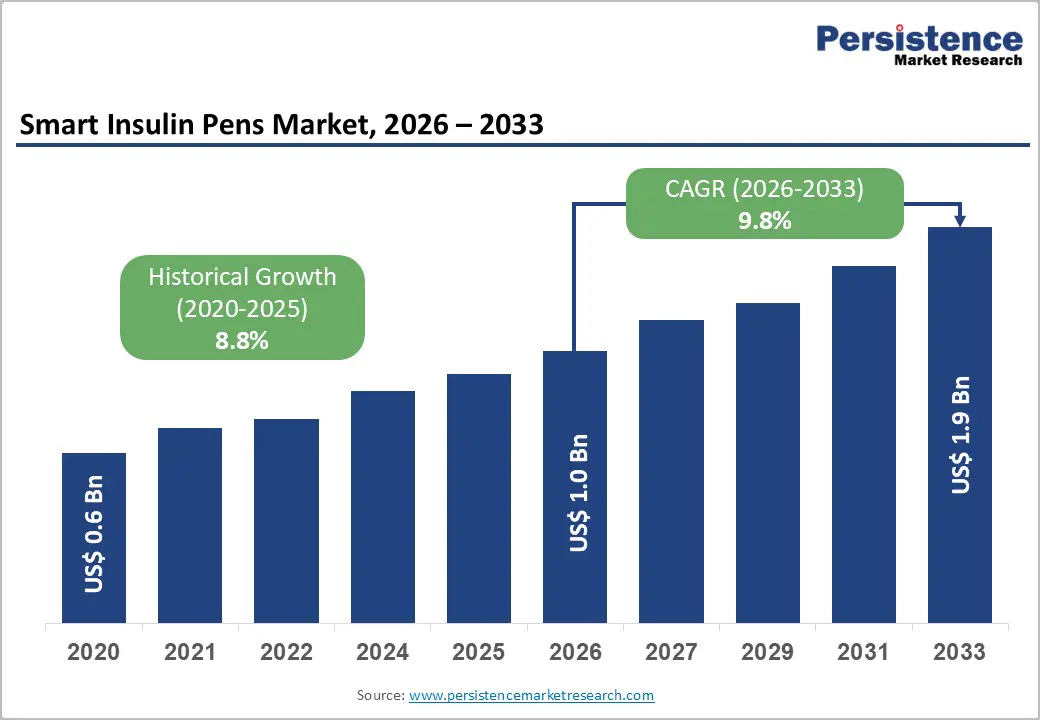
The global smart insulin pens market is estimated to grow from US$ 1.0 billion in 2026 to US$ 1.9 billion by 2033. The market is projected to record a CAGR of 9.8% during the forecast period from 2026 to 2033.
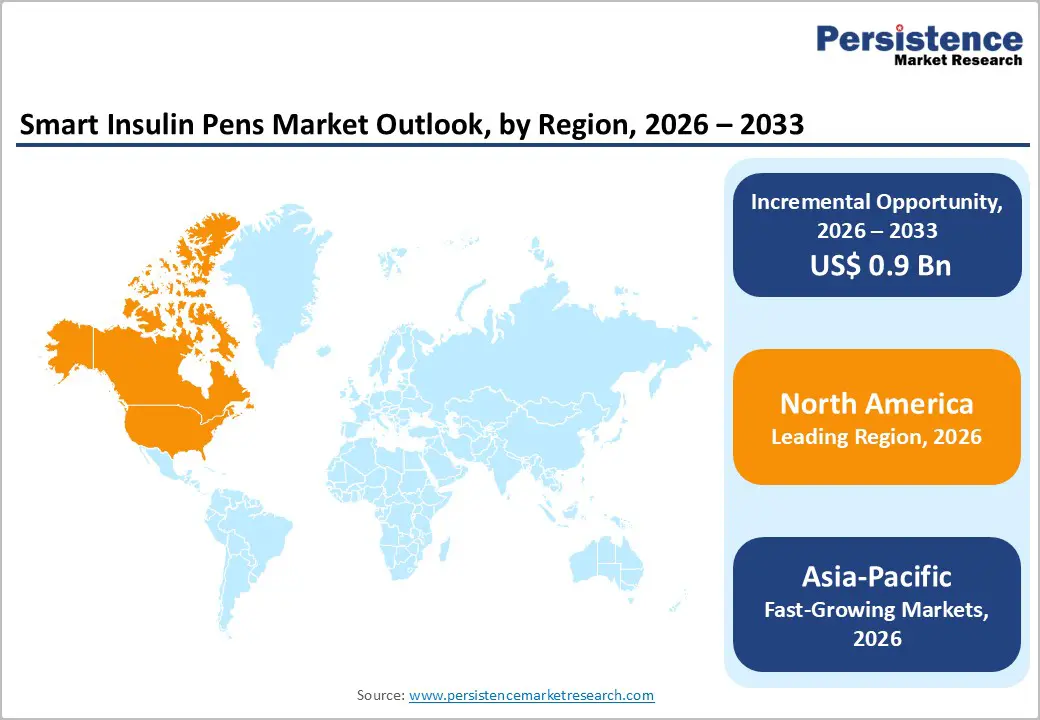
The global smart insulin pens market is expanding steadily, driven by the rising prevalence of diabetes and growing demand for connected diabetes management devices. North America leads due to strong adoption of digital health technologies and advanced healthcare infrastructure, while Asia-Pacific is the fastest-growing region, supported by increasing diabetic populations, healthcare investments, and awareness of smart insulin delivery solutions.
Key Industry Highlights:
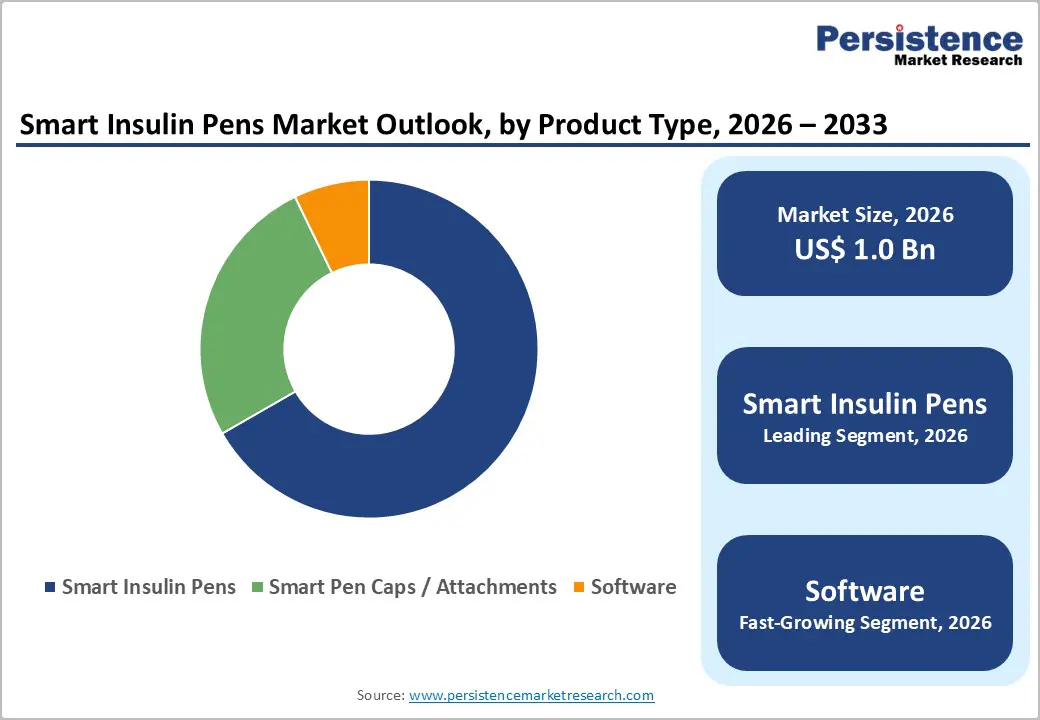
- Dominant Product: Smart insulin pens held nearly 66.7% share in 2025, driven by increasing adoption of connected diabetes management devices that enable automatic dose tracking, reminders, and data integration with mobile health applications. Their ability to improve medication adherence, enhance glucose management, and support remote monitoring by healthcare professionals has significantly increased their use among insulin-dependent diabetes patients.
- Dominant Region: North America is the leading region in the smart insulin pens market with 41.8% share in 2025, supported by high diabetes prevalence, strong adoption of digital health technologies, favorable reimbursement policies, and the presence of major diabetes device manufacturers.
- Growth Indicators: Growth is driven by the rising global prevalence of diabetes, increasing demand for connected diabetes management devices, growing integration of smart pens with mobile health applications and CGM systems, and improved patient adherence through automated insulin dose tracking.
- Opportunity: Opportunities include expansion in emerging markets, integration with digital health ecosystems and AI-based dosing support, development of advanced connected pen caps and reusable smart pens, and increasing adoption of remote patient monitoring in diabetes care.
| Key Insights | Details |
|---|---|
| Global Smart Insulin Pens Market Size (2026E) | US$ 1.0 Bn |
| Market Value Forecast (2033F) | US$ 1.9 Bn |
| Projected Growth (CAGR 2026 to 2033) | 9.8% |
| Historical Market Growth (CAGR 2020 to 2025) | 8.8% |
Market Dynamics
Driver: Growing Adoption of Connected Diabetes Management Devices
The increasing adoption of connected diabetes management technologies is a major driver for the Smart Insulin Pens Market. Diabetes prevalence continues to rise globally, creating a strong demand for advanced monitoring and insulin delivery solutions. According to the International Diabetes Federation, around 537 million adults aged 20-79 were living with diabetes in 2021, and the number is expected to increase significantly in the coming decades. The majority of these patients require regular glucose monitoring and insulin therapy, creating demand for digital tools that simplify treatment management. Smart insulin pens address this need by offering features such as automatic dose recording, Bluetooth connectivity, and smartphone integration, helping patients track insulin usage and improve disease management.
Connected insulin pens are increasingly integrated with broader digital health ecosystems such as mobile applications, continuous glucose monitoring (CGM) systems, and telehealth platforms. Studies indicate that patients using smart insulin pens can experience a 20-30% reduction in insulin dose errors, while adherence to insulin therapy improves significantly due to reminders and automated tracking features. In addition, connectivity features are now present in over 70% of smart insulin pens, enabling real-time data sharing between patients and healthcare providers. These capabilities support remote monitoring and personalized treatment decisions, which are key components of modern chronic disease management. As healthcare systems increasingly adopt digital health technologies and remote monitoring solutions, the demand for connected insulin delivery devices such as smart insulin pens continues to grow globally.
Restraint: High Cost of Smart Insulin Pens and Connected Devices
The high cost of smart insulin pens and associated digital health technologies is a major restraint limiting widespread market adoption. Compared with traditional insulin pens, smart pens include additional electronic components, connectivity modules, and companion mobile applications, increasing the overall cost of the device. In many low- and middle-income countries, affordability remains a major barrier to adoption of advanced diabetes technologies. Studies show that less than 20% of diabetic patients in some lower-income regions have access to digital insulin-delivery devices, highlighting the significant cost barrier that prevents broader market penetration. As a result, conventional insulin pens still dominate many healthcare settings due to their lower price and easier accessibility.
Cost challenges are further intensified by limited reimbursement policies and uneven healthcare infrastructure in several countries. In regions where digital diabetes devices are not covered by public or private insurance, patients must pay out-of-pocket for smart insulin pens and related digital services. This financial burden discourages adoption, particularly among populations already facing high long-term treatment costs for diabetes management. In addition, adoption rates of advanced digital insulin delivery devices remain below 15% in rural populations, where healthcare resources and awareness are limited. These economic and infrastructure barriers continue to restrict the widespread deployment of smart insulin pen technology, especially in developing healthcare systems.
Opportunity: Integration with AI-Based Insulin Dosing Support
Integration of artificial intelligence (AI) and advanced analytics into diabetes management devices presents a significant opportunity for the Smart Insulin Pens Market. AI-enabled insulin dosing systems can analyze glucose levels, insulin history, and lifestyle data to provide personalized dosing recommendations. As diabetes care increasingly moves toward precision medicine and data-driven treatment, smart insulin pens are becoming part of connected ecosystems that include CGMs, smartphone applications, and digital health platforms. These technologies allow real-time data analysis and automated insights that help patients optimize insulin dosing decisions. As digital health adoption grows globally, the integration of AI-driven decision support tools is expected to transform insulin therapy management.
Evidence from clinical and digital health studies shows that technology-supported insulin management can significantly improve treatment outcomes. Smart insulin pens combined with digital monitoring platforms have been shown to improve adherence and reduce complications associated with incorrect dosing. For example, digital insulin management systems can improve dosing accuracy and support more effective treatment adjustments through continuous data monitoring. Integration with electronic medical records and telehealth platforms has also increased rapidly, with some studies reporting a 200% increase in the integration of smart insulin pen data with electronic medical records, improving remote monitoring and treatment optimization. These developments highlight the strong potential for AI-enabled smart insulin pens to enhance personalized diabetes care and expand market growth in the coming years.
Category-wise Analysis
By Product
Smart insulin pens dominate the smart insulin pens market with 66.7% share in 2025, due to their ability to improve dosing accuracy, adherence, and convenience in insulin therapy. The global burden of diabetes is increasing significantly, supporting the adoption of advanced insulin delivery devices. According to the International Diabetes Federation, about 537 million adults worldwide were living with diabetes in 2021, and this number is projected to reach 643 million by 2030. A large proportion of these patients require insulin therapy, particularly individuals with Type 1 diabetes and advanced Type 2 diabetes. Insulin pens have increasingly replaced traditional vial-and-syringe methods because they are easier to use and provide more precise dosing. Smart insulin pens further enhance these benefits by offering digital dose tracking, reminders, and smartphone connectivity, improving treatment management.
By Usability
Reusable systems dominate the smart insulin pens market because they provide long-term cost efficiency and are suitable for chronic insulin therapy. Diabetes requires continuous management, and many patients must administer insulin daily for years. According to the World Health Organization, diabetes affects hundreds of millions globally and requires sustained treatment and monitoring. Reusable smart insulin pens allow patients to replace only the insulin cartridge rather than the entire device, making them more economical over time compared with disposable options. These systems also support sustainability by reducing medical plastic waste generated from single-use devices. In addition, reusable pens are durable and compatible with multiple insulin cartridges, making them practical for long-term diabetes management and encouraging healthcare providers to recommend them widely.
Regional Insights
North America Smart Insulin Pens Market Trends
North America dominates the smart insulin pens market primarily due to the high prevalence of diabetes and strong healthcare infrastructure supporting advanced diabetes technologies. According to the Centers for Disease Control and Prevention, about 40.1 million people in the United States were living with diabetes in 2023, representing nearly 12% of the population. The large diabetic population creates substantial demand for insulin delivery devices and digital diabetes management tools.
In addition, North America has one of the highest healthcare expenditures for diabetes globally. The International Diabetes Federation reports that the North America and Caribbean region accounts for about USD 439 billion in diabetes-related healthcare spending, representing around 43% of global diabetes expenditure. Strong reimbursement systems, early adoption of digital health technologies, and the presence of leading diabetes device manufacturers further support the widespread adoption of smart insulin pens in the region.
Europe Smart Insulin Pens Market Trends
Europe represents an important market for smart insulin pens due to the large diabetic population and well-established healthcare systems across the region. According to the World Health Organization, at least 64 million adults and about 300,000 children in the WHO European Region are living with diabetes, making it one of the most common chronic diseases in the region. The increasing burden of diabetes and the need for effective long-term disease management create strong demand for insulin delivery devices, including smart insulin pens.
Europe also has the highest burden of type 1 diabetes globally, which significantly drives insulin therapy demand because patients with type 1 diabetes require lifelong insulin administration. In addition, many European countries have universal healthcare systems that support access to advanced diabetes technologies. Strong healthcare spending, growing aging populations, and rising obesity rates further increase the need for efficient insulin delivery solutions across the region.
Asia-Pacific Smart Insulin Pens Market Trends
Asia-Pacific is the fastest-growing region in the smart insulin pens market due to its rapidly increasing diabetic population and expanding healthcare infrastructure. Countries such as China and India have some of the largest numbers of people with diabetes globally. Regional health data indicate that more than 140 million adults in Asia are living with diabetes, and the number continues to rise due to urbanization, aging populations, and lifestyle changes. This growing disease burden significantly increases the demand for insulin therapy and modern insulin delivery devices.
In addition, economic development and healthcare investments across Asia-Pacific are improving access to advanced diabetes management technologies. Governments in countries such as China, India, and Southeast Asian nations are expanding diabetes screening and treatment programs. Increasing awareness of diabetes management, rising healthcare expenditure, and a large patient base are therefore driving the rapid adoption of smart insulin pens across the Asia-Pacific region.
Competitive Landscape
The smart insulin pens market is highly competitive, led by major diabetes care companies such as Novo Nordisk, Medtronic, and Abbott Laboratories. These players focus on connected pen technologies, mobile app integration, strategic partnerships, and product innovation to strengthen diabetes management solutions and expand global market presence.
Key Industry Developments:
- In February 2026, Medtronic announced the commercial launch of the MiniMed™ Go Smart MDI system with the Simplera™ continuous glucose sensor across the EMEA region. The system was designed for people managing diabetes with multiple daily insulin injections (MDI). It integrates smart insulin dosing support with continuous glucose monitoring to help patients track glucose levels and insulin administration more effectively.
- In March 2025, Dexcom announced that its continuous glucose monitoring (CGM) system had been integrated with smart insulin pens developed by Novo Nordisk to enhance connected diabetes management. The integration allowed glucose data from Dexcom CGM devices to be shared with Novo Nordisk’s smart insulin pens and companion digital platforms, enabling patients and healthcare providers to better track insulin dosing alongside real-time glucose readings.
Companies Covered in Smart Insulin Pens Market
- Medtronic
- Novo Nordisk
- BIGFOOT BIOMEDICAL, INC. (Abbott)
- mySugr® (Roche)
- Glooko, Inc.
- Health2Sync
- Others
Frequently Asked Questions
The global Smart insulin pens market is projected to be valued at US$ 1.0 Bn in 2026.
Rising diabetes prevalence, demand for connected insulin delivery devices, improved adherence, digital health integration, and remote monitoring adoption.
The global smart insulin pens market is poised to witness a CAGR of 9.8% between 2026 and 2033.
AI-enabled dosing support, expansion in emerging markets, digital health integration, telehealth adoption, and advanced connected pen technologies.
Medtronic, Novo Nordisk, BIGFOOT BIOMEDICAL, INC. (Abbott), mySugr® (Roche), Glooko, Inc.


