




- Pharmaceuticals
- Sepsis Therapeutics Market
Sepsis Therapeutics Market Size, Share, and Growth Forecast, 2026 – 2033
Sepsis Therapeutics Market by Drug Class (Cephalosporin, Aminoglycosides, Glycopeptide, Other Drug Class), Route of Administration (Parenteral, Oral, Others), Distribution Channel (Hospital Pharmacies, Retail Pharmacies, Others), and Regional Analysis for 2026 - 2033

Sepsis Therapeutics Market Share and Trends Analysis
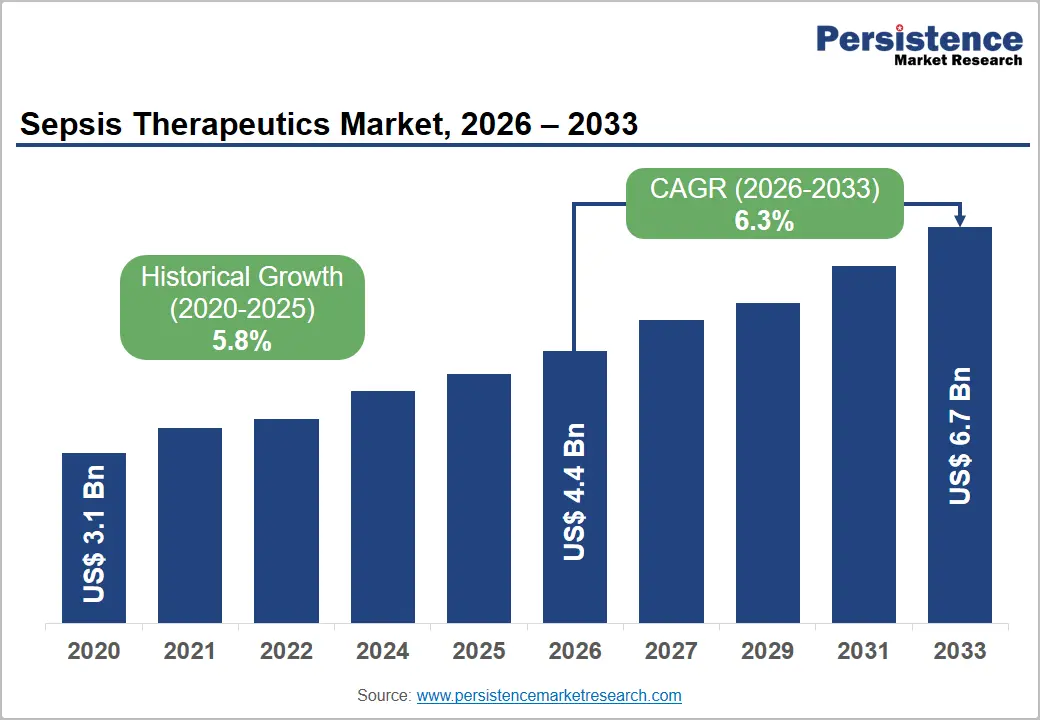
The global sepsis therapeutics market size is likely to be valued at US$4.4 billion in 2026 and is estimated to reach US$6.7 billion by 2033, growing at a CAGR of 6.3% during the forecast period 2026−2033, driven by rising sepsis incidence, expanding critical care infrastructure, and continued advancement in anti-infective therapies.
Growing elderly populations and increasing prevalence of chronic diseases are contributing to higher hospitalization rates, creating sustained demand for rapid therapeutic intervention. Regulatory agencies are supporting accelerated development pathways for innovative infectious disease treatments, improving access to new therapeutic options
Key Industry Highlights:
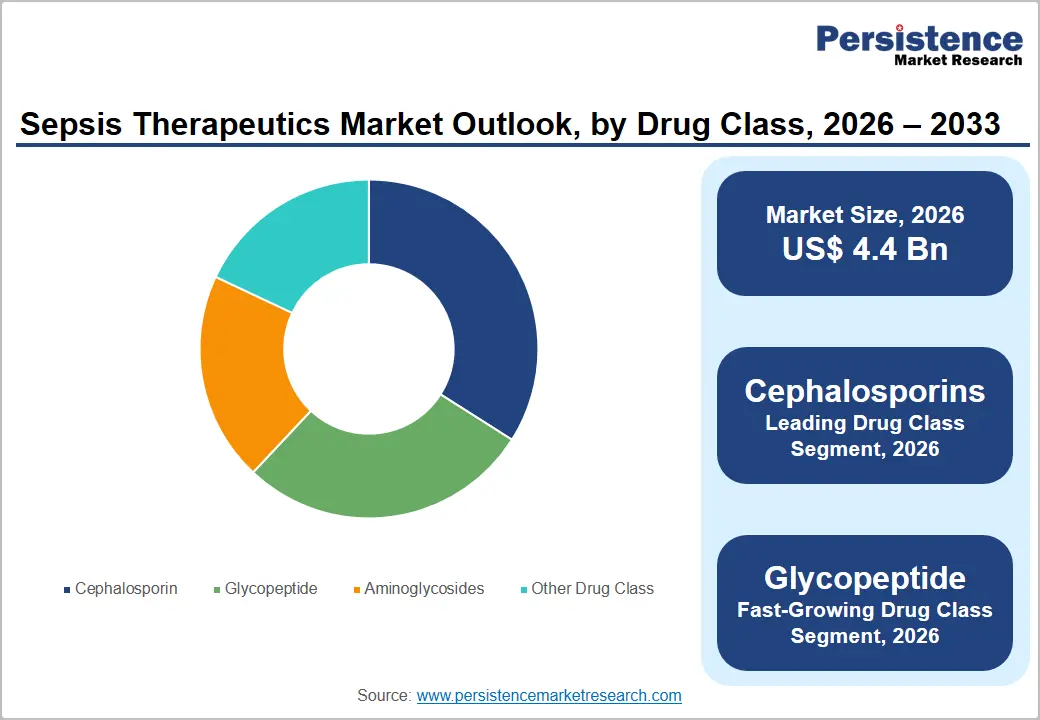
- Leading Drug Class: Cephalosporins are set to hold around 34% revenue share in 2026, driven by entrenched formulary adoption across global tertiary care antibiotic stewardship protocols.
- Fastest-growing Drug Class: Glycopeptides are projected as the fastest-growing segment, supported by escalating MRSA bloodstream infection rates and next-generation lipoglycopeptide pipeline activity in high-acuity inpatient settings.
- Leading Route of Administration: Parenteral formulations are estimated to hold roughly 78% revenue share in 2026, due to the physiological requirement for intravenous drug delivery in hemodynamically unstable sepsis patients across global ICU systems.
- Fastest-growing Route of Administration: Oral formulations are forecast to record the fastest growth, driven by sequential therapy protocol adoption that transitions stable patients to oral antibiotics, reducing hospitalization duration and payer costs.
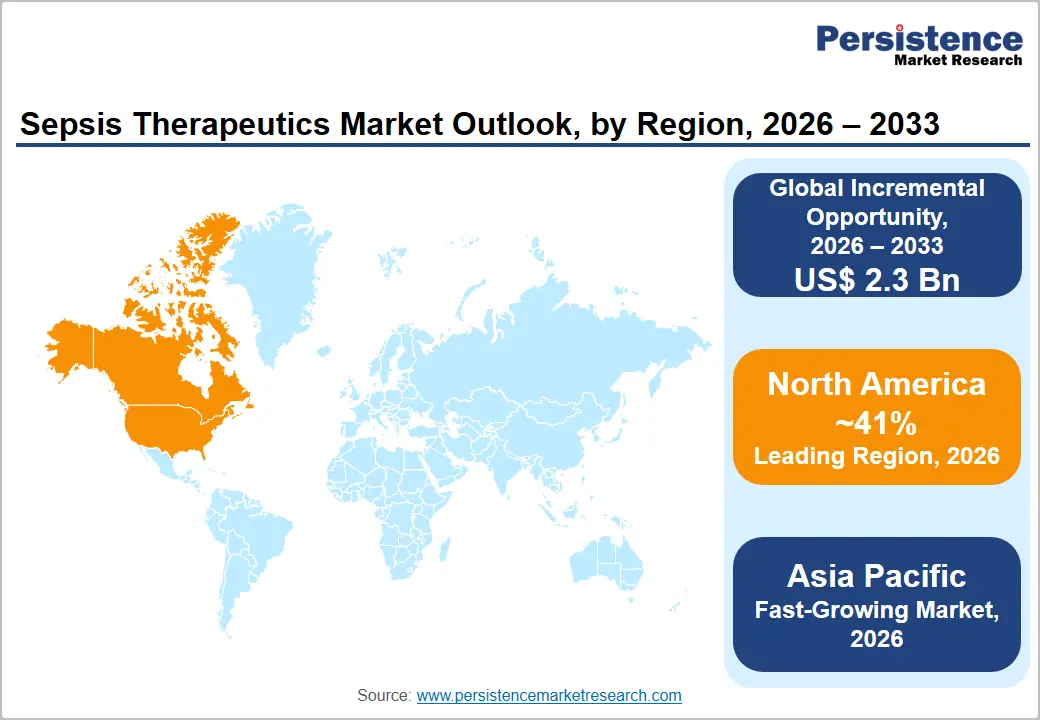
- Regional Leadership: North America is projected to capture roughly 41% of the market share in 2026, while Asia Pacific is forecast to record the fastest growth due to the rapid expansion of private hospital networks.
- Competitive Environment: The market reflects a moderately consolidated structure, with key players such as Pfizer Inc. and Shionogi & Co., Ltd. leveraging novel antimicrobial pipelines, formulary relationships, and regulatory incentive programs to maintain competitive positioning against generic-tier rivals.
DRO Analysis
Driver - Rising Burden of Sepsis and Hospital-Acquired Infections
Sepsis remains a major cause of mortality and intensive care utilization, creating sustained demand for effective therapeutic interventions. Growing numbers of immunocompromised patients, elderly populations, and individuals with chronic diseases are increasing susceptibility to severe infections that can progress to sepsis. Healthcare systems are prioritizing early recognition and treatment protocols, resulting in higher utilization of broad-spectrum antibiotics and supportive therapies across hospital settings.
According to the Centers for Disease Control and Prevention (CDC), at least 1.7 million adults in the United States develop sepsis each year, with nearly 350,000 deaths occurring during hospitalization or following discharge, as reported in 2025 public health updates. This disease burden is prompting healthcare providers to strengthen sepsis management pathways, increasing procurement of antimicrobial therapies and expanding clinical adoption of advanced treatment regimens.
Restraint - Antimicrobial Resistance and Therapeutic Effectiveness Challenges
Escalating antimicrobial resistance is reducing the effectiveness of several established antibiotic classes used in sepsis treatment. Resistance-related treatment failures often require the use of more expensive alternatives, increasing healthcare expenditure and creating pressure on hospital budgets. Therapeutic uncertainty may delay optimization of treatment regimens, affecting clinical outcomes and resource allocation.
Development of new antimicrobial agents requires substantial investment and lengthy clinical validation. Limited commercial returns for anti-infective products can discourage investment, constraining product availability. Rising research costs combined with stewardship restrictions may reduce scalability potential and affect profitability across segments dependent on high-volume antimicrobial utilization.
Opportunity - Integration of Precision Diagnostics with Therapeutic Decision-Making
Growing adoption of molecular diagnostics and biomarker-based testing creates opportunities to improve treatment accuracy and therapeutic selection. Faster identification of pathogens enables targeted antimicrobial administration, reducing unnecessary drug exposure and improving patient outcomes. Integration of diagnostics with treatment protocols can strengthen clinical confidence and support wider adoption of advanced therapeutic products.
Healthcare organizations are investing in digital health platforms that combine laboratory data with clinical decision-support tools. This approach enables personalized treatment pathways and improves resource utilization. Regulatory support for innovative diagnostic technologies is creating opportunities for collaboration between therapeutic manufacturers and diagnostic developers, facilitating broader commercialization of integrated sepsis management solutions.
Category-wise Analysis
Drug Class Insights
Cephalosporins are anticipated to secure around 34% of the sepsis therapeutics market share in 2026, reflecting widespread clinical adoption rooted in a favorable efficacy-to-safety profile across diverse causative pathogens. Third- and fourth-generation cephalosporins such as cefepime are embedded in hospital antibiotic stewardship protocols. Broad formulary penetration across tertiary care settings underpins consistent prescription volumes and sustains segment revenue leadership throughout the forecast period.
Glycopeptides are expected to be the fastest-growing segment, propelled by the rising incidence of methicillin-resistant Staphylococcus aureus bloodstream infections across intensive care units. Vancomycin remains the clinical benchmark, yet next-generation lipoglycopeptides such as dalbavancin are gaining traction in step-down treatment protocols. Pipeline innovation and expanded resistance-focused indications are accelerating prescribing rates in high-acuity inpatient settings.
Route of Administration Insights
Parenterals are poised to dominate with a forecast market share of over 78% in 2026, powered by the physiological requirement for intravenous drug delivery in hemodynamically unstable sepsis patients. Direct bloodstream administration ensures rapid therapeutic concentrations. Products such as intravenous meropenem illustrate the inpatient-dependency of this segment.
Oral formulations are estimated to be the fastest-growing segment, fueled by the adoption of sequential therapy protocols that transition stable sepsis patients from IV to oral antibiotics, reducing hospitalization duration and associated costs. Linezolid oral use for post-sepsis step-down treatment exemplifies this shift. Payer-driven discharge optimization policies further accelerate uptake across cost-conscious health systems.
Distribution Channel Insights
Hospital pharmacies are likely to be the leading segment with a projected 68% of the sepsis therapeutics market share in 2026 due to the acute, life-threatening nature of systemic infections requiring immediate inpatient care. Institutional pharmacies maintain controlled, high-volume inventories of broad-spectrum anti-infectives to supply critical care units continuously. This centralized procurement structure concentrates primary purchasing power within institutional buying groups.
Retail pharmacies are anticipated to be the fastest-growing segment, fueled by expanding numbers of post-discharge clinical care programs and long-term outpatient rehabilitation initiatives. Patients recovering from severe infections require continued prophylactic oral antimicrobial regimens obtained through standard community dispensaries. This transition elevates the commercial significance of retail pharmacy networks over the forecast timeline.
Regional Insights
North America Sepsis Therapeutics Market Trends
North America is expected to lead with an estimated 41% of the global revenue share in 2026, supported by the comprehensive implementation of institutional surveillance frameworks and established clinical treatment bundles. High critical care expenditure and structured federal mandates compel continuous procurement of specialized anti-infectives across regional healthcare networks.
U.S. Sepsis Therapeutics Market Insights
The U.S. is likely to capture approximately 83% of the regional revenue share in 2026, driven by federal legislative adaptations that accelerate automated diagnostic-therapeutic workflows. Institutional adherence to national clinical core elements stabilizes high-volume procurement of premium combination antimicrobials within major domestic hospital networks.
Canada Sepsis Therapeutics Market Insights
Canada is forecast to account for roughly 17% of the regional market share in 2026, supported by the expansion of provincial critical care capabilities and integrated public health data systems. Public procurement optimization ensures stable, long-term acquisition contracts for essential broad-spectrum parenteral treatments in remote territories.
Europe Sepsis Therapeutics Market Trends
Europe is expected to maintain a significant market presence with an estimated 28% of the global revenue share in 2026, driven by strict regulatory harmonization under the European Medicines Agency and widespread adoption of standardized clinical guidelines. Release of updated regional intensive care protocols shapes local institutional formulary choices across the continent.
Germany Sepsis Therapeutics Market Insights
Germany is expected to secure nearly 24% of the Europe market share in 2026, supported by an advanced clinical trial infrastructure that facilitates the rapid adoption of next-generation immunomodulatory biologics. National reimbursement adjustments for high-cost orphan anti-infectives encourage early market penetration by development enterprises.
U.K. Sepsis Therapeutics Market Insights
The U.K. is likely to command around 19% of the Europe market share in 2026, driven by national procurement adjustments within public health networks that prioritize cost-effective generic anti-infective formulations alongside targeted antimicrobial stewardship initiatives. Integrated rapid molecular diagnostics reduce time-to-treatment intervals for targeted therapies.
Asia Pacific Sepsis Therapeutics Market Trends
Asia Pacific is forecast to be the fastest-growing market for sepsis therapeutics, stimulated by the rapid expansion of private hospital networks and rising public health insurance coverage across developing territories. Rising investments in clinical infrastructure enhance emergency response capabilities, multiplying the addressable patient base.
China Sepsis Therapeutics Market Insights
China is projected to hold a dominant 36% of the regional market share in 2026, driven by updates to national essential drug lists that expand access to advanced cephalosporin and glycopeptide generations. Escalating investments in secondary regional medical centers stimulate continuous volume growth in institutional drug distribution channels.
Japan Sepsis Therapeutics Market Insights
Japan is expected to generate approximately 22% of the regional market share in 2026, supported by demographic shifts toward an ultra-aged society that escalates the baseline incidence of urosepsis and respiratory-induced systemic infections. Government support for innovative antimicrobial research drives domestic commercialization of specialized host-directed therapies.
Competitive Landscape
The global sepsis therapeutics market is moderately consolidated, with a limited number of multinational pharmaceutical corporations holding dominant formulary positions through established antimicrobial franchises. Large integrated firms, including Pfizer Inc., Merck & Co., Inc., Melinta Therapeutics, Shionogi & Co., Ltd., and Basilea Pharmaceutica Ltd., command the majority of novel-agent market share through differentiated product pipelines and long-standing hospital procurement relationships.
Simultaneously, a competitive tier of generic manufacturers, anchored by Cipla Ltd. and Sun Pharmaceutical Industries Ltd. in emerging markets, exerts pricing pressure on off-patent antibiotic classes. This dual-tier structure creates a bifurcated competitive dynamic where innovation-driven players compete on clinical differentiation while volume-based players compete on cost and supply reliability across public health procurement channels.
Key Industry Developments
- In March 2026, the Global Sepsis Alliance and the Society of Critical Care Medicine launched a landmark global sepsis collaboration, supported by the Laerdal Foundation and the World Health Organization, to strengthen sepsis research, implementation, and health system response worldwide.
- In March 2026, AUROBAC Therapeutics announced the successful completion of the Phase 1 clinical trial of ATX101, a potential first-in-class sepsis treatment, demonstrating favorable safety, tolerability, and pharmacokinetic results and paving the way for Phase 2 development in septic shock patients.
Companies Covered in Sepsis Therapeutics Market
- Pfizer Inc.
- Merck & Co., Inc.
- Shionogi & Co., Ltd.
- Melinta Therapeutics
- Basilea Pharmaceutica Ltd.
- Cipla Ltd.
- Sun Pharmaceutical Industries Ltd.
- Aurobindo Pharma Ltd.
- Fresenius SE & Co. KGaA
- CSPC Pharmaceutical Group Ltd.
- Paratek Pharmaceuticals
- Abbott Laboratories
- Wockhardt Ltd.
- Meiji Seika Pharma Co., Ltd.
- Allergan (AbbVie Inc.)
Frequently Asked Questions
The global sepsis therapeutics market is projected to reach US$4.4 billion in 2026.
Rising incidence of severe infections and sepsis cases, coupled with expanding critical care infrastructure and growing adoption of advanced antimicrobial therapies, drives the sepsis therapeutics market.
The sepsis therapeutics market is poised to witness a CAGR of 6.3% from 2026 to 2033.
Development of precision diagnostics-integrated therapies and novel immunomodulatory treatments presents significant growth opportunities in the sepsis therapeutics market.
Some of the key market players include Pfizer Inc., Merck & Co., Inc., Melinta Therapeutics, Shionogi & Co., Ltd., and Basilea Pharmaceutica Ltd.


