




- Off-Road Equipment & Machinery
- Seedling Planters Market
Seedling Planters Market Size, Share, and Growth Forecast, 2026 - 2033
Seedling Planters Market by Product Type (Plastic Seedling Planters, Biodegradable Seedling Planters, Others), Material Type (Plastic, Wood, Metal, Fabric, Clay), and Regional Analysis for 2026 - 2033

Seedling Planters Market Size and Trends Analysis
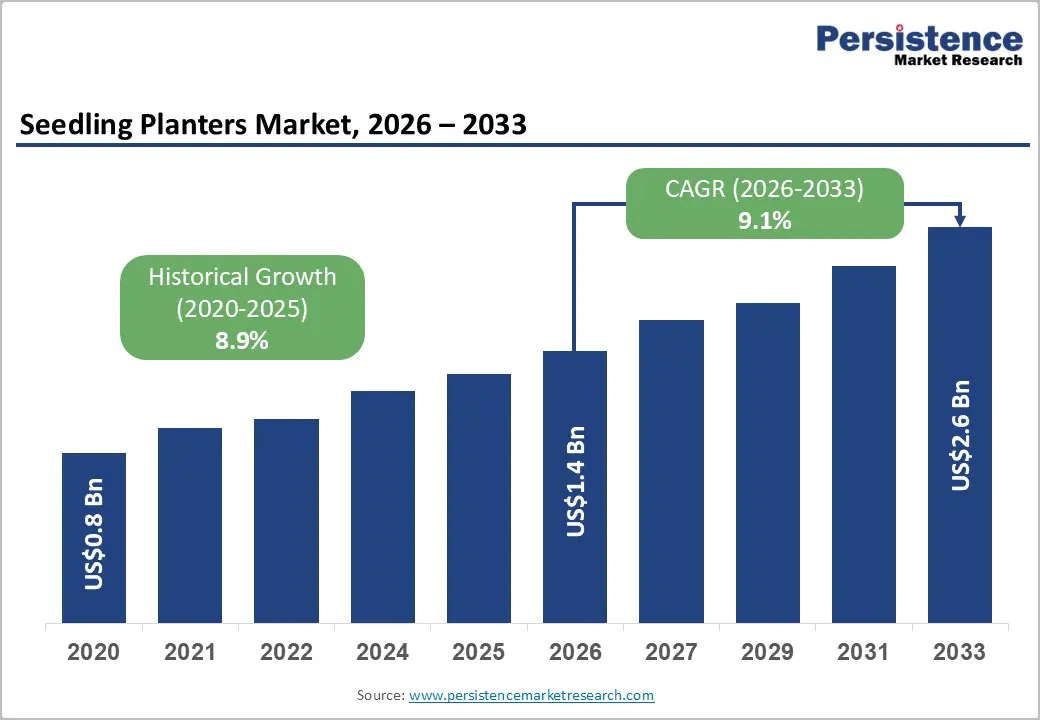
The global seedling planters market size is likely to be valued at US$1.4 billion in 2026 and is expected to reach US$2.6 billion by 2033, growing at a CAGR of 9.1% during the forecast period from 2026 to 2033, driven by increasing demand for efficient and uniform seedling establishment across commercial agriculture, nurseries, and home gardening.
Labor shortages and the push for greater planting efficiency are driving the adoption of mechanized and semi-automated seedling planters. Advances in planter design, lightweight construction, and compatibility with various crops, along with a focus on sustainable horticulture, precision farming, and minimizing transplant shock, are further boosting market growth.
Key Industry Highlights:
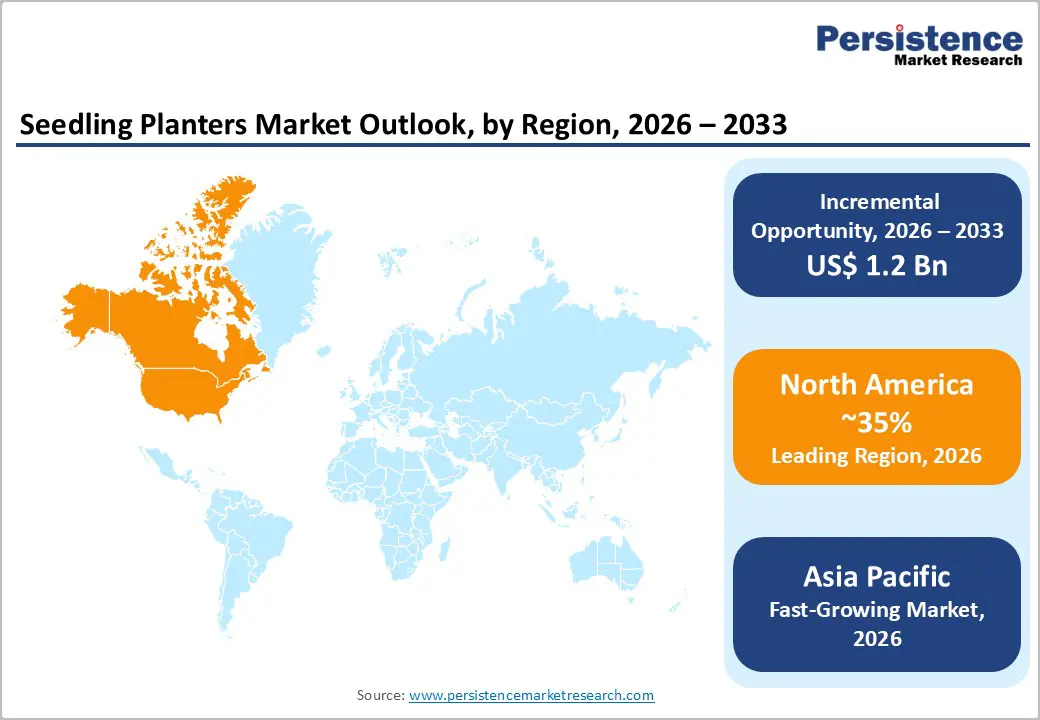
- Leading Region: North America is anticipated to be the leading region, accounting for a market share of 35% in 2026, driven by advanced horticulture infrastructure, strong demand for organic produce, and supportive sustainability regulations.
- Fastest-growing Region: Asia Pacific is likely to be the fastest-growing region, driven by large population demand, cost-effective manufacturing in China, India, Japan, and ASEAN countries, and expanding nursery and greenhouse activities.
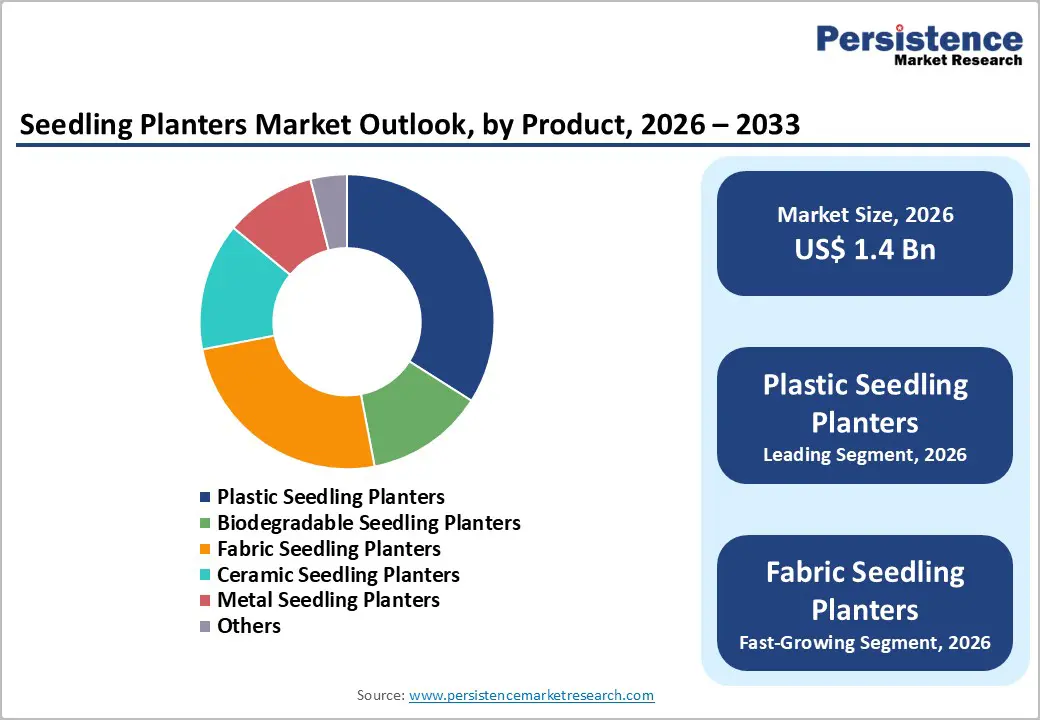
- Leading Product Type: Plastic seedling planters are projected to represent the leading product type in 2026, accounting for 60% of the revenue share, driven by their durability, reusability, and cost-effectiveness in large-scale nursery and commercial farming applications.
- Leading Material: Plastic material is anticipated to be the leading application type, accounting for over 50% of the revenue share in 2026, driven by its low cost, durability, lightweight nature, reusability, and widespread adoption across commercial nurseries and greenhouse operations.
| Key Insights | Details |
|---|---|
| Seedling Planters Market Size (2026E) | US$1.4 Bn |
| Market Value Forecast (2033F) | US$2.6 Bn |
| Projected Growth (CAGR 2026 to 2033) | 9.1% |
| Historical Market Growth (CAGR 2020 to 2025) | 8.9% |
Market Factors - Growth, Barriers, and Opportunity Analysis
Growth in Urban Gardening and Home Horticulture
The growth of urban gardening and home horticulture is a major driver for the seedling planters market, fueled by increasing urbanization, shrinking living spaces, and a rising preference for self-grown, fresh, and chemical-free produce. Urban residents are increasingly adopting balcony gardens, rooftop farms, indoor planters, and vertical gardening systems to optimize limited space. Seedling planters enable efficient germination and early plant growth, ensuring uniformity, reduced plant stress, and higher survival rates when transplanted. Their ease of use, affordability, and compatibility with small-scale gardening setups make them essential tools for urban and residential growers.
Growing awareness of sustainability and food security has increased participation in home gardening, particularly after global supply chain disruptions and rising food costs. Consumers are increasingly choosing reusable and biodegradable seedling planters that align with eco-conscious lifestyles. Government and municipal initiatives promoting urban greening, smart cities, and community gardening projects further support market growth. E-commerce platforms and social media-driven gardening trends have also improved product accessibility and consumer education, accelerating demand.
Environmental Concerns with Traditional Plastic Products
Plastic planters are popular for their durability, lightweight nature, and affordability, but they pose significant long-term environmental risks. Improper disposal can contaminate soil, accumulate non-biodegradable waste in landfills, and release microplastics that harm ecosystems. Their production relies on non-renewable fossil fuels, consuming energy and generating greenhouse gases, further intensifying environmental concerns.
Growing awareness of sustainability among consumers, urban gardeners, and commercial nurseries has increased scrutiny of conventional plastic products. The environmental impact of plastic seedling planters spans their entire lifecycle, from raw material extraction and manufacturing to transportation and disposal, contributing to carbon emissions and resource depletion. In large-scale horticulture, frequent replacement of plastic planters increases waste, creating logistical and financial challenges for recycling or proper disposal. Residual plastics in soil can also impair water retention, nutrient availability, and overall soil health, potentially reducing plant growth and efficiency over time.
Technological Convergence with Smart Gardening
Smart gardening technologies, such as IoT-enabled sensors, automated irrigation systems, and AI-driven growth monitoring tools, are increasingly being integrated with seedling planters to enhance early-stage plant development. These innovations allow precise management of water, nutrients, and light, boosting seedling survival, uniform growth, and overall yield. For commercial nurseries, urban farms, and home gardeners, such technology-driven planters reduce labor, minimize resource waste, and improve efficiency and sustainability.
The growing use of connected devices and mobile apps enables real-time monitoring and data-driven decision-making, helping users manage multiple planting cycles and adjust to changing environmental conditions. Manufacturers are focusing on smart, sensor-compatible, and modular planter designs suitable for both indoor and outdoor horticulture. This integration of technology not only differentiates products in a competitive market but also fuels consumer interest in premium, automated gardening solutions, driving demand for advanced seedling planters in commercial and urban gardening applications.
Category-wise Analysis
Product Type Insights
Plastic seedling planters are expected to lead the seedling planters market, accounting for approximately 60% of the total revenue in 2026, due to their durability, lightweight design, and cost-effectiveness in commercial nurseries and large-scale horticulture operations. These planters are easy to handle, reusable across multiple planting cycles, and suitable for a wide variety of crops, making them a preferred choice among professional growers. For example, Kisankraft Limited offers plastic seedling trays and planters widely used in Indian nurseries for vegetable and flower cultivation, showcasing the segment’s strong presence. Their resistance to breakage, ability to retain moisture, and compatibility with automated transplanting systems further consolidate their leadership in the market.
Biodegradable seedling planters are likely to represent the fastest-growing segment in 2026, driven by strong sustainability trends, rising environmental awareness, and increasing regulatory support for eco-friendly horticultural products. These planters, made from natural and compostable materials such as coconut coir or paper pulp, break down in soil after use, significantly reducing plastic waste and supporting sustainable gardening practices. For example, LittleForest 3″ Biodegradable Coir Pots and Sustainable Coco Pots Natural Coconut Fiber Biodegradable Plant Pots are widely used by eco-conscious gardeners and small nurseries for seed starting, offering both environmental benefits and enhanced root development due to superior aeration and moisture retention.
Material Insights
Plastic seedling planters are projected to lead the market, capturing around 50% of the total revenue share in 2026, driven by their affordability, lightweight nature, and reusability across multiple planting cycles. Plastic planters are widely used in nurseries, greenhouses, and commercial farms for growing vegetables, flowers, and seedlings of various crops. For example, ROSTA Europe manufactures high-quality plastic seedling trays that are extensively utilized in European commercial horticulture for their durability and compatibility with mechanized transplanting systems. Plastic’s ability to retain moisture, resist microbial attack, and withstand harsh environmental conditions makes it highly suitable for both indoor and outdoor planting operations.
Fabric is likely to be the fastest-growing application, due to its functional advantages and rising preference among urban gardeners for sustainable, high-performance planting solutions. Fabric planters, made from breathable materials, enhance aeration and promote healthier root development, which is particularly valuable in space-constrained environments and rooftop or balcony gardening. For example, products such as Potterati Fabric Grow Bag and Wandergrow 14x14 Fabric Grow Bags are gaining popularity among home growers for their portability, breathability, and ease of use, encouraging stronger seedling growth compared with traditional rigid containers. These fabric planters also offer better drainage and reduced risk of root circling, making them ideal for a variety of seedlings from vegetables to herbs.
Regional Insights
North America Seedling Planters Market Trends
North America is anticipated to be the leading region, accounting for a market share of 35% in 2026, driven by strong demand from both commercial horticulture and residential gardening segments. The region’s advanced agricultural infrastructure, extensive greenhouse networks, and high disposable income levels have made it a hub for innovative planting solutions, particularly in the U.S. and Canada. Urban gardening and home horticulture trends are driving consumers to invest in efficient seedling propagation tools that support small-space gardening, patios, and balcony farms. Sustainability concerns are steering buyers toward eco-friendly and recyclable planters, while digital retail channels and nursery centers ensure wide product availability across urban and suburban markets.
Large-scale nurseries and greenhouse operators in North America are adopting advanced seedling planters to improve operational efficiency and reduce labor costs. Growing emphasis on precision horticulture and sustainable practices has encouraged manufacturers to introduce planters that are compatible with automated transplanting systems and biodegradable materials. For example, Semi Pro Grower (108 Planter) represents a premium planter solution used by professional growers and nurseries for high-density seedling propagation, offering durability and modular design suited for varying crop types. Such professional-grade planters exemplify how market players are catering to diverse requirements from commercial nurseries to serious hobbyists, fostering product innovation and customization.
Europe Seedling Planters Market Trends
Europe is expected to be a key market for seedling planters in 2026, driven by a strong focus on sustainability, environmental regulations, and growing consumer awareness of eco-friendly gardening solutions, which are shaping both demand and product innovation. Consumers increasingly prefer biodegradable, recyclable, or sustainably produced seedling planters to comply with stringent environmental standards and minimize plastic waste. This trend is further supported by government initiatives and urban greening projects that promote sustainable horticultural practices and environmentally conscious landscaping solutions. Manufacturers are responding by expanding their product lines to include planters made from sustainable materials and incorporating designs that enhance energy and resource efficiency.
The commercial and professional horticulture sectors in Europe are also shaping market trends, as growers adopt advanced seedling planters to boost operational efficiency and ensure consistent plant propagation. Although the overall planting machinery market in Europe has experienced modest growth compared to other regions, partly due to labor shortages and the need for mechanization, there is a noticeable shift toward precision and technology-driven solutions that optimize seedling growth and resource use. For instance, horticultural equipment manufacturers are increasingly offering seedling trays and planters compatible with greenhouse automation systems, widely used in controlled-environment agriculture across Dutch and Belgian nurseries, which are recognized for year-round ornamental plant and vegetable production.
Asia Pacific Seedling Planters Market Trends
The Asia Pacific region is expected to be the fastest-growing market for seedling planters in 2026, driven by large agricultural populations, increasing demand for productivity enhancements, and the expansion of urban gardening practices. The region accounts for a substantial share of demand for planting equipment and seedling propagation tools, with countries such as China, India, Japan, and Southeast Asian nations leading both consumption and production. Commercial nurseries across the region are increasingly adopting durable and modular seedling planters to support high-density propagation of ornamental plants and vegetables, reflecting broader investments in horticultural infrastructure.
Growth in the Asia Pacific seedling planters market is also being fueled by a rising focus on sustainability and material innovation, aligning with regional agricultural and environmental priorities. This trend is particularly pronounced in major horticulture markets such as India and China, where sustainable planters made from natural fibers and compostable materials are gaining popularity in both urban gardening and commercial nursery operations. For instance, local manufacturers in India are increasingly producing coir-based and compostable seedling trays designed for vegetable and ornamental propagation, promoting eco-friendly practices at lower costs. These sustainable alternatives cater to consumer preferences for environmentally responsible products and support initiatives aimed at reducing plastic waste in agriculture.
Competitive Landscape
The global seedling planters market exhibits a moderately fragmented structure, driven by a mixture of established multinational manufacturers and numerous regional and niche players that cater to diverse customer needs across commercial nurseries, gardening centers, and home growers. Larger firms benefit from extensive distribution networks, economies of scale, and established brand recognition, particularly in plastic and high-volume segments, while smaller and regional manufacturers compete through specialization in sustainable materials, customized sizes, and localized service offerings.
With key leaders including Blackmore Company, Inc., Stuewe & Sons, Inc., Beekenkamp Verpakkingen B.V., Desch Plantpak, and Qingdao Kingjet Plastic Machinery Co., Ltd., the competitive landscape reflects both geographic diversity and strategic focus on product differentiation. These players compete through continuous investment in research and development, expansion of product portfolios, and strategic partnerships that enhance market penetration in high-growth regions such as Asia Pacific and North America. Many are also prioritizing sustainable offerings, such as biodegradable and recyclable planters, to align with stringent environmental regulations and consumer demand for eco-friendly solutions.
Key Industry Developments:
- In December 2025, LetPot introduced its SS-Pro Smart Seed Starter Kit on Kickstarter, marking the 12th product in its lineup. Building on the success of its MP1 smart planter, the SS-Pro is designed to tackle common seedling challenges and help gardeners cultivate healthy seedlings suitable for outdoor gardens, balconies, indoor growing setups, or grow tents. The kit offers improved control over germination conditions, promoting better growth and higher survival rates, especially during winter months.
- In July 2024, FARMAI India, a Tamil Nadu-based start-up, launched an innovative soil-less media under the brand name “vgro” to boost seedling yields. The media is tailored for raising paddy, sugarcane, vegetables, and ornamental plants, supporting crop establishment during the crucial first 20 days. It aims to enhance yield, improve disease resistance, and strengthen overall crop performance.
Companies Covered in Seedling Planters Market
- ROSTA Europe. ST
- Garden Tool Company
- Kisankraft Limited
- Inlon Pty Ltd.
- Dubois Agrinovation
- Checchi e Magli Srl
- SIHNO MACHINERY LIMITED
- SRES
- Om Enterprises
- Lee Shuknecht & Sons
Frequently Asked Questions
The global seedling planters market is projected to reach US$1.4 billion in 2026.
Rising demand for efficient plant propagation, growth in urban gardening and commercial nurseries, increasing adoption of sustainable horticultural practices, and the need to reduce labor and improve crop establishment efficiency.
The seedling planters market is expected to grow at a CAGR of 9.1% from 2026 to 2033.
The growing adoption of biodegradable and eco-friendly planters, integration of smart and automated gardening technologies, expansion of urban and indoor gardening, and rising demand from commercial nurseries and greenhouse farming.
ROSTA Europe, ST Garden Tool Company, Kisankraft Limited, Inlon Pty Ltd., and Dubois Agrinovation are some of the leading players.


