




- Home Appliances
- Portable Solar Power Cooler Market
Portable Solar Power Cooler Market Size, Share, and Growth Forecast 2026 - 2033
Portable Solar Power Cooler Market by Product Type (Thermoelectric coolers, Compressor-based coolers, Absorption coolers, Hybrid models), by Distribution Channel (Online stores (e-commerce), Offline stores (supermarkets/hypermarkets, speciality/outdoor stores)), by Battery Capacity, by End-Use, and by Regional Analysis, 2026 - 2033

Portable Solar Power Cooler Market Size and Trend Analysis
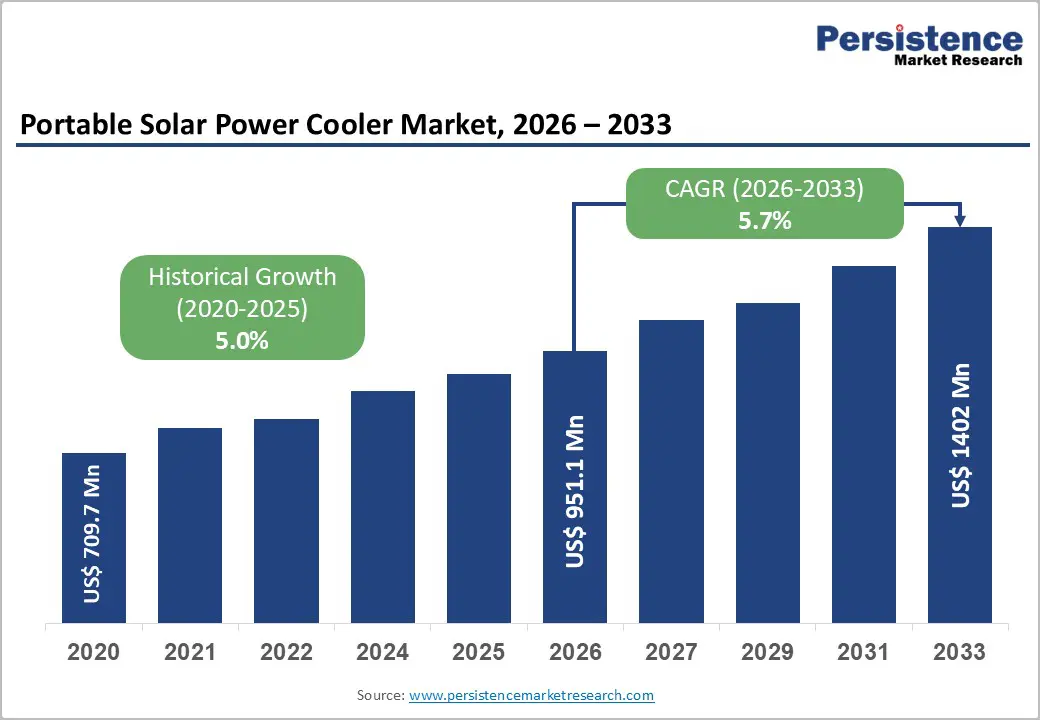
The global portable solar power cooler market size is likely to be valued at US$ 951.1 Million in 2026 and is projected to reach US$ 1,402.0 Million by 2033, growing at a CAGR of 5.7% between 2026 and 2033.
This growth is primarily driven by the increasing adoption of renewable energy solutions and the rising demand for off-grid cooling in outdoor and remote applications, supported by advances in solar technology efficiency.
Key Market Highlights:
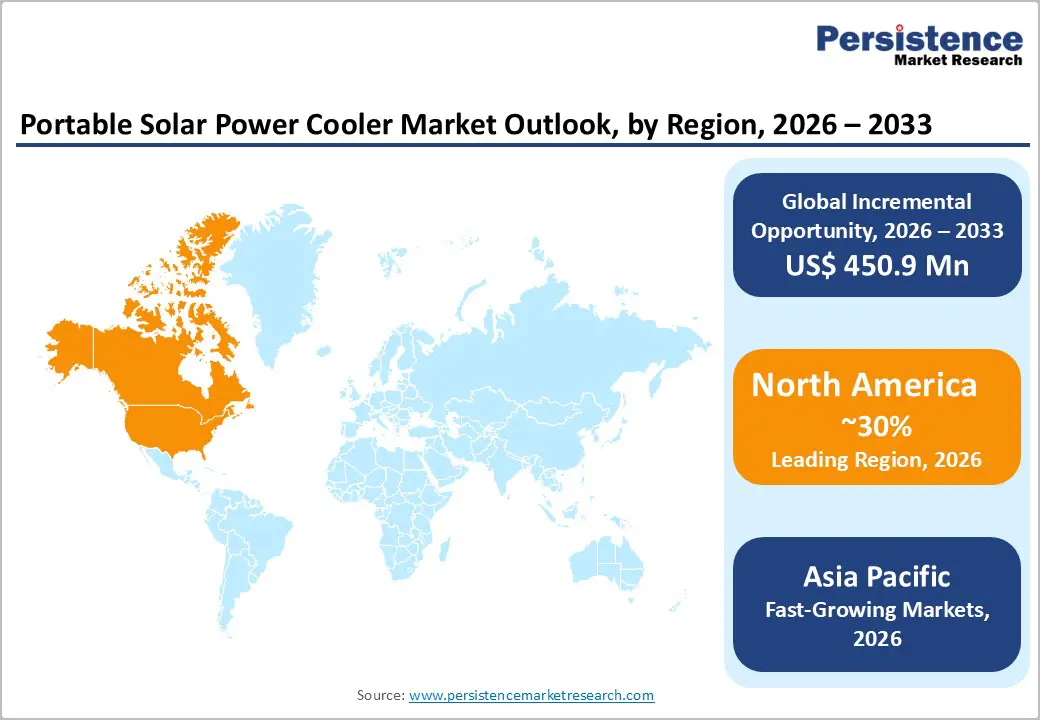
- Leading Region: North America dominates as the leading region with 30% share, driven by a strong outdoor recreation culture and innovation hubs in the U.S.
- Fastest-Growing Region: Asia Pacific emerges as the fastest-growing region at 8% YoY, propelled by manufacturing strengths in China and policy support in India.
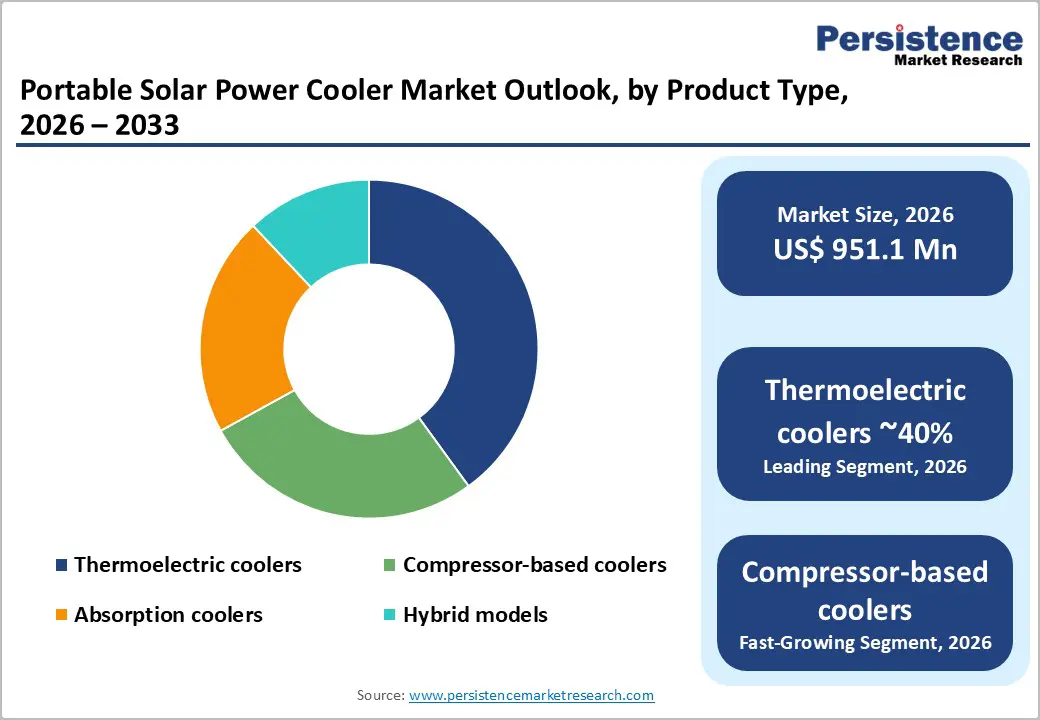
- Leading Segment: Thermoelectric coolers account for 40% of the market, favored for their reliability in low-power solar setups.
- Fastest-Growing Segment: Hybrid models are the fastest-growing product segment, with a 10% CAGR driven by enhanced efficiency across diverse applications.
- The key opportunity lies in off-grid emergency use, supported by government renewables incentives, which is generating substantial demand.
| Key Insights | Details |
|---|---|
| Portable Solar Power Cooler Market Size (2026E) | US$ 951.1 Million |
| Market Value Forecast (2033F) | US$ 1,402.0 Million |
| Projected Growth CAGR (2026 - 2033) | 5.7% |
| Historical Market Growth (2020 - 2025) | 5.0% |
Market Dynamics
Driver - Growing Outdoor Lifestyle Trends are Driving Strong Global Demand for Portable Solar-Powered Coolers
The increasing interest in outdoor activities such as camping, hiking, fishing, and tailgating is driving strong demand for portable solar-powered coolers. These coolers allow users to keep food and beverages fresh without depending on electricity, which is ideal for remote locations. Globally, more than 5 million units are produced annually to meet this growing lifestyle trend.
In the U.S., approximately 18% of households engaged in camping in 2024, highlighting a shift toward adventure-based living. Consumers now prefer lightweight, durable coolers that use renewable energy. This shift is also encouraging manufacturers to develop solar-powered and energy-efficient designs, offering convenience while supporting sustainable recreation and reducing the use of disposable ice packs in the process.
Increasing Renewable Energy Investments and Solar Technology Improvements are Fueling Solar Cooler Innovation and Adoption
The rapid global transition toward renewable energy is fueling the integration of solar power into portable devices, including coolers. According to the World Bank, annual renewable energy investments are expected to exceed USD 300 billion by 2025, promoting solar-driven product innovation. Technological progress has increased solar panel efficiency to approximately 25%, while modern batteries now provide extended runtime for outdoor or emergency use.
These developments make solar coolers more practical, durable, and accessible to both recreational and off-grid users. The rising focus on sustainability and supportive government policies for clean energy adoption are encouraging manufacturers to expand their product portfolios, particularly in markets across Asia, North America, and Europe, where solar integration is rapidly gaining acceptance.
Restraint - Elevated Production and Component Costs Restrict Affordability and Large-Scale Adoption of Solar-Powered Coolers
Despite their growing popularity, the high upfront cost of solar-powered coolers continues to limit adoption, especially among price-sensitive consumers. The inclusion of solar panels and lithium-ion batteries makes these models approximately 20-30% more expensive than conventional coolers. This price difference creates challenges in emerging economies where disposable incomes are lower.
Manufacturing complexities and supply chain costs contribute to higher retail prices. Although solar coolers offer long-term savings by reducing energy use, many buyers hesitate due to the initial expense. As a result, affordability remains a key barrier to widespread market penetration, underscoring the need for cost optimization and government incentives to promote the adoption of solar products globally.
Weather-Dependent Performance Limits Product Reliability and User Confidence in Variable Climates
One of the main limitations of portable solar coolers is their heavy reliance on sunlight. In cloudy or shaded environments, their efficiency can drop by up to 50%, affecting consistent performance. This issue is particularly noticeable in regions with unpredictable weather patterns or long winters. Users in such areas often experience reduced reliability, which in turn lowers consumer confidence in solar cooling products.
Moreover, storage and transport challenges, such as reduced battery life at extreme temperatures, exacerbate operational difficulties. Manufacturers are addressing these challenges through hybrid designs and improved battery insulation, but dependence on weather conditions remains a key constraint on achieving full market potential.
Opportunity - Supportive Policies and Solar Subsidies Worldwide are Creating New Opportunities for Off-Grid Cooling Solutions
Growing government support for renewable energy adoption is creating strong opportunities for the portable solar power cooler market. Programs such as India’s PM-KUSUM scheme and EU solar subsidies encourage solar-based innovations for off-grid and agricultural applications. Global investments exceeding USD 100 billion by 2025 are driving growth in rural electrification, eco-tourism, and sustainable infrastructure. These policies not only make solar technology more affordable but also open new business avenues in emergency response, agriculture, and the residential sector. The trend mirrors the expansion of the Portable Solar Panels Market, which benefits from similar government support. As manufacturers scale up production, emerging markets are projected to grow at a steady 8% annual rate, offering attractive opportunities for new entrants and established brands alike.
Emerging Hybrid Technologies Combining Thermoelectric and Compressor Systems Enhance Efficiency and Growth Potential
The market is witnessing rapid advancements in hybrid cooling systems that combine thermoelectric and compressor technologies. These systems offer enhanced performance and extended cooling capacity, especially for demanding applications such as marine, RVs, and off-grid living. Research indicates that incorporating phase-change materials can improve cooling efficiency by up to 30%, while modern battery innovations extend autonomy for continuous use.
This crossover with the Portable Power Station Market further strengthens demand for hybrid coolers, as consumers seek multipurpose and energy-efficient products. Companies investing in these technologies can tap into fast-growing segments like emergency preparedness and outdoor recreation, driven by the global shift toward sustainable living.
Category-wise Analysis
By Product Type Insights
Thermoelectric coolers hold the leading position in the By Product Type segment, accounting for around 40% of the total market share. Their popularity stems from a compact, lightweight design and low power consumption, making them ideal for solar-powered and portable applications. These solid-state cooling systems have no moving parts, enhancing durability and reducing maintenance requirements. With an efficiency of about 25-30% in consumer electronics, thermoelectric coolers offer an eco-friendly alternative that eliminates the use of harmful refrigerants, aligning with sustainability and energy-efficiency trends in the portable cooling market.
By Distribution Channel Insights
Online stores and e-commerce platforms dominate, capturing nearly 35% of the total market. This growth is driven by the convenience of home delivery, a broad product selection, and the ability to instantly compare prices and reviews. The direct-to-consumer sales model via online platforms enhances accessibility and global brand visibility. With e-commerce sales growing at about 15% annually, digital platforms have become the preferred channel for tech-savvy consumers looking for reliable, customizable, and energy-efficient cooling solutions.
By Battery Capacity Insights
Medium-power systems, particularly 12V configurations with a power range of 50-100W, lead the By Battery Capacity segment, accounting for around 35% of the segment. These models strike an optimal balance between portability and performance, delivering 8-12 hours of runtime on a single charge. Their efficiency and versatility make them suitable for outdoor trips, camping, and vehicle-based cooling needs. Consumers favor these systems for their ability to power moderate loads without compromising energy efficiency, making them a preferred choice for recreational and off-grid applications.
By End-user Insights
The outdoor & recreational segment is likely to remain dominant, accounting for a 40% share in 2026. This growth is primarily driven by the increasing popularity of outdoor activities such as camping, fishing, hiking, and picnics, with adventure tourism participation rising by more than 20% in key markets. Portable coolers used in these settings are valued for their robust construction, portability, and ability to maintain food freshness and keep beverages cold. Additionally, the growing eco-tourism trend and the preference for sustainable outdoor gear continue to boost demand within this segment.
Regional Insights
North America Portable Solar Power Cooler Trends
North America leads the global market with about 30% share in 2026, driven by strong consumer demand for advanced portable cooling systems. The U.S. market benefits from a robust outdoor recreation culture, including camping, RV travel, and off-grid living. Supportive regulations from the Environmental Protection Agency (EPA) encourage the use of energy-efficient and low-emission technologies. Manufacturers in this region are integrating coolers with portable generators and hybrid systems for extended functionality. High disposable incomes and national park initiatives promoting sustainable tourism also drive adoption. Technological improvements in battery performance and solar integration further enhance reliability, making North America a hub for innovation and eco-conscious product development.
Europe Portable Solar Power Cooler Trends
Europe’s market continues to grow under the influence of EU F-Gas Regulations, which encourage low global warming potential (GWP) refrigerants and energy-efficient cooling systems. Countries such as Germany, France, and Spain lead adoption due to strong outdoor tourism and recreational activities. Government subsidies and eco-friendly consumer preferences further boost solar cooler sales, particularly during summer travel seasons.
Europe accounts for about 20% of the global market share, supported by the popularity of marine, camping, and adventure activities. Ongoing product innovations in lightweight and ergonomic designs cater to the needs of environmentally aware consumers, while cross-border trade and harmonized standards facilitate widespread market accessibility across the region.
Asia Pacific Portable Solar Power Cooler Trends
Asia-Pacific is the fastest-growing regional market, supported by China’s manufacturing leadership and India’s rural electrification initiatives under programs such as PM-KUSUM. The region benefits from high solar irradiance, which enhances the practicality and efficiency of solar-powered systems. Growing demand for off-grid cooling in agriculture and remote island communities, particularly across ASEAN nations, is further expanding market potential. Asia-Pacific is likely to account for 25% of the global market, growing at a steady 8% year-over-year. Increasing disposable incomes, rapid urbanization, and the expansion of outdoor recreation industries in countries such as Japan and Australia are creating a favorable environment for innovation and export-led growth in solar-powered cooler manufacturing.
Competitive Landscape
The portable solar power cooler market remains fragmented, with numerous players focusing on niche innovations rather than consolidation. Companies pursue expansion through R&D in efficient solar integration and sustainable materials, differentiating via smart features like app controls. Emerging models emphasize modular designs for customization, while leaders invest in global supply chains for scalability. This structure fosters competition, with moderate M&A activity targeting tech startups.
Key Market Developments
- In January, 2024: GoSun launched the Chill model, featuring advanced brushless compressor technology and seamless solar compatibility for effective operation even in shaded conditions. This innovation enhances overall portability through integrated wheels and ergonomic handles, targeting outdoor enthusiasts and off-grid users for reliable food preservation during extended activities.
- In March, 2025: WorldFish Center introduced solar coolers specifically designed for women fish retailers in aquaculture sectors, significantly improving perishable goods preservation in remote coastal areas using efficient renewable energy sources. This initiative empowers local communities by reducing spoilage losses and supporting sustainable fishing practices through affordable, durable cooling solutions.
- In August, 2025: Vankool released top solar air cooler variants, emphasizing substantial energy savings and eco-friendly designs tailored for outdoor and recreational use. These models incorporate high-efficiency panels and compact batteries, offering versatile cooling for camping and events while minimizing environmental impact and operational costs for consumers.
Companies Covered in Portable Solar Power Cooler Market
- Alpicool
- Dometic
- ARB
- Whynter
- GoSun
- KYOCERA
- ACOPOWER
- ICECO
- Chill
- Nomad Coolers
- C4P
- EcoFlow
- Sheetak
- BrüMate
- Maxesc
- Sundanzer
- LiONCooler
Frequently Asked Questions
The market is expected to reach US$1,402.0 Million by 2033s, growing from US$951.1 Million in 2026 at a 5.7% CAGR.
Key drivers include rising outdoor recreation participation and renewable energy investments exceeding USD 300 billion annually by 2025.
Thermoelectric coolers lead with 40% share, due to their suitability for solar-powered portability and efficiency in low-power scenarios.
North America leads with 30% share, supported by U.S. innovation and outdoor activity trends.
Government incentives for renewables, like subsidies in India, offer growth in off-grid applications with 8% regional expansion.
Major players include GoSun, Dometic, EcoFlow, and KYOCERA, focusing on innovative solar integrations.


