




- Processed Food
- Pepperoni Foods Market
Pepperoni Foods Market Size, Share, and Growth Forecast 2026–2033
Pepperoni Foods Market by Type (Pork-Based, Pork and Beef-Based, Beef-Based), Application (Pizza, Sandwiches, Burgers, Dips and Sauces), Distribution Channel (Supermarkets and Hypermarkets, Grocery Stores, Specialty Stores), and Regional Analysis, 2026–2033

Pepperoni Foods Market Size and Trend Analysis
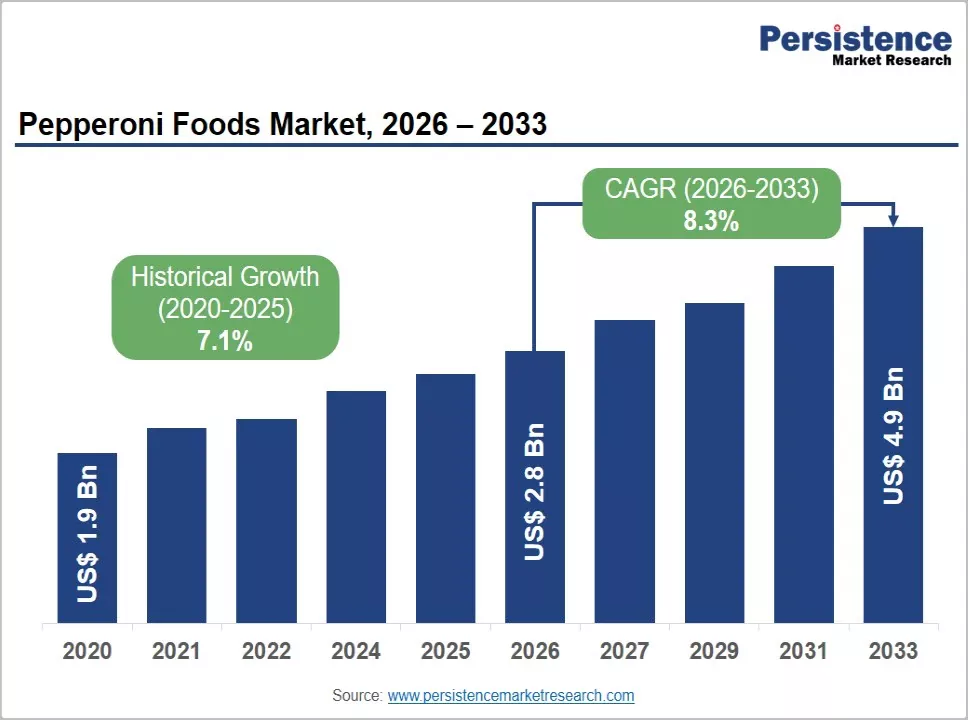
The global pepperoni foods market size is likely to be valued at US$ 2.8 billion in 2026, and is estimated to reach US$ 4.9 billion by 2033, growing at a CAGR of 8.3% during the forecast period 2026–2033. Growth is underpinned by rising pizza and quick-service meal consumption, the widening use of cured meat toppings across sandwiches and snacks, and the steady expansion of modern retail and online grocery channels across developed and emerging economies.
The market recorded a historical CAGR of 7.1% during 2020–2025, supported by the recovery of foodservice demand and the strong performance of frozen and refrigerated pizza at home. However, the forecast period anticipates faster expansion as manufacturers broaden flavor portfolios, introduce clean-label and uncured formats, and extend pepperoni into protein-forward snacking, while global pizza chains continue to enter new geographies.
Key Industry Highlights
- Dominant Type: Pork-based pepperoni is set to command around 52% of the revenue share in 2026, while beef-based pepperoni is likely to grow the fastest at 9.6% CAGR through 033, as halal-compliant and premium formats gain wider acceptance.
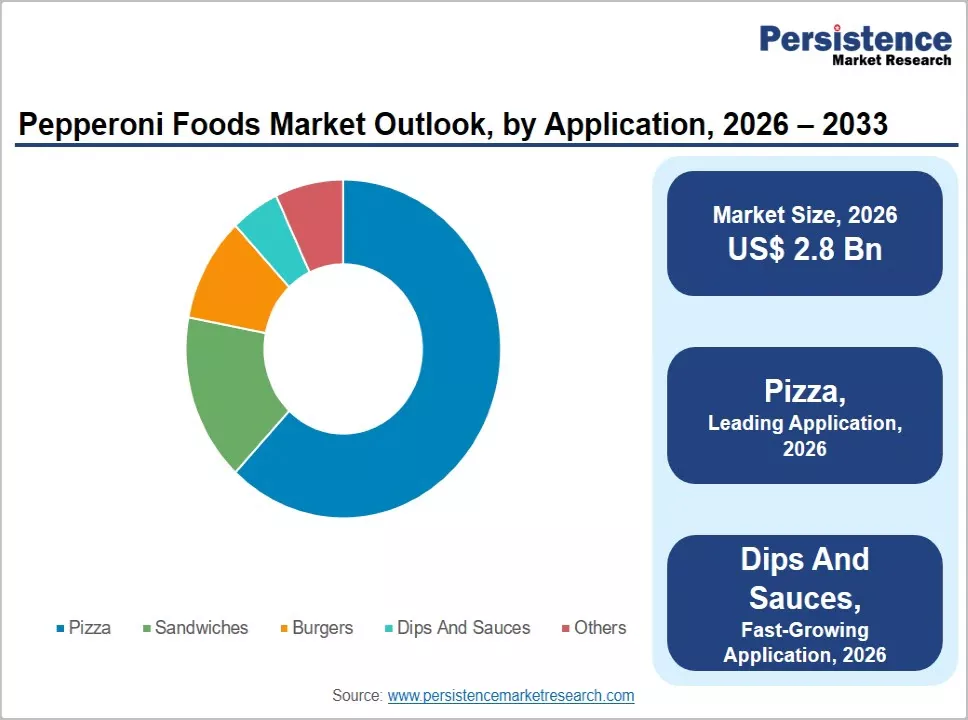
- Leading Application: Pizza is expected to lead with 63% in 2026, while sandwiches are likely to be the fastest-growing application at about 9.4% CAGR during 2026–2033, reflecting the rise of deli-style and grab-and-go offerings.
- Dominant Distribution Channel: Supermarkets and hypermarkets are anticipated to lead with an estimated 46% share in 2026, while e-commerce is slated to represent the fastest-growing channel at 11.8% CAGR from 2026 to 2033.
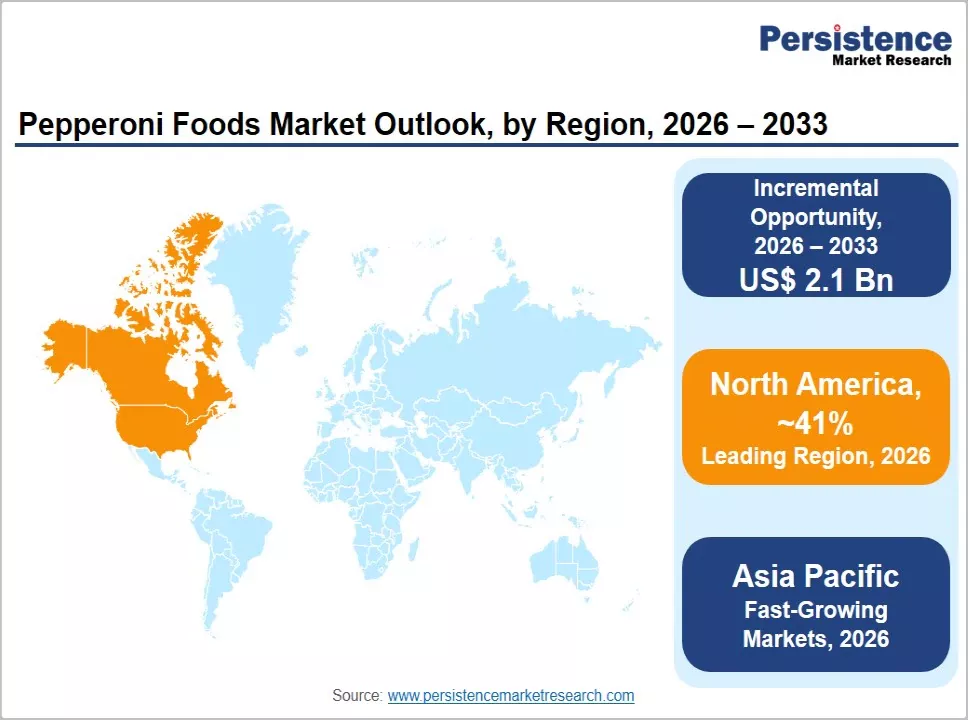
- Regional Leadership: North America is poised to dominate with an estimated 41% share in 2026, while Asia Pacific is expected to register the fastest growth at 10.2% CAGR through 2033, led by quick-service restaurant expansion in China, India, and Southeast Asia.
- Competitive Environment: Competitive dynamics include clean-label and uncured product launches, protein-focused snack innovation, and capacity and distribution expansion with retailers and foodservice operators.
DRO Analysis
Drivers: Rising Pizza Consumption and Foodservice Expansion as Primary Growth Catalyst
Pizza consumption and quick-service restaurant expansion are the leading forces driving the pepperoni foods market growth, as pepperoni remains the most ordered pizza topping across major markets and a defining ingredient of the category. Global pizza chains continue to add outlets and delivery-focused formats, while frozen and refrigerated pizza has benefited from at-home eating and value-seeking shoppers, with frozen pizza shopper trips reported to be up around 2% year to date in early 2026.
The shift toward convenient, ready-to-eat meals is also extending demand for sliced pepperoni into sandwiches, flatbreads, snack packs, and charcuterie-style formats. Processors are responding with new slice thicknesses, cupping slices designed to curl and crisp during baking, and flavor variants such as jalapeño, which allow operators to differentiate menus without altering preparation workflows or kitchen economics.
Protein Trends and Premiumization
Consumers' growing appetite for protein-rich, convenient foods is encouraging manufacturers to reposition pepperoni beyond pizza. Launches such as pepperoni and turkey protein snack kits, grass-fed pepperoni-style beef sticks, and clean-label pepperoni sold through natural-food retailers illustrate this shift. Premium positioning, supported by uncured, nitrate-free-labeled, and heritage-style offerings, is helping producers improve margins, while spicy and hot-honey flavor trends continue to refresh category interest and encourage repeat purchases.
Restraints: Health Concerns Over Processed Meat and Raw Material Price Volatility
Health perceptions around processed meat remain a significant challenge for the pepperoni foods market. Pepperoni is high in sodium and saturated fat, and the World Health Organization's cancer research agency classified processed meat as carcinogenic to humans in 2015, a position that continues to shape dietary guidance and consumer sentiment.
Regulatory measures such as mandatory front-of-package nutrition labeling in Canada, effective from January 2026, and high-fat, salt, and sugar promotion restrictions in the U.K. are increasing the visibility of these nutrient concerns, prompting some shoppers to reduce purchase frequency or switch to leaner alternatives
Input Cost Volatility and Supply Chain Pressures
Pepperoni producers are also exposed to fluctuations in pork and beef prices, which are influenced by herd cycles, feed costs, animal disease outbreaks, and trade policy. Tight cattle supply in North America has lifted beef costs, while periodic swine disease events can disrupt pork availability. Cold-chain requirements, food safety compliance, and the cost of reformulating products to meet clean-label expectations further compress margins, particularly for smaller regional processors with limited pricing power against large pizza chains and retailers.
Opportunities: Emerging Market Quick-Service Growth and Alternative Formats
Emerging economies present substantial opportunities as urbanization, rising disposable incomes, and the expansion of international pizza chains broaden the consumer base for pepperoni. Countries across Southeast Asia, India, Latin America, and the Middle East are witnessing rapid growth in quick-service outlets and food delivery platforms, which are introducing pepperoni-topped products to new consumers. Local manufacturing and co-packing arrangements can reduce import dependence and allow suppliers to meet regional dietary requirements, such as halal certification for beef-based products.
Product Innovation and Digital Retail Channels
Product innovation offers additional growth avenues, with manufacturers launching lower-sodium, uncured, and hybrid formulations that blend meat with plant-based ingredients to address health and sustainability concerns. E-commerce and direct-to-consumer platforms are enabling specialty and artisanal brands to reach consumers without extensive retail listings, while meal kits and online grocery delivery are increasing exposure to premium and flavored varieties. These developments are expected to support steady value growth as producers shift toward higher-margin, differentiated products.
Category-wise Insights
Type Analysis
Why Does Pork-Based Pepperoni Lead the Pepperoni Foods Market?
Pork-based pepperoni is the leading type segment, expected to hold about 52% of the pepperoni foods market revenue share in 2026. Traditional American-style pepperoni relies on pork, often blended with beef for flavor, and pork-based products benefit from established supply chains, familiar taste profiles, and cost advantages relative to beef. Large-scale processors supply standardized slices and sticks to pizza chains, retailers, and foodservice distributors under long-term contracts, supporting stable volumes. Fermentation and curing expertise, along with consistent fat-to-lean ratios that deliver the cupping and crisping characteristics preferred by pizzerias, reinforce the segment's position even as consumers explore alternatives.
Beef-based pepperoni is likely to grow the fastest through 2033, at about 9.6% CAGR. Demand is supported by halal and kosher-compliant offerings, premium positioning, and rising interest in pork-free options among consumers in the Middle East, South Asia, and multicultural urban markets in North America and Europe. Beef-based pepperoni is also being used in grass-fed and protein-snack formats, such as beef sticks with pepperoni-style seasoning. Pork and beef blends remain the middle segment, balancing taste and cost, and are widely used by pizza chains seeking consistent flavor at scale. Higher beef input costs continue to moderate volume gains despite strong premium demand.
Application Analysis
Which Application Dominates the Pepperoni Foods Market?
Pizza dominates the application segment, projected to capture about 63% of the revenue share in 2026. Pepperoni is the most recognized pizza topping in the U.S. and is gaining traction across Europe and Asia as pizza chains localize menus. Foodservice operators favor pepperoni for its shelf stability, flavor intensity, and ability to deliver consistent results in high-throughput kitchens. Frozen and refrigerated retail pizza also relies heavily on pepperoni variants, including flavored and premium versions. While incremental innovation continues through spicy, uncured, and cupping slice formats, the segment's scale makes it resilient to short-term shifts in consumer preferences.
Sandwiches represent the fastest-growing application, anticipated to achieve about 9.4% CAGR during 2026–2033. Deli counters, quick-service chains, and convenience stores are adding pepperoni to subs, paninis, and grab-and-go wraps, supported by demand for bold flavors and protein-dense lunch options. Burgers, dips and sauces, and other applications, including snack kits, charcuterie boards, and pasta toppings, are expanding from smaller bases, with dips and pepperoni-flavored sauces benefiting from pizza-inspired menu extensions. Foodservice operators increasingly treat pepperoni as a versatile flavoring ingredient rather than solely a pizza topping, which is broadening the addressable base.
Distribution Channel Analysis
Why Do Supermarkets and Hypermarkets Lead Distribution Channels?
Supermarkets and hypermarkets are poised to lead with an estimated 46% share in 2026, favored for their wide assortment, refrigerated display infrastructure, promotional pricing, and strong presence across the deli, packaged meat, and frozen pizza aisles. Retailers continue to expand private-label pepperoni, which offers shoppers value while improving retailer margins. Grocery stores and specialty stores serve neighborhood and premium demand, with specialty and natural-food retailers increasingly stocking uncured and clean-label products. These channels collectively remain essential for sampling, brand building, and impulse purchases, particularly for sliced deli formats and multi-pack snack products.
E-commerce is the fastest-growing distribution channel, expected to showcase an approximate 11.8% CAGR through 2033. Online grocery platforms, quick-commerce services, and direct-to-consumer brand sites are making refrigerated meat products more accessible, aided by improvements in cold-chain packaging and last-mile delivery. Subscription boxes and curated charcuterie offerings are helping specialty brands reach new buyers, while retailers use digital promotions and personalized recommendations to lift basket sizes. Adoption is rising quickly in urban Asia Pacific and North America, where delivery convenience and wide assortment appeal to time-constrained households, although perishability and shipping costs remain operational considerations.
Regional Insights
Why Is North America Expected to Lead the Pepperoni Foods Market?
North America is anticipated to account for an estimated 41% of the global pepperoni foods market in 2026, making it the largest regional market. The region benefits from the highest per-capita pizza consumption globally, dense quick-service restaurant networks, and mature frozen pizza and deli segments. Major processors headquartered in the U.S. supply both domestic and export demand, and recent launches of uncured, protein-snack, and flavored pepperoni indicate continuing innovation. Rising beef costs, health-oriented labeling, and retailer private-label expansion are likely to shape competition through 2033, while foodservice recovery and delivery growth are expected to sustain steady volume expansion.
U.S. Pepperoni Foods Market Size
The U.S. is estimated to account for approximately 84% of the North America pepperoni foods market in 2026. Pepperoni is the most popular pizza topping in the country, and demand is supported by large pizza chains, independent pizzerias, and a broad frozen pizza segment. Product development is increasingly centered on clean-label and uncured offerings, with natural-food retailers adding nitrate-free-labeled and organic-certified pepperoni. Protein-focused snacking is another growth avenue, with pepperoni snack kits and meat sticks entering mainstream retail. Consumer concern about sodium and processed meat is encouraging lower-sodium formulations and portion-controlled formats, while price-sensitive shoppers continue to drive private-label growth.
Canada Pepperoni Foods Market Size
Canada is projected to represent approximately 9% of the North America pepperoni foods market in 2026. Demand is anchored in pizza consumption, with national and regional chains and a strong frozen pizza category. The country's mandatory front-of-package nutrition labeling for foods high in sodium and saturated fat, effective from January 2026, is likely to prompt reformulation and portion adjustments among pepperoni suppliers. Growing multicultural populations are increasing interest in halal-certified pepperoni, particularly in Ontario, Quebec, and British Columbia. Retail consolidation and cross-border trade with the U.S. are expected to continue influencing pricing, assortment, and supply arrangements through 2033.
Europe Pepperoni Foods Market Trends and Insights
Europe is estimated to account for approximately 14% of the global pepperoni foods market in 2026. The region's market is expected to benefit from the popularity of pizza in the U.K., Germany, Italy, and Spain, the growth of chilled and frozen pizza, and the rise of American-style pizza chains. Pepperoni-style salami, often produced with local curing traditions, is expanding in retail and foodservice. Regulatory requirements on food labeling, additives such as nitrites, and meat origin transparency are likely to influence product development. Health-focused policies and demand for poultry-based and plant-based alternatives could moderate growth, though premium and artisanal products are expected to maintain demand.
U.K. Pepperoni Foods Market Size
The U.K. is anticipated to account for approximately 27% of the Europe pepperoni foods market in 2026. Pizza is a mainstream takeaway and retail category, and pepperoni is consistently among the most popular toppings. The growth of delivery platforms, stone-baked chilled pizzas, and premium supermarket ranges is supporting demand. High-fat, salt, and sugar regulations on promotion and placement are expected to encourage reformulation, with manufacturers exploring reduced-salt and smaller-portion formats. Retailers are also expanding halal-certified and poultry-based pepperoni ranges to serve diverse consumer groups, while competition among pizza chains is likely to sustain menu innovation using spicy and premium toppings through 2033.
Asia Pacific Pepperoni Foods Market Trends and Insights
Asia Pacific is projected to account for approximately 19% of the global pepperoni foods market in 2026, and is anticipated to register the fastest growth at an estimated CAGR of 10.2% through 2033. Market expansion is likely to be driven by the rapid growth of quick-service pizza chains, food delivery platforms, and rising disposable incomes in China, India, Japan, South Korea, and Southeast Asia. Western-style cuisine is gaining popularity among younger urban consumers, while modern retail and online grocery are improving cold-chain access. Localized flavors and halal-compliant products are expected to broaden adoption, although dietary restrictions and relatively low per-capita consumption currently limit penetration.
China Pepperoni Foods Market Size
China is estimated to represent approximately 27% of the Asia Pacific pepperoni foods market in 2026. The country's market is expected to benefit from the continued expansion of international and domestic pizza chains across tier-two and tier-three cities, together with the popularity of food delivery platforms. Pork is widely consumed, supporting local production of pork-based toppings, while cold-chain investments are improving distribution of chilled and frozen pizzas. Rising interest in Western casual dining and the rapid growth of instant and frozen meal categories are likely to sustain demand. Competition from locally formulated toppings and price sensitivity may influence product positioning through 2033.
India Pepperoni Foods Market Size
India is projected to account for approximately 11% of the Asia Pacific pepperoni foods market in 2026. The market is expected to witness strong expansion from a small base, supported by the growth of pizza chains, cloud kitchens, and quick-commerce delivery in metropolitan areas. Dietary preferences and religious considerations around pork and beef shape product choices, with demand concentrated among urban, non-vegetarian consumers and increasingly met by halal-certified and poultry-based variants alongside imported products. Rising disposable incomes, a young population, and the spread of organized retail are likely to broaden consumption, while cold-chain development remains critical for wider distribution through 2033.
Competitive Landscape
The global pepperoni foods market structure is moderately consolidated, with the top vendors, including Hormel Foods, Smithfield Foods, Tyson Foods, and Sigma Alimentos, controlling close to half of the revenue share. These established players leverage large-scale processing capacity, long-standing relationships with pizza chains and retailers, and strong brand portfolios spanning deli, snack, and foodservice formats. They are also known to invest in clean-label reformulation, protein-focused snack innovation, and flavor development to defend share.
Regional and specialty producers such as Volpi Foods, Fratelli Beretta, and Boar's Head are focusing on premium, artisanal, and heritage-style offerings with local sourcing narratives. Barriers such as food safety compliance, cold-chain infrastructure, and entrenched foodservice contracts limit new entrants, but brands specializing in uncured, organic, and protein-snack formats are finding room through natural-food retailers and online channels. Market consolidation is expected to increase gradually as larger processors acquire specialty brands to broaden premium portfolios, while retailers continue to expand private-label offerings.
Key Market Developments
- In April 2026, Greenfield Natural Meat Co. began the nationwide rollout of its Protein Snack Kits in pepperoni and turkey varieties at major US retailers to serve demand for portable, protein-rich snacking.
- In March 2026, True Story Foods introduced clean-label pepperoni, prosciutto, and salame products at Whole Foods Market, reflecting rising demand for premium and minimally processed cured meats.
- In March 2025, Margherita, an Italian specialty meats brand under Smithfield Culinary, launched Jalapeño Pepperoni to help foodservice operators capture growing demand for spicy flavors.
Companies Covered in Pepperoni Foods Market
- Hormel Foods Corporation
- Smithfield Foods, Inc.
- Tyson Foods, Inc.
- Sigma Alimentos S.A. de C.V.
- JBS S.A.
- Cargill, Incorporated
- Volpi Foods, Inc.
- Fratelli Beretta S.p.A.
- Boar's Head Provisions Co., Inc.
- Bridgford Foods Corporation
Frequently Asked Questions
The global pepperoni foods market is valued at US$ 2.8 billion in 2026 and is projected to reach US$ 4.9 billion by 2033, expanding at a CAGR of 8.3% during 2026–2033.
Rising pizza and quick-service meal consumption, the widening use of pepperoni across sandwiches and snacks, and the expansion of modern retail and online grocery channels are driving the market.
Pork-based pepperoni leads types with about 52% share, pizza leads applications with about 63%, and supermarkets and hypermarkets lead distribution channels with an estimated 46% in 2026.
North America dominates the market with an estimated 41% share in 2026, supported by high pizza consumption and dense foodservice networks, while Asia Pacific is projected to register the fastest growth at a 10.2% CAGR through 2033.
Quick-service and delivery expansion in emerging economies, protein-focused snack innovation, clean-label and uncured formulations, and growth of e-commerce channels are key market opportunities.


