




- Pharmaceuticals
- Paclitaxel Injection Market
Paclitaxel Injection Market Size, Share, and Growth Forecast, 2026 – 2033
Paclitaxel Injection Market by Formulation Type (Branded Paclitaxel Injection, Generic Paclitaxel Injection, Others), Indication (Breast Cancer, Ovarian Cancer, Non-Small Cell Lung Cancer (NSCLC), Pancreatic Cancer, Others), Distribution Channel, and Regional Analysis for 2026-2033

Paclitaxel Injection Market Size and Trends Analysis
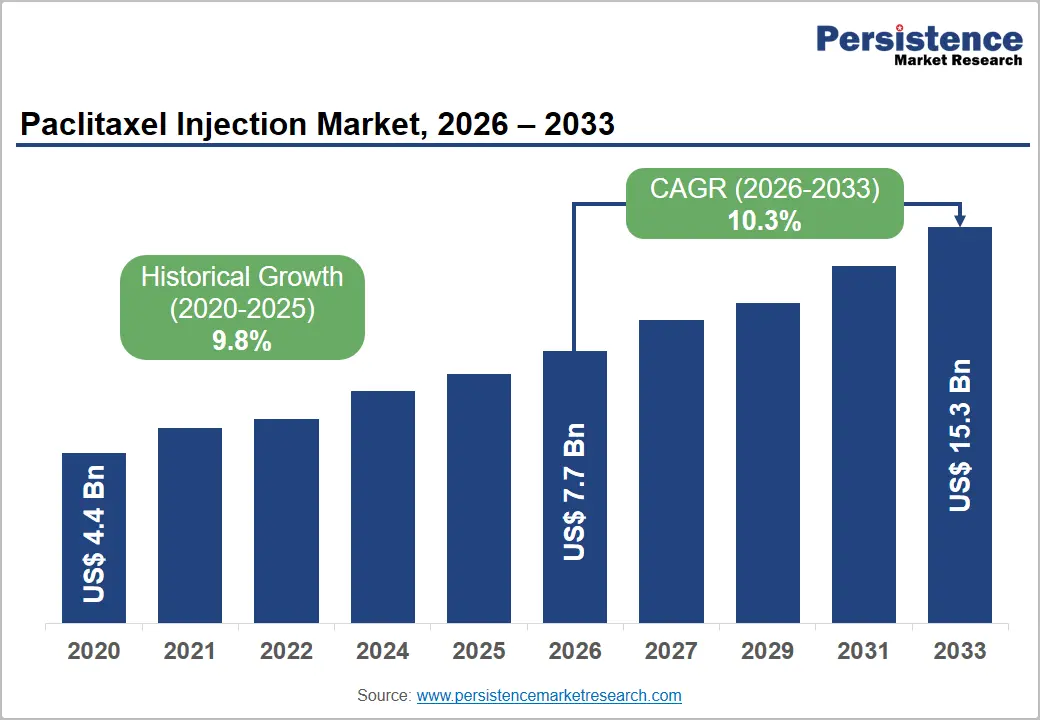
The global paclitaxel injection market size is likely to be valued at US$7.7 billion in 2026 and is estimated to reach US$15.3 billion by 2033, growing at a CAGR of 10.3% during the forecast period from 2026 to 2033, driven by rising cancer incidence, expanding oncology treatment access, and increasing adoption of advanced injectable chemotherapy formulations.
Growing aging populations are contributing to higher diagnosis rates of breast, ovarian, lung, pancreatic, and cervical cancers, creating sustained demand for taxane-based therapies. Regulatory support for generic oncology medicines is improving treatment affordability and expanding patient access across healthcare systems. Technological advancements in sterile manufacturing, formulation stability, and drug delivery systems are strengthening product availability and quality standards.
Key Industry Highlights:
- Leading Formulation Type: Branded paclitaxel injection is set to hold around 35% revenue share in 2026, driven by established clinical trust in originator products.
- Fastest-growing Formulation Type: Generic paclitaxel injection is projected as the fastest-growing segment, supported by cost advantages and procurement preferences.
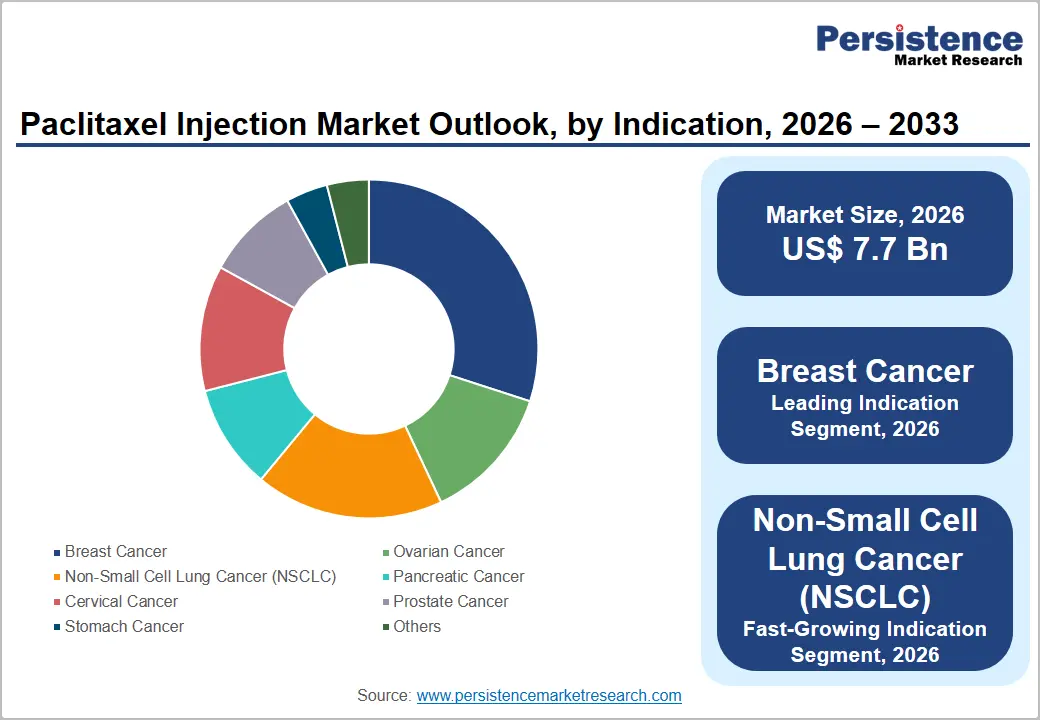
- Leading Indication: Breast cancer is estimated to hold roughly 30% revenue share in 2026, due to high incidence and protocol integration.
- Fastest-Growing Indication: Non-small cell lung cancer (NSCLC) is forecast to record the fastest growth, driven by combination therapy adoption.
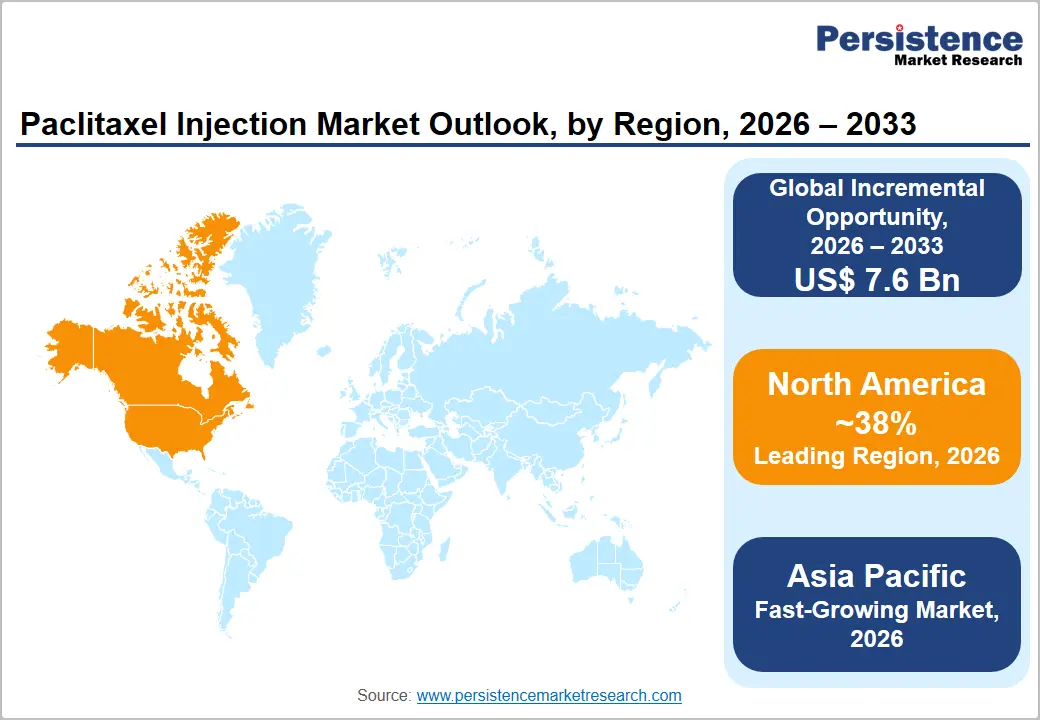
- Regional Leadership: North America is projected to capture roughly 38% of the market share in 2026, while Asia Pacific is forecast to record the fastest growth due to infrastructure investments.
- Competitive Environment: The market reflects a moderately fragmented structure, with key players such as Bristol-Myers Squibb and Fresenius Kabi leveraging scale and formulation expertise.
DRO Analysis
Driver - Rising Global Cancer Burden Driving Chemotherapy Demand
Cancer prevalence continues to increase due to population aging, lifestyle-related risk factors, and improved diagnostic screening. Paclitaxel remains a widely utilized chemotherapeutic agent across multiple solid tumor indications, creating consistent treatment demand. Healthcare systems are allocating greater resources toward oncology care as cancer cases place increasing pressure on treatment infrastructure and clinical capacity.
According to the U.S. National Cancer Institute, approximately 2,041,910 new cancer cases were projected in the United States during 2025. Growing patient volumes are increasing chemotherapy utilization rates across hospitals and specialty oncology centers. Expanded treatment pathways for breast, ovarian, and non-small cell lung cancer are supporting procurement of injectable oncology drugs, resulting in higher production volumes and broader commercialization opportunities.
Restraint - Complex Sterile Manufacturing Requirements
Production of oncology injectables requires highly controlled sterile environments, specialized equipment, and rigorous quality validation procedures. Manufacturing facilities must comply with strict regulatory standards, increasing operational complexity and extending product release timelines.
Elevated compliance costs can reduce manufacturing margins, particularly for generic suppliers operating in competitive pricing environments. Facility upgrades, contamination prevention measures, and batch validation requirements limit rapid scalability and create barriers for new market entrants.
Opportunity - Expansion of Generic Oncology Drug Adoption
Healthcare systems continue to prioritize cost-effective treatment strategies to improve access to cancer therapies. Generic formulations provide an opportunity to address affordability challenges while maintaining clinical efficacy standards established through regulatory approval pathways.
Manufacturers can expand market penetration through strategic launches in regions implementing oncology reimbursement reforms. Regulatory initiatives encouraging generic utilization create favorable conditions for broader commercialization. Investment in efficient manufacturing platforms and supply-chain optimization can strengthen competitiveness while supporting increasing patient access to chemotherapy treatment.
Category-wise Analysis
Formulation Type Insights
Branded paclitaxel injection is anticipated to secure around 35% of the paclitaxel injection market share in 2026, reflecting established trust in originator formulations among oncologists. Bristol-Myers Squibb Abraxane utilization in combination regimens for pancreatic cancer at major US cancer centers. Providers value consistent quality and support services. Generic versions gain traction through cost advantages in volume-driven settings.
Generic paclitaxel injection is expected to be the fastest-growing segment, propelled by patent expirations and procurement preferences in public health systems. Hospitals in cost-sensitive regions adopt generics after bioequivalence confirmation. Fresenius Kabi supplies contracts for large oncology networks. Payers favor lower acquisition costs without compromising efficacy.
Indication Insights
Breast cancer is poised to dominate with a forecast market share of over 30% in 2026, powered by high incidence rates and established first-line positioning. Protocols often combine Paclitaxel Injection with other agents for metastatic cases. Adjuvant use in node-positive early-stage patients at NCI-designated centers. Guidelines reinforce their role across stages.
Non-small cell lung cancer (NSCLC) is estimated to be the fastest-growing segment, fueled by integration into combination regimens with immunotherapies. Rising smoking-related cases sustain momentum. Carboplatin-paclitaxel backbones in community oncology practices. Expanded screening programs identify more treatable patients.
End-user Insights
Hospital pharmacies are likely to be the leading segment with a projected 58% of the paclitaxel injection market share in 2026 due to centralized chemotherapy administration and oncology treatment monitoring requirements. Hospitals remain primary locations for infusion-based cancer care. Large oncology centers maintain dedicated pharmacy departments supporting chemotherapy dispensing.
Specialty pharmacies are anticipated to be the fastest-growing segment, fueled by increasing focus on oncology care coordination and specialized medication management services. The growing complexity of cancer treatment is encouraging dedicated pharmaceutical support programs. Specialty pharmacy providers are expanding oncology-focused distribution capabilities.
Regional Insights
North America Paclitaxel Injection Market Trends
North America is expected to lead with an estimated 38% share in 2026, supported by advanced oncology treatment infrastructure, strong reimbursement systems, high cancer screening rates, and extensive availability of chemotherapy services. Expansion of cancer centers and ongoing investments in sterile injectable manufacturing are strengthening treatment access and supply reliability.
U.S. Paclitaxel Injection Market Insights
The U.S. is projected to account for approximately 82% of the North America market share in 2026. Growth is supported by a large oncology patient population, widespread chemotherapy utilization, and substantial healthcare expenditure. Expansion of cancer treatment networks and continued adoption of generic oncology medicines are improving patient access.
Canada Paclitaxel Injection Market Insights
Canada is forecast to represent nearly 18% of the North America market share in 2026. Demand is supported by public healthcare funding, expanding oncology programs, and increasing focus on affordable cancer treatments. Growth in hospital-based chemotherapy services and continued procurement of generic oncology injectables are supporting market expansion. Investments in cancer care infrastructure are improving treatment accessibility.
Europe Paclitaxel Injection Market Trends
Europe is expected to hold approximately 29% of the market share in 2026, supported by universal healthcare coverage, established oncology treatment pathways, and strong regulatory frameworks. Rising cancer incidence and increasing utilization of chemotherapy regimens are sustaining demand. Expansion of pharmaceutical manufacturing capacity and oncology-focused healthcare investments are supporting long-term growth across the region.
Germany Paclitaxel Injection Market Insights
Germany is projected to account for around 23% of the Europe market share in 2026. Growth is driven by advanced hospital infrastructure, extensive oncology treatment programs, and strong pharmaceutical manufacturing capabilities. Increasing adoption of high-quality generic oncology products is improving treatment affordability. Ongoing healthcare investments continue to strengthen chemotherapy service capacity.
France Paclitaxel Injection Market Insights
France is forecast to represent approximately 18% of the Europe market share in 2026. Demand is supported by favorable reimbursement policies, expanding cancer care initiatives, and increasing access to oncology medicines. Modernization of hospital pharmacy operations and growing emphasis on cost-efficient treatment pathways are supporting the adoption of injectable chemotherapy products.
Asia Pacific Paclitaxel Injection Market Trends
Asia Pacific is forecast to be the fastest-growing regional market in 2026, stimulated by rising cancer prevalence, expanding healthcare infrastructure, and increasing access to oncology treatments. Government initiatives promoting cancer care and growing pharmaceutical manufacturing capacity are supporting rapid market development. Expanding insurance coverage is further strengthening chemotherapy adoption.
China Paclitaxel Injection Market Insights
China is projected to account for nearly 35% of the Asia Pacific market share in 2026. Growth is driven by a large cancer patient population, extensive pharmaceutical manufacturing infrastructure, and increasing investments in oncology hospitals. Expansion of domestic generic drug production is improving treatment affordability and strengthening supply availability across healthcare systems.
India Paclitaxel Injection Market Insights
India is forecast to represent approximately 19% of the Asia Pacific market share in 2026. Demand is supported by increasing cancer incidence, growing healthcare expenditure, and expanding access to affordable chemotherapy treatments. Capacity expansion by domestic pharmaceutical manufacturers and ongoing investments in cancer treatment facilities are creating favorable conditions for sustained growth.
Competitive Landscape
The global paclitaxel injection market is moderately fragmented, with a mix of originator companies and generic specialists competing on pricing, supply reliability, and formulation differentiation. The key participants include Bristol-Myers Squibb, Pfizer, Fresenius Kabi, Accord Healthcare, and Teva Pharmaceutical Industries. Hospital tenders and group purchasing organizations shape competitive dynamics.
Established players leverage scale in API production while generics focus on cost leadership. Regional manufacturers serve price-sensitive segments. The structure supports innovation in delivery systems alongside volume competition.
Key Industry Developments:
- In February 2026, Merck announced that KEYTRUDA (pembrolizumab), combined with paclitaxel, with or without bevacizumab, significantly improved overall survival in patients with platinum-resistant recurrent ovarian cancer compared with paclitaxel-based chemotherapy alone, advancing treatment options in ovarian cancer care.
- In May 2025, Meitheal Pharmaceuticals launched a generic albumin-bound paclitaxel formulation in the United States through an exclusive licensing agreement with Hong Kong King-Friend, expanding access to affordable cancer treatments for breast, pancreatic, and non-small cell lung cancers.
Companies Covered in Paclitaxel Injection Market
- Bristol-Myers Squibb
- Pfizer Inc.
- Fresenius Kabi
- Accord Healthcare
- Teva Pharmaceutical Industries
- Viatris Inc.
- Dr. Reddy’s Laboratories
- Sandoz
- Sun Pharmaceutical Industries
- Cipla Inc.
- Alvogen
- Apotex Inc.
- Hikma Pharmaceuticals
- Gland Pharma
- Natco Pharma
Frequently Asked Questions
The global paclitaxel injection market is projected to reach US$7.7 billion in 2026.
The paclitaxel injection market is driven by the rising global incidence of cancer and the expanding adoption of chemotherapy-based treatment regimens across oncology care settings.
The paclitaxel injection market is poised to witness a CAGR of 10.3% from 2026 to 2033.
Key opportunities in the paclitaxel injection market are emerging from the expansion of generic oncology drug availability and the development of advanced paclitaxel formulations that improve treatment accessibility and clinical outcomes.
Some of the key market players include Bristol-Myers Squibb, Pfizer, Fresenius Kabi, Accord Healthcare, and Teva Pharmaceutical Industries.


