




- Pharmaceuticals
- North America Contraceptive Drugs Market
North America Contraceptive Drugs Market Size, Share, and Growth Forecast, 2026 – 2033
North America Contraceptive Drugs Market by Product Type (Oral Contraceptives, Injectable, Emergency Pills, Patches, Implants), Hormone (Combined, Progestin-only, Non-hormonal Estrogen-based, Hybrid), and Country Analysis for 2026 – 2033

North America Contraceptive Drugs Market Size and Trends Analysis
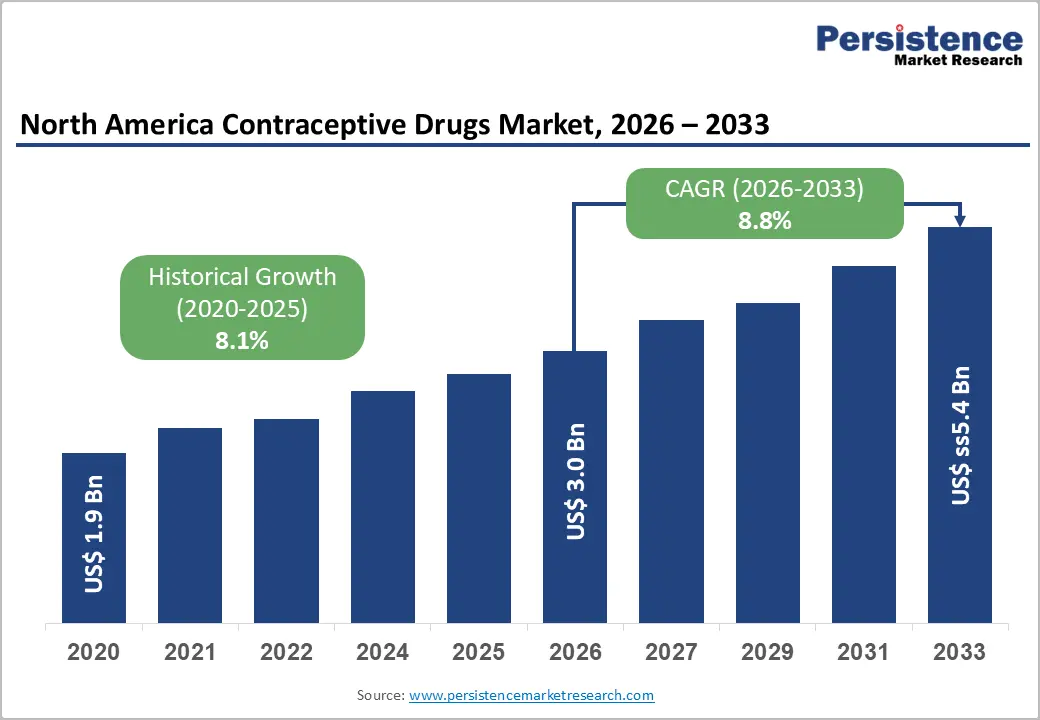
The North America contraceptive drugs market size is likely to be valued at US$3.0 billion in 2026 and is expected to reach US$5.4 billion by 2033, growing at a CAGR of 8.8% during the forecast period from 2026 to 2033, driven by increasing awareness of reproductive health, growing demand for effective family planning solutions, and wider access to modern contraceptive therapies. Rising adoption of oral pills, injectables, implants, and emergency contraceptives, supported by favorable healthcare coverage and expanding telehealth services, continues to strengthen market growth. According to the U.S. Centers for Disease Control and Prevention (CDC), 54.3% of females aged 15-49 in the United States were using contraception during 2022–2023, with oral contraceptive pills accounting for 11.4% usage and long-acting reversible contraceptives reaching 10.5%. Highlighting sustained demand for advanced contraceptive drugs and reproductive healthcare solutions across North America.
Key Industry Highlights:
- Leading Country: The U.S. is anticipated to be the leading country, accounting for a market share of 84% in 2026, driven by strong insurance coverage, widespread availability of contraceptive drugs, continuous product innovation, and supportive regulatory approvals.
- Fastest-growing Country: Canada is likely to be the fastest-growing country, supported by increasing awareness of reproductive health, expanding access to modern contraceptive options, and growing adoption of long-acting reversible contraceptives.
- Leading Product Type: Oral contraceptives are projected to represent the leading product type in 2026, accounting for 48% of the revenue share, driven by their widespread adoption and accessibility.
- Leading Hormone: Combined hormonal contraceptives are anticipated to lead, accounting for over 52% of the revenue share in 2026, supported by strong demand in hand, shoulder, and chest wall reconstruction procedures.
- Key Opportunity: Expansion of non-hormonal contraceptives, long-acting reversible contraceptive (LARC) adoption, and digital health-driven personalized reproductive care collectively present the key growth opportunity driving the North America contraceptive drugs market.
DRO Analysis
Driver - Demographic Shifts and Changing Societal Norms
Rising female participation in higher education and professional careers has contributed to delayed marriage and postponed parenthood, increasing the need for reliable family planning solutions. Women are increasingly seeking greater control over reproductive decisions, encouraging sustained use of oral contraceptives, injectables, implants, and emergency contraceptive products.
Growing urbanization, higher awareness regarding reproductive health, and easier access to healthcare services have strengthened contraceptive adoption. These trends have expanded the consumer base for modern contraceptive drugs, supporting long-term market growth across diverse age groups and demographics. Changing societal attitudes toward family planning and reproductive autonomy continue to influence contraceptive drug utilization. Increased public discussion of sexual health, supported by educational programs and digital health platforms, has improved awareness of available contraceptive options.
Younger populations increasingly prioritize career advancement, financial stability, and lifestyle flexibility before starting families, creating sustained demand for effective contraception. Greater acceptance of women’s reproductive choices has encouraged healthcare consultations and contraceptive use. Telehealth services and online prescription platforms have improved accessibility, particularly among younger consumers, reinforcing market expansion.
Restraint - Concerns over Side Effects and Safety Perceptions
Many users are cautious about hormonal contraceptives due to perceived risks such as weight fluctuations, mood changes, headaches, nausea, and menstrual irregularities. Reports of adverse effects often influence treatment discontinuation and reduce long-term adherence to prescribed contraceptive regimens. Growing access to online health information has increased consumer awareness but has also amplified concerns regarding potential complications. Some individuals delay contraceptive adoption or seek alternative methods, limiting market penetration despite the proven effectiveness and widespread availability of modern contraceptive drugs.
Safety perceptions also influence prescribing patterns and patient preferences throughout the region. Healthcare providers frequently need to address concerns related to cardiovascular risks, hormonal sensitivity, and suitability for specific patient populations before initiating treatment. Regulatory scrutiny and detailed product labeling further highlight potential risks, sometimes creating hesitation among prospective users. Social media discussions and anecdotal experiences can additionally shape public opinion, affecting confidence in hormonal contraceptive products.
Opportunity - Expansion of Non-Hormonal and Innovative Delivery Systems
Increasing numbers of consumers are seeking alternatives that avoid hormone-related side effects while still providing effective pregnancy prevention. This trend is encouraging pharmaceutical companies to invest in research and development of novel formulations and mechanisms of action. Non-hormonal products appeal to individuals with specific medical conditions, hormone sensitivities, or personal preferences.
As awareness of personalized reproductive healthcare increases, demand for diversified contraceptive options continues to rise, creating opportunities for market expansion and product differentiation across multiple consumer segments. Innovative drug delivery systems are creating additional growth opportunities by improving convenience, adherence, and patient satisfaction. Advances in long-acting injectables, biodegradable implants, transdermal patches, and extended-release technologies are transforming contraceptive administration.
These solutions reduce the need for frequent dosing and help minimize user-related errors, improving overall effectiveness. Integration of digital health tools, telemedicine services, and remote prescription management enhances accessibility and patient engagement. Pharmaceutical manufacturers are increasingly focusing on user-friendly delivery methods that align with modern lifestyles and healthcare preferences.
Category-wise Analysis
Product Type Insights
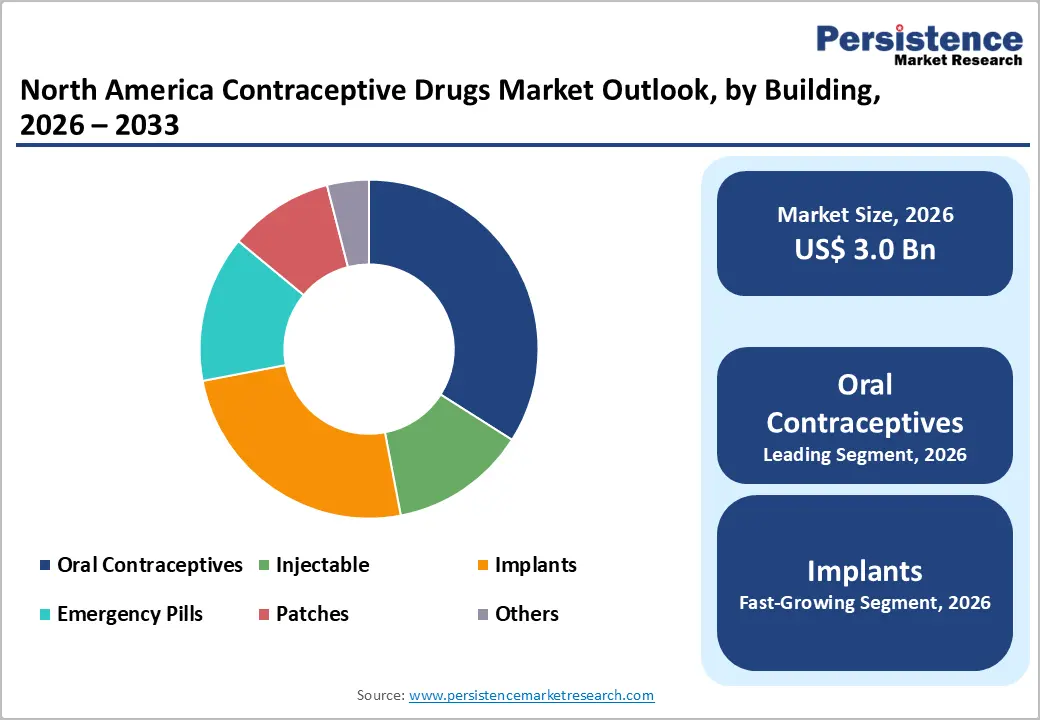
Oral contraceptives are expected to lead the North America contraceptive drugs market, accounting for approximately 48% of revenue in 2026, due to decades of clinical use, broad physician familiarity, convenient administration, and extensive availability through retail pharmacies, hospitals, and online healthcare channels. Oral contraceptives remain a preferred option among women seeking reversible and easily manageable contraception. A notable example includes Yaz marketed by Bayer, which remains one of the widely recognized oral contraceptive brands.
Contraceptive implants are likely to represent the fastest-growing segment in 2026, supported by increasing demand for long-acting reversible contraceptive solutions. Healthcare providers are increasingly recommending implants as they offer highly effective pregnancy prevention with minimal user intervention after insertion. Technological advancements in implant design and patient counseling programs are further contributing to increased acceptance. For example, Nexplanon from Merck has become a widely adopted implant-based contraceptive option.
Hormone Type Insights
Combined hormonal contraceptives are projected to lead the market, capturing around 52% of the revenue share in 2026. Their strong position is attributed to proven contraceptive effectiveness, established clinical guidelines, and broad physician confidence in prescribing these therapies. These products combine estrogen and progestin, offering reliable pregnancy prevention while also providing benefits such as menstrual cycle regulation and reduction of hormone-related symptoms. For instance, Lo Loestrin Fe from AbbVie which remains a recognized combined hormonal contraceptive product within the regional market.
Non-hormonal contraceptives are likely to be the fastest-growing hormone type in 2026, driven by increasing consumer awareness regarding hormone-related side effects and growing demand for personalized reproductive healthcare, are driving interest in non-hormonal alternatives. Many women are actively seeking contraceptive solutions that avoid hormonal exposure while still offering effective pregnancy prevention. A notable example includes Ovaprene, an innovative non-hormonal contraceptive technology that highlights the growing industry focus on expanding hormone-free reproductive health solutions.
Country Insights
U.S. Contraceptive Drugs Market Trends
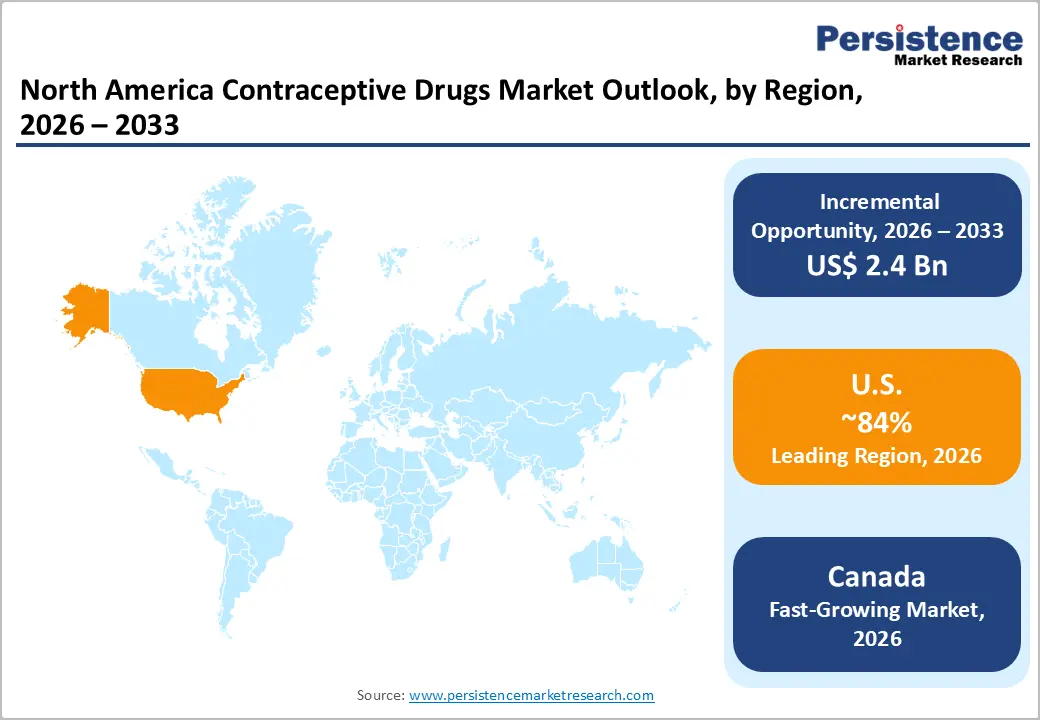
The U.S. is anticipated to be the leading country, accounting for a market share of 84% in 2026, driven by high awareness of reproductive health, broad availability of prescription contraceptives, and expanding access through telehealth platforms. Growing preference for long-acting reversible contraceptives, low-dose hormonal formulations, and emergency contraceptive products continues to influence market dynamics. Consumers are increasingly seeking personalized contraceptive solutions that align with individual health profiles and lifestyle requirements. For example, Pfizer continues to invest in women’s health research and development, supporting advancements in contraceptive therapies.
Another important trend in the U.S. is the rapid expansion of telehealth and digital prescription services for reproductive healthcare. Consumers are increasingly utilizing online consultations and home-delivery pharmacy services to obtain contraceptive medications conveniently. Demand for low-dose hormonal formulations and non-hormonal alternatives is also rising as awareness of potential side effects increases. Favorable reimbursement policies, ongoing product innovation, and strong pharmaceutical research activities continue to strengthen market development.
Canada Mobile Health Market Trends
Canada is likely to be the fastest-growing country, driven by increasing awareness of reproductive health, supportive healthcare policies, and rising utilization of modern contraceptive methods. Demand is growing for products that offer convenience, long-term effectiveness, and improved safety profiles. Healthcare providers are increasingly recommending a broader range of contraceptive options to address diverse patient needs. For instance, Lupin, which supplies generic pharmaceutical products in Canada, contributes to improving access to affordable contraceptive medications through its expanding women's health portfolio.
Another significant trend in Canada is the growing preference for long-acting and low-maintenance contraceptive solutions, including implants and injectables. Consumers are becoming more informed about available contraceptive options through public health campaigns and digital healthcare resources. Interest in non-hormonal contraceptives is also increasing as patients seek alternatives with fewer hormone-related concerns. Expanded access to virtual healthcare services has improved contraceptive counseling and prescription management, particularly in rural communities.
Competitive Landscape
The North America contraceptive drugs market exhibits a moderately fragmented structure, driven by the presence of several global pharmaceutical companies, strong generic manufacturers, and continuous product innovation in hormonal and non-hormonal contraceptives. Competition is shaped by strong brand portfolios, regulatory approvals, and increasing demand for long-acting reversible contraceptives and low-dose formulations. Market players focus on expanding access through retail pharmacies, hospital channels, and digital health platforms.
With key leaders, including Bayer, Pfizer, Merck, Teva Pharmaceutical Industries, and AbbVie, the market demonstrates strong competitive intensity supported by diversified product offerings across oral contraceptives, implants, injectables, and emergency contraceptive pills. Increasing investments in women’s health research and strategic partnerships further enhance competition across the region. These players compete through continuous innovation in drug formulations, development of safer and lower-dose hormonal options, and expansion into non-hormonal contraceptive technologies.
Key Industry Developments:
- In April 2026, Duchesnay Inc. launched a contraceptive vaginal system (segesterone acetate/ethinyl estradiol ring) in Canada designed for up to 1 year of use, offering a long-acting reversible contraceptive option to improve convenience and adherence.
- In June 2025, NEXT Life Sciences announced the successful completion of its North American clinical trial for Plan A™, a novel male contraceptive delivery system. The trial, conducted in Canada with participation from 20 men, achieved a 100% success rate, demonstrating strong efficacy and safety outcomes similar to earlier trials in Australia.
Companies Covered in North America Contraceptive Drugs Market
- Pfizer
- Bayer
- Merck
- Teva
- Mylan
- Gedeon Richter
- Allergan
- Johnson & Johnson
- Novartis
- Lupin
- Sun Pharma
- Amgen
- Sanofi
- AbbVie
- AstraZeneca
Frequently Asked Questions
The North America contraceptive drugs market is projected to reach US$3.0 billion in 2026.
Increasing awareness of reproductive health, rising demand for family planning solutions, and strong adoption of hormonal and long-acting contraceptive methods are driven by advanced healthcare access and supportive insurance coverage.
The North America contraceptive drugs market is expected to grow at a CAGR of 8.8% from 2026 to 2033.
Expansion of non-hormonal contraceptives, growth in long-acting reversible contraceptive technologies, and increasing adoption of telehealth-based prescription and personalized reproductive healthcare solutions.
Pfizer, Bayer, Merck, Teva, Mylan, Gedeon Richter, Allergan, Johnson & Johnson, and Novartis are the leading players.


