




- Pharmaceuticals
- Myocardial Infarction (MI) Therapeutics Market
Myocardial Infarction (MI) Therapeutics Market Size, Share, Growth, and Regional Forecast, 2026 to 2033
Myocardial Infarction (MI) Therapeutics Market by Drug Type (Antiplatelet Agents, Glycoprotein IIb/IIIa Inhibitors, Antithrombotic Agents, Beta-adrenergic Blockers), Route of Administration (Oral, Injectable), Distribution Channel (Hospitals, Clinics, Retail Pharmacies, Online Pharmacies), and Regional Analysis from 2026 to 2033

Myocardial Infarcation (MI) Therapeutics Market Share and Trends Analysis
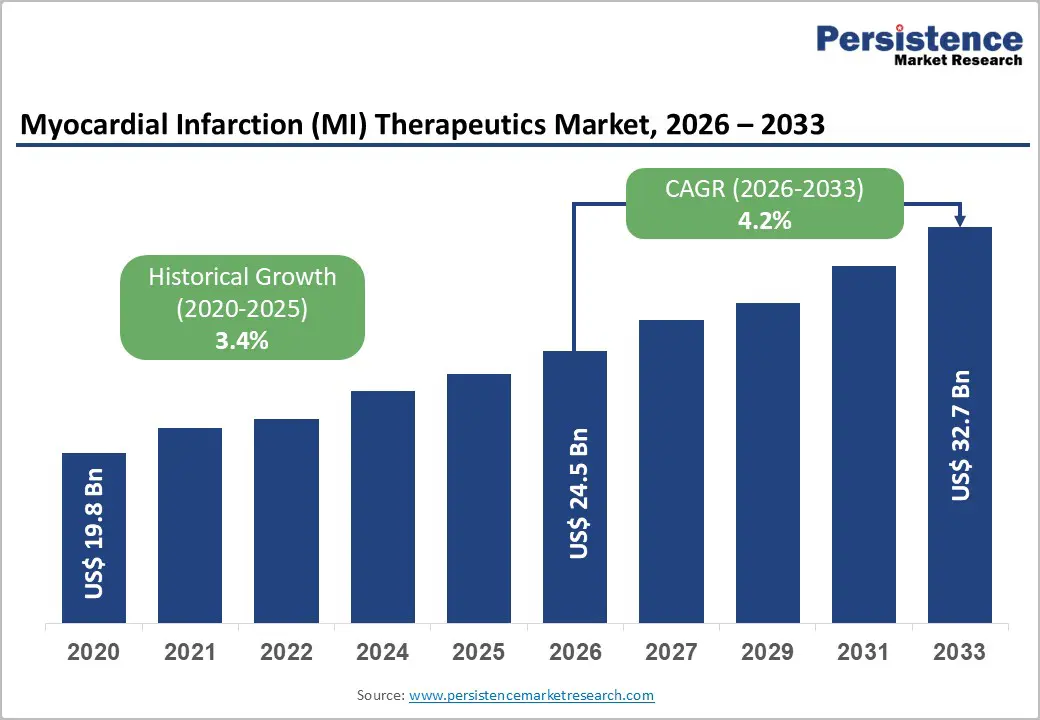
The global myocardial infarction (MI) therapeutics market is estimated to grow from US$ 24.5 Bn in 2026 to US$ 32.7 Bn by 2033. The market is projected to grow at a CAGR of 4.2% from 2026 to 2033.
The global myocardial infarction (MI) therapeutics industry is expanding steadily, driven by telehealth, adoption of digital care, and healthcare analytics. North America leads, supported by advanced infrastructure and stringent regulations. Asia-Pacific is the fastest-growing region, driven by expanding healthcare access, government digital initiatives, rising patient awareness, and investments in software, services, and remote monitoring solutions.
Key Industry Highlights
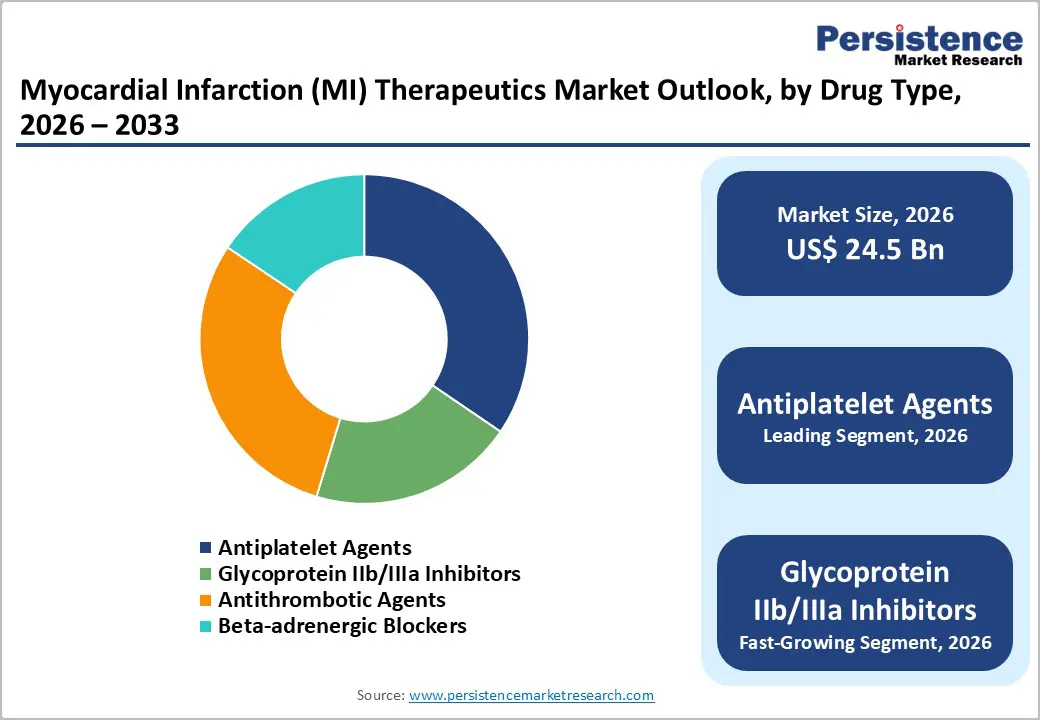
- Dominant Segment: Antiplatelet agents account for the largest share in 2025, at 34.5%, driven by their widespread use to prevent recurrent myocardial infarction, efficacy in combination therapies, and integration into hospital and outpatient protocols. Their proven clinical outcomes, cost-effectiveness, and inclusion in guideline-recommended care enable broad adoption across acute and chronic MI management settings.
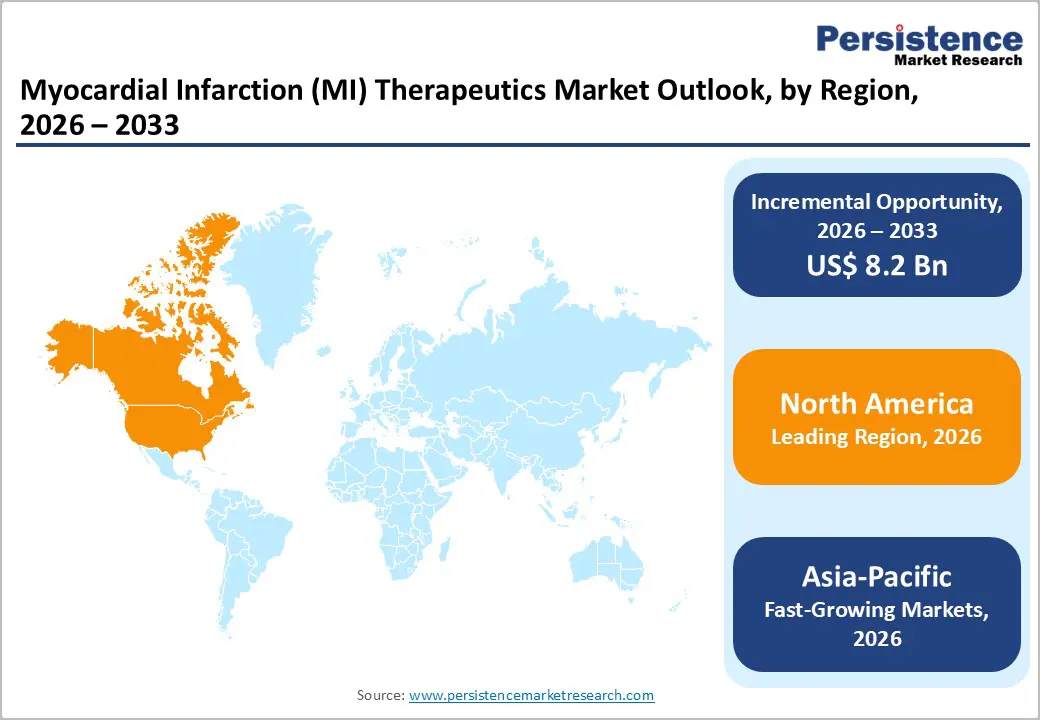
- Dominant Region: North America leads the market with 40.8% share in 2025, supported by advanced healthcare infrastructure, strong regulatory frameworks, and high adoption of digital therapeutics and cardiac care protocols. Asia-Pacific is the fastest-growing region, driven by expanding healthcare access, government initiatives in cardiovascular care, rising patient awareness, and increased investments in telehealth, remote monitoring, and AI-enabled cardiac solutions.
- Market Drivers: Growth is propelled by the rising prevalence of cardiovascular diseases, the increasing incidence of acute MI, the demand for real-time patient monitoring, the adoption of telehealth and digital therapeutics, and advances in combination drug therapies and AI-driven cardiac risk assessment tools.
- Market Opportunity: Key opportunities include the development of novel antiplatelet and anticoagulant therapies, AI-enabled predictive cardiac monitoring, telehealth-based post-MI management, integration with wearable cardiac devices, personalized combination therapy regimens, and expansion into emerging economies with growing cardiovascular care infrastructure and digital health adoption.
| Report Attribute | Details |
|---|---|
|
Myocardial Infarction (MI) Therapeutics Market Size (2026E) |
US$ 24.5 Bn |
|
Market Value Forecast (2033F) |
US$ 32.7 Bn |
|
Projected Growth (CAGR 2026 to 2033) |
4.2% |
|
Historical Market Growth (CAGR 2020 to 2025) |
3.4% |
Market Dynamics
Driver: Increasing Heart Attack Cases Worldwide
The rising incidence of heart attacks, also known as myocardial infarctions (MIs), is a significant driver of growth in the myocardial infarction therapeutics market. Several factors contribute to this increase, which in turn amplifies demand for effective treatments and interventions.
The increasing cases of heart attacks globally are a significant driver for the myocardial infarction therapeutics market.
Factors such as the rising incidence of cardiovascular diseases, growing awareness and early diagnosis, advances in treatment options, rising healthcare expenditure, improved healthcare infrastructure, technological innovations in diagnostics and treatment, and supportive reimbursement policies are contributing to the market's growth.
As demand for effective MI therapeutics continues to rise, companies in this sector are well-positioned to innovate and expand their offerings, ultimately improving patient outcomes and reducing the global burden of myocardial infarction.
Restraints: High Cost of Treatment
Advanced MI therapeutics, including novel drug formulations and regenerative therapies, can be costly. High treatment costs can limit patients' access, particularly in low- and middle-income countries. The overall economic burden of MI, including hospitalization, long-term care, and medication costs, can strain healthcare systems and affect affordability for patients.
The myocardial infarction therapeutics market holds significant potential for growth and innovation, but it also faces numerous restraints that could impede progress. Addressing challenges related to high treatment costs, regulatory hurdles, safety concerns, and access to healthcare will be crucial for companies to navigate and succeed in this dynamic market. Strategic planning, investment in R&D, and collaboration with healthcare stakeholders will be essential to overcome these restraints and deliver effective MI therapies to patients worldwide.
Opportunity: Advancements in Precision Medicine and Genomics
Leveraging genetic information to develop personalized treatment plans can significantly enhance therapeutic efficacy and reduce adverse effects. Companies can invest in precision medicine to create tailored therapies for MI patients based on their genetic profiles.
The future of the myocardial infarction therapeutics market holds numerous opportunities for companies willing to innovate and adapt. By focusing on precision medicine, advanced drug delivery systems, regenerative medicine, digital health integration, and global market expansion, companies can drive significant advancements in MI treatment and improve patient outcomes.
Strategic partnerships, regulatory engagement, and preventive strategies will further enhance the potential for growth and impact in this critical area of healthcare.
Category-wise Analysis
By Drug Type Insights
Antiplatelet agents account for 34.5% of the global market in 2025, as they are foundational to both acute and long-term MI care. Guidelines from cardiovascular authorities recommend aspirin and P2Y12 inhibitors (e.g., clopidogrel, ticagrelor) to prevent platelet aggregation and recurrent events, with many patients continuing therapy for months or years post-MI. For example, antiplatelet therapy is prescribed in over 90% of acute MI cases in some national registries, with aspirin used in the vast majority and clopidogrel rising substantially over time as part of standard care. Clinical evidence shows antiplatelet use reduces recurrent MI and major adverse cardiac events by roughly 20–25% compared with no therapy, reinforcing their market prevalence. As a result, antiplatelet drugs constitute a substantial share of therapeutic prescriptions and expenditures in the management of MI globally.
By Route of Administration Insights
Oral administration dominates the myocardial infarction (MI) therapeutics market because most long-term and guideline-recommended MI medications are prescribed orally, supporting patient adherence and outpatient care. Antiplatelets (aspirin, clopidogrel) and other oral drugs (beta-blockers, ACE inhibitors, statins) are used routinely in acute care and for secondary prevention, with oral antiplatelet therapy exceeding 90% usage at discharge in registry studies and dual antiplatelet therapy common in MI patients. Oral forms are preferred for non-emergency management due to convenience, lower cost, and ease of self-administration compared with injectables, which are typically limited to initial emergency interventions. This broad application across settings underpins the larger market share of oral over injectable administration routes in MI care.
Regional Insights
North America Myocardial Infarction (MI) Therapeutics Market Trends
North America dominates the myocardial infarction (MI) therapeutics market with 40.8% share in 2025, due to a high disease burden and advanced healthcare systems. In the U.S., a heart attack occurs every 40 seconds, with hundreds of thousands of new and recurrent cases annually, making coronary heart disease a leading cause of death. Canada also reports significant ischemic heart disease prevalence, with many living with prior MI. The region’s dominance is reinforced by extensive emergency care networks, widespread adherence to clinical guidelines, high per-capita healthcare spending, and broad access to evidence-based therapies, ensuring strong demand and sustained growth for MI therapeutics.
Europe Myocardial Infarction (MI) Therapeutics Market Trends
Europe is an important region in the myocardial infarction (MI) therapeutics market because cardiovascular diseases remain the leading cause of death and disability across the continent, driving consistent demand for MI treatments and management strategies. In the European Union alone, circulatory diseases, including heart attacks, account for about 32% of all deaths, with approximately 1.7 million deaths annually, highlighting significant disease burden and clinical need. The prevalence and incidence of acute MI and related conditions vary across countries, but substantial patient populations in Germany, France, Italy, Spain, and Eastern Europe ensure broad therapeutic utilization. Moreover, national and EU-level public health initiatives focus on prevention, early diagnosis, and evidence-based care pathways, reinforcing uptake of guideline-recommended MI therapeutics and long-term secondary prevention therapies throughout the region.
Asia Pacific Myocardial Infarction (MI) Therapeutics Market Trends
Asia-Pacific is the fastest-growing region in the myocardial infarction (MI) therapeutics market because cardiovascular disease incidence and healthcare capacity are rising rapidly, creating a strong unmet need and driving adoption of treatment and digital care solutions. Cardiovascular diseases account for roughly 40% of all deaths in the Western Pacific and about a quarter in South Asia.East Asia, with ischemic heart disease a leading cause of mortality and disability. This reflects a large patient base requiring acute MI therapy and secondary prevention. The combination of a growing and aging population, increasing burden of chronic risk factors (e.g., hypertension, smoking), and expanding healthcare access fuels demand. At the same time, telehealth, remote monitoring, and digital health infrastructure are scaling rapidly, improving detection, management, and follow-up care across urban and rural areas, thereby further accelerating the region’s uptake of MI therapeutics.
Future Opportunities for Myocardial Infarction (MI) Therapeutics Market Companies
Advancements in Precision Medicine and Genomics
Leveraging genetic information to develop personalized treatment plans can significantly enhance therapeutic efficacy and reduce adverse effects. Companies can invest in precision medicine to create tailored therapies for MI patients based on their genetic profiles.
The future of the myocardial infarction therapeutics market holds numerous opportunities for companies willing to innovate and adapt. By focusing on precision medicine, advanced drug delivery systems, regenerative medicine, digital health integration, and global market expansion, companies can drive significant advancements in MI treatment and improve patient outcomes.
Strategic partnerships, regulatory engagement, and preventive strategies will further enhance the potential for growth and impact in this critical area of healthcare.
Competitive Landscape
Leading myocardial infarction (MI) therapeutics companies focus on AI-driven therapies, digital health integration, and patient-centric care. Investments target telehealth, connected devices, and analytics, emphasizing interoperability, security, and usability. Collaborations with healthcare providers and regulators enhance adoption and innovation, driving growth in remote monitoring, continuous care, and efficient, evidence-based management of MI across global markets.
Key Industry Developments:
- In January 2026, Bayer and Soufflé Therapeutics announced a strategic collaboration to advance a cell-specific, heart-targeted siRNA therapy. Under the global licensing agreement, the two companies worked to develop a small interfering RNA (siRNA)-based treatment for a form of dilated cardiomyopathy, a rare heart disease, leveraging Soufflé’s proprietary cell-selective delivery technology to target cardiomyocytes.
- In September 2025, Bayer highlighted new clinical data for KERENDIA® (finerenone) at the Heart Failure Society of America (HFSA) Annual Scientific Meeting 2025, held in Minneapolis, Minnesota, from September 26–29, 2025. The company presented subgroup analyses from the Phase III FINEARTS-HF trial, examining finerenone’s safety and efficacy across heart failure patient subgroups, as well as real-world data on guideline-directed medical therapy and outcomes.
Companies Covered in Myocardial Infarction (MI) Therapeutics Market
- Bayer HealthCare LLC
- Boehringer Ingelheim International GmbH
- Eli Lilly and Company
- Janssen Biotech, Inc.
- Merck & Co. Inc.
- Novartis International AG
- Sanofi
- AstraZeneca
- Pfizer
- Amgen, Inc
- GlaxoSmithKline PLC
- Regeneron Pharmaceuticals Inc.
- Bristol-Myers Squibb Company
- Alnylam Pharmaceuticals Inc.
- Others
Frequently Asked Questions
The global myocardial infarction (MI) therapeutics market is projected to be valued at US$ 24.5 Bn in 2026.
Rising cardiovascular disease prevalence, aging population, telehealth adoption, digital therapeutics, and demand for real-time monitoring.
The global myocardial infarction (MI) therapeutics market is poised to witness a CAGR of 4.2% between 2026 and 2033.
Opportunities include AI-driven therapies, telehealth integration, wearable devices, personalized treatment, emerging markets, and digital health solutions.
Bayer HealthCare LLC, Boehringer Ingelheim International GmbH, Eli Lilly and Company, Janssen Biotech, Inc., Merck & Co. Inc., Novartis International AG.


