




- Nutraceuticals & Functional Foods
- Millet Market
Millet Market Size, Share, Growth, and Regional Forecast, 2026 to 2033
Millet Market is segmented by Product Type (Pearl Millet, Finger Millet, Foxtail Millet, Sorghum, Proso Millet, Others), Nature (Organic, Conventional), Form (Whole Grain, Millet Flour, Millet Flakes), End-user (Food & Beverage, Bakery & Confectionery, Infant & Baby Food, Breakfast Foods & Cereals, Animal Feed & Fodder, Others), and Regional Analysis, 2026 - 2033

Millet Market Share and Trends and Analysis
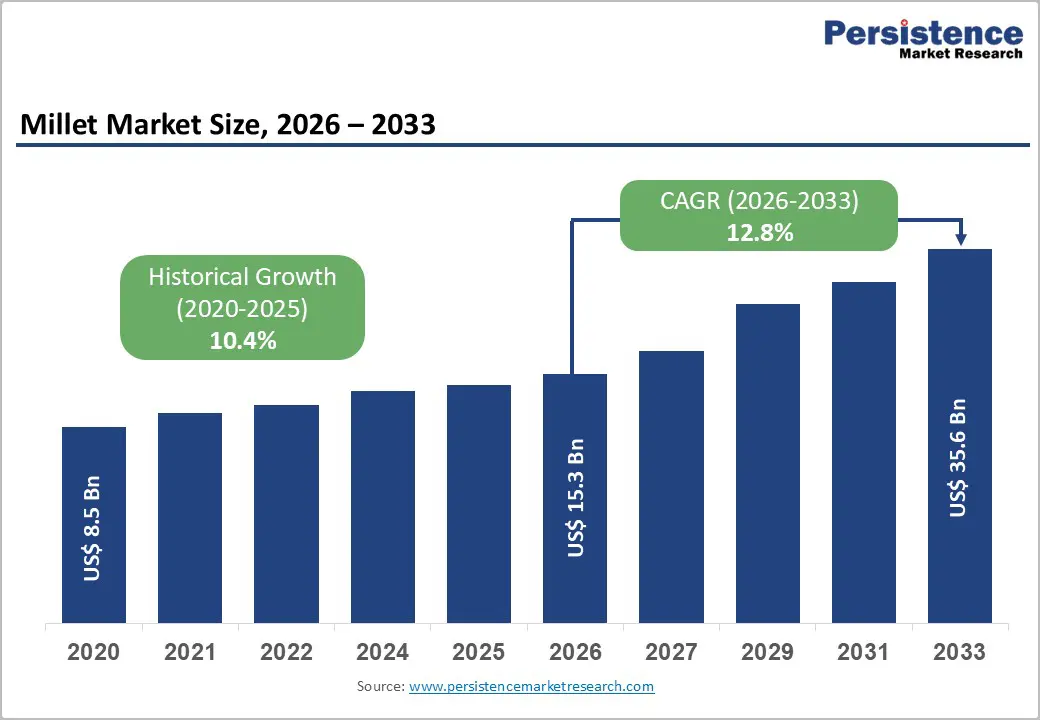
The global millet market size is expected to be valued at US$ 15.3 billion in 2026 and projected to reach US$ 35.6 billion by 2033, growing at a CAGR of 12.8% between 2026 and 2033.
This rapid expansion is primarily driven by the fundamental shift in global dietary patterns toward ancient grains and the increasing recognition of millets as climate-resilient superfoods. As health consciousness rises, consumers are actively seeking gluten-free, low-glycemic index alternatives to traditional cereals like rice and wheat. This transition is further supported by proactive government initiatives, such as the United Nations' declaration of the International Year of Millets, which has significantly boosted production and global export activities, ensuring a robust growth trajectory across both developed and emerging economies.
Key Industry Highlights
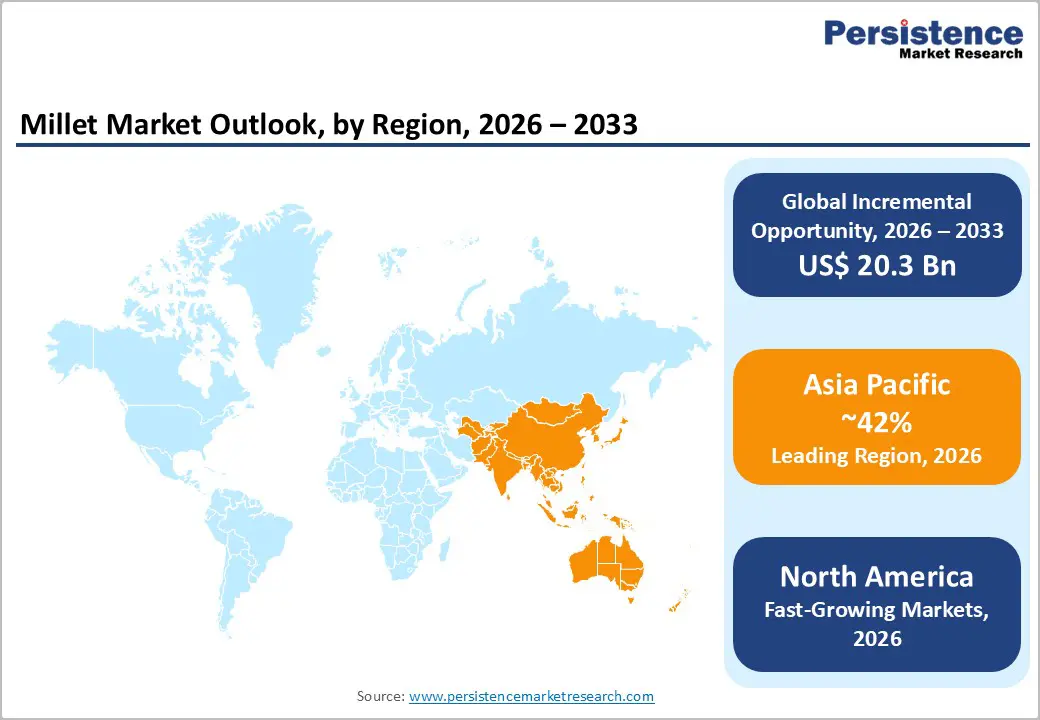
- Leading Region: Asia Pacific, holding 42% market share, driven by strong cultural consumption patterns, large-scale production in India and China, and supportive government initiatives promoting millet adoption.
- Fastest-Growing Region: North America, fueled by rising demand for gluten-free and ancient grains, increasing health awareness, and expanding applications in cereals, snacks, and craft beverages.
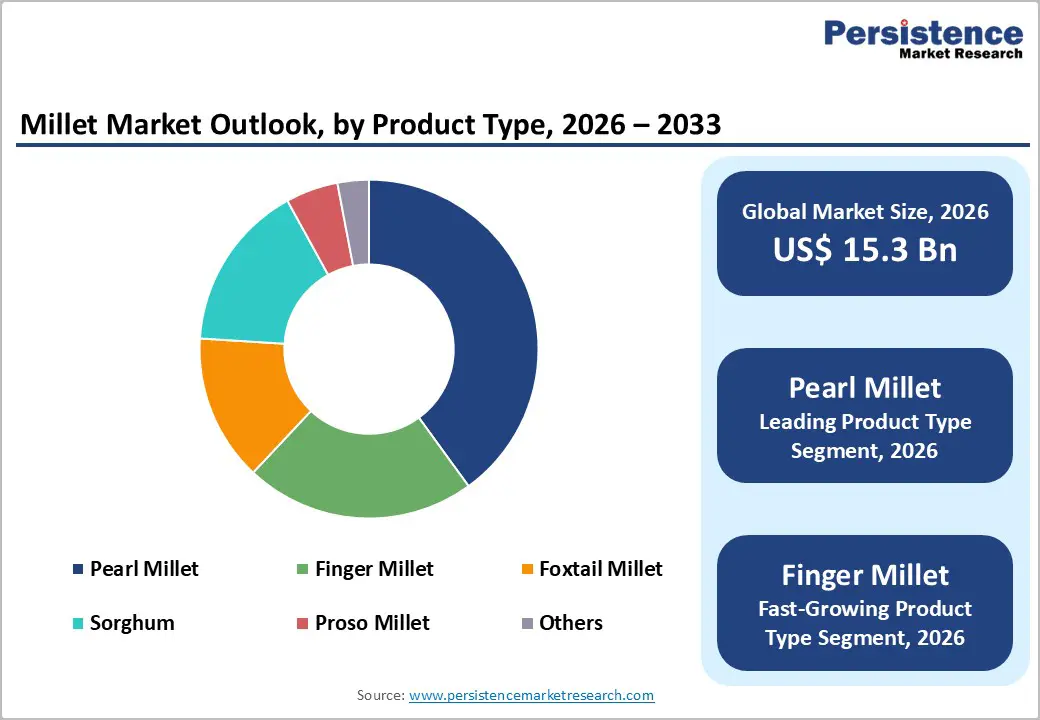
- Fastest-Growing Product Type Segment: Finger Millet, driven by its high calcium content and increasing use in functional foods and pediatric nutrition products.
- Leading Form Segment: Whole Grain, preferred for its minimal processing, traditional consumption patterns, and alignment with clean-label and slow food trends.
- Growth Indicators: Rising consumer focus on preventative healthcare and nutrient-dense whole grains is accelerating millet adoption across food categories.
- Opportunities: Expanding organic and clean-label millet offerings with certified sourcing and sustainable supply chains is unlocking premium market potential.
- Key Developments: In March 2026, the Ministry of Agriculture and Farmers Welfare of India introduced a Millet Export Promotion Plan to enhance global trade, strengthen value chains, and expand international market reach.
| Key Insights | Details |
|---|---|
| Global Millet Market Size (2026E) | US$ 15.3 Bn |
| Market Value Forecast (2033F) | US$ 35.6 Bn |
| Projected Growth (CAGR 2026 to 2033) | 12.8% |
| Historical Market Growth (CAGR 2020 to 2025) | 10.4% |
Market Dynamics
Driver - Growing Consumer Shift Toward Healthier Ancient Grains
The primary driver for the millet industry is the escalating global focus on preventative healthcare through nutrition. According to the World Health Organization (WHO), the rise in non-communicable diseases like diabetes and obesity has encouraged consumers to pivot toward whole grains that offer superior nutritional profiles. Millets are naturally rich in Magnesium, Potassium, and dietary fiber, making them a preferred choice for managing blood sugar levels. The Historical CAGR of 10.4% reflects the successful mainstreaming of these grains in the health and wellness sector. As major food processors like General Mills and ITC Limited launch specialized millet-based product lines, the accessibility of these grains has improved, driving consistent demand in the Breakfast Foods & Cereals and Bakery & Confectionery segments.
Restraints - Lower Sensory Acceptance Compared to Refined Grains
Despite their high nutritional value, millets often face challenges regarding their sensory profile, including taste, texture, and mouthfeel. Some varieties have a distinct, slightly bitter flavor or a grittier texture when compared to the smooth profile of refined wheat or white rice. This can be a deterrent in the Bakery & Confectionery segment, where consumer preference is heavily skewed toward traditional taste profiles. Formulating millet-based products that maintain structural integrity and a pleasant taste requires significant R&D investment. According to industry reports from Persistence Market Research, the technical difficulty in masking these off-notes while maintaining a clean-label status acts as a bottleneck for mass-market adoption among the general population who are not exclusively focused on health benefits.
Opportunity - Rapid Expansion of the Organic and Clean-Label Segment
There is a burgeoning opportunity for market participants to tap into the high-growth Organic millet segment. As transparency in food sourcing becomes a priority for consumers, the demand for certified non-GMO and pesticide-free millets is skyrocketing. According to the Organic Trade Association (OTA), the organic food sector has seen consistent year-on-year growth, and millets are perfectly positioned for this niche. Companies like Jiva Organics and The Millet Company are capitalizing on this by offering premium whole grains and flours. By focusing on sustainable farming certifications and transparent supply chains, businesses can command higher price points and cater to the affluent consumer base that prioritizes environmental health alongside personal wellness.
Category-wise Analysis
Product Type Insights
The pearl millet segment is leading in the product type, accounting for a dominant 40% market share in 2025. Its leadership is justified by its widespread cultivation in India and Africa, where it serves as a foundational staple for millions. It is favored for its high protein content and adaptability to harsh climates. Conversely, Finger Millet is identified as the fastest growing segment through 2033. This rapid growth is driven by its exceptional mineral density, particularly calcium, making it a primary ingredient in the burgeoning functional food and pediatric nutrition industries. Other varieties like Foxtail Millet and Proso Millet are also gaining traction in the North American health snack market due to their unique textures and nutty flavor profiles.
Nature Insights
The Whole Grain form is the leading segment in terms of market share in 2025, as it is the traditional way millets are consumed in primary producing regions and is favored by the Slow Food movement for its minimal processing. However, Millet Flour is identified as the fastest-growing segment. This is because flour is more versatile for industrial applications, serving as a gluten-free base for breads, pastas, and ready-to-cook mixes. Millet Flakes are also seeing a surge in popularity within the Breakfast Foods & Cereals category, providing a convenient oat alternative for the busy morning commute demographic.
Regional Insights
Asia Pacific Millet Market Trends and Insights
Asia-Pacific currently holds a 42% market share in 2025, rooted in the cultural heritage of millet consumption in India and China. India is the global leader in millet production, and the government's National Millet Mission has been instrumental in revitalizing the sector. The region benefits from extensive manufacturing advantages and a well-established infrastructure for both production and consumption.
The innovation ecosystem in this region is focused on the modernization of Besan and other traditional flours into ready-to-eat formats. ITC Limited and The Millet Company are driving the adoption of millets in urban supermarkets. Regulatory support for millet processing units and the expansion of the Online Retail channel are also major trends. The sheer scale of the population and the deep-seated habit of using millets as a primary cereal ensure that the Asia Pacific remains the primary engine for global market value.
North America Millet Market Trends and Insights
North America is projected to be the fastest-growing region for the millet market through 2033. The market leadership in the U.S. and Canada is driven by the explosive growth of the Ancient Grain and gluten-free food trends. Organizations like the Whole Grains Council have been instrumental in educating American consumers about the benefits of diversifying their carbohydrate intake.
The innovation ecosystem in North America is focused on the Breakfast Foods & Cereals and health snack channels. Brands like Bob's Red Mill Natural Foods and NOW Foods have made millets accessible through major retail chains like Whole Foods Market. Regulatory clarity from the FDA regarding nutritional labeling has fostered consumer trust. Furthermore, the rising use of millets in the craft brewing industry as a gluten-free alternative to barley is a notable trend. With high disposable incomes and a strong focus on wellness, North America is poised to see significant value-added growth over the forecast period.
Competitive Landscape
The millet market exhibits a moderately consolidated structure at the top tier, dominated by global agricultural giants with highly integrated supply chains. Key market leaders like ADM, Cargill, and Ardent Mills control a significant portion of the global trade, particularly in the bulk grain and industrial flour segments. These companies employ strategies focused on vertical integration, controlling everything from seed technology with companies like BrettYoung Seeds to final processing. Key differentiators include the ability to provide consistent high-quality grain and the attainment of global safety certifications. Emerging business models are increasingly prioritizing sustainability and traceability to appeal to ethically-minded industrial buyers. As the market matures, there is a visible trend toward strategic partnerships between large processors and niche health brands like Jiva Organics to capture the specialized retail market.
Key Developments:
- In March 2026, the Ministry of Agriculture and Farmers Welfare of India announced a comprehensive Millet Export Promotion Plan for 2026-27, designed to strengthen India’s position in the global millet trade through improved value chains, export incentives, and international market expansion.
- In December 2025, the International Crops Research Institute for the Semi-Arid Tropics (ICRISAT) released the first-ever biofortified pearl millet varieties for Zimbabwe and the East and Southern Africa (ESA) region, aiming to improve nutritional security and boost climate-resilient crop production.
Companies Covered in Millet Market
- ADM
- Cargill
- ITC Limited
- Ardent Mills
- Bob's Red Mill Natural Foods
- AGT Food and Ingredients
- Jiva Organics
- NOW Foods
- BrettYoung Seeds
- General Mills
- The Millet Company
- Others
Frequently Asked Questions
The global millet market is projected to be valued at US$ 15.3 Bn in 2026.
Growing Consumer Shift Toward Healthier Ancient Grains is a major factor driving global Millet market.
The global millet market is poised to witness a CAGR of 12.8% between 2026 and 2033
Rapid expansion of the Organic and Clean-Label Segment is a significant opportunity in the Millet market.
Major players in the Global Millet market include ADM, Cargill, ITC Limited, Ardent Mills, Bob's Red Mill Natural Foods, AGT Food and Ingredients, Jiva Organics, and others.


