




- Beverages
- Luxury Wines and Spirits Market
Luxury Wines and Spirits Market Size, Share, Growth, and Regional Forecast, 2026 to 2033
Luxury Wines and Spirits Market by Product Type (Luxury Wines, Luxury Spirits), by Sales Channel (On-Trade, Off-Trade), by Regional Analysis, 2026 - 2033

Luxury Wines and Spirits Market Share and Trends Analysis
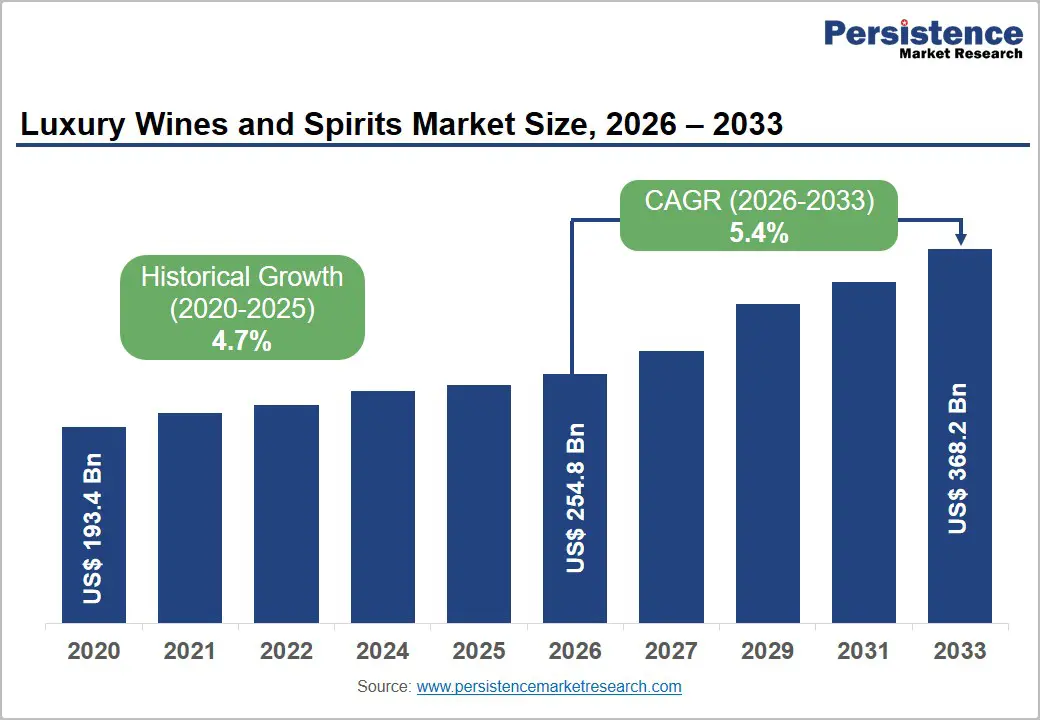
The global luxury wines and spirits market size is estimated to reach US$ 254.8 billion in 2026 to US$ 368.2 billion at a CAGR of 5.4% during the forecast period from 2026 to 2033. It is reshaped by premium lifestyle aspirations, experiential consumption, and rising demand for exclusive alcoholic beverages among affluent consumers.
High-income buyers increasingly prefer limited-edition spirits, vintage wines, and artisanal alcoholic products that reflect heritage, authenticity, and craftsmanship.
Luxury hospitality growth, premium nightlife culture, celebrity collaborations, and collectible alcohol investments are further strengthening market expansion across developed and emerging economies. Sustainability-focused production, biodynamic vineyards, and eco-friendly packaging innovations are also becoming important differentiators for premium beverage brands. Rising digital luxury retail, duty-free shopping, and personalized gifting trends continue to support premium sales momentum across multiple consumer segments.
Key Industry Highlights:
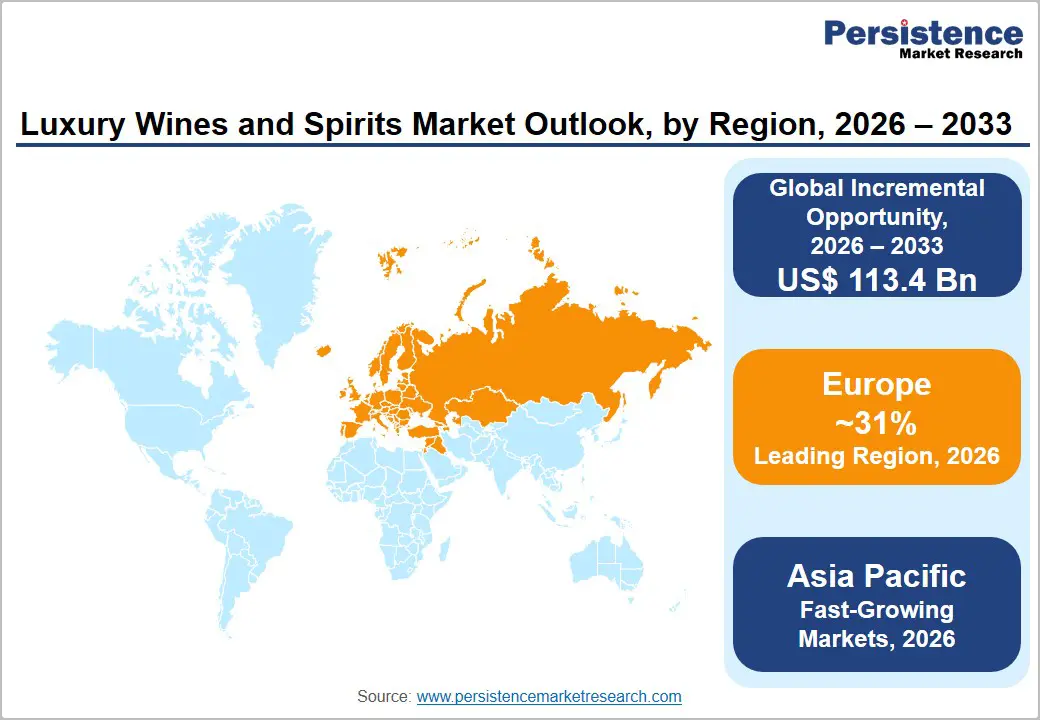
- Leading Region: Europe is likely to capture approximately 31% share, driven by centuries-old winemaking traditions, premium distillation heritage, luxury tourism, and strong demand for vintage wines and artisanal spirits.
- Fastest-Growing Region: Asia Pacific, projected to reach a CAGR of 6.9%, fueled by rising affluent populations, premium lifestyle adoption, luxury hospitality expansion, and increasing demand for imported premium alcoholic beverages.
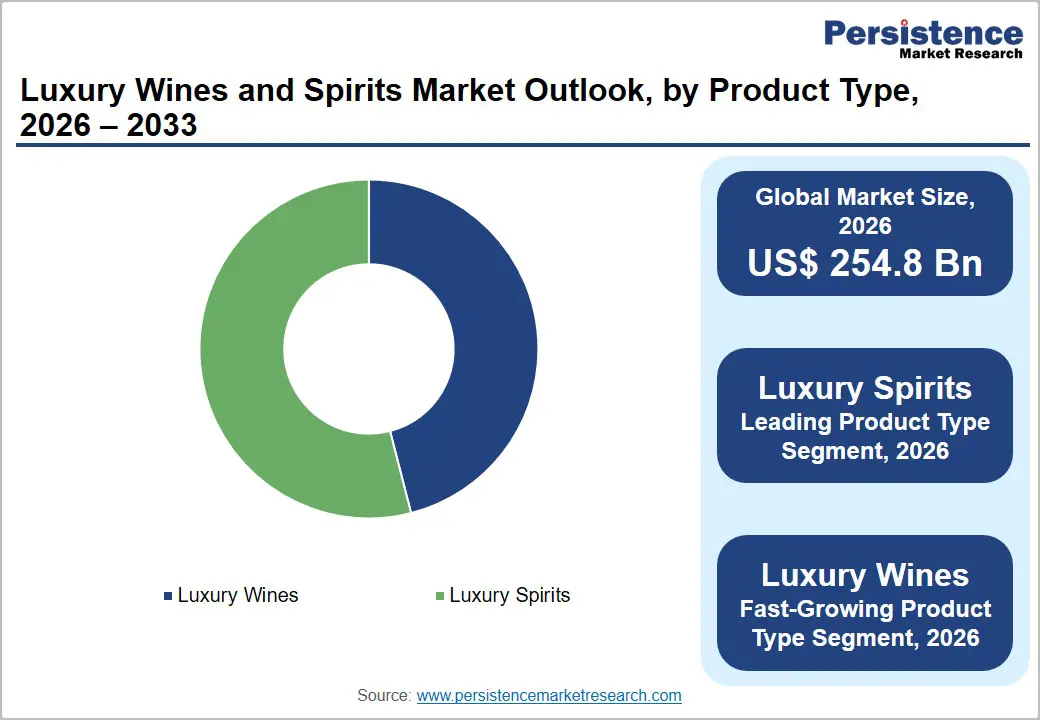
- Leading Product Type Segment: Luxury spirits are likely to account for 54% market share as of 2026, supported by strong demand for premium whisky, tequila, cognac, vodka, and aged rum collections.
- Leading Sales Channel Segment: On-trade is likely to capture 58% share as of 2026, driven by luxury hotels, fine-dining restaurants, upscale bars, cocktail lounges, and experiential premium beverage consumption.
- Growth Indicators: Growing premiumization trends and shifting consumer spending behavior are increasing the preference for artisanal spirits, aged whiskies, vintage wines, and exclusive limited-edition alcoholic beverages.
- Challenges: Rising counterfeiting activities, fraudulent labeling, and unauthorized distribution networks are creating operational and reputational challenges for luxury alcohol producers.
- Opportunities: Expansion of sustainable, biodynamic, and organic product portfolios is creating premium differentiation opportunities among environmentally conscious luxury consumers.
- Consumer Trends: Consumers are increasingly favoring collectible spirits, celebrity-endorsed alcohol brands, premium cocktail experiences, luxury gifting products, and sustainably produced alcoholic beverages.
Market Dynamics
Driver: Pervasive Premiumization Trends and Shifting Consumer Spending Demographics
A noticeable transformation in alcohol consumption habits is accelerating growth across the luxury wines and spirits industry. Consumers are increasingly embracing the “less but better” lifestyle approach, favoring premium-quality beverages over high-volume consumption. Millennials, affluent legal-age consumers, and experience-driven buyers are showing a sstronger preference for artisanal spirits, aged whiskies, vintage wines, and region-specific alcoholic beverages that reflect authenticity, craftsmanship, and cultural heritage.
Demand for limited-edition collections and premium labels is also rising as consumers seek exclusive drinking experiences and stronger emotional brand connections.
According to the International Organisation of Vine and Wine (OIV), overall alcohol consumption volumes have remained relatively stable, while premium product value sales continue to strengthen. Rising disposable incomes and expanding wealthy urban populations are further supporting demand for luxury alcoholic beverages across hospitality, travel retail, and premium dining channels. High-end wines and spirits are increasingly perceived as lifestyle and status symbols among affluent consumers.
Restraint: Volatile Raw Material Costs Compressing Manufacturer Margins
Luxury wines and spirits manufacturers are facing increasing pressure from sophisticated counterfeiting activities and unauthorized distribution networks. Premium alcoholic beverages, particularly rare whiskies, vintage wines, and limited-edition collections, are highly vulnerable to fraudulent refilling, imitation packaging, and fake labeling due to their elevated market value. Counterfeit products can significantly damage brand reputation, reduce consumer trust, and impact revenue generation for luxury beverage companies operating in premium retail and hospitality channels.
According to industry organizations such as the Comité Européen des Entreprises Vins (CEEV), counterfeit alcohol trade continues to create substantial financial and operational challenges for premium beverage producers. To strengthen product authenticity and supply chain transparency, companies are investing in tamper-evident closures, holographic security labels, digital authentication technologies, and blockchain-based product tracing systems. These advanced anti-counterfeiting initiatives increase operational costs and place additional financial pressure on luxury alcohol brands.
Opportunity: Strategic Expansion of Sustainable, Biodynamic, and Organic Product Lines
Growing environmental awareness among premium consumers is creating strong opportunities for luxury wine and spirits producers to expand sustainable, biodynamic, and organic product portfolios. Affluent buyers increasingly prefer alcoholic beverages produced through ethical sourcing, environmentally responsible farming, and low-impact manufacturing practices. Demand for organic wines, naturally crafted spirits, and sustainably packaged premium beverages is steadily increasing as consumers pay closer attention to ingredient transparency, carbon footprints, and long-term environmental impact. This shift is encouraging luxury brands to strengthen sustainability-focused product positioning across premium retail and hospitality channels.
According to the International Federation of Organic Agriculture Movements (IFOAM), certified organic farmland continues to expand annually, reflecting rising global interest in sustainable agriculture. Premium beverage companies are increasingly investing in biodynamic vineyards, water-efficient distillation processes, recyclable packaging, and lightweight glass bottles to reduce environmental impact. These sustainability initiatives are helping brands differentiate and strengthen loyalty among eco-conscious luxury consumers.
Category-wise Analysis
By Product Type Insights
Luxury spirits are likely to dominate with 54% share as of 2026, reflecting strong consumer preference for premium whisky, tequila, cognac, vodka, and aged rum categories across affluent purchasing groups. Consumers increasingly associate luxury spirits with craftsmanship, exclusivity, heritage branding, and premium social experiences. Rising demand for rare cask-aged collections, celebrity collaborations, and limited-edition releases is strengthening product appeal among collectors and younger high-income consumers. Expanding cocktail culture, luxury hospitality spending, and premium nightlife experiences are further accelerating consumption across bars, lounges, and fine-dining establishments.
Leading beverage companies are continuously investing in artisanal distillation methods, innovative barrel-aging techniques, and premium packaging formats to strengthen brand positioning. Duty-free retail expansion, luxury gifting trends, and rising disposable incomes are also supporting higher sales momentum. Growing interest in experiential consumption and premium mixology culture continues to reinforce long-term demand for luxury spirit products across international consumer markets.
By Sales Channel Insights
On-Trade holds a prominent position with 58% share as of 2026, driven by rising consumer preference for premium drinking experiences across luxury hotels, cocktail lounges, fine-dining restaurants, and upscale bars. Affluent consumers increasingly seek curated beverage experiences featuring aged whiskies, vintage wines, craft cocktails, and limited-edition spirit collections served in premium hospitality environments. Social occasions, business gatherings, and experiential nightlife culture continue to strengthen demand for luxury alcoholic beverages through on-trade establishments. Premium beverage visibility through sommeliers, mixologists, and hospitality professionals further enhances brand discovery and consumer engagement.
Luxury wine and spirit producers actively collaborate with hospitality operators to launch exclusive labels, signature cocktails, and experiential tasting events designed to strengthen premium brand positioning. Expansion of luxury tourism, airport lounges, and high-end entertainment venues is also supporting sales growth. Personalized service experiences and premium beverage pairings continue to reinforce stronger consumer spending across on-trade channels.
Regional Insights
Europe Luxury Wines and Spirits Market Trends
Europe holds approximately 31% market share in the global market supported by the region’s centuries-old winemaking traditions, premium distillation heritage, and strong luxury hospitality culture. Consumers across Europe increasingly prefer limited-edition spirits, vintage wines, artisanal labels, and sustainably produced alcoholic beverages with authentic regional identities.
Rising demand for experiential luxury consumption, private cellar collections, and premium gifting products is further strengthening market expansion. Growth in luxury tourism, Michelin-starred dining, and exclusive tasting experiences continues to elevate premium beverage consumption across high-income consumer groups and international travelers.
France Luxury Wines and Spirits Market Trends
France Luxury Wines and Spirits Market trends are shaped by strong demand for prestige champagne, cognac, Bordeaux wines, and luxury vineyard experiences among affluent domestic and international consumers. Producers are increasingly emphasizing terroir authenticity, organic viticulture, and limited-production releases to strengthen premium positioning. Luxury wine tourism and collectible investment-grade wines continue to attract high-net-worth buyers.
Italy Luxury Wines and Spirits Market Trends
Italy luxury wines and spirits market is influenced by rising global demand for premium Italian wines, aperitifs, and heritage-driven artisanal spirits. Consumers increasingly value region-specific labels, family-owned vineyards, and authentic Mediterranean beverage experiences. Sustainable winemaking practices and luxury export expansion are further supporting premium category growth.
Asia Pacific Luxury Wines and Spirits Market Trends
Asia Pacific luxury wines and spirits market is expected to grow at a CAGR of 6.9%, driven by rising disposable incomes, premium lifestyle adoption, and increasing preference for luxury alcoholic beverages among affluent urban consumers. Expanding exposure to international drinking culture, luxury dining experiences, and premium nightlife trends is accelerating demand for aged whiskies, vintage wines, and craft spirits across metropolitan markets.
Growth in luxury hospitality, airport duty-free retail, and exclusive private consumption occasions is further supporting premium beverage sales. Younger legal-age consumers are increasingly exploring limited-edition labels, premium cocktail experiences, and collectible spirit portfolios as lifestyle statements.
China Luxury Wines and Spirits Market Trends
China luxury wines and spirits market trends are shaped by rising demand for prestige whisky, imported wines, and premium gifting-oriented alcoholic beverages among affluent consumers. Luxury banquet culture, corporate gifting practices, and strong interest in collectible rare spirits continue to support category expansion. Premium retail boutiques and digital luxury commerce platforms are further strengthening market accessibility.
India Luxury Wines and Spirits Market Trends
India Luxury Wines and Spirits Market trends are driven by growing premiumization in alcohol consumption, expanding luxury hospitality infrastructure, and rising preference for imported spirits among high-income urban consumers. Demand for premium single malts, craft gin, and luxury wine experiences is increasing steadily across metropolitan cities and upscale dining venues.
Competitive Landscape
The global luxury wines and spirits market is intensely competitive, led by premium beverage conglomerates, heritage distilleries, boutique wineries, and celebrity-backed alcohol brands competing through exclusivity, craftsmanship, and luxury brand storytelling. Leading companies are heavily investing in rare cask collections, aged reserve portfolios, sustainable vineyards, and ultra-premium limited-edition launches to strengthen consumer engagement. Strategic acquisitions of artisanal wineries, craft distilleries, and regional luxury labels are expanding premium product portfolios and international market presence.
Celebrity collaborations and ambassador partnerships with athletes, musicians, and entertainment personalities are increasingly shaping premium consumer perception and aspirational purchasing behavior.
Luxury packaging innovation featuring crystal decanters, personalized engraving, collectible bottles, and sustainable premium materials is becoming a major differentiation strategy. Companies are also expanding experiential tasting events, luxury travel retail presence, and digital direct-to-consumer platforms to strengthen premium brand visibility and affluent consumer loyalty.
Key Developments:
- In May 2026, Chivas Regal collaborated with Formula 1 driver Charles Leclerc to create a unique 16-year-old blended Scotch whisky inspired by his racing career.
- In March 2026, Gallo Luxury Group announced the debut of Monte Rosso Estate fine wines, crafted under the leadership of Argiano Winemaker and CEO Bernardino Sani alongside Estate Director Diego Del Pino.
- In February 2026, The Macallan introduced the Diamonds Are Forever 55th Anniversary Release, a strictly limited 18-year-old Single Malt Scotch Whisky collection.
- In February 2026, Johnnie Walker launched Johnnie Walker Black Cask Blended Scotch Whisky, combining American whiskey character with traditional Scotch whisky craftsmanship.
Companies Covered in Luxury Wines and Spirits Market
- LVMH
- Diageo PLC
- Pernod Ricard SA
- Brown-Forman Corporation
- Rémy Cointreau SA
- Campari Group
- Constellation Brands
- Suntory Holdings Limited
- Hite Jinro Co. Ltd.
- Bacardi Limited
- William Grant & Sons
- Treasury Wine Estates Ltd.
- Radico Khaitan Limited
- Thai Beverage Public Company Limited.
- Others
Frequently Asked Questions
The global luxury wines and spirits market is projected to be valued at US$ 254.8 Bn in 2026.
Pervasive premiumization trends and shifting consumer spending demographics is driving the global luxury wines and spirits market.
The global luxury wines and spirits market is poised to witness a CAGR of 5.4% between 2026 and 2033.
Strategic expansion of sustainable, biodynamic, and organic product lines is creating significant growth opportunities in the global luxury wines and spirits market.
LVMH, Diageo PLC, Pernod Ricard SA, Brown-Forman Corporation, Rémy Cointreau SA, Campari Group, Constellation Brands, Suntory Holdings Limited.


