




- Home Care & Utilities
- Household Care Wipes Market
Household Care Wipes Market Size, Share, and Growth Forecast 2026 - 2033
Household Care Wipes Market by Products (Floor Wipes, Cleaning or Disinfectant wipes, Electrostatic wipes, Mops, Glass & furniture wipes, Others), Sales Channel (Hypermarket & Supermarket, Speciality Stores, Multi-brand Stores, Online stores, Independent Small Stores), Application (Kitchen Cleaning, Bathroom Cleaning, General Household, Baby Care, Pet Care), Regional Analysis, 2026 - 2033

Household Care Wipes Market Size and Trend Analysis
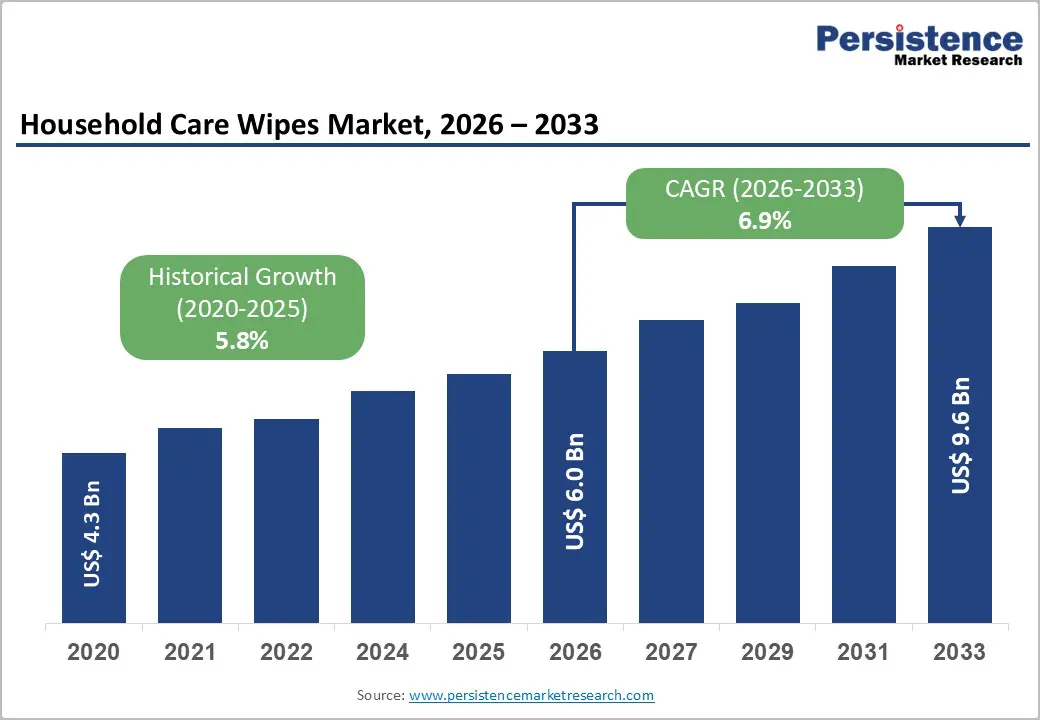
The global household care wipes market is projected to reach US$ 6.0 billion in 2026 and US$ 9.6 billion by 2033, growing at a CAGR of 6.9% from 2026 to 2033.
The global household care wipes industry is currently witnessing a significant shift driven by heightened hygiene awareness and convenience-seeking urban lifestyles. Consumers are increasingly prioritizing ready-to-use cleaning solutions that offer dual benefits of sanitation and time efficiency, particularly in dual-income households.
Key Market Highlights
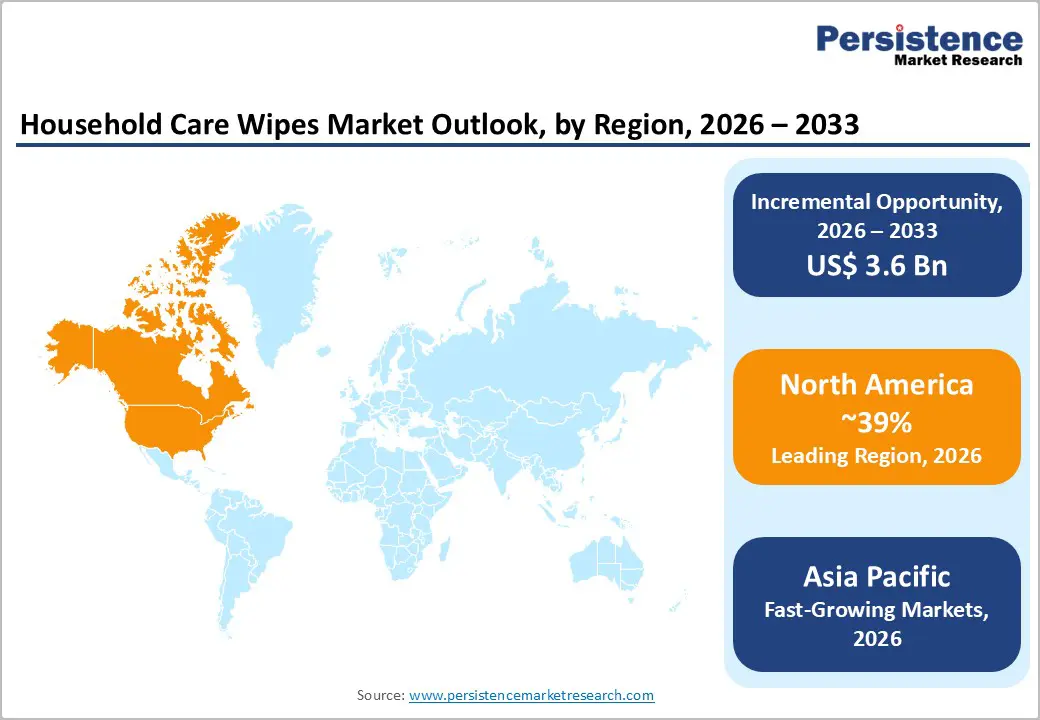
- Leading Region: North America dominates the global landscape with 39% market share, driven by high disposable income, established usage habits, and strong demand for premium disinfectant and convenience-focused cleaning products.
- Fastest-Growing Region: Asia Pacific is projected to grow at the highest rate of 8.6%, fueled by rapid urbanization, expanding middle-class populations in China and India, and rising hygiene awareness.
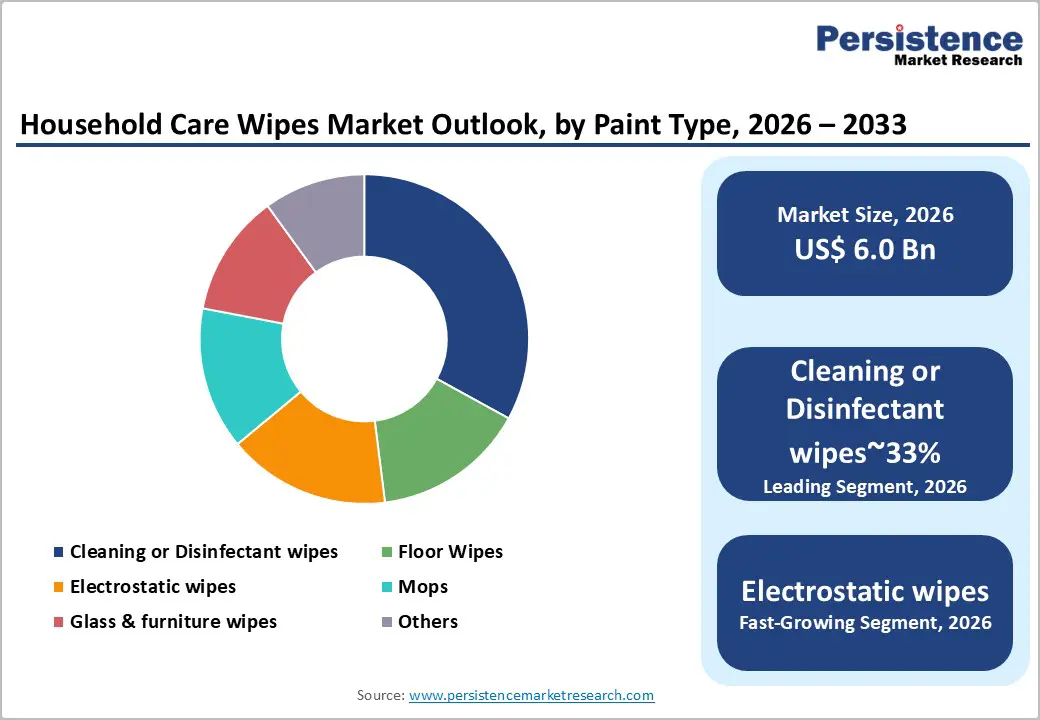
- Dominant Segment: Cleaning or Disinfectant wipes lead the product category, holding 33% share, maintaining a substantial share due to the sustained post-pandemic consumer focus on surface sanitation and health protection.
- Fastest Growing Segment: Floor Wipes are emerging as a rapidly expanding segment with a rising CAGR of 7.4%, driven by the convenience they offer for quick, daily maintenance of hard floors in modern urban homes.
- Key Market Opportunity: Biodegradable and Plastic-Free Wipes represent the most significant growth avenue, as stringent regulations and consumer demand for sustainable products force a shift away from traditional synthetic materials.
| Key Insights | Details |
|---|---|
| Household Care Wipes Market Size (2026E) | US$ 6.0 Billion |
| Market Value Forecast (2033F) | US$ 9.6 Billion |
| Projected Growth CAGR (2026 - 2033) | 6.9% |
| Historical Market Growth (2020 - 2025) | 5.8% |
Market Dynamics
Drivers - Rise in Global Hygiene Awareness Driving Long-Term Demand for Daily Household Surface Sanitizing Wipes Worldwide
The household care wipes market continues to expand rapidly, driven mainly by consumers’ heightened focus on hygiene and infection prevention. According to industry reports, post-pandemic behavioral shifts have become long-term habits, with families now prioritizing daily sanitization of high-touch surfaces such as kitchen counters, doorknobs, and bathroom areas. Disinfectant wipes are increasingly viewed as essential household items because they deliver fast, hospital-grade cleaning efficacy without requiring additional cleaning tools. Market studies indicate that a majority of consumers now treat antimicrobial claims as mandatory before purchasing a product, reinforcing demand for wipes capable of eliminating a broad range of germs and viruses.
In April 2025, Reckitt Benckiser Group PLC launched its Lysol Brand New Day Collection featuring a “Lavender & Cotton Blossom” fragrance, emphasizing long-lasting freshness alongside 99.9% germ-killing performance, as reported in company disclosures. This demonstrates how hygiene effectiveness remains the strongest purchasing driver in the category.
Rapid Urbanization and Fast-Paced Lifestyles Increasing Consumer Preference for Convenient, Time-Saving Household Cleaning Wipe Solutions
Rapid urbanization and increasingly fast-paced lifestyles are major contributors to the growing demand for household care wipes. As more individuals live in metropolitan areas with smaller homes and tighter schedules, traditional cleaning methods involving multiple tools, water, and reusable cloths are becoming less practical. Wipes provide a highly convenient, “grab-and-go” cleaning solution that saves time and effort, especially for dual-income households, millennials, and Gen Z consumers who prefer quick and effective cleaning routines.
The direct relationship between rising urban population and higher wipes consumption reflects the growing willingness to pay for convenience-oriented products. This demand is also fueling the growth of specialized segments such as floor wipes and electrostatic dusting wipes, which offer faster turnaround times and minimal setup. In 2025, Procter & Gamble further emphasized this trend by featuring the Swiffer PowerMop, a smarter, speedier system designed to replace the traditional mop-and-bucket approach, tailored for time-pressed urban homes seeking efficiency in everyday cleaning tasks.
Restraints - Growing Regulatory Pressure on Single-Use Plastics Forcing Manufacturers toward Sustainable, Biodegradable Household Wipe Alternatives
The most significant restraints for the household wipes market is the growing pressure from global regulatory bodies targeting single-use plastics. Governments, particularly in regions such as the European Union and the United Kingdom, are enforcing strict bans, product labeling rules, and environmental guidelines due to concerns about marine pollution and sewer blockages caused by plastic-containing wipes. Incidents like “Fatbergs,” massive sewer blockages formed by improperly disposed non-flushable wipes, have intensified regulatory actions, including the UK’s upcoming ban on plastic in wet wipes.
As a result, manufacturers are being pushed to transition toward biodegradable substrates such as lyocell and viscose. While necessary, this shift requires substantial investment in research, reformulation, and production modifications, often increasing raw material costs. Balancing compliance while maintaining product performance remains a challenge, as consumers still expect durability and strong cleaning efficacy. These rising costs and product adjustments can also affect pricing strategies, particularly in markets where consumers are highly price sensitive.
Supply Chain Instability and Rising Material Prices Creating Production Challenges for Household Wipes Manufacturers Globally
The household care wipes market continues to face growth limitations due to ongoing supply chain instability and fluctuations in raw material costs. Production relies heavily on the consistent availability of nonwoven fabrics, disinfectant chemicals, and plastic polymers used in packaging. Global disruptions, including geopolitical tensions, rising transportation costs, and fluctuating energy prices, directly affect the supply and pricing of these materials. Manufacturers must navigate uncertain timelines, shifting inventory levels, and unpredictable sourcing conditions, all of which pose risks to maintaining steady production flows.
As companies transition to eco-friendly, biodegradable raw materials, they encounter new challenges because sustainable fibers remain less available and more expensive than traditional synthetic options. Securing certified, high-quality biodegradable substrates is especially difficult for large-scale operations. These combined pressures often lead to increased production costs, potential product shortages, or higher retail prices, which could deter cost-sensitive consumers, particularly in developing markets where affordability is a key driver of purchase.
Opportunity - Accelerating Shift toward Eco-Friendly Materials Creating Major Innovation Opportunities in Biodegradable Household Cleaning Wipes
A major opportunity in the household care wipes market lies in the rapid shift toward eco-friendly and biodegradable solutions. As sustainability becomes a mainstream consumer expectation, brands that adopt plastic-free, plant-based materials stand to gain a substantial competitive advantage. Growing environmental awareness is motivating consumers, especially younger demographics, to pay a premium for wipes made from bamboo, organic cotton, and other biodegradable fibers.
Innovation is expanding beyond wipe materials to include sustainable packaging options, such as recyclable wraps, compostable containers, and refillable canisters. Companies that transform their portfolios early will not only meet upcoming regulatory requirements but also secure stronger brand loyalty among environmentally conscious buyers. This trend is reflected in Nice-Pak International’s October 2025 announcement that 92% of its wipes for the UK and Europe are now plastic-free, demonstrating both technological progress and strong alignment with future market demands. This shift signals significant commercial potential for brands that invest aggressively in sustainable product development.
Expanding Niche Cleaning Categories like Pet Care and Electrostatic Dusting Offering High-Growth Opportunities for Wipe Brands
There is a strong opportunity for growth in specialized wipe applications, particularly in segments such as pet care and electrostatic dusting. With the growing trend of “pet humanization,” pet owners are seeking high-quality cleaning products tailored to their pets’ hygiene needs, including paw wipes, ear-cleaning wipes, and grooming wipes. These niche products allow brands to enter less-saturated categories at higher price points and build stronger brand loyalty. Similarly, electrostatic wipes appeal to households focused on health and indoor air quality, as they effectively capture dust and allergens without relying on chemical sprays.
These specialized segments are expanding rapidly as consumers look for targeted, high-performance solutions beyond general-purpose cleaning wipes. To meet this rising demand, Diamond Wipes International announced in October 2025 the expansion of its U.S. manufacturing operations to boost production capacity for the pet care and health & wellness categories. This strategic move demonstrates the growing commercial potential for niche wipes and highlights the strong profitability these segments can offer.
Category-wise Analysis
By Product Insights
The Cleaning or Disinfectant wipes segment currently leads the product category, holding a strong market share of around 33%. This dominance is driven by the lasting consumer habit of frequent surface disinfection developed during the global pandemic. These wipes are considered essential for maintaining a clean and hygienic home, especially because they offer both cleaning and sanitizing benefits. Continuous product innovation also supports this segment’s growth, with brands introducing wipes effective against cold and flu viruses, along with new fragrances that reduce harsh chemical smells. Leading companies such as The Clorox Company and Reckitt Benckiser Group PLC continue to invest in advanced formulations, further strengthening the segment’s long-term leadership.
By Sales Channel Insights
Hypermarkets and Supermarkets remain the top sales channel, capturing approximately 39% of the market. Their strong performance is mainly due to high customer footfall and the convenience of buying household essentials in one place. Consumers prefer purchasing wipes in physical retail stores, where they can compare prices, pack sizes, and new variants. Retailers support this trend by offering prominent shelf placement and running promotions for both branded and private-label products. Additionally, the ability to examine packaging claims, such as “antibacterial” or “biodegradable”, helps build trust at the time of purchase. This combination of convenience, visibility, and assurance keeps this traditional channel highly relevant despite increasing online sales.
By Application Insights
Kitchen Cleaning remains the leading application segment, accounting for roughly 34% of the market. The kitchen is a central area in every household and requires frequent cleaning due to food preparation and hygiene needs. Wipes designed for kitchen use are formulated to remove grease, food residues, and grime while remaining safe for food-contact surfaces. Their convenience in quickly cleaning countertops, appliances, and stovetops drives repeated usage. Product innovation also supports growth, with brands introducing textured wipes for better scrubbing and variants infused with natural degreasers like lemon or vinegar. These features make kitchen wipes a preferred choice for consumers seeking fast, effective, and specialized cleaning solutions.
Regional Insights
North America Household Care Wipes Market Trends
North America continues to lead the global household care wipes market, supported by strong consumer purchasing power and a long-established preference for disposable cleaning products. The United States is the key contributor, where busy lifestyles and high hygiene expectations make wipes a staple in daily cleaning routines. Demand remains particularly strong for disinfectant wipes, driven by continued health awareness and the desire for quick, effective cleaning solutions.
The region also shows growing interest in environmentally friendly and “green” cleaning options, prompting companies to expand sustainable product lines. Regulatory frameworks, such as EPA approvals for disinfectant claims, ensure that products meet strict safety and efficacy standards, raising the overall quality of offerings in the market. Innovation remains vigorous, with leading brands like The Clorox Company and Procter & Gamble introducing advanced formulations and textures that improve cleaning performance. Private-label brands are also gaining ground as cost-effective alternatives, contributing to competitive pricing and broader market access across retail channels.
Europe Household Care Wipes Market Trends
Europe represents a highly influential market with a strong focus on sustainability, driven by strict environmental regulations and consumer preference for eco-friendly products. Countries such as Germany, the United Kingdom, and France are leading the movement toward plastic-free and biodegradable wipes, significantly shaping market direction. The implementation of the EU Single-Use Plastics Directive has accelerated innovation in biodegradable materials, pushing manufacturers to adopt natural fibers such as viscose, lyocell, and wood pulp.
European consumers are particularly discerning about environmental impact, favoring products with eco-certifications, reduced aquatic toxicity, and clear disposal instructions such as “Do Not Flush.” This regulatory and consumer-driven pressure is encouraging brands to transition toward more sustainable production and packaging methods. The region is also promoting advancements in circular economy practices, influencing global industry standards. Despite these regulatory demands, growth remains steady as consumers continue prioritizing high-performance cleaning solutions that align with their environmental values, reinforcing Europe’s role as a leader in sustainable household cleaning trends.
Asia Pacific Household Care Wipes Market Trends
Asia Pacific is the fastest-growing region in the household care wipes market, fueled by rapid urbanization, rising disposable incomes, and a growing middle class across major countries such as China, India, and Japan. The region is undergoing a significant shift in hygiene awareness as consumers transition from traditional cleaning methods to more modern and convenient solutions like household wipes. China remains at the forefront, benefiting from strong domestic manufacturing capabilities and high consumer adoption rates. India is also witnessing steady growth as organized retail expands and Western cleaning habits increasingly influence urban households.
Asia Pacific has advantages in the production of nonwoven fabrics, allowing for cost-effective manufacturing and competitive pricing. The rising emphasis on health, convenience, and time efficiency continues to drive demand, while local and international brands actively expand product portfolios to capture emerging opportunities. With evolving lifestyles and increasing awareness of sanitation, the region is expected to maintain strong, long-term growth momentum.
Competitive Landscape
The global household care wipes market is moderately consolidated, with a few multinational giants dominating the core segments while numerous regional players and private-label brands aggressively compete for market share. Key players such as The Clorox Company, Reckitt Benckiser, and Procter & Gamble wield significant influence through extensive distribution networks, massive R&D budgets, and strong brand equity. However, the market is witnessing increasing fragmentation in the eco-friendly niche, where agile startups and specialized companies are challenging incumbents with innovative, sustainable offerings. Competitive strategies are heavily focused on product differentiation through sustainability (e.g., plastic-free claims), specialized applications (e.g., pet or tech wipes), and strategic mergers and acquisitions to expand geographic footprints. Private label brands from major retailers such as Walmart and Tesco are also exerting pricing pressure, forcing premium brands to justify their value proposition through superior performance and innovation.
Key Market Developments:
- In February, 2025: Nice-Pak Products, Inc. announced that 90% of its private-label wipes sold to the UK and European markets are now plastic-free, achieving a major sustainability milestone ahead of regulatory deadlines.
- In January, 2025: Procter & Gamble Co. unveiled its latest home care innovations, including advanced Swiffer PowerMop refills and upgraded cleaning formulations, emphasizing efficiency and superior cleaning power for modern households
Companies Covered in Household Care Wipes Market
- Edana
- Diamond Wipes International Inc.
- Medline Industries
- The Honest Company, Inc.
- Procter and Gamble Co.
- Edgewell Personal Care Co.
- Pluswipes
- KCWW
- Nice-Pak Products, Inc.
- Rockline Industries
- Amway
- S. C. Johnson & Son, Inc.
- Procter & Gamble Corporation
- The Clorox Company
- Weiman Products, LLC
- Reckitt Benckiser Group PLC
Frequently Asked Questions
The global household care wipes market is projected to reach a value of US$ 9.6 Billion by 2033, growing at a robust CAGR of 6.9% from 2026.
The market is primarily driven by heightened global hygiene awareness, a shift towards convenient cleaning solutions due to rapid urbanization, and the increasing demand for disinfectant products in daily household routines.
The cleaning or disinfectant wipes segment commands the largest market share, favored by consumers for their dual ability to clean and sanitize surfaces effectively against germs and viruses.
Asia Pacific is anticipated to be the fastest-growing region, supported by rising disposable incomes, expanding urban populations, and growing adoption of modern hygiene practices in key markets like China and India.
A significant opportunity lies in the development of eco-friendly, biodegradable wipes, catering to the growing consumer demand for sustainable products and complying with increasingly strict regulations against single-use plastics.
Some key players profiled are The Clorox Company, Procter & Gamble Co., Reckitt Benckiser Group PLC, Nice-Pak Products, Inc., and Rockline Industries in the household care wipes market.


