




- Specialty & Fine Chemicals
- Gear Oil Market
Gear Oil Market Size, Share, and Growth Forecast, 2025 - 2032
Gear Oil Market By Product Type (Biobased Oil, Synthetic Oil, Semi-Synthetic Oil, Mineral Oil), Application (Lubrication, Heat Generation removal, Others), End-user (Transportation, Plastic Manufacturing, Others), and Regional Analysis for 2025 - 2032

Gear Oil Market Size and Trends Analysis
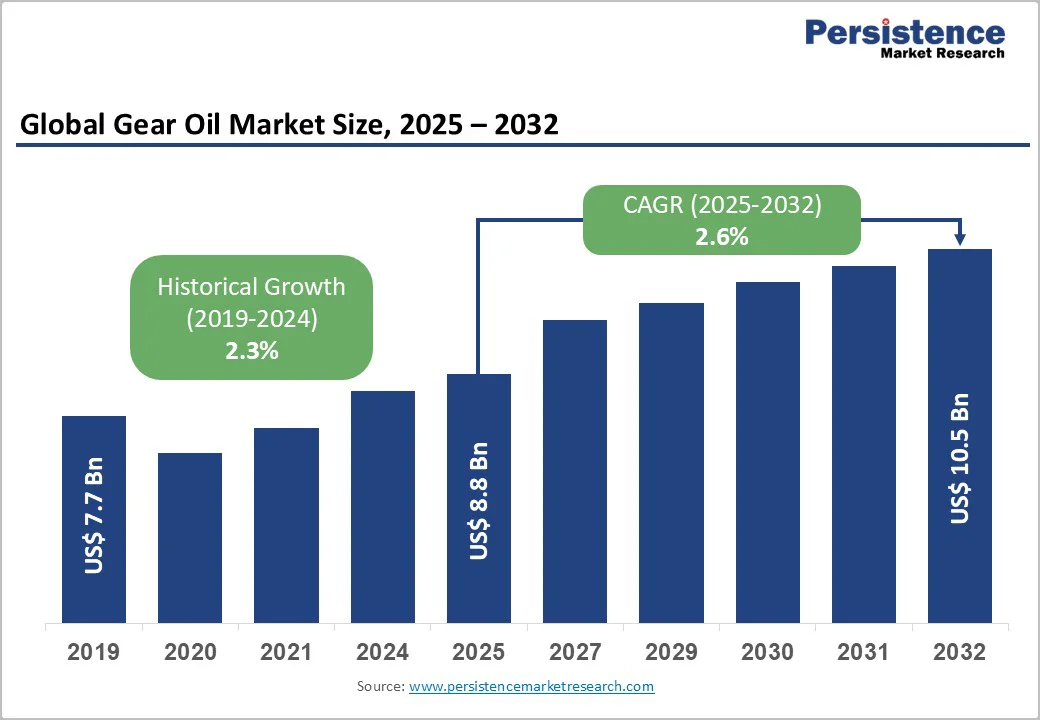
The global gear oil market size is likely to be valued US$8.8 billion in 2025, and is expected to reach US$10.5 billion by 2032, growing at a CAGR of 2.6% during the forecast period from 2025 to 2032, driven by the increasing prevalence of automotive production, rising demand for efficient lubrication in industrial machinery, and advancements in synthetic formulations.
The demand for wear protection and thermal stability, especially in transportation, is driving gear oil adoption. Innovations in biobased and synthetic oils and their role in ensuring gearbox longevity, particularly in oil & gas, further boost market growth.
Key Industry Highlights:
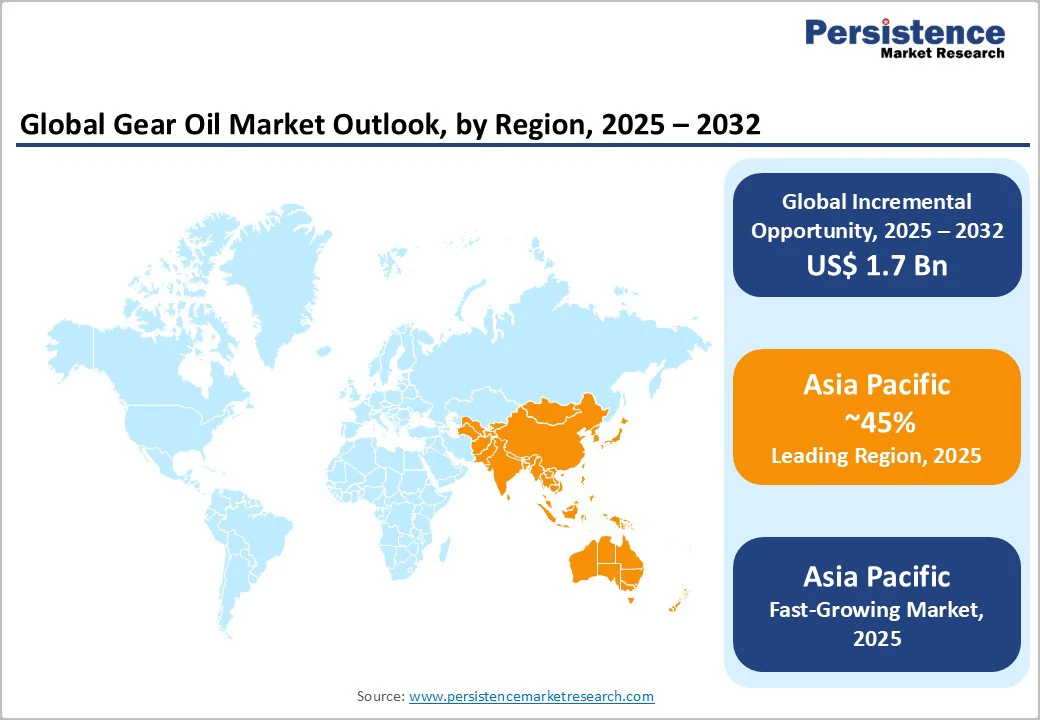
- Leading Region: Asia Pacific, commanding a 45% market share in 2025, driven by massive manufacturing hubs, high prevalence of automotive assembly, and strong R&D activities in China.
- Fastest-growing Region: Asia Pacific, due to rapid industrial expansion, rising automotive production, and large-scale infrastructure development.
- Dominant Product Type: Mineral oil, holding approximately 50% of the market share, due to cost-effectiveness in mass applications.
- Leading Application: Lubrication, accounting for over 70% of the market revenue, driven by friction reduction needs.
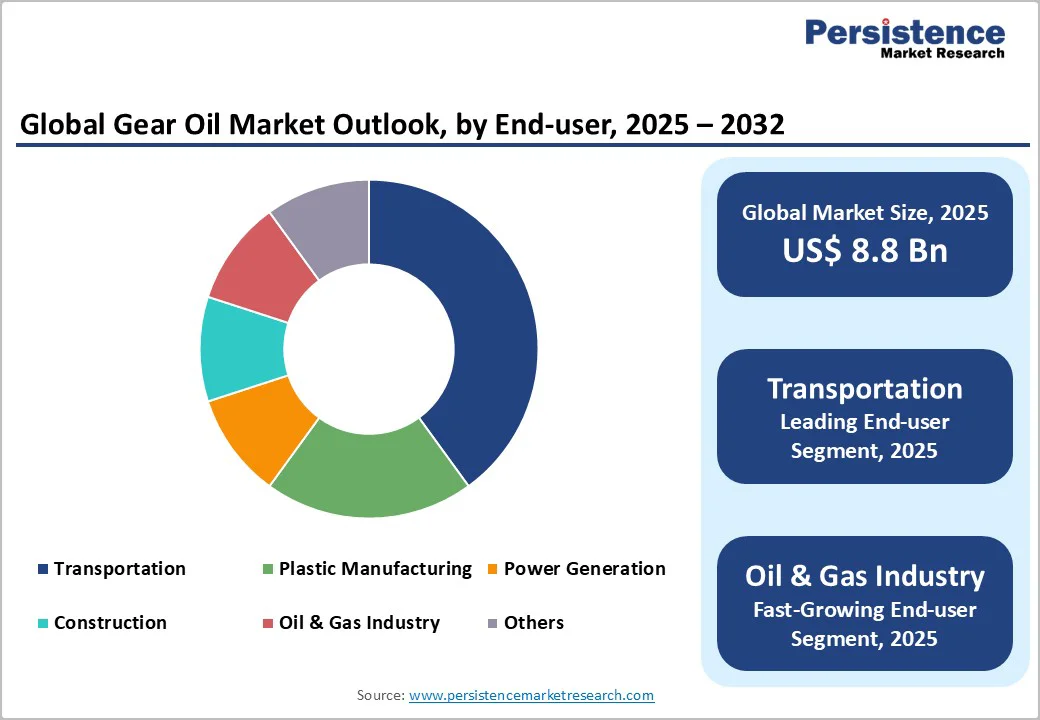
- Leading End-user: Transportation, contributing nearly 40% of the market revenue, due to vehicle fleet growth.
- Key Market Driver: Rising global automotive production is driving stronger demand for high-performance gear oils that reduce friction and enhance drivetrain efficiency.
- Market Opportunity: Growing adoption of electric and hybrid vehicles creates new opportunities for specialized gear oils tailored to high-efficiency drivetrains.
| Key Insights | Details |
|---|---|
| Gear Oil Market Size (2025E) | US$10.5 Bn |
| Market Value Forecast (2032F) | US$8.8 Bn |
| Projected Growth (CAGR 2025 to 2032) | 2.6% |
| Historical Market Growth (CAGR 2019 to 2024) | 2.3% |
Market Factors - Growth, Barriers, and Opportunity Analysis
Rising Prevalence of Automotive Production and Demand for Efficient Lubrication
Rising automotive production is significantly boosting the demand for efficient gear lubrication. As vehicle manufacturing grows, especially in emerging markets such as India, which produced around 28 million vehicles in 2023 - 2024, and global car production rises to tens of millions of units annually, lubrication needs surge.
Advanced gear oil formulations help reduce friction and wear in modern transmissions, including dual-clutch and automatic gearboxes, improving fuel efficiency and extending equipment life.
As automakers shift toward lighter, more efficient drivetrains, lubricant developers are investing in synthetic and low-viscosity oils to meet OEM specifications and regulatory pressures. These trends make efficient lubrication a key enabler of performance and durability in the expanding global automotive fleet.
High Development and Raw Material Volatility Costs
The high costs associated with development and raw material volatility of gear oil pose a significant restraint on market growth. Developing advanced formulations such as synthetic, bio-based, or high-performance extreme-pressure gear oils requires extensive R&D, specialized additives, and rigorous testing to meet strict performance and environmental standards.
These processes demand substantial investment in laboratories, pilot plants, and certification procedures. For example, creating next-generation synthetic formulations for wind turbine gearboxes involves testing for oxidation resistance, micro pitting protection, and long-drain stability, all of which raise development expenses.
Raw material volatility further intensifies cost pressures. Base oils, which form the bulk of gear oil blends, often experience price fluctuations due to crude oil instability, refinery disruptions, and shifting global demand.
Additives such as anti-wear agents, corrosion inhibitors, and viscosity improvers are also affected by supply chain constraints, geopolitical tensions, and chemical industry shortages. A clear instance occurred during petrochemical supply disruptions, when the price of key additives such as zinc dialkyldithiophosphate (ZDDP) increased sharply, raising manufacturing costs.
Advancements in Bio-Based and High-Viscosity Index Oils
Advancements in bio-based and high-viscosity index (HVI) gear oils are transforming the lubricants landscape, driven by the push for sustainability, efficiency, and regulatory compliance. Bio-based gear oils, derived from renewable sources such as vegetable oils and esters, offer excellent biodegradability and low toxicity, making them ideal for environmentally sensitive applications such as forestry machinery, marine equipment, and agricultural vehicles.
For example, many European wind farms have begun adopting bio-based lubricants to reduce environmental risk in offshore environments. These oils also provide strong lubricity and natural polarity, enhancing film strength and reducing wear in heavy-load gear systems.
High-viscosity index gear oils are gaining traction for their ability to maintain stable viscosity across wide temperature ranges. This is critical in applications such as mining trucks, steel mills, and power plant gearboxes, where operating temperatures can fluctuate significantly. A practical instance is their use in cold-climate industrial machinery, where HVI oils ensure smoother start-ups and consistent protection even in sub-zero conditions.
Category-wise Analysis
Product Type Insights
Mineral oil dominates the market, accounting for 50% of the market share in 2025. Its dominance is driven by affordability, availability, and suitability for standard gears, making it preferred for transportation. Mineral oil, such as that from Chevron Corporation, provides basic lubrication, ensuring reliability. Its cost and compatibility make it preferred for manufacturers.
Synthetic oil is the fastest-growing segment, driven by performance and increasing adoption in heavy-duty. Synthetic offers extreme pressure, appealing for off-road. Focus on PAO innovation accelerates adoption in North America and Europe.
Application Insights
Lubrication leads the market, holding 70% of the market share in 2025, accounting for the majority share due to its critical role in reducing friction and preventing wear in gearboxes and mechanical systems. Its broad applicability across automotive, industrial, and heavy-duty equipment ensures continuous demand. As machinery performance standards rise, the need for reliable, accessible, and high-efficiency lubrication solutions continues to strengthen its dominance.
Heat generation removal is the fastest-growing segment, propelled by rising cooling demands across industrial and power applications. As equipment operates under higher loads and temperatures, efficient thermal transfer becomes essential to prevent wear and ensure operational stability. The convenience, reliability, and performance benefits of advanced heat-removal gear oils are accelerating their adoption in power plants, heavy machinery, and high-temperature systems.
End-user Insights
Transportation dominates the market, contributing 40% of revenue in 2025, driven by extensive use across passenger cars, commercial vehicles, and expanding fleet operations. Its large vehicle base ensures consistent, high-volume consumption, making it a preferred focus for OEMs. Continuous demand for reliability, efficiency, and maintenance support further strengthens transportation’s leading role in overall market revenue.
The oil & gas industry is the fastest-growing segment, driven by expanding drilling activities and rising exploration operations. Equipment such as rigs, pumps, and compressors operates under extreme pressure, heat, and heavy loads, creating a strong demand for high-performance gear oils. Advanced formulations that ensure durability, reliability, and longer service life are increasingly preferred to maintain continuous operations.
Regional Insights
North America Gear Oil Market Trends
North America commands 20% of the market share in 2025, shaped by a mature automotive sector, advanced industrial base, and strong emphasis on high-performance lubrication technologies. Demand remains steady across automotive, manufacturing, mining, construction, and marine applications, where gear oils are essential for ensuring efficiency, reducing wear, and extending equipment life.
One of the strongest trends in the region is the shift toward synthetic and semi-synthetic gear oils, driven by the need for better thermal stability, oxidation resistance, and longer drain intervals in heavy-duty operations.
Environmental regulations are also influencing market behavior, with industries increasingly adopting eco-friendly and low-toxicity lubricants to align with sustainability goals and reduce environmental impact. This has encouraged manufacturers to focus on advanced additive formulations and cleaner chemistries that meet higher performance and regulatory requirements.
The growing penetration of hybrid and electric vehicles is prompting companies to develop specialized gear oils designed for high-efficiency drivetrains.
Europe Gear Oil Market Trends
Europe holds 25% of the market share in 2025, driven by a mature industrial base, strict environmental regulations, and a strong shift toward premium synthetic lubricants.
The region’s well-established automotive, manufacturing, marine, and renewable energy industries continue to drive consistent demand for high-performance gear oils that offer superior efficiency, durability, and reduced maintenance needs. Europe is also witnessing growing adoption of synthetic and semi-synthetic gear oils, as industries prioritize longer drain intervals, enhanced thermal stability, and better protection under extreme operating conditions.
A key trend is the region’s strong focus on sustainability and regulatory compliance. European Union policies on emissions, waste reduction, and chemical safety are encouraging manufacturers to develop bio-based, low-toxicity, and environmentally safe gear oils. Companies are adopting advanced additive technologies to meet REACH standards and address the rising demand for eco-friendly lubricants.
Asia Pacific Gear Oil Market Trends
Asia Pacific accounts for 45% of the market share in 2025, driven by rapid industrial expansion, rising automotive production, and increasing infrastructure development across major economies such as China, India, Japan, and South Korea.
The region’s manufacturing, mining, construction, and power generation sectors are the major consumers of gear oils, creating consistent demand for high-performance formulations that can withstand heavy loads and harsh operating environments. The automotive sector, particularly the growth of passenger and commercial vehicles, further accelerates the adoption of advanced gear oils with improved thermal stability and oxidation resistance.
Another key trend is the shift toward synthetic and semi-synthetic gear oils, as industries prioritize efficiency, longer drain intervals, and reduced maintenance costs. Environmental regulations are encouraging the adoption of bio-based and low-toxicity lubricants, prompting companies to introduce sustainable, eco-friendly products.
Local players, especially in China and India, are strengthening their presence through cost-effective products and localized supply chains, while global brands expand through partnerships and investments in regional blending facilities. Digitalization in industrial operations, including predictive maintenance and smart lubrication systems, is also shaping demand.
Competitive Landscape
The global gear oil market is highly competitive, characterized by a balanced mix of multinational energy giants and specialized lubricant manufacturers.
In mature regions such as North America and Europe, leading players such as Exxon Mobil Corporation and TotalEnergies maintain dominance through strong distribution networks, continuous R&D investments, and a broad portfolio of high-performance synthetic and mineral-based gear oils. Their established customer relationships in automotive, industrial, and marine sectors further reinforce market leadership.
In the Asia Pacific region, rapid industrialization and expanding automotive production create strong demand, allowing regional specialists such as Idemitsu Kosan Co., Ltd. to gain traction through localized manufacturing, cost optimization, and tailored formulations suited to diverse climatic and operational needs.
A key competitive trend is the growing focus on bio-based and eco-friendly gear oils, driven by tightening environmental regulations and rising sustainability expectations.
Key Industry Developments
- In November 2024, Valvoline Global Operations, a global leader in automotive and industrial solutions, introduced Valvoline Extended Protection Full Synthetic Gear Oil, the brand’s first super-premium full synthetic gear oil, engineered to maximize differential life, delivering four times better gear wear protection compared to Valvoline Daily Protection Gear Oil.
- In October 2025, Klüber Lubrication launched new 'Mass Balanced' gear oils, which use bio-based, mass-balanced raw materials certified under the REDcert² system to help meet sustainability goals without sacrificing performance.
Companies Covered in Gear Oil Market
- Exxon Mobil Corporation
- Royal Dutch Shell plc
- BP PLC
- TotalEnergies
- Chevron Corporation
- Fuchs Petrolub SE
- Sinopec Limited
- Lukoil
- Idemitsu Kosan Co., Ltd.
- Castrol
Frequently Asked Questions
The global gear oil market is projected to reach US$8.8 billion in 2025.
The rising prevalence of automotive production and demand for efficient lubrication are the key drivers.
The gear oil market is poised to witness a CAGR of 2.6% from 2025 to 2032.
Advancements in bio-based and high-viscosity index oils are the key opportunities.
Exxon Mobil Corporation, Royal Dutch Shell plc, BP PLC, TotalEnergies, and Chevron Corporation are the key players.


