




- Home Care & Utilities
- Canvas Board Market
Canvas Board Market Size, Share, Trends, Growth, Regional Forecasts, 2026 - 2033
Canvas Board Market by Product Type (Acrylic Primed, Oil Primed, Unprimed, Rigid, Mounted & Framed), Material (Cotton, Linen, Polyester, Wood Board, Fiberboard), Application (Professional Artists, Students, Hobbyists), and Regional Analysis for 2026- 2033

Canvas Board Market Share and Trends Analysis
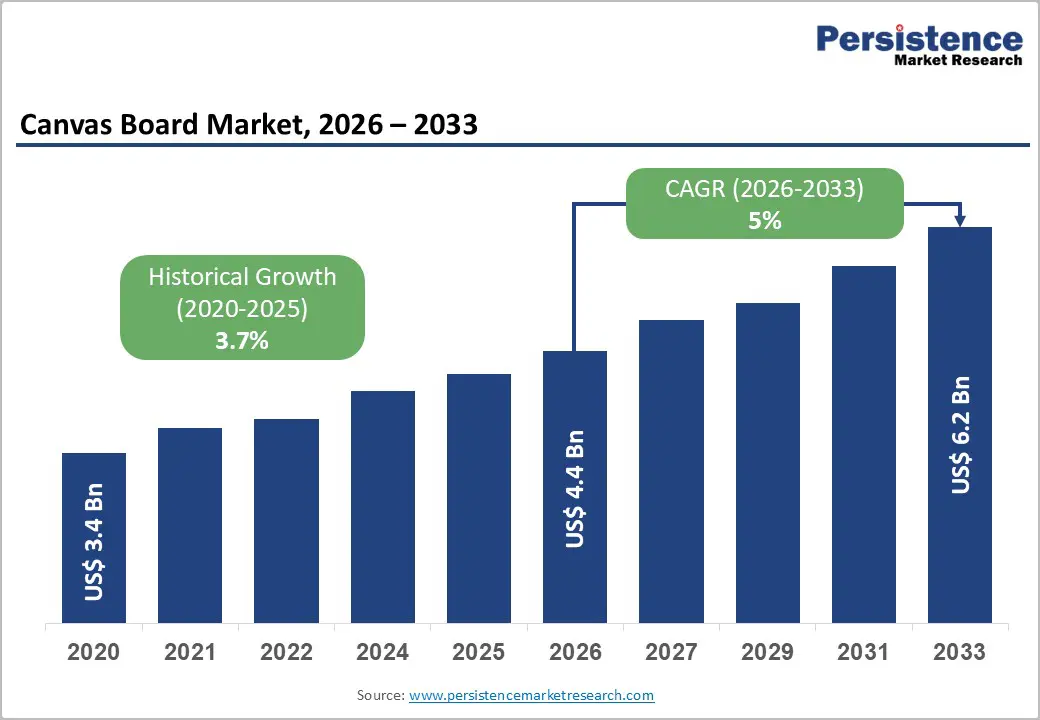
The global canvas board market size is likely to be valued at US$ 4.4 billion in 2026, and is projected to reach US$ 6.2 billion by 2033, growing at a CAGR of 5% during the forecast period 2026–2033. This growth reflects a steady and sustained expansion of the canvas board market, fueled by increasing global interest in visual arts and the integration of art programs across schools, universities, and community education initiatives.
The rising popularity of creative hobbies and do-it-yourself painting activities has further broadened demand, attracting both amateur and professional users. Canvas boards are valued for their versatility, offering suitable surfaces for students learning foundational techniques, hobbyists exploring personal creativity, and professional artists producing high-quality work. Additionally, the proliferation of digital content, online tutorials, and e-commerce platforms has made art supplies more accessible, enhancing adoption across diverse demographics worldwide.
Key Industry Highlights
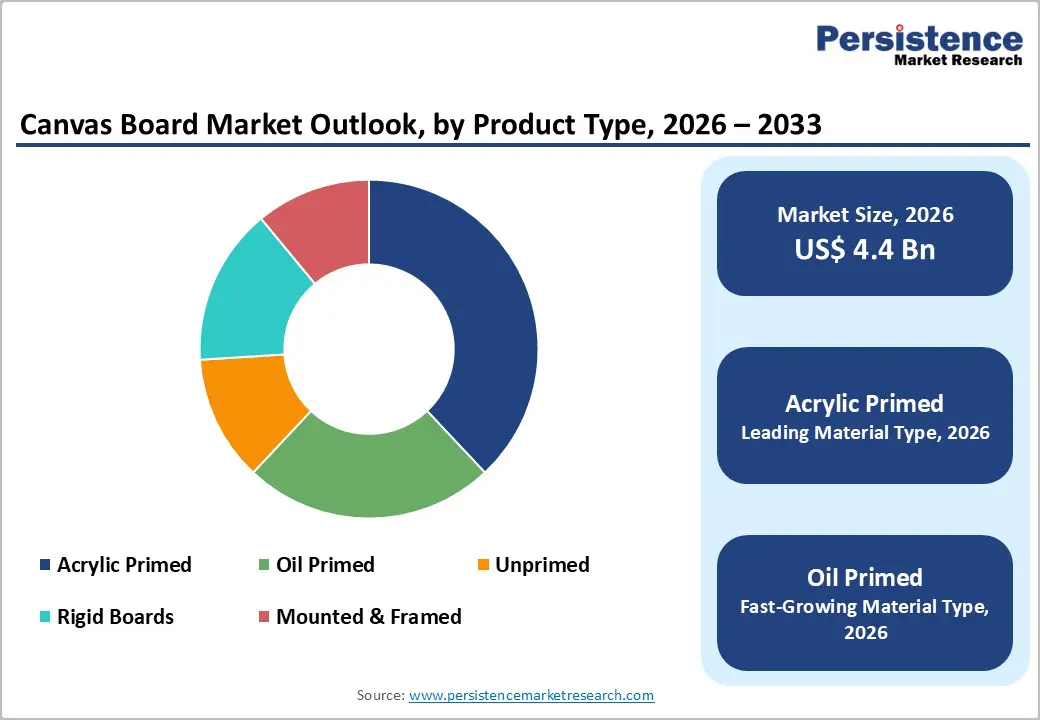
- Leading Product Types: Acrylic primed canvases are expected to lead with an estimated 38% revenue share in 2026, while oil primed canvases are anticipated to grow the fastest at a 5.8% CAGR through 2033, reflecting increased professional artist demand.
- Material Preferences: Cotton-based canvas boards are set to dominate with about 42% revenue share in 2026, whereas linen materials are likely to grow the fastest through 2033, driven by premium and archival applications.
- Application Leadership: Professional artists are poised to lead with around 40% revenue share in 2026, while hobbyist applications are projected to be the fastest-growing through 2033, fueled by rising do-it-yourself (DIY) engagement and social media art communities.
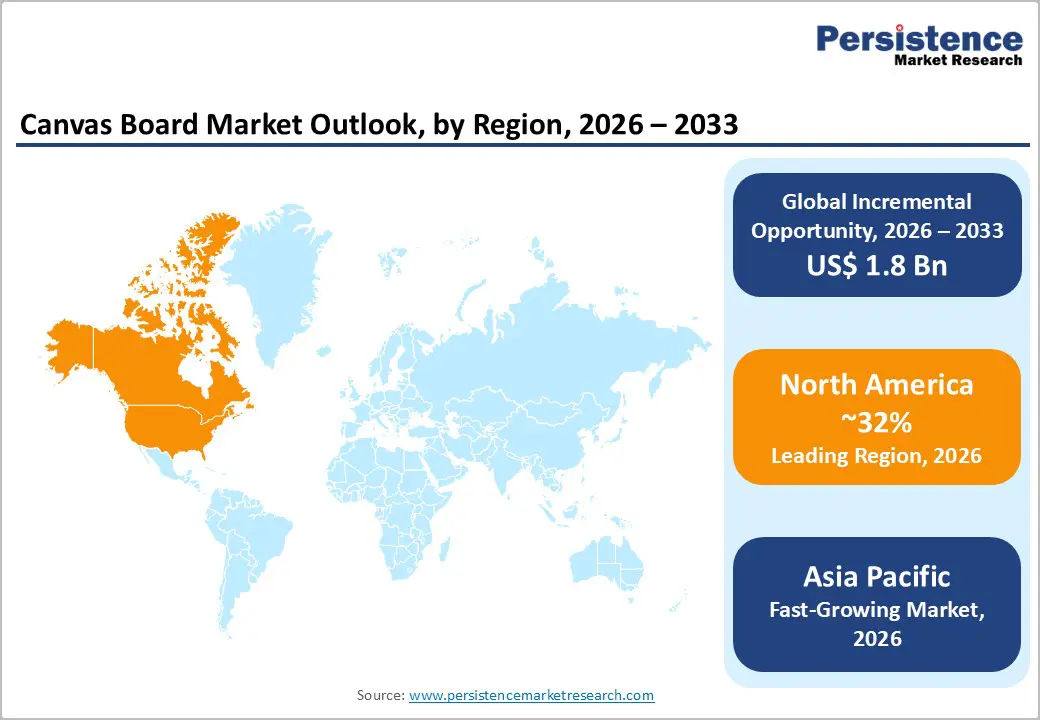
- Regional Leadership: North America is anticipated to lead with roughly 32% market share in 2026 due to established art infrastructure, while the Asia Pacific market is expected to register the fastest 2026-2033 growth at about 7% CAGR, aided by expanding creative education programs.
- Innovation Trends: Sustainability and digital-hybrid canvas products are likely to drive future growth, reflecting evolving consumer preferences for eco-friendly and technology-enabled creative experiences.
| Key Insights | Details |
|---|---|
|
Canvas Board Market Size (2026E) |
US$ 4.4 Bn |
|
Market Value Forecast (2033F) |
US$ 6.2 Bn |
|
Projected Growth (CAGR 2026 to 2033) |
5% |
|
Historical Market Growth (CAGR 2020 to 2025) |
3.7% |
DRO Analysis
Rising Adoption of Visual Arts & Creative Education
Governments and educational institutions globally are placing greater emphasis on the visual arts as part of curriculum development to strengthen creativity, cognitive skills, and cultural education. Programs designed to integrate arts into core learning continue to expand, supported by ongoing national education strategies that recognize the value of arts enrichment in overall student development. Such structured approaches increase demand for foundational art supplies like canvas boards across student and professional segments.
In 2025, multiple education policy shifts and federal funding initiatives underscored this trend. For example, federal funding frameworks in the United States continue to support arts education through well-rounded education grants that include visual arts components, helping schools purchase materials and expand programming. In India, evolving national education policies mandate daily art classes in public schools, further institutionalizing creative arts engagement and indirectly supporting related art supplies demand. These developments reinforce long-term market uptake as visual arts become more central to formal and informal learning environments.
Growth of DIY, Hobbyist Engagement & E-Commerce Channels
The DIY and hobbyist segment is gaining momentum as creative communities online inspire broader participation in hands-on artistic activities outside formal education or professional settings. Social media platforms, trends in experiential hobbies, and lifestyle media frequently highlight creative pursuits as rewarding leisure activities, increasing interest among non-traditional art consumers. This cultural shift encourages more individuals to invest in art materials for personal projects, studios, and home workshops.
The continued evolution of online commerce has substantially enhanced access to art supplies, making products easier to discover and purchase across regions. Major e-commerce ecosystems are evolving into central marketplaces for creative goods, with platforms increasingly integrating social discovery and live shopping elements that merge entertainment with purchasing. Recent official retail data from the U.K. showed strong growth in online art and related product sales, with online sales outperforming many other categories and contributing to broader retail momentum in early 2026. Such digital channel expansion reinforces distribution efficiency and enables brands to reach hobbyists and emerging consumer cohorts worldwide.
Volatility in Raw Material Costs
Canvas boards depend heavily on cotton, linen, and fiberboard raw materials, which are influenced by global agricultural and commodity price movements. Throughout 2025, cotton markets experienced significant fluctuations driven by uneven supply and demand conditions, with prices at multi-year lows and divergent trends between domestic and international benchmarks. These oscillations have increased uncertainty for textile and art material manufacturers sourcing cotton and related fibers for canvas production, intensifying cost pressures. The variability in linen and fiberboard availability due to logistics and climate-related disruptions further compounds the challenge, forcing producers to adjust procurement and production schedules.
Further complicating manufacturers’ planning efforts, cotton futures markets exhibited notable volatility in late 2025, reflecting broader soft commodity instability tied to macroeconomic headwinds and supply uncertainties. These unpredictable cost shifts raise production expenses that may be passed on to end consumers, particularly impacting budget-sensitive segments such as students and hobbyists. In regions with lower disposable incomes, price sensitivity can slow adoption, placing a structural restraint on market growth in price-constrained environments. Industry observers note that supply chain disruptions from major exporting countries could prolong these pressures into 2026, creating persistent uncertainty for canvas board manufacturers.
Competition from Alternative Art Mediums
Traditional canvas boards are facing growing competition from digital art tools and platforms, as creative content increasingly shifts toward digital creation environments. In 2025–2026, the ecosystem of digital painting and illustration expanded significantly, with iPad-optimized drawing apps such as Procreate, Fresco, and other advanced software gaining traction among artists of all skill levels. These tools offer convenience, portability, and capabilities that mimic traditional painting techniques, thereby attracting artists who might otherwise use physical media. The rise of online creative communities and digital tutorials has reinforced this shift, making virtual art a viable alternative for both learning and professional work.
The rapid evolution of digital art demand reflects a broader creative shift; professionals and hobbyists alike increasingly engage with tablet-based art workflows that blend technical efficiency with creative freedom. As digital media improve in realism and ease of use, some art creators allocate more of their time, budget, and skill development to virtual tools. This migration creates a substitution risk for physical art materials like canvas boards, particularly among younger generations who are digital-natives, thus posing a restraint on traditional channels of demand growth within the global market. Analysts also note that hybrid workflows combining digital and physical art can shift spending away from full-size traditional canvases, intensifying competitive pressure.
Sustainable and Eco-Friendly Art Materials
Consumer awareness of environmental sustainability continues to rise, increasing demand for eco-friendly canvas boards made from organic cotton, linen, and recycled fiberboards. Manufacturers that adopt sustainable priming methods, plant-based coatings, and responsibly sourced materials can capture premium segments and align with environmental procurement initiatives. Eco-certified products appeal to institutional buyers, creative educators, and individual artists who value low-impact and ethically manufactured materials.
Recent developments reinforce this trend. Across Brazil in 2025, students participated in sustainable art projects as part of official environmental education initiatives, creating artworks from recyclable materials and bio-jewelry while celebrating culture and ecological awareness in community parades and exhibitions. Such government-supported programs highlight the growing integration of sustainability and creativity in formal learning contexts. These developments create tangible opportunities for canvas board manufacturers to position eco-friendly products as both premium and socially responsible artistic choices.
Expansion in Emerging Markets and Tech-Hybrid Innovation
Emerging regions, including Asia Pacific, Latin America, and the Middle East show rising engagement in creative education, community arts, and hobbyist activities due to increasing disposable incomes, urbanization, and cultural development initiatives. Growing adoption of art supplies in schools, community programs, and informal creative groups creates expanding market potential for canvas boards across diverse segments. Early investment in distribution and localized partnerships can secure first-mover advantages for art supply brands.
Moreover, technology convergence with traditional art surfaces is rapidly creating hybrid product opportunities. Educational programs in the U.S. and Europe reported increasing use of augmented and virtual reality tools in art curricula in 2025, enabling interactive learning and digital-physical creative experiences. These tech-hybrid canvases appeal particularly to younger, digitally native consumers and hobbyists seeking immersive, skill-enhancing tools. Coupled with expanding creative education in emerging regions, this dual trend supports both geographic expansion and new product innovation for canvas board manufacturers.
Category-wise Analysis
Product Type Insights
Acrylic primed canvases are likely to account for around 42% of the canvas board market revenue share in 2026 due to their versatility and compatibility with multiple painting mediums, including both acrylic and oil paints. The priming process enhances adhesion, making them suitable for artists of all skill levels, from students to professionals. Widely adopted in educational programs, workshops, and hobbyist environments, these canvases benefit from bulk institutional purchases and consistent supply chains across regions. Their adaptability to mixed media and textured techniques, combined with durability, ease of use, and balanced cost-to-performance ratio, reinforces broad appeal. Institutional adoption and hobbyist popularity have sustained this dominant share, positioning acrylic primed boards as the foundation of canvas board sales globally.
Oil primed canvases are growing at a CAGR of 6.5%, driven by professional artists’ preference for rich textures, enhanced blending, and archival-quality surfaces suited for fine art techniques. Manufacturers are differentiating offerings through improved coatings and premium formulations, which accelerates adoption among established creators and gallery artists. Interest in traditional painting and fine art education supports consistent demand, while high-end hobbyists contribute to market growth. The increasing premiumization trend positions oil primed canvases as the fastest-growing product type, capturing new opportunities in professional and luxury segments worldwide.
Material Insights
Cotton is set to hold about 48% of the canvas board market share in 2026, on account of its affordability, texture, and performance balance. Its absorbent weave supports diverse painting techniques and offers a familiar surface for students, hobbyists, and professional artists. Widespread adoption in educational institutions, community workshops, and hobbyist groups reinforces market dominance. Cotton’s versatility allows multi-medium applications, including acrylic, oil, and mixed media, which increases its accessibility and appeal. These factors have maintained a strong and stable market presence, securing cotton’s position as the leading canvas material globally.
Linen canvas is expanding at a projected CAGR of 7.2%, driven by premium positioning, superior durability, and a fine weave suitable for precise brushwork and archival-quality artwork. Professional artists, galleries, and high-end hobbyists favor linen for commissioned pieces and gallery exhibitions. Manufacturers emphasize performance advantages and long-term archival quality to differentiate linen boards from cotton options. The growing demand for luxury, durable canvas solutions supports elevated growth, particularly in mature markets. This positions linen as the fastest-growing material, offering premium revenue opportunities in the global canvas board industry.
Regional Insights
North America Canvas Board Market Trends and Insights
North America is anticipated command an estimated 35% of the canvas board market value in 2026, led by the United States with high engagement from professional artists, students, and hobbyists driving consistent demand. Mature retail distribution networks, strong art education ecosystems, and high disposable incomes create a stable environment for both premium and entry-level product adoption. Regulatory frameworks around product safety and consumer protections further reinforce trust in established brands, ensuring consistent quality and adherence to compliance standards.
The community-driven initiatives such as Alton Art Revival in Illinois, offering affordable art materials, inclusive workshops, and educational classes, highlight grassroots demand growth for art supplies and increased local participation. Such programs encourage broad community engagement, extending canvas board usage beyond traditional galleries and institutions. E-commerce and digital retail innovations further expand reach into suburban and rural markets, while strategic partnerships between brands and online marketplaces enhance inventory availability, customer convenience, and personalized offerings. These factors consolidate North America’s leadership and sustained dominance in the global canvas board market.
Europe Canvas Board Market Trends and Insights
The Europe canvas board market is anchored in countries such as Germany, the United Kingdom, France, and Spain, with strong artistic heritage and widespread cultural engagement. Art school enrollments, professional artist networks, and well-developed retail ecosystems drive steady demand across professional, student, and hobbyist segments. The European Union (EU)-wide regulatory harmonization ensures product safety, environmental compliance, and quality labeling, influencing material sourcing and manufacturing practices throughout the region. Cultural funding and municipal support for community art programs sustain active participation and encourage continued creative engagement.
In 2025, international events such as Design Shanghai 2026, featuring European galleries and designers, underscore Europe’s ongoing integration into global art networks, enhancing exposure to material innovations and cross-regional artistic trends. Regional specialty producers, collaborating with global brands, continue to prioritize artisanal quality and sustainability, responding to the growing demand for premium and environmentally conscious products. Additionally, initiatives in creative education, art residencies, and community-based workshops strengthen skill development and hobbyist engagement, ensuring Europe’s canvas board market remains resilient and culturally vibrant.
Asia Pacific Canvas Board Market Trends and Insights
Asia Pacific is poised to be the fastest-growing regional market for canvas boards, with a projected CAGR of approximately 6.9% through 2033, driven by rapid urbanization, rising disposable incomes, and expanding creative communities across China, Japan, India, and ASEAN countries. Large youth populations, increasing access to arts education, and the rise of hobbyist and professional artists fuel broad-based demand. Government initiatives and private cultural programs actively support creative development, promoting wider engagement with art materials across schools, universities, and community spaces.
The high-profile events such as Art Basel Hong Kong 2026, featuring over 240 galleries with strong Asia-Pacific representation, highlighted the region’s influence in global visual arts and elevated professional artist engagement. Similarly, the Asia-Link Sketchwalk festival in Thailand engaged hundreds of local and international artists, fostering skills development and international collaboration. Coupled with manufacturing cost advantages in China and India and the expansion of digital retail channels, these initiatives enhance accessibility, strengthen regional brand presence, and position Asia Pacific as a strategic high-growth market for canvas board manufacturers and distributors
Competitive Landscape
The global canvas board market structure is moderately consolidated, with leading players such as Winsor & Newton, Arteza, Canson, Faber-Castell, and Daler-Rowney collectively controlling a significant portion of the revenue share. These established brands leverage strong distribution networks, longstanding relationships with educational institutions, art studios, and retail chains, and recognized reputations for quality. They also invest in product innovation, including premium acrylic and oil-primed boards, sustainable materials, and enhanced archival-quality canvases to maintain leadership across professional, student, and hobbyist segments.
Regional and niche competitors such as Mabef, Royal Langnickel, and Mont Marte focus on specialized product lines, local market expertise, and affordable or artisanal canvas options. Entry barriers such as supply chain access for cotton, linen, and fiberboard, as well as compliance with safety and labeling standards, limit new entrants. However, digitalization, online retail, and e-commerce marketplaces are enabling smaller or software-supported brands to reach hobbyist and student segments more efficiently. Market consolidation is expected to grow gradually as global leaders pursue acquisitions, sustainability-focused product launches, and e-commerce partnerships to expand geographically and technologically, while smaller and mid-sized firms leverage niche innovation and direct-to-consumer channels.
Key Industry Developments
- In September 2025, Michaels rolled out “The Knit & Sew Shop” and “The Party Shop” in 650+ stores, combining Joann’s fabric and yarn expertise with its existing craft offerings to strengthen customer engagement.
- In March 2025, Plaid expanded into the fine art segment by acquiring Arteza’s brand assets, integrating high-quality products into its arts and crafts portfolio.
- In February 2025, the Frankfurt trade fair showcased leading suppliers like Winsor & Newton and Staedtler, highlighting new products, collaborations, and trends across professional and hobbyist art supplies.
Companies Covered in Canvas Board Market
- Phoenix Arts Group
- Winsor & Newton
- Fredrix
- Langer
- PEBEO
- Anhui Zhongsheng
- Jiangsu High Hope International
- Jinan Danqing Industrial
- Shuyang Sundy Art & Craft
- Beta Art Supplies
- Creative Arts Ltd
- HobbyArts Co.
Frequently Asked Questions
The global canvas board market is projected to reach US$ 4.4 billion in 2026.
Rising adoption of visual arts, growth in hobbyist and DIY segments, and expanded e-commerce accessibility are driving market growth.
The market is poised to witness a CAGR of 5% from 2026 to 2033.
Novel opportunities are coming up in sustainable materials, emerging markets, and technology-integrated or hybrid canvas products.
Winsor & Newton, Arteza, Canson, Faber-Castell, and Daler-Rowney are among the key players in the market.


