


- Executive Summary
- Global Biomaterials Market Snapshot, 2025 and 2032
- Market Opportunity Assessment, 2025 - 2032, US$ Bn
- Key Market Trends
- Future Market Projections
- Premium Market Insights
- Industry Developments and Key Market Events
- PMR Analysis and Recommendations
- Market Overview
- Market Scope and Definition
- Market Dynamics
- Drivers
- Restraints
- Opportunity
- Challenges
- Key Trends
- COVID-19 Impact Analysis
- Forecast Factors - Relevance and Impact
- Value Added Insights
- Value Chain Analysis
- Material Adoption / Usage Analysis
- Key Market Players
- Key Promotional Strategies, By Key Players
- Regulatory Landscape
- PESTLE Analysis
- Porter’s Five Force Analysis
- Global Biomaterials Market Outlook
- Key Highlights
- Market Size (US$ Bn) and Y-o-Y Growth
- Absolute $ Opportunity
- Market Size (US$ Bn) Analysis and Forecast
- Historical Market Size (US$ Bn) Analysis, 2019-2024
- Market Size (US$ Bn) Analysis and Forecast, 2025-2032
- Global Biomaterials Market Outlook: Material
- Historical Market Size (US$ Bn) Analysis, By Material, 2019-2024
- Market Size (US$ Bn) Analysis and Forecast, By Material, 2025-2032
- Metallic Biomaterials
- Ceramic Biomaterials
- Polymeric Biomaterials
- Natural Biomaterials
- Market Attractiveness Analysis: Material
- Global Biomaterials Market Outlook: Application
- Historical Market Size (US$ Bn) Analysis, By Application, 2019-2024
- Market Size (US$ Bn) Analysis and Forecast, By Application, 2025-2032
- Carvacrol 0% to 24%
- Carvacrol 25% to 50%
- Carvacrol 51% to 75%
- Market Attractiveness Analysis: Application
- Key Highlights
- Global Biomaterials Market Outlook: Region
- Historical Market Size (US$ Bn) Analysis, By Region, 2019-2024
- Market Size (US$ Bn) Analysis and Forecast, By Region, 2025-2032
- North America
- Latin America
- Europe
- East Asia
- South Asia and Oceania
- Middle East & Africa
- Market Attractiveness Analysis: Region
- North America Biomaterials Market Outlook
- Historical Market Size (US$ Bn) Analysis, By Market, 2019-2024
- By Country
- By Material
- By Application
- Market Size (US$ Bn) Analysis and Forecast by Country, 2025-2032
- U.S.
- Canada
- Market Size (US$ Bn) Analysis and Forecast, By Material, 2025-2032
- Metallic Biomaterials
- Ceramic Biomaterials
- Polymeric Biomaterials
- Natural Biomaterials
- Market Size (US$ Bn) Analysis and Forecast, By Application, 2025-2032
- Dental
- Cardiovascular
- Orthopedic
- Wound Healing
- Neurology
- Surgery
- Market Attractiveness Analysis
- Historical Market Size (US$ Bn) Analysis, By Market, 2019-2024
- Europe Biomaterials Market Outlook
- Historical Market Size (US$ Bn) Analysis, By Market, 2019-2024
- By Country
- By Material
- By Application
- Market Size (US$ Bn) Analysis and Forecast by Country, 2025-2032
- Germany
- France
- U.K.
- Italy
- Spain
- Russia
- Rest of Europe
- Market Size (US$ Bn) Analysis and Forecast, By Material, 2025-2032
- Metallic Biomaterials
- Ceramic Biomaterials
- Polymeric Biomaterials
- Natural Biomaterials
- Market Size (US$ Bn) Analysis and Forecast, By Application, 2025-2032
- Dental
- Cardiovascular
- Orthopedic
- Wound Healing
- Neurology
- Surgery
- Market Attractiveness Analysis
- Historical Market Size (US$ Bn) Analysis, By Market, 2019-2024
- East Asia Biomaterials Market Outlook
- Historical Market Size (US$ Bn) Analysis, By Market, 2019-2024
- By Country
- By Material
- By Application
- Market Size (US$ Bn) Analysis and Forecast by Country, 2025-2032
- China
- Japan
- South Korea
- Market Size (US$ Bn) Analysis and Forecast, By Material, 2025-2032
- Metallic Biomaterials
- Ceramic Biomaterials
- Polymeric Biomaterials
- Natural Biomaterials
- Market Size (US$ Bn) Analysis and Forecast, By Application, 2025-2032
- Dental
- Cardiovascular
- Orthopedic
- Wound Healing
- Neurology
- Surgery
- Market Attractiveness Analysis
- Historical Market Size (US$ Bn) Analysis, By Market, 2019-2024
- South Asia & Oceania Biomaterials Market Outlook
- Historical Market Size (US$ Bn) Analysis, By Market, 2019-2024
- By Country
- By Material
- By Application
- Market Size (US$ Bn) Analysis and Forecast by Country, 2025-2032
- India
- Indonesia
- Thailand
- Singapore
- ANZ
- Rest of South Asia & Oceania
- Market Size (US$ Bn) Analysis and Forecast, By Material, 2025-2032
- Metallic Biomaterials
- Ceramic Biomaterials
- Polymeric Biomaterials
- Natural Biomaterials
- Market Size (US$ Bn) Analysis and Forecast, By Application, 2025-2032
- Dental
- Cardiovascular
- Orthopedic
- Wound Healing
- Neurology
- Surgery
- Market Attractiveness Analysis
- Historical Market Size (US$ Bn) Analysis, By Market, 2019-2024
- Latin America Biomaterials Market Outlook
- Historical Market Size (US$ Bn) Analysis, By Market, 2019-2024
- By Country
- By Material
- By Application
- Market Size (US$ Bn) Analysis and Forecast by Country, 2025-2032
- Brazil
- Mexico
- Rest of Latin America
- Market Size (US$ Bn) Analysis and Forecast, By Material, 2025-2032
- Metallic Biomaterials
- Ceramic Biomaterials
- Polymeric Biomaterials
- Natural Biomaterials
- Market Size (US$ Bn) Analysis and Forecast, By Application, 2025-2032
- Dental
- Cardiovascular
- Orthopedic
- Wound Healing
- Neurology
- Surgery
- Market Attractiveness Analysis
- Historical Market Size (US$ Bn) Analysis, By Market, 2019-2024
- Middle East & Africa Biomaterials Market Outlook
- Historical Market Size (US$ Bn) Analysis, By Market, 2019-2024
- By Country
- By Material
- By Application
- Market Size (US$ Bn) Analysis and Forecast by Country, 2025-2032
- GCC Countries
- Egypt
- South Africa
- Northern Africa
- Rest of Middle East & Africa
- Market Size (US$ Bn) Analysis and Forecast, By Material, 2025-2032
- Metallic Biomaterials
- Ceramic Biomaterials
- Polymeric Biomaterials
- Natural Biomaterials
- Market Size (US$ Bn) Analysis and Forecast, By Application, 2025-2032
- Dental
- Cardiovascular
- Orthopedic
- Wound Healing
- Neurology
- Surgery
- Market Attractiveness Analysis
- Historical Market Size (US$ Bn) Analysis, By Market, 2019-2024
- Competition Landscape
- Market Share Analysis, 2024
- Market Structure
- Competition Intensity Mapping by Market
- Competition Dashboard
- Company Profiles (Details - Overview, Financials, Strategy, Recent Developments)
- Evonik Industries AG
- Overview
- Segments and End Users
- Key Financials
- Market Developments
- Market Strategy
- Medtronic plc
- Carpenter Technology Corporation
- Invibio Ltd.
- Berkeley Advanced Biomaterials
- BASF SE
- Zimmer Biomet Holdings, Inc.
- Stryker
- Covalon Technologies Ltd.
- Johnson & Johnson
- Others
- Evonik Industries AG
- Appendix
- Research Methodology
- Research Assumptions
- Acronyms and Abbreviations


- Medical Devices
- Biomaterials Market
Biomaterials Market Size, Share, Growth, and Regional Forecast, 2025 - 2032
Biomaterials Market by Material (Metallic Biomaterials, Ceramic Biomaterials, Polymeric Biomaterials, and Natural Biomaterials), by Application (Dental, Cardiovascular, Orthopedic, Wound Healing, Neurology, and Surgery), and Regional Analysis from 2025 - 2032
Key Industry Highlights:
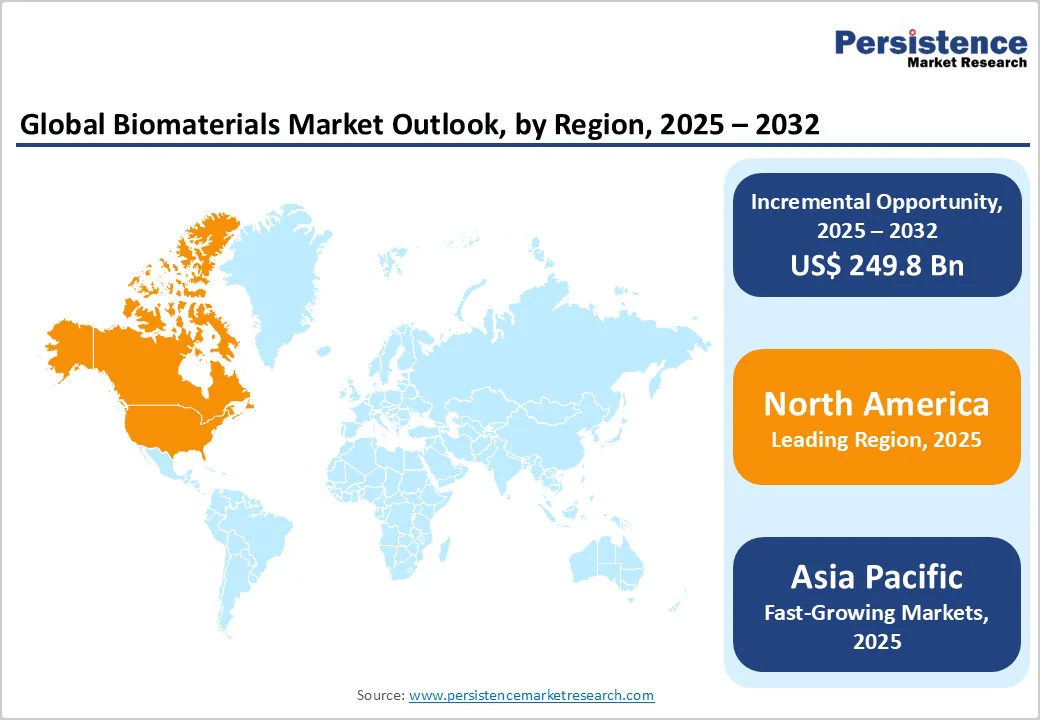
- Leading Region: North America leads the biomaterials market, driven by advanced healthcare infrastructure and technological innovation.
- Fastest Growing Region: Asia Pacific is the fastest-growing region, enabled by expanded healthcare access, government initiatives, and local manufacturing strength.
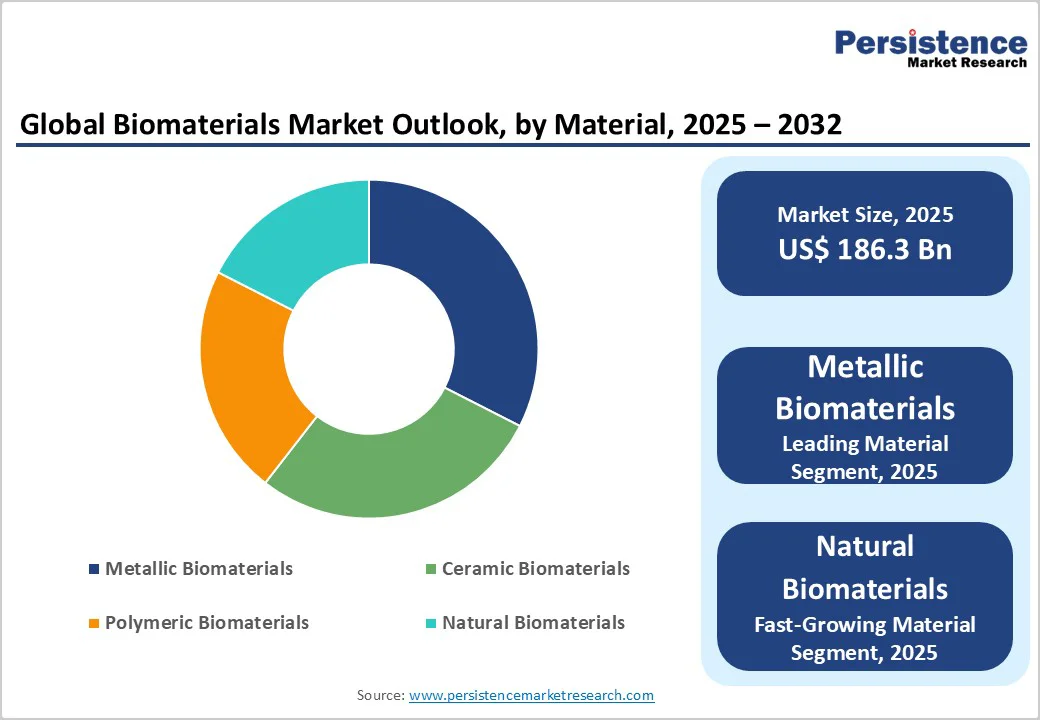
- Dominant Segment: The Metallic Biomaterials category dominates, accounting for a significant market share due to high clinical use and reliability in critical implants.
- Fastest Growing Segment: Natural biomaterials driven by rising demand for bio-based, sustainable, and regenerative medical materials.
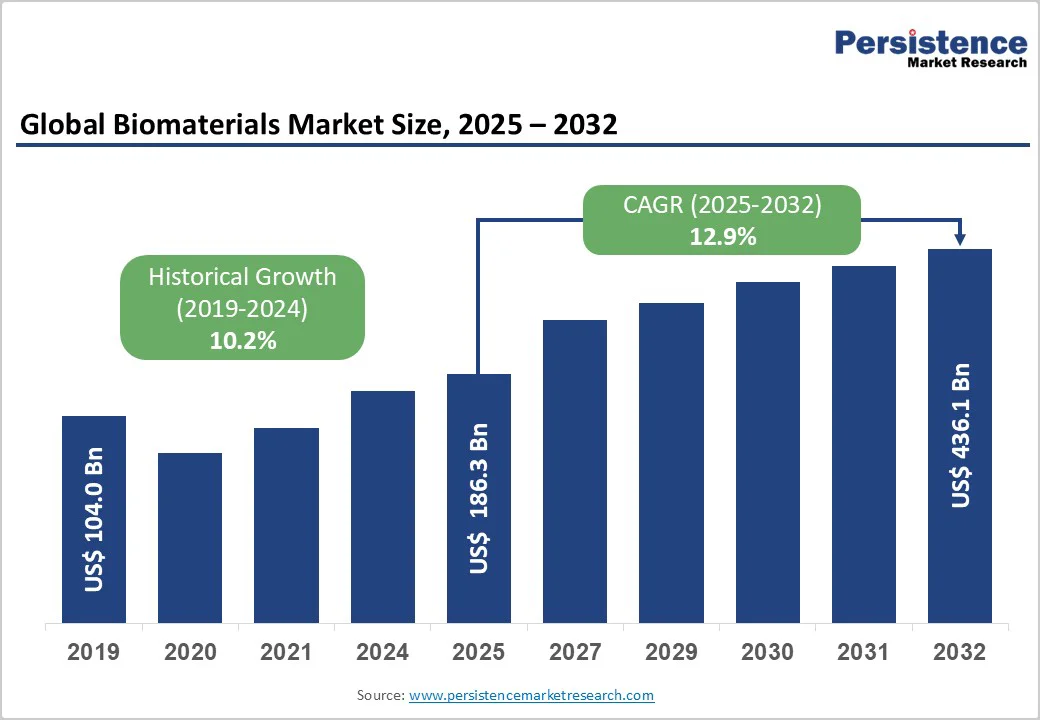
| Key Insights | Details |
|---|---|
|
Biomaterials Market Size (2025E) |
US$186.3 Bn |
|
Market Value Forecast (2032F) |
US$436.1 Bn |
|
Projected Growth (CAGR 2025 to 2032) |
12.9% |
|
Historical Market Growth (CAGR 2019 to 2024) |
10.2% |
Market Dynamics
Driver - Rising Cardiovascular Disease Burden Drives Global Demand for Advanced Biomaterials Solutions
The increasing prevalence of cardiovascular disorders is exerting significant upward pressure on the global biomaterials market. According to the World Health Organization (WHO), an estimated 19.8 million people died from cardiovascular diseases (CVDs) in 2022, accounting for approximately 32% of all deaths worldwide. Major risk factors such as smoking, uncontrolled hypertension, physical inactivity, and elevated cholesterol levels are key drivers of this trend, leading to a growing burden of ischemic heart disease, stroke and other cardiac complications.
As the demand for advanced medical interventions continues to rise, biomaterials play a pivotal role in cardiac therapies, including heart valves, stents, vascular grafts, pacemakers and artificial hearts that restore and support damaged cardiovascular tissue. The combination of high clinical acceptance of such implantable devices and the expanding patient population requiring these solutions is fuelling market growth. Consequently, the surge in cardiovascular disease incidence worldwide is projected to drive robust demand for biomaterials over the coming years, making this an important strategic driver for the biomaterials market.
Restraints - Trade Policy and Supply Chain Challenges
Global trade policies and regulatory complexities pose significant restraints on the biomaterials market. Tariffs, cross-border restrictions, and shifting trade agreements, particularly between the U.S., Europe, and Asian manufacturing hubs, can lead to higher production costs and delayed material availability. Many advanced biomaterials, including medical-grade polymers, specialty metals, and bioceramics, rely on a limited number of specialized suppliers, making the industry vulnerable to supply disruptions. Changes in import-export regulations or customs procedures can slow the movement of critical components used in medical devices, implants, and research applications.
In addition, fluctuating raw material prices, transportation challenges, and dependence on overseas contract manufacturers create uncertainty for end users and developers. Stringent certification processes and varying standards across regions further complicate international distribution. These trade and supply chain issues can restrict innovation timelines, raise product costs, and hinder market expansion, particularly for small and mid-sized biomaterial producers with limited global logistics capabilities.
Opportunity - Smart Biomaterials and Digital Health Integration
The integration of smart biomaterials with digital health technologies is creating a transformative opportunity within the global biomaterials market. These advanced materials, embedded with sensors or responsive elements, can monitor biological changes, deliver drugs in a controlled manner, and adapt to patient-specific needs in real time. Growing adoption of AI and data analytics in healthcare is enabling the development of intelligent biomaterial systems capable of predicting healing responses and adjusting treatment regimens accordingly. Companies are increasingly collaborating across biotechnology, materials science, and digital health sectors to design personalized implants and regenerative therapies.
Partnerships between medical device manufacturers and technology firms are streamlining R&D processes, improving the accuracy of material testing, and accelerating regulatory approvals. For instance, digitally guided tissue scaffolds and sensor-based wound dressings offer superior clinical outcomes and reduced recovery times. As precision medicine gains traction, the convergence of smart biomaterials and digital health platforms is expected to redefine patient care, fostering long-term market growth and innovation leadership.
Category-wise Analysis
By Material Insights
Metallic biomaterials continue to dominate the global biomaterials market, accounting for approximately 32.5% of total revenue in 2024. Their exceptional mechanical strength, corrosion resistance, and long-term biocompatibility make them the preferred choice in orthopedic, dental, and cardiovascular implants. Titanium and its alloys, stainless steel, and cobalt-chromium remain the most widely used materials due to their proven performance in load-bearing applications such as hip, knee, and spinal implants. The growing number of trauma and reconstructive surgeries, coupled with advancements in surface modification technologies, is further driving demand.
On the other hand, natural biomaterials represent the fastest-growing segment, driven by the increasing preference for biologically derived and sustainable materials such as collagen, chitosan, and alginate. Their superior biocompatibility, bioactivity, and minimal immune response make them ideal for tissue regeneration, wound healing, and drug delivery. Expanding research in regenerative medicine and tissue engineering further accelerates their adoption across global healthcare systems.
By Application Insights
The orthopedic segment remains the largest application area within the biomaterials market, supported by a rising incidence of musculoskeletal disorders, sports injuries, and age-related bone degeneration. The growing elderly population in countries such as the U.S., Japan, and Germany has significantly increased the number of joint replacement procedures, particularly of the hip, knee, and shoulder joints. Technological advancements in metallic and polymeric biomaterials have improved prosthetic integration, wear resistance, and longevity, thereby enhancing patient mobility and reducing revision surgeries. The availability of bioresorbable fixation devices and porous coating for enhanced bone bonding further drives orthopedic applications.
Additionally, the rising prevalence of osteoporosis and trauma-related fractures in developing economies, along with improved access to healthcare, is boosting market penetration. Hospitals and specialized orthopedic centers are increasingly adopting biomaterial-based implants to shorten recovery time and improve outcomes. Continued innovation in 3D-printed orthopedic implants and regenerative bone graft substitutes ensures the segment’s sustained leadership in the biomaterials market.
Region-wise Insights
North America Biomaterials Market Trends
North America dominates the global biomaterials market, accounting for around 38.3% of the total share in 2024. The region’s growth is underpinned by a well-established healthcare infrastructure, strong R&D investments, and early adoption of advanced medical technologies. The U.S. biomaterials market leads the North America market, driven by a high incidence of orthopedic and cardiovascular disorders, increasing demand for biodegradable implants, and strong collaborations among universities, biotech firms, and medical device companies. Key institutions such as the National Institutes of Health (NIH) and the U.S. Food and Drug Administration (FDA) actively support innovation through grants and regulatory guidance. Canada also contributes significantly, with a growing focus on tissue engineering, regenerative medicine, and the manufacturing of polymeric biomaterials.
Additionally, rising investments by major players such as Stryker, Johnson & Johnson, and Zimmer Biomet in developing next-generation materials are propelling market expansion. The strong reimbursement framework and patient awareness about advanced implant solutions further reinforce North America’s market leadership.
Asia Pacific Biomaterials Market Trends
The Asia Pacific is witnessing the fastest growth in the global biomaterials market, driven by rising healthcare expenditures, an expanding patient base, and increasing local manufacturing capabilities. China leads the region, with strong government funding for biotechnology and regenerative medicine, along with the establishment of biomaterial innovation parks in cities such as Shanghai and Shenzhen. Japan continues to advance in nanomaterials and bioresorbable implants through collaborations between academic institutions and medical device firms.
India’s market is rapidly expanding, supported by the “Make in India” initiative and the rising production of cost-effective orthopedic and dental implants. South Korea and Singapore are investing in tissue engineering and smart biomaterials research to enhance medical export potential. The growing burden of chronic diseases, combined with favorable demographic trends and improved reimbursement frameworks, is driving adoption across orthopedics, cardiovascular care, and dentistry. Furthermore, international companies are increasingly partnering with regional manufacturers to capitalize on the Asia Pacific’s expanding healthcare ecosystem.
Competitive Landscape
The global biomaterials market is characterized by intense competition, with key players focusing on strategic collaborations, product innovations, and research partnerships to strengthen their market position. Leading companies are actively engaging in agreements and joint ventures to expand their product portfolios and accelerate the development of next-generation biomaterial-based implants and combination medical devices.
Strategic collaborations have become a defining trend, enabling companies to leverage each other’s technological strengths, R&D capabilities, and market reach. These alliances not only enhance product innovation but also drive greater adoption of biomaterials across medical applications such as orthopedics, cardiovascular care, and tissue engineering.
For example, in April 2022, GE Healthcare partnered with Medtronic to address the growing demand for treatment solutions in office-based laboratories (OBLs) and ambulatory surgery centers (ASCs). This collaboration offers customers integrated product portfolios, financing options, and comprehensive clinical support, highlighting how industry partnerships are reshaping the biomaterials landscape through value-driven innovation and expanded accessibility.
Key Industry Developments:
- In September 2025, erthos®, a climate technology company focused on sustainable materials, announced a collaboration with Colgate-Palmolive to explore innovative eco-friendly packaging solutions through ZYA™, its AI-driven materials discovery platform.
- In June 2024, Zimmer Biomet Holdings, Inc. announced a strategic initiative to launch next-generation biodegradable orthopedic implants.
- In January 2023, Zimmer Biomet acquired Embody, Inc. to expand its sports medicine portfolio and enhance soft tissue healing solutions.
Companies Covered in Biomaterials Market
- Evonik Industries AG
- Medtronic plc
- Carpenter Technology Corporation
- Invibio Ltd.
- Berkeley Advanced Biomaterials
- BASF SE
- Zimmer Biomet Holdings, Inc.
- Stryker
- Covalon Technologies Ltd.
- Johnson & Johnson
- Others
Frequently Asked Questions
The global biomaterials market was valued at US$ 112 Bn in 2021 and is expected to reach US$ 470 Bn by 2032.
The global market for biomaterials is expected to expand at a CAGR of 14.5% through 2032.
North America accounts for over 38% share and is set to dominate the global biomaterials market going forward.


