




- Pharmaceuticals
- Angina Market
Angina Market Size, Share, and Growth Forecast 2026 - 2033
Angina Market by Disease Type (Stable Angina, Unstable Angina, Variant Angina, Microvascular Angina), Treatment Type (Medication, Interventional Procedures), Route of Administration (Oral, Sublingual, Intravenous, Transdermal), Distribution Channel (Hospital Pharmacies, Retail Pharmacies, Online Pharmacies), and Regional Analysis for 2026 - 2033

Angina Market Size & Trends Analysis
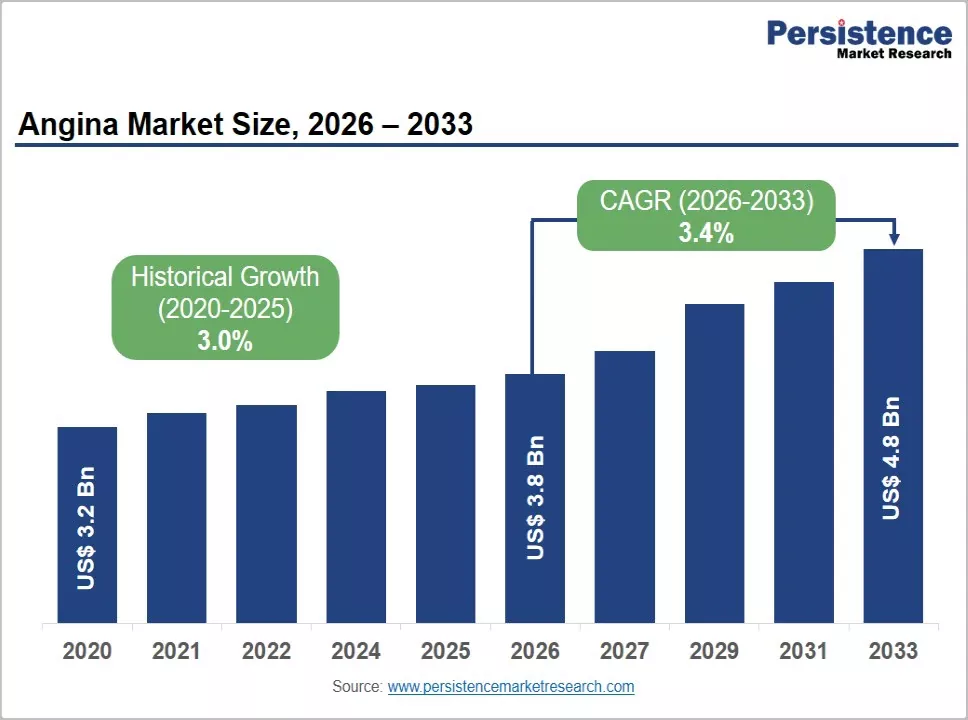
The global angina market is expected to be valued at US$ 3.8 billion in 2026 and is projected to reach US$ 4.8 billion by 2033, growing at a CAGR of 3.4% between 2026 and 2033.
Market growth is primarily driven by the rising global burden of coronary artery disease and the continued reliance on pharmacological therapy as the first line of care. The World Health Organization (WHO) estimates that cardiovascular diseases claim about 17.9 million lives every year, with ischemic heart disease remaining the single largest contributor. In the U.S. alone, the American Heart Association (AHA) reports that roughly 11 million adults live with angina pectoris.
Ageing populations, higher prevalence of diabetes and hypertension, and improved diagnosis of microvascular and vasospastic angina are widening the treated patient pool. The market growth is expected to accelerate modestly as guideline-directed combination therapy, wider access in emerging economies, and device-based options for refractory patients gain traction.
Key Industry Highlights
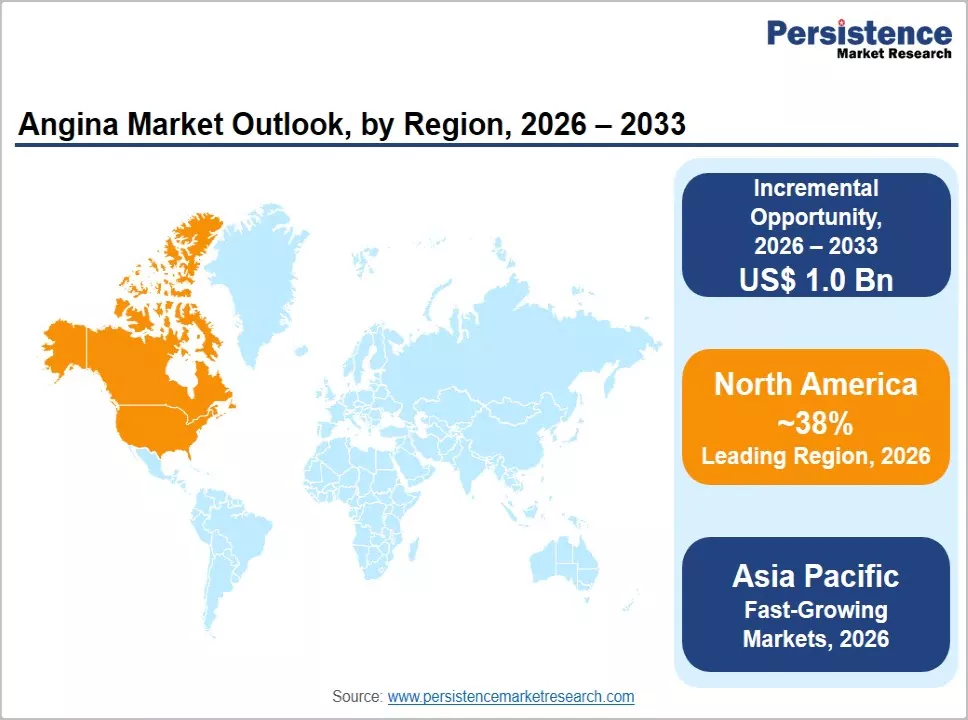
- Leading Region: North America is likely to lead the angina market with about 38% share in 2026, supported by high CAD prevalence, advanced cardiac diagnostics, broad insurance coverage, and early adoption of guideline-directed anti-angina therapy.
- Fastest-Growing Region: Asia Pacific is expected to be the fastest-growing market, driven by China’s large cardiovascular patient base, India’s rising diabetes and hypertension burden, and expanding universal health coverage schemes.
- Dominant Segment: Medication represents the dominant treatment type segment, holding about 81% share of the market in 2026, as optimal medical therapy remains the lifelong foundation of angina care, reinforced by the ISCHEMIA and ORBITA trial findings.
- Fastest-Growing Segment: Microvascular angina represents the fastest-growing disease type, fueled by wider coronary function testing, rising awareness of angina in women, and ESC guideline recognition of INOCA and ANOCA.
- Key Market Opportunity: Rising demand for targeted therapies and diagnostics for microvascular angina, alongside device-based options such as the coronary sinus Reducer for refractory angina, offer strong growth potential for pharmaceutical and medical technology companies.
Market Dynamics
Drivers - Rising Burden of Coronary Artery Disease and Metabolic Risk Factors
The growing prevalence of coronary artery disease (CAD) is a key driver of demand for anti-anginal therapy. According to the Centers for Disease Control and Prevention (CDC), about one in 20 U.S. adults aged 20 and older has CAD, and coronary heart disease caused 371,506 deaths in 2022. The burden is amplified by metabolic risk factors. The WHO estimates that about 1.3 billion adults aged 30 to 79 years live with hypertension, while the International Diabetes Federation (IDF) Diabetes Atlas 2025 reports 589 million adults with diabetes, a figure projected to reach 853 million by 2050.
Both conditions accelerate atherosclerosis and endothelial dysfunction, which directly precipitate stable and microvascular angina. Because angina is a chronic, recurrent symptom, each newly diagnosed patient typically requires long-term maintenance with beta-blockers, calcium channel blockers, or long-acting nitrates, alongside short-acting nitroglycerin, creating a durable and recurring revenue base for manufacturers.
Ageing Demographics and Clinical Preference for Optimal Medical Therapy
The ageing global population and strong clinical evidence favoring optimal medical therapy (OMT) are jointly reinforcing market growth. The United Nations projects that the number of people aged 65 years or older worldwide are projected to more than double from 761 million in 2021 to 1.6 billion by 2050, and angina prevalence rises sharply after the age of 60. At the same time, landmark trials have reshaped treatment pathways.
The ISCHEMIA trial, which enrolled 5,179 patients with stable CAD and moderate-to-severe ischemia, found that an initial invasive strategy did not significantly reduce major cardiovascular events compared with OMT alone. Consequently, the 2023 AHA/ACC chronic coronary disease guideline and the 2024 European Society of Cardiology (ESC) chronic coronary syndromes guideline position individualized anti-anginal drug therapy as the foundation of care. This evidence sustains high prescription volumes across hospital and outpatient settings and supports long-term demand for both first-line and second-line anti-anginal agents.
Restraints - Patent Expiries and Generic Price Erosion
Widespread genericization remains the most significant drag on market value. Nearly all cornerstone anti-anginal agents, including nitroglycerin, isosorbide mononitrate, amlodipine, metoprolol, and ranolazine, are now available as low-cost generics. U.S. generic entry for ranolazine began in 2019, sharply reducing the price of one of the most widely used late-generation anti-anginal drugs. According to the Association for Accessible Medicines (AAM), generics account for about 90% of prescriptions filled in the U.S. but only around 13% of total prescription drug spending.
In China, the national volume-based procurement (VBP) program has cut prices of selected drugs by an average of more than 50%, while Japan’s annual National Health Insurance (NHI) price revisions steadily lower reimbursement levels. As a result, prescription volumes grow faster than revenues, compressing manufacturer margins and limiting value expansion even in markets where the treated patient population continues to rise.
Underdiagnosis, Adverse Effects, and Poor Adherence
Underdiagnosis of non-obstructive disease and limited therapy tolerability restrict the treated patient base. A widely cited analysis of 398,978 patients published in the New England Journal of Medicine found that only about 38% of individuals undergoing elective coronary angiography had obstructive CAD, leaving many symptomatic patients, particularly women, without a definitive diagnosis or targeted treatment. Tolerability further weakens uptake, as headaches are common among patients initiating nitrates, beta-blockers frequently cause fatigue and bradycardia, and calcium channel blockers are associated with peripheral oedema.
The WHO has long estimated that adherence to long-term therapies in developed countries averages only 50%, and chronic cardiovascular medicines follow a similar pattern. Treatment discontinuation, dose reduction, and missed refills reduce prescription volumes, weaken the effectiveness of therapy, and dampen revenue growth for manufacturers across both branded and generic portfolios.
Opportunities - Growing Recognition of Microvascular Angina and INOCA
Rising recognition of coronary microvascular dysfunction offers a significant opportunity for innovators. Ischemia with no obstructive coronary arteries (INOCA) is now formally addressed in the 2024 ESC chronic coronary syndromes guideline, which supports invasive coronary function testing for selected patients with persistent symptoms. The CorMicA trial demonstrated that stratified medical therapy guided by such testing significantly improved angina scores and quality of life at one year. Because the majority of patients undergoing elective angiography show no obstructive lesions, the addressable population is large and remains poorly served by conventional drugs.
Companies developing endothelial-targeted therapies, tailored vasodilator regimens, and wire-based coronary physiology systems, such as Abbott Laboratories, stand to benefit as awareness grows among cardiologists. Dedicated clinical trials, sex-specific treatment protocols, and reimbursement for functional testing are expected to convert this under-treated cohort into a fast-growing revenue stream through 2033.
Emerging Market Access and Device-Based Therapy for Refractory Angina
Expanding access in emerging economies and the rise of device-based options for refractory angina represent a second high-value opportunity. In India, the ICMR-INDIAB study published in The Lancet Diabetes & Endocrinology estimated 101 million people with diabetes and 315 million with hypertension, underscoring a vast at-risk population, while the Pradhan Mantri Bhartiya Janaushadhi Pariyojana (PMBJP) network of more than 15,000 outlets is widening affordable access to cardiovascular generics.
In parallel, the coronary sinus Reducer, designed for patients with refractory angina who are unsuitable for revascularization, gained momentum after Johnson & Johnson MedTech completed its acquisition of Shockwave Medical in 2024. The ORBITA-COSMIC trial, published in The Lancet in 2024, reported fewer daily angina episodes with the device than with a placebo procedure, and the device is CE-marked in Europe while U.S. evaluation continues in the COSIRA-II trial.
Category-wise Analysis
Disease Type Insights
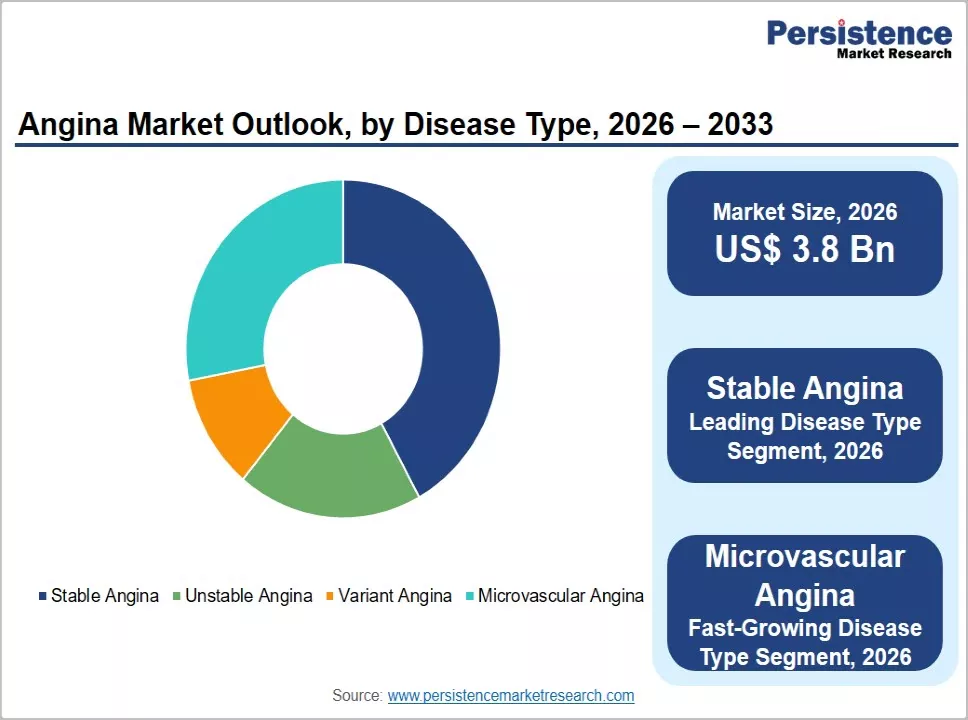
Stable angina is the leading disease type segment, accounting for around 42% of the market share in 2026. Its dominance reflects the chronic and predictable nature of the condition, which requires long-term pharmacological management. Stable angina is the most common presentation of chronic coronary syndromes, and data published by the AHA indicate that around 11 million U.S. adults report angina, most of whom experience exertional, stable symptoms. Standard care combines short-acting nitroglycerin for acute relief with maintenance beta-blockers or calcium channel blockers, supplemented by second-line agents such as ranolazine, ivabradine, and trimetazidine where appropriate, generating recurring prescriptions across multiple drug classes.
Microvascular angina is projected to register the fastest CAGR from 2026 to 2033, supported by improved coronary function testing, greater recognition of angina in women, and guideline endorsement of stratified therapy for patients with non-obstructive coronary arteries. Increasing clinical recognition of microvascular dysfunction is also expanding diagnosis and treatment requirements within the broader coronary artery disease landscape.
Treatment Type Insights
Medication represents the leading treatment type segment, holding an estimated 81% share of the angina market in 2026. Pharmacotherapy remains the first-line and long-term treatment approach for most angina patients, including those who eventually undergo revascularization, because antiplatelets, statins, and anti-anginal agents often continue after stenting. Clinical evidence reinforces this position. The ORBITA trial, published in The Lancet in 2018, showed that percutaneous coronary intervention (PCI) did not significantly increase exercise time over a placebo procedure in stable single-vessel disease, while ISCHEMIA reported comparable event outcomes with optimal medical therapy (OMT). The inclusion of nitrates, beta-blockers, and calcium channel blockers in the WHO Model List of Essential Medicines further supports medication use worldwide.
Interventional procedures are expected to be the fastest-growing treatment type segment, supported by the ORBITA-2 trial published in 2023, which showed PCI improved angina symptom scores versus placebo. Advances in drug-coated balloons, intravascular imaging, and devices for refractory angina are also expanding the range of interventional treatment options.
Route of Administration Insights
Oral is the leading route of administration category, holding an estimated 57% share of the market in 2026. Most maintenance anti-anginal therapies, including beta-blockers such as metoprolol and bisoprolol, calcium channel blockers such as amlodipine, long-acting nitrates such as isosorbide mononitrate, and extended-release ranolazine, are formulated as once- or twice-daily tablets suited to long-term outpatient use. Oral fixed-dose combinations that pair anti-anginal agents with antihypertensive or lipid-lowering drugs are gaining traction because they reduce pill burden, an important consideration given the WHO estimate that adherence to long-term therapies averages only 50%. Low manufacturing costs and broad generic availability further reinforce oral dominance.
The sublingual segment is projected to expand at the fastest CAGR through 2033, driven by demand for rapid-onset nitroglycerin tablets and metered-dose sprays, which provide relief from acute episodes within minutes and are recommended by the ESC for patients with chronic coronary syndromes. Sublingual administration enables nitroglycerin to enter the systemic circulation rapidly while bypassing first-pass hepatic metabolism, making it suitable for patients requiring immediate symptom relief during episodes of angina.
Distribution Channel Insights
Retail pharmacies represent the leading distribution channel, accounting for roughly 46% of the market share in 2026. Angina is predominantly managed in outpatient and primary care settings, where patients refill maintenance prescriptions monthly or quarterly through community pharmacies. The U.S. has more than 60,000 retail pharmacy locations, while England's National Health Service (NHS) contracts with more than 10,000 community pharmacies. Pharmacist-led services, such as the NHS New Medicine Service for patients starting cardiovascular medicines, strengthen the channel's role in medication adherence and chronic disease management. Hospital pharmacies retain an important share for unstable angina, acute coronary syndrome management, and intravenous nitrate therapy.
Online pharmacies are projected to grow at the fastest CAGR, supported by electronic prescription systems, low-cost generic subscription models such as Amazon Pharmacy's RxPass, and expanding telehealth-linked home delivery services across Asia Pacific and other emerging markets. Digital pharmacy platforms provide patients with convenient access to recurring angina medications, including beta-blockers, calcium channel blockers, nitrates, and other maintenance therapies, reducing the need for frequent in-person pharmacy visits.
Regional Analysis
North America Angina Market Trends and Insights
North America is expected to dominate the global angina market with around 38% share in 2026, supported by high disease awareness, advanced diagnostic infrastructure, broad insurance coverage, and early adoption of guideline-directed therapy. The region benefits from an extensive network of cardiac catheterization laboratories, increasing use of coronary computed tomography angiography following the 2021 AHA/ACC chest pain guideline, and robust clinical trial activity. Key trends include growing use of fixed-dose combinations, greater attention to angina in women through initiatives such as the AHA Go Red for Women campaign, and a shift toward value-based care models.
At the same time, drug pricing reforms under the Inflation Reduction Act (IRA) are placing pressure on branded cardiovascular revenues, prompting manufacturers to prioritize lifecycle management and patient-support programs. Growing adoption of remote monitoring and telecardiology is also improving follow-up and medication adherence across the region.
U.S. Angina Market Size
The U.S. angina market is estimated at about US$ 1.3 billion in 2026, representing nearly 88% of the North American market. The country carries a substantial disease burden, as the CDC reports that heart disease accounts for about 1 in 5 deaths and cost roughly US$ 252.2 billion between 2019 and 2020 in health care services, medicines, and lost productivity. Medicare Part D covers a large share of elderly angina patients, sustaining prescription volumes.
In January 2025, the Centers for Medicare & Medicaid Services (CMS) selected AstraZeneca's Brilinta for the second cycle of Medicare drug price negotiation, signaling tighter pricing for branded cardiovascular therapies. At the same time, opportunities are expanding in INOCA diagnosis and treatment, supported by research such as the National Heart, Lung, and Blood Institute (NHLBI)-sponsored WISE study, which established the importance of ischemia in women without obstructive disease.
Europe Angina Market Trends And Insights
Europe represents the second-largest market, holding about 27% of global market revenue in 2026, supported by a high cardiovascular disease burden, established healthcare systems, and broad access to cardiovascular treatment. According to Eurostat, diseases of the circulatory system account for roughly one-third of all deaths in the European Union, keeping angina management a public health priority. The 2024 ESC chronic coronary syndromes guideline, which formally incorporates angina and ischemia with non-obstructive coronary arteries (ANOCA and INOCA), is influencing diagnostic and treatment pathways.
Europe is distinguished by wider use of second-line agents such as ivabradine, trimetazidine, nicorandil, and ranolazine than in the U.S. Strict health technology assessment and the EU Health Technology Assessment Regulation, which began applying in January 2025, increasingly influence market access and pricing. Key regional trends include growth in cardiac rehabilitation, expanded pharmacist roles in chronic disease care, and investment in coronary physiology testing across tertiary cardiology centers.
Germany Angina Market Size
Germany's angina market is expected to be valued at around US$ 225 million in 2026, supported by a high cardiovascular disease burden and extensive cardiology infrastructure. Data from the Federal Statistical Office (Destatis) show that cardiovascular diseases cause roughly one-third of all deaths, with chronic ischemic heart disease ranking as the leading individual cause of death. The German Heart Report (Deutscher Herzbericht) documents one of the highest per-capita rates of coronary angiography and PCI in Europe, supporting diagnosis and follow-up therapy. Statutory health insurance covers about 90% of the population, ensuring broad reimbursement for anti-anginal medicines.
However, reference pricing and the AMNOG benefit assessment process restrain branded pricing. Opportunities are emerging in microvascular angina diagnostics and structured disease management programs (DMPs) for coronary heart disease, supporting long-term treatment adherence.
U.K. Angina Market Size
The U.K. angina market is estimated at about US$ 155 million in 2026, supported by a large cardiovascular disease burden and established NHS-based treatment pathways. The British Heart Foundation (BHF) estimates that around 7.6 million people in the U.K. live with heart and circulatory diseases, including about 2.3 million with coronary heart disease, the nation's single biggest killer. The National Institute for Health and Care Excellence (NICE) stable angina guideline recommends a short-acting nitrate plus a beta-blocker or calcium channel blocker as first-line therapy, sustaining consistent prescription demand.
The NHS Long Term Plan targets the prevention of up to 150,000 heart attacks, strokes, and dementia cases over 10 years, supporting expanded case finding and cardiovascular risk management. Growth opportunities include community pharmacy medication reviews and the national CVDPREVENT audit, which tracks treatment gaps in primary care.
France Angina Market Size
France accounts for about 14% of European market revenue, supported by a significant cardiovascular disease burden and established access to anti-anginal therapies. According to Santé publique France, cardiovascular diseases cause about 140,000 deaths annually, making them the second leading cause of death after cancer. The country is home to Servier, the originator of ivabradine and trimetazidine, supporting strong clinical familiarity with second-line anti-anginal agents.
Assurance Maladie reimburses most anti-anginal therapies, although tightened generic substitution rules introduced in 2020 have accelerated the shift toward lower-cost generics and restrained value growth. The Haute Autorité de Santé (HAS) continues to promote structured care pathways for chronic coronary disease. Opportunities include the aging population, wider coronary function testing in university hospitals, and digital follow-up programs for patients with chronic coronary syndromes.
Asia Pacific Angina Market Trends And Insights
Asia Pacific is projected to register the fastest CAGR between 2026 and 2033, driven by large at-risk populations, rapid urbanization, and expanding health insurance coverage. China anchors regional demand, as the Annual Report on Cardiovascular Health and Diseases in China estimates that about 330 million people live with cardiovascular disease, including 11.39 million with coronary heart disease. China's national VBP program has driven high-volume uptake of generic anti-anginal and antiplatelet drugs while reducing unit prices.
Across the region, key trends include wider use of trimetazidine and nicorandil, rapid growth in PCI capacity, expansion of digital pharmacy platforms, and investment in local pharmaceutical manufacturing. Higher prevalence of vasospastic angina in East Asian populations also supports demand for calcium channel blockers, while government screening programs for hypertension and diabetes are improving early identification of coronary disease.
India Angina Market Size
India's angina market is estimated at about US$ 140 million in 2026, supported by a substantial cardiovascular disease burden, earlier disease onset, and expanding access to cardiac care. The India State-Level Disease Burden Initiative reported that cardiovascular diseases caused about 28% of all deaths in the country, while ischemic heart disease tends to occur nearly a decade earlier than in Western populations. The ICMR-INDIAB study estimated 101 million people with diabetes and 315 million with hypertension, highlighting a large potential patient base for cardiovascular treatment.
The Ayushman Bharat Pradhan Mantri Jan Arogya Yojana (AB PM-JAY), extended in 2024 to all citizens aged 70 and older, is improving access to cardiac procedures. Price caps on coronary stents set by the National Pharmaceutical Pricing Authority (NPPA) and a strong domestic generics industry, including Sun Pharma, Lupin, and Cipla, support high-volume and affordable treatment.
Competitive Landscape
The global angina market is moderately fragmented, with multinational innovators competing alongside a large base of generic manufacturers. Leading companies such as AstraZeneca PLC, Pfizer Inc., Novartis AG, Sanofi S.A., and Bayer AG hold established cardiovascular portfolios, while generic producers supply high volumes of off-patent nitrates, beta-blockers, and calcium channel blockers. Because most core anti-anginal agents are genericized, market leaders differentiate through co-prescribed secondary-prevention therapies, including antiplatelets, PCSK9-targeted lipid-lowering drugs, and anticoagulants, and through strong physician engagement and real-world evidence programs.
Key strategies include lifecycle management through fixed-dose combinations, expansion into emerging markets via local partnerships and manufacturing, and targeted acquisitions in medical technology, exemplified by Johnson & Johnson’s acquisition of Shockwave Medical. Emerging business models include direct-to-patient online pharmacies, subscription-based generic programs, digital adherence platforms, and outcome-based contracts with payers.
Key Industry Developments
- In November 2025, Amgen Inc. presented results from the VESALIUS-CV trial at the AHA Scientific Sessions 2025, showing that Repatha (evolocumab) significantly reduced the risk of first major cardiovascular events in high-risk patients without a prior heart attack or stroke, strengthening the case for aggressive lipid lowering in patients with coronary artery disease.
- In January 2025, the Centers for Medicare & Medicaid Services (CMS) named AstraZeneca PLC’s Brilinta (ticagrelor), widely used in acute coronary syndromes including unstable angina, among 15 drugs selected for the second round of Medicare drug price negotiation, with negotiated prices taking effect in 2027.
Companies Covered in Angina Market
- AstraZeneca PLC
- Pfizer Inc.
- Novartis AG
- Sanofi S.A.
- Bayer AG
- Merck & Co., Inc.
- GSK plc
- Eli Lilly and Company
- Amgen Inc.
- Bristol Myers Squibb Company
- Abbott Laboratories
- Boehringer Ingelheim International GmbH
- Takeda Pharmaceutical Company Limited
Frequently Asked Questions
The global angina market is expected to be valued at US$ 3.8 billion in 2026 and is projected to reach US$ 4.8 billion by 2033, expanding at a CAGR of 3.4% during the forecast period.
Market growth is primarily driven by the growing burden of coronary artery disease and its underlying risk factors. The WHO estimates that about 1.3 billion adults aged 30 to 79 years live with hypertension, while the IDF Diabetes Atlas 2025 reports 589 million adults with diabetes, projected to reach 853 million by 2050.
North America is likely to lead the angina market with around 38% share in 2026.
The most significant opportunity lies in the diagnosis and treatment of microvascular angina and ischemia with no obstructive coronary arteries (INOCA), which the 2024 ESC chronic coronary syndromes guideline formally recognizes.
Key players operating in the angina market include AstraZeneca PLC, Pfizer Inc., Novartis AG, Sanofi S.A., Bayer AG, Merck & Co., Inc., GSK plc, Eli Lilly and Company, Amgen Inc., Bristol Myers Squibb Company, Abbott Laboratories, Boehringer Ingelheim International GmbH, and Takeda Pharmaceutical Company Limited.


