




- Specialty & Fine Chemicals
- Acetoacet-o-Toludide Market
Acetoacet-o-Toludide Market Size, Share, and Growth Forecast, 2026 – 2033
Acetoacet-o-Toludide Market by Purity Type (Above 99%, 99% and below), Application (Dyes and Pigments, Pharmaceuticals, Agrochemicals, Fungicides, Pesticides), End-user (Agrochemicals, Dyes and Pigments, Others), and Regional Analysis for 2026 – 2033

Acetoacet-o-Toludide Market Size and Trends Analysis
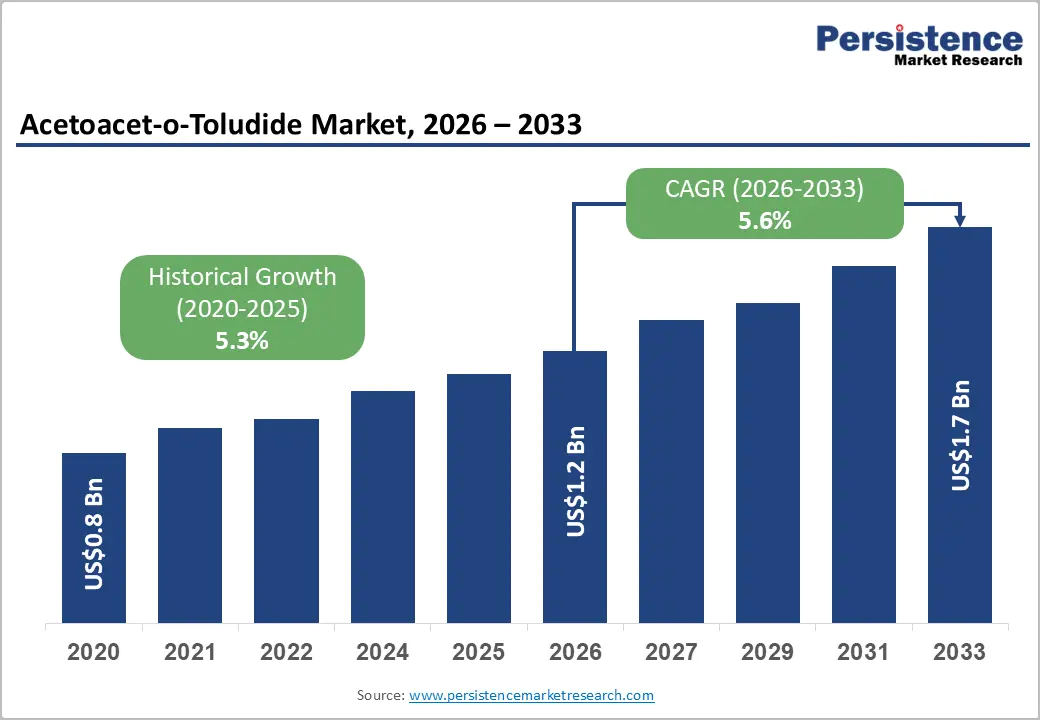
The global acetoacet-o-toludide market size is likely to be valued at US$1.2 billion in 2026 and is expected to reach US$1.7 billion by 2033, growing at a CAGR of 5.6% during the forecast period from 2026 to 2033, driven by increasing demand across diverse applications such as dyes, pigments, pharmaceuticals, agrochemicals, and specialty chemical intermediates. Its versatility as a chemical intermediate, particularly in the synthesis of colorants and pharmaceutical compounds, underpins consistent industrial demand.
Expansion in the textile and dyeing industries, coupled with the growing pharmaceutical sector’s need for high-quality intermediates, is fueling market momentum.
The market is also benefiting from heightened activity in agrochemical production, where acetoacet-o-toluidide serves as a key precursor for fungicides and pesticides. Regional dynamics play a crucial role, with Asia Pacific emerging as a primary growth hub due to its robust chemical manufacturing base, expanding textile production, and increasing pharmaceutical R&D initiatives. Stringent environmental regulations and the push for greener, sustainable synthesis methods are shaping production practices and encouraging manufacturers to innovate in process efficiency.
What is Driving the Consumption rate for Acetoacet-o-Toludide?
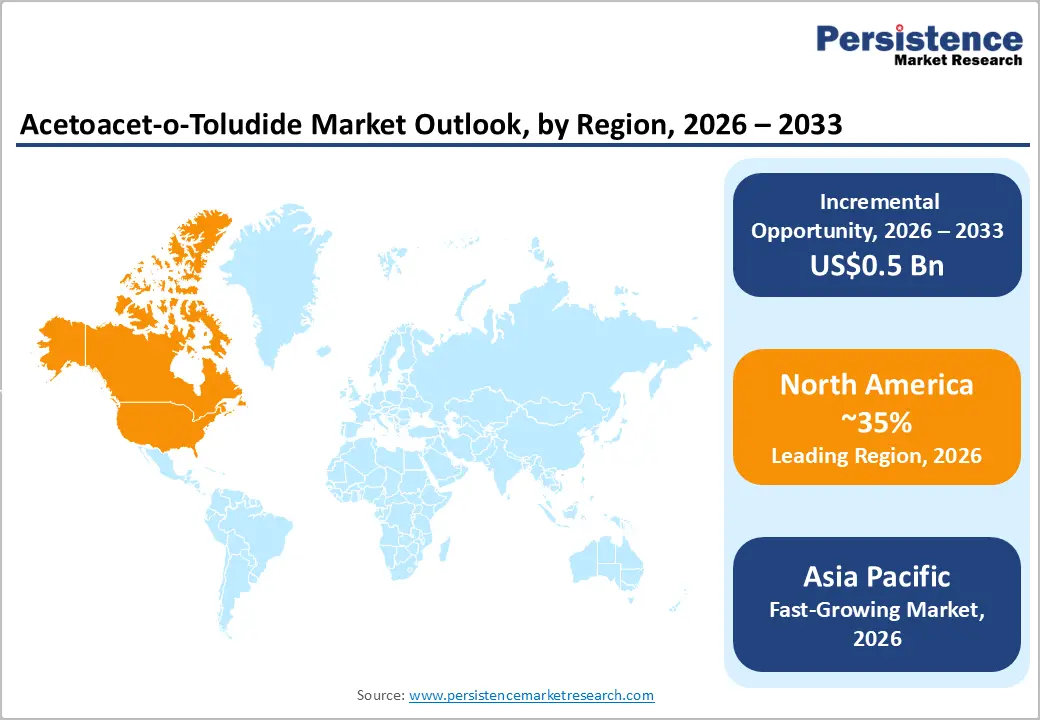
- Leading Region: North America is anticipated to be the leading region, accounting for a market share of 35% in 2026, driven by specialty chemical innovation, regulated pharma and agrochemical sectors, and high-purity intermediate demand.
- Fastest-growing Region: Asia Pacific is likely to be the fastest-growing region, supported by manufacturing advantages, low-cost production, rising agrochemical and textile demand, and chemical industry expansion.
- Leading Purity Type: The above 99% segment is projected to represent the leading purity type in 2026, accounting for 60% of the revenue share, driven by high-specification applications in pharmaceuticals and advanced pigments.
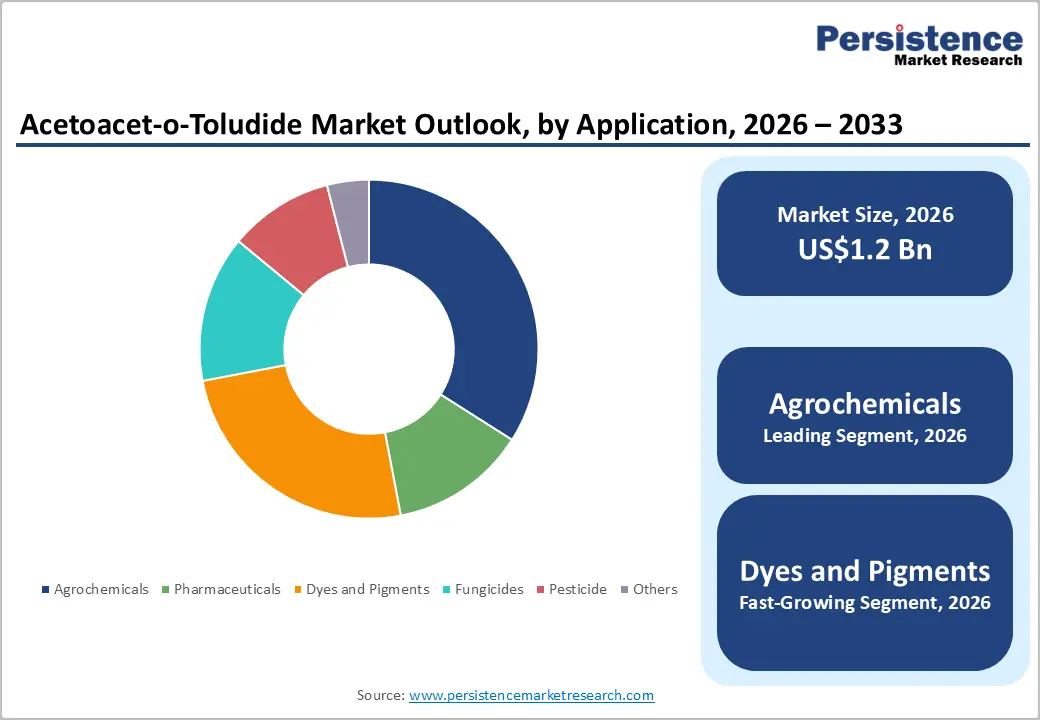
- Leading Application: Agrochemicals are anticipated to be the leading application, accounting for over 50% of the revenue share in 2026, supported by consistent demand in crop protection.
| Key Insights | Details |
|---|---|
| Acetoacet-o-Toludide Market Size (2026E) | US$1.2 Bn |
| Market Value Forecast (2033F) | US$1.7 Bn |
| Projected Growth (CAGR 2026 to 2033) | 5.6% |
| Historical Market Growth (CAGR 2020 to 2025) | 5.3% |
Market Factors – Growth, Barriers, and Opportunity Analysis
Growth Analysis- Expansion in Dyes and Pigments Applications
The increasing demand for vibrant, long-lasting dyes and pigments across textile, coatings, and specialty products has significantly driven the use of acetoacet-o-toluidide. Its chemical properties make it an essential intermediate in synthesizing azo dyes and other pigment compounds that require high purity for consistent color performance. Manufacturers are leveraging their versatility to develop new pigment formulations tailored for high-end applications, including industrial coatings, plastics, and printing inks. The expansion of the textile industry, especially in emerging economies, has also fueled large-scale adoption.
The growth is supported by technological advancements in pigment synthesis that rely on precise chemical intermediates. Acetoacet-o-toluidide facilitates the production of high-quality pigments with improved stability, opacity, and resistance to environmental factors. Increased consumer preference for high-quality textiles and coated products drives manufacturers to adopt intermediates that meet stringent quality standards. As textile and industrial output rise in regions such as Asia Pacific, demand for reliable intermediates expands correspondingly.
Pharmaceutical Intermediate Utilization
Acetoacet-o-toluidide serves as a critical intermediate in pharmaceutical synthesis, particularly in active pharmaceutical ingredient (API) production. Its functional versatility enables the creation of complex molecular structures essential for drug formulations. High-purity grades are preferred in regulated pharmaceutical environments to ensure efficacy, safety, and compliance with stringent quality standards. The expanding pharmaceutical sector, coupled with growing R&D investment in drug development, has amplified the need for reliable intermediates.
Companies producing generics, novel therapeutics, and specialty medicines increasingly depend on intermediates such as acetoacet-o-toluidide to optimize production efficiency and maintain consistent chemical performance.
The demand is strengthened by the rise of specialty medicines and precision therapeutics, which require intermediates with strict impurity control. Regulatory compliance, particularly in North America and Europe, emphasizes the use of high-quality chemical intermediates to prevent contamination and ensure consistent drug performance. The focus on high-value pharmaceutical products in emerging markets also creates opportunities for intermediates that can meet both volume and purity requirements. Pharmaceutical applications remain a core driver for the market, as both established and emerging manufacturers prioritize reliable, high-grade intermediates for critical synthesis pathways.
Barrier Analysis - Regulatory Hurdles on Chemical Intermediates
Acetoacet-o-toluidide, being a reactive organic compound, is subject to regulatory oversight across regions to ensure environmental safety and worker protection. Compliance with chemical handling standards, discharge norms, and labeling requirements increases operational complexity and production costs for manufacturers. Regulatory frameworks such as REACH in Europe and EPA guidelines in North America require rigorous documentation, testing, and certification. Companies must allocate resources for compliance management, which can slow new capacity expansion or delay market entry for smaller players lacking regulatory expertise.
Variations in regulatory enforcement between countries create challenges for supply chains. Exporters must navigate differing safety standards, chemical registration requirements, and import regulations, which may impact delivery timelines and pricing. Non-compliance risks include fines, shipment rejection, or production halts, influencing manufacturers to adopt conservative growth strategies. Emerging regions with less mature regulatory infrastructure face hurdles in meeting buyers’ quality expectations. While demand exists, regulatory hurdles act as a key restraint, requiring industry players to balance growth ambitions with compliance obligations, often increasing operational and financial burden.
Health and Safety Concerns
Manufacturing facilities must implement personal protective equipment (PPE), ventilation systems, and emergency response measures to mitigate hazards. Worker safety regulations in developed markets, coupled with increased awareness of chemical handling risks, require significant investment in occupational health and training programs. Failure to adhere to safety standards can result in accidents, liability issues, and reputational damage. These concerns add operational complexity and may deter new entrants from scaling production or expanding manufacturing capabilities.
The environmental impact of chemical processing and accidental release amplifies safety concerns. Waste management, effluent treatment, and containment systems must meet regulatory and ethical standards, which increase production costs. Safety-driven limitations on production volumes or restricted chemical use can influence supply availability. The heightened scrutiny on chemical safety also influences customer preference, pushing manufacturers toward certified and compliant suppliers.
Opportunity Analysis - Emerging Agrochemical Demand in Developing Regions
Expanding food production needs and intensifying agricultural practices are driving demand for effective, high-quality agrochemical formulations. Acetoacet-o-toluidide's role as a cost-effective and versatile intermediate makes it attractive for large-scale agrochemical production. Developing countries are witnessing infrastructure growth in chemical manufacturing and formulation facilities, which facilitates local production and reduces dependence on imports, creating a strong market pull for intermediates tailored to agrochemical applications.
Government initiatives to enhance crop yields and food security in emerging economies support the adoption of advanced agrochemical solutions. Rising awareness of plant protection and pest management drives higher consumption of formulated products, indirectly increasing demand for chemical intermediates. The increasing mechanization of agriculture and adoption of modern formulations create opportunities for intermediates that can meet both performance and volume requirements.
Technological Convergence in High-Purity Applications
High-purity intermediates are increasingly demanded in pharmaceuticals, specialty dyes, and precision coatings, where impurity control is critical. Adoption of innovative separation techniques, automated synthesis platforms, and real-time quality monitoring allows manufacturers to achieve superior specifications, reduce waste, and enhance consistency. This technological convergence also enables customization of intermediates for niche applications, opening new avenues in high-value markets where performance and reliability are paramount.
Integration of green chemistry principles and energy-efficient processes allows manufacturers to address sustainability concerns while maintaining high-purity standards. Investment in R&D and process innovation facilitates scalability, cost optimization, and differentiation in competitive markets. Collaboration between chemical producers and end-users accelerates the development of application-specific intermediates, enhancing market opportunities. High-purity acetoacet-o-toluidide benefits from technological advancements, increasing its appeal in pharmaceuticals, dyes, and specialty chemicals.
Category-wise Analysis
Purity Type Insights
The above 99% purity segment is expected to lead the acetoacet-o-toludide market, accounting for approximately 60% of revenue in 2026, driven by its critical role in high-specification applications, particularly in pharmaceuticals and advanced pigments, where even minimal impurities can compromise efficacy and color consistency. Manufacturers of specialty dyes rely on high-purity acetoacet-o-toluidide to achieve vibrant, stable colors in industrial coatings and textiles. For example, a pharmaceutical company synthesizing active pharmaceutical ingredients for anti-inflammatory drugs prefers above 99% purity to meet stringent regulatory standards and ensure product safety.
The 99% and below purity segment is likely to be the fastest-growing, supported by cost-sensitive applications in agrochemicals, general dyes, and large-scale industrial processes where ultra-high purity is not required. Emerging markets in Asia and Latin America are increasingly adopting these grades to produce crop protection chemicals such as fungicides and pesticides, balancing acceptable performance with lower production costs. For example, a pesticide manufacturer in India uses 99% purity acetoacet-o-toluidide to synthesize affordable, large-volume products for regional distribution.
The segment’s appeal lies in meeting functional requirements without premium pricing, making it ideal for volume-driven sectors.
Application Insights
Agrochemicals are projected to lead the market, capturing around 50% of the revenue share in 2026, supported by consistent demand for crop protection chemicals in both developed and developing countries. It serves as a key intermediate in synthesizing active ingredients for fungicides, herbicides, and insecticides, ensuring effectiveness and stability in agricultural formulations. For example, a major chemical manufacturer producing systemic fungicides for rice cultivation in Southeast Asia relies on high-volume acetoacet-o-toluidide to maintain consistent output and product efficacy.
The segment benefits from the scale of agriculture, government incentives for food security, and growing mechanization, which collectively sustain intermediate demand.
Dyes and pigments are likely to be the fastest-growing application, driven by expanding textile, coating, and specialty pigment industries, particularly in Asia, where industrialization and manufacturing output are increasing rapidly. It is used to synthesize azo dyes and other pigment intermediates, ensuring vibrant colors, stability, and consistency in final products. For example, a textile manufacturer in China producing high-quality printed fabrics uses acetoacet-o-toluidide-derived dyes to achieve superior colorfastness and durability. Rising consumer demand for textiles and coated materials, coupled with the need for innovative color solutions, fuels the adoption of chemical intermediates.
Regional Insights
North America Acetoacet-o-Toludide Market Trends
North America is anticipated to be the leading region, accounting for a market share of 35% in 2026, driven by strong demand from pharmaceutical, specialty chemical, and advanced pigment sectors. The region’s emphasis on high-purity intermediates is driven by stringent regulatory frameworks such as the U.S. FDA and EPA, which place a premium on compliance, quality, and traceability. For example, Evonik Industries AG has expanded its high-purity intermediates portfolio to support pharmaceutical and specialty chemical customers needing consistent, regulatory-compliant inputs.
North America benefits from investments in sustainable and process-efficient production. Chemical companies are adopting greener synthesis methods and waste reduction practices to align with long-term environmental objectives and customer expectations for lower carbon footprints. For example, BASF SE has implemented process optimization initiatives at its U.S. facilities to minimize solvent waste and energy use, enhancing supply reliability and lowering production costs. These trends not only support market growth but also foster competitive differentiation in high-value segments.
Europe Acetoacet-o-Toludide Market Trends
Europe is likely to be a significant market for acetoacet-o-toludide in 2026, due to stringent regulatory frameworks and high standards for environmental performance, particularly under REACH and EU chemical safety directives. Manufacturers in Europe prioritize high-purity intermediates to meet strict quality and safety requirements, especially in pharmaceutical, fine chemicals, and specialty pigment sectors. For example, Clariant AG has leveraged its expertise in specialty chemical intermediates to support applications in high-performance pigments and pharmaceutical synthesis, investing in process optimization and compliance systems that align with Europe’s regulatory landscape.
Europe acetoacet-o-toluidide market benefits from diversified end-use industries such as agrochemicals and coatings, where intermediates are essential for functional formulations. The region’s emphasis on circular economy principles and reduced carbon footprint is shaping investment decisions, with producers exploring greener synthesis routes and energy-efficient technologies. Growing interest in agrochemical innovations, particularly biological crop protection solutions, supports intermediate demand, even as European farmers adopt more sustainable practices.
Asia Pacific Acetoacet-o-Toludide Market Trends
The Asia Pacific region is likely to be the fastest-growing region, driven by strong growth in chemical manufacturing hubs such as China, India, and Southeast Asian economies. Industrial activity in these regions benefits from lower production costs, abundant raw material access, and expansion of end-use sectors including agrochemicals, dyes and pigments, and pharmaceuticals. For example, Tata Chemicals Limited has expanded its specialty chemical offerings, strengthening intermediate supply chains for regional agrochemical and pigment producers.
Beyond cost advantages, the Asia Pacific market is characterized by rising domestic consumption and export-oriented manufacturing. Countries such as China and India are not only scaling production for local demand but are also serving chemical supply chains. Increasing investment in R&D and process technology adoption enhances product quality and operational efficiency, allowing regional players to meet international specifications and compete with established producers. The integration of digital manufacturing technologies enhances productivity and traceability, supporting growth.
Competitive Landscape
The global acetoacet-o-toludide market exhibits a moderately fragmented structure, driven by a mix of established specialty chemical producers and emerging regional players that compete on innovation, quality, and geographic reach. Large multinational companies leverage extensive R&D capabilities and broad product portfolios to maintain leadership, while niche firms focus on tailored solutions and localized strategies. Companies emphasize differentiation through technological advancements, optimized purification methods, and customized offerings that cater to applications in agrochemicals, high-performance dyes, and pharmaceutical synthesis.
With key leaders, including BASF SE, Clariant AG, Eastman Chemical Company, and Huntsman Corporation, the competitive landscape is shaped by diverse approaches to market participation. These players compete through strategic partnerships, capacity expansions, sustainability initiatives, and ongoing product innovation to meet evolving industry demands. Many competitors are investing in greener production processes and compliance capabilities in response to stricter environmental regulations and end-user expectations for sustainable intermediates.
Companies Covered in Acetoacet-o-Toludide Market
- BASF SE
- Clariant AG
- Lanxess AG
- Eastman Chemical Company
- Evonik Industries AG
- Arkema Group
- Solvay S.A.
- Huntsman Corporation
- Mitsubishi Chemical Corporation
- Sumitomo Chemical Co., Ltd.
- DIC Corporation
- Kronos Worldwide, Inc.
- Venator Materials PLC
- Tronox Holdings PLC
- Tata Chemicals Limited
- Toray Industries, Inc.
- Kuraray Co., Ltd.
- LG Chem Ltd.
- Wacker Chemie AG
- Albemarle Corporation
Frequently Asked Questions
The global acetoacet-o-toludide market is projected to reach US$1.2 billion in 2026.
The acetoacet‑o‑toluidide market is driven by rising demand for high-purity intermediates in pharmaceuticals, dyes, pigments, and agrochemical applications.
The acetoacet-o-toludide market is expected to grow at a CAGR of 5.6% from 2026 to 2033.
Key market opportunities lie in emerging agrochemical demand and technological advancements enabling high-purity acetoacet‑o‑toluidide production for pharmaceuticals and specialty chemicals.
BASF SE, Clariant AG, Lanxess AG, Eastman Chemical Company, Evonik Industries AG, and Arkema Group are the leading players.


