




- Nutraceuticals & Functional Foods
- Krill Oil Market
Krill Oil Market Size, Share, Growth, and Regional Forecast, 2026 - 2033
Krill Oil Market by End Use (Dietary Supplement, Pharmaceutical, Animal Feed, Other), by Sales Channel (B2B, B2C), and Region for 2026 - 2033

Krill Oil Market Size and Trends Analysis
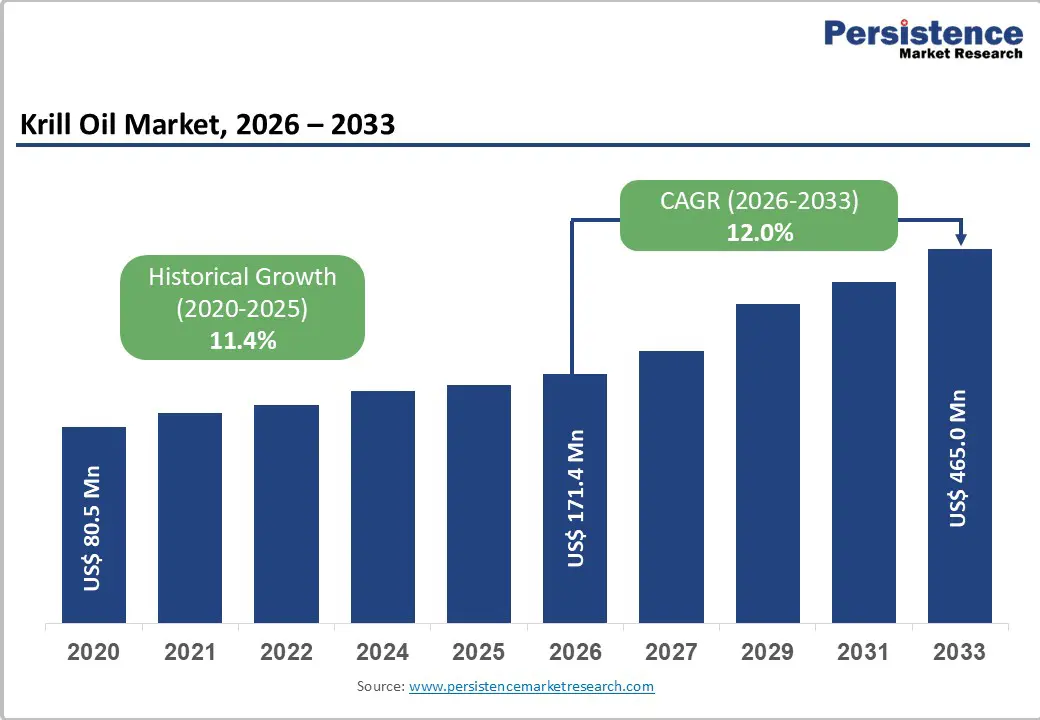
The global krill oil market is projected to reach approximately US$210.2 million by 2026. It is anticipated to showcase a CAGR of 12.0% during the forecast period to attain a value of US$465.0 Mn by 2033. With rising demand for clean-label, high-quality supplements, krill oil is expected to gain traction among wellness enthusiasts, athletes, and ageing populations. This shift underscores a broader consumer preference for products that not only deliver proven health benefits but also enhance the overall supplementation experience.
The nutritional supplement industry is experiencing a notable shift, with krill oil increasingly favoured over traditional fish oil. This trend is largely driven by krill oil’s superior bioavailability, meaning the body absorbs its omega-3 fatty acids more efficiently. Consumers also appreciate that krill oil tends to cause fewer unpleasant side effects, such as the fishy aftertaste often associated with fish oil. As awareness of the health benefits of omega-3 fatty acids continues to grow, supporting cardiovascular function, cognitive performance, and joint mobility, health-conscious individuals are seeking alternatives that combine efficacy with comfort. Krill oil, rich in phospholipid-bound omega-3s and naturally containing antioxidants like astaxanthin, is positioned as a premium option in this space.
Key Industry Highlights
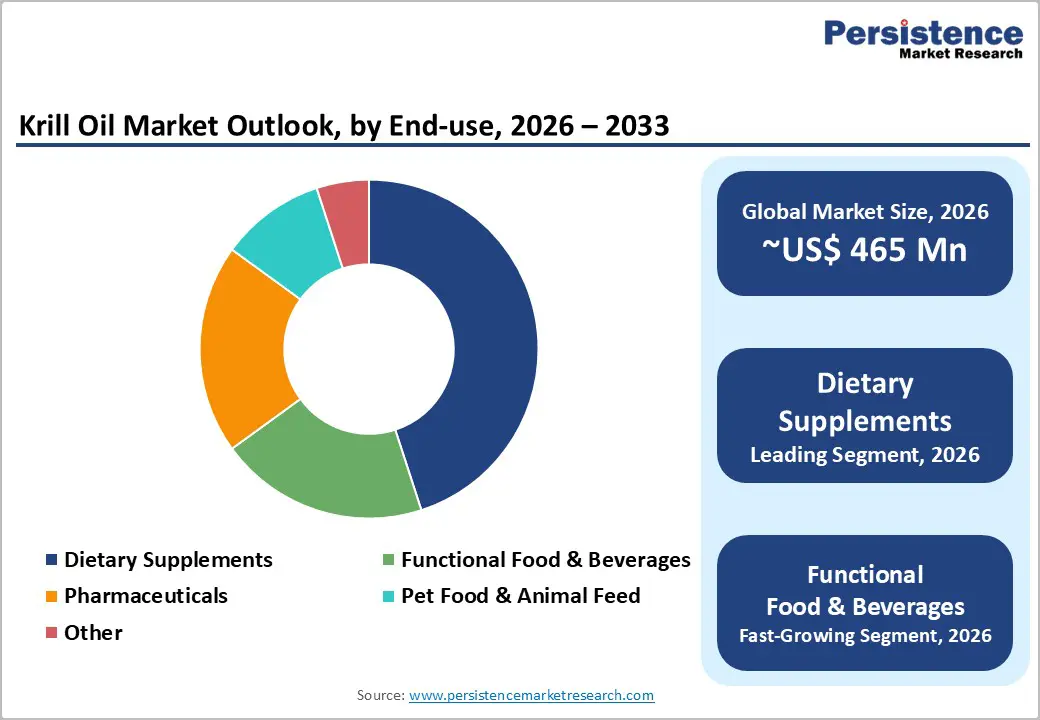
- Leading End use: Dietary supplements account for a major market share of more than 40% in 2025, primarily because of their superior absorption compared to fish oil and its proven health benefits. Consumers increasingly seek omega-3 supplements for cardiovascular, joint, and cognitive health. Krill oil’s phospholipid-based omega-3s and natural antioxidant astaxanthin make it highly effective, driving strong demand.
- Dominant Sales Channel: By sales channel, the supermarkets/hypermarkets segment is anticipated to hold a share of more than 38% in 2026, as they provide one-stop shopping, wide accessibility, and trusted product authenticity. Their shelf space and attractive displays boost visibility, encouraging impulse purchases and consumer confidence in branded supplements.
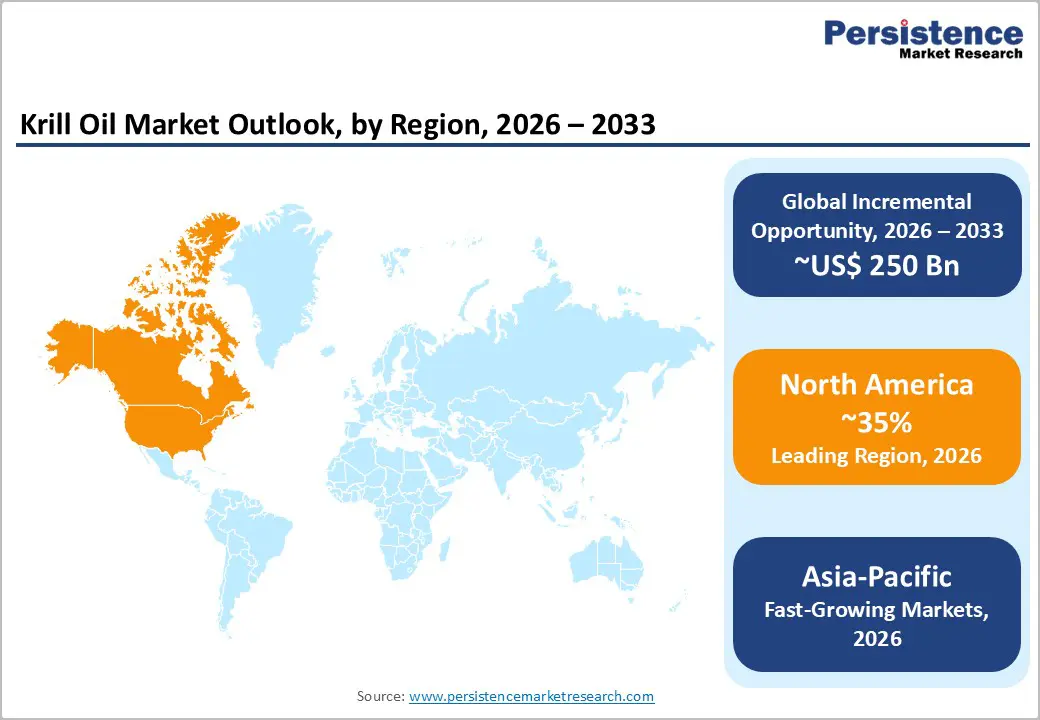
- Dominant Region: North America dominates the Krill Oil market, accounting for around 35% of the global market share in 20205, owing to rising awareness regarding the benefits of krill oil, large consumer base for dietary supplements, strong retail channels and innovation leadership from established nutraceutical companies.
- Investment Strategy: The rise of e-commerce platforms is enabling direct-to-consumer sales of krill oil supplements, making these more accessible. Krill oil's antioxidant-rich composition is driving its application in cosmetic products, particularly anti-aging creams and serums. Companies are adopting supercritical CO2 extraction and enzymatic processes to produce high-purity krill oil with minimal oxidation. Businesses are focusing on obtaining Marine Stewardship Council (MSC) certification and adopting eco-friendly practices to appeal to environmentally conscious buyers.
| Key Insights | Details |
|---|---|
|
Krill Oil Market Size (2026E) |
US$ 210.2 Mn |
|
Market Value Forecast (2033F) |
US$ 465.0 Mn |
|
Projected Growth (CAGR 2026 to 2033) |
12.0% |
|
Historical Market Growth (CAGR 2020 to 2025) |
11.4% |
Market Dynamics
Driver - Premiumization and Personalized Nutrition to boost the demand for Krill Oil
Krill oil is positioned as a premium alternative to fish oil due to its superior absorption, phospholipid-based omega-3s, and natural antioxidant content (astaxanthin). Consumers seeking high-end supplements are drawn to krill oil’s efficacy and sustainability credentials. For example, brands like Aker BioMarine emphasize eco-friendly harvesting and advanced formulations, appealing to affluent buyers who value both performance and ethical sourcing. Premium packaging, flavor masking, and multifunctional blends (e.g., krill oil with CoQ10 or vitamins) further reinforce its upscale image.
The rise of personalized health solutions is also boosting krill oil adoption. Consumers increasingly want supplements tailored to their specific health needs, whether cardiovascular support, joint health, or cognitive performance. Krill oil’s versatility allows companies to design targeted formulations. For instance, products combining krill oil with joint-supporting nutrients are marketed to arthritis patients, while blends with brain-health ingredients appeal to younger professionals. Personalized subscription models and DNA-based nutrition plans are integrating krill oil into customized supplement regimens, ensuring relevance across diverse demographics. In essence, premiumization elevates krill oil as a superior, trusted product, while personalized nutrition ensures it meets individual health goals together fuelling strong demand growth.
Expanding Role of Krill Oil in Fitness and Recovery
The rising demand for krill oil in sports nutrition is driven by athletes and fitness enthusiasts seeking supplements that enhance performance, recovery, and overall health. Krill oil is rich in omega-3 fatty acids bound to phospholipids, which are absorbed more efficiently than traditional fish oil, making it particularly appealing for those requiring rapid nutrient uptake. Its anti-inflammatory properties help reduce exercise-induced muscle soreness and support joint health, both critical for maintaining training intensity. Additionally, krill oil contains astaxanthin, a powerful antioxidant that combats oxidative stress, improving endurance and recovery. These benefits position krill oil as a premium supplement in sports nutrition.
Restraints - Distinct smell and flavor profile limits Krill oil acceptance in the products
The krill oil market faces several challenges that are slowing its growth. One of the primary barriers is high product cost, as krill oil is more expensive than traditional fish oil, limiting adoption among price-sensitive consumers. Limited consumer awareness about its unique benefits, such as superior absorption, also hampers demand in emerging markets. Concerns over the sustainability and environmental impact of krill harvesting create regulatory pressures and skepticism among eco-conscious buyers. Additionally, the “fishy taste” issue affects consumer acceptance, despite advances in flavor masking. Intense competition from established omega-3 sources like fish oil further restrains market expansion. Liquid krill oil formulations are particularly prone to taste and odor issues compared to encapsulated forms. Although soft gel capsules mask the taste, some users still report a fishy aftertaste upon burping after consumption.
Opportunity - Technological Innovations in Extraction Techniques
Innovations in sustainable harvesting and efficient extraction methods are improving the quality and yield of krill oil, minimizing its environmental impact. Enzymatic processes are increasingly being used to break down krill biomass, enhancing the yield and bioavailability of the extracted oil. This process ensures higher concentration of phospholipids and improved absorption rates for omega-3 fatty acids. Enzymatic extraction technology adoption has seen a 20% growth in leading production facilities over the last five years.
New extraction techniques focus on maximizing the retention of phospholipids, which are crucial for the superior bioavailability of krill oil. Products with enhanced phospholipid content have experienced 30% higher market acceptance due to better health outcomes. Novel extraction technologies now prioritize the preservation of astaxanthin, a powerful antioxidant naturally present in krill oil. For instance, Studies show that krill oil with intact astaxanthin content has a 25% higher antioxidant efficacy than other omega-3 supplements. By 2023, 40% of krill oil manufacturers reportedly adopted innovative extraction technologies, contributing to a 12% increase in market value year-over-year.
Increasing Preference for Natural and Sustainable Products
Consumers are showing a growing preference for natural sources of omega-3 fatty acids, driven by the perception that these options are free from synthetic additives and chemical processing. In 2022, according to the Nutrition Business Journal, nearly two-thirds (65%) of supplement users in North America and Europe prioritize natural formulations when selecting daily health products, underscoring a strong market shift toward clean-label solutions. Krill oil has emerged as a compelling alternative, widely regarded as a more sustainable source of omega-3s compared to fish oil derived from overfished species. Its harvesting in the pristine waters of Antarctica, under carefully regulated practices, has further strengthened its reputation among environmentally conscious consumers.
Industry data from 2023 highlights the commercial advantage of sustainability: companies that adhere to certified eco-friendly krill harvesting practices reported a 17% higher growth rate compared to competitors lacking such certifications. This demonstrates that sustainability is not only an ethical imperative but also a powerful driver of consumer trust and business performance in the omega-3 supplement market. Certifications like Marine Stewardship Council (MSC) and Friend of the Seas (FOS) have bolstered consumer trust in krill oil brands. Rise in consumer skepticism toward synthetic and chemically processed supplements is steering demand toward naturally derived options like krill oil.
Category-wise Analysis
By End use, Preventive Healthcare Trends are Driving Adoption of Dietary Supplements
Dietary supplements are projected to hold a market share of more than 40% in 2025. Consumers are increasingly adopting preventative healthcare measures, leading to higher consumption of dietary supplements like krill oil. In 2023, the Council for Responsible Nutrition reported that 77% of U.S. adults use dietary supplements, signaling strong potential for krill oil products. Omega-3 supplements are among the most widely consumed globally, according to the Global Organization for EPA and DHA Omega-3s (GOED). Krill oil is gaining traction because of its superior absorption and bioavailability compared to fish oil, positioning it as a premium alternative. Rising demand for functional foods has encouraged consumers to seek targeted health benefits, and krill oil is increasingly recommended for managing chronic conditions. With 54 million U.S. adults affected by arthritis, its anti-inflammatory properties are driving adoption.
By Sales Channel, Supermarkets/Hypermarkets have a Trusted Purchasing Environment, Boosting Sales
Supermarkets and hypermarkets are projected to account for approximately 38% of krill oil product sales by 2025, reflecting their importance as primary distribution channels. These outlets offer convenient one-stop shopping, allowing consumers to purchase supplements alongside groceries and household essentials. Their widespread presence in urban and suburban areas ensures accessibility to a broad demographic. Research from the Food Marketing Institute shows that 83% of North American consumers prefer buying health-related products in physical stores, reinforcing the strength of this channel.
Supermarkets and hypermarkets also provide extensive shelf space and eye-catching displays, which enhance product visibility and encourage impulse purchases. Consumers often perceive these outlets as trustworthy sources for branded supplements, with authenticity and reliability being key factors in their purchasing decisions. The variety of krill oil products available capsules, soft gels, and liquid formulations caters to diverse preferences, while offerings across multiple price points appeal to both cost-conscious shoppers and those seeking premium options. By combining accessibility, consumer trust, and strong merchandising capabilities, supermarkets and hypermarkets are positioned to play a pivotal role in driving the growth of krill oil supplements. Their ability to reach large audiences and promote product differentiation makes them a cornerstone of future market expansion.
Regional Insights
North America Krill Oil Market Trends
By 2026, North America is expected to hold around 35% share of the global krill oil market, underscoring its role as a key growth region. The area has one of the largest consumer bases for omega-3 supplements, driven by rising interest in preventative healthcare. In 2023, the U.S. dietary supplements market reached US$ 50 billion, with omega-3 products contributing significantly. A growing preference for phospholipid-based omega-3s, which are more efficiently absorbed, has accelerated the shift toward krill oil over traditional fish oil. Increasing awareness of krill oil’s health benefits, particularly its superior bioavailability, continues to boost demand.
The American Heart Association emphasizes the importance of omega-3 fatty acids for cardiovascular health, making krill oil a preferred choice in a region where chronic diseases are prevalent. In the U.S., nearly 48% of adults live with some form of cardiovascular disease, according to the CDC, while arthritis also affects millions. These conditions are driving adoption of krill oil supplements as part of disease prevention and management strategies. North America is also home to leading pharmaceutical and nutraceutical companies, enabling innovation and marketing of advanced krill oil products. In 2023, the region accounted for 40% of global krill oil revenue, supported by strong R&D investments.
South Asia & Pacific Krill Oil Market Trends
South Asia & Pacific is emerging as a fast-growing market for krill oil, driven by rising health awareness, demand for omega-3 supplements, and the expansion of nutraceuticals and functional foods. The region’s large population base and increasing prevalence of lifestyle-related diseases make it a key growth area. China and Japan face a rising prevalence of cardiovascular diseases, which has heightened consumer interest in omega-3 supplements as part of preventive healthcare strategies. Their aging populations further amplify demand, as older consumers actively seek products that support heart health, joint mobility, and cognitive function.
Government initiatives also play a crucial role. In Japan, public health campaigns emphasize the importance of omega-3 fatty acids in daily diets, while in China, authorities are encouraging greater adoption of supplements to reduce the burden of chronic diseases. This policy support has created a favorable environment for krill oil, which is increasingly recognized for its superior bioavailability compared to fish oil. Consumer behavior trends add another layer of growth. Young Chinese consumers are showing a strong preference for premium healthcare products. According to the Chinese Academy of Social Sciences, more than two-thirds of consumers in China are willing to purchase dietary supplements and health products to maintain wellness. This willingness reflects a cultural shift toward proactive health management, positioning krill oil as a trusted solution in both preventive and therapeutic end uses.
Market Competitive Landscape
Companies in the krill oil market are increasingly prioritizing sustainability and innovation to strengthen their position. Leading players such as Aker BioMarine have introduced advanced technologies to monitor and regulate harvesting, ensuring compliance with Marine Stewardship Council (MSC) certification and minimizing environmental impact. Many businesses are also working to reduce their carbon footprint in line with global sustainability goals. On the product side, manufacturers are enhancing krill oil’s bioavailability with new formulations that outperform conventional fish oil. To improve consumer acceptance, they employ flavor masking and encapsulation techniques to eliminate the “fishy” taste. Additionally, krill oil is being blended with astaxanthin, vitamins, and coenzyme Q10 to create multifunctional supplements that deliver broader health benefits
Key Industry Developments:
- In March 2026, at Natural Products Expo West 2026, Aker BioMarine positioned Krill Oil and marine omega-3s as science-backed solutions for cognition, metabolic health and longevity. The company also highlighted clinical data showing krill oil supporting weight loss
- In January 2026, Aker BioMarine entered a few strategic distribution partnerships to achieve geographic expansion of its krill portfolio. The strategic distribution agreement with SK Chemtrade will expand access to Aker Biomarine's krill oil and algal DHA ingredients across South Africa, Zimbabwe and neighbouring markets, strengthening its regional presence in sustainable omega-3 nutrition. Aker BioMarine partnered with G.C. Chemie Pharma to expand its presence in India
- In December 2025, Aker BioMarine’s krill oil-based omega-3 gained first skin health claim approval in Japan
- In March 2025, China launched a huge Antarctic krill vessel. The 139m vessel, named Fuyuan Fishing 9199, also functions as a factory that can process a reported 1,000 tonnes of krill a day.
- In September 2024, Growel Group entered the pet food category with the launch of Carniwel. The pet food is enriched with superfoods like Antarctic Krill, Algal Oil, and Spirulina.
- In August 2024, Swisse tapped into Krill Oil’s three-fold benefits in creating new joint health supplement.
Companies Covered in Krill Oil Market
- Aker BioMarine ASA
- Abco India
- Biocorp Co. Ltd.
- Bio-Mer New Zealand
- Biotikon B.V.®
- ConnOils by Kraft
- Luhua Biomarine (Shandong) Co., Ltd.
- Neptune Wellness Solutions
- Nippon Suisan Kaisha, Ltd. (Nissui)
- Nutracode LLC
- Qingdao Kangjing Marine Biotechnology Co. Ltd.
- Reckitt Benckiser Group Plc
- Rimfrost AS
- Others
Frequently Asked Questions
The global krill oil market is projected to be valued at US$ 210.2 Mn in 2026.
Drivers for rising krill oil demand include preventive healthcare, sports nutrition, functional foods, superior absorption, sustainability, premiumization, aging populations, cardiovascular awareness, personalized blends, and global nutraceutical expansion.
The global Krill Oil market is expected to witness a CAGR of 12.0% between 2026 and 2033
Key opportunities for krill oil include functional foods, sports nutrition, pharmaceuticals, personalized blends, and sustainable premium positioning.
A few major players in the global krill oil market include Aker BioMarine, Rimfrost AS, Neptune Wellness Solutions, and Biocorp Co., Ltd., amongst others


