




- Healthcare Services
- Hair Transplant Services Market
Hair Transplant Services Market Size, Share, Growth, and Regional Forecast, 2026 - 2033
Hair Transplant Services Market by Procedure (Follicular Unit Extraction (FUE), Follicular Unit Transplantation (FUT), Direct Hair Implantation (DHI), Scalp Reduction, Others), Indication (Androgenetic alopecia, Alopecia areata, Scarring alopecia, Traction alopecia), End-user (Hospitals, Specialized Clinics, Ambulatory Surgical Centers), and Regional Analysis from 2026 - 2033

Hair Transplant Services Market Share and Trends Analysis
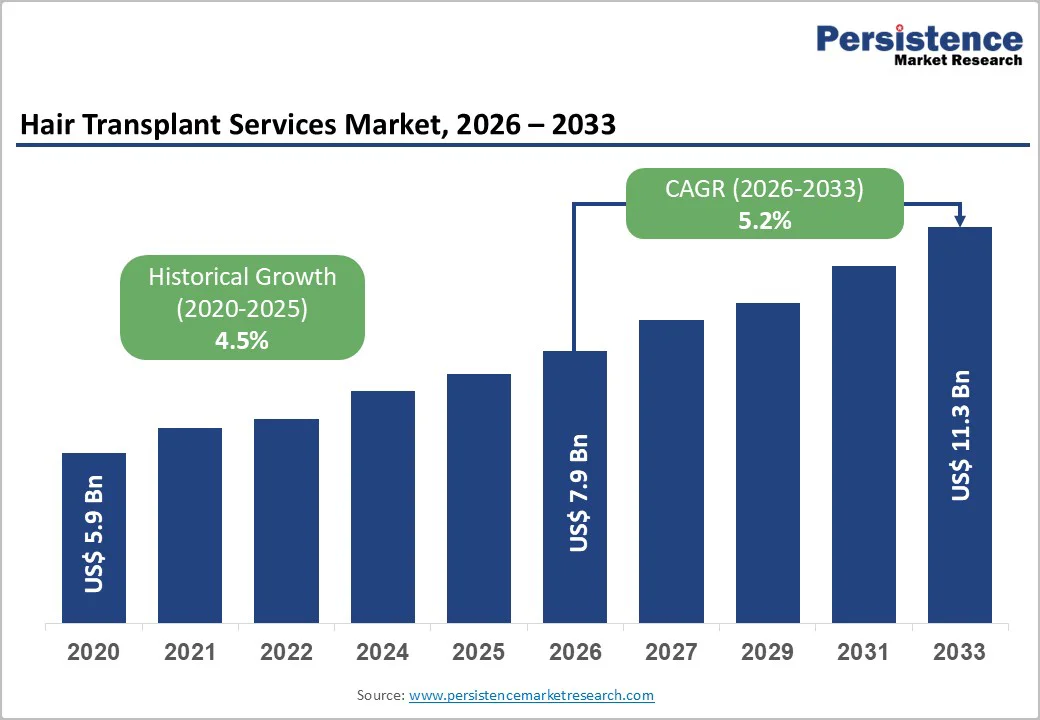
The global hair transplant services market size is estimated to grow from US$ 7.9 billion in 2026 to US$ 11.3 billion by 2033, growing at a CAGR of 5.2% during the forecast period from 2026 to 2033. The rise in prevalence of androgenetic alopecia, increasing aesthetic consciousness, and strong demand for minimally invasive restoration procedures drive the need for hair transplant services.
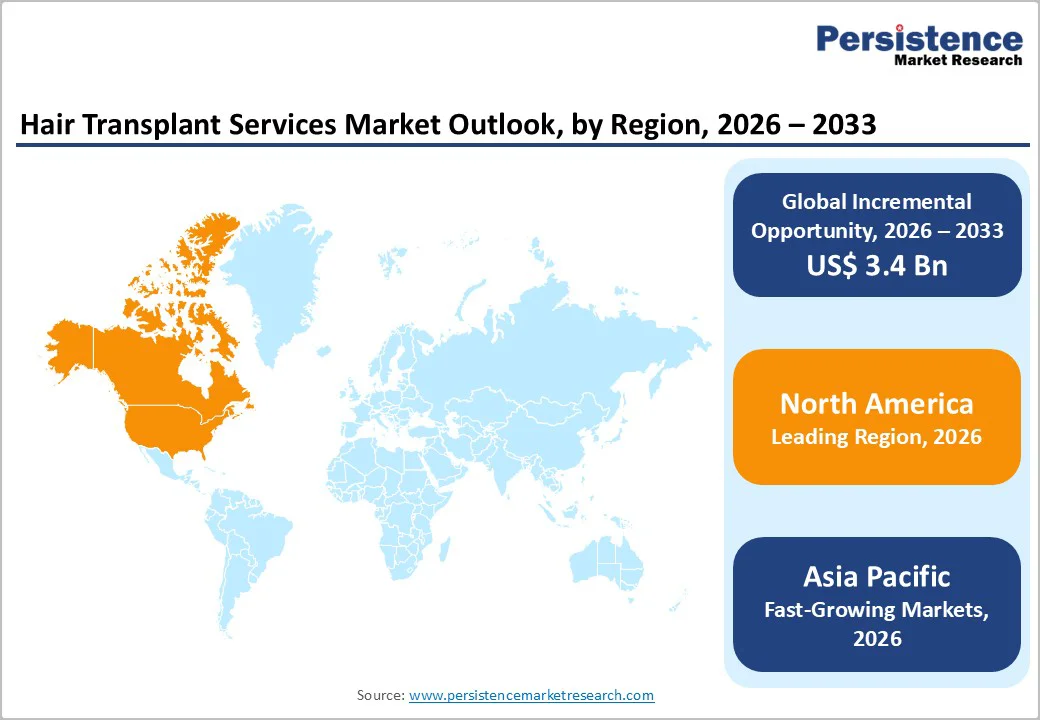
Advancements in FUE, FUT, and DHI techniques, along with improved surgical precision, are further supporting market expansion. North America dominates the market due to the high adoption of cosmetic procedures and the availability of skilled surgeons, while the Asia Pacific leads in growth, fueled by booming medical tourism, affordable treatment packages, and the rapid expansion of specialized transplant clinics, significantly enhancing the regional market potential.
Key Industry Highlights
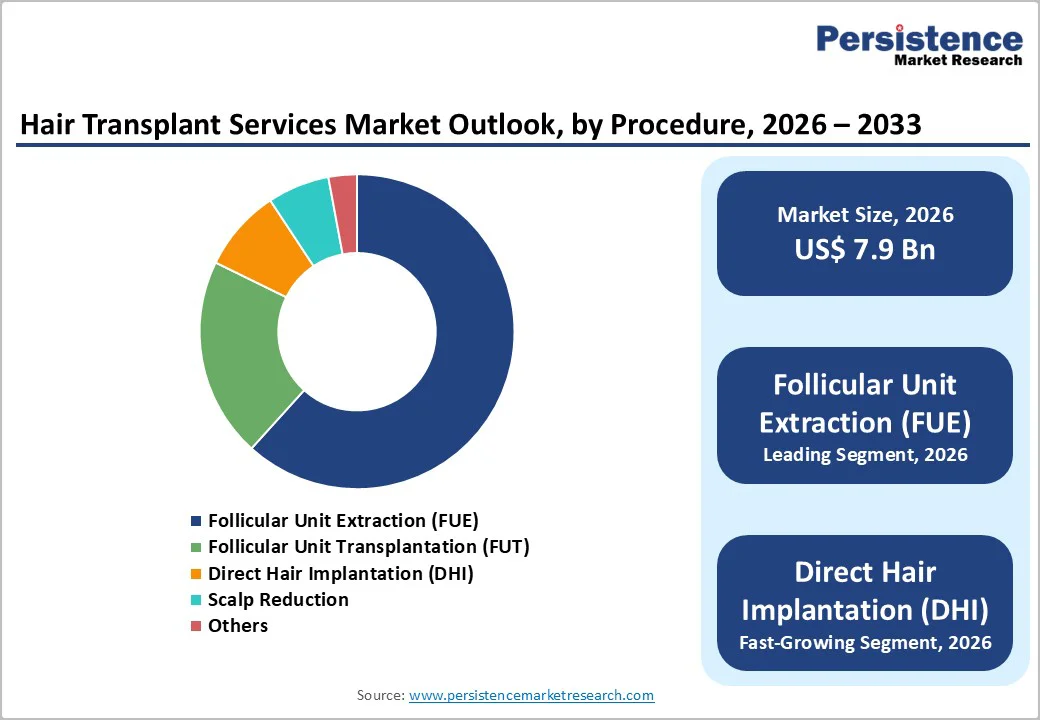
- Dominant Procedure Type: FUE (Follicular Unit Extraction) is expected to dominate the hair transplant services market with 61.7% share in 2026, capturing the majority share by 2025. Its leadership is driven by minimally invasive extraction, faster healing, reduced scarring, and rising global preference for natural-looking results. Continuous improvements in robotic FUE, motorized punches, and precision graft handling are further boosting adoption across high-volume clinics.
- Dominant Region: Asia Pacific leads with the highest share due to strong medical tourism, cost-effective procedure pricing, and rapid expansion of specialized transplant centers. North America follows, supported by high patient spending, strong adoption of advanced technologies, and a dense presence of skilled surgeons. Europe exhibits steady growth, driven by an established cosmetic surgery infrastructure and an increasing acceptance of minimally invasive techniques.
- Market Drivers: Rising prevalence of androgenetic alopecia, growing aesthetic and grooming awareness, increasing social media influence, technological advancements in FUE/DHI, higher success rates, expanding younger patient demographics, and the global shift toward minimally invasive cosmetic treatments.
- Market Opportunities: Growth in robotic-assisted hair restoration, expansion of regenerative therapies (PRP, stem cell–based approaches, exosomes), cross-border medical tourism, clinic franchising and chain-model expansion, AI-driven planning tools, and rising procedure uptake in emerging markets due to improving affordability and broader awareness.
| Key Insights | Details |
|---|---|
|
Global Hair Transplant Services Market Size (2026E) |
US$ 7.9 Bn |
|
Market Value Forecast (2033F) |
US$ 11.3 Bn |
|
Projected Growth (CAGR 2026 to 2033) |
5.2% |
|
Historical Market Growth (CAGR 2020 to 2025) |
4.5% |
Market Dynamics
Driver - Growing Aesthetic Awareness and Grooming Culture
Growing aesthetic awareness and grooming culture are becoming major drivers of the hair transplant services market, especially as younger and appearance-conscious consumers increasingly prioritize self-image. According to the International Society of Hair Restoration Surgery (ISHRS), around 95% of first-time hair restoration patients fall between ages 20–35, showing strong interest from a demographic heavily influenced by social media and digital visibility. ISHRS data also indicates that hair restoration procedures among women have increased by over 15% in recent years, reflecting broader acceptance of cosmetic treatments across genders. Parallel to this, the men’s grooming segment has expanded rapidly, with India’s grooming market crossing USD 2 billion in 2024, driven by rising disposable income and lifestyle changes. Global trends show similar patterns, with male skincare and grooming adoption increasing year over year. As grooming evolves from a basic hygiene routine to a confidence-driven lifestyle choice, demand for advanced, natural-looking hair transplant services continues to rise significantly.
Restraints - High Costs of Transplant Procedures
High procedure costs remain one of the strongest restraints in the hair transplant services market. In countries like the U.S., the average cost of a hair transplant ranges from USD 6,000 to USD 12,000, with complex FUE procedures often exceeding USD 15,000. These prices are driven by the labor-intensive nature of transplantation, where clinics may charge USD 3–8 per graft, along with additional expenses for anesthesia, post-operative medicines, and follow-up care. Even in medical tourism hubs such as Turkey or India, where base pricing is lower, total costs can increase by 20–40% when travel, accommodation, and time away from work are included. Since hair transplantation is considered a cosmetic procedure, most insurance providers do not cover any part of the treatment, leaving patients to bear the entire cost out-of-pocket. This financial barrier significantly reduces accessibility, especially for middle-income individuals, limiting the overall growth potential of the market.
Opportunity - Expansion of Regenerative Therapies such as PRP, Stem Cells, and Exosomes
The expansion of regenerative therapies, such as PRP, stem-cell–derived treatments, and exosomes, offers minimally invasive solutions that complement or even substitute surgical procedures. Clinical evidence shows strong potential: PRP therapy has demonstrated an increase of around 45 hairs/cm² in treated areas, with results sustained for up to two years. Exosome-based treatments are also gaining traction; in one prospective study, exosome combined with microneedling improved hair density by approximately 35 hairs/cm² over 12 months, with high patient satisfaction. Another clinical trial using mesenchymal-stem-cell-derived exosomes recorded an increase from 149.7 to roughly 157 hairs/cm² within 12 weeks, without major side effects. Systematic analyses additionally show density improvements ranging from 9.5 to 35 hairs/cm² across various regenerative formulations. These therapies offer faster recovery, enhanced graft survival, and natural-looking outcomes, creating strong market potential among patients seeking advanced, low-risk solutions for hair restoration.
Category-wise Analysis
By Procedure Insights
Follicular Unit Extraction (FUE) is likely to occupy 61.7% market share in 2026, because it is minimally invasive, leaves no linear scar, and offers faster recovery than traditional strip methods. According to global ISHRS practice data, over 85% of male hair restoration surgeries now use FUE, reflecting strong patient and surgeon preference. Physicians also report performing an average of around 2,262 grafts per FUE session, demonstrating its efficiency for both moderate and advanced hair loss. The technique allows the extraction of individual follicular units, providing more natural-looking results and flexibility for patients who prefer short hairstyles. Technological advancements such as motorized punches and robotic-assisted systems have further improved precision and reduced procedure time, solidifying FUE as the leading procedure worldwide.
By Indication Insights
Androgenetic alopecia dominates the hair transplant services market because it is the most widespread cause of permanent hair loss in both men and women. Research shows that up to 80% of men and about 50% of women experience androgenetic alopecia during their lifetime, making it the leading condition that drives demand for surgical restoration. In the U.S. alone, an estimated 50 million men and 30 million women are affected, highlighting the massive patient pool seeking effective solutions. Large population studies in countries like China also report prevalence rates of 21.3% in men and 6% in women, confirming its global burden. Since AGA causes progressive follicular miniaturization that does not reverse without intervention, many patients ultimately turn to hair transplant procedures, making it the dominant indication.
Regional Insights
North America Hair Transplant Services Market Trends
North America dominates the hair transplant services market with 36.4% share in 2026, due to its high procedure volume, strong clinical infrastructure, and early adoption of advanced technologies. ISHRS data shows that over 149,000 hair restoration surgeries were performed in the U.S. and Canada in 2021, reflecting one of the largest patient bases globally. The region also has a high prevalence of hair loss, about two-thirds of men experience noticeable hair thinning by age 35, increasing to around 85% by age 50, which significantly boosts demand for surgical solutions. Additionally, North America benefits from the widespread availability of skilled surgeons, advanced robotic FUE systems, and high disposable incomes that support cosmetic spending. These factors collectively position North America as the leading region in the global hair transplant services landscape.
Europe Hair Transplant Services Market Trends
Europe is a highly important region in the hair transplant services market due to its strong clinical base, high prevalence of hair loss, and dominance in medical tourism. ISHRS data indicates that over 20% of global hair restoration professionals practice in Europe, reflecting its well-developed expertise. The region recorded more than 106,000 surgical hair-restoration procedures in 2019, showing a sharp rise in patient demand. Male pattern baldness is also widespread, with studies reporting rates as high as 43% among adult men in certain European populations. Additionally, Turkey, geographically linked to Europe, has become one of the world’s largest medical tourism hubs, performing hundreds of thousands of hair transplant procedures annually, which further strengthens Europe’s significance in the global market.
Asia Pacific Hair Transplant Services Market Trends
Asia Pacific is the fastest-growing region in the market, mainly due to rising hair-loss prevalence, strong medical tourism, and expanding dermatology infrastructure. Countries such as India, Thailand, and Turkey (for APAC medical tourists) see 20–25% annual growth in cosmetic-procedure inflow. India’s National Health Profile shows a 15% increase in dermatology and cosmetology OPD visits over five years, reflecting higher demand for aesthetic procedures. Japan and South Korea report some of the world’s highest male-pattern baldness rates over 40% in men above 40, driving procedure uptake. Additionally, APAC offers hair transplant costs 60–70% lower than Western countries, encouraging regional and international patients, thereby accelerating market expansion.
Competitive Landscape
Leading companies in the hair transplant services market focus on advanced follicular-unit techniques, robotic-assisted FUE systems, regenerative solutions like PRP and stem-cell therapies, and high-precision surgical tools. They invest in technology upgrades, surgeon training, and global clinic expansion while partnering with dermatology centers to improve outcomes, reduce procedure time, and offer more affordable, high-quality transplant options worldwide.
Key Industry Developments:
- In October 2025, DHI announced that it had become India’s first hair transplant clinic to receive accreditation from the National Accreditation Board for Hospitals & Healthcare Providers (NABH). The organization confirmed that the clinic had met rigorous national standards for patient safety, clinical protocols, hygiene, and service quality.
- In October 2025, Eugenix Hair Sciences announced that it had unveiled its new global hair restoration facility in Gurgaon, marking a major expansion of its international footprint. The company stated that the center had been designed to offer advanced hair transplant procedures, including DHT and robotic-assisted techniques, with improved precision and patient comfort.
- In September 2024, Bosley and Lumenis announced that they had partnered to introduce FoLix™, a new energy-based hair loss treatment, in the United States. The companies stated that the solution had been designed to stimulate hair follicles using advanced laser and light technology, offering a non-invasive option for patients with early-stage hair loss.
Companies Covered in Hair Transplant Services Market
- Bosley
- Bernstein Medical
- HairClub
- DHI Global Medical Group
- Vinci Hair Clinic
- NeoGraft
- Eugenix Hair Sciences
- Moser Medical
- MediTresse
- GETFUE Hair Clinics
- Limmer Hair Transplant Center
- Hairline International Hair & Skin Clinic
- Hair Restoration BlackRock (HRBR)
- Acibadem Healthcare Group
- Others
Frequently Asked Questions
The global hair transplant services market is projected to be valued at US$ 7.9 Bn in 2026.
Rising baldness prevalence, improved FUE/FUT technologies, higher disposable income, medical tourism, social acceptance, and expanding clinic networks drive the hair transplant services market.
The global hair transplant services market is poised to witness a CAGR of 5.2% between 2026 and 2033.
Growing demand in Asia Pacific, robotic FUE adoption, regenerative hair therapies, male grooming trends, and untapped markets in MEA create strong opportunities.
Bosley, Bernstein Medical, HairClub, DHI Global Medical Group, Vinci Hair Clinic, NeoGraft.


