Glycobiology Market Size, Share, Growth, and Regional Forecast, 2026 to 2033

Glycobiology Market by Product (Instruments, Enzymes, Consumables, Kits and Reagents), Technology (Diagnostics, Drug Discovery and Development, Oncology, Immunology, Others), End User (Biopharmaceutical & Biotechnology Companies, Academic Institutes & Research Laboratories, Hospitals, Contract Research Organizations, Others), and Regional Analysis from 2026 to 2033

ID: PMRREP4769
Calendar

January 2026

246 Pages

Author : Pravin Rewale

Glycobiology Market Size and Trend Analysis

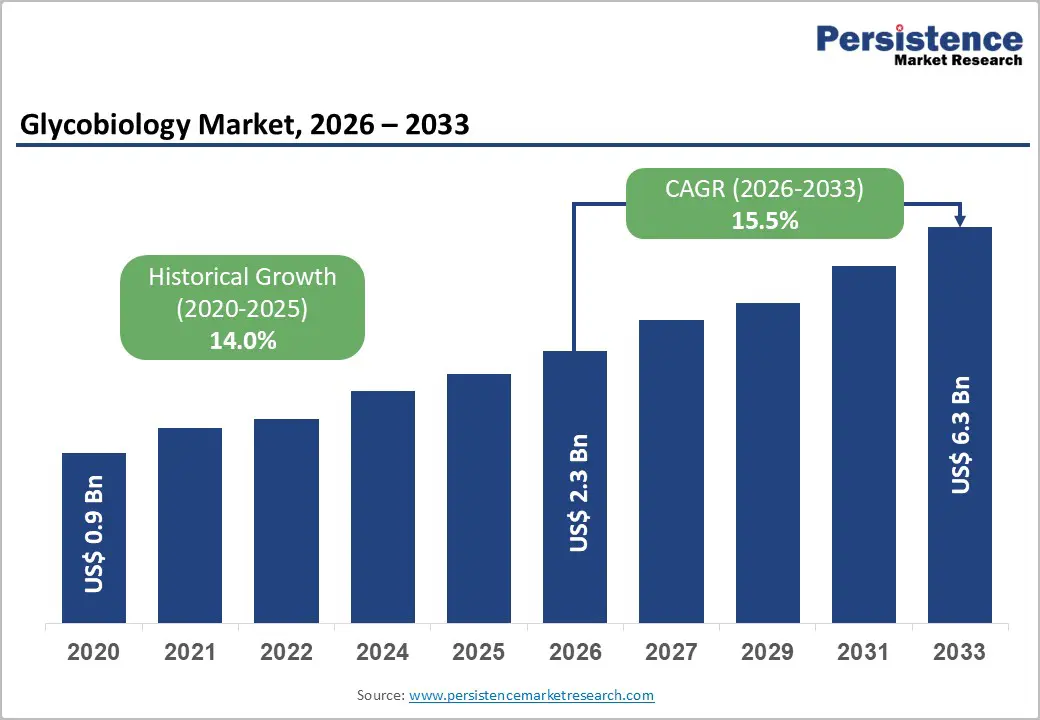
The global glycobiology market is estimated to grow from US$ 2.3 Bn in 2026 to US$ 6.3 Bn by 2033. The market is projected to record a CAGR of 15.5% during the forecast period from 2026 to 2033.

The global glycobiology industry is expanding steadily, driven by the adoption of digital healthcare, telehealth, and advanced analytics. North America leads due to robust infrastructure, strict regulations, and high laboratory standards. Asia-Pacific is the fastest-growing region, supported by expanding healthcare facilities, government digital initiatives, rising patient awareness, and growing investments in diagnostic software, services, and interoperable testing solutions.

Key Industry Highlights

  • Dominant Segment: Consumables in the glycobiology market are the leading segment, with a 37.1% share in 2025, as they enable accurate, reproducible assays, support high-throughput testing, integrate with digital systems, and enable efficient sample preparation, metabolic profiling, and advanced glycan analysis.
  • Dominant Region: North America leads with strong infrastructure, regulatory support, and routine adoption of metabolic screening. Asia-Pacific is the fastest-growing region, driven by expanding healthcare facilities, rising prevalence of metabolic disorders, government health initiatives, and growing investments in diagnostic laboratories and digital testing technologies.
  • Market Drivers: Rising diabetes and obesity rates, demand for early diagnosis, advanced assay technologies, and digital health integration fuel market growth.
  • Market Opportunities: Point-of-care metabolic testing, AI-enabled diagnostics, multiplex metabolic panels, personalized disease management, telehealth integration, and expansion into emerging healthcare markets.
Global Market Attributes  Key Insights 
Glycobiology Market Size (2026E)  US$ 2.3 Bn
Market Value Forecast (2033F)  US$ 6.3 Bn
Projected Growth (CAGR 2026 to 2033)  15.5%
Historical Market Growth (CAGR 2020 to 2025)  14.0% 

glycobiology-market-2026–2033

Market Dynamics

Driver: Increasing demand for early disease diagnosis and monitoring

The glycobiology market is driven by the increasing global emphasis on early disease detection and monitoring, enabling timely intervention and better health outcomes. According to the World Health Organization (WHO), diagnostics influence approximately 70% of healthcare decisions, underscoring the critical role of early and accurate detection in clinical care. Early identification of noncommunicable diseases like cancer, diabetes, and cardiovascular conditions through advanced biomarkers and surveillance systems supports prevention and management strategies and reduces long-term care costs. Enhanced monitoring systems and a stronger focus on disease surveillance by public health bodies further emphasize the importance of early diagnosis to mitigate disease progression and improve survival rates.

Glycobiology contributes significantly to early disease diagnosis by identifying glycan-based biomarkers that can indicate pathological changes before symptoms appear. Research shows that aberrant glycosylation patterns are associated with cancer progression and can be detected in blood, offering non-invasive diagnostic potential. For pancreatic cancer, N-glycan signatures demonstrated diagnostic sensitivity of nearly 90% for early-stage detection in clinical studies, highlighting the promise of glycan analysis for early identification. These biomarkers provide insight into underlying disease mechanisms and, when integrated with clinical monitoring, support more precise tracking of disease onset, progression, and response to therapy.

Restraints: Complexity of glycobiology workflows and specialized technical requirements

A key restraint in the glycobiology market is the complexity of workflows and the expertise required to accurately study glycans. Glycans are structurally diverse and highly branched, making their analysis far more complex than that of proteins or nucleic acids. Techniques such as mass spectrometry, high-performance liquid chromatography, and capillary electrophoresis are commonly used to resolve glycan structures. In addition, interpreting results demands knowledge of bioinformatics and glycan databases. Many clinical and research laboratories face challenges implementing these protocols due to their intricacy, length, and need for highly trained personnel, which can slow adoption of glycobiology-based diagnostics and therapeutics.

The specialized technical requirements in glycobiology further restrict broader use. Glycan profiling requires precise instrumentation, controlled sample preparation, and extensive computational analysis to differentiate isomers and branching patterns. Standardizing protocols is difficult because minor variations in reagents, instruments, or workflows can significantly affect results. As a result, only laboratories with skilled staff in analytical chemistry, molecular biology, and bioinformatics can reliably perform advanced glycan studies. This talent scarcity limits accessibility and slows translation from research to clinical practice. Even institutions with resources often face delays due to training needs, long experimental timelines, and intricate quality control requirements.

Opportunity: Development of point-of-care metabolic and glycan testing

The development of point-of-care (POC) metabolic and glycan testing presents a significant opportunity in the glycobiology market by enabling rapid, decentralized diagnostic insights at or near patient care sites. POC technologies deliver results quickly, often within minutes, allowing clinicians to make timely treatment decisions without relying on centralized laboratory infrastructure, which traditionally requires sample transport and delayed turnaround. Rapid POC results improve clinical and economic outcomes by reducing delays in therapy and facilitating earlier interventions for conditions such as diabetes and metabolic disorders. These attributes align with global healthcare priorities for accessible diagnostics, especially where conventional lab access is limited.

Evidence from clinical settings shows that POC diagnostics, such as hemoglobin A1c tests, yield highly correlated results with traditional lab assays, demonstrating their feasibility in community and decentralized settings. For example, POC hemoglobin A1c testing demonstrated a strong correlation (0.85) with laboratory results, indicating reliable assessment of a metabolic marker outside centralized labs and high participant satisfaction with community testing initiatives. Additionally, POC testing platforms are being adopted globally for a range of biochemical markers, underscoring the role of rapid, on-site diagnostics in patient management and monitoring. These developments suggest that expanding POC metabolic and glycan testing could strengthen early disease detection, improve monitoring, and broaden access to essential diagnostics.

Category-wise Analysis

By Product, Consumables Dominates the Glycobiology Market

Consumables occupies 37.1% share of the global market in 2025, because they are essential for every step of glycan analysis and diagnostic workflows. Glycobiology involves complex processes such as glycan release, labeling, derivatization, separation, and detection, all of which require high-quality reagents, enzymes, buffers, and assay kits. Unlike instruments, consumables are single-use and must be replenished for each experiment or test, creating recurring demand. For example, the NIH Glycomic program and interlaboratory studies conducted by NIST rely on standardized consumables to ensure accuracy, reproducibility, and comparability of glycan data across multiple labs. Additionally, consumables support emerging techniques like lectin microarrays, enzymatic profiling, and high-throughput analyses, making them indispensable for research, clinical diagnostics, and biomarker discovery in glycobiology.

By Application, Drug Discovery and Development dominates due to glycans’ critical role in therapeutic design, protein function, and biologics development

By application, drug discovery and development dominate the glycobiology market because glycobiology is central to the design and optimization of modern therapeutics, particularly biologics and targeted treatments. Glycans, the carbohydrate portions of glycoproteins and glycolipids, are crucial for protein folding, stability, immune recognition, cell signaling, and drug–receptor interactions, making them essential targets and quality attributes in drug design and evaluation. For example, more than half of approved protein therapeutics, such as monoclonal antibodies, are glycoproteins, and their glycosylation patterns directly influence efficacy, stability, and half-life.

Government-linked research centers, such as the National Center for Functional Glycomics, focus on developing glycan analysis technologies to support drug discovery and biological understanding, reflecting public investment in glycoscience for therapeutics. This foundational role in creating safe, effective, and stable drugs explains why drug discovery and development remain the leading application segment in the field of glycobiology.
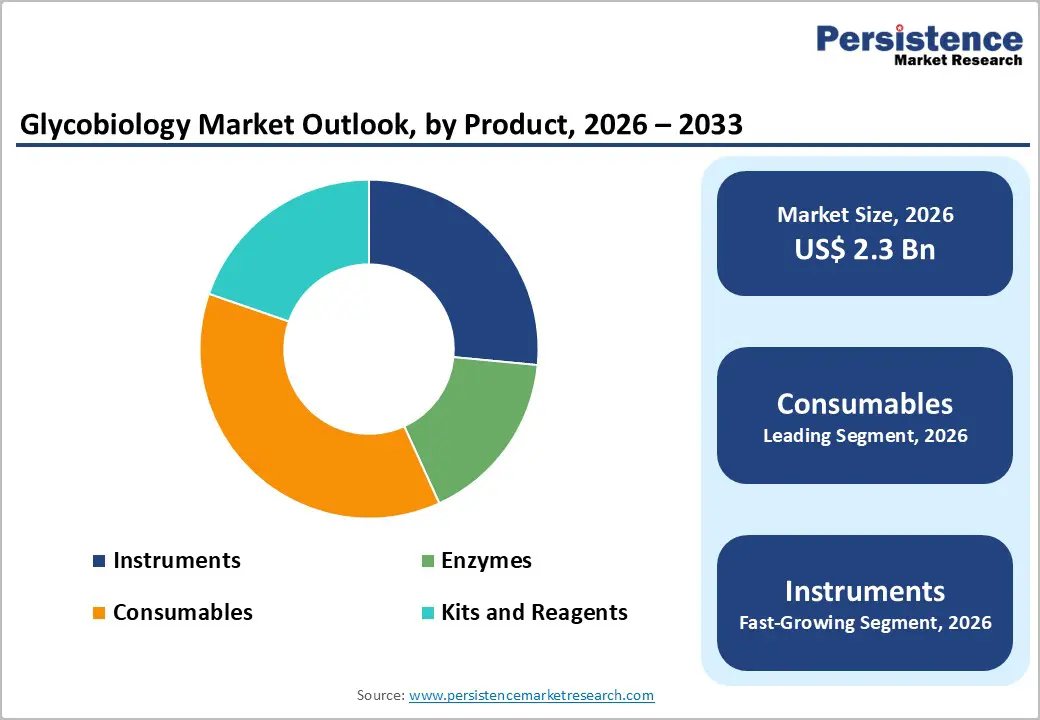
glycobiology-market-outlook-by-product-2026-2033

Regional Insights

North America Glycobiology Market Trends

North America dominates the glycobiology market with a 44.4% share in 2025, thanks to robust research infrastructure, strong public funding, and a vibrant biotechnology and pharmaceutical ecosystem. Federal agencies such as the U.S. National Institutes of Health (NIH), the National Science Foundation (NSF), and others actively support glycoscience research, including specialized centers such as the National Center for Functional Glycomics, which advances glycan analysis technologies and training.

The U.S., the largest contributor within the region, benefits from concentrated academic–industry collaborations and high research output in glycobiology and related fields. This environment accelerates innovation in biomarkers, therapeutics, and diagnostics that rely on glycan characterization, reinforcing North America’s leadership in research, clinical applications, and commercialization of glycobiology solutions.

Europe Glycobiology Market Trends

Europe is a key region in the glycobiology market due to its advanced research infrastructure, collaborative scientific networks, and strong healthcare investment. Programs like the European Union’s Horizon Europe fund multidisciplinary research, including glycoscience, promoting innovation, biomarker discovery, and translational studies across member states. Public health systems in Europe collectively spend around 10% of GDP on healthcare, reflecting significant support for diagnostic research and clinical applications.

European institutions such as ELIXIR and the European Glycoscience Community facilitate data sharing, training, and collaboration between academia, industry, and clinics. This integration strengthens glycobiology research, accelerates biomarker and therapeutic development, and enhances Europe’s position as a hub for innovation in disease diagnostics and drug development.

Asia-Pacific Glycobiology Market Trends

Asia Pacific is the fastest-growing region in the glycobiology market, driven by rapid demographic shifts, rising chronic disease prevalence, and expanding healthcare infrastructure. The region’s aging population is growing rapidly; by 2050, nearly 22% of the Asia Pacific’s population will be over 65, increasing demand for diagnostics and monitoring of age-related metabolic and glycan-linked conditions. Additionally, non-communicable diseases such as diabetes and cardiovascular disorders affect millions, with the World Health Organization reporting over 276 million adults with diabetes in South-East Asia, highlighting the need for early detection and monitoring.

Governments are also investing in digitalization of healthcare and telehealth, improving accessibility and enabling point-of-care diagnostics. High smartphone and internet penetration, exceeding 70%, supports remote monitoring and patient-centric care. This combination of demographic growth, disease burden, and technological adoption drives strong demand for glycobiology testing and diagnostic solutions across the region.
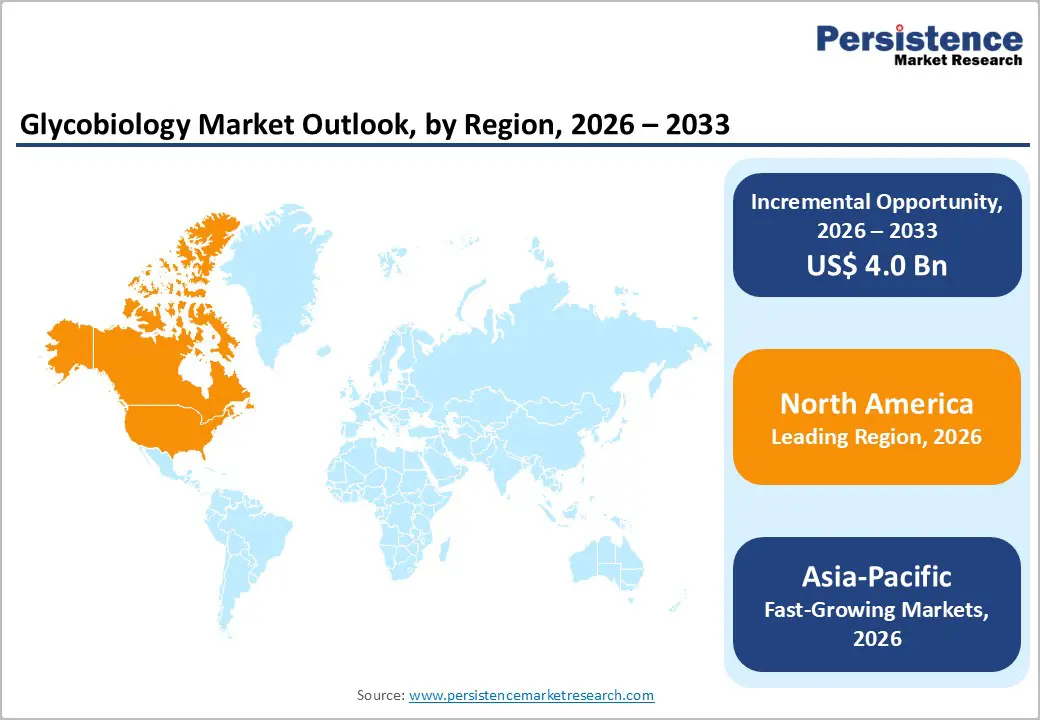
glycobiology-market-outlook-by-region-2026–2033

Market Competitive Landscape

Leading glycobiology market companies focus on advanced assays, scalable platforms, and regulatory compliance. Investments in AI-enabled analysis, high-throughput testing, and process optimization enhance accuracy and reproducibility. Collaborations with research institutions, standardized protocols, quality control, and integrated supply chains drive innovation and support widespread adoption in clinical diagnostics, preventive metabolic care, and biomarker-based research.

Key Industry Developments:  

  • In October 2025, Takara Bio USA, Inc., a wholly owned subsidiary of Takara Bio Inc., announced a series of updates to its spatial biology product portfolio, extending its innovation with a new class of spatial technology.
  • In September 2025, Lunit, a Seoul-based developer of artificial intelligence for cancer diagnostics and therapeutics, and Agilent Technologies Inc., a global leader in life sciences and diagnostics, announced that they had entered into a non-exclusive collaboration to co-develop companion diagnostic solutions powered by AI for precision medicine.

Companies Covered in Glycobiology Market

  • Glycodiag
  • Tracxn Technologies Limited
  • Agilent Technologies, Inc.
  • Takara Bio Inc.
  • Bio-Techne
  • Bruker Corporation
  • Thermo Fisher Scientific Inc.
  • Shimadzu Corporation
  • New England Biolabs.
  • Waters.co.
  • Merck KGaA
  • Palleon Pharmaceuticals
  • Asparia Glycomics
  • RayBiotech Life,Inc.
  • Z Biotech,LLC.
  • Chemily Glycoscience
  • Lectenz Bio
  • 2BScientific
  • Others
Frequently Asked Questions

The global glycobiology market is projected to be valued at US$ 2.3 Bn in 2026.

Rising chronic diseases, demand for early diagnosis, advanced assays, digital health integration, and personalized therapies.

The global glycobiology market is poised to witness a CAGR of 15.5% between 2026 and 2033.

Opportunities include point-of-care testing, AI-enabled diagnostics, multiplex assays, personalized medicine, telehealth integration, and emerging markets.

Glycodiag, Tracxn Technologies Limited, Agilent Technologies, Inc., Takara Bio Inc., Bio-Techne, Bruker Corporation.

Global Glycobiology Market Report Scope
Report Attributes  Details 
Historical Data/Actuals  2020 – 2025
Forecast Period  2026 – 2033
Market Analysis Value: US$ Bn  
Geographical Coverage 
  • North America 
  • Europe 
  • East Asia 
  • South Asia & Oceania 
  • Latin America 
  • Middle East and Africa 
Segmental Coverage 
  • Product
  • Application
  • End User
  • Region 
Competitive Analysis 
  • Glycodiag
  • Tracxn Technologies Limited
  • Agilent Technologies, Inc.
  • Takara Bio Inc.
  • Bio-Techne
  • Bruker Corporation
  • Thermo Fisher Scientific Inc.
  • Shimadzu Corporation
  • New England Biolabs.
  • Waters.co.
  • Merck KGaA
  • Palleon Pharmaceuticals
  • Asparia Glycomics
  • RayBiotech Life,Inc.
  • Z Biotech,LLC.
  • Chemily Glycoscience
  • Lectenz Bio
  • 2BScientific
  • Others
Report Highlights 
  • Market Forecast and Trends 
  • Competitive Intelligence & Share Analysis  
  • Growth Factors and Challenges 
  • Strategic Growth Initiatives 
  • Pricing Analysis
  • Future Opportunities and Revenue Pockets 
  • Industry Market Analysis Tools
Global Glycobiology Market Segmentation

By Product

  • Instruments
  • Enzymes
  • Consumables
  • Kits and Reagents

By Application

  • Diagnostics
  • Drug Discovery and Development
  • Oncology
  • Immunology
  • Others

By End User

  • Biopharmaceutical & Biotechnology Companies
  • Academic Institutes & Research Laboratories
  • Hospitals
  • Contract Research Organizations
  • Others

By Region 

  • North America 
  • Europe 
  • East Asia 
  • South Asia & Oceania 
  • Latin America
  • Middle East and Africa 

Related Reports

  1. Executive Summary
    1. Global Glycobiology Market Snapshot, 2026 and 2033
    2. Market Opportunity Assessment, 2026 – 2033, US$ Bn
    3. Key Market Trends
    4. Future Market Projections
    5. Premium Market Insights
    6. Industry Developments and Key Market Events
    7. PMR Analysis and Recommendations
  2. Market Overview
    1. Market Scope and Definition
    2. Market Dynamics
      1. Drivers
      2. Restraints
      3. Opportunity
      4. Challenges
      5. Key Trends
    3. Macro-Economic Factors
      1. Global Sectorial Outlook
      2. Global GDP Growth Outlook
    4. COVID-19 Impact Analysis
    5. Forecast Factors – Relevance and Impact
  3. Value Added Insights
    1. Regulatory Landscape
    2. Product Adoption Analysis
    3. Value Chain Analysis
    4. Key Deals and Mergers
    5. PESTLE Analysis
    6. Porter’s Five Force Analysis
  4. Global Glycobiology Market Outlook:
    1. Key Highlights
      1. Market Size (US$ Bn) and Y-o-Y Growth
      2. Absolute $ Opportunity
    2. Market Size (US$ Bn) Analysis and Forecast
      1. Historical Market Size (US$ Bn) Analysis, 2020-2025
      2. Market Size (US$ Bn) Analysis and Forecast, 2026–2033
    3. Global Glycobiology Market Outlook: Product
      1. Introduction / Key Findings
      2. Historical Market Size (US$ Bn) Analysis, By Product, 2020 – 2025
      3. Market Size (US$ Bn) Analysis and Forecast, By Product, 2026 – 2033
        1. Instruments
        2. Enzymes
        3. Consumables
        4. Kits and Reagents
      4. Market Attractiveness Analysis: Product
    4. Global Glycobiology Market Outlook: Application
      1. Introduction / Key Findings
      2. Historical Market Size (US$ Bn) Analysis, By Application, 2020 – 2025
      3. Market Size (US$ Bn) Analysis and Forecast, By Application, 2026 – 2033
        1. Diagnostics
        2. Drug Discovery and Development
        3. Oncology
        4. Immunology
        5. Others
      4. Market Attractiveness Analysis: Application
    5. Global Glycobiology Market Outlook: End User
      1. Introduction / Key Findings
      2. Historical Market Size (US$ Bn) Analysis, By End User, 2020 – 2025
      3. Market Size (US$ Bn) Analysis and Forecast, By End User, 2026 – 2033
        1. Biopharmaceutical & Biotechnology Companies
        2. Academic Institutes & Research Laboratories
        3. Hospitals
        4. Contract Research Organizations
        5. Others
      4. Market Attractiveness Analysis: End User
  5. Global Glycobiology Market Outlook: Region
    1. Key Highlights
    2. Historical Market Size (US$ Bn) Analysis, By Region, 2020 – 2025
    3. Market Size (US$ Bn) Analysis and Forecast, By Region, 2026 – 2033
      1. North America
      2. Europe
      3. East Asia
      4. South Asia and Oceania
      5. Latin America
      6. Middle East & Africa
    4. Market Attractiveness Analysis: Region
  6. North America Glycobiology Market Outlook:
    1. Key Highlights
    2. Historical Market Size (US$ Bn) Analysis, By Market, 2020 – 2025
      1. By Country
      2. By Product
      3. By Application
      4. By End User
    3. Market Size (US$ Bn) Analysis and Forecast, By Country, 2026 – 2033
      1. U.S.
      2. Canada
    4. Market Size (US$ Bn) Analysis and Forecast, By Product, 2026 – 2033
      1. Instruments
      2. Enzymes
      3. Consumables
      4. Kits and Reagents
    5. Market Size (US$ Bn) Analysis and Forecast, By Application, 2026 – 2033
      1. Diagnostics
      2. Drug Discovery and Development
      3. Oncology
      4. Immunology
      5. Others
    6. Market Size (US$ Bn) Analysis and Forecast, By End User, 2026 – 2033
      1. Biopharmaceutical & Biotechnology Companies
      2. Academic Institutes & Research Laboratories
      3. Hospitals
      4. Contract Research Organizations
      5. Others
    7. Market Attractiveness Analysis
  7. Europe Glycobiology Market Outlook:
    1. Key Highlights
    2. Historical Market Size (US$ Bn) Analysis, By Market, 2020 – 2025
      1. By Country
      2. By Product
      3. By Application
      4. By End User
    3. Market Size (US$ Bn) Analysis and Forecast, By Country, 2026 – 2033
      1. Germany
      2. France
      3. U.K.
      4. Italy
      5. Spain
      6. Russia
      7. Rest of Europe
    4. Market Size (US$ Bn) Analysis and Forecast, By Product, 2026 – 2033
      1. Instruments
      2. Enzymes
      3. Consumables
      4. Kits and Reagents
    5. Market Size (US$ Bn) Analysis and Forecast, By Application, 2026 – 2033
      1. Diagnostics
      2. Drug Discovery and Development
      3. Oncology
      4. Immunology
      5. Others
    6. Market Size (US$ Bn) Analysis and Forecast, By End User, 2026 – 2033
      1. Biopharmaceutical & Biotechnology Companies
      2. Academic Institutes & Research Laboratories
      3. Hospitals
      4. Contract Research Organizations
      5. Others
    7. Market Attractiveness Analysis
  8. East Asia Glycobiology Market Outlook:
    1. Key Highlights
    2. Historical Market Size (US$ Bn) Analysis, By Market, 2020 – 2025
      1. By Country
      2. By Product
      3. By Application
      4. By End User
    3. Market Size (US$ Bn) Analysis and Forecast, By Country, 2026 – 2033
      1. China
      2. Japan
      3. South Korea
    4. Market Size (US$ Bn) Analysis and Forecast, By Product, 2026 – 2033
      1. Instruments
      2. Enzymes
      3. Consumables
      4. Kits and Reagents
    5. Market Size (US$ Bn) Analysis and Forecast, By Application, 2026 – 2033
      1. Diagnostics
      2. Drug Discovery and Development
      3. Oncology
      4. Immunology
      5. Others
    6. Market Size (US$ Bn) Analysis and Forecast, By End User, 2026 – 2033
      1. Biopharmaceutical & Biotechnology Companies
      2. Academic Institutes & Research Laboratories
      3. Hospitals
      4. Contract Research Organizations
      5. Others
    7. Market Attractiveness Analysis
  9. South Asia & Oceania Glycobiology Market Outlook:
    1. Key Highlights
    2. Historical Market Size (US$ Bn) Analysis, By Market, 2020 – 2025
      1. By Country
      2. By Product
      3. By Application
      4. By End User
    3. Market Size (US$ Bn) Analysis and Forecast, By Country, 2026 – 2033
      1. India
      2. Southeast Asia
      3. ANZ
      4. Rest of South Asia & Oceania
    4. Market Size (US$ Bn) Analysis and Forecast, By Product, 2026 – 2033
      1. Instruments
      2. Enzymes
      3. Consumables
      4. Kits and Reagents
    5. Market Size (US$ Bn) Analysis and Forecast, By Application, 2026 – 2033
      1. Diagnostics
      2. Drug Discovery and Development
      3. Oncology
      4. Immunology
      5. Others
    6. Market Size (US$ Bn) Analysis and Forecast, By End User, 2026 – 2033
      1. Biopharmaceutical & Biotechnology Companies
      2. Academic Institutes & Research Laboratories
      3. Hospitals
      4. Contract Research Organizations
      5. Others
    7. Market Attractiveness Analysis
  10. Latin America Glycobiology Market Outlook:
    1. Key Highlights
    2. Historical Market Size (US$ Bn) Analysis, By Market, 2020 – 2025
      1. By Country
      2. By Product
      3. By Application
      4. By End User
    3. Market Size (US$ Bn) Analysis and Forecast, By Country, 2026 – 2033
      1. Brazil
      2. Mexico
      3. Rest of Latin America
    4. Market Size (US$ Bn) Analysis and Forecast, By Product, 2026 – 2033
      1. Instruments
      2. Enzymes
      3. Consumables
      4. Kits and Reagents
    5. Market Size (US$ Bn) Analysis and Forecast, By Application, 2026 – 2033
      1. Diagnostics
      2. Drug Discovery and Development
      3. Oncology
      4. Immunology
      5. Others
    6. Market Size (US$ Bn) Analysis and Forecast, By End User, 2026 – 2033
      1. Biopharmaceutical & Biotechnology Companies
      2. Academic Institutes & Research Laboratories
      3. Hospitals
      4. Contract Research Organizations
      5. Others
    7. Market Attractiveness Analysis
  11. Middle East & Africa Glycobiology Market Outlook:
    1. Key Highlights
    2. Historical Market Size (US$ Bn) Analysis, By Market, 2020 – 2025
      1. By Country
      2. By Product
      3. By Application
      4. By End User
    3. Market Size (US$ Bn) Analysis and Forecast, By Country, 2026 – 2033
      1. GCC Countries
      2. Egypt
      3. South Africa
      4. Northern Africa
      5. Rest of Middle East & Africa
    4. Market Size (US$ Bn) Analysis and Forecast, By Product, 2026 – 2033
      1. Instruments
      2. Enzymes
      3. Consumables
      4. Kits and Reagents
    5. Market Size (US$ Bn) Analysis and Forecast, By Application, 2026 – 2033
      1. Diagnostics
      2. Drug Discovery and Development
      3. Oncology
      4. Immunology
      5. Others
    6. Market Size (US$ Bn) Analysis and Forecast, By End User, 2026 – 2033
      1. Biopharmaceutical & Biotechnology Companies
      2. Academic Institutes & Research Laboratories
      3. Hospitals
      4. Contract Research Organizations
      5. Others
    7. Market Attractiveness Analysis
  12. Competition Landscape
    1. Market Share Analysis, 2025
    2. Market Structure
      1. Competition Intensity Mapping By Market
      2. Competition Dashboard
    3. Company Profiles (Details – Overview, Financials, Strategy, Recent Developments)
      1. Glycodiag
        1. Overview
        2. Segments and Products
        3. Key Financials
        4. Market Developments
        5. Market Strategy
      2. Tracxn Technologies Limited
      3. Agilent Technologies, Inc.
      4. Takara Bio Inc.
      5. Bio-Techne
      6. Bruker Corporation
      7. Thermo Fisher Scientific Inc.
      8. Shimadzu Corporation
      9. New England Biolabs.
      10. Waters.co.
      11. Merck KGaA
      12. Palleon Pharmaceuticals
      13. Asparia Glycomics
      14. RayBiotech Life,Inc.
      15. Z Biotech,LLC.
      16. Chemily Glycoscience
      17. Lectenz Bio
      18. 2BScientific
      19. Others
  13. Appendix
    1. Research Methodology
    2. Research Assumptions
    3. Acronyms and Abbreviations

Research Methodology Framework for Market Research Excellence

At Persistence Market Research, we implement a comprehensive, validated, and multi-dimensional approachto market analysis that delivers actionable insights across complex market landscapes. Our methodology combines the analytical rigor of leading consulting firms with innovative research techniques, ensuring robust market assessments that guide strategic decision-making with confidence.

Core Research Philosophy

Our methodology is built on four foundational pillars:

Research Philosophy Image

At Persistence Market Research, our methodology is designed to transcend conventional market studies by combining analytical rigor, multi-source validation, and future-focused insights.

We integrate advanced research frameworks, robust data collection strategies, cutting-edge analytics, and innovative technologies to deliver a 360-degree view of complex markets.

We integrate advanced research frameworks, robust data collection strategies, cutting-edge analytics, and innovative technologies to deliver a 360-degree view of complex markets.

Each stage spanning from strategic scoping and hypothesis-building to competitive intelligence, quality validation, and actionable recommendations is engineered to provide clients with unmatched clarity, precision, and confidence in decision-making.

By embedding innovation and technology at the core, our approach ensures that insights are not only comprehensive but also predictive, empowering businesses to seize opportunities, mitigate risks, and achieve sustainable growth

Research Philosophy Image

Capturing Key Information and Events

During this phase, key research objectives focus on essential information and data points for assessing the market, including:

Research Philosophy Image

TAM-SAM-SOM Framework Implementation

We employ both top-down and bottom-up approaches to ensure accurate market sizing.

Top-Down Market SizingBottom-Up Market Sizing
Universe Definition: Total global/regional market identificationUnit Economics: Average transaction values, purchase frequencies, customer lifecycle
Segmentation Filters: Geographic, demographic, and behavioral constraintsCustomer Segmentation: Detailed buyer persona development and sizing
Market Share Analysis: Competitive landscape assessment and share allocationPenetration Analysis: Market penetration rates by segment and geography
Growth Rate Application: Historical trends and forward-looking growth assumptionsScaling Methodology: Extrapolation techniques with confidence intervals

Validation & Cross-Verification

  • Triangulation: Comparing top-down and bottom-up results for consistency
  • Sensitivity Analysis: Testing key assumptions and parameter variations
  • Peer Benchmarking: Comparison with analogous markets and industry benchmarks
  • Expert Review: External validation through industry specialist consultation

Research Philosophy Image

Forecasting & Projection Modeling

Our proprietary forecasting models incorporate multiple variables and scenarios.

Forecasting Components

  • Historical Trend Analysis: 10-year historical growth patterns and cyclical variations
  • Driver-Based Modeling: Economic indicators, demographic shifts, technology adoption
  • Scenario Planning: Base case, optimistic, and conservative projections
  • Monte Carlo Simulations: Probability-weighted outcomes and risk assessments

Model Validation

  • Back-Testing: Historical accuracy assessment over 3–5-year periods
  • Cross-Validation: Multiple modeling approaches for result comparison
  • External Benchmarking: Comparison with established market forecasts
  • Continuous Calibration: Quarterly model updates based on new data

Comprehensive Data Collection Strategy

Our secondary research phase establishes a robust knowledge base utilizing diverse, credible sources.

Secondary Data Sourcess

  • Industry Publications & Reports
  • Government & Regulatory Data
  • Financial Intelligence (filings & reports)
  • Academic Research & Digital Intelligence

Quality Assurance Protocol

  • Source credibility assessment and publication date validation
  • Data consistency checks across multiple sources
  • Bias identification and neutralization techniques
  • Information gap tracking for primary research prioritization

Research Philosophy Image

Primary Research Excellence

Our primary research methodology employs best-in-class techniques to capture unique market insights.

Quantitative Research Methods

  • Large-Scale Surveys: Statistically representative samples with 95% confidence intervals
  • Survey Methodology: Multi-channel deployment (online, telephone, in-person)
  • Question Architecture and Response Optimization

Qualitative Research Methods

  • Executive Interviews
  • Focus Groups
  • Expert Consultations

Quality Assurance & Validation Framework

Multi-Stage Validation Process

  • Source Verification and Consistency Testing
  • Outlier Detection and Bias Assessment
  • Peer Review Process and External Validation
  • Sensitivity Analysis and Confidence Intervals

Research Philosophy Image

Methodology Validation & Credibility

Our research methodology has been extensively validated through:

  • Academic Partnerships: Collaborations with top-tier business schools and research institutions
  • Client Success Stories: Documented case studies demonstrating research impact and ROI
  • Continuous Benchmarking: Performance comparison with leading global research firms

This comprehensive methodology framework positions Persistence Market Research at the forefront of market intelligence, combining the analytical sophistication of top-tier consulting firms with innovative research techniques. Our approach ensures that every market assessment delivers precise, actionable, and strategically valuable insights that drive business success in competitive market environments.

Ready to unlock your market potential? Contact our research experts to discuss how our validated methodology can transform your strategic decision-making with data-driven market intelligence.

Copyright © 2026 Persistence Market Research. All Rights Reserved

Connect With Us -