




- Animal Feed & Additives
- Silage Additives Market
Silage Additives Market Size, Share, and Growth Forecast, 2026 - 2033
Silage Additives Market by Product Type (Inoculants, Organic Acids, Enzymes, Preservatives & Absorbents, Others), Crop Type (Corn, Grass, Legumes, Sorghum, Barley, Oats, Rye, Others), Application (Dairy, Commercial Silage Producers, Agricultural Cooperatives, Feed Distributors), and Regional Analysis for 2026 - 2033

Silage Additives Market Share and Trends Analysis
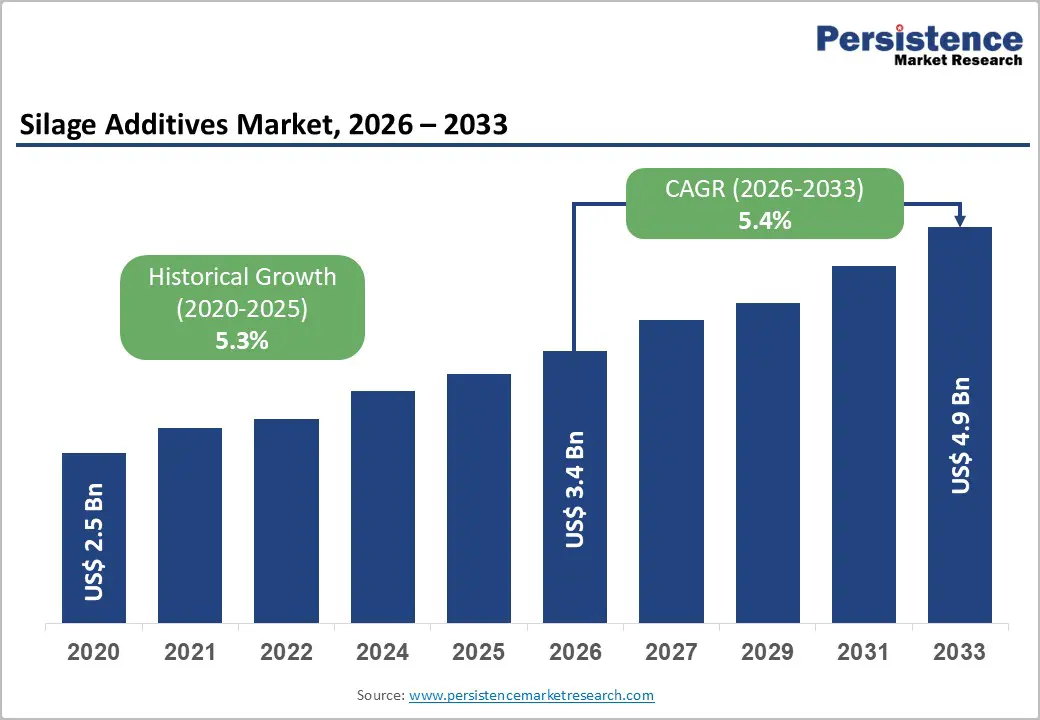
The global silage additives market size is likely to be valued at US$ 3.4 billion in 2026, and is projected to reach US$ 4.9 billion by 2033, growing at a CAGR of 5.4% during the forecast period 2026–2033. This growth is strongly underpinned by the increasing adoption of feed quality enhancement solutions and advanced fermentation control products across both dairy and beef production systems. Livestock producers are increasingly prioritizing feed efficiency and nutrient retention, as high-quality silage directly impacts animal performance, milk yield, and meat production. The global livestock output continues to rise, supported by population growth, higher per capita protein consumption, and industrial-scale farming practices. Supportive agricultural policies, government subsidies, and extension programs promoting improved forage management are accelerating additive adoption. Economic modernization in emerging economies, coupled with the rapid expansion of commercial silage producers, is further enhancing the use of silage additives across diverse crop types and regions.
Key Industry Highlights
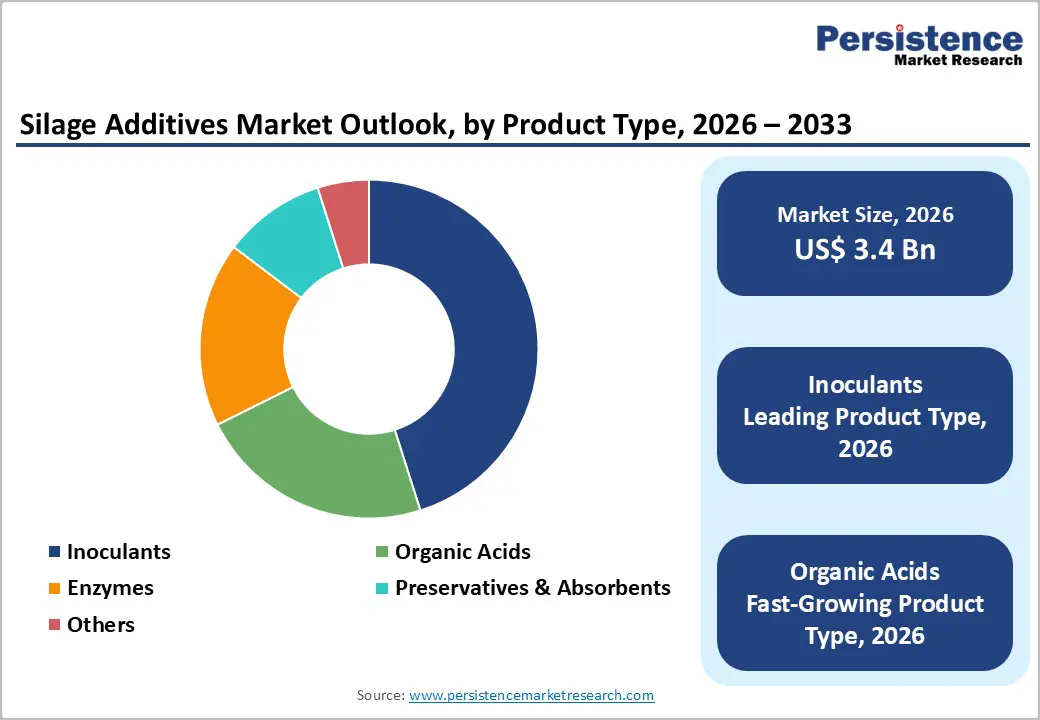
- Dominant Product Type: Inoculants are set to command around 46% market share in 2026, while organic acids are likely to grow the fastest at an estimated 2026-2033 CAGR of 6%, driven by rising demand for spoilage control and improved aerobic stability.
- Leading Crop Type: Corn is projected to hold approximately 42% revenue share in 2026, while sorghum & rye are expected to grow fastest through 2033, supported by climate resilience and additive-assisted fermentation.
- Top Application: Dairy producers are estimated to account for around 45% revenue share in 2026, while commercial silage producers and cooperatives are likely to register the highest growth through 2033, due to industrial feed standardization.
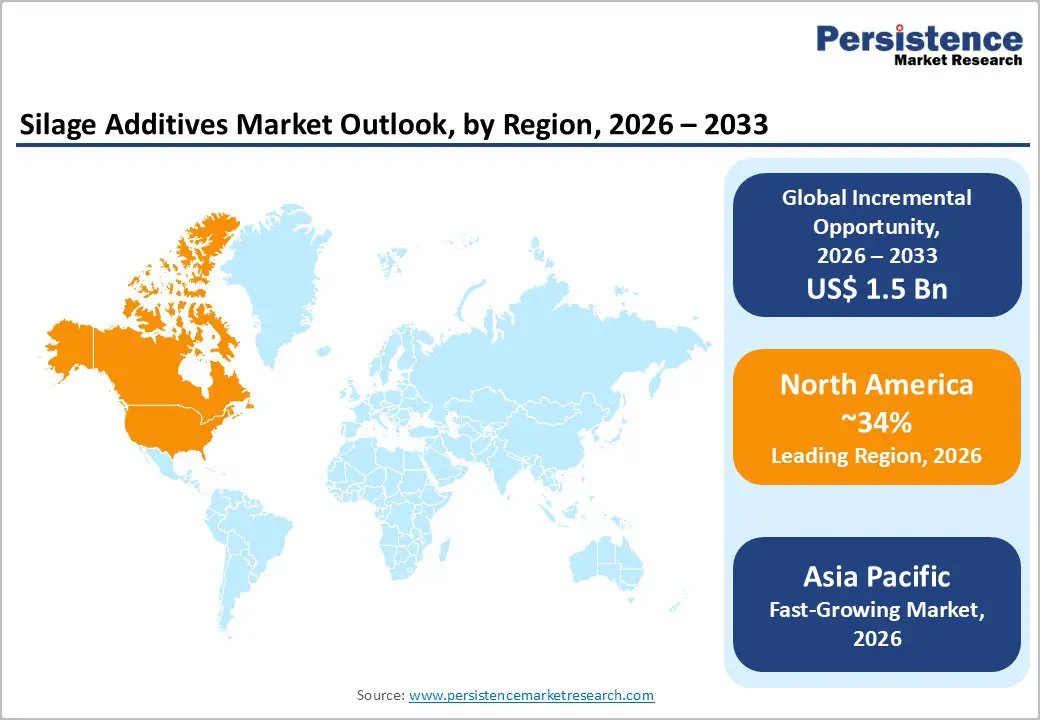
- Regional Growth Leaders: North America is set to lead with over 34% share in 2026, while the Asia Pacific market is expected to expand the fastest at around 6.5% CAGR through 2033, owing favorable policies and rising livestock demand.
- Key Market Developments: Product innovation, eco-friendly additive formulations, and integration with precision agriculture technologies remain central to competitive strategies.
| Key Insights | Details |
|---|---|
|
Silage Additives Market Size (2026E) |
US$ 3.4 Bn |
|
Market Value Forecast (2033F) |
US$ 4.9 Bn |
|
Projected Growth (CAGR 2026 to 2033) |
5.4% |
|
Historical Market Growth (CAGR 2020 to 2025) |
5.3% |
Market Factors – Growth, Barriers, and Opportunity Analysis
Rising Demand for High-Quality Livestock Feed and Supply Stability
The global livestock sector’s intensification is supported by increasing consumer demand for meat, dairy, and protein-rich products, remains a primary catalyst for silage additive adoption. Silage additives, such as, inoculants, organic acids, enzymes, significantly improve fermentation efficiency, enhance nutrient retention, and reduce dry matter losses in stored forage. Studies show that untreated silage can lose up to 18% of nutritional value, whereas additive-treated silage substantially limits these losses, supporting stable animal performance and feed conversion efficiency. As feed represents one of the largest input costs in livestock production, producers are prioritizing solutions that preserve forage quality and protect nutritional value throughout storage cycles.
Government actions aimed at strengthening feed supply chains further reinforce this demand. In December 2025, the Government of Indonesia announced plans to expand national food and animal feed reserves for 2026, increasing its corn feed stockpile target from 300,000 tons to 1 million tons. This strategic move is designed to enhance feed availability for poultry and livestock producers while mitigating supply volatility. By stabilizing feed inputs, such initiatives increase the economic incentive to preserve stored forage efficiently, thereby supporting broader adoption of silage preservation technologies and feed quality enhancement solutions.
Commercialization of Livestock Operations and Risk Mitigation Frameworks
Commercial livestock producers and cooperatives increasingly standardize silage practices to ensure consistent feed quality year-round. In structured production systems, additives are integrated into feed protocols to improve fermentation control, aerobic stability, and predictable nutrient composition. Larger herd sizes, centralized feed processing, and industrial livestock operations demand uniform silage performance across seasons. This shift toward commercial scale production elevates the importance of scientifically managed silage preservation as part of broader productivity optimization strategies.
Policy-driven risk mitigation frameworks are also strengthening the business case for modern feed technologies. In early 2026, the Government of Bangladesh introduced the Livestock Risk Protection Insurance Policy alongside updated veterinary regulatory draft reforms aimed at improving disease control and safeguarding marginal farmers. By reducing financial exposure to livestock loss and strengthening veterinary oversight, these measures enhance production stability and encourage farmers to invest in productivity-enhancing inputs, including advanced feed preservation and silage additive solutions. As regulatory systems mature, the adoption of performance-oriented nutritional technologies becomes more commercially viable.
Cost Barriers and Limited Adoption among Small-Scale Farmers
High upfront costs and perceived technical complexity of silage additives restrict adoption among smallholder and marginal farmers. Despite their long-term value in improving feed quality, many producers cannot justify the initial expense when cash flow is constrained. Cost sensitivity is particularly acute where traditional silage practices persist, resulting in significantly lower adoption rates among smallholders compared with commercial farms. Producers also face limited access to credit, training, and structured extension services needed to deploy silage additives effectively.
These cost pressures are compounded by broader economic and structural challenges affecting small farms. For example, ongoing inflation and high input costs, including rising feed, fuel, and credit expenses, continue to squeeze farmer margins in 2025 and 2026, forcing some producers to reduce operational investments or exit the sector. In parts of India, dairy farmers report production costs exceeding revenue due to steep feeding expenses and limited price support, compelling them to purchase silage and other feed inputs at elevated rates. Such dynamics reinforce cost barriers to adopting quality-enhancement technologies among financially constrained producers.
Variability in Forage Quality and Environmental Conditions
Silage additive performance is influenced by crop type, moisture level, and storage conditions, leading to inconsistent results in variable environments. This structural challenge requires tailored application protocols and expert guidance, which are not universally available, especially in developing regions with fragmented support systems. Climatic fluctuations, including erratic rainfall, droughts, and weather extremes, can alter forage composition and fermentation dynamics, reducing additive effectiveness and discouraging repeated use. Inconsistent silage quality undermines producers’ confidence in investment returns.
Real-world evidence reflects these environmental constraints. A recent survey in Ireland found that while most farms expect sufficient feed reserves, a notable minority face significant fodder deficits or quality shortfalls that could jeopardize winter feed adequacy. These challenges highlight the practical limitations farmers encounter when securing consistently high-quality forage for preservation. Additionally, broader climate stress on agriculture, including water scarcity and yield variability, continues to pressure feed and fodder availability, reinforcing the inherent complexity and risk of silage quality management across diverse agro-ecologies.
Expanding Demand in Emerging Livestock Economies
Emerging regions such as Asia Pacific, including China, India, and ASEAN countries, are experiencing rapid livestock sector growth and modernization of feed preservation practices. Expanding dairy and beef production, accelerating urbanization, and rising awareness of feed quality’s economic impact are driving stronger demand for silage additives. Producers are increasingly recognizing the link between improved silage management and higher milk yields, better weight gain, and reduced feed losses. These markets present significant growth potential through localized sales strategies, regional distribution partnerships, and structured farmer education programs.
Government and industry developments illustrate deeper momentum. In January 2026, India’s Union Budget introduced AI-based agriculture tools and expanded livestock support programs, including digital decision-making platforms designed to improve productivity and feed management for millions of farmers. These initiatives strengthen precision farming adoption and are expected to increase efficiency across animal husbandry operations, making quality feed solutions more accessible and operationally valuable to emerging livestock producers. At the same time, major livestock expositions such as ILDEx Philippines 2025 continue to spotlight innovative solutions and technologies across the animal protein value chain, further catalyzing regional knowledge transfer and commercial engagement.
Sustainable Innovation and Precision-Enabled Silage Management
Heightened interest in sustainable agriculture and feed safety standards is creating demand for biodegradable and low-residue silage additives. New formulations with environmental certifications appeal to producers aligning with regulatory and corporate sustainability commitments. These products support reduced spoilage, lower emissions via improved fermentation, and enhanced feed efficiency outcomes in livestock operations. As farmers and supply chains prioritize traceability and environmental accountability, eco-friendly additive solutions represent a differentiated segment with higher perceived value and strategic importance.
Precision agriculture technologies are also transforming farm management practices in ways that dovetail with silage additive use. Government-supported smart agriculture programs are accelerating this trend, highlighted by initiatives such as Taiwan Smart Agriweek 2026, where agriculture solutions, IoT technology, and digital tools smart are showcased alongside livestock and feed innovations. These events, supported by government smart agriculture programs, enhance adoption of data-driven farming practices that improve application accuracy, waste reduction, and decision-making. Parallel global commitments, such as the Food and Agriculture Organization (FAO)’s new animal health and sustainability plans launched following its Global Conference on Sustainable Livestock Transformation, underscore the increasing policy emphasis on sustainable livestock systems and innovative feed solutions.
Category-wise Analysis
Product Type Insights
Inoculants are expected to remain the leading product type, capturing approximately 46% of the silage additives market revenue share in 2026 due to their proven ability to rapidly enhance lactic acid fermentation, stabilize silage pH, and improve aerobic stability in stored forage. These biological additives are widely deployed across dairy, beef, and commercial silage systems to minimize nutrient loss and preserve feed quality throughout storage. Their broad applicability across forage types reinforces their strategic role in modern feed optimization strategies. In 2025, major agribusinesses such as Cargill showcased expanded precision nutrition and microbial solutions portfolios at VIV Asia 2025, highlighting continued investment in science-based fermentation technologies that enhance livestock feed efficiency. Such industry positioning underscores inoculants’ central role in advancing structured, performance-driven silage management systems globally.
Organic acids are likely to represent the fastest growing product category, projected to expand at an estimated CAGR of 6% through 2033, supported by increasing producer demand for improved spoilage control and microbial stability under variable climate conditions. These additives help mitigate undesirable microbial growth, particularly in high-moisture silage environments where aerobic deterioration risks are elevated. In January 2025, Jones-Hamilton Co. introduced “BeefUp,” a mineral acidifier designed to enhance pH control and cattle performance, reflecting broader industry momentum toward acid-based feed solutions that strengthen hygiene and preservation standards. Such product innovations demonstrate how preservative technologies are evolving beyond traditional roles, becoming integral to comprehensive, risk-managed silage and livestock nutrition systems.
Crop Type Insights
Corn is poised to remain the dominant crop, accounting for approximately 42% of total silage additive consumption in 2026, reflecting its global prominence in livestock feeding systems. Its high starch and energy content make it the preferred silage base for dairy and beef rations, while additives enhance fermentation efficiency and nutrient retention. In August 2025, Punjab Agricultural University (India) formalized the commercialization of maize hybrid PMH-17 through a licensing agreement with a Hyderabad-based seed company, specifically highlighting its suitability for high-quality silage production. The initiative emphasized improved green fodder yield and digestibility, reinforcing the structural link between advanced corn hybrids and increased additive usage. Such developments illustrate how crop innovation and silage-focused breeding programs continue to strengthen corn’s dominance within the market.
Sorghum and rye are projected to represent the fastest-growing crop segment, projected to expand at an estimated CAGR of 5.8% through 2033, driven by their resilience to drought, soil variability, and shifting climate conditions. As livestock producers diversify forage sources to mitigate environmental risk, additive use in these crops is rising to improve fermentation quality and fiber digestibility. In 2026, the United States Department of Agriculture (USDA) reported expanded sorghum acreage and renewed focus on climate-resilient feed grains under federal sustainability programs, reflecting broader momentum toward alternative forage crops. Increased institutional backing for resilient crop systems strengthens the need for optimized silage treatment solutions. This trend positions sorghum and rye as strategic growth contributors in regions prioritizing climate adaptation and feed security.
Regional Insights
North America Silage Additives Market Trends
North America is expected to command approximately 34% of the silage additives market share in 2026, supported by large-scale dairy and beef operations with structured feed management systems. The United States continues to drive regional demand due to advanced livestock production practices, high feed efficiency expectations, and integration of silage additives into standard feeding protocols. Canada’s beef and dairy sectors also contribute significantly, particularly where forage quality maintenance is critical in variable climates. Regulatory attention on animal feed innovation is rising, for instance, the U.S. Congress introduced the Innovative FEED Act of 2025, a bipartisan bill aimed at modernizing U.S. Food and Drug Administration (FDA) regulations to speed access to innovative feed additives, potentially including fermentation and digestive health enhancers for livestock feed. This legislative momentum underscores the region’s focus on improving feed technologies and supply chain resilience.
North America’s robust extension services and precision farming adoption remain strong growth enablers. Through federal regulatory frameworks and industry-government engagement, silage additives and related innovations are positioned to reach producers more quickly, aligning with farm-level productivity and sustainability goals. These developments anchor North America’s leadership in both demand and feed additive innovation. Increased interest in data-driven feed management, including automated dosing and digital monitoring systems, is further strengthening feed quality outcomes across large herd operations. Overall, the region’s regulatory environment, production scale, and technological adoption sustain its dominant role in the global silage additives landscape.
Europe Silage Additives Market Trends
Europe remains a major market for the silage additives industry, bolstered by mature livestock systems and strong regulatory harmonization across the European Union. Countries such as Germany, the U.K., France, and Spain maintain well-established dairy and mixed livestock operations that prioritize consistent feed quality and animal health performance. Silage plays a central role in temperate European feeding systems, reinforcing steady demand for additives that enhance fermentation control and reduce spoilage losses. The European Union (EU)’s unified feed additive approval framework provides clear pathways for product authorization and cross-border trade, encouraging manufacturer participation and innovation. Regulatory consistency reduces compliance uncertainty and strengthens confidence among producers investing in advanced silage management solutions.
European feed production trends reflect both structural adjustments and growth opportunities. For instance, official EU forecasts indicate shifting cattle feed output patterns, with Germany reporting modest production increases while Spain and the Netherlands experience variable performance influenced by climate conditions, environmental policies, and input costs. These fluctuations heighten the importance of efficiency-oriented solutions that help stabilize feed quality despite supply variability. As producers navigate sustainability targets and operational cost pressures, silage additives play a critical role in preserving nutrient value and improving storage reliability. The region’s policy-driven focus on feed safety, animal welfare, and environmental stewardship continues to support measured but stable market development.
Asia Pacific Silage Additives Market Trends
Asia Pacific is projected to be the fastest-growing regional market for silage additives, likely to exhibit a CAGR of around 6.5% between 2026 and 2033, on account of favorable policies and rising livestock demand, with major contributions from China and India. Asian producers are increasingly adopting advanced feed management practices to enhance forage quality and production efficiency under warm, humid conditions common across much of the region. Structured investment in commercial livestock systems and a growing pool of feedlot and dairy operations support this rapid uptake. Institutional support for feed quality innovation is evident across several markets.
For example, in July 2025 in Australia, grain-fed beef producers expanded operations to record levels, reporting 1.6 million cattle in grain-fed feedlots to meet rising the global demand, particularly from Asian export markets such as Japan and South Korea. This trend highlights how feedlot and structured feeding systems, which often rely on high-quality silage and feed additives to optimize weight gain and economic returns, are gaining traction across the broader Asia Pacific region. Asia Pacific’s strong demographic growth, rising protein demand, and increasing adoption of modern feed systems position it as the fastest-growing regional market.
Competitive Landscape
The global silage additives market structure is moderately consolidated, led by major players such as DSM-Firmenich, Chr. Hansen, Lallemand Animal Nutrition, Kemin Industries, and BASF. These companies hold a significant revenue share due to strong microbial research capabilities and global distribution networks. Their portfolios focus on proprietary bacterial strains, enzyme blends, and preservative solutions that improve fermentation and feed stability. Continuous investment in R&D and technical advisory services strengthens long-term relationships with commercial livestock producers. Established regulatory expertise further supports their competitive positioning across key regions.
Regional and specialized biotechnology firms compete through cost-effective and locally adapted formulations. Companies such as Volac and Pioneer concentrate on specific forage types and targeted geographic markets. Regulatory approvals and strain validation requirements create moderate entry barriers for new participants. However, innovation in combination products and climate-specific solutions is enabling mid-sized players to expand. Strategic partnerships and selective acquisitions are expected to gradually increase market consolidation.
Key Industry Developments
- In February 2026, ADM and Alltech formed Akralos Animal Nutrition, a North America–focused joint venture combining Hubbard Feeds, Masterfeeds, and ADM’s U.S. feed operations. With over 40 feed mills and 1,400 employees, the partnership strengthens integrated nutrition distribution, leveraging Alltech’s science-driven additive innovation and ADM’s logistics network to expand specialized feed and silage additive reach.
- In January 2026, Eurofins Agro Testing and BASF’s trinamiX GmbH launched a handheld NIR-based silage analysis tool (trinamiX PAL Two) enabling real-time nutritional assessment of maize, grass, clover silage, and haylage. The technology allows immediate on-site decision-making for feed formulation, improving silage optimization and additive application efficiency.
- In June 2025, Novonesis completed a € 1.5 billion acquisition of the Feed Enzymes Alliance, vertically integrating innovation, production, and global distribution of enzyme-based animal biosolutions. The deal strengthens Novonesis’ position in enzyme and probiotic feed additives, while DSM-Firmenich simultaneously agreed to divest its remaining Animal Nutrition & Health business.
Companies Covered in Silage Additives Market
- ABB Ltd.
- Siemens AG
- Alstom Grid
- Eaton Corporation
- Schneider Electric SE
- Hitachi Energy
- Mitsubishi Electric Corporation
- GE Grid Solutions
- Parker Hannifin Corporation
- Schweitzer Engineering Laboratories, Inc.
- NARI Technology Co., Ltd.
- Guodian Electric Co., Ltd.
- Nozomi Networks, Inc.
- Cisco Systems, Inc.
- Ericsson
Frequently Asked Questions
The global silage additives market is projected to reach US$ 3.4 billion in 2026.
Rising demand for high-quality animal feed, improved feed efficiency, and reduced forage losses are key growth drivers.
The market is poised to witness a CAGR of 5.4% from 2026 to 2033.
Major opportunities lie in climate-resilient formulations, precision dosing technologies, and expanding dairy sectors in emerging markets.
DSM-Firmenich, Lallemand Animal Nutrition, Kemin Industries, and BASF SE are major players in the market.


