




- Medical Devices
- Scalp Cooling Systems Market
Scalp Cooling Systems Market Size, Trends, Share, Growth, and Regional Forecast, 2026 - 2033
Scalp Cooling Systems Market by Product Type (Manual / Cold Gel Caps, Automated Cooling Systems / Machines, Consumables / Accessory Kits), Indication (Chemotherapy, Neonatal Encephalopathy / Hypoxic-Ischemic Encephalopathy (HIE), Cardiac Arrest / Post-Cardiac Cooling, Others), End-user, and Regional Analysis from 2026 - 2033

Scalp Cooling Systems Market Share and Trends Analysis
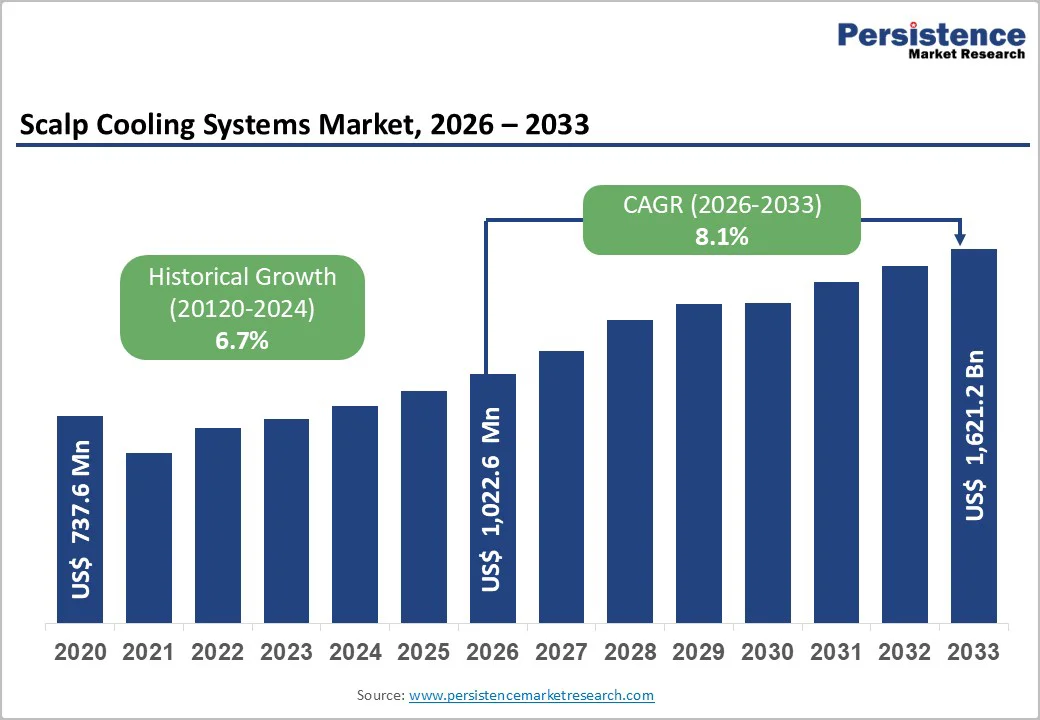
The global scalp cooling systems market size is estimated to grow from US$1,022.6 million in 2026 to US$1,621.2 million by 2033, growing at a CAGR of 6.8% during the forecast period from 2026 to 2033. Cancer care increasingly focuses on improving patients’ quality of life alongside treatment efficacy, driving the need for scalp cooling systems.
These systems use controlled cooling to reduce blood flow to hair follicles during chemotherapy, helping to minimize chemotherapy-induced hair loss, a major emotional concern for patients. Hospitals and oncology clinics are rapidly adopting automated cooling devices for their greater precision and comfort.
Key Industry Highlights:
- Demand for scalp cooling systems is rising as cancer care shifts toward improving patients’ emotional well-being in addition to treatment outcomes.
- Automated scalp cooling machines are gaining dominance due to precise temperature control, ease of use, and compatibility with multiple chemotherapy regimens.
- More oncology centers are documenting real-world outcomes demonstrating reduced chemotherapy-induced alopecia with scalp cooling therapy.
- Manual / Cold Gel Caps account for the highest share mainly because of cost, accessibility, and ease of adoption
| Key Insights | Details |
|---|---|
|
Scalp Cooling Systems Market Size (2026E) |
US$1,022.6 Mn |
|
Market Value Forecast (2033F) |
US$1,621.2 Mn |
|
Projected Growth (CAGR 2026 to 2033) |
6.8% |
|
Historical Market Growth (CAGR 2020 to 2024) |
4.5% |
Market Dynamics
Driver - Chemotherapy Regimen Modernization
Chemotherapy treatment protocols have evolved toward longer, multi-cycle regimens that increase patient exposure to cytotoxic drugs over extended periods. While these advancements improve survival outcomes, they significantly amplify the risk of severe and persistent alopecia, sometimes lasting months or even becoming permanent. For many patients, visible hair loss is not just a cosmetic change but a constant reminder of illness that affects social interaction, confidence, and emotional stability.
As oncologists recognize the importance of preserving normalcy during therapy, scalp cooling is becoming a proactive measure integrated early in treatment planning rather than an optional add-on. The increasing adoption of these modern drug regimens directly drives higher demand for scalp cooling systems to enhance overall survivorship experience and psychological well-being.
Restraints - Inconsistent Clinical Efficacy Across Chemo Regimens
Inconsistent clinical efficacy across chemotherapy regimens remains one of the most significant barriers to the scalp cooling market. The technology demonstrates strong success with taxane-based regimens but shows noticeably lower response rates with high-dose alkylating agents and multi-drug protocols, leading to unpredictable hair-preservation outcomes.
This variability makes oncologists cautious about universally recommending scalp cooling, as treatment outcomes depend on drug class, dosage intensity, infusion time, and patient physiology. When patients experience hair loss despite using the system, confidence in the therapy declines, reducing physician advocacy and referral rates. This inconsistency slows institutional adoption and complicates reimbursement justification across oncology networks.
Opportunity - Pediatric Oncology Adoption
Pediatric oncology represents a high-value but largely underserved expansion area for scalp cooling systems. Hair loss during chemotherapy can be especially traumatic for children and adolescents, affecting self-esteem, social confidence, and emotional stability throughout treatment and recovery. Parents are becoming increasingly proactive in requesting non-drug supportive therapies that minimize psychological burden, creating strong demand potential.
However, most current devices are designed for adult head sizes and longer treatment chairs, presenting an opportunity for child-specific caps, ergonomic designs, and shorter cooling cycles that align with pediatric tolerance. Partnerships with children’s cancer hospitals, survivorship programs, and NGO-funded treatment support initiatives can accelerate adoption. Pediatric-focused clinical evidence from trials and registries could further validate safety, driving both reimbursement consideration and therapeutic uptake.
Category-wise Analysis
By Product Insights
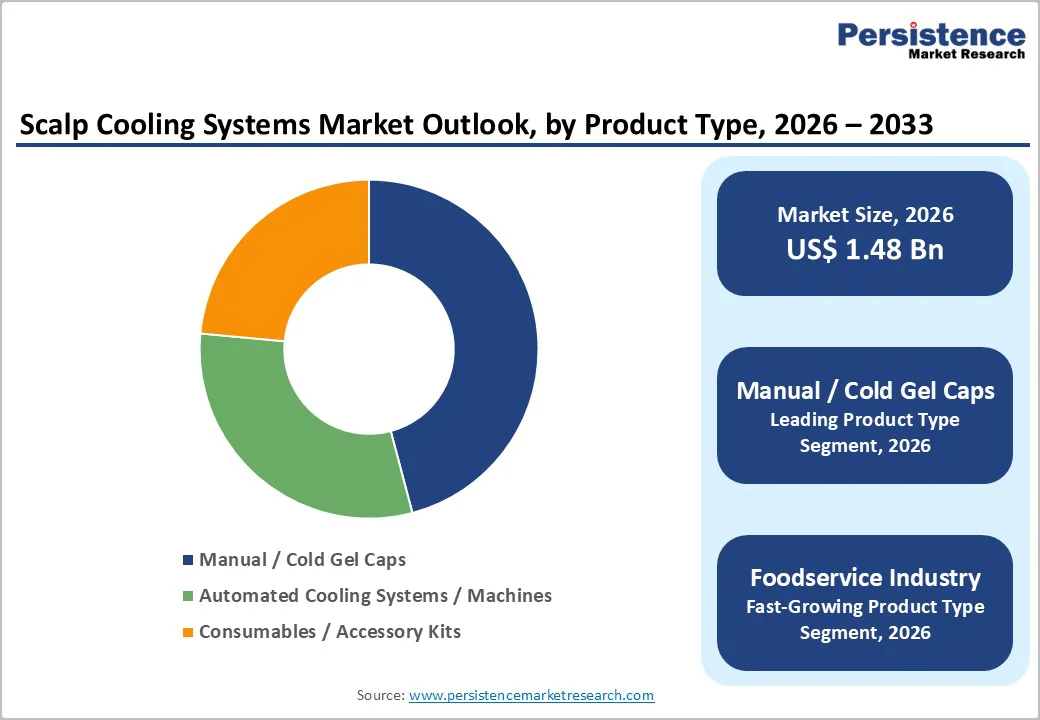
Manual / Cold Gel Caps are the leading product segment in the scalp cooling systems market because they combine low cost, ease of use, and wide accessibility, making them the preferred option for most cancer treatment centers and patients. Unlike automated scalp cooling machines, cold gel caps do not require complex machinery, technical staff, or dedicated installation, allowing even small and resource-limited hospitals and clinics to offer scalp cooling during chemotherapy. Their affordability also helps patients reduce out-of-pocket expenses, making them popular in both developed and emerging markets.
Additionally, cold caps provide portability and flexibility, so patients can use them at home or across different treatment facilities, and many prefer the non-electrical, low-maintenance format. Awareness campaigns and patient advocacy groups have further supported cold cap adoption, as they have proven effective in minimizing chemotherapy-induced hair loss when used consistently and correctly. These benefits, together, make manual/cold gel caps the most widely used and commercially dominant product segment.
By Indication Insights
Chemotherapy is the leading application segment in the scalp cooling systems market because it directly addresses chemotherapy-induced alopecia, one of the most distressing side effects for cancer patients. With millions undergoing chemotherapy annually, demand for hair-preservation solutions is naturally high. Scalp cooling improves emotional well-being, treatment confidence, and patient compliance, prompting oncologists and hospitals to integrate these systems into routine cancer care. The adoption is higher for breast cancer and hematologic malignancies, where long treatment cycles make hair retention more valuable. Compared to neonatal encephalopathy or post-cardiac cooling, chemotherapy applications involve far larger patient volumes and stronger clinical awareness, driving market share.
Region-wise Insights
North America Scalp Cooling Systems Market Trends
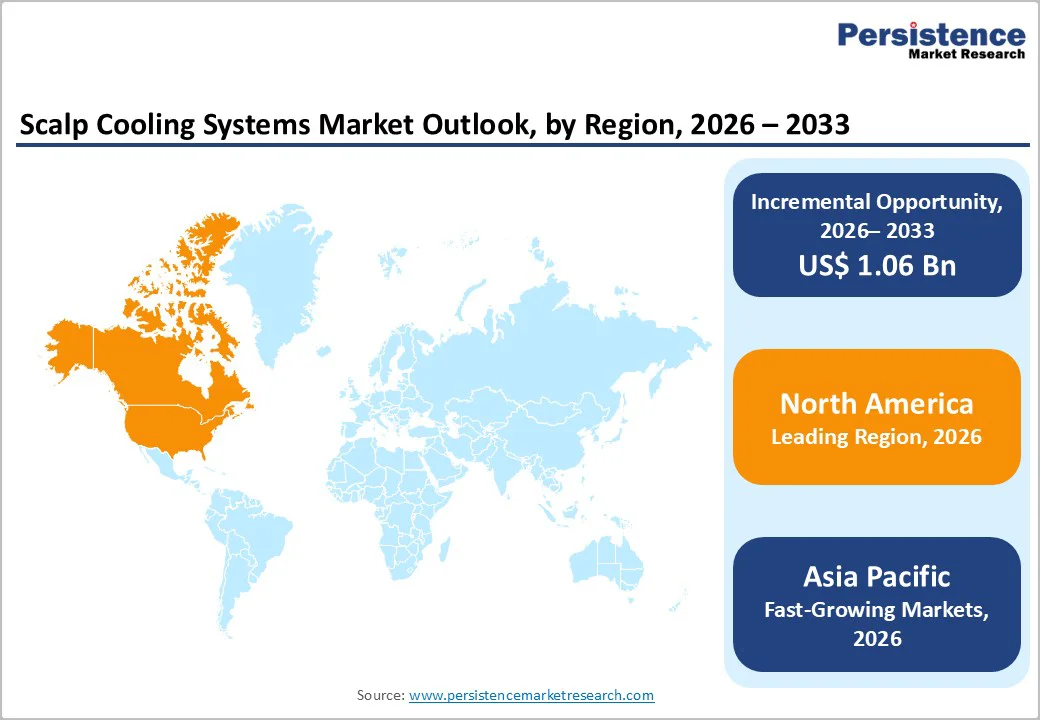
North America leads the scalp cooling systems market due to its advanced oncology infrastructure, strong focus on patient-centred cancer care, and high awareness of chemotherapy-induced alopecia management. Rapid integration of scalp cooling into breast cancer and solid tumour treatment pathways, along with favourable reimbursement initiatives, accelerates adoption across cancer centres. The region also benefits from strong clinical evidence supporting temperature-controlled cooling for hair retention, encouraging oncologists to recommend it as a standard supportive therapy. The U.S. particularly drives market growth, with a high density of accredited cancer institutes, increasing installation of automated cooling systems, expanding insurance coverage, and strong patient advocacy groups promoting hair-preservation options during chemotherapy.
Asia Pacific Scalp Cooling Systems Market Trends
Asia Pacific is emerging as the fastest-growing region in the scalp cooling systems market, driven by a rising cancer burden, increasing chemotherapy volumes, and improving patient awareness regarding hair preservation during treatment. Hospitals across India, China, Japan, South Korea, and Australia are gradually integrating automated scalp cooling systems into oncology departments as part of personalized supportive care. Growing medical tourism and preference for value-added cancer treatment packages further support adoption.
Local distributors and international manufacturers are forming partnerships to expand access, while low-cost manual gel caps continue to penetrate tier-2 and tier-3 cities. Government programs promoting cancer care modernization and a shift toward patient-experience-focused treatment pathways are transforming scalp cooling from a niche option to a recommended choice in chemo settings.
Competitive Landscape
The global scalp cooling systems market is moderately consolidated, with a mix of multinational device makers, oncology technology companies, and consumable/accessory suppliers competing to expand global footprint. Manufacturers focus on automated cooling machine installations in hospitals and infusion centres, supported by recurring revenue from consumable caps and cooling circuits. Competition revolves around clinical efficacy, patient comfort, pricing, reimbursement support, and integration with chemotherapy workflows. New entrants are targeting affordability with manual gel caps and portable systems, while established brands invest in AI-based temperature regulation, service contracts, and multi-patient compatibility.
Key Industry Developments:
- In July 2025, Cooler Heads closed an oversubscribed $11 million Series A funding round to expand manufacturing and roll out Amma, its FDA-cleared portable scalp cooling system for chemotherapy patients. The device helped prevent hair loss during cancer treatment by cooling the scalp before, during, and after chemotherapy sessions.
Companies Covered in Scalp Cooling Systems Market
- Paxman Coolers Limited
- Dignitana AB
- Penguin Cold Caps
- Wishcaps
- Arctic Cold Caps LLC
- Chemotherapy Cold Caps, Inc.
- Polar Cold Caps, LLC
- Warrior Caps
- Other
Frequently Asked Questions
The global scalp cooling systems market is projected to be valued at US$1,022.6 Mn in 2026.
The increasing incidence of breast cancer, hematologic malignancies, and solid tumors globally continues to boost demand for hair-preservation solutions during chemotherapy.
The global market is poised to witness a CAGR of 6.8% between 2026 and 2033.
Growing demand for decentralized chemotherapy and patient convenience creates a strong market for portable systems.
Paxman Coolers Limited, Dignitana AB, Penguin Cold Caps, Wishcaps, and others.


