




- Medical Devices
- Pneumatic Nebulizers Market
Pneumatic Nebulizers Market Size, Trends, Share, Growth, and Regional Forecast, 2026 - 2033
Pneumatic Nebulizers Market by Product (Breath-Actuated, and Vented), End-user (Hospitals, Specialty Clinics, and Home Care Settings), and Regional Analysis from 2026 - 2033

Pneumatic Nebulizers Market Share and Trends Analysis
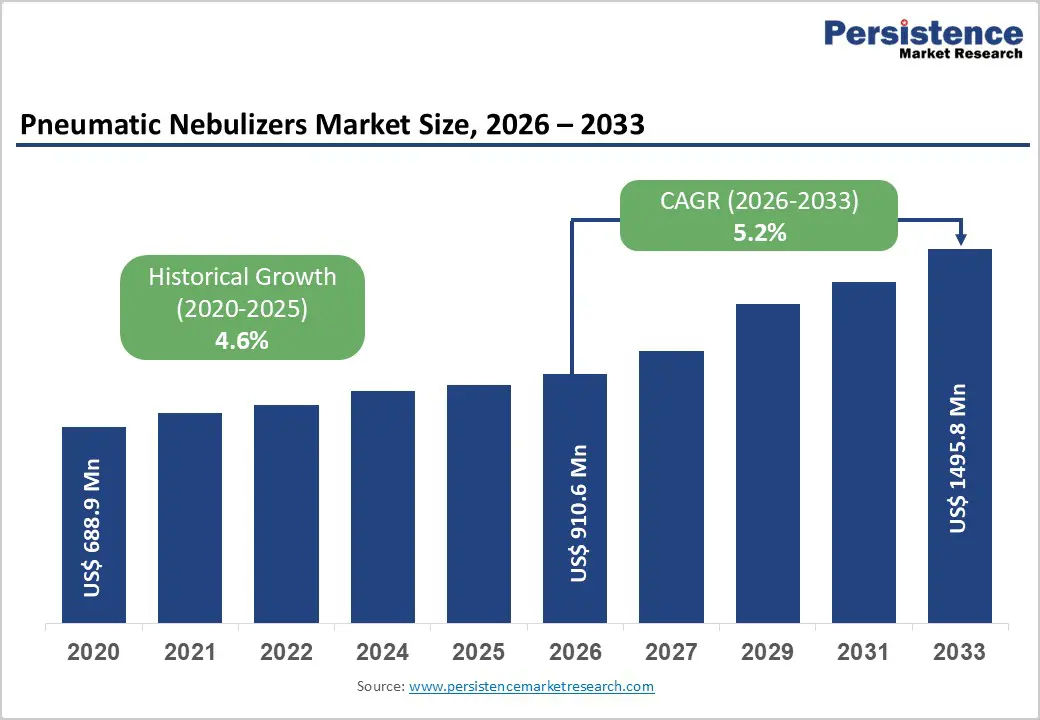
The global pneumatic nebulizers market size is estimated to grow from US$ 910.6 million in 2026 to US$ 1,495.8 million by 2033. The market is projected to grow at a CAGR of 5.2% from 2026 to 2033. Global demand for pneumatic nebulizers is increasing steadily, driven by the rising prevalence of chronic respiratory diseases such as asthma, COPD, cystic fibrosis, and bronchitis, along with growing air pollution exposure, smoking rates, and aging populations. Increasing awareness of effective aerosol drug delivery and expanding adoption of inhalation therapies across acute and chronic care settings are supporting sustained market growth.
Higher treatment volumes in hospitals and homecare settings, coupled with rising healthcare expenditure and broader access to respiratory care services, are further accelerating demand. Continuous innovation in compact compressor systems, improved aerosolization efficiency, low-noise operation, and patient-friendly designs is enhancing treatment adherence and clinical outcomes. In addition, increasing focus on home-based respiratory therapy, portable nebulizer systems, and integration with home healthcare workflows is further propelling the global pneumatic nebulizers market.
Key Industry Highlights:
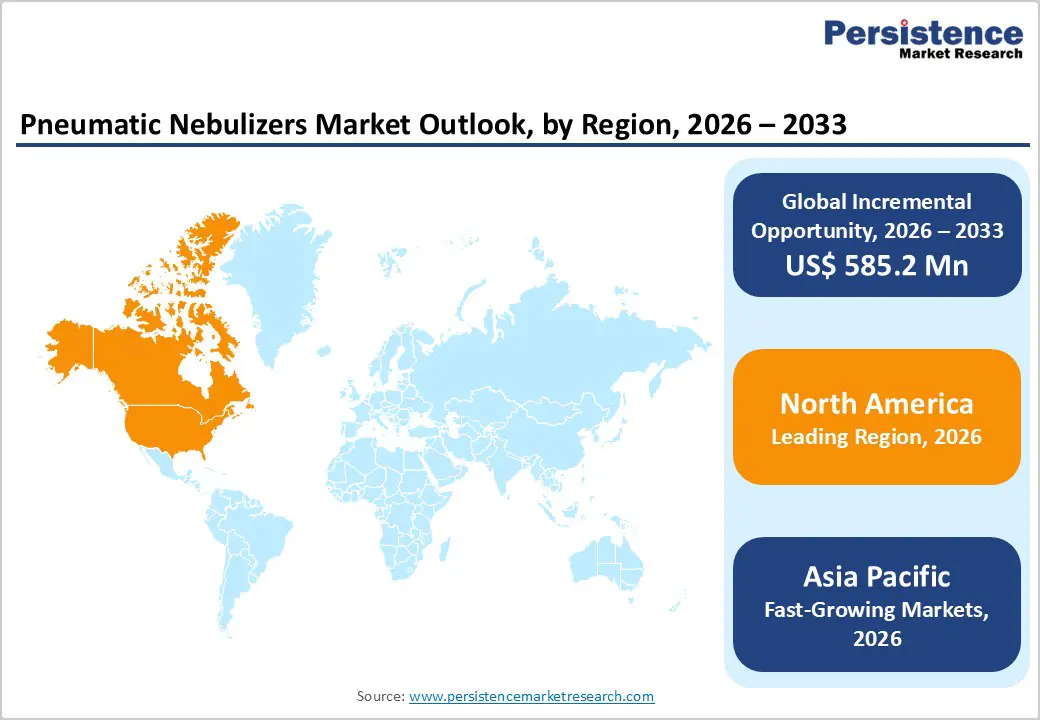
- Leading Region: North America holds the largest share at 47.1%, supported by advanced healthcare infrastructure, high diagnosis and treatment rates for chronic respiratory diseases, early adoption of home respiratory care technologies, and the strong presence of leading manufacturers.
- Fastest-Growing Region: Asia Pacific is expanding fastest due to a large undiagnosed and undertreated patient population, rising air pollution levels, improving healthcare infrastructure, and increasing investments in respiratory care services.
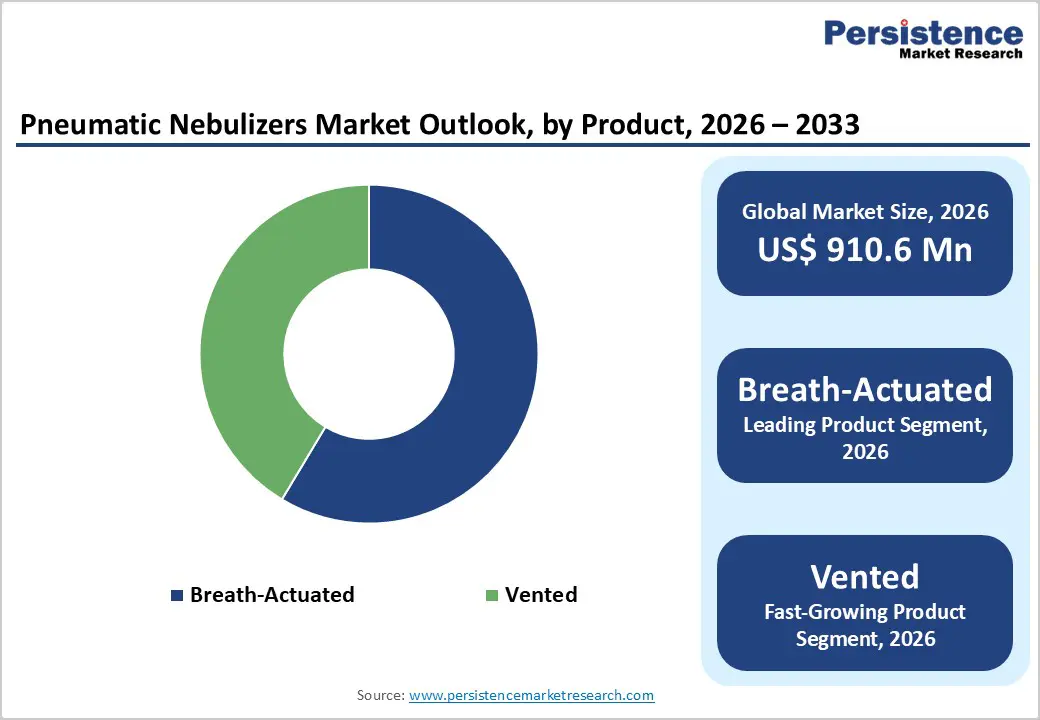
- Leading Product Segment: Breath-Actuated dominates the market due to its efficient drug delivery, reduced medication wastage, and suitability for both adult and pediatric respiratory patients.
- Fastest-Growing Product Segment: Vented are expanding rapidly as clinicians increasingly adopt them for home-based and long-term respiratory therapy, where ease of use and continuous airflow are required.
- Leading End-user Segment: Hospitals remain the top end-user, driven by high volumes of acute respiratory treatments and access to advanced respiratory care infrastructure.
- Fastest-Growing End-user Segment: Home Care Settings are scaling quickly as demand rises for long-term respiratory disease management, post-discharge care, and outpatient treatment.
| Key Insights | Details |
|---|---|
|
Pneumatic Nebulizers Market Size (2026E) |
US$ 910.6 Mn |
|
Market Value Forecast (2033F) |
US$ 1,495.8 Mn |
|
Projected Growth (CAGR 2026 to 2033) |
4.6% |
|
Historical Market Growth (CAGR 2020 to 2025) |
5.2% |
Market Dynamics
Driver - Rising Burden of Chronic Respiratory Diseases and Environmental Risk Factors
The increasing global prevalence of chronic respiratory diseases, such as asthma, chronic obstructive pulmonary disease (COPD), and cystic fibrosis, is a major driver of the pneumatic nebulizers market. For instance, according to the American Lung Association, the prevalence of asthma in the United States reached 24,748,581 individuals in 2023. This large patient base continues to drive sustained demand for inhalation therapies, particularly nebulized drug delivery for pediatric, geriatric, and severe asthma patients. The growing disease burden also increases long-term utilization of pneumatic nebulizers across hospitals, outpatient clinics, and homecare settings. These conditions require long-term and recurrent administration of inhaled medications to manage symptoms, prevent exacerbations, and improve quality of life. Pneumatic nebulizers are widely preferred in both hospital and homecare settings due to their ability to deliver a broad range of medications effectively, including bronchodilators, corticosteroids, and antibiotics. The growing elderly population, higher survival rates among patients with chronic respiratory disorders, and improved diagnosis rates are further contributing to sustained demand for nebulized drug delivery systems worldwide.
Additionally, worsening environmental and lifestyle-related risk factors are significantly increasing the incidence of respiratory illnesses, particularly in emerging economies. Rising air pollution levels, rapid urbanization, industrial emissions, and increased exposure to vehicular pollutants are leading to higher rates of asthma and COPD. Additionally, persistent smoking prevalence and occupational exposure to dust, chemicals, and fumes in manufacturing, mining, and construction sectors are accelerating the respiratory disease burden. Limited access to early preventive care in several low- and middle-income countries further amplifies reliance on effective therapeutic interventions. Together, these epidemiological and environmental factors are strengthening long-term demand for pneumatic nebulizers across acute, chronic, and home-based respiratory care settings.
Restraints - Device Limitations Impacting Patient Compliance and Portability
Longer treatment times associated with pneumatic nebulizers represent a key limitation, particularly in outpatient and home care settings where convenience and ease of use strongly influence patient adherence. Compared to alternative inhalation devices, pneumatic nebulizers often require extended administration sessions, which can be burdensome for working adults, elderly patients, and caregivers managing pediatric treatments. Repeated daily sessions may lead to poor compliance, missed doses, or premature discontinuation of therapy, ultimately affecting clinical outcomes. In homecare environments, where supervision by healthcare professionals is limited, prolonged treatment duration can further reduce consistent usage, especially among patients with mild-to-moderate respiratory conditions who may prefer faster, more discreet drug delivery options.
Moreover, the bulky design, higher noise levels, and limited portability of pneumatic nebulizers constrain their adoption relative to mesh and ultrasonic technologies. Traditional compressor-based systems are often larger, heavier, and dependent on a continuous power supply, restricting mobility and suitability for travel or active lifestyles. Noise generated during operation can cause discomfort, particularly at night or in pediatric care. As patient preference increasingly shifts toward compact, silent, and portable respiratory devices, these design-related drawbacks pose competitive challenges. Together, longer treatment times and physical limitations reduce patient acceptance in non-hospital settings, influencing purchasing decisions and slowing adoption in home-based and ambulatory care environments.
Opportunity - Expansion of Homecare Respiratory Management and Emerging Market Demand
The global expansion of home healthcare services and long-term respiratory disease management programs is creating significant growth opportunities for the pneumatic nebulizers market. As healthcare systems increasingly shift care delivery from hospitals to home settings, nebulizers are being widely adopted for chronic disease management, post-discharge care, and long-term therapy for asthma and COPD patients. Pneumatic nebulizers remain a preferred option for pediatric, geriatric, and severely ill patients due to their ability to deliver a wide range of medications without requiring complex inhalation techniques. This transition toward home-based care improves patient comfort, reduces hospital burden, and supports consistent therapy adherence over extended treatment periods.
Furthermore, strong growth potential is emerging in developing regions, driven by rising air pollution levels, rapid urbanization, and expanding access to healthcare infrastructure. Improving affordability, broader insurance coverage, and increasing investments in respiratory care services are accelerating adoption across emerging markets. Manufacturers are responding by developing compact, low-noise, and portable pneumatic nebulizers specifically designed for home use and resource-constrained settings. Additionally, increasing reliance on nebulized therapies in pediatrics, geriatrics, and post-acute care environments is reinforcing demand, as these populations often require gentle, reliable, and continuous drug delivery. Together, these trends position pneumatic nebulizers for sustained growth across both mature and high-growth markets globally.
Category-wise Analysis
By Product Insights
The breath-actuated devices segment is projected to dominate the global pneumatic nebulizers Market in 2026, accounting for a 42.6% revenue share. This leadership is primarily driven by their ability to synchronize aerosol delivery with patient inhalation, thereby improving lung deposition while minimizing medication loss. These devices are widely used across adult and pediatric populations for effective management of asthma, COPD, and other obstructive airway diseases. The rising prevalence of respiratory disorders, aging populations, and increasing preference for efficient and patient-friendly inhalation therapies are reinforcing demand. Technological advancements, such as improved compressor performance, optimized particle size control, and compatibility with a broad range of medications, further enhance adoption. Strong reimbursement support in developed markets and expanding access in emerging economies continue to sustain this segment’s dominant global position.
By End-user Insights
The hospitals segment is projected to dominate the global pneumatic nebulizers Market in 2026, accounting for 58.2% of revenue. This dominance is driven by the high volume of acute and chronic respiratory treatments administered in hospital settings, particularly for severe asthma attacks, COPD exacerbations, and post-operative respiratory care. Hospitals are equipped with advanced respiratory therapy departments, trained respiratory therapists, and access to a wide range of nebulized medications. Strong capital investment in respiratory equipment, ability to manage complex and comorbid cases, and integration with intensive care and emergency services further reinforce hospital leadership. Additionally, centralized procurement models, long-term supplier agreements, and a preference for durable, high-performance nebulizer systems significantly contribute to hospital-led revenue generation.
Regional Insights
North America Pneumatic Nebulizers Market Trends
North America is expected to dominate the global market, with a 47.1% share in 2026, led primarily by the U.S. The region benefits from a well-established healthcare infrastructure, high prevalence and diagnosis rates of chronic respiratory diseases, and widespread access to advanced respiratory therapy devices. Favorable reimbursement policies for nebulized drug delivery under public and private insurance programs continue to support strong adoption across hospitals and homecare settings. Early uptake of technologically advanced solutions, including portable pneumatic nebulizers and low-noise compressor systems, further drives treatment volumes.
Market growth is also boosted by the strong presence of leading global manufacturers, active R&D investments, and standardized clinical guidelines supporting inhalation therapy. In addition, increasing adoption of home healthcare services, remote patient monitoring, and post-discharge respiratory management improves patient adherence and outcomes. Supportive regulatory pathways and collaborations between healthcare providers and industry players continue to accelerate innovation and commercialization, sustaining North America’s market leadership.
Europe Pneumatic Nebulizers Market Trends
The European pneumatic nebulizer market is expected to grow steadily, supported by an aging population, rising prevalence of COPD and asthma, and increasing awareness of the clinical and economic burden of unmanaged respiratory diseases. Countries such as Germany, the U.K., France, Italy, and the Nordic region demonstrate consistent demand, driven by universal healthcare coverage, structured treatment pathways, and strong primary care involvement. High acceptance of both hospital-based and homecare nebulizer therapies supports balanced market growth. Expansion is further encouraged by the adoption of advanced pneumatic nebulizers offering improved aerosol consistency, durable compressor systems, and compatibility with multiple drug formulations.
Favorable regulatory frameworks, reimbursement support, and public healthcare funding enhance accessibility across multiple European markets. Ongoing collaboration between academic research centers, respiratory clinics, and device manufacturers continues to advance clinical validation and innovation. Additionally, integration of home care respiratory services and outcome-based care models is improving efficiency and long-term disease management across the region.
Asia Pacific Pneumatic Nebulizers Market Trends
Asia Pacific pneumatic nebulizers market is expected to register a relatively higher CAGR of around 7.0% between 2026 and 2033, driven by expanding healthcare infrastructure and a rapidly growing undiagnosed and undertreated respiratory patient population. Large populations, rising air pollution levels, increasing smoking prevalence, and growing awareness of respiratory health are fueling demand across China, India, Japan, South Korea, and Southeast Asia. Improving access to hospitals, growth of private healthcare facilities, and rising investments in respiratory care capabilities are accelerating adoption.
Government-led initiatives promoting chronic disease management, improved access to essential medical devices, and broader insurance coverage are supporting market expansion in several countries. Cost-effective nebulizer systems, local manufacturing, and regional distribution partnerships are improving affordability in price-sensitive markets. Global players are increasingly focusing on localization strategies, clinician training, and channel expansion. Gradual adoption of portable pneumatic nebulizers and home-based respiratory therapy is expected to strengthen long-term growth prospects across the Asia Pacific region.
Competitive Landscape
The global pneumatic nebulizers market is highly competitive, with strong participation from companies such as Koninklijke Philips N.V., Omron Corporation, Medtronic, General Electric, Medline Industries Inc., and BD (Becton, Dickinson & Company). These players leverage extensive global distribution networks, strong brand recognition, and established relationships with hospitals and home care providers, alongside continuous innovation in compressor efficiency, aerosol delivery performance, device durability, and ease of use to address a wide range of acute and chronic respiratory conditions.
Rising demand for effective management of asthma, COPD, and other respiratory disorders, particularly in home care and outpatient settings, is driving product innovation and portfolio expansion. Manufacturers are increasingly focused on compact and portable pneumatic nebulizers, low-noise compressors, improved drug delivery efficiency, and devices suitable for pediatric and geriatric patients. Key strategic priorities include expansion of home healthcare offerings, strengthening after-sales service and patient education programs, penetration into emerging markets, and long-term partnerships with hospitals, clinics, and durable medical equipment providers to sustain competitive advantage and support long-term market growth.
Key Industry Developments:
- In July 2025, HCMED INNOVATIONS announced that its breath-activated nebulizer, AdheResp, received U.S. FDA 510(k) clearance. AdheResp is the world’s first FDA-cleared breath-activated nebulizer with built-in connectivity and the only advanced nebulizer available with mass production capacity to support pharmaceutical companies’ clinical trials.
- In May 2024, Medline launched the Hudson RCI TurboMist small-volume nebulizer for respiratory drug delivery. The device delivers medication in approximately three minutes nearly 70% faster than traditional nebulizers by administering up to 2.5 times more medication per minute, enabling quicker and more cost-effective respiratory care for clinicians and therapists.
Companies Covered in Pneumatic Nebulizers Market
- Koninklijke Philips N.V.
- Omron Corporation
- Medtronic
- General Electric
- Medline Industries Inc.
- BD (Becton, Dickinson & Company)
- Allied Medical LLC (A Flexicare Company)
- Heyer Medical AG
- PARI Pharma GmbH
- Airssential Health Care
- Vectura Group Plc
- DeVilbiss Healthcare
- Flexicare Medical Ltd.
- Clement Clarke International
- Others
Frequently Asked Questions
The global pneumatic nebulizers market is projected to be valued at US$ 910.6 Mn in 2026.
Rising prevalence of asthma and COPD, coupled with growing adoption of home-based respiratory care, is driving global demand for pneumatic nebulizers.
The global pneumatic nebulizers market is poised to witness a CAGR of 5.2% between 2026 and 2033.
Expansion in emerging markets and integration with homecare and telehealth ecosystems present key growth opportunities for pneumatic nebulizers.
Koninklijke Philips N.V., Omron Corporation, Medtronic, General Electric, Medline Industries Inc., and BD (Becton, Dickinson & Company) are some of the key players in the pneumatic nebulizers market.


