




- Animal Feed & Additives
- Pet Food Antioxidants for Meat Rendering Market
Pet Food Antioxidants for Meat Rendering Market Size, Share, and Growth Forecast 2026 - 2033
Pet Food Antioxidants for Meat Rendering Market by Product Type (Dry Pet Food, Wet Pet Food), Ingredient Source (Natural, Synthetic Antioxidants), End-user (Dogs, Cats), by Distribution Channel (Online, Offline), and Regional Analysis, 2026 - 2033

Pet Food Antioxidants for Meat Rendering Market Size and Trends Analysis
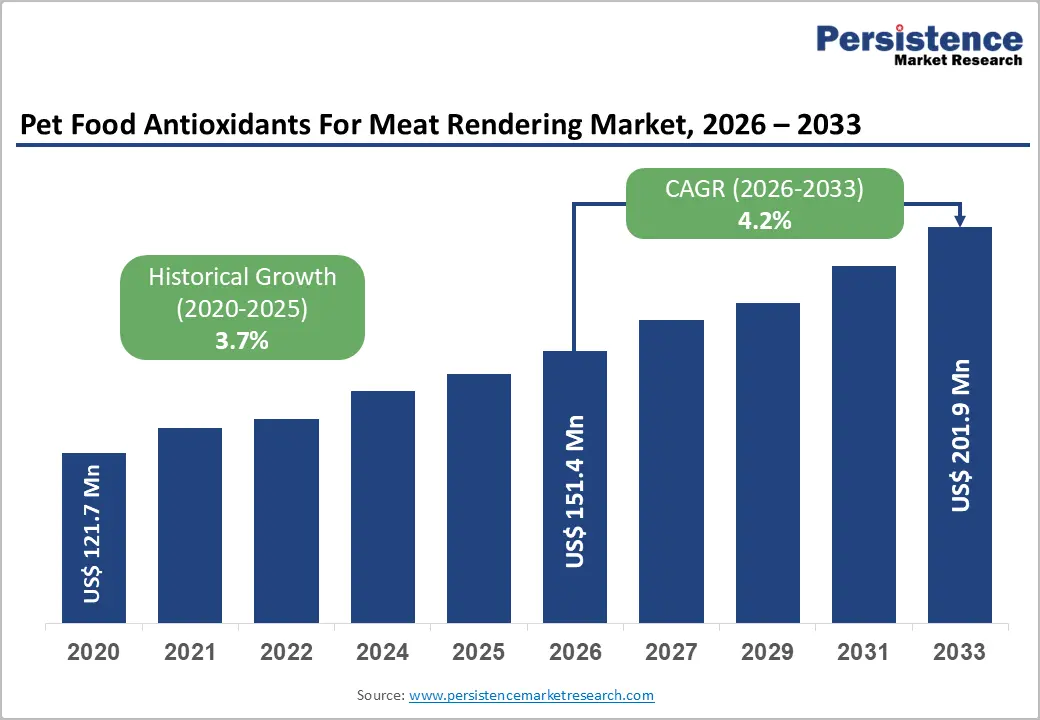
The global pet food antioxidants for meat rendering market size is likely to be valued at US$151.4 million in 2026 and is expected to reach US$201.9 million by 2033, growing at a CAGR of 4.2% from 2026 to 2033, driven by rising demand for high-quality and shelf-stable pet food as pet humanization trends push manufacturers to improve product safety and nutritional retention.
Key Industry Highlights:
- Latest Product: In March 2025, Kemin Industries launched PROSIDIUM, a new feed pathogen control solution, at VIV Asia in Bangkok. The product is based on novel peroxy acids and designed to reduce Salmonella and viral risks in animal feed.
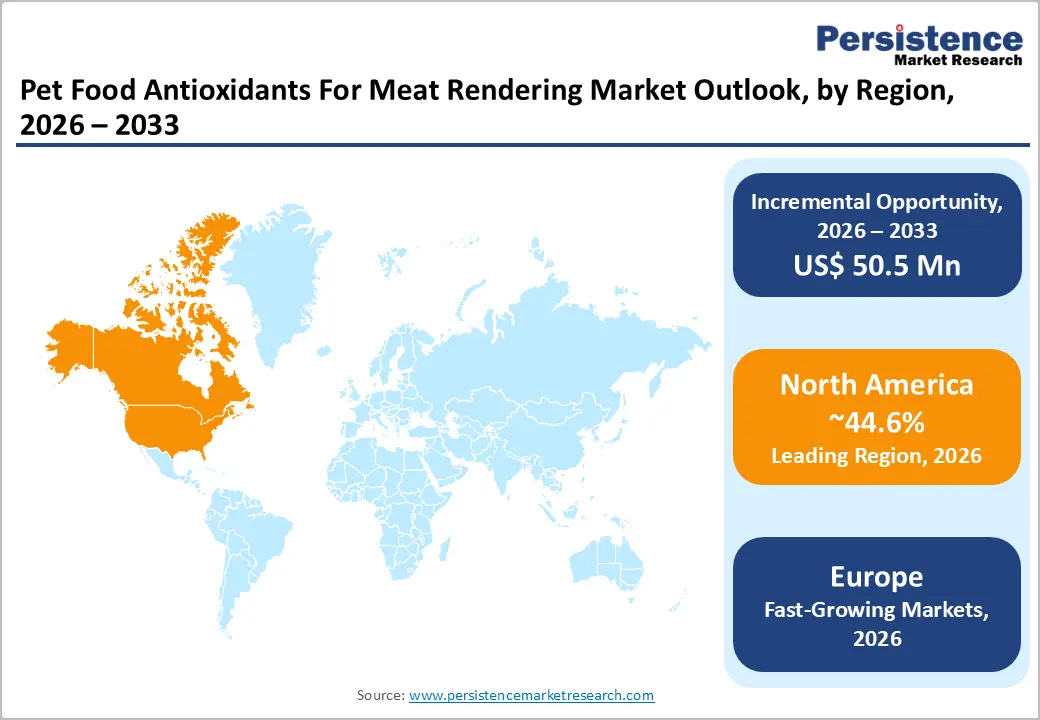
- Leading Region: North America, with about 44.6% share in 2026, spurred by increasing premium pet food demand and strict feed safety regulations.
- Fast-growing Region: Europe, backed by strict norms on synthetic additives and increasing preference for natural pet food.
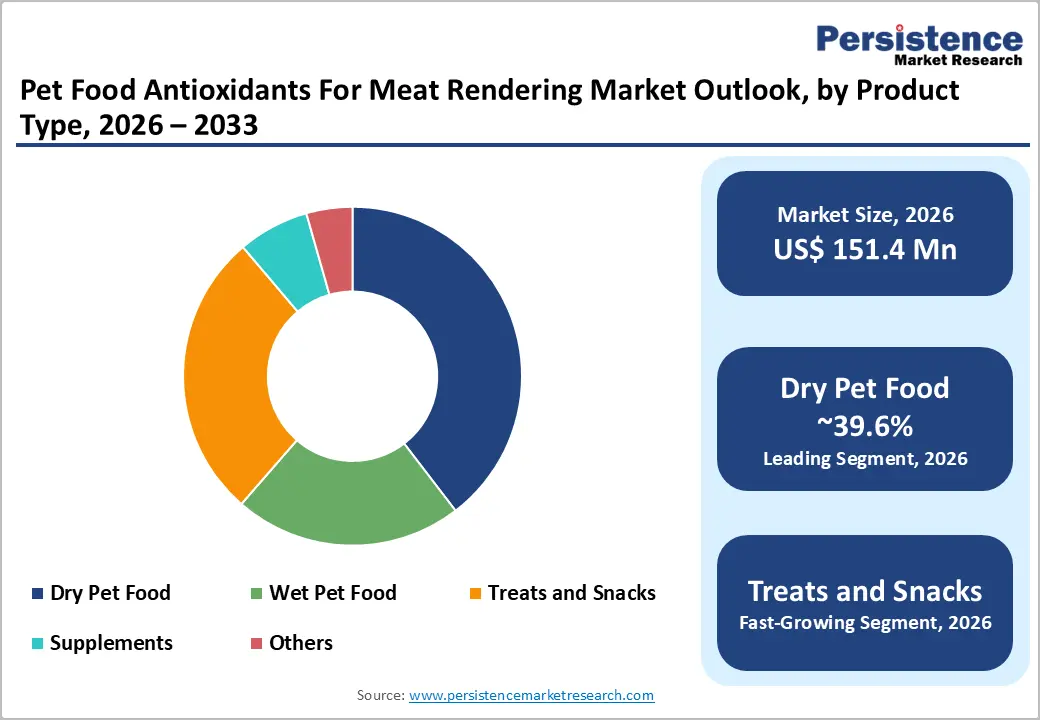
- Leading Product Type: Dry pet food, approximately 39.6% share in 2026, as long shelf life and high fat content require effective antioxidants to prevent oxidation and maintain quality.
- Dominant Ingredient Source: Natural antioxidants, nearly 70.4% in 2026, due to rising consumer preference for clean-label and plant-based ingredients.
DRO Analysis
Driver- Increasing Awareness of Pet Health and Nutrition
Today's pet owners are no longer just checking the flavor on the label. They are actively researching ingredients, oxidative stress, and long-term health outcomes for their animals. A Packaged Facts survey from January 2024 found that 80% of dog owners and 82% of cat owners rank pet food as the most important health product for their pets. This shift in mindset is pushing manufacturers to use antioxidants not just as preservatives, but as functional health ingredients in meat-rendered pet food.
As consumers become more educated about the health risks associated with oxidation in pet food, demand for both natural and synthetic antioxidants has grown steadily. In May 2024, Kemin Industries submitted a request to the European Commission to allow liquid rosemary extract as an antioxidant feed additive for cats and dogs, which received authorization through Commission Implementing Regulation (EU) 2024/1068. This kind of regulatory engagement shows how seriously ingredient-level health claims are now being pursued.
Surge in Pet Ownership and Spending on Pet Care
Pet ownership has expanded well beyond traditional demographics, and spending habits have changed alongside it. The U.S. has seen a 25% increase in pet ownership over the last five years, with approximately 75% of households now owning a pet. As the pet population surges, so does the demand for rendered meat products that hold up nutritionally over time, and antioxidants are central to that.
The rising trend of pet humanization has led to a 12% annual increase in premium pet food spending, pushing manufacturers to prioritize formulations that maintain both palatability and nutritional value. Companies are responding with investment. In September 2024, Cargill acquired two feed mills from Compana Pet Brands in Colorado and Kansas. This helped the company to strengthen its animal nutrition and health business as well as broaden the supply of nutritional additives, including antioxidant-related ingredients.
Restraint - Increasing Competition from Alternative Pet Food Products
The most prominent competitive threat to antioxidants in meat rendering is not another preservative. But it is the increasing rejection of rendered formats altogether. A rising segment of pet owners now actively prefers fresh, minimally processed, or raw diets, where long shelf life becomes less relevant. Increasing competition from alternative preservation methods and extended shelf-life technologies poses a challenge to the market, as pet food manufacturers may explore these solutions instead. Brands, including The Farmer's Dog and JustFoodForDogs, have built entire businesses around eliminating the requirement for traditional preservation.
New developments, such as lab-produced meat, are anticipated to have a key impact on the market by decreasing the relevance of antioxidants for preventing rancidity. The AVMA's House of Delegates also reviewed raw pet food diet policies in January 2024, showcasing how mainstream the raw feeding conversation has become, even if institutional guidance remains cautious. As fresh-format pet food becomes more accessible and affordable, it narrows the marketplace where rendered meat antioxidants operate.
Opportunity - Vet-Backed Formulations Open Doors to Premium Placement
Veterinary endorsement is one of the most credible and commercially powerful tools available in the pet food industry. Antioxidant-rich formulations stand to benefit significantly. Pet owners' concerns about health have fueled the growth of veterinary-endorsed brands such as Hill's Pet Nutrition, Royal Canin, and Purina Pro Plan. About 71% of pet owners say they like pet food backed by scientific research. Antioxidant suppliers that collaborate with veterinary nutritionists, providing clinical data on oxidative stability and immune support, can move their ingredients from commodity status into premium product lines.
Clinical validation has become a key factor for retail placement, leading companies to publish peer-reviewed research on ingredient efficacy. Virbac reported a 13.6% revenue increase in 2025, propelled by high demand for products supported by veterinary endorsements. AAFCO guidelines permit veterinary endorsement claims on pet food labels, provided the endorsement is not false or misleading and is supported by a statistically valid survey of veterinarians. This creates a compliance-ready pathway for antioxidant brands to pursue formal vet partnerships.
Subscription Pet Food Services Create a Recurring Demand Channel
The subscription pet food model has become one of the most important distribution channels for antioxidant ingredient suppliers. These services depend on consistent and high-quality formulations delivered regularly. The rise of direct-to-consumer brands and subscription-based pet food services is facilitating the adoption of customized antioxidant solutions, further diversifying the application landscape. Services such as PetPlate and Ollie already build antioxidant-rich ingredients into their core recipes.
PetPlate recipes include antioxidant-rich fruits and vegetables such as spinach, cranberries, and blueberries across most of their formulations. JustFoodForDogs allows customers to work with a vet online to create prescription diets and boost nutrition with antioxidant supplements. As subscriptions lock in repeat orders, they also lock in ingredient demand. It is making this channel a stable opportunity for antioxidant manufacturers supplying rendered meat-based pet food.
Category-wise Analysis
Product Type Insights
Dry pet food is predicted to dominate with approximately 39.6% of the market share in 2026, attributed to convenience, long shelf life, and cost-effectiveness. The rising trend of premium dry pet food products enriched with antioxidants further propels demand. Oxidation is a particularly serious problem in dry formats as fat content in rendered meat ingredients is exposed to air during extrusion and storage. This makes antioxidants non-negotiable for quality control. Manufacturers also benefit from the fact that dry food requires higher antioxidant loading per batch compared to wet formats. This is because moisture is removed during processing, and the fat-to-air surface ratio is greater.
Treats and snacks are predicted to be the fastest-growing segment in the forecast period. Traditional treats are commonly used for rewarding pets or training, but functional treats now feature ingredients that provide the right balance of antioxidants, proteins, fatty acids, and vitamins. Most food and treat brands now have their own line of functional treats. Pet owners are willing to pay more for treats that do something useful. High pet adoption rate and the increasing tendency to consider pets a part of the family augment demand for natural, nutritious, and healthy snacks essential for companion animals’ well-being.
Ingredient Source Insights
Natural antioxidants are expected to lead with nearly 70.4% of the share in 2026. This growth is boosted by increasing consumer preference for chemical-free formulations and rising concerns over the long-term effects of synthetic additives on pet health. Plant-derived antioxidants such as tocopherols and rosemary extract are widely adopted due to their effectiveness in extending shelf life while complying with natural product claims. The European Union's 2021 ban on ethoxyquin in pet food catalyzed a 300% surge in rosemary extraction capacity among suppliers in Germany and France.
Herbal antioxidants are anticipated to remain in the second position in 2026. Herbs such as rosemary, turmeric, and oregano are emerging as the most commercially dynamic subset within natural antioxidants. They deliver a dual benefit of preservation and health functionality that neither synthetic nor standard vitamin-based antioxidants can match. The European Food Safety Authority has approved health claims for certain plant extracts, including cranberry for urinary health and turmeric for joint support. EU organic regulations also permit specific plant-based additives in certified organic pet foods, creating a premium niche.
Regional Insights
North America Pet Food Antioxidants for Meat Rendering Market Trends
North America is estimated to dominate in 2026, with a share of nearly 44.6%, owing to its large pet-owning base and a well-established pet food manufacturing infrastructure. Regulatory developments have also influenced the market in important ways. The FDA's Center for Veterinary Medicine confirmed that ingredients used in animal food must either be FDA-approved food additives or generally recognized as safe (GRAS) for their intended use.
The framework encourages manufacturers to prioritize well-studied and safe antioxidant ingredients. In January 2025, AAFCO further strengthened the regulatory ecosystem. AAFCO approved a new regulatory pathway for animal food ingredients through Kansas State University's Olathe Innovation Campus. It was designed to bring ingredients to market safely and more efficiently. Hence, rising consumer demand and evolving regulatory support continue to keep North America at the top.
U.S. Pet Food Antioxidants for Meat Rendering Market Trends
The U.S. is the single largest national market for pet food antioxidants, with consumer behavior and regulatory dynamics both pointing toward continued growth. According to the American Pet Products Association, approximately 70% of U.S. households own a pet, translating to over 90 million homes. Around 45% of U.S. pet owners also prioritize natural ingredients.
Export strength also underpins domestic ingredient demand. According to the USDA, U.S. dog and cat food exports reached US$2.49 billion in 2024, strengthening the requirement for globally compliant, high-protein inputs. The U.S. is also home to leading ingredient innovators such as Kemin Industries, ADM, and Cargill. Their continued investment in antioxidant solutions ensures the country remains central to global formulation trends.
Europe Pet Food Antioxidants for Meat Rendering Market Trends
Europe's growth is being augmented not by volume alone, but by a structural shift toward premium and natural formulations. These are backed by some of the world's most rigorous regulatory standards. The region's favorable regulatory framework promoting natural ingredients in pet food is a significant driver of market growth. The EU's regulatory stance has directly accelerated this shift. The surging emphasis on health and wellness has increased the usage of natural antioxidants. It is encouraged by stringent compliance with additives enacted by the European Union.
Germany Pet Food Antioxidants for Meat Rendering Market Trends
Germany occupies the top position in Europe and sets the pace for premium, science-backed pet food formulation on the continent. Demand is shaped by a superior culture of ingredient transparency and ethical sourcing. Germany's well-established food manufacturing sector and emphasis on sustainability make it a key market in Europe. BASF and Evonik Industries are notable contributors, focusing on unique antioxidant solutions for meat, dairy, and bakery segments. Government policies on food safety and stringent regulations on additive usage encourage transparency and quality.
U.K. Pet Food Antioxidants for Meat Rendering Market Trends
The U.K. is expected to be the fastest-growing market, bolstered by premiumization, direct-to-consumer e-commerce, and breed-specific formulation demand. Pet humanization is particularly well-established in the U.K. New Product of the Year research shows that most local pet owners treat their animals such as family members, with food and treats pushing the majority of premium spending. The functional treats category is also expanding steadily.
Asia Pacific Pet Food Antioxidants for Meat Rendering Market Trends
Asia Pacific is witnessing a shift from home-cooked pet diets to commercially prepared food, creating new opportunities for market expansion. It is mainly augmented by rising pet ownership and the surging humanization of pets. Pet snacks and treats are expected to see high demand as pet owners consider their pets as part of the family. In January 2024, Mars Petcare launched a dedicated pet health research center in Singapore to develop region-specific pet food formulations and advance clinical nutrition studies. This signals how seriously global players are treating this region.
China Pet Food Antioxidants for Meat Rendering Market Trends
China is the most dynamic individual market in Asia Pacific. It’s robust economic growth, rising middle-class disposable income, and shifting societal attitudes toward pet ownership are key factors propelling market expansion. Premium formats expanded 18 to 22% in 2024 as pet owners traded up to limited-ingredient, organic, and veterinary-endorsed formulas that command price premiums of 40 to 50% over standard kibble. Government support has also accelerated domestic production. In 2023, the government launched initiatives to boost domestic pet food production, including financial subsidies and tax incentives.
India Pet Food Antioxidants for Meat Rendering Market Trends
India is considered one of the fastest-growing markets in Asia Pacific, though from a smaller base. Premium and functional formats are gaining traction. In June 2024, Heads Up For Tails unveiled Hearty, a super-premium pet food line with 60% real meat and 40% fresh vegetables, targeting pet parents who scrutinize ingredient labels. The brand anticipates revenue of US$60 million within three years. Antioxidant demand from the meat rendering side is set to rise as packaged and shelf-stable formats displace home-cooked meals.
Competitive Landscape
The global pet food antioxidants for meat rendering market is moderately consolidated. Kemin Industries is the market leader as it operates dedicated pet food and rendering divisions rather than treating antioxidants as a small extension of a broad chemicals portfolio. Competition in the industry is shifting from synthetic antioxidants toward clean-label and natural stabilization systems.
Large pet food brands are reducing dependence on ethoxyquin, BHA, and BHT. This is because consumers now scrutinize ingredient labels more closely, especially in premium dog and cat food. It has created high demand for rosemary extracts, mixed tocopherols, and plant-based antioxidant blends. Kalsec, Alltech, and DSM-Firmenich are benefiting from this transition because of their natural preservation expertise.
Key Industry Developments:
- In May 2026, Big Idea Ventures and Mars Petcare launched the third annual edition of the Next Generation Pet Food Program. The program is seeking start-ups with breakthrough solutions in alternative proteins, fats, oils, and novel ingredients.
- In February 2026, ADM and Alltech officially launched Akralos Animal Nutrition. It is a joint venture that combines Alltech's U.S.-based Hubbard Feeds and Canada-based Masterfeeds businesses with ADM's U.S. feed operations.
- In January 2025, the U.S. FDA finalized Guidance for Industry (GFI) #294, establishing the Animal Food Ingredient Consultation (AFIC) program. It is a new regulatory pathway for animal food ingredients.
Companies Covered in Pet Food Antioxidants for Meat Rendering Market
- Kemin Industries
- BASF SE
- Cargill
- ADM
- DSM-Firmenich
- Alltech
- Camlin Fine Sciences
- Novus International
- Nutreco
- Adisseo
- Wilbur-Ellis Nutrition
- ITPSA
- Kalsec
- Perstorp
- Kerry Group
Frequently Asked Questions
The global pet food antioxidants for meat rendering market is projected to be valued at US$151.4 million in 2026.
The market is expected to reach US$201.9 million by 2033.
Shift toward natural antioxidants and premiumization of pet food are a few key market trends.
Dry pet food is predicted to lead with around 39.6% of share in 2026, as large-scale production and storage increase the demand for stabilization solutions.
The market is expected to grow at a CAGR of 4.2% from 2026 to 2033.
Kemin Industries, BASF SE, Cargill, ADM, and DSM-Firmenich are a few key market players.


