




- Beverages
- Noni Juice Market
Noni Juice Market Size, Share, and Growth Forecast, 2026 - 2033
Noni Juice Market by Product Type (Organic & Natural), Application (Foods & Beverage, Pharmaceutical, Personal Care, Others), and Regional Analysis for 2026 - 2033

Noni Juice Market Size and Trends Analysis
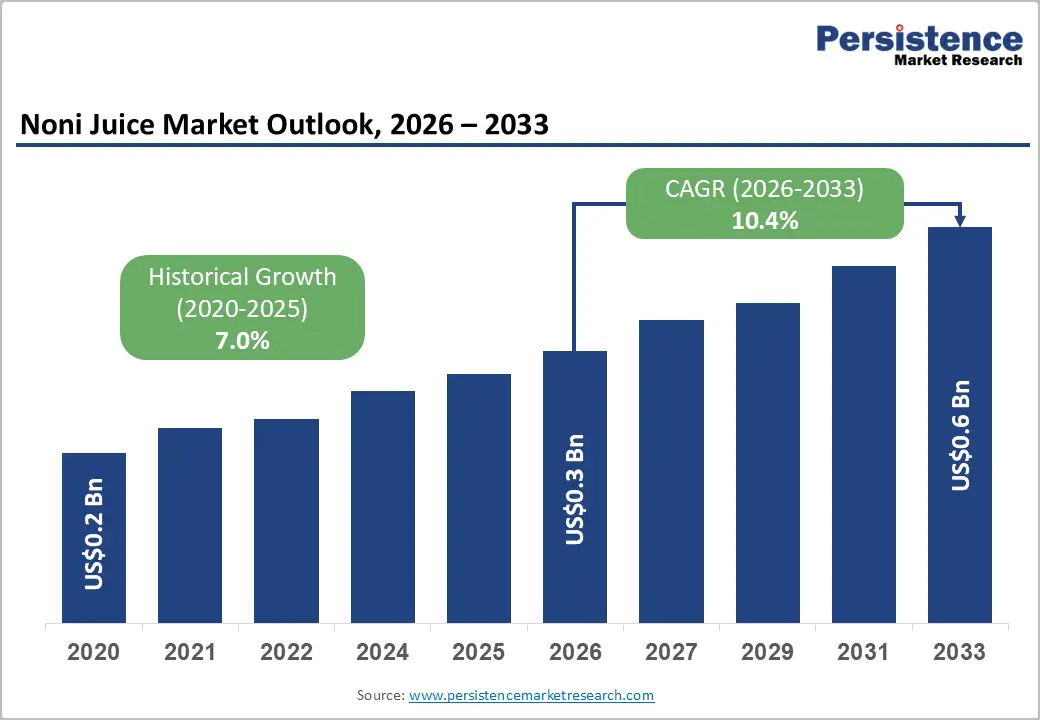
The global noni juice market size is likely to be valued at approximately US$0.3 billion in 2026 and is expected to reach US$0.6 billion by 2033, growing at CAGR of 10.4% during the forecast from 2026 to 2033, driven by the rising demand for organic and natural formulations, broader application penetration across food, pharmaceutical, and personal care industries, and increasing alignment with clean-label and functional ingredient trends.
Growth momentum is further reinforced by regulatory acceptance of plant-derived inputs, expanding consumer awareness of ingredient transparency, and gradual supply-side optimization. While short-term cost and compliance challenges persist, long-term fundamentals remain structurally favorable, positioning the market as a steadily scaling specialty ingredient ecosystem.
Key Industry Highlights:
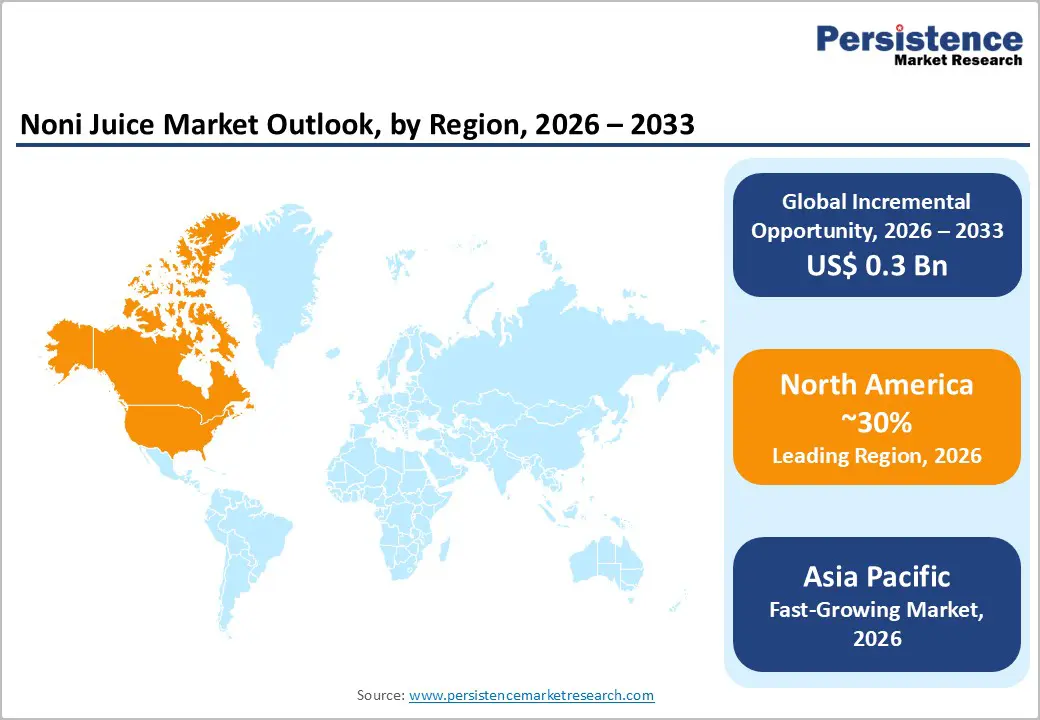
- Leading Region: North America, accounting for approximately 30% of total revenue, driven by its well-established dietary supplement industry, robust retail and e-commerce distribution networks, and high consumer awareness of functional beverages.
- Fastest-Growing Region: Asia Pacific, driven by the local cultivation of Morinda citrifolia, lower production costs, increasing middle-class demand for functional beverages, and the expansion of export-oriented powders and concentrate products.
- Leading Product Type: The organic segment, capturing roughly 62% of the total share in 2026, is driven by advancements in fermentation techniques, increased adoption of sustainable packaging solutions, and rigorous certification requirements that strengthen its premium appeal within regulated nutraceutical and wellness distribution channels.
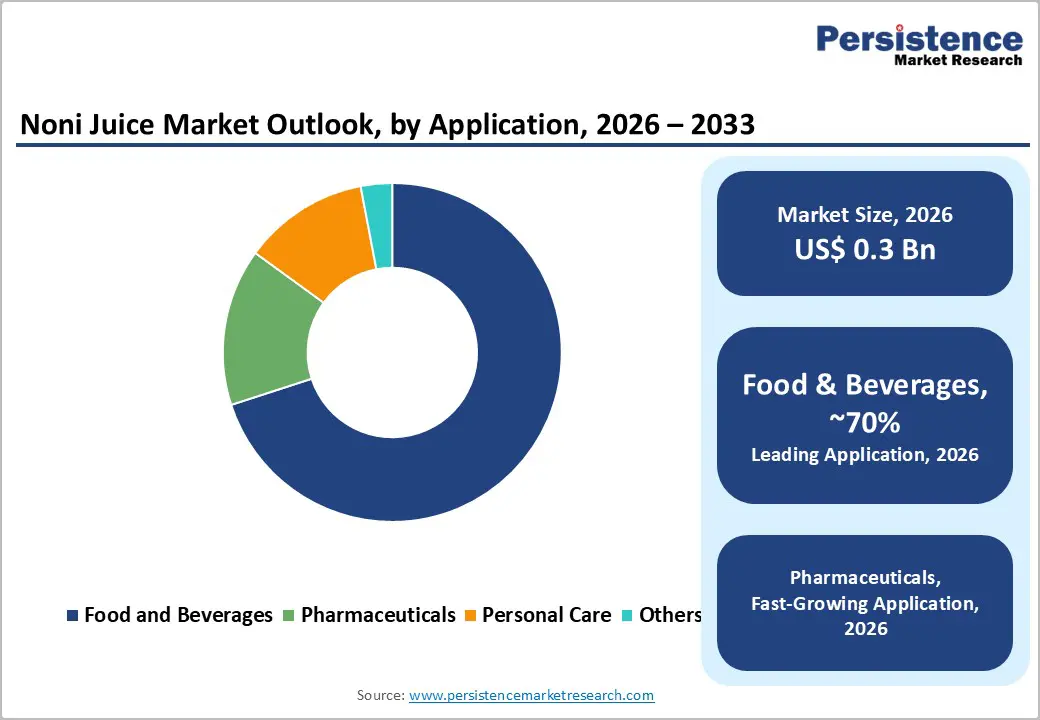
- Leading Application Type: The food and beverage segment, accounting for around 70% of total share, is driven by increasing demand for clean-label functional drinks, wellness shots, and nutraceutical blends featuring complementary ingredients such as turmeric and ashwagandha, supporting premium positioning.
| Key Insights | Details |
|---|---|
|
Noni Juice Market Size (2026E) |
US$0.3 Bn |
|
Market Value Forecast (2033F) |
US$0.6 Bn |
|
Projected Growth (CAGR 2026 to 2033) |
10.4% |
|
Historical Market Growth (CAGR 2020 to 2025) |
7.0% |
Market Factors - Growth, Barriers, and Opportunity Analysis
Growth Analysis - Structural Shift Toward Organic and Natural Ingredients
The growth of the market is being driven by a broad industry shift towards organic and natural ingredients across the food, nutraceutical, and personal care sectors. As consumers become more conscious of ingredient sourcing, transparency in processing, and the health benefits of products, there is an increasing demand for plant-based and minimally processed options. Noni juice, derived from Morinda citrifolia, aligns naturally with these trends, supporting clean-label products and traditional wellness practices. Many functional beverage brands are combining noni with ingredients such as turmeric, ginger, and vitamin C to create immunity-boosting drinks that are marketed as preservative-free and organically sourced. Likewise, dietary supplement companies are incorporating certified organic noni concentrates into capsules and tonics, emphasizing digestive and antioxidant support.
This structural shift supports steady, long-term market demand rather than short-term trends. As a result, manufacturers can make significant investments in organic farming, traceability systems, and advanced extraction technologies. In Southeast Asia, export-focused processors are adopting contract farming models to ensure a consistent organic noni supply for North American brands. This integration strengthens supply chain reliability, boosts regulatory compliance, and solidifies noni juice’s position as a resilient, value-added ingredient within the expanding natural products market.
Surge in Preventive Health and E-Commerce Expansion
The growing shift toward preventive healthcare is a major driver of market demand. As health-conscious consumers prioritize immunity support, digestive health, and overall wellness, the inclusion of noni juice derived from Morinda citrifolia is accelerating in functional wellness products. Data from the National Center for Complementary and Integrative Health reveals that nearly 38% of U.S. adults use complementary health approaches, highlighting a strong consumer interest in plant-based remedies. This trend is fueling the adoption of organic noni in dietary supplements, herbal tonics, and ready-to-drink (RTD) immunity beverages. For example, U.S. wellness brands are increasingly blending noni with turmeric and ginger in daily immunity shots marketed as rich in antioxidants and free of preservatives.
The rapid growth of e-commerce is enhancing the accessibility and reach of noni-based products. With approximately 35% of health beverage purchases now taking place online, direct-to-consumer brands can distribute certified organic noni concentrates and capsules nationwide. E-commerce platforms allow smaller botanical brands to educate consumers about ingredient sourcing and organic certification, bolstering their premium positioning. This digital distribution model also reduces reliance on traditional retail, improves profit margins, and supports recurring subscription sales. Together, the rising focus on preventive health and the expansion of online sales channels are reinforcing long-term demand growth for noni-based wellness products.
Barrier Analysis - Supply Chain Variability and Raw Material Consistency
Supply chain variability and raw material inconsistency pose significant challenges in the market, as product quality is closely tied to agricultural conditions. The fruit of Morinda citrifolia is highly sensitive to factors such as rainfall patterns, soil quality, and harvest timing. For example, excessive monsoon rains in regions such as India or Indonesia can dilute the fruit’s concentration, affecting bioactive compounds and altering taste. Early harvesting to meet export deadlines may also reduce antioxidant content, while inconsistent fermentation processes can result in variations in aroma and color. These fluctuations complicate the formulation of functional beverages and nutraceutical supplements, where consistent potency and sensory characteristics are crucial for regulatory compliance and brand reputation.
These challenges lead to sourcing uncertainties and higher production costs. For instance, North American beverage manufacturers sourcing noni concentrate from various Southeast Asian suppliers may encounter batch-to-batch inconsistencies, requiring additional testing and blending to maintain quality. Port delays and poor cold-chain management can further degrade the raw material. Smaller processors, lacking advanced quality control, struggle to meet international standards, limiting scalability. To address these risks, many companies are adopting long-term supplier contracts, contract farming, and centralized processing hubs.
Quality Standardization Gaps
Quality standardization gaps are a significant barrier in the market, especially where cultivation relies on smallholder farming systems. The fruit of Morinda citrifolia requires controlled ripening and timely processing to ensure consistent taste, color, and bioactive content. However, many small farms lack uniform harvesting and fermentation protocols, leading to batch-to-batch variability. For example, ready-to-drink (RTD) beverage manufacturers often struggle to maintain consistent flavor profiles when sourcing noni concentrate from different villages. Indonesian exporters supplying U.S. nutraceutical firms may face rejection rates of up to 10% due to deviations in microbial standards, moisture levels, or active-ingredient concentrations. These inconsistencies increase testing, blending adjustments, and compliance costs for processors.
Climate volatility compounds this issue. Irregular rainfall and temperature fluctuations in Southeast Asia heighten cultivation risks, raising input costs by an estimated 12%. Prolonged monsoons, for example, can lower fruit quality and reduce extraction yields. Smaller processors, lacking advanced quality control infrastructure, struggle to absorb these rising costs, limiting scalability. As a result, vertically integrated suppliers or those using contract farming models are better positioned to meet consistent export-grade standards.
Opportunity - Alignment with Preventive Health and Wellness Positioning
The market is uniquely positioned to capitalize on the growing demand for preventive health and wellness products across the food, beverage, and nutraceutical industries. Derived from Morinda citrifolia, noni juice is widely recognized for its immune support, digestive benefits, and overall vitality. For example, functional beverage brands are increasingly promoting daily wellness shots that combine noni with ingredients such as vitamin C, turmeric, and probiotics to boost immune resilience. Similarly, nutraceutical companies are incorporating noni extract into capsules and tonics to support antioxidant activity and gut health. These applications focus on daily preventive use rather than treatment claims, allowing brands to maintain regulatory compliance while leveraging clean label and plant-based positioning to command premium pricing.
From an opportunity perspective, the focus on preventive health drives the integration of noni into broader formulations, rather than standalone consumer demand. Supplement manufacturers often blend noni with other botanicals in holistic wellness products, broadening its appeal without requiring extensive consumer education. Personal care brands are also incorporating noni into serums for skin vitality and environmental protection. This embedded use of noni boosts demand stability, fosters long-term supplier relationships, and secures its place in the ongoing innovation of wellness-focused products.
E-Commerce and Direct-to-Consumer Channels to Fuel Market Growth
The expansion of e-commerce and direct-to-consumer (DTC) channels is creating strong growth momentum in the noni juice market, particularly for premium organic variants derived from Morinda citrifolia. Digital platforms allow wellness brands to launch high-margin noni tonics through subscription-based models, ensuring recurring monthly revenue and stronger customer retention. This approach mirrors the success seen in adaptogen beverage categories, where online sales have grown by approximately 25% year-over-year. For example, U.S. based botanical supplement brands now offer organic noni concentrate bundled with turmeric and elderberry in monthly immunity packs, marketed through targeted social media campaigns and influencer partnerships.
Strategic collaboration with major platforms such as Amazon further expands product visibility among urban millennials and health-conscious consumers who prioritize preventive wellness routines. Online storefronts enable brands to highlight certifications, sourcing transparency, and lab test results key decision factors for premium buyers. Subscription auto-renewal models stabilize demand and improve inventory forecasting compared to traditional retail channels. DTC sales also reduce dependency on intermediaries, improving profit margins and enabling personalized marketing strategies. Together, digital commerce and recurring purchase models are strengthening demand resilience and accelerating premiumization within the noni juice segment.
Category-wise Analysis
Product Type Insights
The organic segment is projected to lead, accounting for approximately 62% of the total market share in 2026. Its strong position is supported by ongoing fermentation innovations, the adoption of eco-friendly packaging, and stricter certification standards that reinforce premium positioning within regulated nutraceutical channels. Derived from Morinda citrifolia, organic noni juice is increasingly available in aged or fermented formats and is often blended with organic grape or pomegranate juices to enhance palatability while maintaining USDA Organic or EU Organic certification. Leading market participants are leveraging certified sourcing and transparency to strengthen brand value. For example, Tahitian Noni® (NewAge) emphasizes traditional cultivation practices supported by traceable certification systems, while Healing Noni promotes farm-to-table production in Hawaii to justify premium pricing. Pura Veda focuses on high-potency fermented concentrates, and Apollo Noni integrates organic noni into Ayurvedic formulations, frequently supported by Halal and Kosher certifications along with blockchain-enabled supply chain transparency.
The natural segment is expected to be the fastest-growing category, driven by greater availability of raw materials and fewer certification requirements. Manufacturers, particularly in the Asia Pacific, often use conventionally cultivated noni concentrate in blended functional beverages combined with ingredients such as mango, pineapple, or aloe vera to improve taste and affordability. This format is especially prevalent in high-volume ready-to-drink (RTD) wellness products distributed through supermarkets and online channels. Lower production costs and flexible sourcing enable rapid scalability, positioning natural noni juice as an attractive option for mass-market functional beverages and flavored health drink applications.
Application Type Insights
The food and beverage segment is projected to lead the market, accounting for approximately 70% of the total share in 2026. Growth is primarily driven by rising demand for clean-label functional beverages, wellness shots, and nutraceutical blends that incorporate complementary ingredients such as turmeric and ashwagandha, enabling premium product positioning. Advanced processing technologies, including cold-pressed extraction and flash pasteurization, help preserve key bioactive compounds, while flavor-masking techniques and controlled fermentation processes improve palatability and consumer acceptance. Regulatory oversight by the European Food Safety Authority, U.S. Food and Drug Administration, and Food Safety and Standards Authority of India has strengthened quality benchmarks, enhancing consumer confidence and limiting the presence of substandard suppliers. The concentration of raw material sourcing in the South Pacific, combined with premium origin branding and rising demand from aging populations across Asia, continues to support market expansion. Companies such as Morinda and Puna Noni are leveraging supply chain transparency and digital-first distribution strategies to capitalize on these structural growth drivers.
The pharmaceutical segment is emerging as the fastest-growing application area, driven by noni’s extensive composition of over 200 bioactive compounds and increasing preference for plant-based therapeutic solutions amid rising chronic disease incidence. Companies such as Morinda (NewAge) are advancing R&D-driven Tahitian Noni® formulations, while Apollo Noni focuses on Ayurvedic concentrates and Amrith Noni develops specialized joint-health products. Other players, including Kapiva and La Grande Herbs, are broadening immune-support offerings. Segment growth is further supported by synergistic nutraceutical combinations and ongoing research into nanoparticle-based delivery systems designed to enhance bioavailability and targeted therapeutic efficacy.
Regional Insights
North America Noni Juice Market Trends
North America is projected to maintain a leading position, accounting for approximately 30% of total revenue in 2026. This dominance is supported by the rapid expansion of e-commerce channels, with online sales increasing in response to influencer-driven “gut health” trends across social media platforms. Ongoing mergers and acquisitions are strengthening market consolidation, as large wellness conglomerates acquire niche noni brands to broaden their natural and functional product portfolios.
A well-defined regulatory environment further reinforces regional leadership. Oversight by the U.S. Food and Drug Administration (FDA), along with California’s stringent sustainable packaging requirements, is accelerating the transition from plastic packaging to recyclable glass and aluminum formats. These regulatory and sustainability initiatives align with growing consumer demand for clean-label and environmentally responsible products. For example, NewAge (Tahitian Noni) emphasizes lifestyle-oriented branding strategies, while Healing Noni highlights farm-direct sourcing and supply chain transparency to appeal to health-conscious consumers.
Market leadership is further reinforced by the Hawaii-to-mainland supply chain, which supports strong “Made in USA” branding, streamlined domestic distribution, and regulatory alignment. Research initiatives undertaken by North American universities exploring the functional properties of noni contribute to product development and scientific substantiation. Brands such as Vimergy focus on premium wellness formulations, while Dynamic Health Laboratories target broader retail and value-oriented segments. Emerging trends such as ethnobotanical tourism, premium pet nutraceuticals, and alkaline diet–inspired product positioning are expanding niche yet high-value demand across the region.
Europe Noni Juice Market Trends
Europe is expected to remain a stable and significant market for noni juice, supported by evolving regulatory standards and growing demand for premium organic products. The expansion of private-label organic noni offerings through major pharmacy chains such as Boots and Rossmann is strengthening retail penetration. Post-Brexit divergence in organic standards from the EU Bio-Leaf framework has also increased the need for dual certification for products distributed across the U.K. and EU markets, adding complexity but reinforcing quality assurance standards.
Noni juice derived from Morinda citrifolia holds novel food authorization under the European Food Safety Authority (EFSA), requiring suppliers to comply with strict safety regulations, ISO certifications, and GMP-based traceability systems. European importers typically mandate comprehensive documentation, including cultivation records and pesticide-residue testing, before approving concentrates. These requirements reflect the region’s precautionary regulatory approach and long-standing apothecary and herbal medicine traditions.
Market demand in Europe remains steady across functional beverages, organic supplements, and clean-label beauty products. Brands such as Schoenenberger focus on pharmaceutical-grade fresh plant juices, while Pura Veda targets premium segments in France and the Benelux region with fermented variants. Although overall growth is moderate compared to Asia Pacific, sustainability regulations, rising demand for alcohol-free adaptogenic products, and the convergence of nutraceutical and cosmetic applications continue to reinforce Europe’s position as a quality-driven and regulation-oriented market.
Asia Pacific Noni Juice Market Trends
Asia Pacific is projected to be the fastest-growing region, driven by increasing raw material exports, particularly from Indonesia to the European Union, along with competitive labor costs and expanding Halal-certified production under regulatory authorities such as JAKIM and MUI. These factors position Asia Pacific as a strategic supply base, especially for Middle Eastern markets seeking certified functional and wellness beverages.
Manufacturers in the region are strengthening operational efficiency through vertically integrated and factory-at-farm models. Companies such as Apollo Noni and Kapiva process Morinda citrifolia within hours of harvest, preserving antioxidant potency, minimizing oxidation during transportation, and reducing overall production costs. This approach enhances product quality while improving supply chain economics.
Rising urbanization and increasing lifestyle-related stress in major cities such as Jakarta and Delhi are further driving demand for detox-focused and immunity-supporting wellness products. Direct-selling companies such as DXN leverage extensive distribution networks to penetrate both rural and urban markets, while ingredient suppliers such as Bionap provide standardized extracts for international pharmaceutical and functional beverage applications. Regional familiarity with noni in traditional practices, growing anti-pollution positioning in marketing strategies, and reverse-export models, where locally processed products are sold globally, reinforce Asia Pacific’s role as the primary growth engine of the global noni juice industry.
Competitive Landscape
The global noni Juice market is moderately fragmented, with leadership concentrated among global and regional players such as Morinda, Tahitian Noni International, and Puna Noni. Additional prominent participants include Herbalife, Nature's Way, Noni Biotech, NutraGreen, AIDP, Sabinsa, and Xi'an Natural Field, which are active across branded juices, concentrates, extracts, and nutraceutical-grade noni ingredients. These companies shape market standards through proprietary processing technologies, strong sourcing networks, and quality-driven positioning that reinforces traceability and consumer trust.
Competitive differentiation is driven by origin-based branding, R&D-backed functional formulations, and vertical integration strategies spanning cultivation, extraction, and distribution. While some firms operate end-to-end models targeting retail and direct-to-consumer channels, others focus on B2B ingredient supply and therapeutic wellness solutions. The landscape is further influenced by strategic partnerships, selective acquisitions, and innovation in functional beverage delivery systems, supporting consolidation while enabling niche specialization within the expanding global wellness ecosystem.
Key Industry Developments:
- In January 2025, CIMG Inc. launched its new Maca Noni beverage, a plant-based energy drink combining maca and noni extracts designed to relieve physical fatigue and enhance immunity. This product won the 2024 China Annual Most Innovative New Consumer Brand Award by iiMedia Research.
Companies Covered in Noni Juice Market
- Tahitian Noni
- Nature's Way
- Noni BioTech
- Morinda
- NutraGreen
- AIDP
- Sabinsa
- Xi'an Natural Field
- Givaudan Naturex
Frequently Asked Questions
The global noni juice market is expected to be US$0.3 billion in 2026.
The noni juice market is primarily driven by rising consumer preference for natural, plant-based health products and increasing demand for functional beverages.
The noni juice market is poised to witness a CAGR of 10.4% from 2026 to 2033.
Key opportunities include expansion into personal care and cosmetic applications and product innovation, such as flavored or fortified formulations.
Key players include Tahitian Noni, Morinda, Noni BioTech, Sabinsa, and Xi'an Natural Field.


