




- Medical Devices
- Medical Copper Tubing Market
Medical Copper Tubing Market Size, Share, Growth, and Regional Forecast, 2026 - 2033
Medical Copper Tubing Market by Product Type (Tubing Type, Fittings, Bracketing), Application, End-user, and Regional Analysis from 2026 - 2033

Medical Copper Tubing Market Share and Trends Analysis
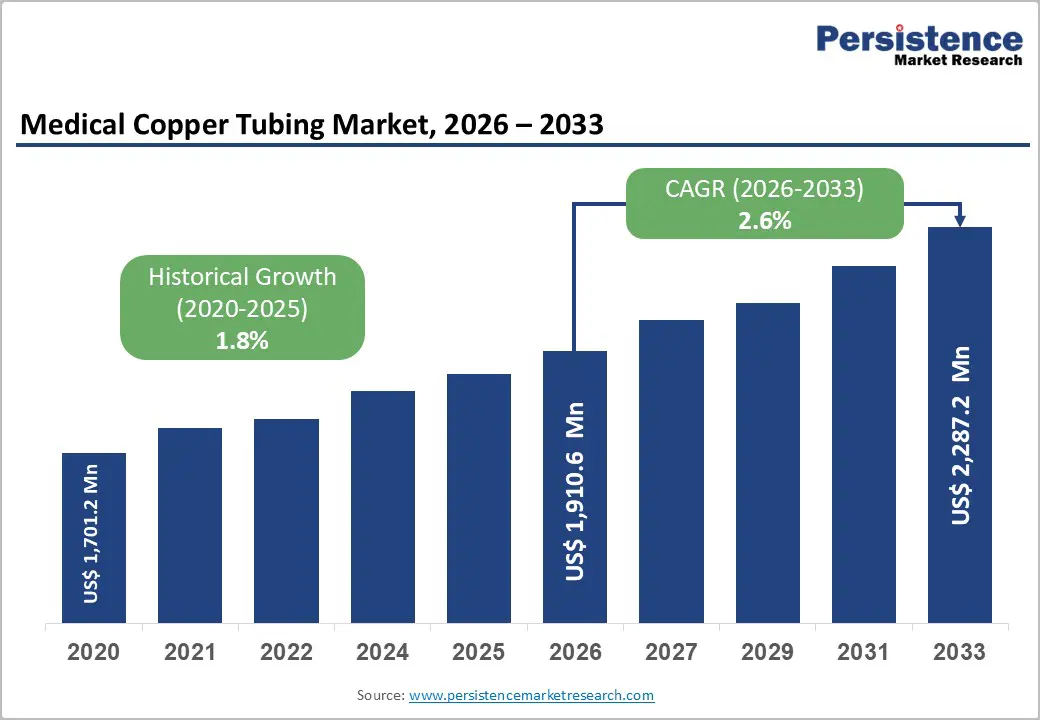
The global medical copper tubing market size is likely to be valued at US$1,910.6 million in 2026 to US$ 2,287.2 million by 2033. The market is projected to record a CAGR of 2.6% during the forecast period from 2026 to 2033.
Based on the increasing demand for reliable and safe medical gas and fluid distribution systems in hospitals, clinics, and research facilities, the market is expected to witness a positive trajectory in the coming years. Copper tubing is preferred for its durability, corrosion resistance, and excellent thermal conductivity, making it ideal for oxygen, nitrous oxide, and HVAC applications. The market is driven by the expansion of healthcare infrastructure, rising surgical procedures, and stricter safety regulations.
Key Industry Highlights
- Copper tubing is preferred for its corrosion resistance, longevity, and high thermal conductivity, ensuring safe and consistent performance in medical gas and fluid distribution.
- The global medical copper tubing market size is likely to be valued at US$1,910.6 million in 2026 and US$2,287.2 million by 2033. The market is projected to grow at a CAGR of 2.6% from 2026 to 2033. drive significant demand for tubing, especially in hospitals and surgical centers that require strict safety standards.
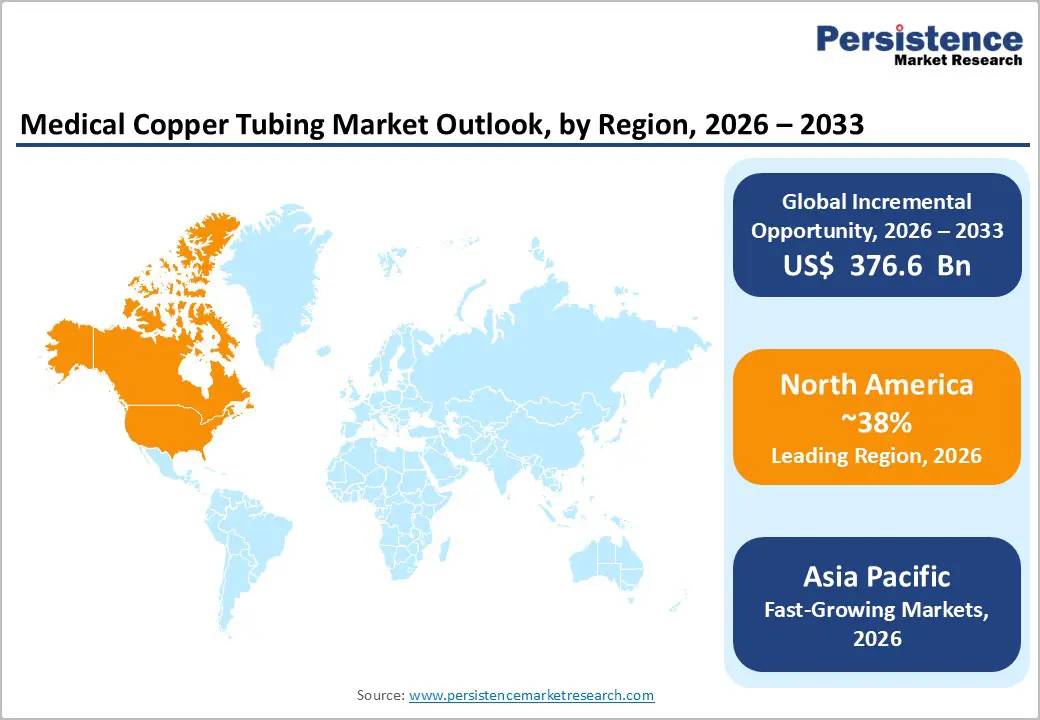
- North America leads the market due to developed healthcare systems, while Asia Pacific is the fastest-growing region, fueled by rapid healthcare infrastructure expansion.
- Growth in ambulatory surgical centers, nursing homes, and home healthcare increases demand beyond traditional hospitals and laboratories.
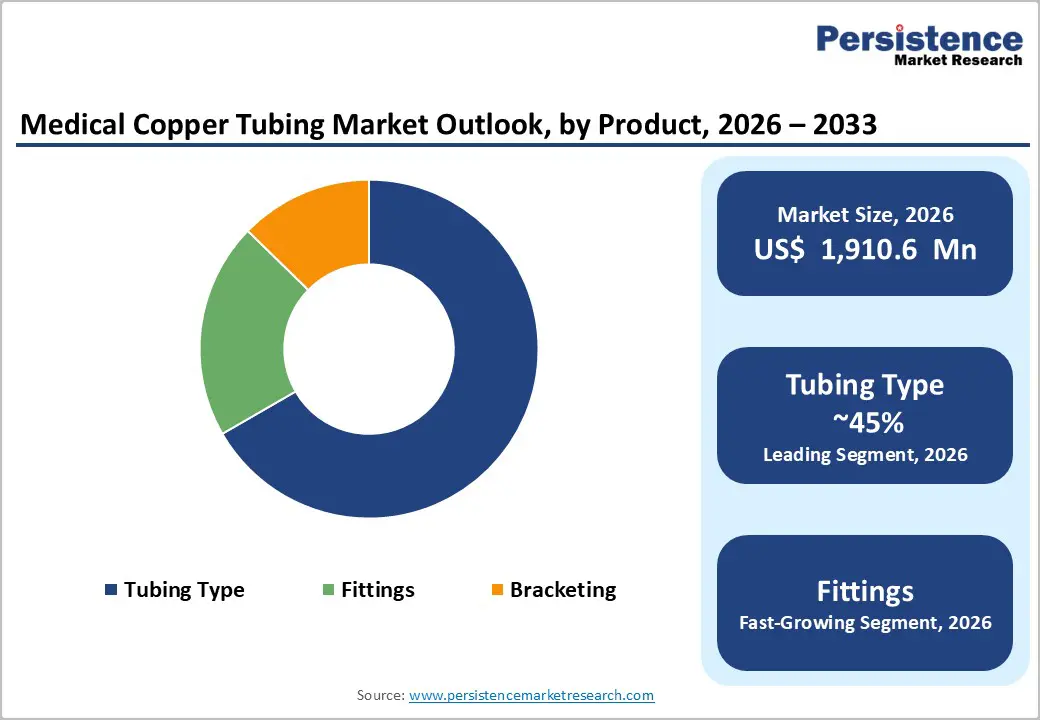
- Leading Product: Tubing itself is the main material used in medical gas, oxygen, and HVAC systems. Without the tubes, fittings, and brackets, the system cannot function.
| Key Insights | Details |
|---|---|
|
Medical Copper Tubing Market Size (2026E) |
US$1,910.6 Mn |
|
Market Value Forecast (2033F) |
US$2,287.2 Mn |
|
Projected Growth (CAGR 2026 to 2033) |
2.6% |
|
Historical Market Growth (CAGR 2020 to 2025) |
1.8% |
Market Dynamics
Driver - Seamless Tubing Preference for Critical Systems
Seamless copper tubing has emerged as the preferred choice for critical medical gas systems, driving significant demand in the healthcare infrastructure sector. Unlike welded tubing, seamless copper tubes are manufactured without joints or seams, minimizing potential weak points that could lead to leaks or system failures. This characteristic is particularly important in medical environments, where the uninterrupted and safe delivery of gases such as oxygen, nitrous oxide, medical air, and vacuum is essential for patient care. Hospitals, surgical centers, and intensive care units rely heavily on these high-integrity pipelines to ensure consistent performance and avoid any risk to patient safety. The inherent strength and durability of seamless copper tubing also allow it to withstand high pressure, temperature fluctuations, and corrosion over extended periods, reducing maintenance requirements and operational disruptions.
Furthermore, seamless tubes facilitate smoother installation and reliable connections with fittings and accessories, making them a practical choice for both new constructions and facility upgrades. The emphasis on compliance with international safety standards, including ISO and ASTM certifications, further encourages healthcare providers to adopt seamless tubing over alternative materials. As medical facilities expand and modernize globally, the preference for seamless copper tubing in critical systems continues to grow, making it a central driver of the overall medical copper tubing market.
Restraints - Corrosion in Aggressive Environments
Copper is widely recognized for its excellent corrosion resistance, durability, and long service life, making it a preferred material for medical tubing in hospitals, clinics, and laboratories. However, despite its inherent resistance, copper tubing can still face challenges in particularly aggressive environments. Certain chemicals, acidic solutions, or high-humidity conditions can accelerate corrosion or cause localized degradation, especially in specialized laboratory or industrial healthcare settings. Over time, this can lead to leaks, contamination risks, and reduced system efficiency, potentially compromising the safety and reliability of medical gas and fluid delivery systems.
In specialized laboratories where copper tubing may come into contact with reactive chemicals, sterilization agents, or other corrosive substances, even minor degradation can affect the purity of gases such as oxygen or nitrous oxide. Additionally, areas with high moisture or extreme temperature fluctuations can promote surface oxidation, resulting in aesthetic changes and potential functional issues. Addressing these challenges often requires additional protective measures, such as coatings, insulation, or careful environmental control, which can increase installation and maintenance costs. Consequently, while copper remains a robust and preferred choice, its performance in aggressive environments requires careful monitoring, preventive maintenance, and adherence to strict installation standards to ensure long-term reliability and patient safety.
Opportunity - Advanced Technologies and Emphasis on Regenerative Medicine
Integration with Smart Healthcare Facilities presents a significant growth opportunity for the medical copper tubing market. As hospitals and healthcare centers increasingly adopt digital technologies and smart infrastructure, there is a rising demand for IoT-enabled and sensor-integrated copper tubing systems. These advanced systems enable continuous monitoring of critical parameters, including gas flow, pressure, and leakage in medical gas pipelines, ensuring safety, efficiency, and regulatory compliance. Real-time data from smart tubing networks can be integrated with hospital management systems, enabling predictive maintenance, early anomaly detection, and rapid response to potential hazards. This reduces the risk of service disruptions and enhances patient safety, particularly in high-dependency units such as intensive care, operating theaters, and specialized laboratories.
Moreover, hospitals seeking smart facility certifications or compliance with international safety standards prefer technologically advanced piping solutions, creating a premium market segment. The integration of sensors and IoT also enables energy-efficient operations by optimizing gas use and reducing waste, aligning with sustainability goals. Manufacturers and suppliers of copper tubing can leverage this trend by offering value-added, connected solutions that combine durability with digital monitoring capabilities, positioning themselves as partners in modernizing healthcare infrastructure. This convergence of traditional copper tubing with digital technology represents a high-tech, future-ready market segment with strong global growth potential.
Category-wise Analysis
By Product Insights
The Tubing Type segment accounts for the highest share in the medical copper tubing market because it represents the primary and most critical component of medical gas and fluid distribution systems. Hospitals, clinics, and laboratories rely heavily on copper tubing to deliver oxygen, nitrous oxide, medical air, and other essential gases safely and efficiently. The volume of tubing required for pipelines is significantly higher than the quantity of fittings or bracketing, making it the dominant revenue contributor.
Tubing also serves as the foundation for the entire system; without it, accessories such as fittings, elbows, tees, or support brackets cannot function. Additionally, copper tubing must meet strict standards for durability, corrosion resistance, and thermal conductivity, underscoring its importance in healthcare applications. Fittings and bracketing, while essential for installation and system support, are secondary products whose demand is directly tied to the amount of tubing used. This inherent dependency and the high-volume usage of tubing make the Tubing Type segment the largest and most valuable portion of the medical copper tubing market.
By Veterinary Hospital Insights
Hospitals account for the highest share in the medical copper tubing market because they represent the largest and most critical end-user of medical gas and fluid distribution systems. Hospitals require extensive networks of copper tubing for oxygen, nitrous oxide, medical air, vacuum, and HVAC applications to ensure continuous and safe patient care. Their operations are complex, high-volume, and run 24/7, driving demand for durable, corrosion-resistant, and reliable tubing solutions. The sheer scale of installations in multi-story hospital buildings, intensive care units, operating theaters, and specialized departments necessitates longer lengths of tubing than in other end-users.
In contrast, clinics, outpatient centers, and ambulatory surgical centers have smaller setups with limited gas and fluid systems, resulting in lower overall consumption. Home healthcare and nursing facilities, while growing, utilize decentralized and less complex systems. Research laboratories represent a niche segment with specialized applications and relatively small volume requirements. Therefore, due to scale, continuous use, and critical safety needs, hospitals dominate the market for medical copper tubing.
Regional Insights
North America Medical Copper Tubing Market Trends
North America remains a leading region in the medical copper tubing market, driven by advanced healthcare infrastructure, stringent regulatory standards, and high healthcare spending. The United States dominates the region, with hospitals accounting for the majority of copper tubing for medical gas systems, including oxygen, medical air, and vacuum delivery. Regulatory frameworks like ASTM B819 and CSA ensure high material quality and safety, while healthcare modernization projects and pipeline upgrades drive continuous demand.
Copper’s corrosion resistance and antimicrobial properties further enhance its adoption. Investments in new hospital construction, facility retrofits, and integration of advanced tubing technologies support steady market growth. Overall, strong infrastructure, rigorous safety standards, and ongoing modernization initiatives position North America, particularly the U.S., as a key market for medical copper tubing.
Asia Pacific Medical Copper Tubing Market Trends
Asia Pacific is emerging as a fast-growing region in the medical copper tubing market, driven by the rapid expansion of healthcare infrastructure and increasing government investments in China, India, and Southeast Asia. Rising urban populations and a growing middle class are fueling demand for new hospitals, clinics, and diagnostic centers, all of which require reliable medical gas and fluid distribution systems with durable copper tubing. National health initiatives and reforms, along with increasing private healthcare spending, support market growth.
Local manufacturing capacity improvements and efforts to meet international quality standards are further boosting the adoption of premium copper tubing products. As healthcare facilities proliferate and modernize, demand for medical copper tubing continues to accelerate, positioning the Asia Pacific as a key growth driver in the global market.
Market Competitive Landscape
The medical copper tubing market is highly competitive, driven by continuous product innovation, quality certifications, and strong distribution networks. Manufacturers focus on developing durable, corrosion-resistant, and technologically advanced tubing solutions, including pre-insulated and flexible variants, to meet the growing demand from hospitals and healthcare facilities. Competition is intensified by the need to comply with stringent regulatory standards and by the ability to offer customized solutions for diverse medical applications. Companies are investing in R&D, expanding regional presence, and strengthening supply chains to capture emerging markets. Price competitiveness, product reliability, and after-sales support remain key factors influencing market positioning and customer preference in this sector.
Key Industry Developments:
- In February 2025, Sebela Women's Health Inc., part of Sebela Pharmaceuticals, announced that the U.S. Food and Drug Administration (FDA) had granted approval of MIUDELLA® (copper intrauterine system) for the prevention of pregnancy in females of reproductive potential for up to three years. MIUDELLA was a next-generation, hormone-free, low-dose copper intrauterine device (IUD), marking the first such FDA approval in the United States in over 40 years.
Companies Covered in Medical Copper Tubing Market
- Mueller Industries, Inc.
- OmegaFlex Inc.
- Cambridge-Lee Industries LLC
- Lawton Tube Co. Ltd.
- Beacon Medaes
- UACJ Corporation
- Mandev Tubes
- Jiangyin Hehong Precision Technology Co., Ltd.
- Others
Frequently Asked Questions
The global medical copper tubing market is projected to be valued at US$1,910.6 Mn in 2026.
Copper’s corrosion resistance, long lifespan, and antimicrobial properties make it ideal for medical applications, ensuring patient safety and regulatory compliance.
The global market is poised to witness a CAGR of 2.6% between 2026 and 2033.
Rapid development of hospitals, clinics, and diagnostic centers in Asia Pacific, Latin America, and the Middle East drives new demand.


