




- Beauty & Personal Care
- Haircare Tools Market
Haircare Tools Market Size, Share, and Growth Forecast, 2025 - 2032
Haircare Tools Market By Product Type (Hairbrushes and Combs, Scalp Care Tools), Material Type (Plastic and Synthetic, Natural Bristle), Distribution Channel, End-user, and Regional Analysis for 2025 - 2032

Haircare Tools Market Size and Trends Analysis
The global haircare tools market size is likely to be valued at US$27.42 Bn in 2025 and is expected to reach US$40.12 Bn by 2032, growing at a CAGR of 5.6% during the forecast period from 2025 to 2032, driven by consumers increasingly focusing on hair health and maintenance. The market encompasses a wide range of products, including hairbrushes, combs, scalp massagers, dryers, and other tools designed to cleanse, condition, and protect hair.
Key Industry Highlights:
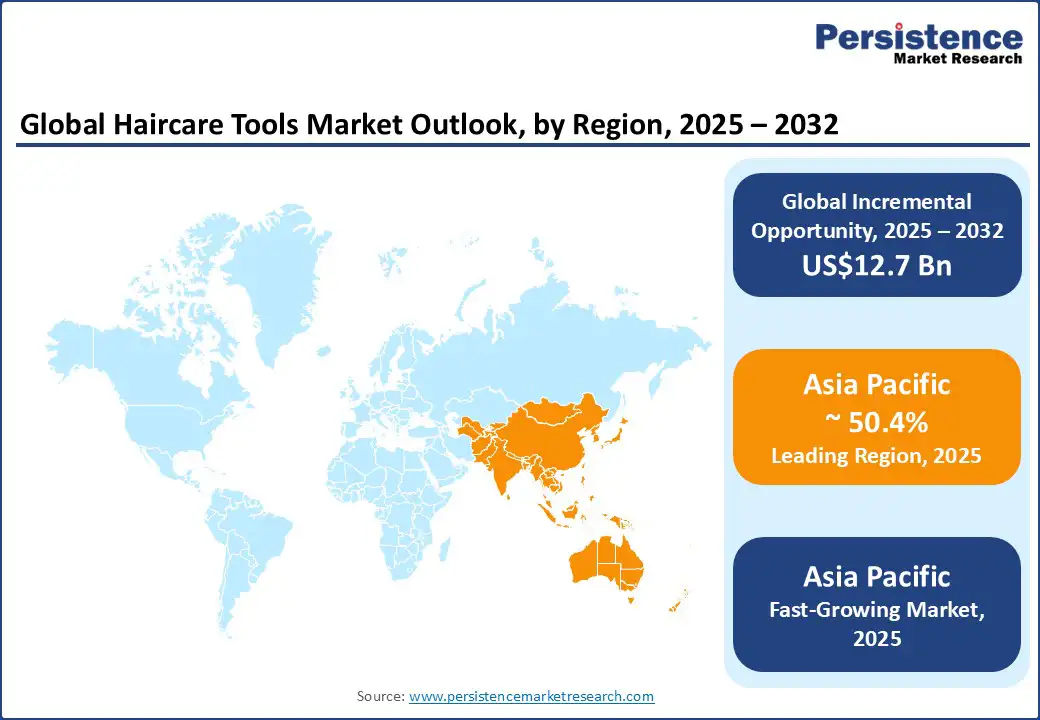
- Leading and Fastest-growing Region: Asia Pacific, accounting for approximately 50.4% of the global market share, driven by rising disposable incomes, urbanization, and demand for professional-grade tools.
- Investment Plans: L’Oréal’s acquisition of Color Wow to strengthen its portfolio in premium haircare and target frizz-control and curly hair care solutions.
- Dominant Product Type: Hairbrushes and combs hold an estimated 35.4% of the market, as they are widely adopted for daily grooming and essential hair maintenance.
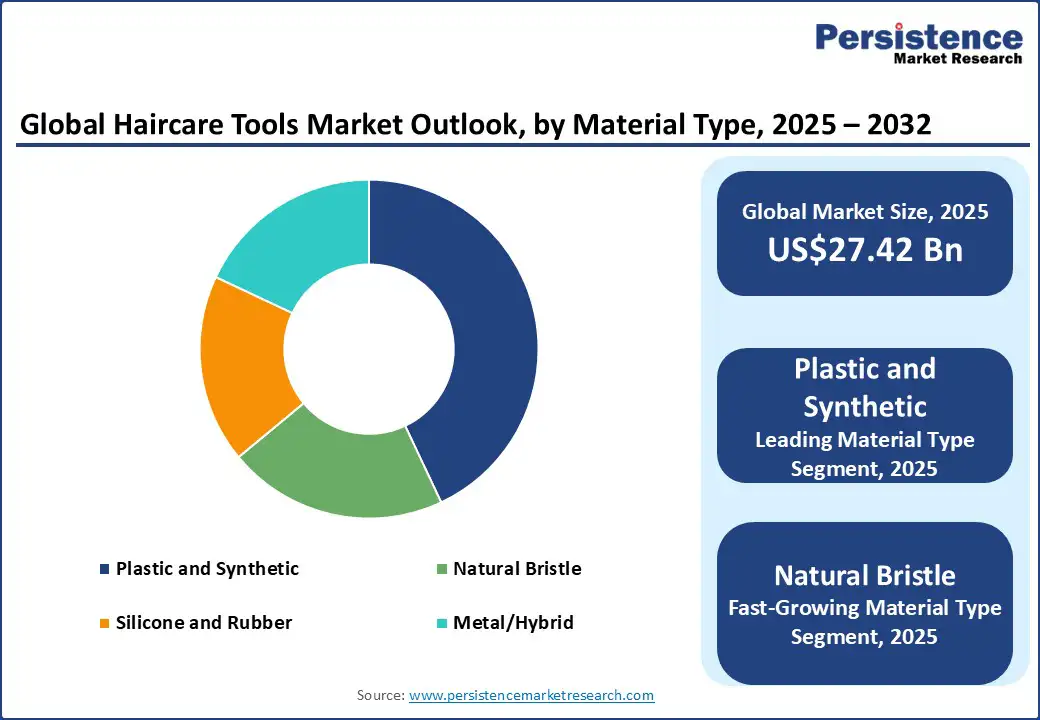
- Leading Material Type: The plastic and synthetic segment is leading with approximately 43.4% of the market share, preferred for affordability, durability, and versatility.
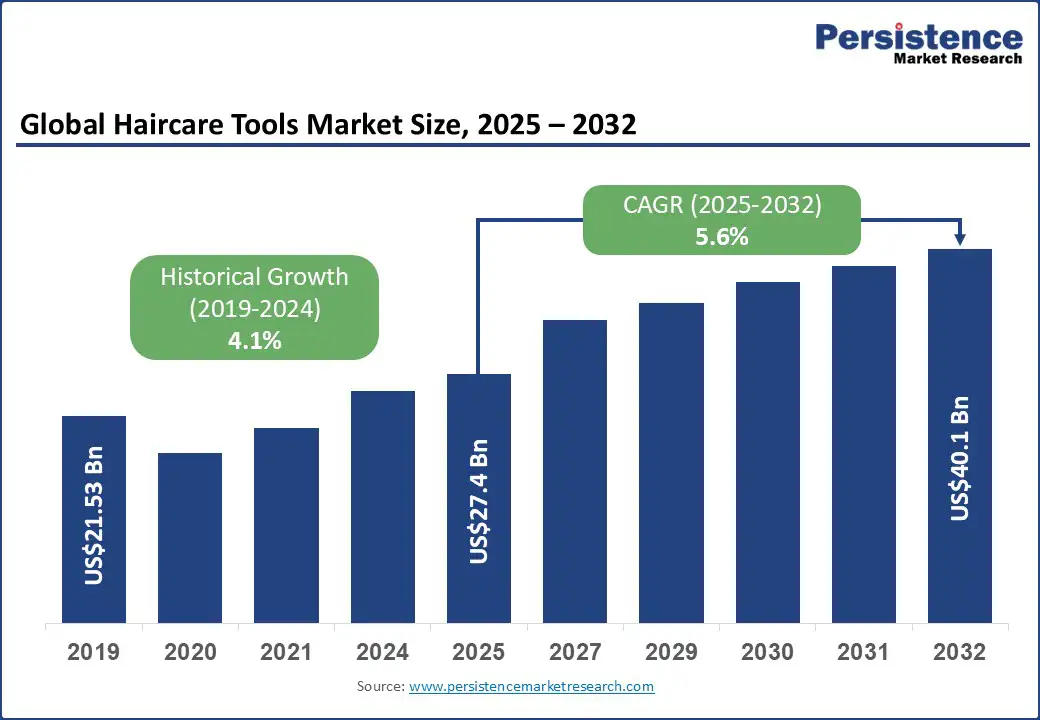
| Key Insights | Details |
|---|---|
| Haircare Tools Market Size (2025E) | US$27.42 Bn |
| Market Value Forecast (2032F) | US$40.12 Bn |
| Projected Growth (CAGR 2025 to 2032) | 5.6% |
| Historical Market Growth (CAGR 2019 to 2024) | 4.1% |
Market Factors - Growth, Barriers, and Opportunity Analysis
Premium Haircare Tools and Scalp Wellness Driving Market Growth
The haircare tools market is witnessing strong growth as consumers increasingly prioritize hair health and maintenance. High-quality, durable hairbrushes designed for specific hair types and needs are gaining traction, reflecting a shift toward products that contribute to overall hair wellness.
Brands such as Mason Pearson and La Bonne Brosse exemplify this trend by offering premium brushes crafted from superior materials, blending traditional grooming techniques with modern quality standards. This focus on performance and longevity is encouraging consumers to invest in tools that go beyond basic functionality.
Rising awareness of scalp health is shaping consumer behavior and expanding the market for specialized haircare tools. Products such as scalp massagers and gentle detangling combs are in demand as individuals seek to address issues such as dryness, oiliness, and dandruff while promoting circulation and relaxation.
This trend is driving innovation and adoption of tools that focus on holistic haircare, encouraging consumers to integrate them into their daily grooming routines. The resurgence of premium hairbrushes demonstrates a clear shift toward investing in tools that enhance hair longevity and overall health, moving away from disposable, low-quality alternatives toward products designed for long-term care.
Market Saturation and Consumer Caution Limiting Growth
The haircare tools market is influenced by shifting consumer behavior, particularly in developed regions where market saturation is prominent. Many consumers already own essential tools such as brushes, combs, and dryers, resulting in longer usage cycles and slower replacement rates.
This reduces the frequency of purchases, limiting overall market expansion. Price sensitivity further impacts growth, as consumers often prioritize affordable, functional options over premium or feature-rich tools unless clear value additions are offered.
Rapid product innovation and short life cycles also contribute to cautious consumer behavior. Frequent releases of new tools can overwhelm buyers, making them hesitant to adopt the latest offerings. Concerns over safety, particularly with heat-based haircare devices, heighten this caution, as improper use can lead to hair damage or minor injuries.
Together, these dynamics restrict aggressive growth in the market, emphasizing the need for brands to focus on differentiation, education, and product reliability to maintain consumer trust.
Scalp Wellness and Sustainable Tools Driving Market Potential
The increasing focus on scalp health is creating substantial opportunities within the market. Consumers are becoming more aware of the link between scalp wellness and overall hair vitality, driving demand for specialized tools such as scalp massagers and targeted brushes. These products not only promote relaxation but also stimulate blood flow and improve scalp condition, encouraging consistent use and higher engagement.
Rising consumer interest in eco-friendly and sustainable products is shaping market innovation. Tools made from bamboo, natural bristles, and other environmentally conscious materials are gaining traction among buyers who prioritize both performance and sustainability.
The natural bristle hairbrush segment, in particular, is experiencing steady growth as consumers seek products that align with their values of natural beauty and responsible consumption. By catering to these preferences, brands can capture niche markets and differentiate themselves in a competitive landscape.
The integration of technology into haircare tools is opening a promising avenue for market growth. Devices equipped with sensors, heat regulation, and app connectivity allow consumers to monitor hair condition and receive personalized care recommendations, creating a more interactive grooming experience.
Products such as ionic brushes and temperature-controlled dryers not only protect hair from damage but also optimize results based on individual hair types and needs. This trend is fueled by tech-savvy consumers seeking efficient, customized solutions at home, allowing brands to position themselves as innovators in advanced, science-driven haircare tools.
Category-wise Analysis
Product Type Analysis
Hairbrushes and combs are anticipated to dominate, holding an estimated 35.4% share for their essential role in daily hair maintenance. These tools are fundamental for detangling, smoothing, and reducing hair breakage, making them indispensable for consumers who prioritize hair health.
Their widespread availability, variety of designs for different hair types, and ability to deliver consistent results have cemented their leading position. Brands such as Tangle Teezer have revolutionized this category with innovative designs that offer painless detangling and improved hair care, demonstrating why hairbrushes remain the dominant product type.
Scalp care tools represent the fastest-growing segment as consumers increasingly recognize the link between scalp wellness and overall hair vitality. Products such as scalp massagers and exfoliating brushes are gaining popularity for their benefits in stimulating blood circulation, promoting hair growth, and enhancing relaxation.
Rising consumer interest in holistic haircare routines and wellness-oriented grooming practices is driving the adoption of these tools. Their growth reflects a shift toward specialized, health-focused products that go beyond basic grooming.
Material Type Analysis
Plastic and synthetic materials are projected to lead in 2025, approximately with 43.4% share due to their affordability, durability, and versatility. Brushes and combs made from these materials are easy to manufacture, widely available, and suitable for a range of hair types and textures.
Their practicality and accessibility make them a preferred choice for the majority of consumers, maintaining their leading market share. Brands such as Olivia Garden leverage synthetic and hybrid materials to provide professional-quality brushes that combine durability with performance, reinforcing the dominance of this segment.
Natural bristle tools are the fastest-growing segment as consumer demand for eco-friendly and sustainable products continues to rise. Brushes made from natural fibers, such as boar bristles, are valued for their gentle detangling, scalp stimulation, and superior hair care benefits.
Growing awareness of sustainable grooming practices and the desire for premium, environmentally conscious products are driving adoption in this category. Companies such as Mason Pearson and La Bonne Brosse have capitalized on this trend, offering high-quality natural bristle brushes that appeal to health- and eco-conscious consumers.
Regional Insights
Asia Pacific Haircare Tools Market Trends
Asia Pacific is projected to be the fastest-growing region with a market share of 50.4% in 2025, supported by a combination of rising disposable incomes, urbanization, and evolving consumer preferences. China, as the largest market within the region, has seen the rapid adoption of innovative grooming products and professional-grade tools.
Brands are expanding their reach through e-commerce platforms and social media campaigns that educate consumers about hair care and scalp health. For example, T3 Micro and Panasonic have successfully introduced products such as ionic hairbrushes and scalp massagers, which appeal to consumers seeking healthier, damage-free hair care routines.
India represents another key growth driver in the Asia Pacific market. The rising popularity of at-home haircare and salon-inspired products has created significant demand for professional-grade hair dryers, combs, and treatment tools designed for thicker and textured hair types. Brands are responding with tailored offerings such as temperature-controlled straighteners and scalp care devices designed to address common hair concerns such as dandruff and hair thinning. In addition,
Japanese consumers continue to favor precision-engineered tools from both domestic and global brands, including Panasonic and Dyson, emphasizing durability, performance, and advanced features. The combination of high consumer interest and the increasing influence of beauty trends from Western markets has established Asia Pacific as a highly dynamic and fast-expanding segment of the global haircare tools industry.
North America Haircare Tools Market Trends
In North America, the market is increasingly defined by innovation and a shift toward premium products that combine functionality with health benefits. The U.S., as the leading market in the region, has witnessed several notable developments reflecting this trend. Brands are focusing on high-performance tools that promote hair health, durability, and ease of use.
For example, Dyson has expanded its portfolio with hairdryers and straighteners featuring intelligent heat control technology and air multiplier systems, which prevent excessive heat exposure and reduce hair damage. Consumers are increasingly drawn to such advanced features, demonstrating a preference for products that go beyond basic grooming to provide long-term care.
Another notable development is GHD’s AI-powered tool, CurlFinder, which offers personalized product recommendations based on hair type and texture. This product exemplifies the growing demand for technology-integrated haircare tools that deliver a salon-like experience at home.
L’Oréal has also strengthened its position in the market through strategic acquisitions, including the purchase of Color Wow, a brand focused on frizz control and curly hair solutions. This move aligns with the rising consumer interest in specialized products that cater to unique hair care needs.
Europe Haircare Tools Market Trends
Europe’s market is characterized by steady growth and a strong focus on sustainability, innovation, and strategic acquisitions. Germany, as a leading market, has seen an increasing demand for professional-grade and eco-friendly products.
Consumers are seeking high-quality haircare tools that are durable, environmentally responsible, and designed to improve hair health. Brands are responding by introducing tools made from natural materials such as bamboo and boar bristles, combined with ergonomic and innovative designs to enhance hair care experiences.
The U.K. illustrates another key trend, the integration of sustainability with technological innovation. Brands have introduced haircare tools that are energy-efficient, made from recycled materials, and designed for extended durability. Strategic acquisitions also play a major role in shaping market dynamics.
For example, PAI Partners’ acquisition of Beautynova, an Italian professional haircare group with brands such as Medavita and Urban Tribe, highlights the importance of expansion and consolidation to strengthen the market presence. This acquisition allows Beautynova to accelerate its growth in both European and U.S. markets, demonstrating the region’s focus on combining product innovation with strategic business development to remain competitive.
Competitive Landscape
The global haircare tools market is highly competitive, characterized by the presence of established multinational brands alongside emerging niche players focusing on specialized and eco-friendly products. Leading companies such as Dyson, Panasonic, GHD, L’Oréal, Mason Pearson, and Olivia Garden dominate the market with strong brand recognition, extensive distribution networks, and continuous innovation in product technology and design.
Companies are increasingly differentiating themselves through features such as AI-driven personalization, scalp health-focused tools, and sustainable materials to meet evolving consumer preferences. Strategic acquisitions, partnerships, and product launches are common strategies used to expand market presence, enhance technological capabilities, and capture both mature and fast-growing regional markets.
Emerging local brands in Asia Pacific and Europe are also gaining traction by offering affordable, high-performance tools tailored to regional hair types and consumer needs, intensifying competition across all segments.
Key Industry Highlights
- In August 2025, GHD introduced CurlFinder, an AI-driven tool designed to personalize product recommendations based on users’ hair type, curl preferences, and desired style. This launch reflects GHD's strategy to integrate AI across its operations, enhancing product innovation and consumer engagement.
- In June 2025, L'Oréal announced that it had signed an agreement to acquire Color Wow, a professional haircare brand known for its innovative products targeting frizz control and care for curly hair. This acquisition aligns with L'Oréal's strategy to expand its presence in the rapidly growing premium hair products market.
Companies Covered in Haircare Tools Market
- Dyson
- Panasonic Corporation
- Conair Corporation
- Philips
- Revlon Inc.
- Wahl Clipper Corporation
- GHD (Good Hair Day)
- L’Oréal
- Braun GmbH
- Helen of Troy Limited
- Remington Products Company
- Mason Pearson
- Olivia Garden
- Tangle Teezer
- Denman International Ltd.
- Moroccanoil
- BabylissPRO
- Paul Mitchell
- Beurer GmbH
- Amika
Frequently Asked Questions
The haircare tools market size in 2025 is estimated at US$27.42 Bn.
By 2032, the haircare tools market is projected to reach a value of US$40.12 Bn.
Key trends include the rising adoption of scalp care tools, demand for eco-friendly and natural bristle brushes, integration of AI and sensor technology for personalized grooming, and expansion of premium and professional-grade products.
Hairbrushes and combs remain the leading segment due to their everyday utility and essential role in hair maintenance.
The haircare tools market is expected to grow at a CAGR of 5.6% from 2025 to 2032, driven by innovation in sustainable materials and technology-enabled products.
Major players in the haircare tools market include Dyson, Panasonic, GHD, Mason Pearson, and Olivia Garden.


