




- Pharmaceuticals
- Fish Odor Syndrome Treatment Market
Fish Odor Syndrome Treatment Market Size, Share, and Growth Forecast, 2026 - 2033
Fish Odor Syndrome Treatment Market by Treatment Type (Antibiotics, Vitamin B12 Supplements, Dietary Management, Other Treatments), Application (Hospital Pharmacies, Retail Pharmacies, Online Pharmacies, Specialty Rare Disease Centers), End‑user (Adult Patients, Pediatric Patients, Healthcare Providers, Home Users), and Regional Analysis for 2026 - 2033

Fish Odor Syndrome Treatment Market Share and Trends Analysis
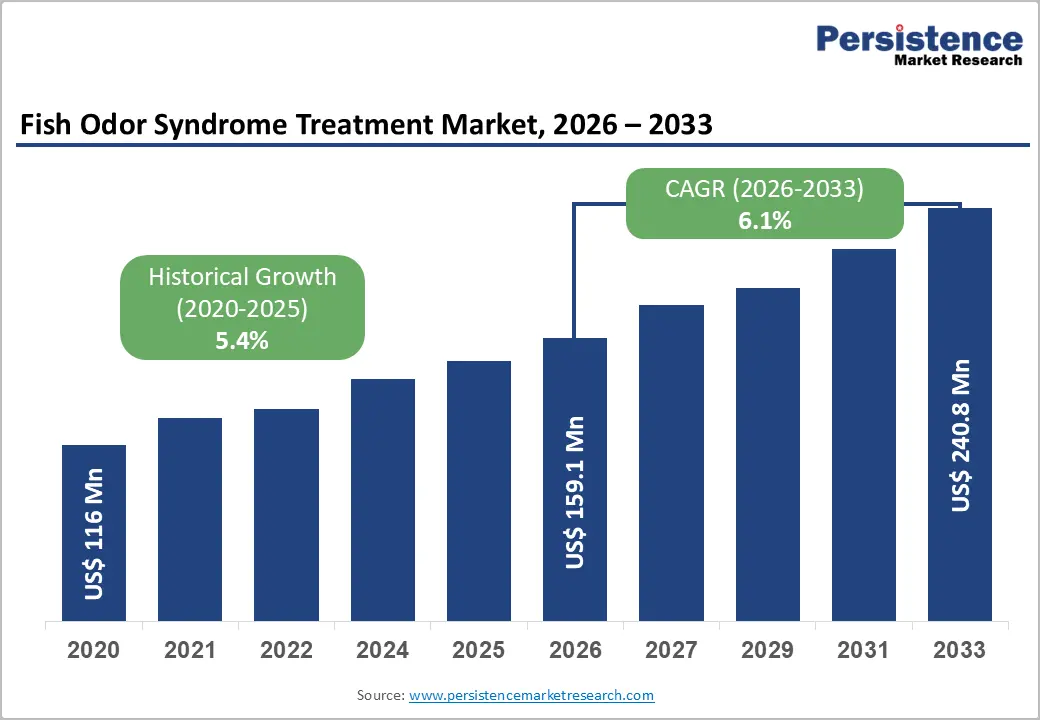
The global fish odor syndrome treatment market size is likely to be valued at US$ 159.1 million in 2026 and is estimated to reach US$ 240.8 million by 2033, growing at a CAGR of 6.1% during the forecast period 2026 - 2033.
The fish odor syndrome treatment market is projected to expand steadily due to rising clinical recognition and structured care pathways for rare metabolic disorders. Improved diagnostic awareness among healthcare professionals enables earlier identification of trimethylaminuria, supporting higher treatment adoption rates.
Public health initiatives led by the World Health Organization and National Institutes of Health enhance disease visibility and patient adherence. Demand for non-invasive, lifestyle-based interventions promotes dietary management and supplementation. Digital health integration strengthens long-term monitoring and compliance. Expanding healthcare infrastructure in emerging economies and ongoing innovation in microbiome-based therapies further improve access and treatment outcomes, overall growth.
Key Industry Highlights
- Leading Treatment Type: Dietary management is projected to hold the largest market share at 38%, driven by strong clinical acceptance and cost efficiency.
- Fastest-Growing Treatment Type: Vitamin B12 supplements are forecasted to show rapid adoption supported by expanding nutraceutical innovation and increasing preference for non-invasive metabolic support therapies.
- Leading Application: Hospital pharmacies are expected to dominate with a market share of 42% due to high clinical trust and integrated care delivery.
- Fastest-Growing Application: Online pharmacies are projected to expand rapidly, driven by digital commerce growth, telemedicine integration.
- Regional Leadership: North America is expected to lead with an estimated 38% market share, while Asia Pacific is forecasted to be the fastest-growing regional market, driven by expanding healthcare access and rising awareness.
- Competitive Environment: The market remains moderately fragmented, with pharmaceutical, nutraceutical, and biotechnology companies competing through product differentiation, regulatory alignment, and distribution expansion.
- Innovation Trends: Key innovation areas include microbiome-based therapies, personalized nutrition models, and digital health integration, enabling improved patient monitoring and treatment adherence.
| Key Insights | Details |
|---|---|
| Fish Odor Syndrome Treatment Market Size (2026E) | US$ 159.1 Mn |
| Market Value Forecast (2033F) | US$ 240.8 Mn |
| Projected Growth (CAGR 2026 to 2033) | 6.1% |
| Historical Market Growth (CAGR 2020 to 2025) | 5.4% |
DRO Analysis
Driver - Rising Clinical Awareness and Diagnostic Advancements
The market gains momentum through expanding clinical awareness and measurable progress in diagnostic capabilities. Education initiatives led by institutions such as the National Institutes of Health and the World Health Organization improve physician familiarity with metabolic disorders, enabling accurate differentiation from dermatological or psychological conditions. Earlier detection increases patient entry into formal care pathways, strengthening treatment demand. A 2025 update from the National Institutes of Health indicates that rare diseases collectively affect nearly 30 million individuals in the United States, reinforcing the scale of underdiagnosed conditions and unmet clinical needs addressed through improved screening and diagnostic precision.
Advancements in laboratory testing, including genetic screening and metabolite analysis, improve diagnostic reliability and reduce misclassification risk. Healthcare providers gain confidence in prescribing targeted dietary and pharmacological interventions, which enhances treatment uptake rates. Standardized diagnostic protocols support operational efficiency within healthcare systems by reducing repeated consultations and ineffective therapies. Increased availability of diagnostic tools across emerging healthcare markets expands patient identification rates, creating a broader treatment base. Integration of diagnostics with digital health platforms strengthens longitudinal monitoring, enabling consistent management of metabolic imbalances and supporting sustained demand for therapeutic interventions.
Advancements in Microbiome-Based and Nutritional Therapies
Targeted innovation in gut microbiota modulation and precision nutrition strengthens therapeutic efficiency for trimethylaminuria management. Microbiome-focused approaches regulate trimethylamine production at the source, improving symptom control and reducing reliance on invasive interventions. Structured dietary protocols supported by clinical guidance create measurable outcomes in odor reduction and patient quality of life. The National Institutes of Health reported in 2025 that rare diseases in the United States affect fewer than 200,000 individuals per condition, reinforcing the need for specialized, scalable therapies. This environment drives investment in tailored nutritional solutions and standardized care pathways.
Rising acceptance of nutrition-based therapy enhances patient compliance and expands long-term treatment demand across healthcare systems. Functional foods, probiotics, and enzyme-targeted supplements improve metabolic balance, supporting consistent symptom management without complex procedures. Digital health integration enables real-time dietary tracking and microbiome monitoring, increasing treatment adherence and reducing clinical burden. Healthcare providers gain operational efficiency through preventive care models centered on nutrition. Expanding research into gut-liver metabolic interactions supports development of next-generation therapies with higher efficacy. These factors stimulate demand expansion and encourage continuous product innovation across developed and emerging healthcare systems.
Restraint - Limited Disease Awareness and Underdiagnosis in Emerging Regions
Constrained awareness across emerging regions restricts early patient identification and clinical intervention. Limited training among primary care professionals reduces recognition of trimethylaminuria symptoms, leading to frequent misclassification within broader metabolic or dermatological conditions. Screening protocols remain inconsistent across healthcare systems, which weakens diagnostic accuracy and delays therapeutic engagement. Public health outreach programs led by organizations such as World Health Organization and National Institutes of Health show uneven penetration across low-resource settings, resulting in minimal disease visibility. This gap constrains patient flow into specialized care pathways and limits treatment demand generation across underserved populations.
Economic and infrastructure limitations further intensify underdiagnosis, particularly in rural and semi-urban populations. Diagnostic testing for rare metabolic disorders requires specialized laboratories, which remain concentrated in developed regions. High out-of-pocket expenditure discourages patients from pursuing confirmatory testing and long-term management. Pharmaceutical distribution networks show limited reach for niche therapies, reducing availability of targeted supplements and microbiome-based interventions. Healthcare systems prioritize high-burden diseases, which diverts funding and clinical attention away from rare conditions. This imbalance reduces incentives for providers to invest in training, diagnostic tools, and awareness programs, thereby suppressing treatment adoption rates.
Lack of Standardized Treatment Protocols and Reimbursement Challenges
Absence of standardized clinical protocols creates fragmentation in diagnosis and treatment pathways across regions. Physicians follow varied approaches, leading to inconsistent patient outcomes and reduced confidence in therapy selection. Clinical guidelines remain limited, restricting integration into formal care frameworks and slowing institutional adoption. Variability in use of dietary control, antibiotics, and supplementation reduces treatment predictability. Research constraints limit large-scale clinical validation, affecting regulatory clarity and delaying protocol harmonization. Healthcare systems face operational inefficiencies due to a lack of uniform practices, which weakens scalability of care delivery and restricts the structured expansion of specialized metabolic disorder services.
Reimbursement limitations create financial barriers that directly influence treatment uptake and continuity. Insurance coverage for rare metabolic conditions remains restricted, increasing patient cost burden and lowering adherence to long-term management strategies. Absence of defined reimbursement codes complicates claims processing and discourages provider participation. Payers allocate fewer resources to low-prevalence conditions, reducing funding support for therapy access. Economic constraints limit the establishment of dedicated treatment centers and restrict the availability of specialized services. Organizations such as the World Health Organization and National Institutes of Health promote awareness, yet financial support gaps continue to influence demand stability.
Opportunity - Expansion of Rare Disease Frameworks and Policy Support
Structured rare disease frameworks create a favorable environment for improved diagnosis, reimbursement alignment, and coordinated care delivery. Policy-backed registries and screening initiatives increase patient identification rates, which expands the treated population base and strengthens demand visibility for therapy providers. Standardized clinical guidelines reduce variability in treatment approaches, enabling consistent adoption across healthcare institutions. Government-supported funding programs enhance research activity and patient access initiatives, supporting long-term therapy utilization. Institutional collaboration across regulatory and clinical bodies improves operational efficiency, which encourages investment in targeted metabolic disorder treatments and accelerates integration of structured care pathways.
Regulatory incentives such as orphan drug designation and financial support mechanisms improve cost efficiency for pharmaceutical developers, which drives innovation in microbiome-targeted therapies and nutritional interventions. Accelerated approval processes reduce commercialization timelines, supporting quicker availability of new treatment options. International coordination promoted by organizations like the World Health Organization strengthens knowledge exchange and harmonizes treatment standards. Expanded insurance coverage under rare disease policies improves affordability and access, which increases therapy uptake. Healthcare systems benefit from reduced diagnostic delays and optimized resource utilization, which supports sustained demand across specialized care settings.
Growth of Digital Health and Personalized Treatment Models
Expanding digital health ecosystems creates a strong opportunity through enhanced remote monitoring and data-driven care delivery. Clinical management improves with tools that track dietary intake, symptom variation, and metabolic response in real time. Healthcare providers utilize analytics to refine individualized treatment pathways, increasing precision and reducing unnecessary clinical interactions. Digital platforms enable continuous patient engagement, strengthening adherence to long-term therapy protocols. Integration of telehealth services supports access to specialists across geographies, improving early intervention rates. This structured, technology-enabled approach enhances operational efficiency and supports scalable care delivery across diverse patient populations managing rare metabolic conditions.
Personalized treatment models strengthen demand by aligning therapeutic strategies with individual metabolic profiles and lifestyle patterns. Targeted supplementation and microbiome-focused interventions improve symptom control while reducing trial-and-error approaches in treatment selection. Healthcare systems benefit from optimized resource utilization through predictive tools that support accurate diagnosis and intervention planning. Wearable technologies and mobile applications enable continuous monitoring, minimizing treatment gaps and improving patient accountability. Pharmaceutical development focuses on precision-based formulations tailored to biochemical variations, supporting improved clinical outcomes. This shift toward individualized care expands accessibility and increases patient retention across evolving healthcare delivery frameworks.
Category-wise Analysis
Treatment Type Insights
Dietary management is anticipated to secure around 38% of the fish odor syndrome treatment market share in 2026, reflecting strong clinical reliance on non-pharmacological intervention as a first-line management strategy. Dietary modification represents a widely adopted approach due to the direct reduction of trimethylamine production through controlled intake of choline-rich foods. Clinical acceptance remains strong with minimal side effects and sustained symptom control. Guidance from institutions such as the National Health Service reinforces structured dietary planning, while accessibility and cost efficiency support patient adherence through nutritionist-led models and digital tracking tools.
Vitamin B12 supplements are expected to be the fastest-growing segment during the 2026 - 2033 forecast period, propelled by increasing recognition of metabolic support therapies and expanding nutraceutical innovation. Vitamin B12 supplementation supports metabolic pathways and reduces symptom severity in trimethylaminuria management. Rising preference for supplement-based interventions drives adoption across clinical and homecare settings. Regulatory support from the Food and Drug Administration improves availability of over-the-counter formulations.
Advances in sustained-release and bioavailability-enhanced formats strengthen effectiveness, while e-commerce and direct-to-consumer models accelerate accessibility and patient compliance.
Application Insights
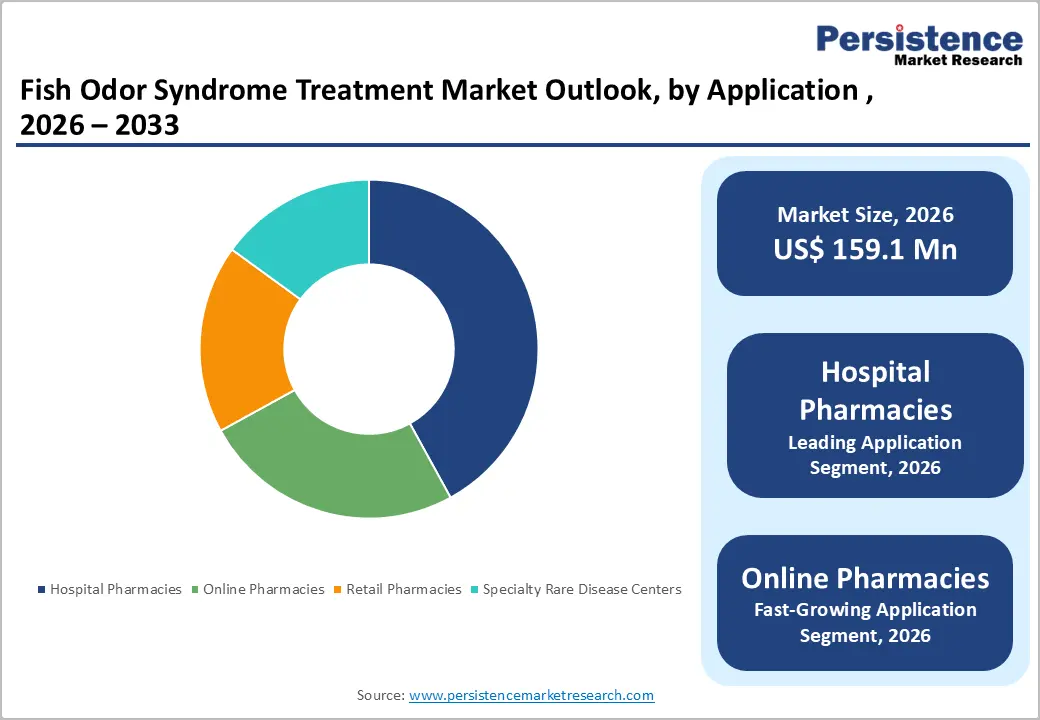
Hospital pharmacies' extracts are poised to dominate with a forecasted market share of over 42% in 2026, powered by strong clinical trust, structured prescription systems, and integration within specialized treatment pathways. Hospital pharmacies serve as primary dispensing points due to direct alignment with healthcare providers and diagnosis-linked treatment control. Physicians rely on institutional channels for accurate monitoring and coordinated care. Regulatory oversight ensures the consistent availability of therapies. Patients show higher trust in supervised settings, while the expansion of tertiary care centers and rare disease clinics strengthens distribution efficiency and treatment accessibility.
Online pharmacies are estimated to be the fastest-growing segment from 2026 to 2033, fueled by rapid digital commerce expansion and increasing consumer preference for convenient healthcare access. Digital platforms enable access to supplements, prescribed medications, and dietary products, supporting treatment continuity. Telemedicine supports remote prescriptions, strengthening online pharmacy usage. E-commerce expands reach across dispersed populations with limited specialized care access.
Subscription delivery models improve adherence through consistent availability, while integration of digital health tools enables personalized recommendations and effective treatment tracking, enhancing patient engagement and overall treatment outcomes.
Regional Insights
North America Fish Odor Syndrome Treatment Market Trends
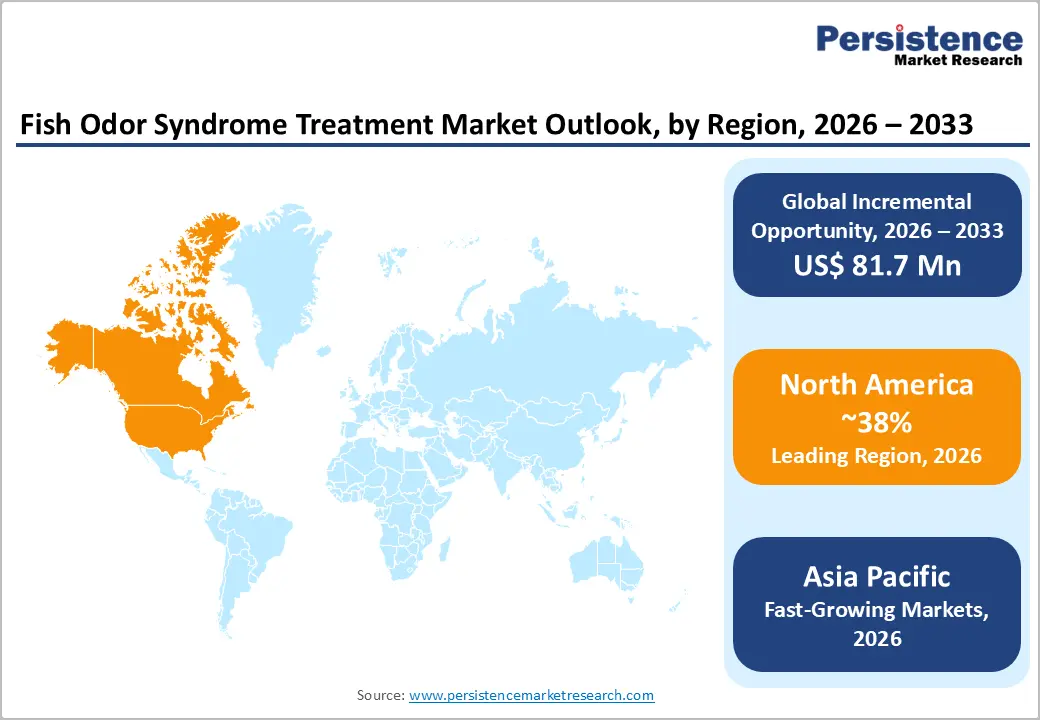
North America is expected to lead with an estimated 38% of the fish odor syndrome treatment market share, supported by advanced metabolic disorder screening systems and strong clinical recognition of Trimethylaminuria. Established diagnostic pathways enable early identification, improving patient enrollment into treatment programs. High penetration of specialized diet management solutions and medical nutrition products supports consistent demand. The presence of integrated care networks ensures coordination between clinicians, nutrition experts, and digital platforms.
Favorable reimbursement structures for rare disease management improve treatment accessibility, while structured patient registries enhance long-term monitoring and therapy optimization across healthcare systems.
Robust research activity and institutional funding drive innovation in metabolic disorder management and targeted therapeutic approaches. Strong presence of biotechnology firms and academic collaborations supports the development of enzyme modulation strategies and microbiome-based interventions. Digital health adoption enables remote monitoring, improving adherence to dietary protocols and supplement regimens. High consumer awareness supports proactive healthcare behavior, leading to sustained demand for personalized treatment solutions.
Well-developed retail and online pharmacy ecosystems ensure efficient distribution of medical foods and supplements, strengthening market penetration and enabling continuous patient engagement across urban and suburban populations.
Europe Fish Odor Syndrome Treatment Market Trends
Europe demonstrates strong growth in the fish odor syndrome treatment market, driven by structured rare disease frameworks and advanced clinical networks. Germany leads through metabolic clinics and comprehensive patient registries, enabling early diagnosis and treatment adoption. France shows increasing demand for dietary management and enzyme supplementation. Expansion of specialized nutrition therapy providers enhances adherence and long-term outcomes. Insurance coverage for metabolic disorders improves affordability, while digital health tools enable remote monitoring and continuous patient engagement, supporting consistent therapy management across healthcare systems.
Healthcare policies supporting rare disease management and favorable regulatory environments strengthen market stability. Italy shows rising clinical trials and pilot programs for dietary and pharmacological interventions. Spain reflects growing telemedicine adoption, improving specialist access and dietary guidance. E-commerce penetration enhances the distribution of medical foods, supplements, and prescribed products. Patient advocacy and awareness campaigns drive proactive health behavior. Integration of digital tools allows personalized recommendations and treatment tracking, while public-private collaborations optimize supply chains and product availability across treatment networks.
Asia Pacific Fish Odor Syndrome Treatment Market Trends
Asia Pacific is forecasted to be the fastest-growing market for fish odor syndrome treatment between 2026 and 2033, stimulated by rapid expansion of diagnostic access and rising clinical attention toward Trimethylaminuria. China demonstrates strong momentum through healthcare infrastructure upgrades and wider metabolic screening initiatives. India shows rising demand driven by increasing patient awareness and expanding access to nutritional therapy solutions.
Growth of urban healthcare centers supports early identification and structured treatment pathways. Increasing penetration of digital pharmacies improves product availability across tier-2 and tier-3 cities, strengthening treatment reach and enabling consistent supply of supplements and dietary management products.
Japan and South Korea reflect steady growth through advanced clinical research and integration of precision medicine approaches. Expansion of telehealth platforms enables remote consultations, improving patient engagement and continuity of care. A rising middle-income population supports higher spending on specialized healthcare products and medical nutrition. Regulatory evolution in several economies supports the approval and commercialization of targeted therapies and dietary supplements.
Growth of contract manufacturing and regional supply chains enhances product availability and cost efficiency. Increasing collaboration between hospitals and digital health platforms supports data-driven treatment monitoring and personalized therapy planning across diverse patient populations.
Competitive Landscape
The global fish odor syndrome treatment market exhibits a moderately fragmented structure, with pharmaceutical, nutraceutical, and specialty healthcare firms operating at regional and global levels. Leading participants include Nestlé Health Science, Abbott Laboratories, Danone, Pfizer, Bausch Health Companies, and Amgen, collectively holding a notable yet non-dominant share. Competitive dynamics revolve around product portfolio diversity, regulatory adherence, and distribution efficiency. Focus on dietary management solutions and supplement-based therapies to strengthen market presence and patient reach.
Emerging biotechnology firms are increasingly exploring microbiome-based and enzyme-targeted interventions to differentiate offerings. Companies leverage clinical research, digital health integration, and nutritional expertise to enhance treatment effectiveness. Expansion of specialized distribution channels supports broader patient access, while collaborations with healthcare providers and nutrition specialists drive innovation. Strategic emphasis on personalized therapy solutions and long-term patient adherence enables sustained competitiveness in this niche and evolving market segment.
Companies Covered in Fish Odor Syndrome Treatment Market
- Nestlé Health Science
- Abbott Laboratories
- Danone
- Pfizer
- Bausch Health Companies
- Amgen
- GSK plc
- Bayer AG
- DSM-Firmenich
- Ajinomoto Co., Inc.
- Kyowa Kirin
- BioMarin Pharmaceutical
- Recordati Rare Diseases
- Meiji Holdings Co., Ltd.
- Herbalife Nutrition
Frequently Asked Questions
The fish odor syndrome treatment market is projected to reach US$ 159.1 million in 2026.
Rising patient awareness, growing adoption of dietary management solutions, and expansion of digital health platforms drive the fish odor syndrome treatment market.
The fish odor syndrome treatment market is poised to witness a CAGR of 6.1% from 2026 to 2033.
Development of microbiome-based therapies, personalized nutrition solutions, and telehealth-enabled treatment models presents key opportunities in the fish odor syndrome treatment market.
Some of the key market players include Nestlé Health Science, Abbott Laboratories, Danone, Pfizer, Bausch Health Companies, and Amge.


