




- Medical Devices
- Digital Diabetes Management Market
Digital Diabetes Management Market Size, Trends, Share, Growth, and Regional Forecast, 2026 to 2033
Digital Diabetes Management Market by Product (Continuous Glucose Monitoring (CGM) Systems, Smart Glucose Meters, Smart Insulin Pens & Delivery Devices, Insulin Pumps / Closed‑Loop Delivery Systems, Digital Diabetes Management Mobile Apps, Others), Device Type (Wearable Devices, Handheld Devices), End-user (Hospitals & Clinics, Home Healthcare, Diabetes Specialty Centers, Others), and Regional Analysis from 2026 to 2033

Digital Diabetes Management Market Share and Trends Analysis
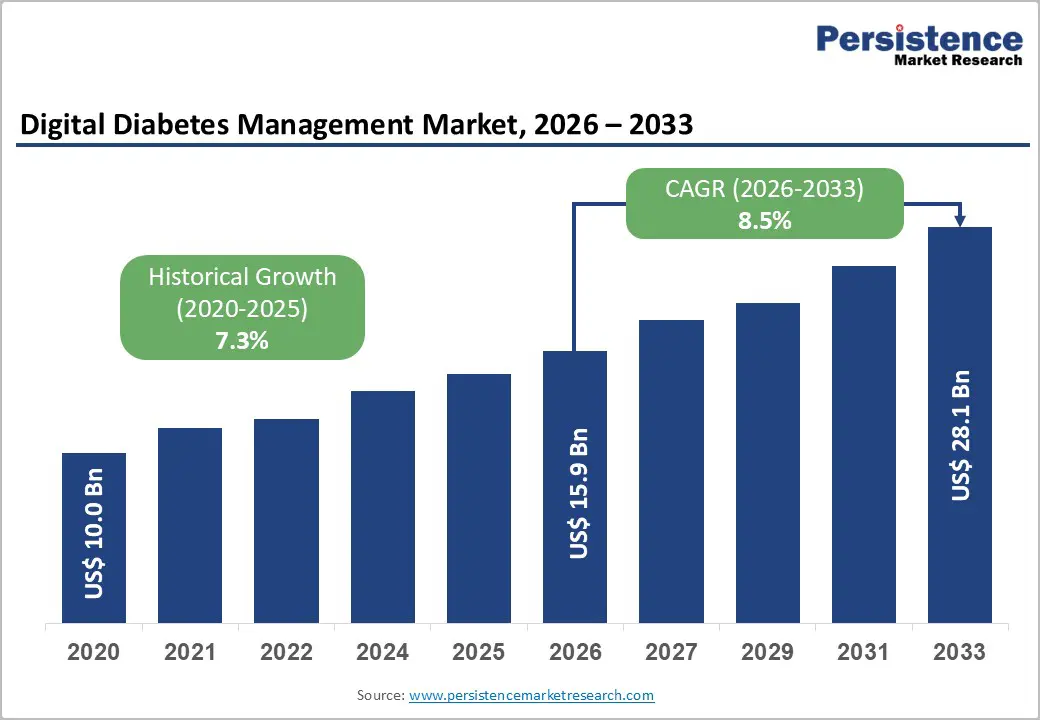
The global digital diabetes management market is estimated to be valued at US$ 15.9 billion in 2026 to US$ 28.1 billion by 2033. The market is projected to record a CAGR of 4.8% during the forecast period from 2026 to 2033.
The global market is expanding steadily, driven by rising demand for connected glucose monitoring, smart insulin delivery, and digital health apps. North America leads due to advanced healthcare infrastructure and reimbursement support, while Asia-Pacific is the fastest-growing region, fueled by increasing smartphone adoption, awareness of diabetes management, and growing investments in remote patient monitoring solutions.
Key Industry Highlights:
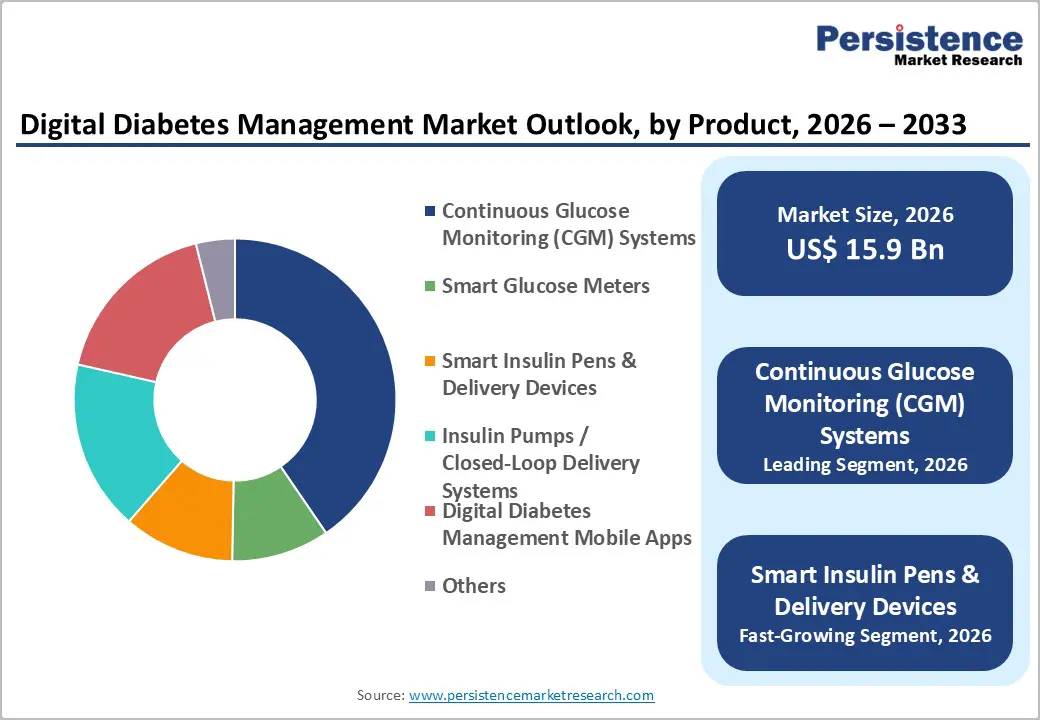
- Dominant Segment: Continuous Glucose Monitoring (CGM) Systems held nearly 42% share in 2025, driven by high adoption among insulin-dependent patients, integration with smart insulin pumps, and growing demand for real-time glucose tracking and digital health insights.
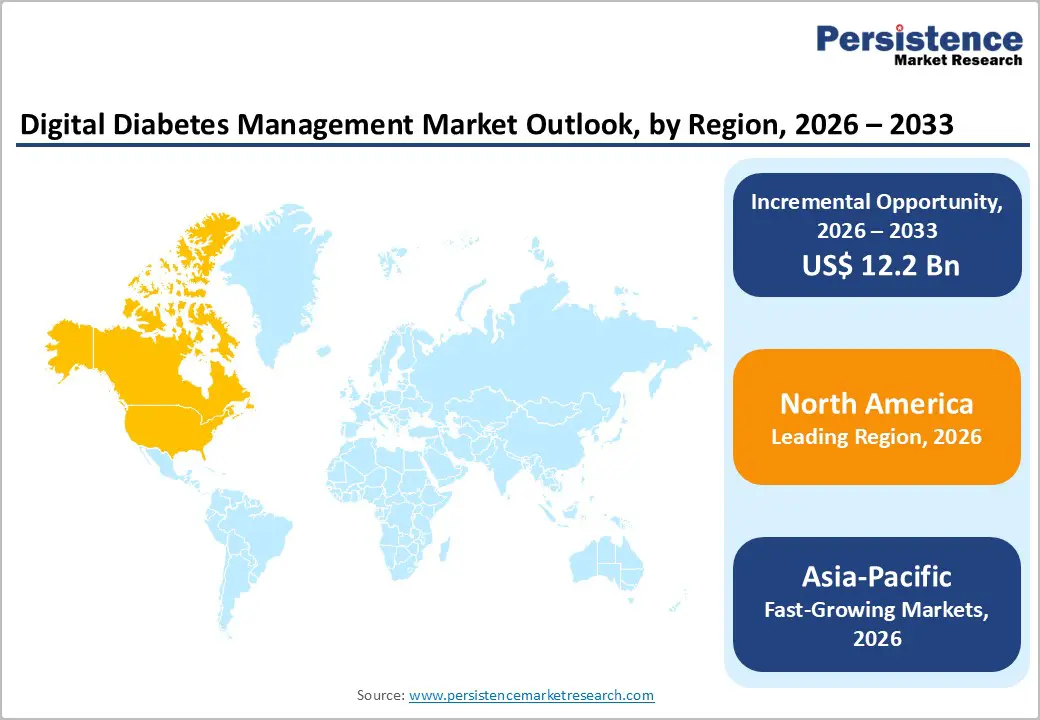
- Dominant Region: North America led the market with 40% share in 2025, supported by advanced healthcare infrastructure, favorable reimbursement policies, and high adoption of digital diabetes management solutions across hospitals and home care.
- Market Drivers: Growth is driven by rising prevalence of diabetes, increasing patient awareness, demand for connected monitoring devices, mobile apps, and AI-powered analytics for personalized diabetes care.
- Market Opportunity: Opportunities include expansion of mobile app platforms, development of AI-based predictive analytics, integration with telehealth, growth in Asia-Pacific and emerging markets, and innovations in wearable insulin delivery and remote monitoring solutions.
| Key Insights | Details |
|---|---|
| Global Digital Diabetes Management Market Size (2026E) | US$ 15.9 Bn |
| Market Value Forecast (2033F) | US$ 28.1 Bn |
| Projected Growth (CAGR 2026 to 2033) | 8.5% |
| Historical Market Growth (CAGR 2020 to 2025) | 7.3% |
Market Dynamics
Driver: Increasing patient awareness and preference for remote and self-management solutions
The global burden of diabetes is substantial and rising. As of the latest World Health Organization (WHO) data, about 830 million people worldwide are living with diabetes, with prevalence increasing most rapidly in low and middle-income countries; over half of those affected are not receiving appropriate treatment. This vast and growing patient pool is driving demand for solutions that empower individuals to self-manage their condition outside of traditional clinical settings.
Remote and self-management digital tools, continuous glucose monitors, smartphone apps, connected insulin delivery devices, and telehealth platforms give patients real-time information and actionable feedback on glucose trends, medication adherence, lifestyle factors, and alerts. Studies have shown that when digital tools are effective and minimally intrusive, 65%-94% of patients are willing to adopt some form of remote digital monitoring if it delivers demonstrably better outcomes than standard care. Moreover, research indicates that comprehensive remote monitoring frameworks leveraging wearables and mobile computing can reliably detect, predict, and support diabetes management with high accuracy, underscoring the clinical value of these technologies. The combination of enormous unmet need and patient openness to digital care enhances awareness and preference for self-management technologies and is a strong driver behind market expansion.
Restraint: Data privacy and cybersecurity concerns in digital health solutions
Digital diabetes management systems collect highly sensitive Protected Health Information (PHI), including clinical histories, glucose levels, medication regimens, and personal identifiers. When such data is stored, shared, or analyzed digitally, it significantly expands the potential attack surface for cyber threats. Contemporary cybersecurity analyses highlight ransomware, data breaches, insider threats, and vulnerabilities in interconnected health IT systems as persistent risks in modern healthcare environments. Numerous high-profile healthcare cybersecurity incidents illustrate the scale of this challenge: in 2025, nearly 30-million individual records were implicated in large healthcare data breaches, with some affecting millions of patients across multiple institutions. Regulatory frameworks like the U.S. HIPAA and the EU GDPR impose strict requirements on the handling, storage, and transmission of digital health data, and non-compliance can result in fines, legal penalties, and loss of patient trust.
Healthcare data breaches also carry substantial financial costs: the average breach in the sector was reported at approximately $7.42-million per incident in 2025, the highest across industries. In the context of digital diabetes technologies, these privacy and security concerns can restrain adoption, both from patients wary of exposing critical personal data and providers facing legal and operational risks unless robust security architectures and compliance strategies are implemented.
Opportunity: Development of AI-powered predictive analytics and decision-support tools
Artificial intelligence (AI) and predictive analytics represent a significant growth opportunity within digital diabetes management. By analysing longitudinal patient data, including glucose readings, activity levels, dietary inputs, and clinical markers, AI models can identify patterns and provide clinicians and patients with actionable forecasts on glycemic trends, potential complications, and individualized intervention strategies. Emerging research highlights how remote digital monitoring systems integrating real-time sensor data and predictive analytics can achieve strong performance metrics. For example, frameworks combining wearables and mobile computing have demonstrated sensitivity above 87-% and accuracy over 83-% in risk prediction and automated analysis.
The adoption of predictive AI reinforces the shift toward proactive rather than reactive diabetes care. Instead of waiting for adverse events like hypoglycemia or hospitalization triggers, AI tools can alert users and providers ahead of time, enabling preventive behavioural and clinical interventions. Such capabilities enhance clinical outcomes and can reduce healthcare costs by minimizing preventable complications. Additionally, AI-driven decision support can assist overburdened health systems, offering scalable, data-backed guidance in regions where specialist endocrinology resources are scarce. Because AI leverages the massive amounts of data generated by digital health systems, the development of privacy-preserving, interoperable predictive analytics models stands out as a key strategic opportunity in the expanding digital diabetes market.
Category-wise Analysis
By Product Insights
Continuous Glucose Monitoring (CGM) systems dominate because they provide real-time glucose data, eliminating frequent finger-pricks and enabling proactive diabetes management. In 2025, around 67% of Type-1 diabetes patients in the U.S. used CGMs, reflecting rapid adoption due to improved technology and insurance coverage. CGMs improve glycemic control, reducing severe hypoglycemia by more than 50% compared to traditional monitoring. They integrate with mobile apps and insulin delivery systems, offering actionable insights for both patients and clinicians. Clinical guidelines increasingly recommend CGMs as standard care, supporting tight glucose control and self-management. This combination of clinical efficacy, convenience, and technology integration makes CGM systems the largest product segment in digital diabetes management.
By Device Type Insights
Wearable devices dominate because they offer continuous, non-invasive monitoring, empowering patients to manage diabetes throughout daily life. The U.S. Department of Health and Human Services promotes wearable health devices, including glucose monitors, as part of chronic care initiatives. Wearable CGMs accounted for approximately 85% of device shipments, driven by ease of use, remote monitoring, and real-time alerts. They integrate with mobile apps and insulin delivery systems, enabling clinicians to track patient data without in-person visits. Wearables reduce invasive procedures, improve adherence, and support predictive care, making them the dominant device type in the digital diabetes management market globally.
Regional Insights
North America Digital Diabetes Management Market Trends
North America leads the digital diabetes management market largely due to its high prevalence of diabetes and advanced healthcare ecosystem. The region accounts for the largest share 41.8% of global digital diabetes usage supported by widespread adoption of connected health technologies, CGMs, and telehealth integration. In the U.S. alone, more than 34 million people have diabetes, making it one of the highest national burdens globally, which drives demand for digital tools. Strong digital infrastructure, high smartphone and wearable penetration, and supportive reimbursement for digital health further accelerate adoption. Established healthcare providers and public health initiatives also encourage integration of apps and remote monitoring in standard diabetes care, reinforcing North America’s dominant position.
Europe Digital Diabetes Management Market Trends
Europe holds a significant portion of the global digital diabetes management market, showcasing robust regional demand. With an estimated 66 million adults living with diabetes in the region, chronic disease burden underpins the need for digital tools that support monitoring and self-management. European healthcare systems emphasize preventive care and integrated digital health strategies, including reimbursement for certified mobile health apps and structured telemedicine services, which strengthen uptake. Countries such as Germany, the UK, and France are advancing digital prescriptions and eHealth programs that connect clinician platforms with patient data systems. Growing app downloads and CGM deployment also reflect increasing patient engagement with digital diabetes solutions across public and private care settings.
Asia Pacific Digital Diabetes Market Trends
Asia Pacific is the fastest-growing region in the digital diabetes management market, driven by a rapidly expanding diabetic population and rising technology adoption. The region accounts for a significant portion of global cases, with over one-third of adults living with diabetes located in the Western Pacific alone, and populations in China and India among the largest worldwide. Improving smartphone uptake and internet access exceeding 60% penetration in urban areas supports mobile health use and app engagement for self-management. Although CGM adoption remains lower than in North America and Europe, shipments of home-use sensors in Asia-Pacific grew markedly year-over-year, indicating accelerating uptake. Government health pilots and digital infrastructure investments also expand access to telehealth and connected care, accelerating growth more rapidly than in established markets.
Competitive Landscape
The digital diabetes management market is highly competitive, led by companies like Abbott, Medtronic, Dexcom, and Roche, focusing on innovative CGM systems, smart insulin delivery devices, wearable technology, and mobile apps. They emphasize product integration, remote monitoring, and patient-centric solutions to enhance adoption, improve diabetes care, and maintain market leadership.
Key Industry Developments:
- In November 2025, Dexcom’s Smart Basal system received FDA clearance to support insulin therapy in patients with Type 2 diabetes. The approval allows the device to provide automated basal insulin adjustments based on continuous glucose monitoring data, helping patients maintain better glucose control. This marks a significant step in expanding Dexcom’s digital diabetes management solutions and integrating automated insulin support for broader patient populations.
- In August 2025, Abbott launched the next-generation FreeStyle Libre 2 Plus, providing patients with continuous glucose readings for improved diabetes management. The updated system offers real-time monitoring, enhanced accuracy, and seamless mobile app integration, enabling users to track glucose trends, receive alerts, and make informed decisions. This launch strengthened Abbott’s position in the digital diabetes management market.
Companies Covered in Digital Diabetes Management Market
- Dexcom, Inc.
- B. Braun Melsungen AG
- Abbott
- LifeScan, Inc.
- Sanofi
- Ascensia Diabetes Care Holdings AG
- Insulet Corporation
- Bayer AG
- Medtronic
- F. Hoffmann‑La Roche Ltd.
- Others
Frequently Asked Questions
The global digital diabetes management market is projected to be valued at US$ 15.9 Bn in 2026.
Rising diabetes prevalence, growing patient awareness, adoption of CGMs, wearable devices, mobile apps, telehealth integration.
The global digital diabetes management market is poised to witness a CAGR of 8.5% between 2026 and 2033.
AI-powered predictive analytics, wearable insulin devices, mobile app expansion, telehealth integration, emerging markets, personalized diabetes care.
Dexcom, Inc., B. Braun Melsungen AG, Abbott, LifeScan, Inc., Sanofi, Ascensia Diabetes Care Holdings AG.


