




- Pharmaceuticals
- Combination Treatments for Scars Market
Combination Treatments for Scars Market Size, Share, and Growth Forecast, 2026 – 2033
Combination Treatments for Scars Market by Product Type (Topical Agents, Laser Devices, Others), Treatment (Ablative Fractional Resurfacing, Others), End-user (Hospitals, Clinics, Dermatology Centers, Others), and Regional Analysis for 2026 – 2033

Combination Treatments for Scars Market Size and Trends Analysis
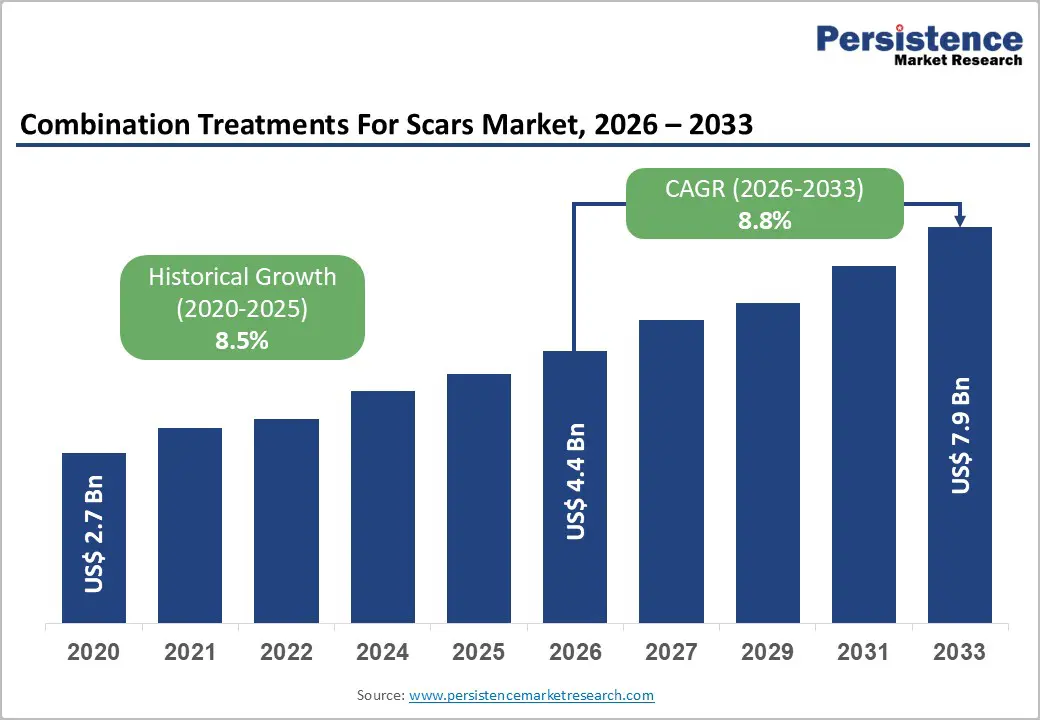
The global combination treatments for scars market size is likely to be valued at US$4.4 billion in 2026 and is expected to reach US$7.9 billion by 2033, growing at a CAGR of 8.8% during the forecast period from 2026 to 2033, driven by the highly specialized segment within aesthetic and dermatological care, focusing on multimodal therapeutic approaches that integrate topical agents with energy-based devices and minimally invasive procedures to enhance clinical outcomes in scar revision.
According to the World Health Organization (2025), recent findings indicate a steady improvement in global access to essential healthcare services, including dermatological care, enabling a greater number of individuals to seek timely treatment for skin conditions such as scars. The organization also highlights the growing availability of advanced medical technologies and skilled healthcare professionals, particularly across emerging economies, which is enhancing treatment accessibility and clinical outcomes. These advancements, along with the expanding presence of dermatology clinics, cosmetic surgery centers, and ambulatory care facilities, are creating a supportive ecosystem for the adoption of combination treatment approaches.
Key Industry Highlights:
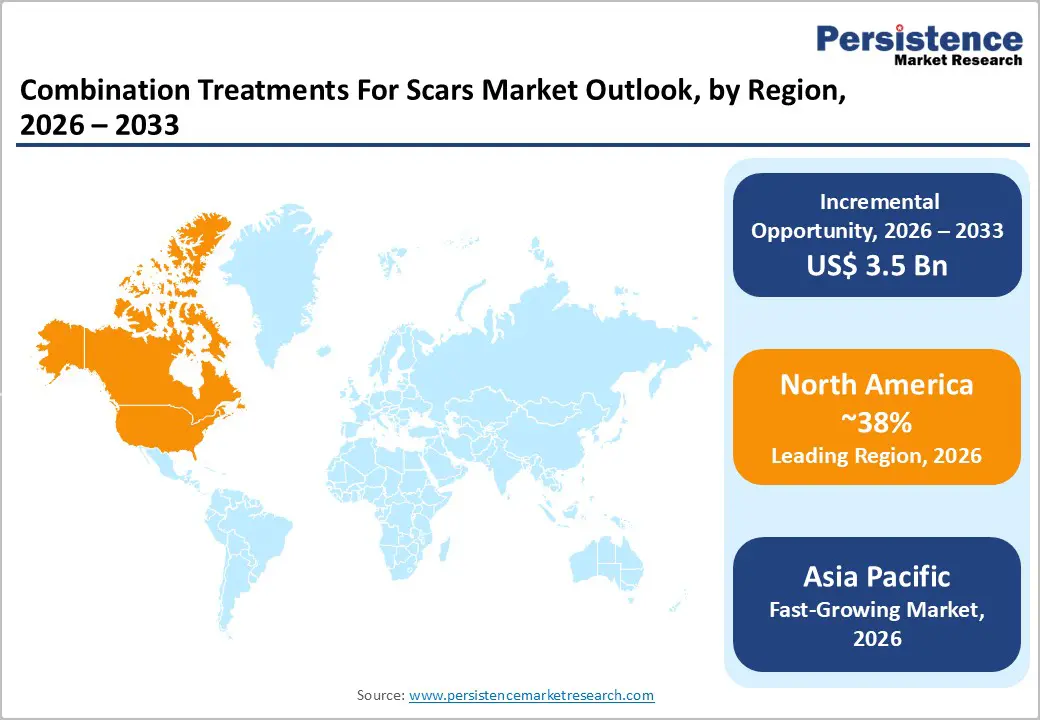
- Leading Region: North America is anticipated to be the leading region, accounting for a market share of 38% in 2026, driven by high aesthetic awareness, advanced treatment adoption, and strong innovation ecosystem.
- Fastest-growing Region: Asia Pacific is likely to be the fastest-growing region, supported by rising aesthetic demand, expanding healthcare access, and increasing adoption of advanced treatment technologies.
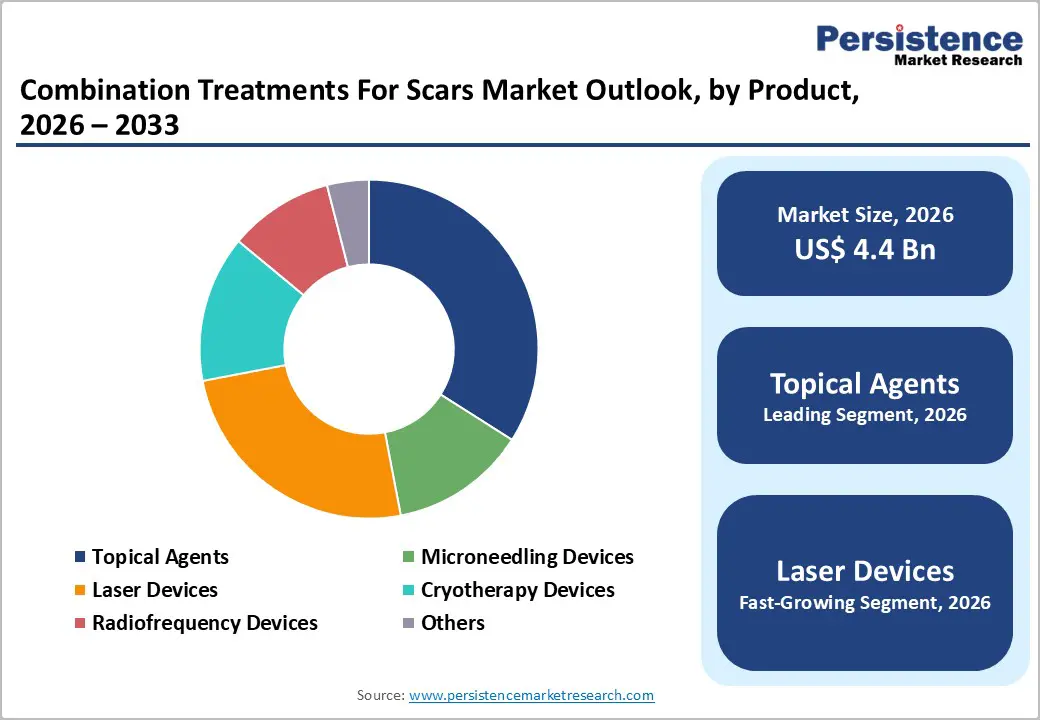
- Leading Product Type: Topical agents are projected to represent the leading product type in 2026, accounting for 35% of the revenue share, driven by their widespread use as foundational and maintenance components in combination scar treatment protocols.
- Leading Treatment: Ablative fractional resurfacing is anticipated to be the leading treatment, accounting for over 30% of the revenue share in 2026, supported by its high effectiveness in treating severe scars and its strong integration within combination therapy protocols.
| Key Insights | Details |
|---|---|
|
Combination Treatments For Scars Market Size (2026E) |
US$4.4 Bn |
|
Market Value Forecast (2033F) |
US$7.9 Bn |
|
Projected Growth (CAGR 2026 to 2033) |
8.8% |
|
Historical Market Growth (CAGR 2020 to 2025) |
8.5% |
DRO Analysis
Driver Analysis- Rising Incidence of Skin Injuries and Aesthetic Concerns
The increasing prevalence of skin injuries from acne, surgical procedures, burns, and trauma is significantly driving demand for advanced scar management solutions. A growing number of individuals are seeking effective treatments to improve skin appearance and reduce long-term scarring. Urbanization, lifestyle changes, and rising awareness about personal aesthetics are accelerating the need for professional dermatological care. Combination treatments are gaining traction as they provide enhanced outcomes by addressing multiple layers of skin damage simultaneously, making them a preferred choice for patients seeking visible and long-lasting improvements in scar appearance across diverse demographic groups.
The expanding influence of social media, digital exposure, and beauty standards is encouraging individuals to pursue aesthetic treatments earlier and more proactively. Increasing disposable income and access to dermatology clinics and cosmetic centers are enabling a broader population to opt for combination therapies. Post-procedural scar management following cosmetic and reconstructive surgeries is becoming a routine practice, fueling demand. As patients increasingly prioritize skin health and appearance, the adoption of integrated treatment approaches continues to rise, supporting consistent growth in advanced scar management solutions across both developed and emerging healthcare markets.
Technological Advancements in Devices and Combination Protocols
Continuous innovation in dermatological technologies, including advanced laser systems, radiofrequency microneedling, and hybrid energy-based devices, is transforming the effectiveness of scar treatments. These technologies enable precise targeting of different skin layers, improving collagen remodeling and overall skin texture. The integration of multiple treatment modalities into cohesive protocols enhances clinical outcomes, making combination therapies more efficient and reliable. As device manufacturers focus on improving safety, customization, and ease of use, healthcare providers are increasingly adopting these advanced solutions to deliver optimized results for various scar types.
The evolution of treatment protocols is also being supported by digital tools, imaging technologies, and data-driven approaches that allow practitioners to personalize therapies based on individual skin characteristics. This shift toward tailored treatment plans improves patient satisfaction and treatment success rates. The introduction of minimally invasive and low-downtime procedures aligns with patient preferences, driving higher adoption rates. Ongoing research and development efforts are refining combination techniques, enabling more effective and consistent outcomes while expanding the scope of applications in scar management.
Restraint Analysis - Lack of Standardized Protocols and Variable Clinical Outcomes
The absence of universally accepted treatment protocols for combination therapies presents a challenge in achieving consistent clinical outcomes. Variations in practitioner expertise, device selection, and patient-specific factors such as skin type and scar severity can lead to differing results. This lack of standardization creates uncertainty among patients and healthcare providers, potentially affecting treatment adoption. The complexity of combining multiple modalities requires careful planning and expertise, which is not uniformly available across all healthcare settings, limiting widespread implementation of advanced combination approaches.
Inconsistent outcomes can also impact patient confidence and satisfaction, especially when expectations are not met. The need for multiple sessions and tailored treatment regimens adds to variability, making it difficult to establish predictable results. Limited large-scale clinical studies and standardized guidelines hinder the development of universally accepted best practices. Addressing these challenges through clinical validation, practitioner training, and protocol optimization will be essential to improve reliability and ensure broader acceptance of combination therapies in scar management.
Regulatory Hurdles for Combination Devices and Therapies
The regulatory landscape for combination treatments involving multiple devices and therapeutic approaches can be complex and time-consuming. Each component of a combination therapy may require separate approvals, creating challenges for manufacturers and healthcare providers seeking to introduce integrated solutions. Differences in regulatory frameworks across regions complicate market entry and expansion. These factors can delay the availability of innovative treatments and increase compliance costs, impacting the pace of adoption in the market.
Ensuring safety and efficacy for combined modalities requires extensive clinical evaluation, which can be resource-intensive. Regulatory authorities often require robust evidence demonstrating the effectiveness of combined approaches compared to individual treatments. This can slow down innovation and limit the introduction of new technologies. Despite these challenges, ongoing efforts to streamline approval processes and harmonize regulations across regions are gradually improving the environment for combination therapies, enabling more efficient commercialization and broader accessibility.
Opportunity Analysis - Technological Convergence and Personalized Combination Protocols
The convergence of multiple advanced technologies is creating new opportunities for highly effective scar treatment solutions. The integration of laser systems, radiofrequency devices, microneedling, and topical therapies into unified treatment protocols allows for comprehensive management of complex scars. This approach enhances treatment precision and effectiveness by targeting different aspects of scar pathology simultaneously. As healthcare providers increasingly adopt these integrated solutions, the demand for combination therapies continues to grow, supported by improved clinical outcomes and patient satisfaction.
Personalization is becoming a key focus area, with practitioners leveraging advanced diagnostic tools and patient data to design customized treatment plans. Tailored protocols based on individual skin characteristics, scar type, and severity improve treatment efficacy and reduce the risk of adverse effects. The adoption of digital technologies and artificial intelligence enhances decision-making and treatment planning. This shift toward personalized care is driving innovation and creating significant growth opportunities in the market, positioning combination therapies as a preferred approach in modern scar management.
Integration of Regenerative Biologics and Combination Therapies
The incorporation of regenerative biologics such as platelet-rich plasma and growth factor-based therapies into combination treatment protocols is opening new avenues for scar management. These biologics enhance the body’s natural healing processes, promoting collagen production and tissue regeneration. When combined with devices such as lasers and microneedling, they significantly improve treatment outcomes by accelerating recovery and enhancing skin quality. This synergy between biologics and traditional modalities is driving increased adoption among healthcare providers and patients seeking advanced and effective solutions.
Ongoing research in regenerative medicine is expected to expand the adoption through the development of new biological therapies and the enhancement of existing ones. The growing focus on natural and minimally invasive treatments aligns well with patient preferences, supporting market growth. The integration of biologics into combination protocols offers opportunities for differentiation and innovation among market players. As clinical evidence continues to support their effectiveness, regenerative combination therapies are likely to become a key component of future scar treatment strategies.
Category-wise Analysis
Product Type Insights
Topical agents are expected to lead, accounting for approximately 35% of revenue in 2026, driven by their essential role as foundational components in multimodal therapy protocols. These agents are widely used before and after procedural interventions to enhance skin healing, improve hydration, and support collagen regeneration. For example, silicone gel sheets combined with fractional laser therapy are commonly used to improve hypertrophic and surgical scars, demonstrating how topical agents enhance procedural outcomes while ensuring sustained therapeutic benefits and patient compliance across diverse treatment plans.
Laser devices are likely to represent the fastest-growing segment, supported by continuous technological advancements and increasing demand for minimally invasive yet highly effective scar treatments. These devices enable precise targeting of scar tissue through controlled thermal energy, stimulating collagen remodeling and improving skin texture. For example, fractional CO2 lasers combined with platelet-rich plasma therapy have shown improved outcomes in treating atrophic acne scars, highlighting the effectiveness of laser-based combination approaches in delivering faster healing, reduced downtime, and superior aesthetic results.
Treatment Insights
Ablative fractional resurfacing is projected to lead the market, capturing around 30% of the revenue share in 2026, supported by its high effectiveness in managing severe and deep scars through controlled skin ablation and regeneration. This technique works by removing microscopic columns of damaged skin, triggering the body’s natural healing response and promoting new collagen formation. For example, ablative fractional resurfacing combined with post-procedural application of growth factor serums is widely used to enhance healing and optimize results, demonstrating its strong role as a core component in advanced combination treatment protocols.
Non-ablative fractional laser therapy is likely to be the fastest-growing treatment, driven by increasing patient preference for low-risk, minimal downtime procedures. Unlike ablative methods, this approach stimulates collagen production without removing the outer skin layer, making it suitable for patients seeking gradual improvement with reduced recovery time. Its compatibility with other treatments, such as fillers, topical agents, and microneedling, enhances its effectiveness within combination protocols.
For example, non-ablative laser therapy combined with hyaluronic acid-based fillers is increasingly used to treat mild to moderate atrophic scars, offering improved skin texture and volume restoration while maintaining a favorable safety profile and high patient satisfaction.
Regional Insights
North America Combination Treatments for Scars Market Trends
North America is anticipated to be the leading region, accounting for a market share of 38% in 2026, driven by advanced dermatology infrastructure, high adoption of multimodal therapies, and strong consumer demand for aesthetic procedures. The region is characterized by rapid integration of energy-based devices with topical and injectable therapies, enabling more effective and personalized scar management. Increasing use of tele dermatology and digital consultation platforms is also enhancing patient access and adherence to combination treatment protocols. Strategic collaborations and mergers among key players are strengthening product portfolios and expanding treatment capabilities.
The region is witnessing a growing focus on integrated and regenerative treatment approaches, combining lasers, biologics, and injectables for improved outcomes. For example, Cynosure has strengthened its presence through the launch of advanced laser systems such as PicoSure Pro, which are widely used in combination with other modalities for enhanced scar revision results. The region is also witnessing increased adoption of biologics such as platelet-rich plasma alongside device-based treatments, reflecting a shift toward outcome-driven care.
Europe Combination Treatments for Scars Market Trends
Europe is likely to be a significant market for combination treatments for scars, due to a well-established healthcare infrastructure, high aesthetic awareness, and increasing preference for minimally invasive, multimodal treatment approaches. The region accounts for a significant share of the market, driven by countries such as Germany, the U.K., and France, where patients actively seek integrated therapies combining lasers, injectables, and topical solutions for improved outcomes. The growing demand for personalized treatment protocols, where clinicians tailor combinations based on scar type, skin characteristics, and severity, using advanced imaging and diagnostic tools.
The rapid adoption of hybrid and regenerative combination therapies, integrating biologics, energy-based devices, and advanced injectables to enhance collagen stimulation and tissue repair. For example, Candela Corporation expanded its Nordlys platform across European markets, offering multifunctional laser and light-based technologies that are widely used in combination with other modalities for scar revision and skin rejuvenation. The region is also experiencing increased investment in device innovation, strategic partnerships, and expansion of aesthetic clinics, enabling broader access to advanced therapies.
Asia Pacific Combination Treatments for Scars Market Trends
The Asia Pacific region is likely to be the fastest-growing region, driven by rapid urbanization, rising disposable income, and strong cultural emphasis on aesthetic appearance. Countries such as India and South Korea are witnessing increasing adoption of multimodal scar treatment approaches, where lasers, microneedling, and topical therapies are combined to achieve superior clinical outcomes. The growing popularity of minimally invasive procedures, supported by social media influence and expanding dermatology clinic networks, is significantly accelerating demand.
The market is characterized by a strong presence of regional players actively expanding their footprint through innovation and strategic investments. For example, Alma Lasers has significantly strengthened its presence in Asia Pacific by expanding operations in Japan and introducing advanced energy-based platforms widely used in combination with scar treatments. The region is also witnessing rapid growth in medical tourism, particularly in countries such as Thailand and South Korea, where patients seek advanced, cost-effective combination therapies.
Competitive Landscape
The global combination treatments for scars market exhibits a moderately fragmented structure, driven by the presence of numerous regional and international players offering a diverse range of technologies, therapeutic modalities, and treatment protocols. Innovation in energy-based devices, topical formulations, and regenerative adjuncts has lowered barriers to entry, enabling both established medical device companies and niche dermatology solution providers to participate competitively.
With key leaders including Cynosure, Candela Corporation, Alma Lasers, Lutronic, and Lumenis dominating significant portions of the market, competition centers around technological innovation, strategic partnerships, and distribution reach. These players compete through continuous R&D investments to enhance device effectiveness, safety, and integration capabilities, alongside strategic collaborations with dermatology clinics and aesthetic chains for broader adoption.
Key Industry Developments:
- In February 2026, Cutera launched its advanced Secret PRO and Secret DUO platforms, integrating RF microneedling with CO2 and 1540-nm erbium laser technologies, respectively. These dual-modality devices allow clinicians to perform customized combination treatments targeting both the deep dermis for scar remodeling and the superficial skin for texture improvement. Clinical studies and real-world applications demonstrated enhanced outcomes in atrophic acne scars, surgical scars, and texture irregularities compared with single-modality treatments.
- In November 2025, Lumenis Ltd. launched its next-generation Stellar M22™ skin treatments platform featuring XPL™ (Expert Pulsed Light) technology, backed by new clinical data presented at the 2025 Annual American Society for Dermatologic Surgery (ASDS) meeting. The Stellar M22™ system is designed to deliver versatile energy-based treatments for a wide range of skin concerns and supports hybrid protocols that can be integrated into combination scar treatment regimens, such as pairing pulsed light with radiofrequency microneedling or topical adjuncts for enhanced clinical outcomes.
Companies Covered in Combination Treatments for Scars Market
- Allergan, Inc.
- Smith & Nephew plc
- Merz Pharmaceuticals, LLC
- Cynosure, Inc.
- Lumenis Ltd.
- Syneron Medical Ltd.
- Suneva Medical, Inc.
- Enaltus LLC
- Valeant Pharmaceuticals International, Inc.
- Scarguard Labs, LLC
- Pacific World Corporation
- Revitol Corporation
- Biodermis
Frequently Asked Questions
The global combination treatments for scars market is projected to reach US$4.4 billion in 2026.
Rising demand for minimally invasive, multimodal therapies that effectively address complex scars drives the combination treatments for scars market.
The combination treatments for scars market is expected to grow at a CAGR of 8.8% from 2026 to 2033.
Integration of advanced devices with biologics and personalized combination protocols presents the key market opportunities in combination treatments for scars.
Allergan, Inc., Merz Pharmaceuticals, LLC, Smith & Nephew plc, and Cynosure, Inc. are the leading players.


