




- Food Ingredients & Additives
- Cardamom Extract Market
Cardamom Extract Market Size, Share, and Growth Forecast, 2026 - 2033
Cardamom Extract Market by Product Type (Liquid, Powder, Others), Application (Food & Beverages, Pharmaceuticals, Cosmetics, Others), Distribution Channel (Online Stores, Supermarkets/Hypermarkets, Specialty Stores, Others), and Regional Analysis for 2026 - 2033

Cardamom Extract Market Size and Trends Analysis
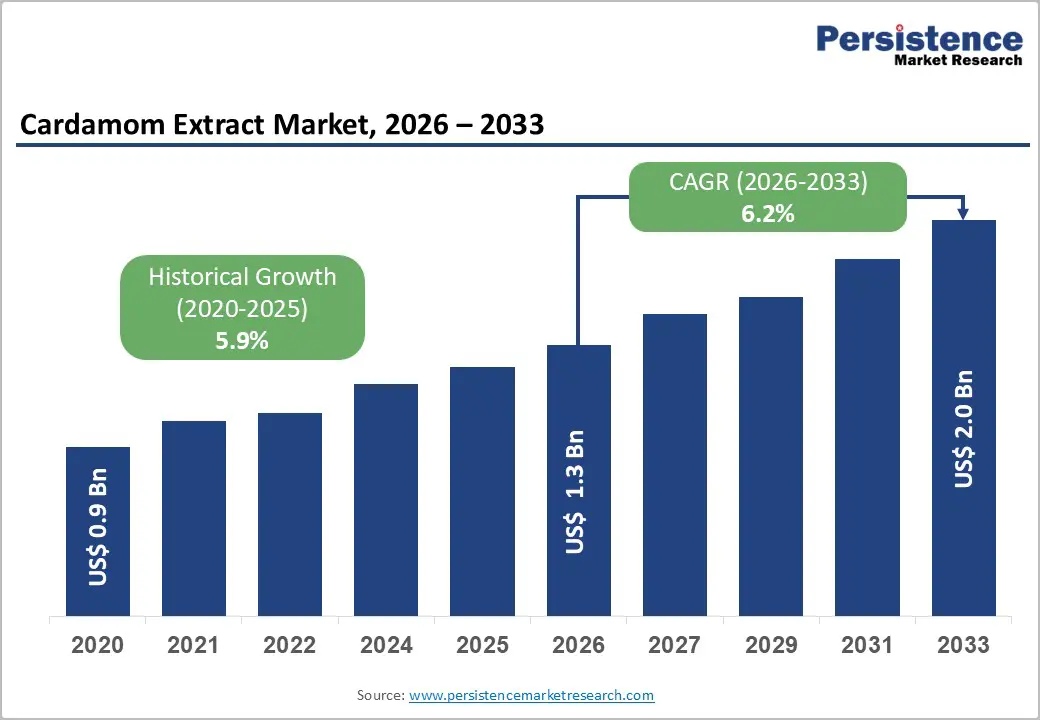
The global cardamom extract market size is likely to be valued at US$1.3 billion in 2026, expected to reach US$2.0 billion by 2033, growing at a CAGR of 6.2% during the forecast period from 2026 to 2033, driven by the increasing prevalence of natural flavor demand in food & beverages, rising consumer preference for exotic ingredients in dietary supplements, and advancements in extraction technologies.
The need for aromatic compounds, particularly in cosmetics, has significantly boosted the adoption of cardamom extract across various demographics. The market is further propelled by innovations in liquid and powder forms, catering to preferences for concentrated and versatile options. The growing acceptance of cardamom extracts as essential ingredients in wellness products, particularly in pharmaceuticals, is a key driver of cardamom extract market trends.
Key Industry Highlights:
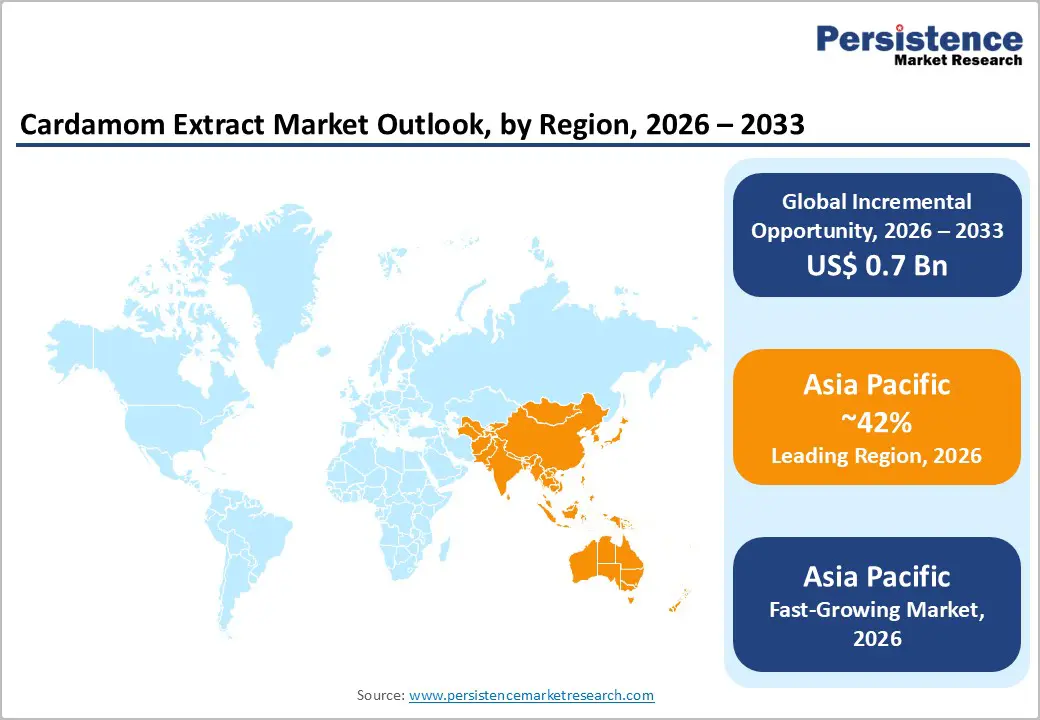
- Leading Region: Asia Pacific is anticipated to lead, accounting for a 42% market share in 2026, driven by dominant spice production, high prevalence of culinary uses, and strong R&D activities in India.
- Fastest-growing Region: North America, fueled by increasing health-conscious consumers, rising awareness of superfoods, and growing investments in nutraceuticals in the U.S.
- Dominant Product Type: Liquid, to hold approximately 45% of the market share in 2026, due to ease of incorporation in beverages.
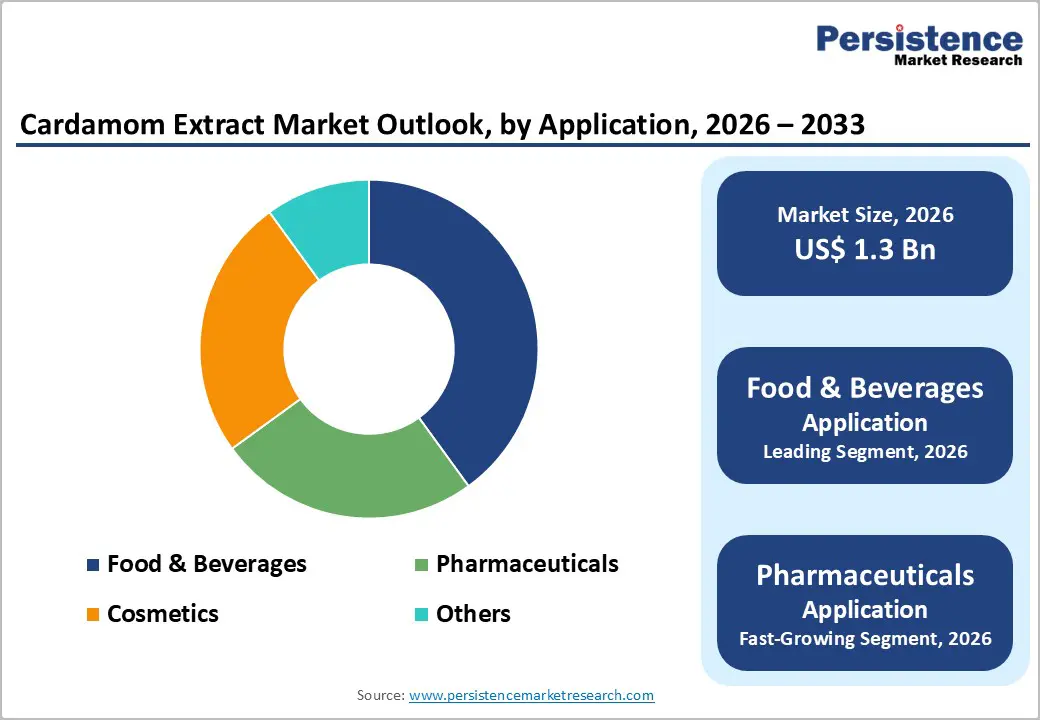
- Leading Application: Food & beverages, to account for over 40% of market revenue, driven by flavor enhancement needs.
- Leading Distribution Channel: Supermarkets/Hypermarkets, to contribute nearly 35% of the market revenue, due to retail accessibility.
| Key Insights | Details |
|---|---|
| Cardamom Extract Market Size (2026E) | US$1.3 Bn |
| Market Value Forecast (2033F) | US$2.0 Bn |
| Projected Growth (CAGR 2026 to 2033) | 6.2% |
| Historical Market Growth (CAGR 2020 to 2025) | 5.9% |
Market Factors - Growth, Barriers, and Opportunity Analysis
Growing Demand for Natural Flavors in Food & Beverages and Exotic Ingredients in Dietary Supplements
The increasing demand for natural flavors in the food and beverage sector, along with the growing interest in exotic ingredients in dietary supplements, is reshaping ingredient trends across industries. Consumers worldwide are increasingly prioritizing clean-label products that deliver authentic taste profiles while offering health benefits. Cardamom, with its warm, aromatic notes and antioxidant properties, fits perfectly into this narrative, appearing in teas, spice blends, baked goods, and functional beverages.
The global expansion of the ethnic food market, coupled with post-pandemic rising health awareness, has amplified interest in versatile extracts such as cardamom, particularly among millennials and Gen Z who seek culturally inspired, nutrient-dense options. In the dietary supplements category, cardamom extract's anti-inflammatory and digestive benefits are gaining recognition, positioning it as a staple in gut health formulas, immunity boosters, and stress-relief capsules. Pharmaceutical applications are also emerging, with cardamom extracts showing promise in oral care and respiratory formulations. The ingredient's mild, versatile flavor further enhances its appeal in food & beverages, from gourmet sauces to herbal infusions, while its sustainability story resonates with eco-conscious brands.
High Development and Supply Chain Volatility Costs
The high costs associated with the development and supply chain instability of cardamom extract present a significant challenge to market growth. As a premium spice sourced primarily from smallholder farms in Guatemala, India, and Sri Lanka, cardamom struggles with inconsistent quality and limited production scale. The specialized drying and distillation processes required to preserve its volatile oils further increase extractors' operational expenses. Limited arable land and susceptibility to climate variability, such as droughts and monsoons, compound these issues, leading to supply inconsistencies and price fluctuations that discourage widespread adoption by food manufacturers and supplement brands.
Navigating regulatory requirements adds complexity, as cardamom extract must comply with stringent food safety standards and organic certification requirements in key markets such as the U.S. and the EU. Meeting GRAS status and allergen labeling regulations extends development timelines and raises costs, particularly for new product formulations. While these measures help maintain quality, they create obstacles for emerging players and slow market entry in price-sensitive segments.
Advancements in Extraction Technologies and Expanded Functional Applications
Advancements in extraction technologies and the growing range of functional applications present significant growth opportunities for the cardamom extract market. Techniques such as supercritical CO2 and ultrasound-assisted extraction are improving both yield and bioactivity retention, making cardamom extract more competitive with well-established spices such as ginger and turmeric. These innovations help reduce production costs and enhance shelf stability, paving the way for broader use in ready-to-eat meals, beverages, and cosmetics. The rise of microencapsulation technology also helps protect sensitive aroma compounds from degradation, expanding its potential in fortified snacks, oral care products, and even pet foods.
Cardamom extract's untapped potential in pharmaceuticals and nutraceuticals, particularly in anti-inflammatory supplements, oral health formulations, and aromatherapy, presents high-margin opportunities. As scientific research continues to validate its antimicrobial and antioxidant properties, brands can leverage this clinical backing to position cardamom extract as a premium ingredient. Strategic partnerships with spice cooperatives can ensure ethical sourcing, while vertical integration in processing helps mitigate volatility, positioning cardamom extract as a scalable super-ingredient for the next decade.
Category-wise Analysis
Product Type Insights
The liquid segment is expected to dominate with a 45% share in 2026, as it blends easily into beverages, sauces, and functional food formulations. Its strong solubility, quick dispersion, and aroma retention make it highly preferred by food and beverage manufacturers. The format also supports consistent dosing and clean-label product development, further boosting its widespread adoption. Nature’s Flavors, Inc. produces a natural liquid cardamom flavor extract widely used by food and beverage manufacturers. This liquid cardamom extract is designed to deliver the authentic warm and aromatic profile of cardamom and can be seamlessly blended into a variety of beverage and food applications, including flavored teas, specialty drinks, sauces, dairy products, baked goods, and confections.
The powder segment is the fastest-growing, valued for its long shelf life, stability, and versatility in supplements, bakery mixes, and dry beverage blends. It offers easy handling, precise dosing, and consistent flavor delivery. Manufacturers prefer powder formats for their compatibility with clean-label formulations and their ability to enhance nutritional content without altering product texture. Botanical Cube Inc. produces a cardamom extract powder specifically engineered for stability, a long shelf life, and compatibility with dry product formulations. Their spray-dried cardamom extract powder is processed to reduce moisture content to under 3%, which helps maintain potency and stability for up to 36 months (long shelf life) without added preservatives. The powder is also free-flowing and resistant to clumping, making it ideal for use in capsules, tablets, functional beverages, dry supplements, and bakery premixes where precise dosing and consistent flavor delivery are critical.
Application Insights
The food & beverages segment is expected to lead, accounting for 40% revenue share in 2026, as cardamom extract is widely used to enhance flavor in teas, curries, baked goods, and desserts. Its strong aromatic profile, versatility, and clean-label appeal make it a preferred ingredient for premium and functional food products, driving continuous demand across global culinary applications. Spice Drop Cardamom Extract and similar food-grade cardamom extracts from Apex Flavors illustrate how cardamom extracts are formulated specifically for use in a wide range of food and beverage products. Apex’s natural and ethyl alcohol-free cardamom extracts are designed to be water-soluble and dispersible, making them suitable for beverages such as flavored teas, dairy drinks, and specialty craft sodas, as well as culinary and bakery uses such as cakes, cookies, and ice cream.
The pharmaceutical segment is the fastest-growing, increasingly used for its digestive, respiratory, and oral health benefits. Its natural anti-inflammatory, antimicrobial, and antioxidant properties make it valuable in herbal medicines, syrups, capsules, and therapeutic formulations. Rising demand for plant-based remedies and preventive healthcare further accelerates its adoption. HerbEra’s Cardamom Capsules are marketed as a natural herbal dietary supplement containing organic cardamom (Elettaria cardamomum) designed to support digestive health and gastrointestinal balance. These capsules harness bioactive compounds such as cineole, limonene, and natural antioxidants, which have been traditionally associated with positive digestive effects and antioxidant support.
Distribution Channel Insights
Supermarkets and hypermarkets are projected to lead the market with a 35% share, as shoppers often make impulse purchases in well-organized spice and extract sections. These stores offer high product visibility, frequent promotions, and a range of brands, which encourage both trial and repeat purchases. Supermarkets and hypermarkets cater to consumers seeking reliable, easily accessible cardamom extract options for everyday cooking and wellness. Products such as Ossoro Cardamom, Elaichi Flavour Essence, and Natural Extracts and Pastes Green Cardamom Extract are commonly available in these retail channels, including BigBasket, JioMart, and local grocery stores. These products are typically displayed in the spices and extracts aisles, where prominent shelf placement and visibility prompt shoppers to discover and make impulse buys while browsing for cooking and flavoring items.
Online stores are likely to represent the fastest-growing segment, as e-commerce platforms make premium cardamom extracts accessible to a global audience. Consumers prefer online shopping for the wider selection of brands, specialty formulations, and competitive pricing it offers. The rise of wellness-focused direct-to-consumer (D2C) brands and subscription services has further accelerated digital sales, particularly among health-conscious and gourmet consumers seeking convenience. For example, Spice Drop Cardamom Extract is sold online through platforms such as Amazon and specialty spice e-stores. This concentrated extract, marketed for use in beverages and desserts, is easily accessible to consumers shopping online, eliminating the need to visit a physical store.
Regional Insights
North America Cardamom Extract Market Trends
North America is expected to be the fastest-growing region, accounting for 24% market share in 2026, led by the U.S. demand for premium natural flavors and functional ingredients. Rising interest in global flavors is pushing demand for cardamom extract in specialty teas, artisanal bakery products, craft beverages, and premium condiments. The region is also seeing expanding use of botanical extracts in nutraceuticals, with cardamom valued for its digestive support, antioxidant properties, and role in natural respiratory formulations. Clean-label product reformulation by major food manufacturers is further encouraging the adoption of concentrated cardamom extract as a consistent, high-impact flavoring alternative to traditional spices.
In personal care, brands are incorporating cardamom extract into oral hygiene, aromatherapy, and herbal skincare products for its soothing and antimicrobial properties. The growing popularity of functional foods and holistic wellness lifestyles is accelerating diversification into shots, herbal blends, and health-focused snacks. Improved supply chain traceability and quality certification standards are strengthening consumer confidence in botanical ingredients.
Europe Cardamom Extract Market Trends
Growth in Europe is supported by strong consumer interest in natural flavors, clean-label products, and botanical-based wellness solutions. The region’s culinary landscape, known for fusion cuisine, artisanal bakery items, and gourmet beverages, is increasingly incorporating cardamom extract as a premium flavor enhancer. Its use is rising in specialty teas, plant-based desserts, flavored dairy alternatives, and craft beverages, aligning with Europe’s preference for authentic, aromatic ingredients. The wellness sector is another major driver, as consumers seek herbal extracts with digestive, antioxidant, and respiratory health benefits.
The cardamom extract segment is gaining traction in digestive tonics, functional shots, supplements, and herbal remedies, aligning with Europe’s growing preventive health culture. In personal care, formulators are adopting cardamom extract for natural oral care, aromatherapy blends, and botanical skincare due to its soothing fragrance and antimicrobial qualities. Sustainability is also shaping market behavior, with European buyers showing a strong preference for ethically sourced, traceable, and pesticide-free extracts. The rise of premium private-label offerings and innovation in organic formulations further enhances demand.
Asia Pacific Cardamom Extract Market Trends
Asia Pacific is estimated to dominate with a 42% share in 2026, supported by strong regional consumption of spices, rising incorporation of botanical ingredients in foods, and expanding applications in traditional wellness systems. The region’s rich culinary heritage, particularly in South Asian and Southeast Asian cuisines, continues to drive high demand for concentrated cardamom extract in teas, curries, confectionery, and premium packaged foods. Growing urbanization and the rise of ready-to-drink beverages are prompting manufacturers to use liquid and powder extracts to deliver consistent flavor.
In the wellness sector, cardamom extract is increasingly featured in herbal supplements, digestive tonics, and respiratory formulations, reflecting the region’s long-standing reliance on natural remedies. The beauty and personal care industry is also adopting cardamom extract for its aromatic and antimicrobial properties, integrating it into oral care products, aromatherapy oils, and herbal skincare products. Expanding food processing industries, growing preference for clean-label ingredients, and improved extraction technologies are further supporting market expansion. Rising disposable incomes and exposure to global product formats are boosting demand for premium, high-purity botanical extracts.
Competitive Landscape
The global cardamom extract market is highly competitive, shaped by multinational flavor houses, regional spice processors, and emerging clean-label ingredient brands. Companies compete heavily on factors such as purity, solvent-free extraction, organic certification, and full supply-chain traceability. Leading global players such as Givaudan SA, Kerry Group, and Mane Kancor leverage advanced extraction technologies, large-scale procurement networks, and strong partnerships with food and beverage manufacturers to maintain their market dominance. Indian companies such as Keya Foods and Herbanic India are strengthening their positions through cost-efficient production, direct sourcing from farmer groups, and a growing portfolio of organic, steam-distilled, and resin-free cardamom extracts tailored for natural product categories.
Recent years have seen increased investments in upgrading extraction facilities, expanding cold-chain storage, and improving quality assurance to meet evolving international standards. Manufacturers are also vertically integrating with farmer cooperatives to secure sustainable raw material supply and ensure consistent quality. Product innovation is accelerating, with new cardamom extract formats designed for functional beverages, nutraceuticals, plant-based foods, and premium personal care products.
Key Industry Developments
- In July 2025, the Multi-Commodity Exchange of India (MCX) announced the launch of Cardamom Futures Contracts. This major initiative is designed to enhance price discovery, provide better price risk management, and strengthen the spice trading ecosystem, particularly benefiting small and medium-scale farmers in South India and traders throughout the country.
- In August 2024, the Spices Board launched a comprehensive scheme to enhance the export of spices and value-added spice products, as well as improve cardamom productivity. Spices Board has rolled out various programs under the scheme - Sustainability in Spice Sector through Progressive, Innovative and Collaborative Interventions for Export Development' (SPICED).
Companies Covered in Cardamom Extract Market
- McCormick & Company
- Olam International
- Givaudan SA
- Kerry Group
- Mountain Rose Herbs Inc.
- doTERRA Holdings LLC
- Keya Foods International Pvt. Ltd.
- Monterey Bay Spice Company Inc.
- SOM Extracts
- Herbanic India
- Mane Kancor
Frequently Asked Questions
The global cardamom extract market is projected to reach US$1.3 billion in 2026.
Rising demand for natural and exotic flavors in food & beverages, along with growing use in functional supplements and cosmetics, are the primary growth drivers.
The cardamom extract market is expected to grow at a CAGR of 6.2% from 2026 to 2033.
Advancements in extraction technologies and expanding applications in pharmaceuticals and premium cosmetics present major growth opportunities.
Leading players include Givaudan SA, Kerry Group, Mane Kancor, Olam International, McCormick & Company, and doTERRA Holdings LLC.


