




- Beverages
- Beer Home Brewing Kits Market
Beer Home Brewing Kits Market Size, Share, and Growth Forecast, 2026 - 2033
Beer Home Brewing Kits Market by Product Type (All-Grain Kits, Extract Kits, Partial Mash Kits), Equipment Type (Fermenters, Brewing Pots, Others), Distribution Channel (Online Retail, Specialty Stores, Others), and Regional Analysis for 2026 - 2033

Beer Home Brewing Kits Market Size and Trends Analysis
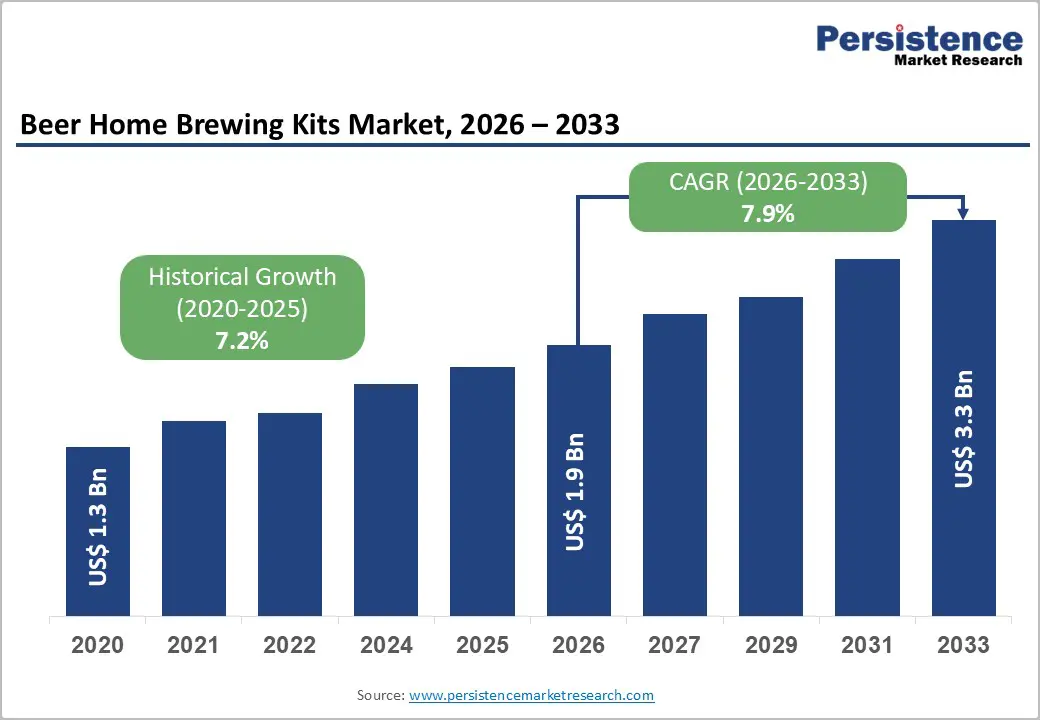
The global beer home brewing kits market size is likely to be valued at US$1.9 billion in 2026, and is expected to reach US$3.3 billion by 2033, growing at a CAGR of 7.9% during the forecast period from 2026 to 2033, driven by rising consumer interest in craft beer, increasing preference for DIY brewing experiences, and growing popularity of home-based hobbies post-pandemic. The increasing demand for convenient, high-quality home-brewing solutions remains a major driver of the beer home-brewing kits market's growth.
Key Industry Highlights:
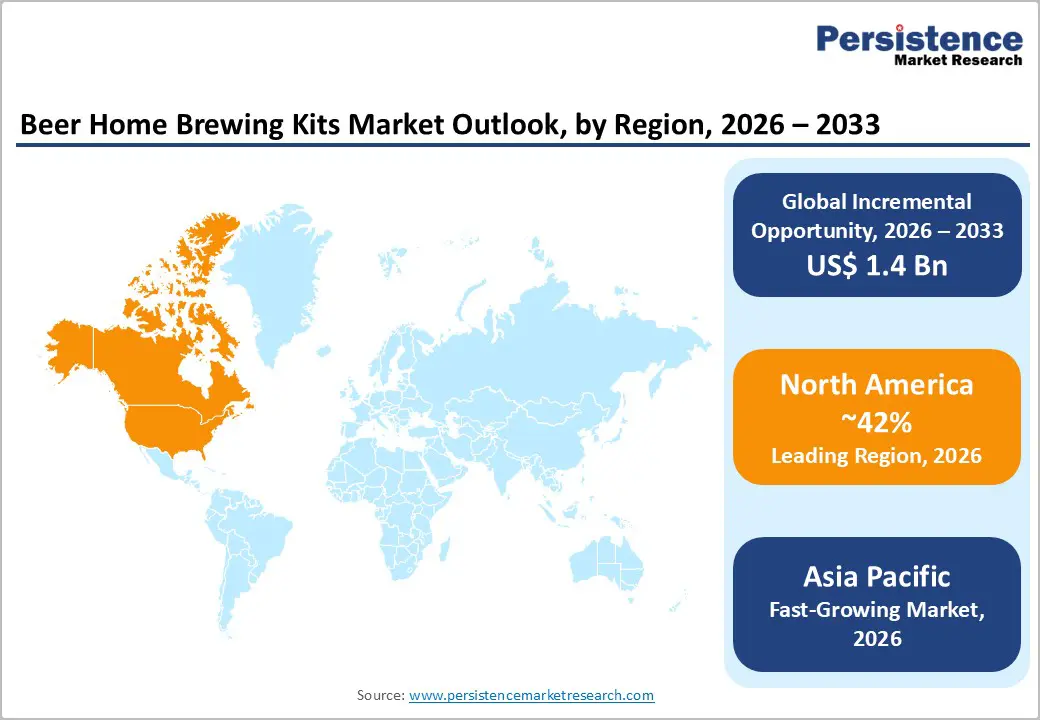
- Leading Region: North America, anticipated to account for a 42% market share in 2026, driven by strong craft beer culture and rising DIY home brewing trends across the U.S. and Canada.
- Fastest-growing Region: Asia Pacific, fueled by rising disposable incomes, growing interest in Western hobbies, and expanding e-commerce in China and India.
- Dominant Product Type: All-Grain Kits, to hold approximately 48% of the market share, preferred by experienced home brewers.
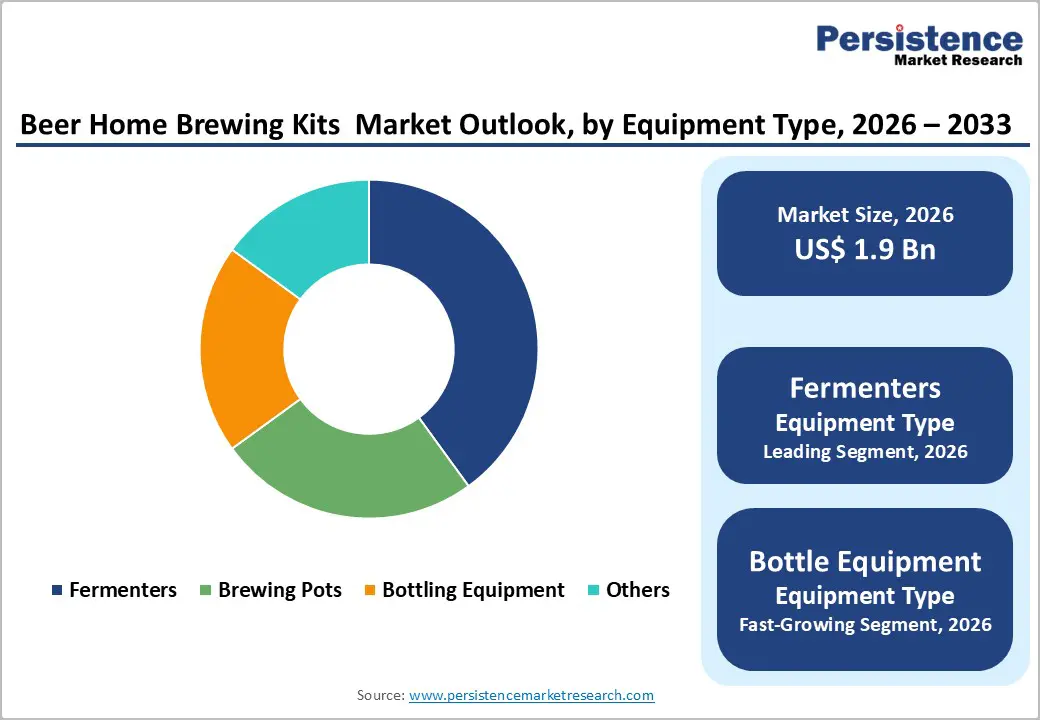
- Leading Equipment Type: Fermenters are projected to dominate, holding a 40% share in 2026, due to their essential role in converting wort into beer by enabling controlled fermentation, which directly impacts flavor, aroma, and quality.
| Key Insights | Details |
|---|---|
| Beer Home Brewing Kits Market Size (2026E) | US$1.9 Bn |
| Market Value Forecast (2033F) | US$3.3 Bn |
| Projected Growth CAGR (2026 - 2033) | 7.9% |
| Historical Market Growth (2020 - 2025) | 7.2% |
DRO Analysis
Driver Analysis - Rising Craft Beer Culture & Premiumization
The growing consumer shift toward high-quality, artisanal beverages is significantly driving demand for homebrewing kits. As drinkers increasingly prefer distinctive flavors, small-batch production, and authentic brewing techniques, interest in replicating such experiences at home has surged. Craft beer emphasizes creativity, ingredient quality, and unique taste profiles, which contrasts with mass-produced beer and appeals strongly to younger and premium-oriented consumers.
This trend encourages individuals to experiment with diverse ingredients, such as specialty malts, hops, and yeast strains, enabling them to create customized brews tailored to their preferences. Home brewing kits serve as an accessible entry point into this experience, offering pre-measured ingredients and simplified processes that mirror professional brewing methods. The premiumization trend, where consumers are willing to spend more on high-quality, personalized products, supports the adoption of advanced and higher-priced brewing kits. Social media and digital communities further amplify this movement by showcasing creative brewing experiments and sharing knowledge, making the hobby more appealing and approachable.
Desire for Customization & Flavor Experimentation
A growing preference for personalized consumption experiences is encouraging consumers to move beyond standardized beer offerings and explore unique flavor profiles. Home brewing kits enable individuals to tailor every aspect of the brewing process, from selecting ingredients such as hops, malts, and yeast to adjusting fermentation time and flavor intensity. This level of control allows users to create beers that align precisely with their taste preferences, whether they prefer fruity, bitter, spicy, or smooth variations.
The appeal of experimentation is further strengthened by the availability of diverse ingredient kits and recipe variations, which inspire users to try new combinations and brewing styles. Enthusiasts often enjoy the creative process of crafting signature brews, turning home brewing into both a hobby and a form of self-expression. This experimentation is also influenced by global flavor trends, seasonal ingredients, and the desire to replicate popular craft beer styles at home. Social media platforms and online brewing communities play a key role in sharing recipes, techniques, and success stories, motivating others to experiment.
Restraint Analysis - Complex Brewing Process & Learning Curve
The process of brewing beer at home involves multiple precise steps, including sanitization, ingredient measurement, fermentation, and temperature control, which can be challenging for beginners. Even small errors in hygiene or timing can lead to contamination or inconsistent taste, resulting in failed batches. This technical complexity often discourages first-time users who may find the process intimidating despite the availability of starter kits.
In addition, understanding brewing techniques such as yeast management, carbonation, and flavor balancing requires time and practice. Many consumers seek convenience and may not be willing to invest the effort needed to master these skills. While instruction manuals and online tutorials help, the hands-on nature of brewing still presents a barrier to easy adoption.
Space & Storage Constraints in Urban Households
Limited living space in urban households poses a significant challenge to adopting home brewing kits. Brewing beer requires space for equipment such as fermenters, bottles, tubing, and cleaning supplies, as well as a stable area where the brewing process can proceed undisturbed. In compact apartments, especially in densely populated cities, dedicating such space is often impractical.
Fermentation needs controlled conditions, including consistent temperature and minimal disturbance, which may be difficult to maintain in small, shared living environments. Storage of ingredients and finished batches further adds to the space burden, as bottles or kegs can occupy considerable room.
Opportunity Analysis - Growing Demand for Craft & Specialty Beers
Consumer preferences are increasingly shifting toward unique, high-quality beer experiences that go beyond standard mass-produced options. There is strong interest in beverages with distinctive taste profiles, including fruity, spiced, sour, and barrel-aged varieties. This shift is driven by a desire for authenticity, creativity, and a deeper connection with the brewing process.
As people explore diverse beer styles, many become curious about how these flavors are created, which in turn encourages them to experiment with home brewing. Home brewing kits provide an accessible way to recreate popular specialty styles or develop entirely new combinations using different hops, malts, and yeast strains. This hands-on involvement enhances the overall experience, turning consumption into a creative and engaging activity. Seasonal and limited-edition flavors further fuel this interest, as consumers seek variety and novelty in their choices. The ability to produce small batches at home allows for continuous experimentation without relying on commercial availability.
Eco-Friendly & Sustainable Brewing Solutions
Environmental awareness is increasingly shaping consumer purchasing decisions, encouraging a shift toward more sustainable lifestyle choices. In the context of home brewing, this translates into a preference for kits and processes that minimize waste, reduce resource consumption, and use environmentally responsible materials. Many consumers are drawn to options that include reusable equipment, recyclable packaging, and ingredients sourced through sustainable agricultural practices.
Home brewing itself can support sustainability by reducing reliance on mass production and extensive supply chains, which often involve higher carbon emissions from transportation and packaging. By producing beer in small batches at home, users can better control quantities and limit excess waste. Spent grains and other by-products can be repurposed for composting or cooking, further promoting a circular approach. Manufacturers have an opportunity to innovate by offering compact, energy-efficient brewing systems and organic ingredient kits. As sustainability becomes a key consideration, brands that align with eco-conscious values are likely to gain a competitive edge.
Category-wise Analysis
Product Type Insights
All-grain kits are projected to lead the market, accounting for approximately 48% of the share in 2026, owing to the high level of control they provide over the brewing process and final product. These kits enable brewers to work directly with raw ingredients such as malted grains, allowing for precise customization of flavor, aroma, and body. They are particularly favored by enthusiasts and experienced brewers for their authenticity and ability to replicate professional brewing methods. Companies such as MoreBeer! offer an extensive range of all-grain beer recipe kits, including collaborations with craft breweries such as Russian River Brewing Company’s Pliny the Elder Double IPA. By incorporating raw ingredients such as malted grains and diverse hop varieties, these kits allow users to produce high-quality craft beer at home with enhanced flavor precision and control.
Extract kits represent the fastest-growing segment, propelled by their simplicity and convenience. These kits use pre-processed malt extract instead of raw grains, eliminating complex steps such as mashing and reducing overall brewing time. This makes them highly appealing to beginners and casual users who want an easy entry into home brewing without extensive knowledge or equipment. The shorter preparation process and lower risk of errors further enhance their attractiveness. Northern Brewer, a prominent homebrewing supplier, offers a variety of extract kits, including Dead Ringer IPA and Bavarian Hefeweizen. These kits include pre-prepared malt extract, hops, yeast, and step-by-step instructions, enabling users to brew beer easily without complex processes like grain mashing.
Equipment Type Insights
Fermenters are expected to lead the market, accounting for around 40% of the share in 2026, as they play a vital role in converting wort into beer. These vessels create a controlled environment in which yeast ferments sugars into alcohol and carbon dioxide, directly shaping the beverage’s flavor, aroma, and overall quality. Regardless of brewing expertise, every setup requires a fermenter, making it an essential component in the process. Products such as the FermZilla 27L Conical Fermenter by KegLand are widely used in homebrewing setups. This system functions as a versatile unit for fermentation, carbonation, and even dispensing, enabling brewers to streamline operations. It features pressure-handling capability, a dedicated yeast collection container, and a transparent design that allows easy monitoring of the fermentation process.
Bottling equipment is likely to be the fastest-growing segment, driven by the need for proper storage and professional presentation of finished beer. After fermentation, bottling plays a crucial role in preserving carbonation, flavor, and shelf life. Home brewers increasingly seek high-quality bottles, cappers, and filling tools to achieve consistent results and a polished final product. The rising interest in sharing home-brewed beer with friends or gifting further boosts demand for reliable bottling solutions. William’s Brewing, a recognized supplier of homebrewing equipment, offers an extensive range of bottling solutions, including bottle cappers, bottles, and the BeerGun filling system, all designed to streamline the bottling process and enhance the final presentation of the beer.
Regional Insights
North America Beer Home Brewing Kits Market Trends
North America is projected to dominate, accounting for the 42% of the market share in 2026, driven by a strong culture of craft beer appreciation and a growing interest in do-it-yourself activities. Consumers across the U.S. and Canada are increasingly exploring home brewing as both a hobby and a way to create personalized beer experiences. This trend is supported by a well-established craft beer ecosystem that inspires individuals to experiment with different styles and ingredients at home.
Demand is increasing for beginner-friendly, compact brewing kits that streamline the process and minimize the need for extensive equipment. Experienced brewers are gravitating toward advanced systems with automation and temperature control, highlighting a growing premiumization trend. E-commerce platforms are further supporting market growth by enhancing product accessibility and offering a broad selection of kits and ingredients. Sustainability is becoming a key consideration, with consumers increasingly preferring reusable equipment and environmentally friendly packaging.
Europe Beer Home Brewing Kits Market Trends
The European market is shaped by a strong cultural foundation of traditional brewing combined with a modern shift toward craft and personalized beer experiences. Countries such as Germany, the U.K., and Belgium have long-standing brewing heritage, which continues to influence consumer interest in home brewing. This deep-rooted culture encourages enthusiasts to experiment with classic and regional beer styles at home.
Increasing demand for premium and authentic brewing experiences, with consumers seeking greater control over ingredients and flavor profiles. This has led to rising interest in advanced kits, including all-grain systems and automated brewing solutions. Beginner-friendly kits remain popular, supported by growing online tutorials and digital communities that make brewing more accessible. Expansion of e-commerce channels, which are improving product availability across different European regions and reducing dependence on physical retail stores. Consumers are showing interest in diverse beer styles influenced by the evolving craft beer scene, including specialty and experimental flavors.
Asia Pacific Beer Home Brewing Kits Market Trends
Asia Pacific is the fastest-growing region, driven by changing consumer lifestyles and greater exposure to global beer culture. Countries such as China, Japan, Australia, and India are witnessing rising interest in craft-style beverages, encouraging consumers to explore home brewing as a hobby. Urbanization and a growing young population are further supporting this trend, as consumers seek unique and experiential activities.
There is an increasing demand for beginner-friendly and compact brewing kits, as many consumers are new to the concept of home brewing. Simplicity, affordability, and ease of use are the major factors influencing purchasing decisions. The expansion of e-commerce platforms is improving accessibility, allowing consumers to explore a wide range of products that may not be available in local stores. The growing influence of social media and online communities is helping to spread awareness and share brewing techniques. Rising disposable incomes and interest in premium lifestyle products are encouraging consumers to experiment with customized beer flavors.
Competitive Landscape
The global beer homebrewing kits market is highly competitive and fragmented, characterized by numerous specialized brewing brands and equipment manufacturers competing to differentiate themselves through quality, convenience, and innovation. Key players such as Brewer's Best, Northern Brewer, Mr. Beer, Brooklyn Brew Shop, Craft a Brew, Coopers Brewery Limited, Muntons PLC, BrewDemon, Midwest Supplies, Home Brew Ohio, MoreBeer, The Home Brewery, WilliamsWarn, Mangrove Jack's, and Brewferm are actively shaping the market landscape.
Companies are increasingly focusing on developing comprehensive and user-friendly kits tailored for both beginners and advanced brewers. Innovation in automated brewing systems and compact designs is gaining traction, while e-commerce platforms play a crucial role in expanding global reach. Brands are investing in educational content, tutorials, and subscription-based ingredient kits to enhance customer engagement and build long-term loyalty.
Key Industry Developments
- In February 2026, Mangrove Jack's launched a new range of cold IPA and lager-specific all-grain kit systems for the North American market, featuring precision-engineered yeast nutrient blends and QR-code linked instructional video content, targeting the rapidly growing segment of style-specific advanced brewers. The product line was made available through Amazon and direct-to-consumer channels simultaneously, with an introductory price of US$79.99 per kit.
- In January 2026, Northern Brewer introduced its BrewShare subscription tier, offering curated all-grain recipe kits with pre-milled grain, pre-weighed hops, and liquid yeast delivered monthly at a price of US$54.99 per box. Within the first four weeks of launch, the company reported over 8,500 active subscriptions, validating strong consumer demand for its recurring ingredient-delivery model.
Companies Covered in Beer Home Brewing Kits Market
- Brewer's Best
- Northern Brewer
- Mr. Beer
- Brooklyn Brew Shop
- Craft a Brew
- Coopers Brewery Limited
- Muntons PLC
Frequently Asked Questions
The global beer home brewing kits market is projected to reach US$1.9 billion in 2026.
The beer home brewing kits market is primarily driven by the rising popularity of craft beer culture and increasing preference for personalized, cost-effective home brewing experiences.
The beer home brewing kits market is poised to witness a CAGR of 7.9% from 2026 to 2033.
Key opportunities in the beer home brewing kits market include the development of smart brewing systems, expansion of subscription models, and growth in emerging markets through affordable starter kits and online education.
Key players in the beer home brewing kits market include Northern Brewer, Brewer's Best, Mr. Beer, Brooklyn Brew Shop, and Craft a Brew.


