

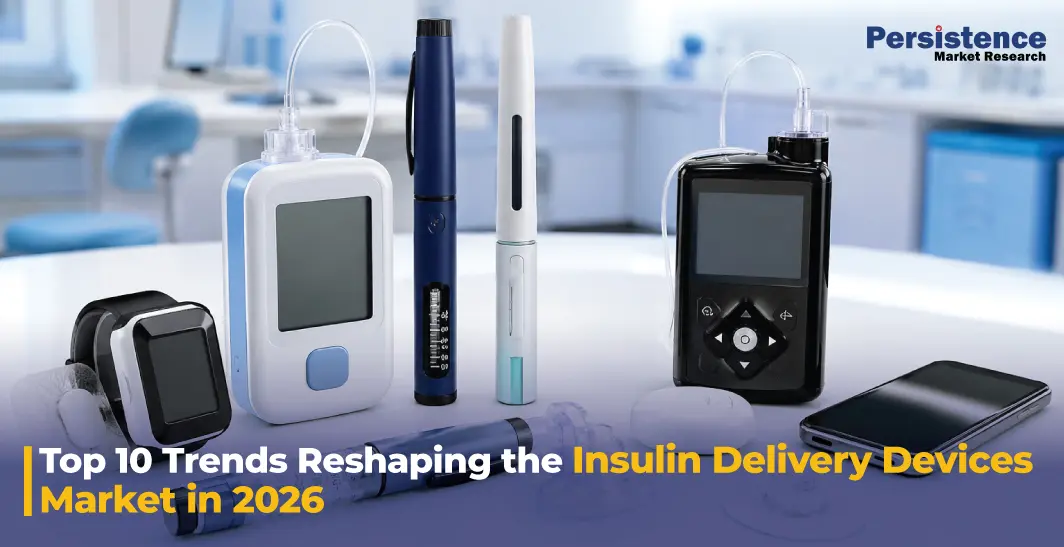
1. Automated Insulin Delivery Is Becoming Standard in Diabetes Care
Automated insulin delivery systems are rapidly changing the treatment landscape. These systems continuously adjust insulin dosing based on glucose readings, reducing the need for frequent manual intervention. Devices such as Medtronic’s MiniMed 780G and Insulet’s Omnipod 5 illustrate how automation is improving glucose management and simplifying therapy routines. The increasing adoption of closed-loop systems reflects growing demand for solutions that reduce hypoglycemic events, improve time-in-range performance, and support more stable glucose control throughout the day.
2. Type 2 Diabetes Is Driving Broader Device Adoption
Advanced insulin delivery technologies were historically associated with type 1 diabetes management. However, the market is now expanding significantly within the type 2 diabetes population. In 2024, the FDA expanded Insulet’s SmartAdjust technology indication for adults with type 2 diabetes, while Medtronic broadened MiniMed 780G approvals in Europe to include type 2 diabetes patients. Since type 2 diabetes represents the majority of global diabetes cases, this expansion is significantly increasing the demand base for insulin pumps, smart pens, and connected delivery systems.
3. Interoperability Has Become a Key Market Requirement
Compatibility between insulin delivery devices and continuous glucose monitoring systems is becoming increasingly important. Patients and healthcare providers are prioritizing systems that allow greater flexibility instead of restricting users to a single ecosystem. Tandem Diabetes Care integrated its t:slim X2 pump with the Dexcom G7 sensor, while Insulet expanded Omnipod 5 compatibility with Abbott’s FreeStyle Libre 2 Plus sensor. This trend reflects the broader movement toward integrated diabetes management platforms that combine data sharing, glucose tracking, and insulin delivery within a unified experience.
4. Tubeless Pumps Are Gaining Strong Consumer Preference
Tubeless insulin pumps continue to gain traction due to their discreet design and improved wearability. Patch pumps eliminate external tubing, making insulin therapy less intrusive during daily activities. Insulet’s Omnipod 5 has become one of the most recognized examples in this category because of its compact wearable format and automated insulin adjustment capabilities. These systems are particularly appealing to younger users, active individuals, and patients seeking more flexible diabetes management solutions.
5. Smart Insulin Pens Are Transforming Injection-Based Therapy
Despite rapid growth in insulin pump adoption, insulin pens remain the most widely used delivery format globally. They are evolving through the introduction of connected smart pens that provide digital dosing support. Medtronic’s InPen system allows users to track insulin doses through a mobile application while integrating glucose data from CGM systems. Features such as dose reminders, insulin-on-board calculations, and therapy tracking are improving adherence and reducing dosing errors for patients using multiple daily injections.
6. Smartphone Integration Is Enhancing Patient Engagement
Mobile connectivity is becoming an essential component of insulin delivery systems. Modern devices increasingly incorporate smartphone-based monitoring, bolus calculation, therapy alerts, and glucose-sharing features. Tandem Diabetes Care introduced smartphone bolusing functionality within its ecosystem, while Medtronic’s CareLink platform enables users to synchronize pump data with mobile devices. These capabilities improve accessibility to treatment information and support more convenient diabetes management in real-world settings.
7. Simplified Sensor Design Is Improving User Experience
Ease of use has become a major focus across the insulin delivery market. Manufacturers are developing all-in-one sensor systems that reduce insertion complexity and minimize the number of wearable components. Medtronic’s Simplera Sync sensor, approved for use with the MiniMed 780G system, eliminated the need for a separate transmitter while simplifying the insertion process. These improvements are helping reduce patient discomfort and supporting higher long-term adoption rates for continuous glucose monitoring systems.
8. Pediatric and Pregnancy Applications Are Expanding
Insulin delivery devices are increasingly being approved for broader patient groups, including young children and pregnant individuals with diabetes. Medtronic expanded indications for the MiniMed 780G system to include children as young as two years old and use during pregnancy. This development reflects the growing emphasis on personalized diabetes management across different life stages and patient populations. Expanding regulatory approvals are also increasing awareness and accessibility of advanced insulin delivery technologies.
9. Reimbursement Policies Are Influencing Market Expansion
Healthcare reimbursement remains one of the most important factors affecting adoption rates for insulin delivery technologies. Several countries are expanding insurance coverage and reimbursement support for insulin pumps and connected diabetes management systems. Insulet secured reimbursement status for Omnipod 5 in France, improving patient access to automated insulin delivery therapy. Broader reimbursement coverage is expected to accelerate adoption across both developed and emerging healthcare markets.
10. Diabetes Management Ecosystems Are Becoming More Integrated
The insulin delivery market is increasingly characterized by integrated digital ecosystems that combine pumps, sensors, software, and mobile applications. Companies are focusing on creating connected platforms that improve data continuity and therapy optimization. Tandem Diabetes Care collaborates with Dexcom for CGM integration, while Insulet supports compatibility with both Abbott and Dexcom sensors. Medtronic continues to expand its integrated pump and monitoring ecosystem through connected software platforms and automated insulin delivery technologies. This integration trend is strengthening the role of digital health within diabetes care.
Conclusion
The insulin delivery devices market is undergoing a major technological transformation driven by automation, digital connectivity, and patient-centered innovation. Automated insulin delivery systems, smart pens, interoperable platforms, and wearable patch pumps are reshaping how diabetes is managed across different patient groups. Improvements in sensor simplicity, smartphone integration, and reimbursement support are also accelerating adoption worldwide. As diabetes prevalence continues to increase globally, the demand for more efficient, connected, and personalized insulin delivery technologies is expected to remain strong throughout the coming decade.


