




- Nutraceuticals & Functional Foods
- Peppermint Oil Market
Peppermint Oil Market Size, Trends, Share, Growth, and Regional Forecast, 2026 - 2033
Peppermint Oil Market by Nature (Organic, Conventional), by Application (Aromatherapy, Cosmetics and Personal Care, Food & Beverages, Home Care Products, Others), Distribution Channel (B2B, B2C), and Regional Analysis from 2025 - 2032

Peppermint Oil Market Share and Trends Analysis
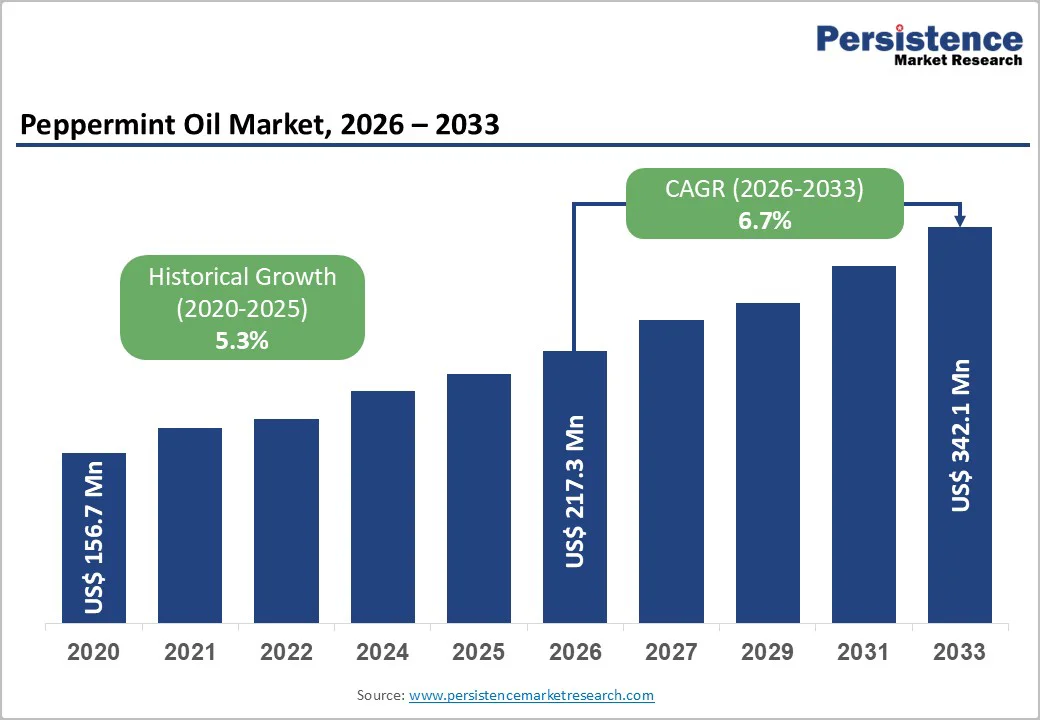
The global peppermint oil market size is estimated to grow from US$ 217.3 million in 2026 and projected to reach US$ 342.1 million by 2033, growing at a CAGR of 6.7% during the forecast period from 2026 to 2033. The peppermint oil market is entering a phase of premiumization, wellness-driven innovation, and rapid capability upgrades, creating clear competitive shifts across regions and applications. These highlights capture the strongest momentum trends reshaping the market growth.
Key Industry Highlights:
- Leading Region: North America remains dominant, supported by strong demand for natural wellness products, rising aromatherapy adoption, and growing use in personal care, oral care, and home-fragrance formulations.
- Fastest-Growing Region: Asia Pacific is accelerating due to expanding herbal wellness culture, increasing personal care consumption, and higher integration of peppermint oil in traditional remedies and functional relaxation products.
- Fastest-Growing Application Segment: Aromatherapy leads growth as consumers embrace stress-relief routines, home diffusers, spa-use botanicals, and mood-enhancing essential oil blends.
- Growth Indicators: Rising global interest in aromatherapy, wellness rituals, and natural cooling actives is strengthening demand for high-purity peppermint oil across consumer health, personal care, and lifestyle segments.
- Opportunities: Scaling organic cultivation and residue-free extraction offers companies a path to premium positioning, stronger branding, and competitive differentiation in high-value retail and export channels.
- Key Developments: In August 2025, UNIFI, Inc. introduced A.M.Y. Peppermint, a naturally deodorizing yarn using peppermint’s odor-neutralizing properties. In March 2024, BASF Aroma Ingredients expanded its Isobionics line with a new natural beta-Caryophyllene ingredient.
| Key Insights | Details |
|---|---|
|
Global Peppermint Oil Market Size (2026E) |
US$ 217.3 Mn |
|
Market Value Forecast (2033F) |
US$ 342.1 Mn |
|
Projected Growth (CAGR 2026 to 2033) |
6.7% |
|
Historical Market Growth (CAGR 2020 to 2025) |
5.3% |
Market Dynamics
Driver - Growing Popularity of Aromatherapy Supports Consistent Industrial Demand
The growing popularity of aromatherapy supports consistent industrial demand, positioning peppermint oil as a core ingredient in wellness-focused formulations. As consumers seek natural solutions for stress relief, respiratory comfort, and cognitive revitalization, peppermint oil is gaining traction across essential oil blends, diffusers, spa therapies, and personal care products. Its strong sensory impact, cooling effect, and perceived therapeutic benefits make it a preferred choice for brands developing mood-enhancing and relaxation-oriented products. The surge in home-based aromatherapy and self-care routines is strengthening year-round consumption, prompting manufacturers to scale production and enhance quality consistency. With wellness culture accelerating globally, peppermint oil continues to be integrated into candles, roll-ons, balms, and premium aromatherapy kits, reinforcing its role as a high-demand natural extract across industries.
Restraints - Synthetic Mint Substitutes Challenge Natural Oil Pricing
Synthetic mint substitutes challenge natural oil pricing, creating a growing cost-pressure scenario that affects producers across the peppermint supply chain. As lab-developed menthol and artificial mint flavors become increasingly sophisticated, many manufacturers turn to these low-cost alternatives to stabilize input expenses and maintain competitive margins. Synthetic variants offer predictable supply, uniform composition, and reduced dependence on seasonal crop yields, making them appealing for high-volume confectionery, oral care, and pharmaceutical applications. This shift disrupts price parity and weakens bargaining power for natural oil suppliers, who face higher cultivation, extraction, and quality-control costs. As synthetic adoption grows, natural peppermint oil producers must emphasize purity, traceability, and differentiated sensory profiles to remain viable in a tightening market environment.
Opportunity - Organic Cultivation Investments Allow Companies to Premiumize and Differentiate
Organic cultivation investments allow companies to premiumize and differentiate, opening a clear pathway for value-driven growth in the global peppermint oil market. As consumer trust shifts toward certified organic wellness products, brands that secure pesticide-free farms and traceable supply networks gain a strong competitive advantage. Startups benefit by positioning themselves as transparent, ethically aligned producers, while established players can extend premium product lines targeted at aromatherapy, personal care, and natural therapeutics. Organic farming enhances oil purity, boosts aroma quality, and supports higher price realization, making it financially attractive despite longer cultivation cycles. With global preferences leaning toward clean, responsibly sourced botanicals, expanding organic acreage enables companies to secure stable demand, strengthen branding, and tap into high-margin retail and export channels.
Category-wise Analysis
By Application Insights
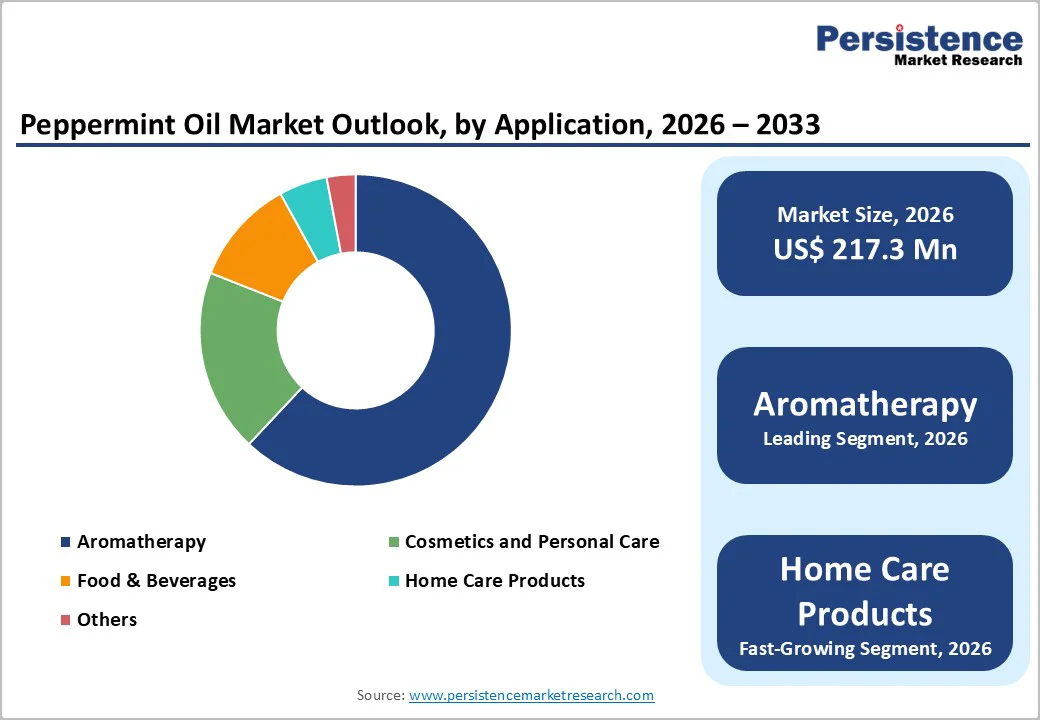
Aromatherapy nearly accounts for 67% share as of 2025, driven by the global shift toward natural wellness practices, stress-relief routines, and home-based therapeutic experiences. Peppermint oil’s cooling sensation, invigorating aroma, and perceived mental clarity benefits make it a foundational ingredient in diffusers, essential oil blends, roll-ons, and spa treatments. Cosmetics and personal care brands use peppermint oil in skincare, haircare, and topical formulations for its refreshing feel and sensory appeal. In food and beverages, it is valued for flavor enhancement in confectionery, herbal teas, and functional drinks. Home care products such as candles, air fresheners, and natural cleaning sprays integrate peppermint oil to deliver a clean, uplifting scent profile. This broad multisector adoption reinforces aromatherapy’s dominant position in the peppermint oil market.
By Nature Insights
Organic peppermint oil is projected to grow at a CAGR of 9.4% during the forecast period, reflecting a strong global shift toward clean-label, chemical-free botanical ingredients. As consumers scrutinize sourcing practices and favor products made without synthetic residues, organic-certified peppermint oil gains a clear trust advantage across aromatherapy, personal care, and health-focused formulations. It is strengthened by the rising demand for ethically cultivated, environmentally responsible crops supported by traceable farming networks. Brands use organic peppermint oil to differentiate premium product lines in skincare, herbal wellness, oral care, and natural home fragrances. With retailers and export markets tightening quality and sustainability expectations, producers investing in organic acreage, residue-free extraction, and certification compliance are positioned to capture accelerated, high-margin growth throughout the forecast horizon.
Regional Insights
North America Peppermint Oil Market Trends
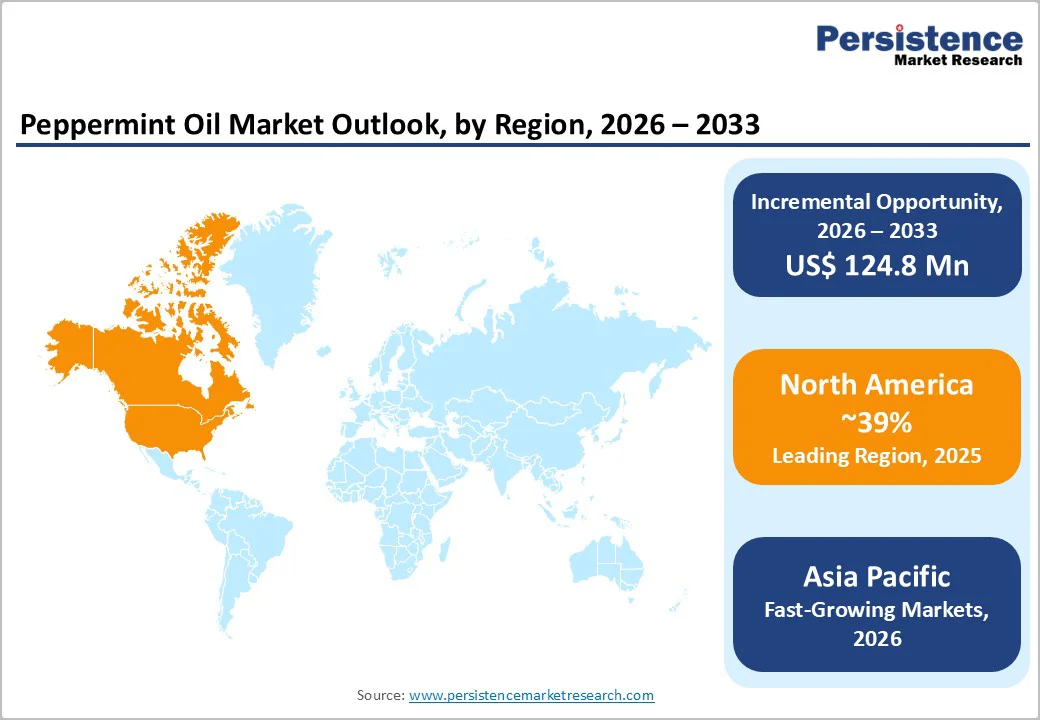
North America holds approximately 39% market share in the global Peppermint Oil Market, reflecting strong consumer alignment with natural wellness, clean-label ingredients, and therapeutic botanical extracts. In the US, peppermint oil demand is rising across aromatherapy, topical pain-relief products, oral care, and premium personal care formulations, driven by expanding interest in stress management and home-based relaxation routines.
Canada is witnessing an increased adoption within herbal supplements, cold-relief remedies, and natural household products as consumers prioritize purity and plant-derived actives. Brands are incorporating higher-quality peppermint oil into candles, balms, teas, and functional beverages to enhance sensory appeal and wellness value. The region’s focus on transparent sourcing, organic cultivation, and high-standard extraction methods continues to shape product development strategies and strengthen long-term market momentum.
Asia Pacific Peppermint Oil Market Trends
Asia Pacific Peppermint Oil Market is expected to grow at a CAGR of 7.8%, supported by rising interest in natural remedies, herbal wellness traditions, and expanding personal care consumption across the region. In China, peppermint oil is increasingly used in traditional wellness formulations, cooling balms, and herbal beverages. India is witnessing greater use in Ayurvedic preparations, digestive aids, and aromatherapy blends as urban consumers adopt holistic self-care.
Japan and South Korea are driving demand through premium skincare, scalp-care treatments, and functional relaxation products. Indonesia and Southeast Asian markets are expanding peppermint oil usage in natural home fragrances and plant-based topical applications. Growing preference for botanical purity, clean-label scents, and multifunctional wellness products is shaping product innovation and accelerating peppermint oil’s adoption across diverse consumer categories in the region.
Competitive Landscape
The global peppermint oil market is moderately fragmented, creating space for both established producers and fast-moving startups to influence industry direction. Leading players are upgrading extraction methods to improve purity, aroma intensity, and batch consistency as aromatherapy demand accelerates with shifting consumer lifestyles focused on relaxation and rejuvenation. Startups are leaning into organic farming partnerships and vertically integrated models to secure residue-free crops and traceable supply chains. Certifications for organic, fair-trade, and clean-label compliance are becoming strategic tools for market differentiation. Innovation in steam distillation efficiency, solvent-free processing, and quality stabilization is reshaping production standards.
Across regions, companies are aligning with wellness-driven consumer behavior to create premium-grade peppermint oil that meets rising expectations for safety, sustainability, and elevated sensory experience.
Key Industry Developments:
- In August 2025, UNIFI, Inc. launched A.M.Y.® Peppermint, a naturally deodorizing yarn designed for long-lasting freshness. The innovation leverages peppermint’s odor-neutralizing properties to enhance performance in recycled and synthetic textiles.
- In March 2024, BASF Aroma Ingredients expanded its Isobionics® portfolio with the launch of Isobionics® Natural beta-Caryophyllene 80.
Companies Covered in Peppermint Oil Market
- Young Living Essential Oils LLC
- doTERRA
- Synthite Industries Ltd.
- The Lebermuth Company
- Aromaaz International
- Biolandes
- IL Health & Beauty Natural Oils Co. Inc.
- Greenleaf Extractions Pvt. Ltd.
- Aksuvital
- Shaanxi Guanjie Technology Co.
- Others
Frequently Asked Questions
The global peppermint oil market is projected to be valued at US$ 217.3 Mn in 2026.
Rising interest in aromatherapy is steadily boosting industrial consumption, becoming a key force propelling growth in the global peppermint oil market.
The global Peppermint Oil market is poised to witness a CAGR of 6.7% between 2026 and 2033.
Expanding investment in organic cultivation enables companies to create premium offerings and strengthen product differentiation, unlocking a significant growth opportunity.
Major players in the global Peppermint Oil market include doTERRA, Synthite Industries Ltd., The Lebermuth Company, Aromaaz International, Biolandes, and others.


