




- Nutraceuticals & Functional Foods
- Agarwood Essential Oil Market
Agarwood Essential Oil Market Size, Share, and Growth Forecast, 2025 - 2032
Agarwood Essential Oil Market By Product Type (Natural Agarwood Oil, Synthetic Agarwood Oil), Application (Perfumery, Therapeutics and Wellness, Others), Distribution Channel, and Regional Analysis for 2025 - 2032

Agarwood Essential Oil Market Size and Trends Analysis
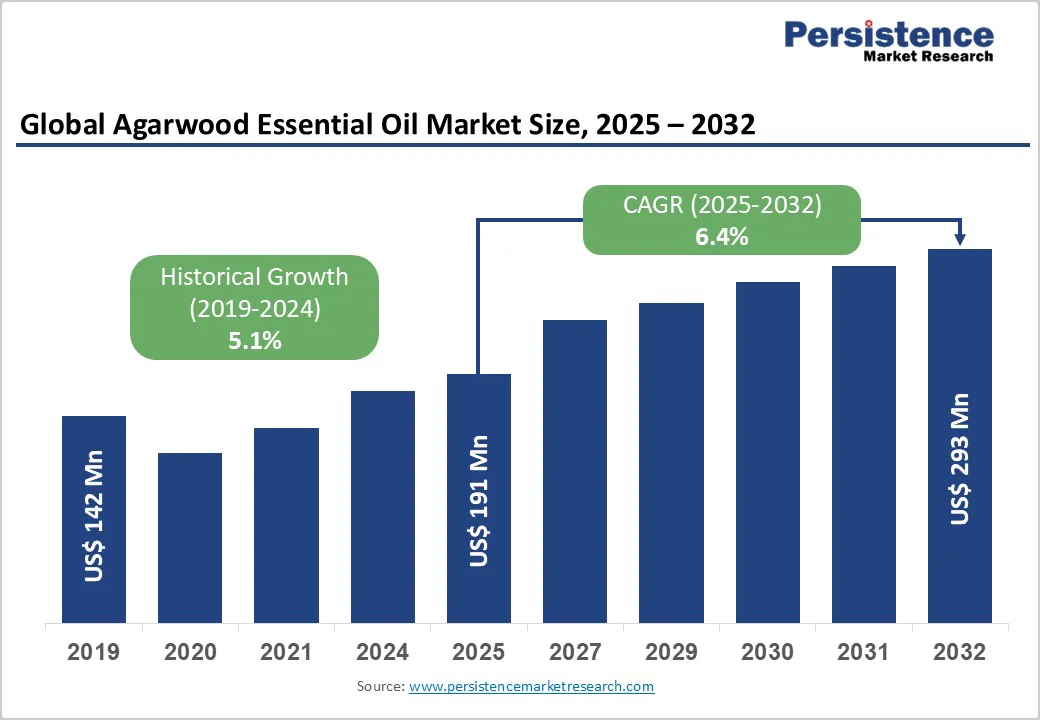
The global agarwood essential oil market size is likely to be valued at US$191 Million in 2025 and is expected to reach US$293 Million by 2032, growing at a CAGR of approximately 6.4% during the forecast period from 2025 to 2032, driven by rising demand for premium natural fragrances, expanding use in aromatherapy and traditional medicine, and the increasing commercialization of sustainable agarwood plantations.
The agarwood essential oil market is growing due to strong investments in extraction technologies, ethical sourcing, rising consumer preference for natural high-value personal care products, increasing disposable incomes in Asia and the Middle East, and expanding use in perfumery and therapeutic applications.
Key Industry Highlights
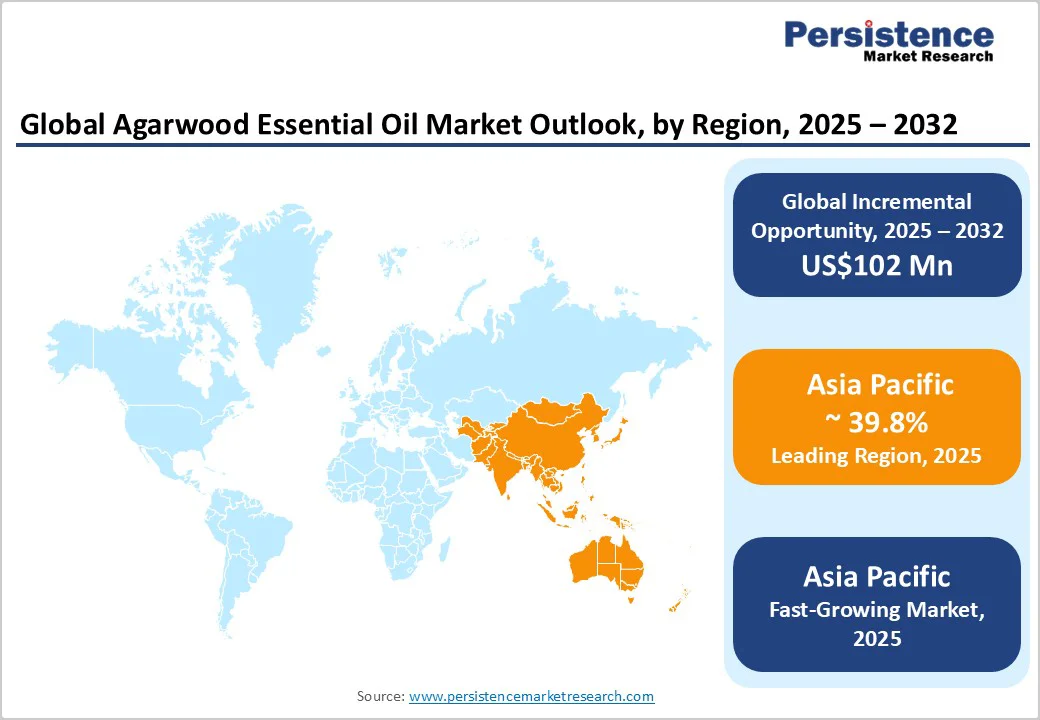
- Leading Region: Asia Pacific, commanding over 39.8% of global agarwood essential oil revenue in 2025, driven by large-scale production in India, Vietnam, and Thailand, and rising consumption across China and Japan.
- Fastest-growing Region: Asia Pacific due to strong export momentum, sustainable plantation initiatives, and luxury fragrance adoption in emerging economies.
- Investment Plans: Expanding investments in sustainable agarwood cultivation across Vietnam, Laos, and India under government-backed agroforestry programs; North American distributors forming long-term supply partnerships with Asian producers to secure traceable sourcing.
- Dominant Product Type: Natural agarwood oil continues to command the majority of global market value, accounting for over 77% of the total revenue due to its authenticity, cultural reverence, and complex aromatic profile.
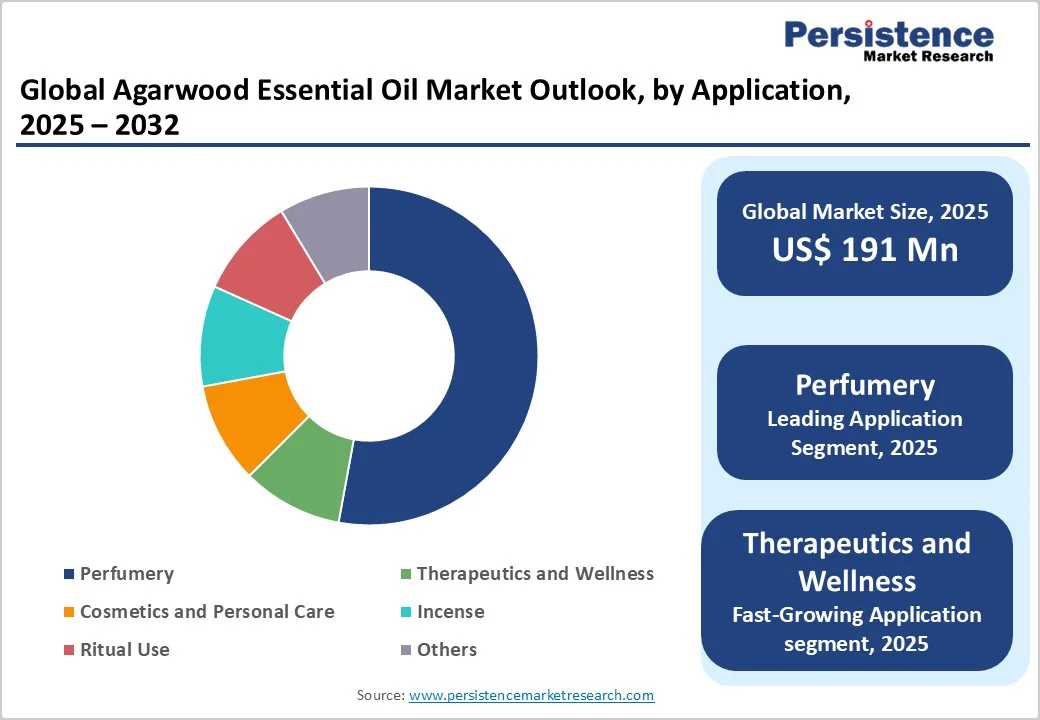
- Leading Application: Perfumery, contributing more than 50% of the total market revenue in 2025, supported by global demand for luxury and artisanal oud-based formulations.
| Key Insights | Details |
|---|---|
|
Agarwood Essential Oil Market Size (2025E) |
US$191 Mn |
|
Market Value Forecast (2032F) |
US$293 Mn |
|
Projected Growth (CAGR 2025 to 2032) |
6.4% |
|
Historical Market Growth (CAGR 2019 to 2024) |
5.1% |
Market Factors - Growth, Barriers, and Opportunity Analysis
Growth Analysis - Rising Demand for Natural and Premium Fragrances
The global fragrance sector is shifting toward natural ingredients as consumers become increasingly cautious about synthetic chemicals. Agarwood oil’s rich, complex scent profile positions it as a luxury ingredient in high-end perfumes and incense formulations. Premium fragrance brands are incorporating agarwood oil into niche collections to enhance exclusivity and natural appeal. The strong association of agarwood with spiritual and cultural heritage in Asian and Middle Eastern societies continues to fuel consistent demand across both traditional and modern markets.
Expansion of Aromatherapy and Wellness Applications
Agarwood essential oil is increasingly recognized for its therapeutic benefits, particularly in stress relief, anxiety reduction, and sleep enhancement. Its integration into aromatherapy blends and diffusers reflects the global wellness movement, emphasizing mental and emotional well-being. The expanding spa and wellness industry, expected to exceed US$1 Trillion by 2032, has significantly boosted the consumption of premium essential oils. The use of agarwood in meditation and holistic health practices further strengthens its position in high-value therapeutic markets.
Sustainable Plantation Development and Technological Innovation
Recent technological advances in artificial inoculation and controlled cultivation of Aquilaria trees have made agarwood production more sustainable and scalable. Commercial plantations in countries such as India, Thailand, and Vietnam are reducing dependence on wild agarwood, aligning production with international conservation standards. The adoption of advanced distillation processes, including CO2 extraction and hydro-distillation, has improved oil yield and purity. These developments enhance supply reliability and help address price volatility caused by the scarcity of naturally infected trees.
Barrier Analysis - High Production Costs and Limited Raw Material Availability
Agarwood oil production involves complex, time-intensive processes with low extraction yields, typically requiring over 70 kilograms of agarwood to produce one liter of oil. Limited access to quality feedstock and high plantation maintenance costs constrain supply. These factors result in premium pricing, often exceeding several thousand dollars per kilogram, which restricts large-scale adoption in mass-market products.
Regulatory Restrictions and Trade Limitations
International trade of agarwood is tightly regulated under CITES (Convention on International Trade in Endangered Species). Export licensing, documentation, and compliance requirements impose administrative burdens on producers and exporters. Differences in national policies regarding plantation registration and resin grading create additional barriers, complicating global distribution and cross-border partnerships.
Opportunity Analysis - Emerging Markets in Asia Pacific and the Middle East
Growing middle-class populations in China, India, and Southeast Asia are driving luxury product consumption. Agarwood’s deep cultural roots make it a preferred ingredient in traditional perfumery, prayer incense, and wellness products. The Middle East, particularly the UAE and Saudi Arabia, remains a key growth engine, with agarwood-based perfumes and attars forming a significant portion of regional fragrance sales. Together, these markets represent more than 60% of global consumption potential.
R&D in Synthetic Biology and Biotechnology Applications
Innovations in biotechnology offer a sustainable pathway to agarwood resin production without reliance on mature trees. Research into microbial inoculation and genetic modification can increase resin yield and shorten growth cycles. The successful commercialization of lab-grown agarwood oil could reduce environmental pressure and provide cost stability, potentially expanding global availability by 25–30% over the forecast period.
Expansion into Premium Cosmetics and Skincare
The rising consumer preference for natural actives in skincare is opening opportunities for agarwood oil as a premium ingredient in creams, serums, and massage oils. Its antioxidant and antimicrobial properties make it suitable for anti-aging and rejuvenation formulations. Cosmetic brands seeking differentiation through exotic natural ingredients are exploring agarwood-infused product lines, particularly in the luxury and spa skincare segments.
Category-wise Analysis
Product Type Insights
Natural agarwood oil commands over 77% of the global market in 2025, driven by its authenticity, cultural significance, and complex aromatic profile that synthetic alternatives cannot replicate. Extracted from the resinous heartwood of mature Aquilaria trees, it is valued for its deep, woody, and balsamic fragrance, central to luxury perfumes and incense. The Middle East, especially Saudi Arabia, the UAE, and Oman, relies heavily on high-grade oud for premium attars, while in Japan and China, it holds ceremonial and religious importance. Artisanal brands such as Ajmal, Ensar Oud, and AgarAura highlight the enduring appeal of pure natural agarwood oil.
The synthetic agarwood oil segment is poised for robust growth between 2025 and 2032, driven by cost efficiency, consistency, and sustainability. Produced through aroma chemistry and biosynthetic techniques, synthetic oils offer a predictable supply and stable quality, catering to mid-tier perfume brands and cosmetic manufacturers. Recent technological advances, including bio-fermentation and precision chemistry, have improved aromatic fidelity, enabling synthetic variants to closely mimic natural oud. Biotechnological approaches, such as yeast- or bacterial-derived agarwood molecules, expand accessibility while reducing pressure on wild Aquilaria populations. These innovations allow broader consumer reach, promote environmentally responsible sourcing, and provide fragrance houses with scalable, high-quality alternatives to natural agarwood oil.
Application Insights
In 2025, the perfumery segment dominated the agarwood oil market, contributing around 50% of global revenue. Its rich, warm aroma and versatility as both a fixative and signature base note make it essential in luxury perfumes, especially oriental and woody fragrances. Major perfumery hubs in France and the Middle East drive consumption, with Middle Eastern markets relying on agarwood for traditional attars and incense, while European brands incorporate it into modern niche fragrances. Renowned names such as Dior, Tom Ford, and Jo Malone have launched oud-infused collections, reflecting a growing global fascination with exotic scents. This cross-cultural adoption has elevated agarwood from a regional luxury to a worldwide olfactory trend.
The therapeutics and wellness segment is the fastest-growing application area, fueled by expanding aromatherapy and holistic health industries. Agarwood oil’s calming, grounding, and meditative properties make it popular for diffusers, massage blends, and meditation rituals. It is believed to reduce stress, ease anxiety, and promote restful sleep, aligning with the global wellness movement emphasizing emotional balance and mindfulness. Spa chains, wellness retreats, and boutique aromatherapy brands in the U.S., Japan, India, Thailand, and Indonesia increasingly incorporate agarwood oil into premium treatments. Online retail channels further expand access to therapeutic-grade oils, allowing consumers worldwide to benefit from their traditional and modern wellness applications, blending heritage with contemporary health trends.
Regional Insights
North America Agarwood Essential Oil Market Trends - Luxury Fragrance Demand and Wellness-Driven Growth
North America accounted for approximately 22% of global agarwood essential oil revenue in 2025, driven by surging consumer interest in luxury fragrances, holistic wellness, and clean-label aromatherapy products. The U.S. remains the region’s dominant market, supported by a well-established retail ecosystem, widespread adoption of aromatherapy in spas and wellness centers, and growing awareness of plant-based therapeutic oils.
Regulatory oversight by the U.S. Food and Drug Administration (FDA) and other quality certification bodies has enhanced product authenticity and consumer trust, especially for imported essential oils. Canada is witnessing notable growth within the premium spa and wellness tourism segment, where demand for sustainable, exotic oils continues to rise.
Market expansion is reinforced by aggressive marketing from niche perfume brands that emphasize sustainably sourced natural ingredients. In April 2025, a California-based fragrance startup launched an eco-certified agarwood perfume line made from ethically harvested resin, targeting the premium retail segment.
Investment activity has also intensified, with distributors forming long-term procurement agreements with Southeast Asian producers to ensure steady supply and traceability. The presence of high-income demographics, coupled with increasing preference for natural luxury goods, positions North America as a significant growth contributor through 2032.
Europe Agarwood Essential Oil Market Trends - Sustainable Perfumery and Ethical Sourcing Leadership
Europe represents over 28% of the global market share in 2025, anchored by its deep-rooted tradition in perfumery craftsmanship and sustainable sourcing ethics. France, the U.K., and Germany dominate consumption, collectively accounting for over two-thirds of the regional revenue.
The European Union’s stringent regulations on organic labeling, fair trade certification, and natural product authenticity are shaping the market toward greater transparency and environmental accountability. Consumer preference for botanical and traceable ingredients aligns strongly with agarwood’s exotic origin and symbolic luxury value.
The U.K. market continues to expand, led by independent niche brands offering artisanal fragrances that blend agarwood with contemporary notes. Germany’s aromatherapy and wellness industries are integrating agarwood oil into high-end diffusers and therapeutic blends, appealing to consumers seeking emotional well-being through natural aromas.
In February 2025, a French luxury fragrance house introduced a new unisex oud-inspired collection featuring sustainably sourced agarwood from Laos, marking a significant move toward ethical luxury. European buyers increasingly prefer suppliers with Forest Stewardship Council (FSC) or CITES-compliant certifications, reducing the risks associated with illegal trade. This emphasis on traceable sourcing and craftsmanship continues to reinforce Europe’s reputation as a leader in premium fragrance innovation.
Asia Pacific Agarwood Essential Oil Market Trends- Production Dominance and Cultural Integration Driving Expansion
Asia Pacific remains the largest and fastest-growing regional market, accounting for over 39.8% of global agarwood essential oil revenue in 2025. The region’s dominance is rooted in both production and consumption, with India, China, Vietnam, and Thailand serving as major centers due to the oil’s religious, cultural, and medicinal significance.
India has emerged as a key exporter, bolstered by government-backed agroforestry initiatives promoting agarwood cultivation in Assam and the Northeast states. China’s expanding luxury fragrance and incense industries are embracing agarwood for its distinct sensory appeal, especially among high-income consumers seeking rare, traditional essences.
Southeast Asian countries such as Vietnam, Laos, and Malaysia are investing in scientifically managed plantations and value-added processing to ensure long-term resource sustainability. In March 2025, Vietnam’s Ministry of Agriculture announced partnerships with private enterprises to expand sustainable agarwood cultivation zones for export markets. Japan remains a stable and mature market, driven by traditional incense use in Buddhist ceremonies and home aromatics.
The region benefits from vertically integrated production networks, artisanal expertise, and proximity to raw material sources, which collectively enable competitive pricing and consistent quality. With rapid urbanization, rising exports, and growing consumer demand for natural perfumery, Asia Pacific is projected to maintain its leadership position through 2032, capturing the majority of new revenue growth in the global agarwood essential oil landscape.
Competitive Landscape
The global agarwood essential oil market is moderately consolidated, with leading producers controlling roughly 45–50% of the total revenue. Prominent players include vertically integrated companies involved in plantation cultivation, distillation, and global distribution. The competitive landscape is characterized by differentiation in oil quality, scent profiles, and certification standards.
Strategic partnerships between plantation owners and perfumery brands are enhancing supply stability and brand authenticity. Market leaders are prioritizing innovation, traceability, and vertical integration to ensure consistent quality and compliance with global standards. Key strategic themes include expansion of sustainable plantations, investment in advanced distillation technologies, and collaboration with high-end fragrance brands to capture luxury consumer segments.
Key Industry Developments
- In March 2025, Asia Plantation Capital (Thailand/SEA-based agroforestry firm) opened one of Southeast Asia’s largest agarwood oil distillation factories, equipped with solar-powered steam distillation and a proprietary “soil-to-oil” process under patent review, to support its plantation network in Thailand, India, and Myanmar and boost export supply.
- In April 2025, the Department of Forests & Park Services (DoFPS) of Bhutan and Maehongson Organic Social Enterprise Limited (MOSEL) (Thailand) signed a strategic partnership to develop Bhutan’s high-value agarwood farming sector, focusing on technology transfer, organic cultivation, and export market access for Bhutanese agarwood.
Companies Covered in Agarwood Essential Oil Market
- Asia Plantation Capital
- Hoang Giang Agarwood Ltd.
- Gaharu Technologies
- OudAsia
- Borneo Agarwood
- Assam Aromas
- Kyarazen
- Dadvance Agarwood Solutions Sdn Bhd
- Davis Commodities Limited
- Royal Oud Collection
- Agar Aura
- Ensar Oud
- Tashi Agarwood
- Plantation International Pte. Ltd.
- Oud Al Anfar
- Al Haramain Perfumes
- Ajmal Perfumes
- Baieido Co. Ltd.
- Vietnamese Agarwood Association (VAA)
- Synbion Sdn Bhd
Frequently Asked Questions
The global agarwood essential oil market size is estimated at US$191 Million in 2025.
By 2032, the agarwood essential oil market is projected to reach US$293 Million.
Major trends include the rise of sustainable agarwood cultivation, growing preference for natural and ethically sourced fragrances, expansion of e-commerce sales channels, and increasing use of agarwood oil in therapeutic and spa formulations.
The perfumery segment leads the market, accounting for over 45% of global revenue in 2025, driven by high demand for luxury and artisanal fragrances featuring natural oud.
The agarwood essential oil market is projected to expand at a CAGR of 6.4% from 2025 to 2032.


