




- Medical Devices
- Tissue Dissection Device Market
Tissue Dissection Device Market Size, Share, and Growth Forecast 2026 - 2033
Tissue Dissection Device Market by Product Type (Manual tools: scalpels, scissors, forceps, Energy-based devices: electrosurgical, ultrasonic, laser, Robotic-assisted systems), by Application (General surgery, Cardiovascular surgery, Neurosurgery, Orthopedic surgery, Others), by End User (Hospitals, Clinics & surgical centers, Labs & research institutes), by Regional Analysis, 2026-2033

Tissue Dissection Device Market Size and Trend Analysis
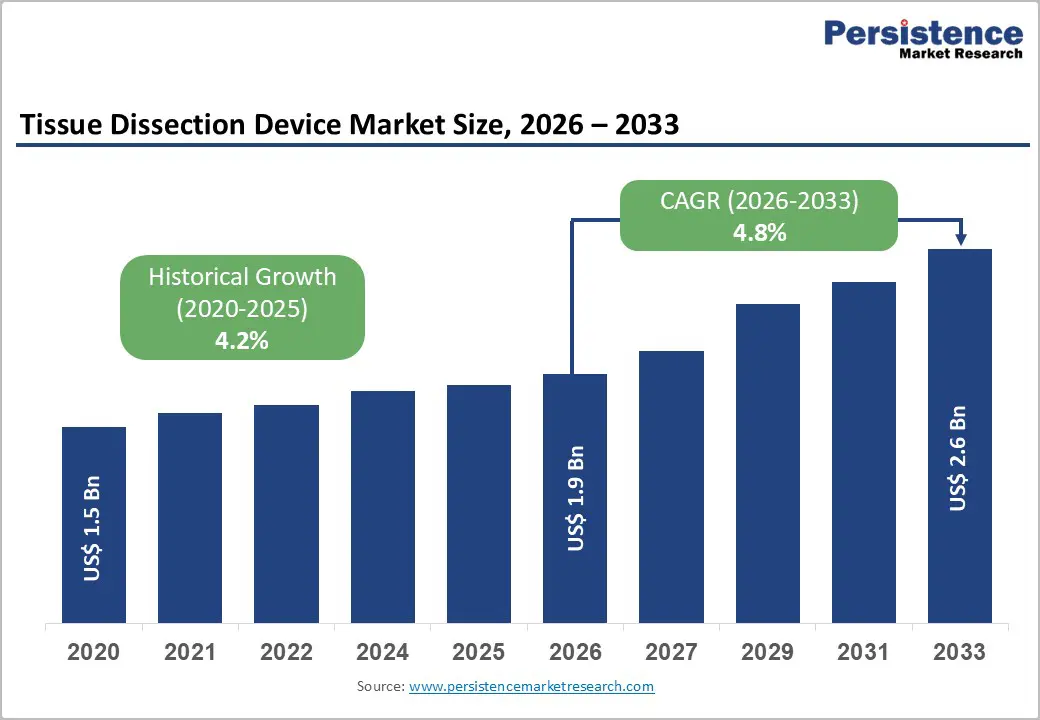
The global Tissue Dissection Device market is expected to be valued at US$ 1.9 billion in 2026 and projected to reach US$ 2.6 billion by 2033, growing at a CAGR of 4.8% between 2026 and 2033.
Market expansion is fundamentally driven by the accelerating adoption of minimally invasive surgical (MIS) techniques across global healthcare systems, coupled with technological advancements enabling surgeons to perform complex procedures through smaller incisions with enhanced precision. The global minimally invasive surgery market, valued at approximately US$ 110 billion in 2026, is projected to reach US$ 362 billion by 2034 at 16.05% CAGR, with tissue dissection devices serving as critical enabling components. The escalating prevalence of chronic diseases including cardiovascular disorders (affecting approximately 697,000 deaths annually in the United States), cancer, and musculoskeletal conditions (affecting approximately 1.71 billion people globally) is creating sustained demand for sophisticated surgical solutions enabling safe, precise tissue removal while minimizing patient trauma and recovery times.
Key Market Highlights
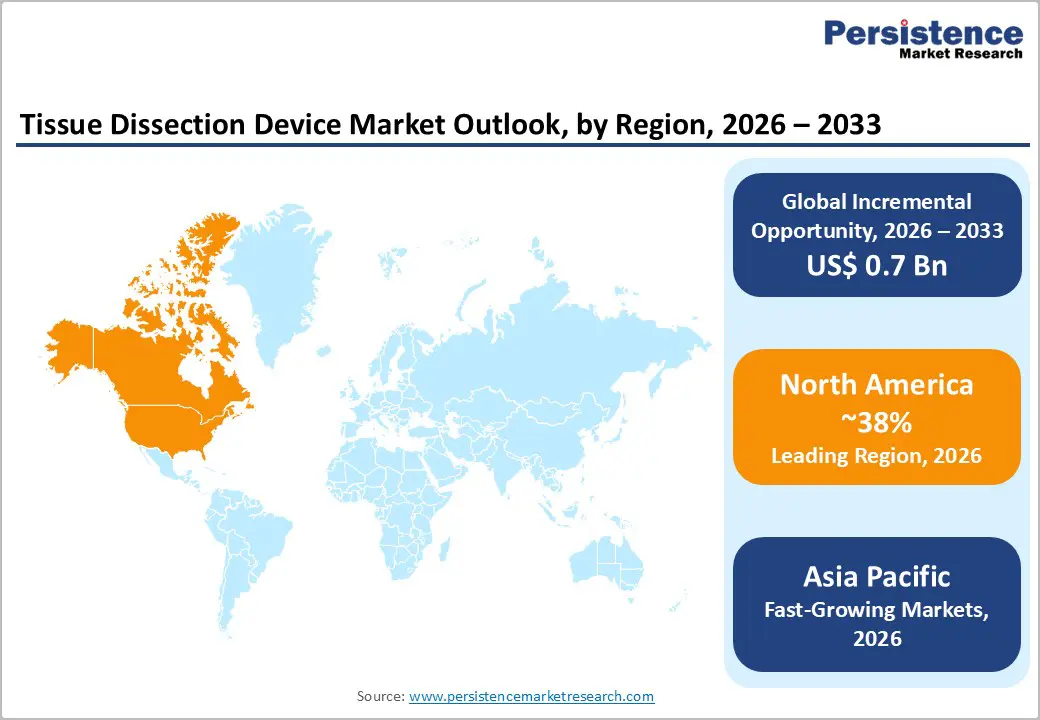
- Leading Region: North America commands the dominant regional market position, accounting for approximately 38% of global tissue dissection device market share in 2025, driven by mature surgical infrastructure, high surgical procedure volumes, and advanced healthcare system characteristics supporting technology adoption.
- Fastest Growing Region: Asia Pacific emerges as the fastest-growing region, projected to expand at 6.8-7.8% CAGR through 2033, fueled by accelerating healthcare infrastructure development, expanding surgical procedure volumes, and increasing adoption of minimally invasive surgical techniques across China, India, and Southeast Asian markets.
- Dominant Product Segment: Energy-based tissue dissection devices (electrosurgical, ultrasonic, laser) maintain market dominance with approximately 62% market share in 2025, reflecting clinical superiority in precision tissue dissection and hemostatic control compared with traditional manual instruments.
- Fastest Growing Segment: Cardiovascular surgery applications emerge as the fastest-growing segment, projected at 7.8% CAGR through 2033, driven by escalating cardiac disease prevalence, minimally invasive cardiac surgery (MICS) expansion, and TAVR procedure volume acceleration requiring sophisticated tissue dissection capabilities.
- Key Market Opportunity: Robotic surgical platform integration represents the most significant emerging opportunity, with Medtronic’s Hugo™, Johnson & Johnson’s OTTAVA™, and emerging competitors creating substantial opportunities for proprietary energy tool developers achieving seamless robotic platform compatibility supporting next-generation minimally invasive surgical ecosystems.
| Global Market Attributes | Key Insights |
|---|---|
| Tissue Dissection Device Market Size (2026E) | US$ 1.9 billion |
| Market Value Forecast (2033F) | US$ 2.6 billion |
| Projected Growth CAGR (2026-2033) | 4.8% |
| Historical Market Growth (2020-2025) | 4.2% |
Market Dynamics
Market Growth Drivers
Rising Prevalence of Chronic Diseases and Expanding Surgical Procedure Volumes
The global burden of chronic diseases is escalating at unprecedented rates, with cardiovascular disease remaining the leading cause of mortality affecting millions annually, while cancer incidence is expanding, necessitating surgical intervention for tumor resection and staging. Surgical procedure volumes are expanding substantially, with the global soft tissue dissection surgical procedures market projected to increase from approximately 151.7 million procedures in 2024 to 174.9 million by 2029, representing 3.0% CAGR growth. The aging global population, with individuals aged 60+ years representing approximately 12-15% of total population in developed nations and expanding rapidly in emerging markets, creates proportionally increased demand for age-related disease interventions requiring surgical tissue dissection. Orthopedic procedures are experiencing exceptional growth, driven by escalating osteoarthritis prevalence among elderly populations, with the World Health Organization estimating that a substantial global population segment suffers from musculoskeletal conditions. Cardiovascular surgical demand continues escalating, with tissue dissection devices playing essential roles in minimally invasive cardiac surgery (MICS) procedures including transcatheter aortic valve replacement (TAVR), which now accounts for >80% of eligible elderly patient treatment in United States healthcare systems, representing a fundamental shift toward less-invasive intervention approaches.
Technological Advancement and Integration with Robotic-Assisted Surgical Platforms
The advancement of tissue dissection technologies and their integration with robotic-assisted surgical platforms is a key growth driver for the tissue dissection device market. Modern surgical procedures increasingly demand precision, minimal invasiveness, and reduced operative time, which conventional manual instruments often cannot fully achieve. Robotic-assisted platforms, when combined with advanced dissection devices such as ultrasonic, electrosurgical, and laser-based systems, enable surgeons to perform complex tissue dissections with unparalleled accuracy and control. These integrated solutions enhance visualization, reduce tissue trauma, and improve patient recovery outcomes. Additionally, continuous innovation in robotics and smart dissection tools such as haptic feedback, AI-guided motion, and automated cutting systems is encouraging hospitals and surgical centers to adopt these technologies. The seamless fusion of robotics with tissue dissection devices is thus fueling market expansion globally, particularly in high-volume surgical specialties like orthopedic, cardiovascular, and neurosurgery.
Market Restraints
High Capital Equipment Costs and Training Requirements Limiting Market Penetration
One of the major restraints limiting the growth of the tissue dissection device market is the high capital costs associated with advanced dissection systems and the extensive training required for their effective use. Sophisticated devices such as robotic-assisted, ultrasonic, and laser-based dissection tools often involve significant upfront investment, making them less accessible for smaller hospitals, clinics, and emerging markets. Beyond the initial purchase, institutions must invest in training surgeons and operating room staff to ensure proper handling and maximize patient safety, which adds to operational expenses. The steep learning curve associated with robotic integration and energy-based dissection technologies can also delay adoption, as healthcare professionals may be hesitant to switch from conventional manual instruments. Consequently, these financial and educational barriers restrict widespread penetration of tissue dissection devices, particularly in resource-limited regions, slowing overall market expansion despite growing clinical demand.
Competitive Threat from Alternative Surgical Approaches and Emerging Technologies
Laser-based tissue dissection systems, offering alternative mechanisms for precision tissue cutting and coagulation, present competitive alternatives to traditional electrosurgical and ultrasonic approaches in specific surgical applications. Robotic-assisted surgery platforms, while utilizing energy-based dissection devices, are increasingly integrating proprietary energy tool systems specifically designed to optimize integration with robotic interfaces, potentially displacing standalone tissue dissection devices from established market positions. Advancement in digital imaging technologies, including real-time tissue visualization and fluorescent guidance systems, enables surgeons to perform complex dissection procedures with conventional instruments, potentially reducing demand for sophisticated energy-based devices in selected applications. Development of tissue adhesives and advanced hemostatic agents providing alternative approaches to surgical bleeding control may reduce demand for electrosurgical and ultrasonic dissection devices in specific procedural contexts. Artificial intelligence and machine learning integration into surgical platforms may enable automated or semi-automated tissue dissection capabilities, potentially transforming traditional surgeon-operator device dynamics.
Market Opportunities
Expansion of Minimally Invasive Procedures in Emerging Markets and Underserved Regions
The expansion of minimally invasive procedures in emerging markets and underserved regions presents a significant growth opportunity for the tissue dissection device market. Rising awareness about the benefits of minimally invasive surgery such as reduced postoperative pain, shorter hospital stays, and faster recovery is driving demand for advanced dissection technologies like ultrasonic, electrosurgical, and laser-based systems. Developing countries, where access to conventional surgical infrastructure may be limited, are increasingly adopting compact and versatile tissue dissection devices that can be integrated into both general and specialized procedures. Additionally, governments and private healthcare providers in these regions are investing in surgical modernization and training programs, enabling the adoption of high-precision devices even outside major urban centers. By targeting these markets, manufacturers can capitalize on unmet clinical needs, expand their customer base, and drive adoption of advanced dissection technologies where demand is poised to grow rapidly.
Category-wise Insights
Product Type Analysis
Energy-based devices, encompassing electrosurgical, ultrasonic, and laser technologies, command the dominant market position, representing approximately 62% of global tissue dissection device market volume in 2025. Electrosurgical devices, utilizing radiofrequency energy for tissue cutting and hemostatic coagulation, maintain the largest single subcategory at approximately 38% of market volume, reflecting established clinical acceptance, surgeon familiarity, and substantial installed equipment base. Ultrasonic dissection devices, operating at 40-55.5 kHz frequencies for tissue cutting through mechanical vibrations, represent the fastest-growing subcategory within energy-based devices, projected at 11.8% CAGR through 2033, driven by clinical superiority in minimizing collateral tissue damage and enabling complex procedures within confined anatomical spaces. Laser-based tissue dissection, utilizing CO2, Nd:YAG, and fiber laser technologies for precision cutting in specific surgical applications including neurosurgery and otolaryngologic procedures, maintains a 3-5% market share. However, manual dissection instruments (scalpels, scissors, forceps) continue maintaining approximately 26% market share, reflecting their continued essential role in traditional and minimally invasive surgical workflows where mechanical manipulation remains preferred.
Application Analysis
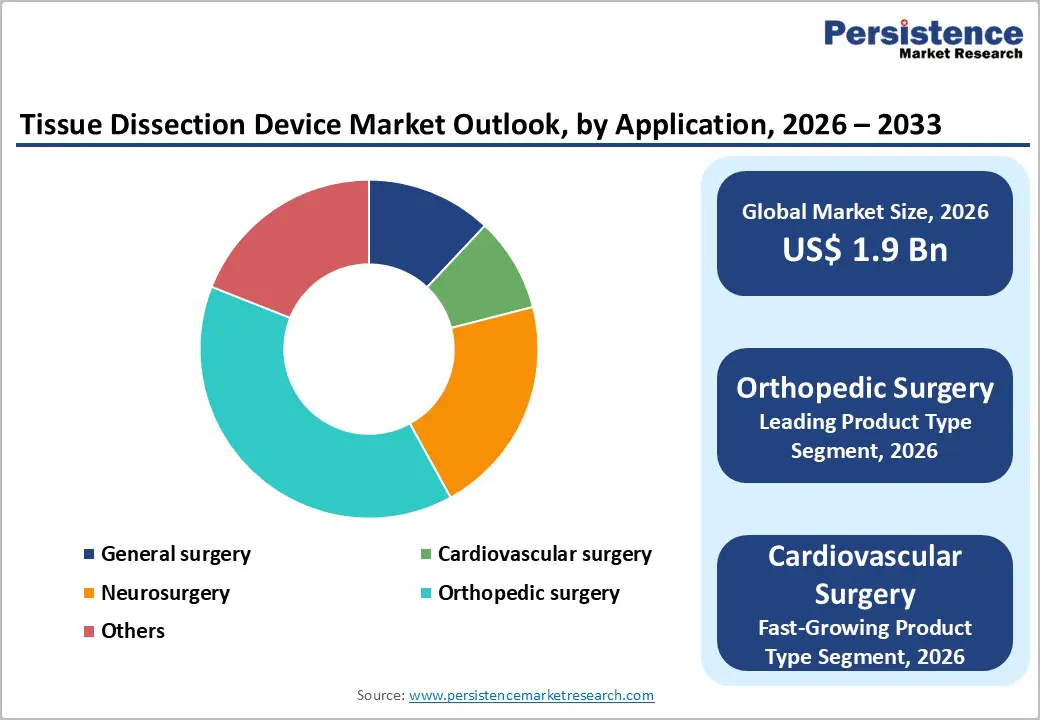
Orthopedic surgery maintains market dominance at approximately 39% of global tissue dissection device market share in 2025, driven by the extraordinarily high volume of orthopedic procedures performed globally (estimated at 50-60 million procedures annually) for joint replacement, arthroscopic repair, and trauma management. Musculoskeletal condition prevalence, affecting approximately 1.71 billion people globally, creates sustainable demand for orthopedic dissection devices across joint replacement, arthroscopic surgery, and spinal procedures. General surgery represents the second-largest application segment at approximately 28% market share, encompassing gastrointestinal procedures, abdominal wall repairs, and oncologic resections requiring tissue dissection capabilities. However, Cardiovascular surgery represents the fastest-growing application segment, projected at 7.8% CAGR through 2033, driven by escalating cardiac disease prevalence (approximately 697,000 cardiac deaths annually in United States) and accelerating minimally invasive cardiac surgery (MICS) adoption. TAVR procedure volumes, exceeding 80% of eligible elderly patient populations in developed markets, create substantial demand for precision dissection devices enabling vascular access and tissue manipulation. Neurosurgery represents an emerging high-growth segment, projected at 6.5% CAGR, driven by increasing brain tumor diagnosis and resection procedures and expanding adoption of laser-guided tissue dissection in neurosurgical applications.
Regional Insights
North America Tissue Dissection Device Market Trends and Insights
North America continues to dominate the global tissue dissection device market, driven by a highly developed surgical ecosystem and early adoption of advanced technologies. The United States forms the backbone of regional leadership due to high surgical volumes across orthopedics, oncology, cardiovascular, and general surgery. A strong regulatory framework, supported by streamlined FDA 510(k) and De Novo pathways, enables faster commercialization of next-generation robotic, ultrasonic, and energy-based dissection systems. Academic medical centers and integrated delivery networks actively collaborate with device manufacturers to pilot AI-assisted and image-guided dissection platforms, particularly for complex minimally invasive procedures. Reimbursement support from CMS for MIS procedures has further accelerated uptake by reducing hospital stay duration, complication rates, and overall treatment costs. The region also benefits from deep capital availability, allowing companies to invest aggressively in R&D, surgeon training programs, and digital surgery platforms. Continuous upgrades in robotic surgery suites and outpatient surgical centers are increasing demand for high-precision, reusable, and disposable dissection tools. As procedure complexity rises, North America remains a benchmark market for premium, innovation-driven tissue dissection solutions.
Asia Pacific Tissue Dissection Device Market Trends and Insights
Asia Pacific is emerging as the fastest-growing region in the tissue dissection device market, supported by rapid healthcare infrastructure expansion and rising surgical demand. Countries such as China, India, Japan, South Korea, and Southeast Asian nations are witnessing strong growth in orthopedic, cardiovascular, and general surgeries due to demographic shifts, urbanization, and improved access to care. China leads regional procedure volumes and is increasingly investing in domestically developed robotic and electrosurgical platforms, strengthening local manufacturing competitiveness. India’s growth is fueled by medical tourism, private hospital expansion, and rising adoption of minimally invasive techniques across tier-1 and tier-2 cities. Japan’s super-aging population is driving sustained demand for precision surgical tools that reduce complications and recovery time. ASEAN markets benefit from government-backed hospital development and foreign investment, creating opportunities for mid-priced and entry-level dissection devices. The coexistence of global brands and cost-efficient regional players makes APAC highly competitive. As training programs and robotic surgery penetration improve, the region is positioned for long-term, volume-led expansion in tissue dissection technologies.
Competitive Landscape
Market Structure Analysis
The competitive landscape of the tissue dissection device market is characterized by the presence of several global and regional players offering a diverse range of manual, energy-based, and robotic-assisted surgical instruments. Market leaders compete on technological innovation, product quality, precision, and integration with advanced surgical platforms. Strategic initiatives such as mergers, acquisitions, partnerships, and geographic expansions are commonly employed to strengthen market position. Smaller players often focus on niche applications, cost-effective solutions, or specialized training programs to gain market share.
Key Market Developments
- In October 2025, Olympus Corporation (Olympus), a global MedTech company committed to making people’s lives healthier, safer, and more fulfilling, announced the launch of THUNDERBEAT™ II, the next-generation hybrid energy device for soft tissue management, which was designed to deliver faster, more hemostatic dissection and large vessel transection in both laparoscopic and open surgery.
Companies Covered in Tissue Dissection Device Market
- Medtronic plc
- Johnson & Johnson (Ethicon)
- Stryker Corporation
- B. Braun Melsungen AG
- Olympus Corporation
- Boston Scientific Corporation
- CONMED Corporation
- Integra LifeSciences
- Karl Storz SE & Co. KG
- Erbe Elektromedizin GmbH
- Thermo Fisher Scientific Inc.
- Carl Zeiss AG
Frequently Asked Questions
The global Tissue Dissection Device Market is expected to be valued at US$ 1.9 billion in 2026.
The Tissue Dissection Device Market growth is propelled by two principal demand drivers. First, the escalating prevalence of chronic diseases including cardiovascular disorders (approximately 697,000 deaths annually in the United States), cancer (requiring surgical intervention), and musculoskeletal conditions (affecting approximately 1.71 billion people globally) is driving exponential growth in surgical procedure volumes requiring tissue dissection devices.
North America commands the dominant regional market position, accounting for approximately 38% of global tissue dissection device market share in 2025.
Robotic Surgical Platform Integration represents the most significant emerging opportunity. Medtronic’s Hugo™ platform commercialization, Johnson & Johnson’s OTTAVA™ platform development (projected 2027-2029 commercial availability), and emerging robotic platforms are creating unprecedented opportunities for proprietary energy tool developers achieving seamless robotic compatibility, with potential premium pricing of 30-50% above traditional standalone devices.
Leading competitors include Medtronic plc (largest electrosurgical devices share of 18-22%), Johnson & Johnson (Ethicon) (specialized ultrasonic devices, 12-16% share), Stryker Corporation, B. Braun Melsungen AG, Olympus Corporation, ERBE Elektromedizin GmbH, Boston Scientific Corporation, and CONMED Corporation.


