


- Executive Summary
- Global Sportswear Fabric Market Snapshot, 2025 and 2032
- Market Opportunity Assessment, 2025 - 2032, US$ Bn
- Key Market Trends
- Future Market Projections
- Premium Market Insights
- Industry Developments and Key Market Events
- PMR Analysis and Recommendations
- Market Overview
- Market Scope and Definition
- Market Dynamics
- Drivers
- Restraints
- Opportunity
- Challenges
- Key Trends
- COVID-19 Impact Analysis
- Forecast Factors - Relevance and Impact
- Value Added Insights
- Value Chain Analysis
- Key Market Players
- Regulatory Landscape
- PESTLE Analysis
- Porter’s Five Force Analysis
- Consumer Behavior Analysis
- Price Trend Analysis, 2019 - 2032
- Key Factors Impacting Product Prices
- Pricing Analysis, By Product Type
- Regional Prices and Product Preferences
- Global Sportswear Fabric Market Outlook
- Market Size (US$ Bn) Analysis and Forecast
- Historical Market Size (US$ Bn) Analysis, 2019-2024
- Market Size (US$ Bn) Analysis and Forecast, 2025-2032
- Global Sportswear Fabric Market Outlook: Product Type
- Historical Market Size (US$ Bn) Analysis, By Product Type, 2019-2024
- Market Size (US$ Bn) Analysis and Forecast, By Product Type, 2025-2032
- Activewear
- Athletic Footwear
- Sports Accessories
- Market Attractiveness Analysis: Product Type
- Global Sportswear Fabric Market Outlook: Fabric Type
- Historical Market Size (US$ Bn) Analysis, By Fabric Type, 2019-2024
- Market Size (US$ Bn) Analysis and Forecast, By Fabric Type, 2025-2032
- Cotton
- Polyester
- Nylon
- Wool
- Spandex
- Market Attractiveness Analysis: Fabric Type
- Global Sportswear Fabric Market Outlook: Distribution Channel
- Historical Market Size (US$ Bn) Analysis, By Distribution Channel, 2019-2024
- Market Size (US$ Bn) Analysis and Forecast, By Distribution Channel, 2025-2032
- Offline Retail
- Online Retail
- Direct Sales
- Market Attractiveness Analysis: Distribution Channel
- Market Size (US$ Bn) Analysis and Forecast
- Global Sportswear Fabric Market Outlook: Region
- Historical Market Size (US$ Bn) Analysis, By Region, 2019-2024
- Market Size (US$ Bn) Analysis and Forecast, By Region, 2025-2032
- North America
- Latin America
- Europe
- East Asia
- South Asia and Oceania
- Middle East & Africa
- Market Attractiveness Analysis: Region
- North America Sportswear Fabric Market Outlook
- Historical Market Size (US$ Bn) Analysis, By Market, 2019-2024
- By Country
- By Product Type
- By Fabric Type
- By Distribution Channel
- Market Size (US$ Bn) Analysis and Forecast, By Country, 2025-2032
- U.S.
- Canada
- Market Size (US$ Bn) Analysis and Forecast, By Product Type, 2025-2032
- Activewear
- Athletic Footwear
- Sports Accessories
- Market Size (US$ Bn) Analysis and Forecast, By Fabric Type, 2025-2032
- Cotton
- Polyester
- Nylon
- Wool
- Spandex
- Market Size (US$ Bn) Analysis and Forecast, By Distribution Channel, 2025-2032
- Offline Retail
- Online Retail
- Direct Sales
- Market Attractiveness Analysis
- Historical Market Size (US$ Bn) Analysis, By Market, 2019-2024
- Europe Sportswear Fabric Market Outlook
- Historical Market Size (US$ Bn) Analysis, By Market, 2019-2024
- By Country
- By Product Type
- By Fabric Type
- By Distribution Channel
- Market Size (US$ Bn) Analysis and Forecast, By Country, 2025-2032
- Germany
- France
- U.K.
- Italy
- Spain
- Russia
- Rest of Europe
- Market Size (US$ Bn) Analysis and Forecast, By Product Type, 2025-2032
- Activewear
- Athletic Footwear
- Sports Accessories
- Market Size (US$ Bn) Analysis and Forecast, By Fabric Type, 2025-2032
- Cotton
- Polyester
- Nylon
- Wool
- Spandex
- Market Size (US$ Bn) Analysis and Forecast, By Distribution Channel, 2025-2032
- Offline Retail
- Online Retail
- Direct Sales
- Market Attractiveness Analysis
- Historical Market Size (US$ Bn) Analysis, By Market, 2019-2024
- East Asia Sportswear Fabric Market Outlook
- Historical Market Size (US$ Bn) Analysis, By Market, 2019-2024
- By Country
- By Product Type
- By Fabric Type
- By Distribution Channel
- Market Size (US$ Bn) Analysis and Forecast, By Country, 2025-2032
- China
- Japan
- South Korea
- Market Size (US$ Bn) Analysis and Forecast, By Product Type, 2025-2032
- Activewear
- Athletic Footwear
- Sports Accessories
- Market Size (US$ Bn) Analysis and Forecast, By Fabric Type, 2025-2032
- Cotton
- Polyester
- Nylon
- Wool
- Spandex
- Market Size (US$ Bn) Analysis and Forecast, By Distribution Channel, 2025-2032
- Offline Retail
- Online Retail
- Direct Sales
- Market Attractiveness Analysis
- Historical Market Size (US$ Bn) Analysis, By Market, 2019-2024
- South Asia & Oceania Sportswear Fabric Market Outlook
- Historical Market Size (US$ Bn) Analysis, By Market, 2019-2024
- By Country
- By Product Type
- By Fabric Type
- By Distribution Channel
- Market Size (US$ Bn) Analysis and Forecast, By Country, 2025-2032
- India
- Indonesia
- Thailand
- Singapore
- ANZ
- Rest of South Asia & Oceania
- Market Size (US$ Bn) Analysis and Forecast, By Product Type, 2025-2032
- Activewear
- Athletic Footwear
- Sports Accessories
- Market Size (US$ Bn) Analysis and Forecast, By Fabric Type, 2025-2032
- Cotton
- Polyester
- Nylon
- Wool
- Spandex
- Market Size (US$ Bn) Analysis and Forecast, By Distribution Channel, 2025-2032
- Offline Retail
- Online Retail
- Direct Sales
- Market Attractiveness Analysis
- Historical Market Size (US$ Bn) Analysis, By Market, 2019-2024
- Latin America Sportswear Fabric Market Outlook
- Historical Market Size (US$ Bn) Analysis, By Market, 2019-2024
- By Country
- By Product Type
- By Fabric Type
- By Distribution Channel
- Market Size (US$ Bn) Analysis and Forecast, By Country, 2025-2032
- Brazil
- Mexico
- Rest of Latin America
- Market Size (US$ Bn) Analysis and Forecast, By Product Type, 2025-2032
- Activewear
- Athletic Footwear
- Sports Accessories
- Market Size (US$ Bn) Analysis and Forecast, By Fabric Type, 2025-2032
- Cotton
- Polyester
- Nylon
- Wool
- Spandex
- Market Size (US$ Bn) Analysis and Forecast, By Distribution Channel, 2025-2032
- Residential
- Industrial
- Market Attractiveness Analysis
- Historical Market Size (US$ Bn) Analysis, By Market, 2019-2024
- Middle East & Africa Sportswear Fabric Market Outlook
- Historical Market Size (US$ Bn) Analysis, By Market, 2019-2024
- By Country
- By Product Type
- By Fabric Type
- By Distribution Channel
- Market Size (US$ Bn) Analysis and Forecast, By Country, 2025-2032
- GCC Countries
- Egypt
- South Africa
- Northern Africa
- Rest of Middle East & Africa
- Market Size (US$ Bn) Analysis and Forecast, By Product Type, 2025-2032
- Activewear
- Athletic Footwear
- Sports Accessories
- Market Size (US$ Bn) Analysis and Forecast, By Fabric Type, 2025-2032
- Cotton
- Polyester
- Nylon
- Wool
- Spandex
- Market Size (US$ Bn) Analysis and Forecast, By Distribution Channel, 2025-2032
- Offline Retail
- Online Retail
- Direct Sales
- Market Attractiveness Analysis
- Historical Market Size (US$ Bn) Analysis, By Market, 2019-2024
- Competition Landscape
- Market Share Analysis, 2024
- Market Structure
- Competition Intensity Mapping By Market
- Competition Dashboard
- Company Profiles (Details - Overview, Financials, Strategy, Recent Developments)
- Nike
- Overview
- Segments and Product Type
- Key Financials
- Market Developments
- Market Strategy
- Adidas
- Under Armour
- Lululemon
- Puma
- Asics
- New Balance
- VF Corporation
- Anta Sports
- Decathlon
- Columbia Sportswear
- Li Ning
- Mizuno
- H&M
- Uniqlo
- Others
- Nike
- Appendix
- Research Methodology
- Research Assumptions
- Acronyms and Abbreviations


- Sporting Goods & Equipment
- Sportswear Fabric Market
Sportswear Fabric Market Size, Share, and Growth Forecast, 2025 - 2032
Sportswear Fabric Market by Product Type (Activewear, Athletic Footwear, Sports Accessories), Fabric Type (Cotton, Polyester, Nylon, Wool, Spandex), Distribution Channel (Offline Retail, Online Retail, Direct Sales), and Regional Analysis for 2025 - 2032
Sportswear Fabric Market Size and Trends Analysis
The global sportswear fabric market size is likely to be valued at US$ 28.8 Bn in 2025, and is expected to reach US$ 40.5 Bn by 2032, with a CAGR of 5.0% during the forecast period from 2025 to 2032.
The increasing consumer shift toward active lifestyles, rising demand for performance-driven and sustainable sportswear, and technological advancements in fabric development encourages the need for sportswear fabrics.
The market is characterized by a growing emphasis on eco-friendly materials, such as recycled polyester and biodegradable fibers, alongside innovations in moisture-wicking, stretchable, and breathable fabrics. These advancements cater to the evolving needs of professional athletes and fitness enthusiasts alike, fueling market expansion across diverse applications.
Key Industry Highlights:
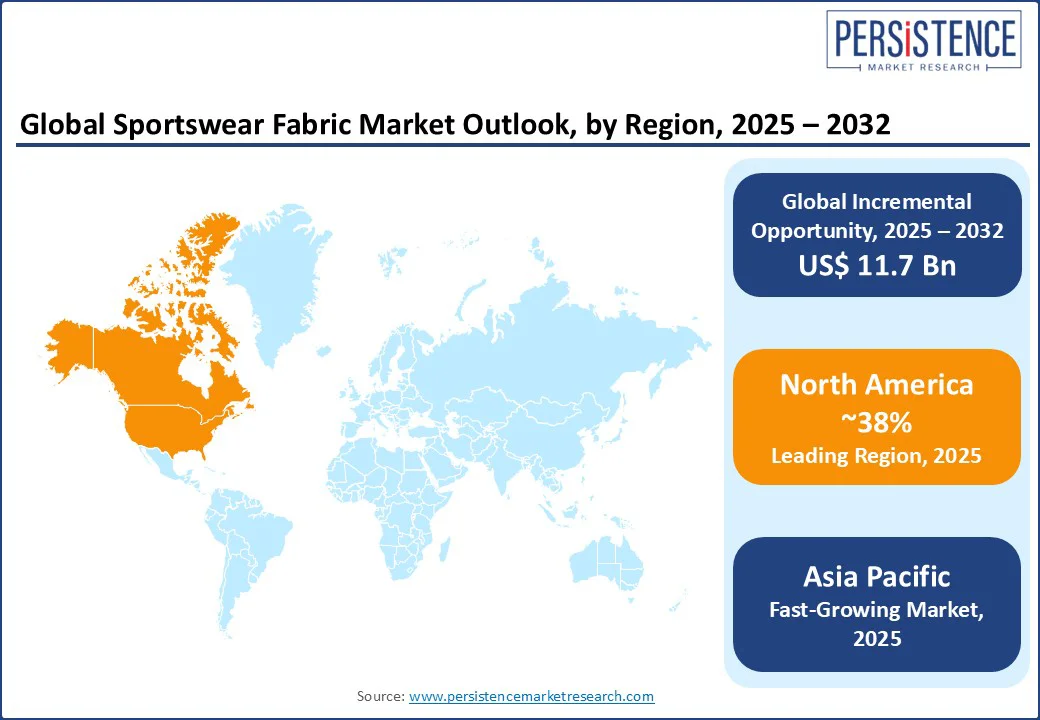
- Leading Region: North America, commanding a 38% market share in 2025, driven by a strong fitness culture, high consumer spending, and the presence of major sportswear brands.
- Fastest-Growing Region: Asia Pacific, propelled by rising disposable incomes, increasing participation in sports and fitness activities, and government initiatives promoting sports in countries like China and India. Europe, advancing through sustainability initiatives like the EU’s Circular Economy Action Plan, which encourages eco-friendly fabric production and recycling.
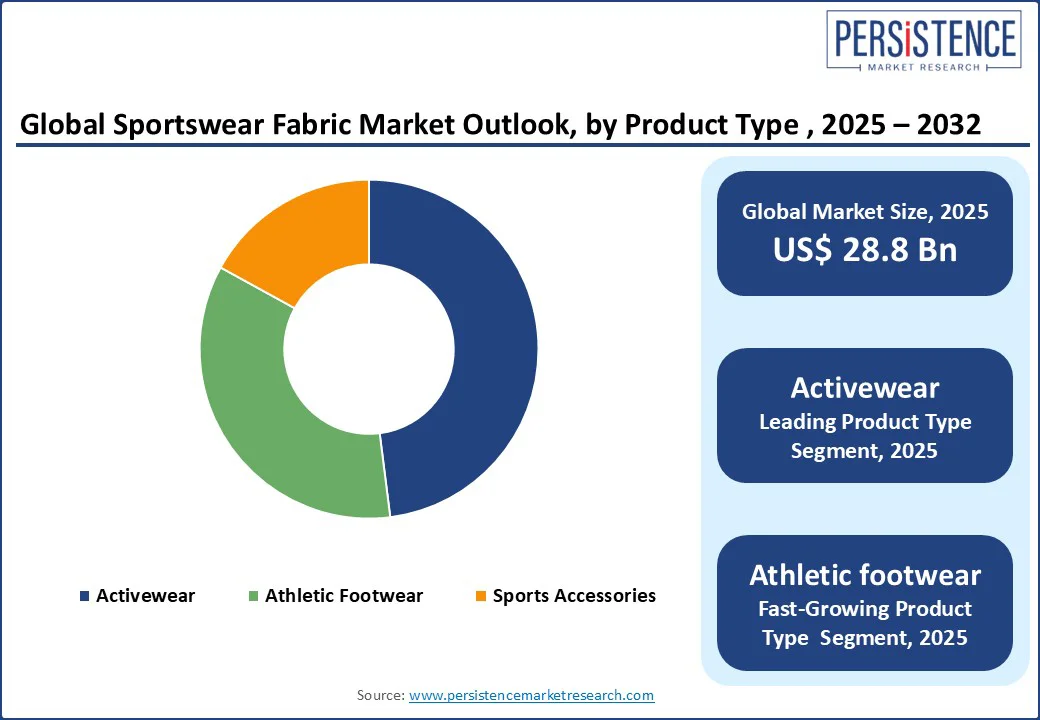
- Dominant Product Type: Activewear, accounting for 48% of the share in 2025, driven by its versatility and widespread use in fitness and casual settings.
- Leading Distribution Channel: Online Retail, capturing 30% of the domain, fueled by the rapid growth of e-commerce platforms and direct-to-consumer models.
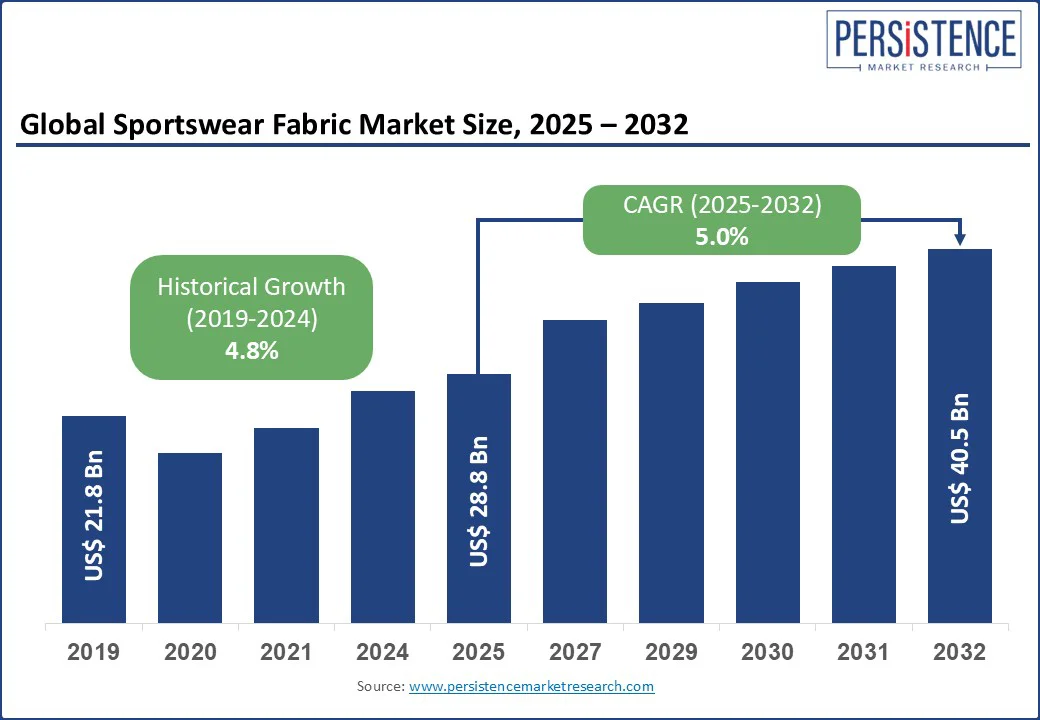
|
Global Market Attribute |
Key Insights |
|
Sportswear Fabric Market Size (2025E) |
US$ 28.8 Bn |
|
Market Value Forecast (2032F) |
US$ 40.5 Bn |
|
Projected Growth (CAGR 2025 to 2032) |
5.0% |
|
Historical Market Growth (CAGR 2019 to 2024) |
4.8% |
Market Dynamics
Driver - Rising Consumer Shift Toward Active Lifestyles and Fitness Culture
The rising consumer shift toward active lifestyles and fitness culture is a key driver fueling the growth of the sportswear fabric market. Increasing health awareness, driven by concerns over sedentary lifestyles and related health issues such as obesity, diabetes, and cardiovascular diseases, is encouraging people to engage in regular physical activities like running, yoga, gym workouts, and outdoor sports.
For instance, according to the International Health, Racquet & Sportsclub Association (IHRSA), global health club memberships exceeded 230 million in 2023, reflecting the growing popularity of structured fitness activities. This has boosted demand for high-performance sportswear fabrics that offer comfort, flexibility, moisture-wicking, and breathability.
Social media influence and the popularity of fitness influencers have further amplified the fitness trend, making active lifestyles a part of daily routines rather than occasional activities. Moreover, the growing adoption of athleisure-sportswear that doubles as casual wear has widened the industry appeal, attracting consumers who value both style and functionality. The presence of major fitness chains, the expansion of sports events, and rising disposable incomes are further contributing to this cultural shift, driving continuous demand for innovative and sustainable sportswear fabrics.
Restraint - High Production Costs of Advanced and Sustainable Fabrics
The high production costs of advanced and sustainable fabrics act as a significant restraint in the sportswear fabric market. Producing high-performance textiles such as moisture-wicking, antibacterial, or UV-protective fabrics requires advanced manufacturing processes, specialized machinery, and premium raw materials, all of which increase overall costs.
For instance, recycled polyester, a popular eco-friendly alternative, can cost up to 20-30% more than virgin polyester due to the complex recycling and processing steps involved. Similarly, organic cotton cultivation involves higher labor and certification expenses, contributing to premium pricing. These elevated costs are often passed on to consumers, potentially limiting affordability, especially in price-sensitive markets.
Furthermore, achieving sustainability goals may require brands to invest in new technologies, research, and eco-compliance certifications, adding to operational expenses. Smaller manufacturers may find it challenging to compete with large players who can absorb these costs, creating barriers to market entry and slowing widespread adoption of advanced, sustainable sportswear fabrics.
Opportunity - Growing Demand for Sustainable and Eco-Friendly Fabrics
The growing demand for sustainable and eco-friendly fabrics presents a significant opportunity for the sportswear fabric market. As environmental concerns and awareness of climate change intensify, consumers are increasingly seeking products made from renewable, recycled, or biodegradable materials. This shift is encouraging brands to invest in innovative fabrics such as organic cotton, bamboo fiber, hemp, and recycled polyester.
For instance, recycled polyester, made from post-consumer PET bottles, reduces energy consumption and landfill waste compared to virgin polyester. Governments and regulatory bodies are also supporting sustainable practices through incentives, eco-labeling, and stricter environmental regulations, further driving adoption.
Additionally, the rise of conscious consumerism, where purchasing decisions are influenced by a product’s environmental footprint, has made sustainability a key competitive differentiator in the sportswear market. Brands that incorporate transparent sourcing, closed-loop production processes, and minimal-waste manufacturing stand to gain customer loyalty and expand their market reach. This growing preference for eco-friendly fabrics not only aligns with global sustainability goals but also opens new avenues for premium product positioning and long-term market growth.
Category-wise Analysis
Product Type Insights
Activewear holds the largest market share, expected to account for 48% of the Sportswear Fabric Market in 2025. Its dominance is driven by its widespread use in fitness activities, athleisure trends, and casual wear. The versatility of activewear, coupled with consumer demand for comfortable and stylish clothing, has fueled its growth.
Brands like Lululemon and Under Armour have capitalized on this trend by offering activewear with advanced fabric technologies, such as moisture-wicking and anti-odor properties, appealing to both athletes and casual consumers. The rise of athleisure, where activewear is worn in non-sporting settings, has further solidified this segment’s leadership.
Athletic footwear is the fastest-growing segment from 2025 to 2032, driven by innovations in lightweight and durable fabrics used in shoe manufacturing. The increasing popularity of running, hiking, and other outdoor activities has boosted demand for performance-driven footwear.
Companies like Nike and New Balance are introducing fabrics like Flyknit and engineered mesh, which offer breathability and flexibility, enhancing consumer appeal. The segment’s growth is further supported by the rising adoption of customized and sustainable footwear, particularly in North America and Europe.
Fabric Type Insights
Polyester dominates the sportswear fabric market, accounting for approximately 60% of the sector share in 2025. Its leadership stems from its durability, moisture-wicking properties, and cost-effectiveness, making it ideal for activewear and athletic footwear.
Polyester’s versatility allows it to be blended with other fibers like spandex to enhance stretchability, catering to a wide range of applications. The growing use of recycled polyester, driven by sustainability trends, further reinforces its market dominance, with brands like Adidas and Columbia Sportswear adopting it extensively.
Spandex is the fastest-growing fabric type, driven by its exceptional elasticity and comfort, which are critical for high-performance sportswear. The increasing popularity of form-fitting activewear, particularly for yoga and fitness activities, has fueled demand for spandex.
Innovations in spandex blends, such as those with moisture-wicking and anti-microbial properties, are accelerating its adoption. Brands like Lululemon and Asics are leveraging spandex to cater to consumer demand for flexible and durable sportswear, particularly in the Asia Pacific region.
Distribution Channel Insights
Online retail commands the largest share, accounting for 30% of the sportswear fabric market in 2025. The growth of e-commerce platforms, such as Amazon, Zalando, and brand-specific online stores, has made sportswear more accessible to consumers worldwide.
The convenience of online shopping, coupled with direct-to-consumer models adopted by brands like Nike and Under Armour, has driven this segment’s dominance. Additionally, the use of digital marketing and social media campaigns has enhanced consumer engagement, further boosting online sales.
Direct sales are the fastest-growing distribution channel from 2025 to 2032, driven by brands’ increasing focus on building direct relationships with consumers. Companies like Lululemon and Decathlon are investing in their own retail stores and websites to offer personalized shopping experiences and exclusive product lines. This channel allows brands to control pricing, enhance brand loyalty, and gather consumer data for targeted marketing, particularly in North America and Europe.
Regional Insights
North America Sportswear Fabric Market Trends
North America is projected to command a 38% share of the sportswear fabric market in 2025, driven by its strong fitness culture, high consumer spending power, and the presence of leading global sportswear brands.
The region has a well-established health and wellness trend, with a large portion of the population actively participating in activities such as gym workouts, running, yoga, cycling, and team sports. This culture has significantly increased the demand for high-performance sportswear fabrics that provide comfort, durability, moisture-wicking, and breathability.
Furthermore, the presence of renowned brands such as Nike, Under Armour, Lululemon, and Columbia Sportswear, many headquartered in the U.S., ensures continuous innovation in fabric technologies and product designs. The region also benefits from a robust e-commerce infrastructure, allowing consumers easy access to the latest sportswear collections.
Additionally, high disposable incomes enable consumers to invest in premium and sustainable fabrics, while the growing athleisure trend merges performance wear with everyday fashion. Together, these factors solidify North America’s dominance in the sportswear fabric market and support its continued growth trajectory.
Europe Sportswear Fabric Market Trends
Europe holds a significant position in the global Sportswear Fabric Market, with Germany, the UK, and France as key contributors. Germany benefits from a strong sportswear manufacturing base, with companies like Adidas and Puma driving innovation in sustainable fabrics.
The UK is advancing through its focus on fitness and outdoor activities, supported by government initiatives promoting physical activity. France is experiencing growth due to its fashion-forward sportswear market, with brands like Decathlon leading in affordable performance wear. The EU’s Circular Economy Action Plan is a major driver, encouraging the adoption of recycled and biodegradable fabrics. However, stringent regulations, such as the EU’s REACH standards, pose challenges for manufacturers, requiring compliance with environmental and safety standards.
Asia Pacific Sportswear Fabric Market Trends
Asia Pacific is emerging as one of the fastest-growing regions in the sportswear fabric market, propelled by rising disposable incomes, increasing participation in sports and fitness activities, and supportive government initiatives in countries such as China and India.
Rapid urbanization and a growing middle-class population have fueled consumer spending on health, wellness, and active lifestyles. The popularity of activities such as running, yoga, gym workouts, and sports like badminton, cricket, and basketball is driving demand for high-performance sportswear fabrics that offer breathability, durability, and moisture management.
Governments are also playing a crucial role by investing in sports infrastructure, organizing fitness campaigns, and promoting events like the Asian Games, Khelo India, and national fitness programs. Furthermore, the expansion of international sportswear brands in the region, combined with the booming e-commerce sector, is making premium and sustainable sportswear fabrics more accessible. This combination of economic growth, cultural shifts toward fitness, and strategic initiatives positions the Asia Pacific as a powerhouse for market expansion.
Competitive Landscape
The Global Sportswear Fabric Market is highly competitive, characterized by innovation in fabric technologies, sustainability initiatives, and strategic partnerships. Key players focus on developing high-performance and eco-friendly fabrics to meet consumer demands.
Nike and Adidas lead with significant R&D investments, with Nike allocating US$ 2.5 billion annually to innovation. Emerging trends, such as smart textiles and biodegradable fibers, are intensifying competition, with companies like Under Armour and Puma exploring new fabric technologies. Collaborations with textile manufacturers and sustainability-focused initiatives are key strategies to maintain market share.
Key Developments
- In April 2023, ahead of Earth Day, Adidas announced that 96% of the polyester used in its products is now recycled polyester. This achievement brings the company closer to its 2024 goal of replacing all virgin polyester with recycled alternatives. Adidas plans to continue expanding its focus beyond recycled polyester by changing materials, rethinking processes, and reducing its carbon footprint.
- In June 2023, Under Armour invested US$ 42 Mn in research and development, focusing on advanced fabric technologies and smart performance wear. The company developed three new proprietary fabric technologies to enhance athletic performance.
Companies Covered in Sportswear Fabric Market
- Nike
- Adidas
- Under Armour
- Lululemon
- Puma
- Asics
- New Balance
- VF Corporation
- Anta Sports
- Decathlon
- Columbia Sportswear
- Li Ning
- Mizuno
- H&M
- Uniqlo
Frequently Asked Questions
The Global Sportswear Fabric Market is projected to reach US$ 28.8 Bn in 2025.
Rising consumer shift toward active lifestyles and fitness culture, supported by government initiatives, is our key driver.
The Sportswear Fabric market is poised to witness a CAGR of 5.0% from 2025 to 2032.
Growing demand for sustainable and eco-friendly fabrics is a key opportunity.
Nike, Adidas, Under Armour, Lululemon, and Puma are among the key players.


