




- Beauty & Personal Care
- Personalized Skin Care Products Market
Personalized Skin Care Products Market Size, Share, and Growth Forecast 2026 - 2033
Personalized Skin Care Products Market by Product Type (Face Care, Body Care), by Gender (Male, Female), Distribution Channel (Online, Offline), and Regional Analysis, 2026 - 2033

Personalized Skin Care Products Market Size and Trend Analysis
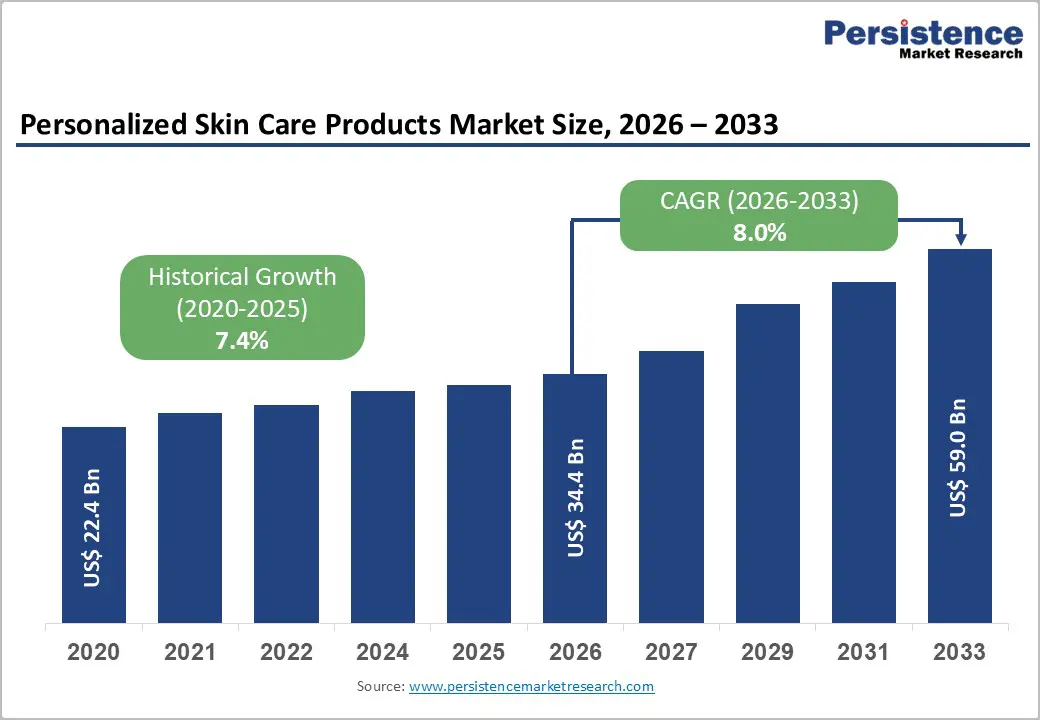
The global Personalized Skin Care Products market size is expected to be valued at US$ 34.4 billion in 2026 and projected to reach US$ 59.0 billion by 2033, growing at a CAGR of 8.0% between 2026 and 2033.
Rising consumer demand for customized beauty solutions is driving market expansion as individuals increasingly seek products tailored to their skin type, concerns, and lifestyle. Advances in artificial intelligence, skin diagnostics, and biotechnology are enabling brands to develop more precise formulations and personalized skincare routines. Growing awareness of skin health, increasing digital engagement, and the rapid expansion of e-commerce platforms are further supporting the adoption of personalized skincare products across global markets.
Key Industry Highlights:
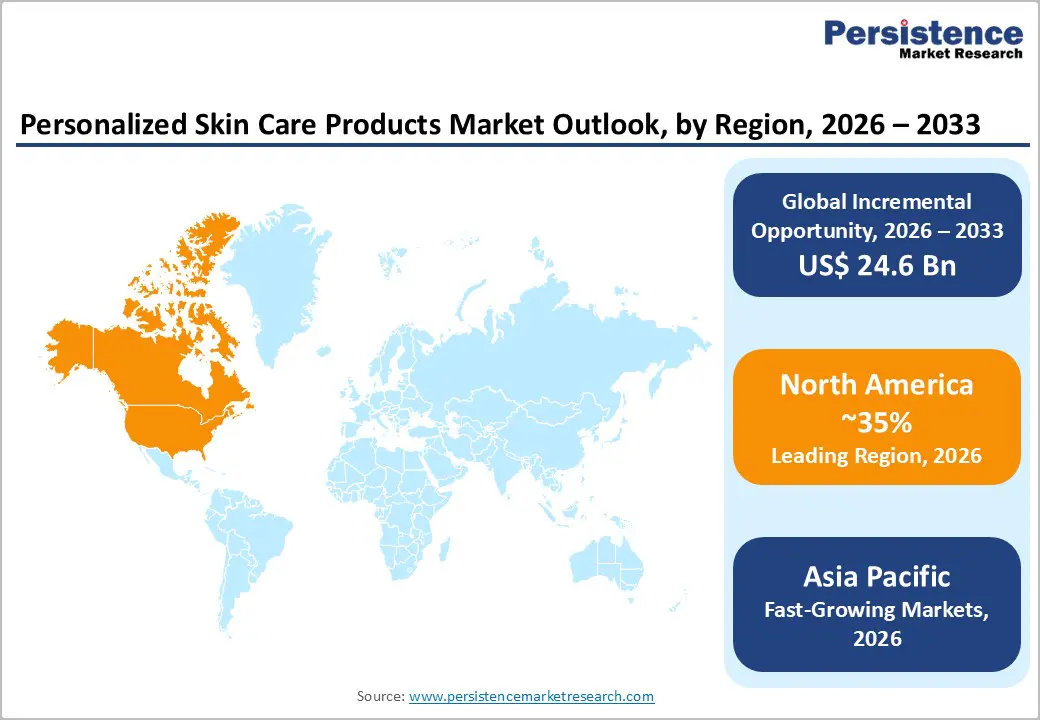
- Leading Region: North America leads the personalized skin care products market with a 35% share in 2025 driven by strong technology adoption and advanced skincare innovation.
- Fastest Growing Region: Asia Pacific holds a 31% share in 2025 and is emerging as the fastest growing region due to rising digital beauty adoption and expanding consumer demand.
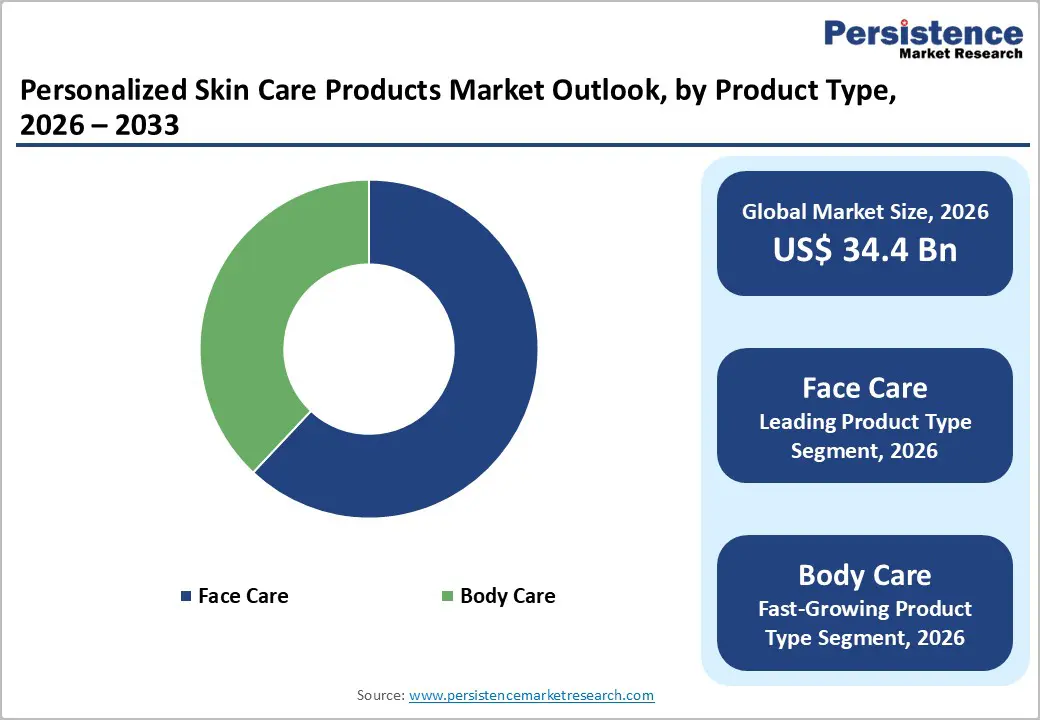
- Leading Product Type: Face Care dominates the market with a 62% share in 2025 as consumers increasingly seek targeted solutions for aging, acne, and hydration concerns.
- Leading Distribution Channel: Online channels lead with a 55% share in 2025, supported by rapid e-commerce expansion and digital skin analysis tools enabling personalized product recommendations.
- Key Opportunity: The men’s grooming segment represents a key opportunity as rising awareness of male skincare is increasing demand for personalized grooming solutions.
| Key Insights | Details |
|---|---|
|
Personalized Skin Care Products Size (2026E) |
US$ 34.4 billion |
|
Market Value Forecast (2033F) |
US$ 59.0 billion |
|
Projected Growth CAGR(2026-2033) |
8.0% |
|
Historical Market Growth (2020-2025) |
7.4% |
Market Dynamics
Drivers - Advancements in AI and Biotechnology Enable Precision-Based Skincare Personalization
Advances in artificial intelligence and biotechnology are significantly improving the accuracy and effectiveness of personalized skincare solutions. AI-powered skin scanners, digital imaging tools, and algorithm-based analysis allow brands to assess skin conditions such as hydration levels, pigmentation, pores, and sensitivity, helping develop formulations tailored to individual needs. These technologies enable faster and more precise product recommendations compared with traditional skincare selection methods.
Biotechnology innovations, including DNA-based analysis and microbiome research, are further strengthening personalization capabilities in skincare. Scientific studies have shown that customized skincare regimens can provide noticeably improved results compared with standard products. As consumers increasingly seek data-driven and science-backed beauty solutions, these technologies are encouraging higher trust, stronger brand loyalty, and greater willingness to adopt personalized skincare routines.
Growing Consumer Awareness of Skin Health and Wellness Driving Personalized Skincare Demand
Increasing awareness about skin health and overall wellness is encouraging consumers to choose skincare products designed specifically for their individual needs. Educational content shared through social media platforms, dermatology blogs, and digital beauty communities has improved consumer understanding of ingredients, skin conditions, and proper skincare routines, motivating people to move beyond generic products toward more customized solutions.
In addition, the broader wellness movement has strengthened the connection between skincare and overall health. Many consumers now view skincare as an essential component of self-care and preventive health. This shift in mindset has encouraged greater interest in personalized skincare routines that address unique concerns such as sensitivity, hydration balance, and long-term skin maintenance.
Restraints - Strict Regulatory Requirements Increase Development and Compliance Complexity
Personalized skincare products must comply with strict cosmetic safety regulations and ingredient standards across different regions. Authorities require extensive product testing, safety assessments, and documentation to ensure consumer protection and product reliability. These regulatory processes can significantly extend development timelines, particularly when customized formulations involve active ingredients or advanced biotechnology.
Compliance procedures also increase operational costs for companies developing personalized skincare solutions. Smaller and emerging brands often face greater challenges in navigating regulatory frameworks, certification requirements, and cross-border standards. As a result, product approvals may take longer, delaying market entry and slowing innovation, particularly for startups attempting to scale personalized skincare technologies globally.
High Customization Costs and Manufacturing Complexity Limit Scalability
Personalized skincare products require specialized production processes, customized ingredient combinations, and individualized packaging, which increase manufacturing complexity. Unlike mass-produced cosmetics, tailored formulations must be prepared in smaller batches or through on-demand production systems, leading to higher operational costs and more complicated supply chain management.
These production challenges can make it difficult for companies to scale personalized skincare offerings efficiently. Ingredient sourcing, logistics coordination, and advanced diagnostic technologies further increase overall costs. As a result, personalized skincare products are often priced higher than conventional alternatives, limiting accessibility for price-sensitive consumers and slowing adoption in emerging markets.
Opportunity - Growing Demand for Personalized Solutions in the Men’s Grooming Segment
The men’s grooming segment presents a strong growth opportunity for personalized skincare products as awareness about skin health and grooming continues to expand among male consumers. Increasing interest in skincare routines, along with rising demand for solutions addressing concerns such as acne, oil control, and sensitivity, is encouraging brands to develop customized formulations specifically designed for men.
Digital skin analysis tools and online consultations are making personalized skincare more accessible for male consumers who prefer convenient and guided product selection. In addition, the influence of social media, fitness culture, and professional grooming trends is encouraging greater adoption of tailored skincare routines among men, creating new product innovation opportunities for brands targeting this evolving consumer segment.
Rising Adoption of Sustainable and Clean Beauty in Personalized Skincare
The growing consumer preference for sustainable and clean beauty products is creating significant opportunities in the personalized skincare market. Consumers are increasingly seeking products made with safe, transparent, and environmentally responsible ingredients, encouraging companies to incorporate natural extracts, biodegradable materials, and eco-friendly formulations into customized skincare solutions.
Sustainability initiatives across the beauty industry are also promoting innovation in packaging, ingredient sourcing, and production technologies. Advances such as biotechnology-based ingredients and environmentally conscious manufacturing processes allow brands to create personalized skincare products while reducing environmental impact. As sustainability becomes a key purchase factor, companies integrating clean beauty principles into personalized formulations are expected to attract a wider consumer base.
Category-wise Analysis
Product Type Insights
Face care dominates the product type segment with a 62% share in 2025, as facial skin requires more targeted and frequent treatment compared with other areas of the body. Consumers prioritize concerns such as aging, acne, hydration, and pigmentation, which are more visible on the face. Dermatology associations also highlight that most individuals focus their skincare routines primarily on facial products, further strengthening the demand for personalized facial treatments.
Body Care is expected to witness the fastest growth as consumers increasingly adopt holistic skincare routines beyond facial care. Rising awareness about concerns such as dryness, uneven tone, and body acne is encouraging demand for customized body lotions, serums, and treatments. Brands are expanding personalized offerings to include body-specific formulations, supported by growing consumer interest in full-body skincare solutions.
Gender Insights
Female consumers lead the gender segment with a 68% share in 2025, driven by higher skincare awareness and stronger engagement with beauty routines. Women are more likely to use multiple skincare products daily and actively seek targeted solutions for concerns such as aging, pigmentation, and hydration. Social media influence, beauty education, and increased spending on skincare products further support the dominance of female consumers in the personalized skincare market.
The male segment is emerging as the fastest-growing category as grooming awareness among men continues to increase globally. Men are becoming more interested in skincare solutions that address oil control, sensitivity, and post-shave irritation. Changing perceptions around male grooming and the growing availability of male-focused skincare products are encouraging wider adoption of personalized skincare routines among male consumers.
Distribution Channel Insights
Online channels lead the distribution segment with a 55% share in 2025, supported by the rapid expansion of e-commerce platforms and digital skincare tools. Online platforms allow consumers to complete skin assessments, receive personalized product recommendations, and purchase customized formulations conveniently. The availability of quizzes, AI-based skin diagnostics, and direct-to-consumer models has significantly strengthened online purchasing behavior in the personalized skincare market.
Offline channels are witnessing the fastest growth as consumers continue to value in-person consultations and professional guidance. Dermatology clinics, specialty beauty stores, and skincare studios provide personalized assessments and tailored product recommendations, helping consumers better understand their skin needs. This personalized service experience is encouraging stronger engagement and increasing demand for customized skincare products through physical retail environments.
Regional Insights
North America Personalized Skin Care Products Market Trends
North America holds the leading position in the personalized skin care products market with a 35% share in 2025, supported by strong technological innovation and high consumer awareness. The United States plays a major role due to widespread adoption of AI-based skin analysis tools, digital beauty platforms, and advanced dermatology research. Consumers in the region are highly engaged with mobile applications and smart beauty technologies that provide customized skincare recommendations and product formulations.
The region continues to see strong development in digital diagnostics and personalized beauty solutions. Increasing consumer focus on ingredient transparency, dermatology-backed formulations, and advanced skincare technologies is encouraging companies to invest in innovative personalized solutions. The presence of advanced retail infrastructure and strong online beauty ecosystems is further strengthening market growth across North America.
Europe Personalized Skin Care Products Market Trends
Europe represents a significant market for personalized skincare, supported by strong consumer interest in premium beauty products and science-backed formulations. Countries such as the United Kingdom, Germany, and France play a key role in driving innovation and adoption of customized skincare solutions. Strict cosmetic safety standards and ingredient regulations across the region help maintain high product quality and consumer trust.
The European personalized skincare market is projected to grow at a CAGR of 6.4% during the forecast period. Rising demand for clean beauty products, sustainable formulations, and technology-driven skincare solutions is encouraging brands to introduce advanced customization systems. Growing awareness about ingredient transparency and environmentally responsible skincare is also supporting the adoption of personalized beauty products across European markets.
Asia Pacific Personalized Skin Care Products Market Trends
Asia Pacific accounts for a significant share of the personalized skin care products market, holding around 31% in 2025. The region benefits from a large consumer base, rapid digital adoption, and strong beauty culture in countries such as China, Japan, South Korea, and India. Increasing smartphone usage and e-commerce penetration are enabling consumers to access digital skin diagnostics and customized skincare recommendations more easily.
Asia Pacific is also emerging as the fastest growing region due to expanding middle-class populations and rising interest in advanced skincare technologies. Regional beauty trends, including innovation in skincare routines and ingredient-focused formulations, are encouraging greater demand for personalized products. In addition, the presence of strong manufacturing capabilities and growing investment in biotechnology and cosmetic research are supporting continued market development.
Competitive Landscape
The personalized skin care products market is characterized by increasing competition as companies focus on advanced technologies and customized formulations to attract consumers. Market participants are investing in artificial intelligence-based skin diagnostics, biotechnology ingredients, and digital consultation platforms to deliver tailored skincare solutions. Continuous product innovation and research in dermatology are helping brands improve product efficacy and enhance consumer trust in personalized skincare offerings.
Competition is also shaped by expanding direct-to-consumer channels and strategic collaborations with technology providers and dermatology experts. Companies are strengthening online platforms, improving personalization algorithms, and enhancing customer engagement through digital tools. Growing demand for clean beauty, sustainable ingredients, and science-backed formulations is further encouraging innovation and differentiation across the market.
Key Developments:
- In January 2025, L'Oréal introduced the Perso AI-powered device designed to analyze skin conditions and dispense customized skincare formulations. The innovation strengthened the company’s personalized beauty portfolio and supported rising consumer demand for technology-driven skincare solutions globally.
- In June 2024, Procter & Gamble expanded its digital personalization capabilities through the Olay Skin Advisor application, which analyzes user skin data and recommends tailored routines. The platform enhanced consumer engagement and improved conversion rates for personalized skincare products.
- In March 2025, Unilever presented research on microbiome-focused retinol formulations at the International Master Course on Aging Science (IMCAS), highlighting scientific advancements supporting personalized skincare and demonstrating growing interest in microbiome-based beauty innovations.
Companies Covered in Personalized Skin Care Products Market
- L'Oréal S.A.
- Estée Lauder Companies
- Procter & Gamble
- Shiseido Company
- Unilever
- Beiersdorf AG
- Amorepacific Corporation
- Coty Inc.
- Johnson & Johnson
- Galderma
- Curology
- Function of Beauty
- Proven Skincare
- Atolla
- SkinCeuticals
Frequently Asked Questions
The global personalized skin care products market is expected to reach US$ 34.4 billion in 2026, growing from historical trends.
Key drivers include AI advancements and consumer wellness trends, with 72% adoption among young users.
North America leads with 35% share in 2025, thanks to U.S. innovation and regulatory support.
Expansion into men's grooming offers high potential at 9.2% CAGR, via tailored AI solutions.
Leading companies include L'Oréal, Procter & Gamble, and Unilever, focusing on tech-driven customization.


