


- Executive Summary
- Global Personal Care Chemicals Ingredients Market Snapshot, 2025 and 2032
- Market Opportunity Assessment, 2025 - 2032, US$ Bn
- Key Market Trends
- Future Market Projections
- Premium Market Insights
- Industry Developments and Key Market Events
- PMR Analysis and Recommendations
- Market Overview
- Market Scope and Definition
- Market Dynamics
- Drivers
- Restraints
- Opportunity
- Challenges
- Key Trends
- COVID-19 Impact Analysis
- Forecast Factors - Relevance and Impact
- Value Added Insights
- Value Chain Analysis
- Key Market Players
- Regulatory Landscape
- PESTLE Analysis
- Porter’s Five Force Analysis
- Consumer Behavior Analysis
- Price Trend Analysis, 2019 - 2032
- Key Factors Impacting Product Prices
- Pricing Analysis, By Ingredients Type
- Regional Prices and Product Preferences
- Global Personal Care Chemicals Ingredients Market Outlook
- Market Size (US$ Bn) Analysis and Forecast
- Historical Market Size (US$ Bn) Analysis, 2019-2024
- Market Size (US$ Bn) Analysis and Forecast, 2025-2032
- Global Personal Care Chemicals Ingredients Market Outlook: Ingredients Type
- Historical Market Size (US$ Bn) Analysis, By Ingredients Type, 2019-2024
- Market Size (US$ Bn) Analysis and Forecast, By Ingredients Type, 2025-2032
- Inactive
- Surfactants
- Conditioning Polymers
- Emollients
- Active
- Conditioning Agents
- UV Ingredients
- Anti-ageing
- Exfoliants
- Others
- Market Attractiveness Analysis: Ingredients Type
- Global Personal Care Chemicals Ingredients Market Outlook: Application Type
- Historical Market Size (US$ Bn) Analysis, By Application Type, 2019-2024
- Market Size (US$ Bn) Analysis and Forecast, By Application Type, 2025-2032
- Skin Care
- Hair Care
- Oral Care
- Cosmetics
- Others
- Market Attractiveness Analysis: Application Type
- Market Size (US$ Bn) Analysis and Forecast
- Global Personal Care Chemicals Ingredients Market Outlook: Region
- Historical Market Size (US$ Bn) Analysis, By Region, 2019-2024
- Market Size (US$ Bn) Analysis and Forecast, By Region, 2025-2032
- North America
- Latin America
- Europe
- East Asia
- South Asia and Oceania
- Middle East & Africa
- Market Attractiveness Analysis: Region
- North America Personal Care Chemicals Ingredients Market Outlook
- Historical Market Size (US$ Bn) Analysis, By Market, 2019-2024
- By Country
- By Ingredients Type
- By Application Type
- Market Size (US$ Bn) Analysis and Forecast, By Country, 2025-2032
- U.S.
- Canada
- Market Size (US$ Bn) Analysis and Forecast, By Ingredients Type, 2025-2032
- Inactive
- Surfactants
- Conditioning Polymers
- Emollients
- Active
- Conditioning Agents
- UV Ingredients
- Anti-ageing
- Exfoliants
- Others
- Inactive
- Market Size (US$ Bn) Analysis and Forecast, By Application Type, 2025-2032
- Skin Care
- Hair Care
- Oral Care
- Cosmetics
- Others
- Market Attractiveness Analysis
- Historical Market Size (US$ Bn) Analysis, By Market, 2019-2024
- Europe Personal Care Chemicals Ingredients Market Outlook
- Historical Market Size (US$ Bn) Analysis, By Market, 2019-2024
- By Country
- By Ingredients Type
- By Application Type
- Market Size (US$ Bn) Analysis and Forecast, By Country, 2025-2032
- Germany
- France
- U.K.
- Italy
- Spain
- Russia
- Rest of Europe
- Market Size (US$ Bn) Analysis and Forecast, By Ingredients Type, 2025-2032
- Inactive
- Surfactants
- Conditioning Polymers
- Emollients
- Active
- Conditioning Agents
- UV Ingredients
- Anti-ageing
- Exfoliants
- Others
- Inactive
- Market Size (US$ Bn) Analysis and Forecast, By Application Type, 2025-2032
- Skin Care
- Hair Care
- Oral Care
- Cosmetics
- Others
- Market Attractiveness Analysis
- Historical Market Size (US$ Bn) Analysis, By Market, 2019-2024
- East Asia Personal Care Chemicals Ingredients Market Outlook
- Historical Market Size (US$ Bn) Analysis, By Market, 2019-2024
- By Country
- By Ingredients Type
- By Application Type
- Market Size (US$ Bn) Analysis and Forecast, By Country, 2025-2032
- China
- Japan
- South Korea
- Market Size (US$ Bn) Analysis and Forecast, By Ingredients Type, 2025-2032
- Inactive
- Surfactants
- Conditioning Polymers
- Emollients
- Active
- Conditioning Agents
- UV Ingredients
- Anti-ageing
- Exfoliants
- Others
- Inactive
- Market Size (US$ Bn) Analysis and Forecast, By Application Type, 2025-2032
- Skin Care
- Hair Care
- Oral Care
- Cosmetics
- Others
- Market Attractiveness Analysis
- Historical Market Size (US$ Bn) Analysis, By Market, 2019-2024
- South Asia & Oceania Personal Care Chemicals Ingredients Market Outlook
- Historical Market Size (US$ Bn) Analysis, By Market, 2019-2024
- By Country
- By Ingredients Type
- By Application Type
- Market Size (US$ Bn) Analysis and Forecast, By Country, 2025-2032
- India
- Indonesia
- Thailand
- Singapore
- ANZ
- Rest of South Asia & Oceania
- Market Size (US$ Bn) Analysis and Forecast, By Ingredients Type, 2025-2032
- Inactive
- Surfactants
- Conditioning Polymers
- Emollients
- Active
- Conditioning Agents
- UV Ingredients
- Anti-ageing
- Exfoliants
- Others
- Inactive
- Market Size (US$ Bn) Analysis and Forecast, By Application Type, 2025-2032
- Skin Care
- Hair Care
- Oral Care
- Cosmetics
- Others
- Market Attractiveness Analysis
- Historical Market Size (US$ Bn) Analysis, By Market, 2019-2024
- Latin America Personal Care Chemicals Ingredients Market Outlook
- Historical Market Size (US$ Bn) Analysis, By Market, 2019-2024
- By Country
- By Ingredients Type
- By Application Type
- Market Size (US$ Bn) Analysis and Forecast, By Country, 2025-2032
- Brazil
- Mexico
- Rest of Latin America
- Market Size (US$ Bn) Analysis and Forecast, By Ingredients Type, 2025-2032
- Inactive
- Surfactants
- Conditioning Polymers
- Emollients
- Active
- Conditioning Agents
- UV Ingredients
- Anti-ageing
- Exfoliants
- Others
- Inactive
- Market Size (US$ Bn) Analysis and Forecast, By Application Type, 2025-2032
- Skin Care
- Hair Care
- Oral Care
- Cosmetics
- Others
- Market Attractiveness Analysis
- Historical Market Size (US$ Bn) Analysis, By Market, 2019-2024
- Middle East & Africa Personal Care Chemicals Ingredients Market Outlook
- Historical Market Size (US$ Bn) Analysis, By Market, 2019-2024
- By Country
- By Ingredients Type
- By Application Type
- Market Size (US$ Bn) Analysis and Forecast, By Country, 2025-2032
- GCC Countries
- Egypt
- South Africa
- Northern Africa
- Rest of Middle East & Africa
- Market Size (US$ Bn) Analysis and Forecast, By Ingredients Type, 2025-2032
- Inactive
- Surfactants
- Conditioning Polymers
- Emollients
- Active
- Conditioning Agents
- UV Ingredients
- Anti-ageing
- Exfoliants
- Others
- Inactive
- Market Size (US$ Bn) Analysis and Forecast, By Application Type, 2025-2032
- Skin Care
- Hair Care
- Oral Care
- Cosmetics
- Others
- Market Attractiveness Analysis
- Historical Market Size (US$ Bn) Analysis, By Market, 2019-2024
- Competition Landscape
- Market Share Analysis, 2024
- Market Structure
- Competition Intensity Mapping By Market
- Competition Dashboard
- Company Profiles (Details - Overview, Financials, Strategy, Recent Developments)
- GE Water & Process Technologies
- Overview
- Segments and Ingredients Type
- Key Financials
- Market Developments
- Market Strategy
- King Lee Technologies
- Genesys International
- Kemira
- BWA Water Additives
- Nalco
- Reverse Osmosis Chemicals International
- LennTech BV
- Others
- GE Water & Process Technologies
- Appendix
- Research Methodology
- Research Assumptions
- Acronyms and Abbreviations


- Beauty & Personal Care
- Personal Care Chemicals Ingredients Market
Personal Care Chemicals Ingredients Market Size, Share, and Growth Forecast, 2025 - 2032
Personal Care Chemicals Ingredients Market by Ingredients Type (Inactive (Surfactants, Conditioning Polymers, Emollients), Active (Conditioning Agents, UV Ingredients, Anti-ageing, Exfoliants), Others), Application Type (Skin Care, Hair Care, Oral Care, Cosmetics, Others), and Regional Analysis for 2025 - 2032
Personal Care Chemicals Ingredients Market Size and Trend Analysis
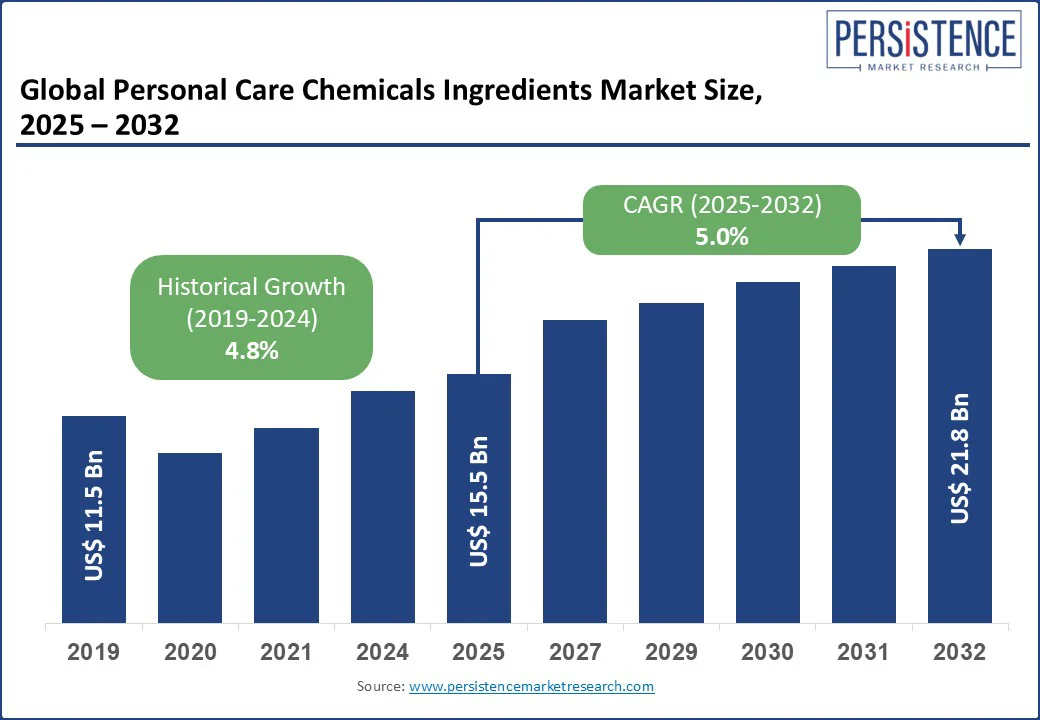
The global Personal Care Chemicals Ingredients Market size is likely to be valued at US$ 15.5 Bn in 2025 and is expected to reach US$ 21.8 Bn by 2032, growing at a CAGR of 5.0% during the forecast period 2025 to 2032.
This growth is fueled by evolving lifestyles, growing disposable incomes in emerging economies, and a shift toward natural and organic formulations.
Key Industry Highlights
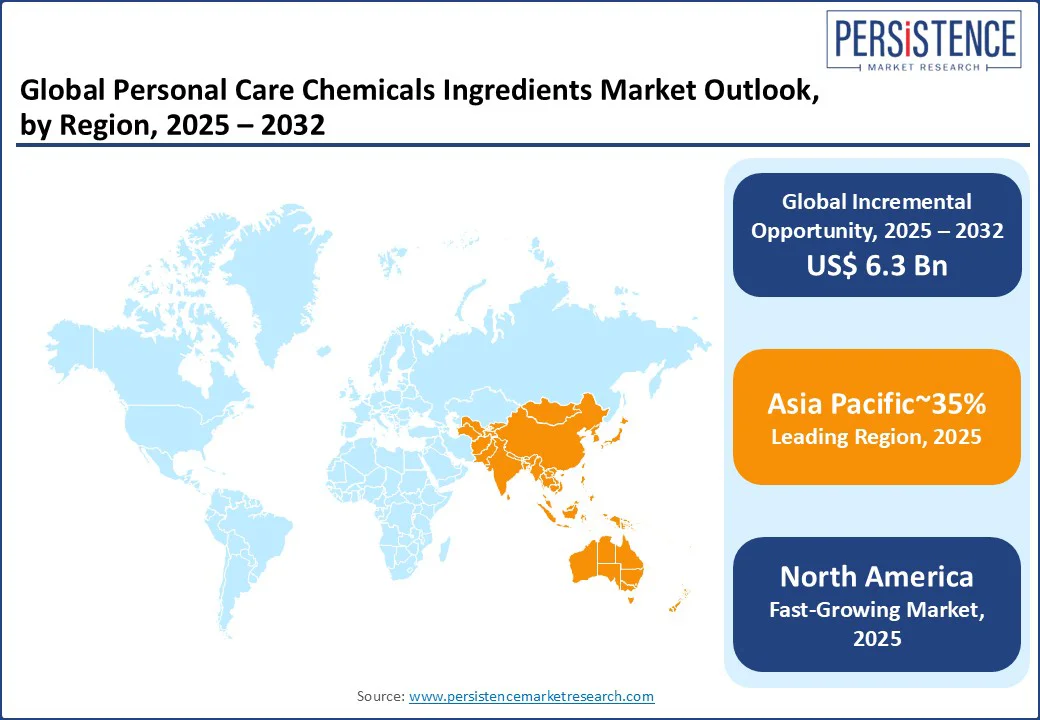
- Leading Region: Asia Pacific, with a projected 35% share of the personal care chemicals ingredients market in 2025, driven by economic growth and increasing per capita spending in countries such as China and India.
- Fastest-Growing Region: North America is expanding at the fastest pace, with a CAGR of 5.6% through 2032, driven by increased adoption of bio-based, dermatologically tested, and premium formulations in the U.S. and Canada.
- Major Developments: Companies are innovating with bio-based actives, AI-driven formulation tools, and biotech peptides, addressing growing consumer demand for sustainable, high-performance personal care solutions.
- Dominant Ingredient Type: Inactive ingredients dominate the personal care chemicals ingredients market, accounting for approximately 55% of total share, driven by the widespread use of emollients, surfactants, and conditioning polymers across skincare, haircare, and hygiene formulations.
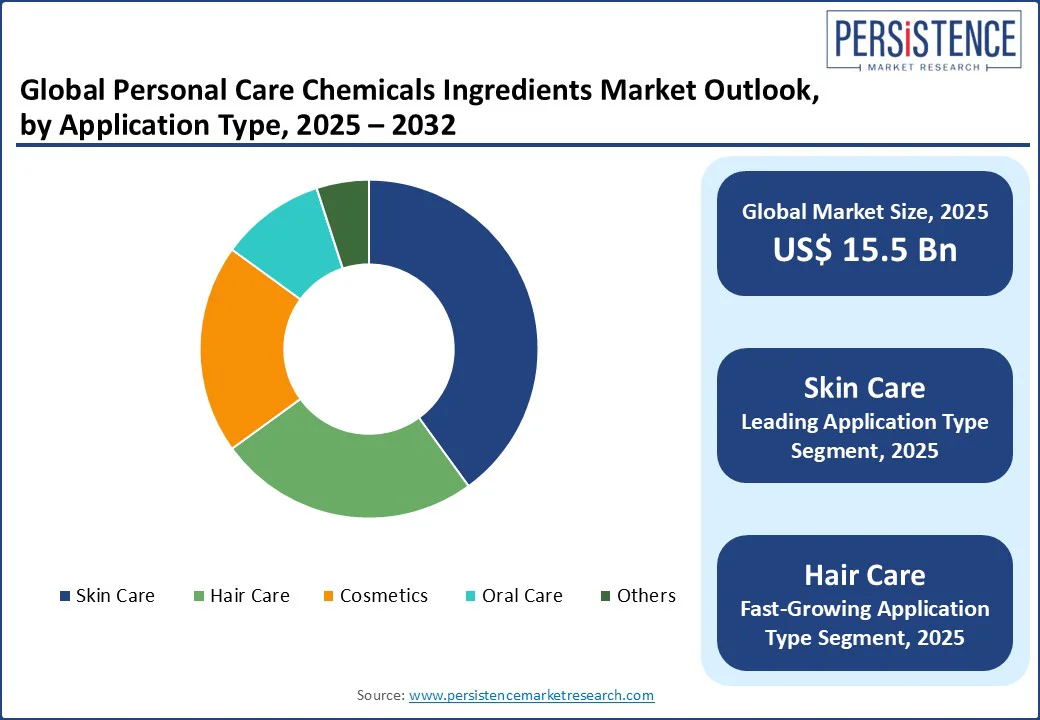
- Leading Application: Skin care dominates the personal care chemicals ingredients market, driven by strong demand for moisturizers, anti-aging products, and sunscreens, supported by clean beauty and natural formulation trends.
|
Global Market Attribute |
Key Insights |
|
Personal Care Chemicals Ingredients Market Size (2025E) |
US$ 15.5 Bn |
|
Market Value Forecast (2032F) |
US$ 21.8 Bn |
|
Projected Growth (CAGR 2025 to 2032) |
5.0% |
|
Historical Market Growth (CAGR 2019 to 2024) |
4.8% |
Market Dynamics
Driver - Increased Awareness of Skincare and Hygiene
The Increasing awareness around skin health and personal hygiene is significantly driving demand in the personal care chemicals ingredients market. Consumers are now more conscious of product safety, ingredient transparency, and long-term skin impact. This has led to a shift toward mild surfactants, natural emulsifiers, and dermatologically tested preservatives in daily-use products such as face cleansers, moisturizers, and body washes. The post-pandemic focus on routine hygiene has further normalized skincare as part of preventive self-care.
For instance, the CDC reported that over 50% of U.S. adults adopted better cleaning practices during COVID-19, with many continuing those routines post-pandemic. This behavioral shift has translated into rising demand for non-toxic, skin-safe formulations, prompting manufacturers to prioritize ingredient innovation aligned with consumer health and safety expectations.
Restraint - Stringent Regulations and Raw Material Volatility
The personal care ingredients market faces significant challenges due to stringent regulatory frameworks and volatility in raw material prices. Regulatory bodies such a the European Commission Cosmetics Directive (ECCD) and the U.S. Food and Drug Administration (FDA) impose strict guidelines on the use of synthetic chemicals in personal care products to ensure consumer safety and environmental protection. For example, the EU’s Registration, Evaluation, Authorization, and Restriction of Chemicals (REACH) regulations limit the use of certain surfactants and preservatives, increasing compliance costs for manufacturers. These regulations, while ensuring safety, restrict market growth by limiting the use of cost-effective synthetic ingredients, which account for a significant market share.
Additionally, the volatility of raw material prices, particularly petrochemical-based ingredients such as surfactants and emollients, poses a challenge. A 2024 report by Research Nester noted that fluctuations in crude oil and natural gas prices directly impact production costs, as many personal care ingredients are derived from petrochemicals. This volatility affects profit margins, especially for small and medium-scale manufacturers in the Asia Pacific and the Middle East, where supply chain disruptions are common. Consumer resistance to synthetic ingredients, coupled with the high cost of transitioning to bio-based alternatives, further complicates market dynamics.
Opportunity - Innovation in Bio-Based and Multifunctional Ingredients
The shift toward bio-based and multifunctional ingredients presents significant opportunities for market growth. Consumers are increasingly demanding products with natural, eco-friendly, and multifunctional properties, such as anti-aging, skin brightening, and UV protection. In February 2024, Dow Chemical Company launched a new line of bio-based and biodegradable surfactants for personal care applications, targeting the growing demand for sustainable ingredients in North America. Similarly, Croda International Plc acquired Solus Biotech in February 2023, enhancing its portfolio with biotech-derived ceramides and phospholipids for premium beauty actives. These innovations cater to the rising popularity of K-beauty and J-beauty trends, which emphasize multi-step skincare regimens and specialized ingredients.
The growing demand for anti-aging and skin-conditioning products is driving investment in active ingredients such as retinol, hyaluronic acid, and vitamin C. The active ingredients segment, valued at over US$2 Bn globally in 2024, is driven by their proven efficacy in addressing skin concerns such as acne and dryness. In emerging markets, such as India and Brazil, the rise of the middle class and increasing urbanization are creating opportunities for affordable, high-performance personal care products, further boosting demand for innovative ingredients. Additionally, advancements in biotechnology are enabling the development of sustainable ingredients with enhanced sensory benefits, such as non-greasy emollients.
Category-wise Insights
Ingredients Type Insights
Inactive ingredients, including emollients, surfactants, and conditioning polymers, dominate the personal care ingredients market, holding over 55% of the total share. These ingredients are essential for enhancing product texture, spreadability, and skin feel across creams, shampoos, cleansers, and lotions. The consistent use of emollients and surfactants in daily-use personal care products drives steady demand globally, especially within moisturizers and gentle skin cleansers.
Active ingredients are the fastest-growing segment with a CAGR of 5.9%. Ingredients such as anti-aging agents, UV filters, peptides, and exfoliants are growing rapidly, driven by rising demand for performance-based skincare and clean beauty formulations. As consumers seek visible skin benefits and personalized routines, actives are gaining prominence in serums, sunscreens, and targeted facial treatments, boosting innovation across the active personal care ingredients market.
Application Type Insights
The skin care segment dominates the personal care chemicals ingredients market, holding approximately 40% of the market share in 2025. This growth is fueled by rising consumer demand for anti-aging, moisturizing, and sun protection products such as face creams, serums, and sunscreens. The increasing popularity of clean beauty, natural formulations, and dermatologically tested ingredients continues to strengthen skin care’s market position.
Hair care is the fastest-growing application segment, driven by growing awareness of scalp health, hair loss solutions, and demand for sulfate-free and silicone-free products. Consumers in Asia Pacific and North America are actively seeking mild surfactants, conditioning agents, and plant-based extracts, making hair care a key area for innovation in the personal care ingredients industry.
Regional Insights
North America Personal Care Chemicals Ingredients Market Trends
North America is the fastest-growing region in the personal care chemicals ingredients market, projected to expand at a CAGR of 5.6% through 2032. This growth is driven by strong consumer demand for natural, organic, and eco-friendly formulations, along with a mature cosmetics and skincare industry.
In the United States, increasing preference for clean beauty products and UV-protective ingredients is encouraging manufacturers such as Dow and Ashland to invest in bio-based solutions. Canada is seeing growth through rising demand for premium personal care, while Mexico benefits from urbanization and increased spending on affordable skincare and haircare products across a broadening consumer base.
Europe Personal Care Chemicals Ingredients Market Trends
Europe holds a significant share of the global personal care chemicals ingredients market, driven by strong demand for natural, biodegradable, and sustainably sourced formulations. In Germany, consumer preference for eco-friendly ingredients and compliance with strict EU regulations like REACH is pushing innovation in green chemistry.
The U.K. market is shaped by rising interest in premium skincare and K-beauty-inspired routines, with a growing focus on unique textures and functional actives. Meanwhile, France, home to global leaders such as L’Oréal, continues to lead in anti-aging and skin-brightening innovations, reinforcing the region’s influence in high-performance and luxury personal care formulations.
Asia Pacific Personal Care Chemicals Ingredients Market Trends
Asia Pacific dominates the global personal care chemicals ingredients market, accounting for approximately 35% of the total market share, driven by a diverse consumer base and rapid industry expansion. China leads within the region, supported by a large middle-class population, increasing per capita spending, and the rising popularity of K-beauty trends and e-commerce adoption. India is the fastest-growing market, propelled by urbanization, higher disposable incomes, and a strong preference for affordable, natural personal care products. In Japan, demand is shaped by J-beauty trends and a focus on high-performance ingredients such as ceramides and hyaluronic acid, reinforcing the region’s role in driving innovation and volume.
Competitive Landscape
The Personal Care Chemicals Ingredients Market is highly competitive, characterized by continuous innovation and strategic collaborations. Key players include Genesys International, Kemira, GE Water & Process Technologies, BWA Water Additives, Nalco, Reverse Osmosis Chemicals International, King Lee Technologies, and LennTech BV. These companies focus on R&D to develop sustainable and bio-based ingredients, with BASF SE and Dow leading through investments in eco-friendly surfactants and emollients.
The personal care chemicals ingredients market also sees competition from small and medium-scale manufacturers in Asia Pacific, particularly in China and India, offering cost-effective alternatives.
Key Industry Developments
- Dow (May 2025): Unveiled Decarbia™ low?carbon silicone elastomers at NY SCC Suppliers’ Day, expanding its bio-based portfolio for skin, hair, and sun care formulations with sustainability-focused innovations.
- Croda International (Jul 2023): Finalized acquisition of Solus Biotech, bringing advanced biotech-derived ceramides and phospholipids into its beauty actives lineup, enhancing high-performance, sustainable skincare ingredients.
- Ashland (Feb 2025): Launched Collapeptyl Biofunctional, the first AI-designed hyalupeptide hybrid that targets 20 collagen types for “glass skin” anti-aging effects, showcased at In-Cosmetics Global
Companies Covered in Personal Care Chemicals Ingredients Market
- King Lee Technologies
- Genesys International
- Kemira
- GE Water & Process Technologies
- BWA Water Additives
- Nalco
- Reverse Osmosis Chemicals International
- LennTech BV
- Others
Frequently Asked Questions
The personal care chemicals ingredients market is projected to reach US$15.5 Bn in 2025.
The personal care chemicals ingredients market is expected to grow at a CAGR of 5.0% from 2025 to 2032.
Key drivers include rising consumer awareness of natural and sustainable ingredients, increasing disposable incomes, and demand for multifunctional products.
Opportunities lie in bio-based and multifunctional ingredients, particularly in emerging economies, and advancements in sustainable packaging.
Leading players include Genesys International, Kemira, GE Water & Process Technologies, BWA Water Additives, Nalco, and others.
Asia Pacific dominates, with a projected 35% market share by 2032, driven by economic growth in China and India.


