




- Pharmaceuticals
- Pancreatic Cancer Treatment Market
Pancreatic Cancer Treatment Market Size, Share, Growth, and Regional Forecast, 2026 to 2033
Pancreatic Cancer Treatment Market by Type (Exocrine, Endocrine), End-use (Hospital Pharmacies, Retail Pharmacies, Others), by Regional Analysis, from 2026 to 2033.

Pancreatic Cancer Treatment Market Share and Trends Analysis
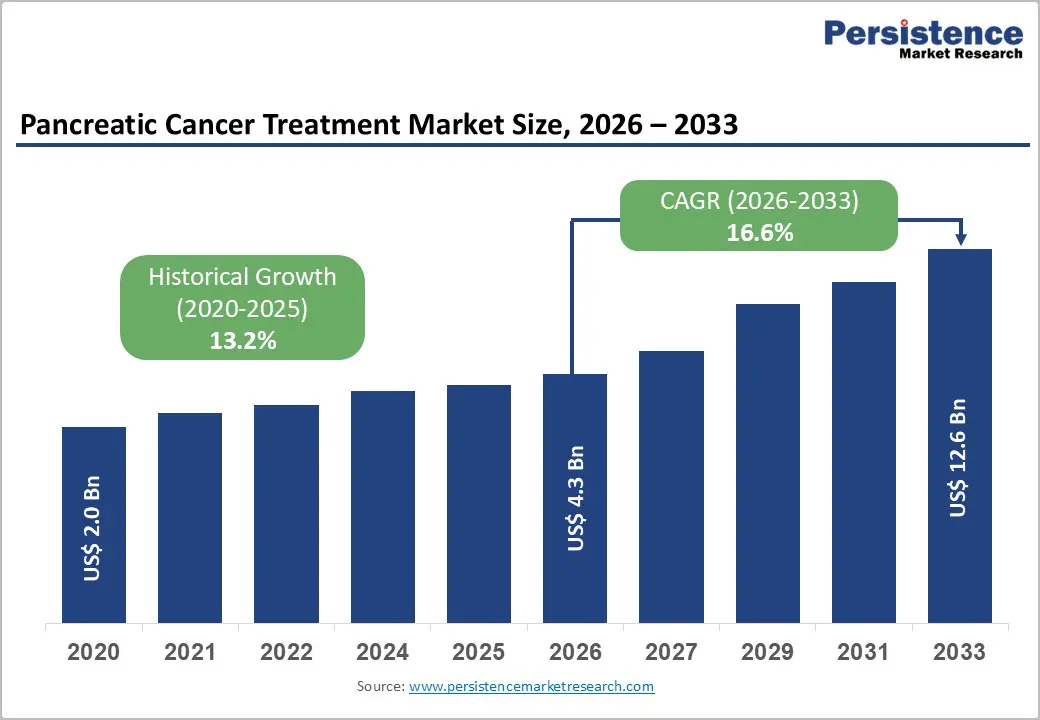
The global pancreatic cancer treatment market size is expected to be valued at US$ 4.3 billion in 2026 and projected to reach US$ 12.6 billion by 2033, growing at a CAGR of 16.6% between 2026 and 2033. The market is witnessing a steady growth, driven by the rise in prevalence of this aggressive malignancy and demand for effective therapies.
The market encompasses a broad range of interventions, including surgery, chemotherapy, targeted therapy, immunotherapy, and radiation therapy, aimed at improving patient outcomes. Advancements in research, technology, and understanding of pancreatic cancer’s molecular biology are further fueling market expansion, while personalized medicine approaches that tailor treatments to individual tumor genetics are gaining prominence.
Key trends shaping the market include the growing adoption of immunotherapies, such as checkpoint inhibitors and CAR T-cell therapies, which provide new treatment options for patients with limited alternatives. Additionally, the integration of artificial intelligence and machine learning in diagnostics is enhancing early detection and treatment planning. Increased collaboration among pharmaceutical companies, research institutions, and healthcare providers is accelerating the development of innovative therapies, driving sustained market growth.
Key Industry Highlights:
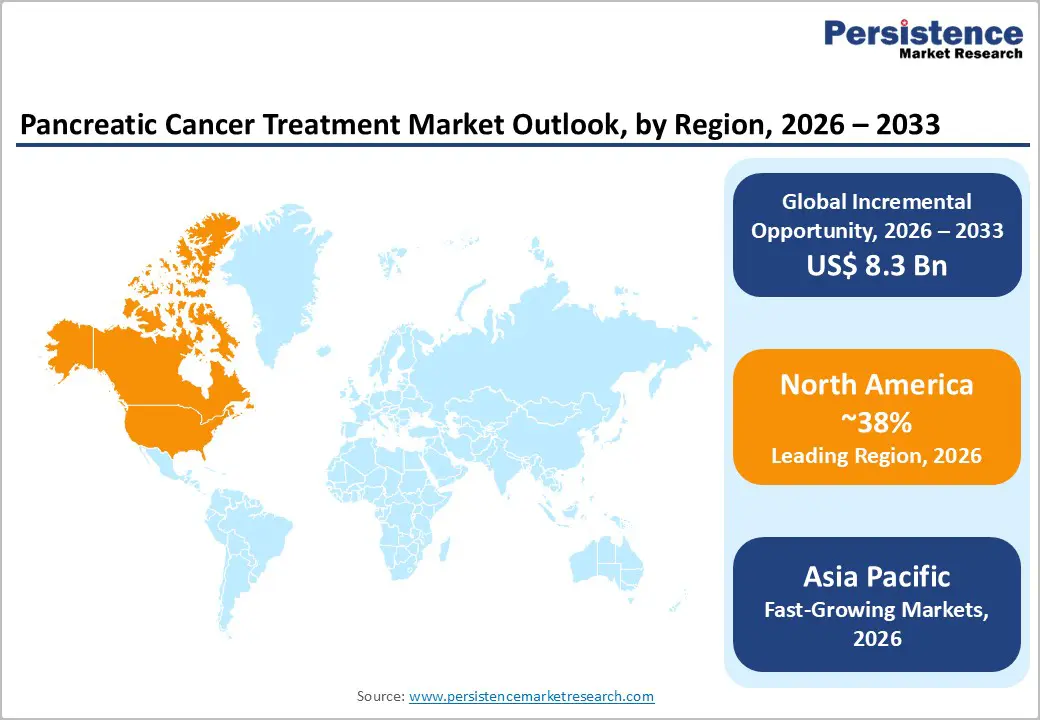
- North America is expected to account for 38% of the market due to significant healthcare investments, and a marked increase in pancreatic cancer diagnoses.
- Europe is expected to secure second most significant regional market.
- Innovations in targeted therapies and immunotherapies are propelling the pancreatic cancer treatment market growth.
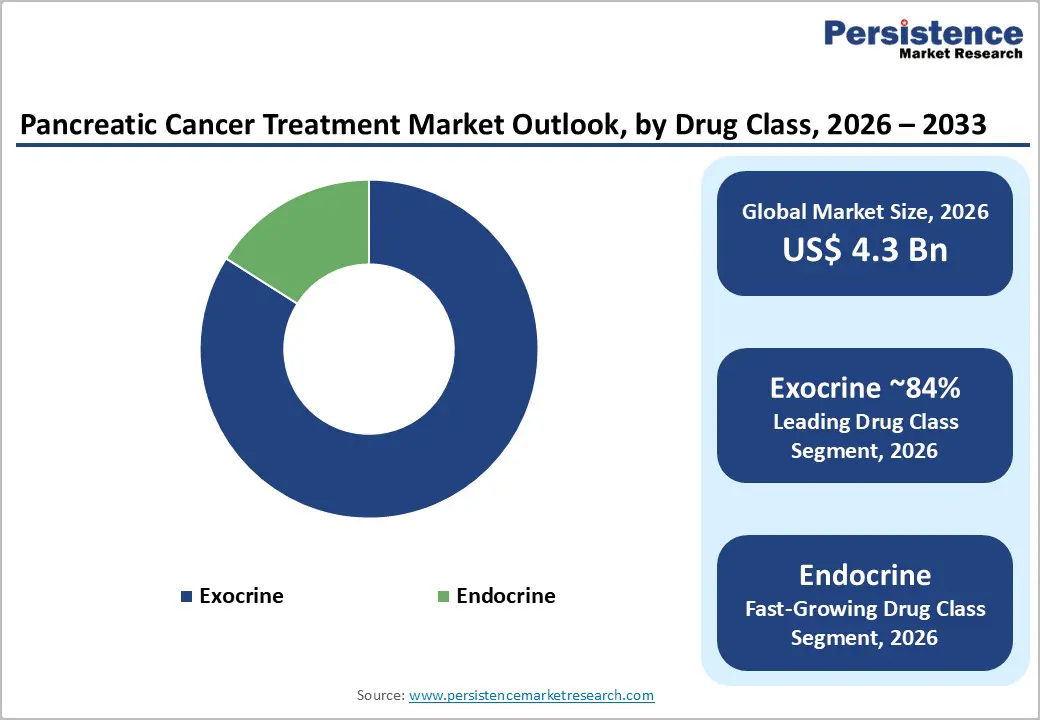
- The exocrine segment is projected to command an impressive 84.31% market share in 2026.
- The rising incidence of chronic pancreatitis and increased sugar and alcohol consumption have spurred demand for treatments.
- Hospital pharmacies are poised to emerge as the leading segment in the pancreatic cancer treatment market holding a substantial 52 % share.
- The surge in pancreatic cancer cases is attributed to changing dietary habits, increased sugar intake, unhealthy diets, and lifestyle choices.
- Increased awareness of pancreatic cancer encourages patients to pursue treatment options and stimulates research and development efforts.
| Key Insights | Details |
|---|---|
|
Pancreatic Cancer Treatment Size (2026E) |
US$ 4.3 Bn |
|
Market Value Forecast (2033F) |
US$ 12.6 Bn |
|
Projected Growth (CAGR 2026 to 2033) |
16.6% |
|
Historical Market Growth (CAGR 2020 to 2024) |
13.2% |
Market Dynamics
Driver – Rising Disease Burden and Therapeutic Advancements
The pancreatic cancer treatment market is primarily driven by the increasing incidence of pancreatic cancer and growing disease awareness. Rising prevalence, coupled with improved diagnostic capabilities, has led to earlier detection and higher treatment uptake. Public health campaigns and educational initiatives have increased awareness of pancreatic cancer symptoms and risk factors, encouraging patients to seek timely medical care. This heightened awareness is also prompting healthcare systems to prioritize pancreatic cancer management, thereby expanding demand for effective treatment options and supporting sustained market growth.
Another major growth driver is continuous advancement in treatment modalities, including targeted therapies, immunotherapies, and personalized medicine approaches. These innovations focus on selectively attacking cancer cells while minimizing harm to healthy tissue, resulting in better efficacy and fewer side effects. Additionally, collaborative research efforts among pharmaceutical companies, research institutions, and healthcare providers are accelerating drug development and clinical trials. Increased government and private funding further support innovation, leading to the introduction of novel therapies that aim to improve survival rates and quality of life for pancreatic cancer patients.
Restraints – High Costs and Limited Treatment Effectiveness
The pancreatic cancer treatment market faces significant restraints due to the high costs associated with advanced therapies. Innovative treatment options such as targeted therapies, immunotherapies, and combination regimens are often priced at a premium, limiting affordability for a large patient population. In many regions, inadequate or partial insurance coverage further restricts patient access to these therapies, leading to delayed treatment initiation or discontinuation. This financial burden places pressure on both patients and healthcare systems, slowing overall market expansion despite growing disease prevalence.
Another major restraint is the limited efficacy of existing treatment options. Pancreatic cancer is frequently diagnosed at advanced stages due to nonspecific early symptoms, resulting in poor survival outcomes. Conventional treatments such as chemotherapy and radiation therapy often provide marginal survival benefits and face challenges related to drug resistance and tumor aggressiveness. These clinical limitations not only impact patient quality of life but also discourage large-scale investment in treatment innovation, posing a barrier to the rapid development of more effective therapies.
Opportunity – Personalized Medicine and AI-Driven Diagnostics
The development of personalized medicine presents a significant opportunity for the pancreatic cancer treatment market. Advances in genomic research and molecular profiling are enabling a deeper understanding of tumor biology, allowing therapies to be tailored to individual patient characteristics. Targeted treatments based on biomarkers can improve therapeutic efficacy while reducing adverse effects, potentially transforming pancreatic cancer management. As precision oncology gains momentum, pharmaceutical companies and research institutions are increasingly investing in personalized treatment strategies.
Another promising opportunity lies in the integration of artificial intelligence (AI) into diagnostic workflows. AI-driven tools can enhance imaging analysis, detect subtle disease patterns, and support earlier diagnosis of pancreatic cancer, which is critical for improving survival rates. By enabling faster and more accurate clinical decision-making, AI technologies can support timely treatment initiation and better disease monitoring, ultimately driving innovation and growth within the pancreatic cancer treatment market.
Category-wise Analysis
By Drug Class Insights
The pancreatic cancer treatment market is segmented into exocrine and endocrine types, with the exocrine segment expected to capture 84 % market share in 2026. Exocrine pancreatic cancer affects the pancreas’ ability to produce and deliver digestive enzymes to the small intestine, often causing severe digestive issues. Conditions such as chronic pancreatitis, diabetes, gastrointestinal surgeries, and cystic fibrosis can contribute to its development.
Lifestyle factors, including high sugar and alcohol consumption, have further increased the prevalence of exocrine pancreatic cancer, driving demand for effective treatments. Awareness of these health risks has encouraged early intervention and the adoption of targeted therapies, including enzyme replacement, chemotherapy, and emerging targeted drugs. The high prevalence of exocrine pancreatic cancer, combined with the need for specialized treatment approaches, continues to make this segment the dominant focus within the overall pancreatic cancer treatment market.
By End-user Insights
In 2025, hospital pharmacies are expected to dominate the pancreatic cancer treatment market, holding a significant 52.98% share. Hospitals serve as critical care centers for pancreatic cancer patients, offering access to advanced diagnostic tools, cutting-edge medical devices, and highly trained healthcare professionals. The availability of multidisciplinary teams in hospital settings ensures comprehensive management of both mild and advanced cases, from surgery and chemotherapy to targeted therapies and immunotherapies.
The central role of hospital pharmacies extends beyond dispensing medications; they coordinate treatment plans, monitor patient responses, and manage complex therapy regimens. This integrated approach improves treatment efficacy, patient safety, and overall clinical outcomes. The growing reliance on hospital-based care highlights the importance of hospital pharmacies in ensuring timely access to innovative therapies, reinforcing their critical position within the pancreatic cancer treatment ecosystem.
Regional Insights
North America Pancreatic Cancer Treatment Market Trends
North America is projected to lead the pancreatic cancer treatment market. This dominance is driven by substantial healthcare investments, robust healthcare infrastructure, supportive government policies, and the presence of leading pharmaceutical companies actively engaged in research and development. Rising awareness about pancreatic cancer, coupled with advanced diagnostic capabilities, is enabling earlier detection and increased demand for innovative treatment options.
Lifestyle and dietary changes are contributing significantly to the rising incidence of pancreatic cancer in the region. Increased consumption of sugar, fats, and fast foods, combined with sedentary habits, has escalated the risk of developing this aggressive malignancy. As a result, the demand for advanced therapies including targeted therapies, immunotherapies, and personalized medicine is expected to grow. The situation highlights the critical need for proactive healthcare measures, public education campaigns, and early intervention strategies to manage the growing pancreatic cancer burden across North America.
Europe Pancreatic Cancer Treatment Market Trends
Europe is expected to be the second-largest market for pancreatic cancer treatments in 2025, driven by a rising incidence linked to unhealthy dietary patterns, including high sugar intake and processed foods. Lifestyle changes, such as reduced physical activity, alcohol consumption, and smoking, are further exacerbating cancer risk across the region.
Environmental factors, including industrialization and exposure to pesticides and chemicals in food, are contributing to increasing cases of pancreatic cancer. The UK, in particular, represents a critical area due to its significant elderly population, who are more vulnerable to the disease. Limited access to preventive healthcare and insufficient clinical monitoring intensify the need for early diagnosis and effective therapeutic interventions. Increasing adoption of advanced treatments, such as targeted therapies and immunotherapies, alongside government and institutional support, is expected to drive market growth while addressing the rising clinical burden across Europe.
Asia Pacific Pancreatic Cancer Treatment Market Trends
Asia Pacific pancreatic cancer treatment market is witnessing significant growth, fueled by rising incidence rates and increasing healthcare investments. Rapid urbanization, changing lifestyles, and dietary shifts such as higher consumption of processed foods, sugar, and fats have contributed to growing pancreatic cancer cases in countries like China, India, and Japan.
Limited awareness about early symptoms and delayed diagnoses often result in advanced-stage detection, increasing demand for innovative therapies such as targeted treatments, immunotherapies, and combination regimens. Additionally, governments and healthcare organizations are investing in awareness campaigns, infrastructure, and research initiatives to enhance early detection and treatment. Rising access to advanced diagnostic technologies, combined with increasing adoption of personalized medicine, is expected to further expand the market, providing better patient outcomes and improving the overall management of pancreatic cancer across the region.
Competitive Landscape
The pancreatic cancer treatment market features a highly dynamic and competitive landscape, driven by continuous innovation and advancement in therapeutic approaches. Leading pharmaceutical companies are actively expanding their product portfolios through targeted and precision-based treatments to address the complex nature of pancreatic cancer. For example, Amgen’s launch of AMG 510 (sotorasib) in 2022 marked a significant milestone by targeting KRAS G12C mutations, a common genetic alteration in pancreatic tumors. Such developments highlight the industry’s shift toward personalized medicine aimed at improving clinical outcomes. Ongoing research, strategic collaborations, and robust clinical pipelines are intensifying competition as companies seek to address unmet medical needs.
Key Industry Developments:
- In June 2024, The University of Glasgow and NHS Greater Glasgow and Clyde launched a mid-stage study to evaluate a new drug combination as a first-line treatment for metastatic pancreatic cancer. The study will determine Gemzar, a chemotherapy drug from Eli Lilly and Genentech, Keytruda, a pembrolizumab from Merck & Co., and IMM-101, an immunomodulatory drug from Immodulon Therapeutics.
- In September 2024, Researchers from the University of Birmingham opened a trial to study the use of messenger RNA (mRNA) cancer vaccines to prevent the recurrence of pancreatic cancer. The trial, which is the first in Europe, will recruit patients undergoing surgery to remove pancreatic ductal adenocarcinoma (PDAC), which accounts for 90% of all pancreatic cancers. Patients will either receive an investigational cancer vaccine combined with chemotherapy (treatment group) or standard chemotherapy alone (control group).
Companies Covered in Pancreatic Cancer Treatment Market
- AstraZeneca
- Novartis AG
- Pfizer Inc
- Genentech, Inc
- Bristol-Myers Squibb Company
- Ipsen Pharma Oncolytics Biotech Inc
- TME Pharma
- Phaxiam
- Others
Frequently Asked Questions
The global pancreatic cancer treatment market is projected to be valued at US$ 4.3 Bn in 2026.
Rising demand for immune-boosting ingredients, infant nutrition growth, functional foods adoption, and expanding pharmaceutical and nutraceutical applications globally.
The global market is expected to witness a CAGR of 16.6% between 2026 and 2033.
Expansion in infant formula, sports nutrition, clinical nutrition, emerging markets, and innovation in high-purity lactoferrin formulations.
North America is the leading region in the global pancreatic cancer treatment market.


