




- Pharmaceuticals
- Male Menopause Treatment Market
Male Menopause Treatment Market Size, Share, and Growth Forecast, 2026 – 2033
Male Menopause Treatment Market by Hormonal Therapy (Testosterone Replacement Therapy (TRT), Estrogen Therapy, Combination Treatments), Alternative Medicine (Herbal Supplements, Acupuncture, Homeopathy), Psychological Counselling (Cognitive Behavioral Therapy (CBT), Support Groups, Stress Reduction Programs), and Regional Analysis for 2026-2033

Male Menopause Treatment Market Share and Trends Analysis
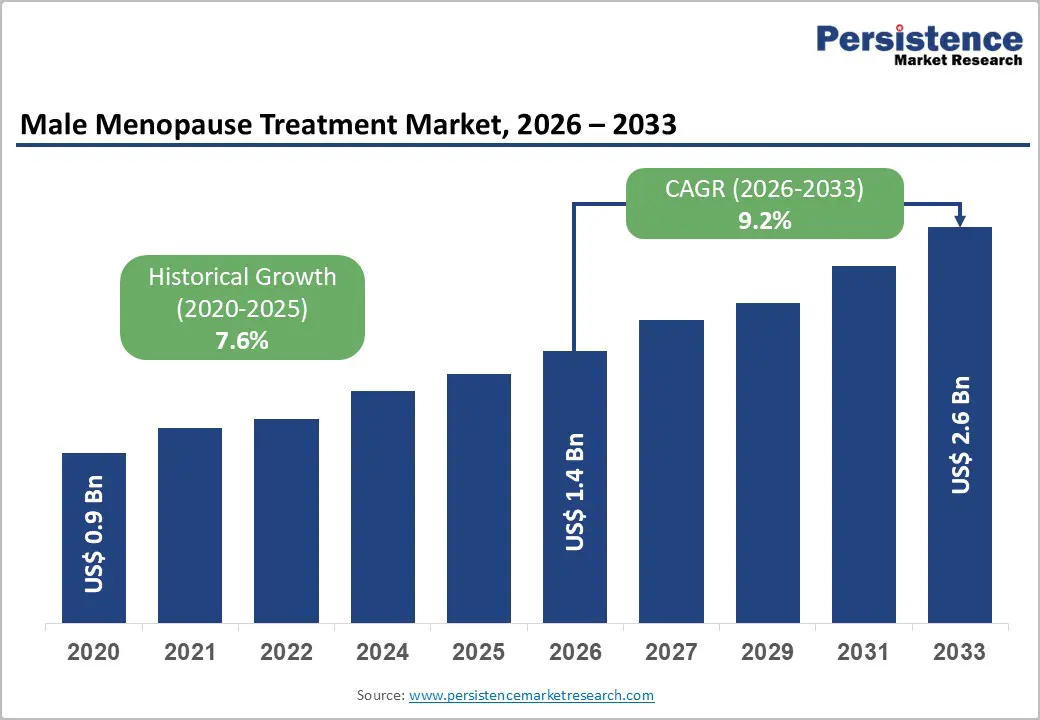
The global male menopause treatment market size is likely to be valued at US$ 1.4 billion in 2026, and is projected to reach US$ 2.6 billion by 2033, growing at a CAGR of 9.2% during the forecast period 2026−2033. This market growth reflects rising prevalence of testosterone decline in aging male populations and increasing clinical recognition of male andropause or late onset hypogonadism symptoms, such as fatigue, libido reduction, and mood variation. North America currently leads in market share due to early diagnosis rates and advanced healthcare infrastructure, with Asia Pacific emerging fastest as access and awareness expand.
Testosterone replacement therapy (TRT) remains the dominant treatment category due to established clinical efficacy, while alternative medicine and psychological counseling segments gain traction as holistic care adoption increases. Investments in digital health platforms, telemedicine, and patient self-monitoring tools are bolstering accessibility and adherence.
Key Industry Highlights
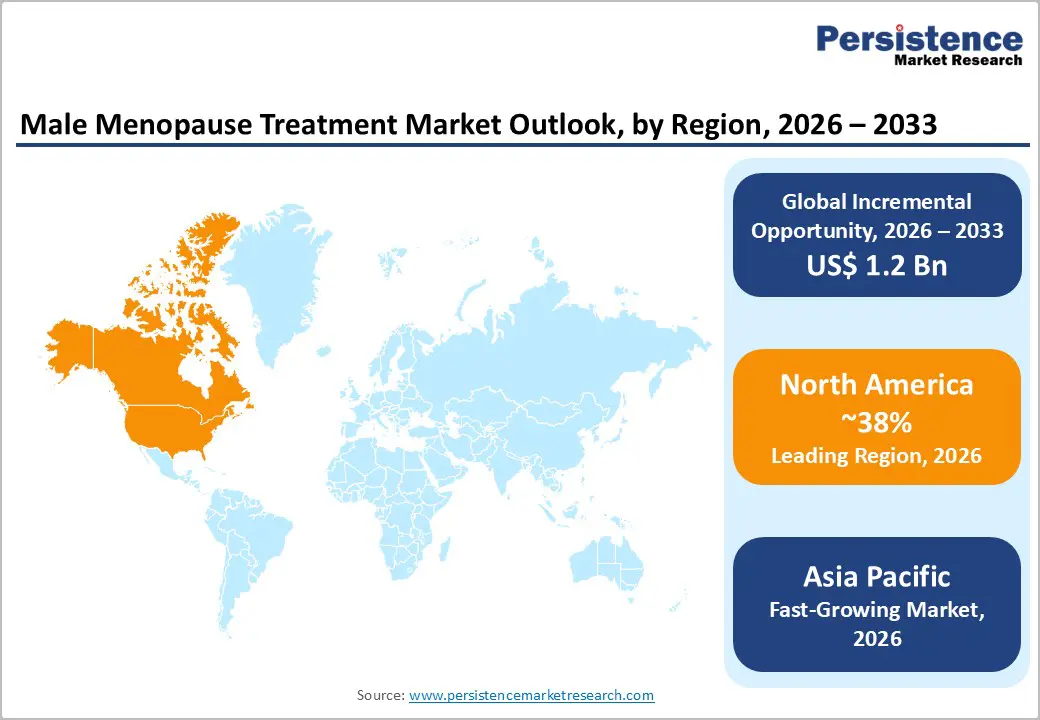
- Dominant Region: North America is projected to capture a market share of about 38% by 2026, fueled by advanced healthcare delivery models and early adoption of age-related hormonal health interventions.
- Fastest-growing Market: Asia Pacific is forecasted to be the fastest-growing market between 2026 and 2033, stimulated by demographic diversification and expanding access to diagnostics and hormone therapies.
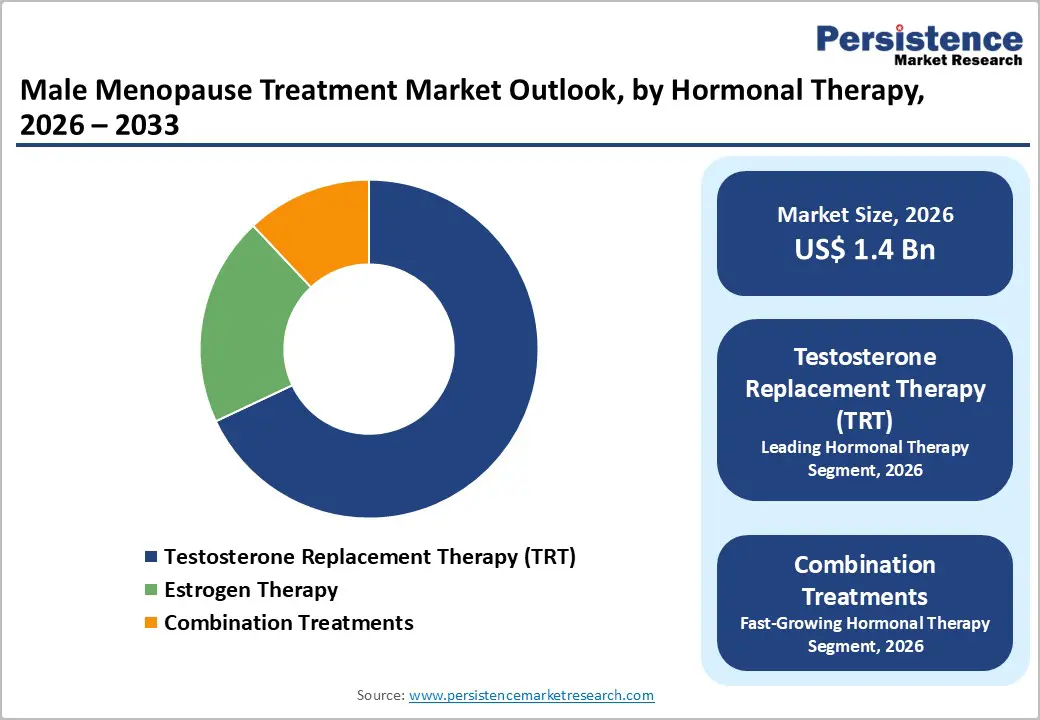
- Leading Hormonal Therapy: Testosterone replacement therapy is likely to hold a 68% market share by 2026, driven by its effectiveness in restoring hormone levels and addressing core symptoms.
- Fastest-growing Hormonal Therapy: Combination treatments are expected to grow the fastest through 2033, fueled by the integration of testosterone with supplementary hormones to optimize symptom management.
| Key Insights | Details |
|---|---|
| Male Menopause Treatment Market Size (2026E) | US$ 1.4 Bn |
| Market Value Forecast (2033F) | US$ 2.6 Bn |
| Projected Growth (CAGR 2026 to 2033) | 9.2% |
| Historical Market Growth (CAGR 2020 to 2025) | 7.6% |
Market Factors – Growth, Barriers, and Opportunity Analysis
Demographic Shifts and Aging Population Trends
Population aging is reshaping the prevalence and perception of health conditions, particularly those associated with hormonal decline in men. According to the World Health Organization (WHO), the number of persons aged 80 years or older is expected to triple between 2020 and 2050 to reach 426 million. Testosterone production naturally decreases with age, leading to symptoms such as fatigue, reduced muscle strength, mood fluctuations, and diminished sexual health. These physiological changes impact overall quality of life, daily functioning, and personal well-being, prompting a growing number of men to seek therapeutic support. As life expectancy increases globally and a larger proportion of men reach age brackets where hormonal decline becomes more pronounced, healthcare systems and pharmaceutical providers are witnessing higher demand for targeted interventions.
Shifts in demographic composition also influence healthcare-seeking behavior and investment patterns. Older male populations are increasingly proactive about preventive and corrective medical solutions, resulting in greater utilization of healthcare services for conditions associated with aging. Organizations and healthcare systems are recognizing the broader implications of untreated hormone deficiency on workforce productivity, social engagement, and long-term wellness. Pharmaceutical developers are responding with therapies tailored to age-related hormonal changes, ensuring treatments are accessible, effective, and aligned with patient needs. The combination of longer life expectancy, greater awareness of male health issues, and rising demand for quality-of-life improvements reinforces sustained growth in therapies addressing hormone deficiency.
Safety Concerns and Side Effect Risks
Safety concerns and potential side effects significantly limit the adoption of male menopause treatments, as these therapies typically involve hormone modulation such as testosterone replacement. Changes in hormone levels can lead to cardiovascular complications, liver dysfunction, or prostate-related issues, prompting increased regulatory scrutiny and discouraging broad use. Clinicians and patients remain cautious due to the variability in individual responses, requiring close monitoring and tailored dosage management. These clinical complexities create barriers for new treatment options and reduce healthcare providers' confidence in recommending therapies for aging male populations.
Patient perception of risk further amplifies hesitancy, with many men delaying or avoiding treatment due to concerns about long-term health implications and possible adverse events. Public awareness campaigns and information gaps contribute to slower acceptance, especially in areas with limited access to specialized care. The necessity for extensive clinical studies and ongoing post-treatment monitoring increases operational costs for both manufacturers and healthcare providers, which in turn constrains investment and innovation in this field.
Technological Convergence and Digital Health Integration
Technological convergence and digital health integration are transforming the delivery and management of male menopause treatment. Advanced wearable devices, mobile health applications, and telemedicine platforms enable continuous monitoring of hormone levels, sleep patterns, and metabolic health, providing clinicians with real-time data to personalize therapy. The integration of digital platforms empowers patients to track symptoms, adherence, and lifestyle factors, improving engagement and treatment outcomes. Adoption of artificial intelligence (AI)-driven analytics and predictive modeling allows clinicians to anticipate hormonal fluctuations and tailor interventions, enhancing efficacy while minimizing adverse effects.
The convergence of diagnostic, therapeutic, and monitoring technologies fosters seamless healthcare workflows, strengthening patient-provider interaction and optimizing decision-making. Digital health solutions facilitate remote coaching, lifestyle modification guidance, and adherence tracking, supporting long-term disease management. Pharmaceutical and wellness companies leverage these platforms for data-driven insights, accelerating product development and expanding service offerings. Enhanced interoperability between devices, electronic health records, and patient portals promotes coordinated care and robust outcome measurement, giving providers who embrace integrated solutions a competitive advantage.
Category-wise Analysis
Hormonal Therapy Analysis Insights
Testosterone replacement therapy is projected to capture approximately 68% of the market share in 2026, underlining its status as the primary intervention for testosterone deficiency. The therapy directly restores hormone levels and addresses key symptoms such as fatigue, reduced libido, and muscle loss, driving broad adoption among clinicians. Multiple delivery methods, including injections, transdermal patches, and oral formulations, offer flexibility for patient preferences and clinical needs, ensuring consistent revenue and reinforcing the dominance of TRT in hormonal treatment portfolios.
Combination treatments are expected to be the fastest-growing segment from 2026 to 2033, driven by the rise of personalized therapy protocols that target multifactorial hormonal imbalances. By integrating testosterone with supplementary hormones, clinicians can optimize symptom management and improve patient outcomes in cases where standalone TRT is insufficient. The increasing emphasis on precision medicine is encouraging the adoption of tailored regimens, while advancements in clinical monitoring and hormone analytics support more accurate efficacy tracking and treatment optimization.
Alternative Medicine Insights
Herbal supplements are expected to lead with over 48% of the male menopause market revenue share in 2026, driven by strong consumer accessibility, widespread retail availability, and a rising preference for natural solutions that support hormonal balance and vitality. Botanical formulations align with preventive health trends and self-care routines, enabling integration without the need for clinical intervention. Their broad acceptance in both traditional and modern wellness systems sustains uptake, while standardized extracts, capsule formats, and blends targeting energy, mood, and metabolic health enhance commercial scalability, reinforcing leadership in alternative treatment pathways.
Acupuncture and homeopathy are projected to be the fastest-growing segment between 2026 and 2033, supported by increasing adoption of integrative and lifestyle-based healthcare models. Demand is driven by the preference for low-risk, non-pharmacological interventions that complement conventional therapies. Expanding wellness clinics and holistic health centers are incorporating these modalities into structured care programs, improving credibility and patient reach. Growing emphasis on stress management, sleep regulation, and overall well-being further strengthens utilization, positioning acupuncture and homeopathy as high-growth options within complementary health ecosystems.
Psychological Counseling Insights
Cognitive behavioral therapy (CBT) is expected to capture approximately 34% of the male menopause treatment market share in 2026, due to its strong clinical validation, structured intervention models, and consistent results in mood stabilization and cognitive reframing. CBT provides standardized protocols that effectively address anxiety, irritability, sleep disruption, and motivation decline associated with hormonal changes. Its high acceptance among healthcare providers supports routine referral and integration into standard care pathways.
Support groups are projected to be the fastest-growing segment of psychological counseling between 2026 and 2033, driven by rising mental health awareness and increasing demand for community-based coping strategies. Peer interaction helps normalize experiences and reduces stigma, improving engagement and retention. Stress reduction programs, such as mindfulness training and guided relaxation, enhance emotional resilience and sleep quality, aligning with holistic care models and supporting long-term well-being.
Regional Insights
North America Male Menopause Treatment Market Trends
North America is projected to capture around 38% of the male menopause treatment market share by 2026, driven by advanced healthcare delivery models and early adoption of age-related hormonal health interventions. High diagnosis rates result from proactive screening, routine hormone testing, and strong engagement with primary care among middle-aged men. The integration of endocrinology, mental health services, and wellness programs enables comprehensive treatment pathways that address physical, cognitive, and emotional symptoms. Robust reimbursement coverage for hormone therapies, counseling, and digital health solutions lowers access barriers and supports sustained utilization among insured populations.
This leadership is further strengthened by a vibrant innovation ecosystem and commercial readiness. Pharmaceutical companies, telehealth providers, and digital health platforms collaborate to deliver personalized therapy, remote monitoring, and subscription-based care models. High disposable income supports the adoption of premium treatments, including combination therapies, psychological counseling, and lifestyle management programs. Employer-sponsored health benefits increasingly cover hormonal health and mental well-being support, broadening treatment reach beyond traditional clinical settings.
Europe Male Menopause Treatment Market Trends
Europe maintains a significant position in the male menopause treatment market, supported by well-established healthcare infrastructure, high awareness of age-related hormonal health, and strong adoption of evidence-based therapies. Widespread access to specialized endocrinology and urology clinics facilitates early diagnosis and management of testosterone deficiency and related symptoms. Cultural acceptance of preventive care and wellness interventions encourages middle-aged men to seek treatment for fatigue, mood fluctuations, and metabolic concerns. Comprehensive insurance coverage and reimbursement policies reduce financial barriers, ensuring consistent access to hormonal therapies, psychological counseling, and lifestyle management programs.
This strong market position is further enhanced by the integration of conventional medicine with complementary approaches, including nutraceuticals, herbal supplements, and digital health solutions. Telemedicine and remote monitoring platforms improve patient engagement, adherence, and follow-up efficiency, particularly for working professionals and those in semi-urban areas. Investment in research, clinical trials, and innovative delivery formats such as transdermal patches and combination therapies supports ongoing product development and adoption. Employer-led wellness programs and public health initiatives promoting male hormonal health broaden awareness and drive greater treatment uptake.
Asia Pacific Male Menopause Treatment Market Trends
Asia Pacific is expected to be the fastest-growing market for male menopause treatment between 2026 and 2033, driven by rapid demographic changes and improving healthcare engagement among middle-aged men. Rising life expectancy and urbanization increase the prevalence of lifestyle-related hormonal imbalances, fueling demand for medical consultation and long-term symptom management. Awareness campaigns by healthcare providers and digital platforms help reduce stigma around age-related hormonal changes, encouraging earlier diagnosis and treatment adoption. Expanding access to diagnostic services, hormone testing, and outpatient care in metropolitan and tier-two cities facilitates faster patient entry into treatment pathways.
This growth is further accelerated by ongoing healthcare system transformation and digital integration. Telemedicine platforms, remote counseling, and mobile health applications offer discreet and convenient access to therapy, aligning with regional preferences for flexible care delivery. The increasing presence of private healthcare providers and wellness clinics broadens treatment availability beyond traditional hospital settings. Integration of hormonal therapy with lifestyle modification, nutrition support, and mental health counseling meets the demand for holistic care models. Employer-sponsored wellness programs and preventive health initiatives are also expanding treatment exposure among working-age men, further driving market momentum.
Competitive Landscape
The global male menopause treatment market structure is moderately fragmented. At present, AbbVie, Bayer AG, Eli Lilly and Company, Pfizer Inc., and Teva Pharmaceutical Industries are the top companies sitting at the apex of the market, accounting for approximately 42% of global revenue. These leading firms focus on developing comprehensive hormonal therapy portfolios, transdermal delivery systems, and innovative solutions to address testosterone deficiency and related symptoms.
Moderate market fragmentation creates opportunities for both established companies and emerging manufacturers to innovate and address unmet needs. Leading players utilize their expertise in endocrinology, robust research and development capabilities, and extensive distribution networks to maintain competitive positioning. Strategic investments in combination therapies, digital health integration, and patient support programs are enhancing treatment adherence and outcomes across the market.
Key Industry Developments
- In December 2025, an FDA advisory panel recommended easing restrictions on testosterone replacement therapy for men, advocating updated regulatory approaches to improve access and align treatment practices with current clinical evidence for hormonal care.
- In July 2025, a study presented at the Endocrine Society’s annual meeting showed that anti obesity medications such as semaglutide, dulaglutide, and tirzepatide significantly increased testosterone levels in men with obesity or type 2 diabetes, suggesting potential benefits for hormonal health beyond weight loss.
- In July 2025, a study published in Reproductive Biology and Endocrinology found that tirzepatide treatment in 28 obese men with functional hypogonadism and insulin resistance led to 8.1% weight loss, doubled testosterone levels, elevated LH/FSH/SHBG, reduced estradiol, and improved erectile function (IIEF-5) over 8 weeks. This treatment outperformed TRT, which suppresses gonadotropins, while tirzepatide restores hypothalamic-pituitary-gonadal axis function by addressing metabolic root causes.
Companies Covered in Male Menopause Treatment Market
- AbbVie
- Bayer AG
- Eli Lilly and Company
- Pfizer Inc.
- Teva Pharmaceutical Industries
- Novartis AG
- Merck & Co.
- Mylan N.V.
- Ipsen S.A.
- GlaxoSmithKline plc
- Zydus Lifesciences
- Cipla Limited
- Lupin Ltd.
- Organon & Co.
- Besins Healthcare
Frequently Asked Questions
The global male menopause treatment market is projected to reach US$ 1.4 billion in 2026.
Widening awareness of age-related hormonal decline, increasing diagnosis of low testosterone, and growing demand for personalized and holistic treatment solutions drive the market.
The market is poised to witness a CAGR of 9.2% from 2026 to 2033.
Integration of digital health platforms, development of combination therapies, and expansion of preventive and wellness-focused care offer key market opportunities.
Some of the key market players include AbbVie, Bayer AG, Eli Lilly and Company, Pfizer Inc., Teva Pharmaceutical Industries, and Novartis AG.


