




- Food Ingredients & Additives
- Dried Cranberries Market
Dried Cranberries Market Size, Share, Growth, and Regional Forecast, 2026 to 2033
Dried Cranberries Market by Product Type (Sun Dried, Air Dried, Freeze Dried, Others), by Nature (Organic, Conventional), by Sales Channel (Supermarkets /Hypermarkets, Specialty Stores, Convenience Stores, Online Retail, Others), by Regional Analysis, 2026-2033

Dried Cranberries Market Size and Trend Analysis
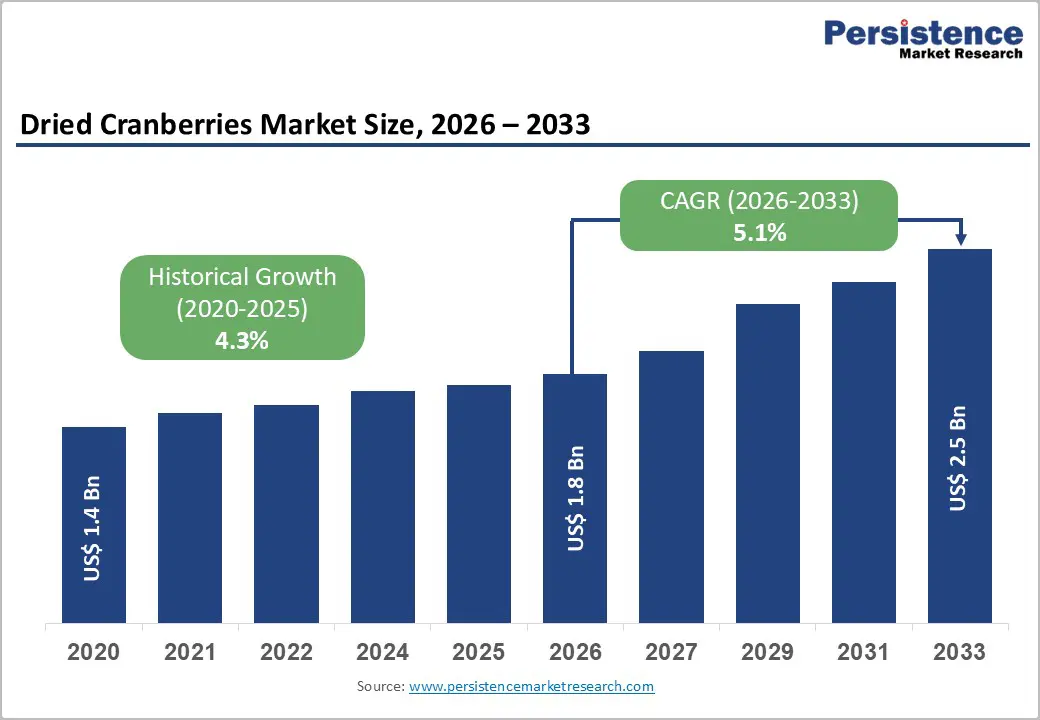
The global Dried Cranberries market size is expected to be valued at US$ 1.8 billion in 2026 and projected to reach US$ 2.5 billion by 2033, growing at a CAGR of 5.1% between 2026 and 2033
The global Dried Cranberries Market is currently undergoing a transformative phase, driven by the intersection of functional nutrition and the demand for clean-label, plant-based snacking alternatives. As consumers increasingly prioritize preventative health, the role of cranberries as a "superfood" has shifted from a seasonal festive staple to a year-round dietary essential.
Key Industry Highlights
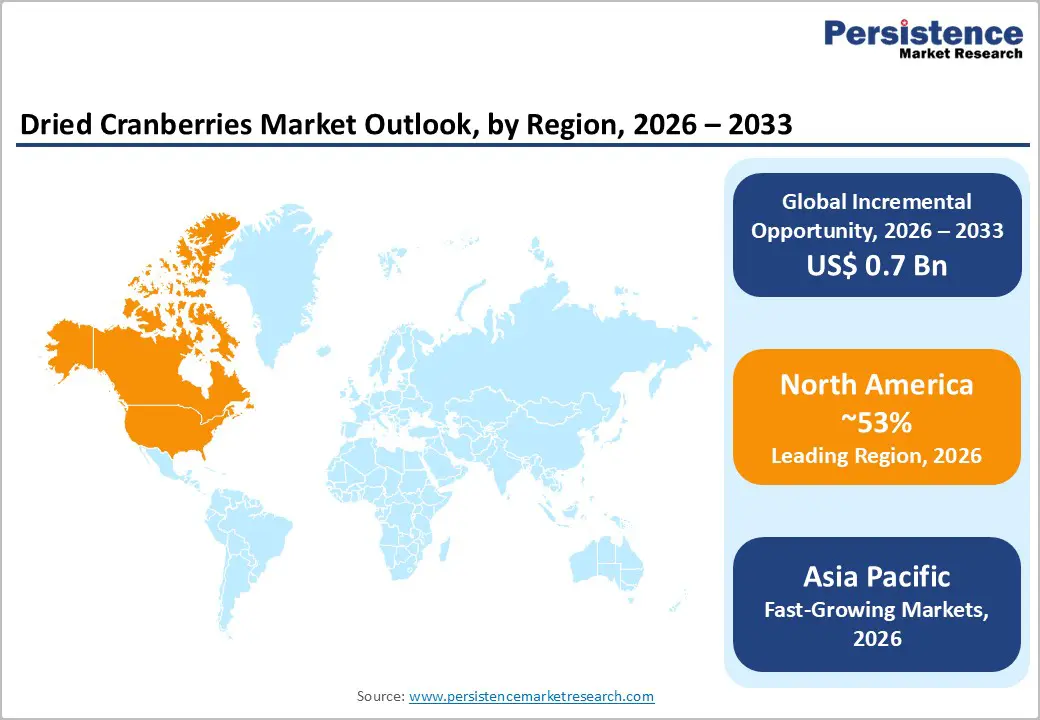
- Leading Region: North America, holding approximately 53% market share, supported by its position as the global production hub, advanced processing infrastructure, and deep integration of dried cranberries into bakery, confectionery, and seasonal consumption habits.
- Fastest-Growing Region: Asia Pacific, driven by rising disposable incomes, rapid expansion of organized retail and e-commerce, increasing adoption of Western-style snacks, and premium positioning of imported dried fruits in urban markets.
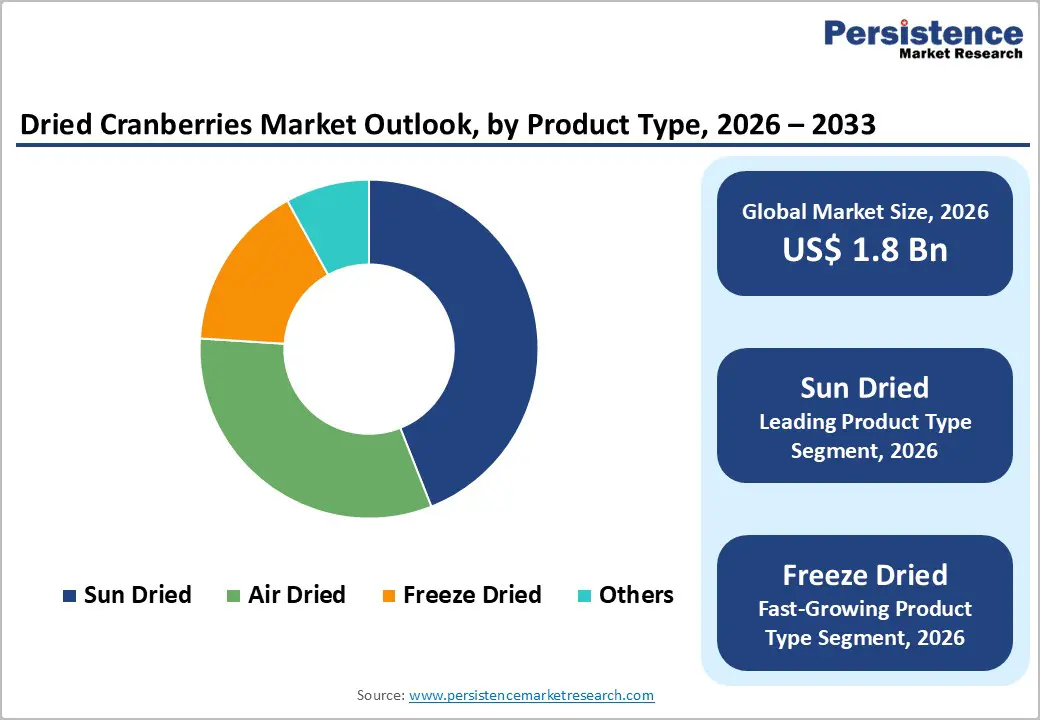
- Fastest-Growing Product Type Segment: Freeze-dried cranberries, fueled by superior nutrient retention, crunchy texture, clean-label appeal, and growing use in cereals, dairy inclusions, and functional food formulations.
- Market Drivers: Extensive integration into global bakery and confectionery supply chains, where dried cranberries deliver stable color, flavor intensity, heat resistance, and versatility across sweet and savory applications.
- Opportunities: Advancements in freeze-drying technology enable premium positioning, organic expansion, low-sugar innovation, and entry into high-margin functional foods and nutrient-dense snack categories.
- Key Developments: In June 2025, Ocean Spray Cranberries, Inc. expanded its Craisins® portfolio with Sour Blueberry Lemon and Chili Lime flavors. In December 2024, Ocean Spray partnered with Dyla Brands to enter the powdered drink mix segment using real cranberry juice powder.
| Key Insights | Details |
|---|---|
| Global Dried Cranberries Market Size (2026E) | US$ 1.8 Bn |
| Market Value Forecast (2033F) | US$ 2.5 Bn |
| Projected Growth (CAGR 2026 to 2033) | 5.1% |
| Historical Market Growth (CAGR 2020 to 2025) | 4.3% |
Market Dynamics
Driver – Extensive Integration into Global Bakery and Confectionery Supply Chains
The second major driver is the industrial versatility of dried cranberries as a high-performance ingredient. Unlike fresh berries, dried versions offer a concentrated flavor, vibrant red color, and a shelf-stable nature that is highly prized by commercial bakers. The U.S. Department of Agriculture (USDA) has noted a consistent increase in the volume of cranberries diverted to processing, as they are increasingly used to replace synthetic flavorings or dyes in premium muffins, breads, and cookies. The ability of dried cranberries to maintain their structural integrity during high-heat processing makes them superior to other berries. Furthermore, the trend toward "fusion" cuisines in emerging markets has led to the fruit's inclusion in savory salads, poultry stuffings, and ethnic desserts, significantly expanding the addressable market for bulk suppliers like Decas Cranberry Products, Inc. and Fruit d'Or.
Restraints – Health Concerns Regarding Added Sugars in Sweetened Variants
Despite their "superfood" status, the inherent tartness of cranberries necessitates the addition of sweeteners to make them palatable for direct consumption. A standard serving of sweetened dried cranberries can contain over 25 grams of added sugar, which increasingly conflicts with the dietary guidelines set by organizations like the World Health Organization (WHO) and the American Heart Association (AHA). As transparency in labeling becomes mandatory under revised FDA and EFSA regulations, consumers are becoming more wary of the "health halo" surrounding dried fruits. This scrutiny has forced manufacturers to invest heavily in alternative sweetening agents, such as apple juice concentrates or fiber-based syrups. However, these innovations often increase production costs, presenting a barrier to maintaining competitive pricing while meeting the demands of the low-glycemic and diabetic-friendly market segments.
Opportunity – Advancements in Freeze-Drying Technology for Nutrient Retention
The most significant technological opportunity within the Dried Cranberries Market lies in the rapid adoption of Freeze-Drying (lyophilization). While the Sun Dried segment currently leads in volume, freeze-dried cranberries are the fastest-growing sub-segment. This process involves freezing the fruit and then removing moisture via sublimation in a vacuum, which preserves up to 90% of the original fruit's antioxidants and vitamins compared to heat-intensive methods. According to research from the Journal of Food Engineering, freeze-dried fruits maintain a "crunchy" texture and a porous structure that is ideal for rapid rehydration in breakfast cereals and dairy products. For companies like Mariani Packing Company, Inc., expanding into freeze-dried offerings allows for premium positioning in the "clean-label" and "organic" markets, where consumers are willing to pay a high markup for superior nutrient density and shelf-life without chemical preservatives.
Category-wise Analysis
Product Type Analysis
The Sun Dried segment continues to hold the leadership position in the Dried Cranberries Market, commanding a 44% market share in 2025. This dominance is largely due to the cost-efficiency of the process and the traditional flavor profile it imparts to the fruit. Sun-drying results in a chewy, leathery texture that is highly compatible with industrial baking and "trail mix" applications. Historically, this method has been the standard for the industry, supported by large-scale infrastructure in the Northeast United States. However, while it remains the volume leader, it faces increasing competition from technical drying methods. The justification for its leading share lies in its widespread retail availability and its status as the "entry-level" price point for mass-market consumers. Brands like Ocean Spray have perfected the infusion-drying process, which often starts with sun-dried bases to ensure a consistent, sweet-tart balance that appeals to the global palate.
Nature Analysis
Conventional segment currently maintains the largest share of the Dried Cranberries Market, primarily due to the established high-yield agricultural practices in major producing states like Wisconsin. Conventional cranberries benefit from a more mature supply chain and significantly lower retail prices compared to their organic counterparts. However, the Organic segment is identified as the fastest-growing, driven by the "clean-label" movement and rising consumer concerns over pesticide residues. According to the Organic Trade Association (OTA), organic food sales have seen consistent year-over-year growth, outperforming total food market averages. For manufacturers, the shift toward organic production requires a rigorous multi-year transition of bogs, but it offers a strategic advantage in capturing the high-spending, health-conscious demographic that views "organic" as a proxy for both personal health and environmental sustainability.
Region-wise Insights
North America Dried Cranberries Market Trends and Insights
North America is the undisputed leader in the Dried Cranberries Market, holding a 53% market share in 2025. This dominance is rooted in the region's status as the global production hub for the fruit. The United States alone accounts for approximately 75% of the world's cranberry harvest. Wisconsin remains the top-producing state, contributing nearly 60% of the national output, followed by Massachusetts, Oregon, and New Jersey. The region's market is highly mature, characterized by sophisticated processing infrastructure and a deeply embedded cultural affinity for the fruit, especially during the autumn and winter holiday seasons.
The regulatory framework in North America, governed by the USDA and FDA, ensures high standards of food safety and labeling transparency. Innovation in the U.S. is currently focused on product diversification; for instance, the recent collaboration between Ocean Spray and Dyla Brands in December 2024 to create cranberry-based powdered drink mixes illustrates how market leaders are leveraging their raw material base to enter new categories. Furthermore, the 2024 surge in Quebec's cranberry production to record yields of 26,000 pounds per acre positions Canada as a key player in the export market, supplying the growing demand in both Europe and Asia.
Asia Pacific Dried Cranberries Market Trends and Insights
Asia Pacific is the fastest-growing region for the Dried Cranberries Market, fueled by a massive demographic shift and rising disposable incomes. China, India, and Japan are the primary growth engines. In India, cranberry imports surged by over 52% in the 2023-2024 fiscal year, according to data from The Hans India, as the fruit became a popular inclusion in local sweets and savory dishes. The "Westernization" of the snack market and the rapid expansion of organized retail and e-commerce have made dried cranberries accessible to millions of new consumers.
The region's competitive advantage lies in its large-scale food manufacturing sector. Countries like China and Vietnam are increasingly importing bulk dried cranberries to process them into finished retail products for both domestic consumption and re-export. The Cranberry Institute is actively targeting this region with educational campaigns focused on the fruit's medicinal benefits, specifically for aging populations and women's health. As the middle class in India and China continues to seek out "prestige" imported foods, dried cranberries are being positioned as a luxury yet healthy snack, often sold in premium, gift-oriented packaging.
Market Competitive Landscape
The Dried Cranberries Market is characterized by a consolidated structure at the primary processing level, dominated by grower-owned cooperatives and large-scale agricultural conglomerates. Ocean Spray Cranberries, Inc., a cooperative of over 700 farm families, remains the dominant force, leveraging its integrated supply chain and massive marketing reach. However, the secondary market—comprising retail brands and ingredient suppliers—is more fragmented. Companies like Graceland Fruit, Inc. and Mariani Packing Company, Inc. differentiate themselves through proprietary drying technologies and unique flavor infusions. Strategies for growth are currently focused on geographic expansion into Asia and Latin America, alongside R&D investment in "low-sugar" and "freeze-dried" portfolios to combat the rising health concerns surrounding traditional sweetened variants. The market is also seeing a shift toward direct-to-consumer (DTC) models as brands look to capture higher margins through their own e-commerce platforms.
Key Developments:
- In June 2025, Ocean Spray Cranberries, Inc. expanded its Ocean Spray® Craisins® Dried Cranberries portfolio with the launch of Sour Blueberry Lemon and Chili Lime flavors, tapping into rising consumer demand for bold, globally inspired taste profiles and reinforcing flavor-led innovation within the dried fruit and snack category.
- In December 2024, Ocean Spray Cranberries, Inc. and Dyla Brands announced a partnership to enter the powdered drink mix category, utilizing real cranberry juice powder to target the on-the-go hydration market.
- In February 2024, as part of a protracted World Trade Organization dispute, India eliminated customs duties on cranberry imports through an agreement with the United States.
Companies Covered in Dried Cranberries Market
- Ocean Spray Cranberries, Inc.
- Graceland Fruit, Inc.
- Decas Cranberry Products, Inc.
- Fruit d'Or
- Cape Blanco Cranberries, Inc.
- Atoka Cranberries
- Mariani Packing Company, Inc
- The Wonderful Company
- Habelman Bros. Co.
- Cliffstar LLC
- Others
Frequently Asked Questions
The global Dried Cranberries market is projected to be valued at US$ 1.8 Bn in 2026.
Extensive Integration into Global Bakery and Confectionery Supply Chains is driving demand for Dried Cranberries market.
The Global Dried Cranberries market is poised to witness a CAGR of 5.1% between 2026 and 2033
Advancements in Freeze-Drying Technology for Nutrient Retention is key opportunity for key players in the market.
Major players in the Global Dried Cranberries market include Ocean Spray Cranberries, Inc., Graceland Fruit, Inc., Decas Cranberry Products, Inc., Fruit d'Or, and others.


