




- Pharmaceuticals
- Dental Anesthetics Market
Dental Anesthetics Market Size, Share, Growth, and Regional Forecast, 2026 - 2033
Dental Anesthetics Market by Anesthesia Type (Local, General, Sedation), Delivery Mode (Injectable, Topical, Inhalation, Others), End-user (Dental Clinics, Hospitals, Ambulatory Surgical Centers, Academic & Research Institutes, Others), and Regional Analysis from 2026 - 2033

Dental Anesthetics Market Share and Trends Analysis
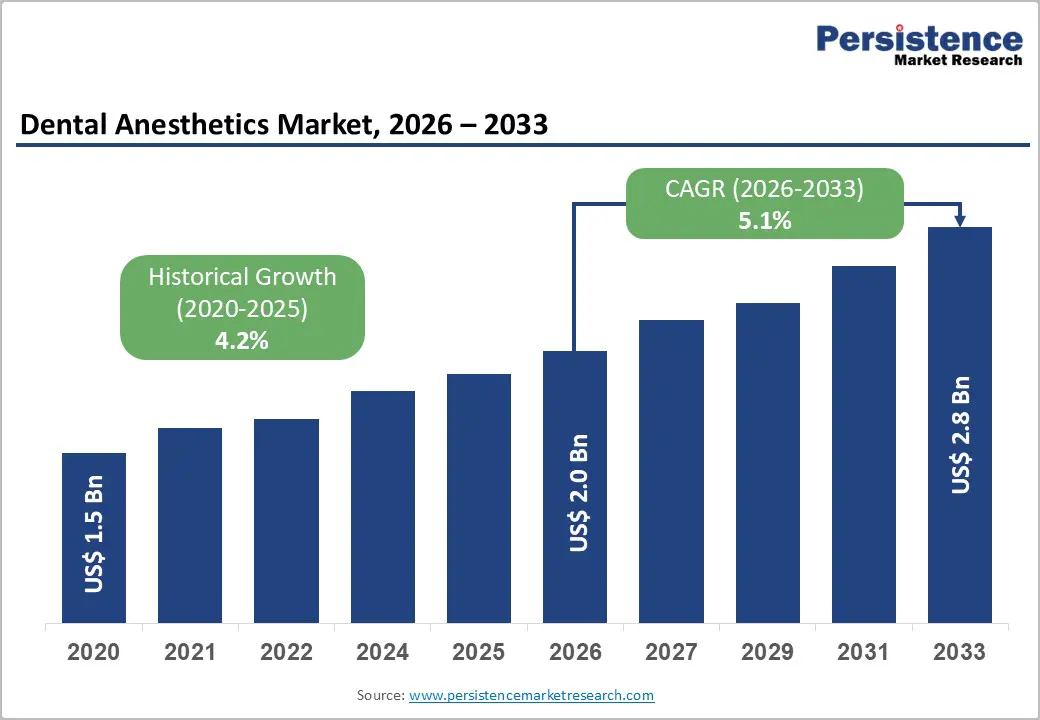
The global dental anesthetics market is estimated to grow from US$ 2.0 billion in 2026 to US$ 2.8 billion, growing at a CAGR of 5.1% during the forecast period from 2026 to 2033.
The global market is projected a steady growth driven by increasing dental procedures, rising oral health awareness, and demand for pain-free treatments. North America dominates due to advanced dental infrastructure and high procedure volumes. Asia Pacific is the fastest-growing region, supported by expanding dental care access, improving healthcare infrastructure, and growing awareness of modern dental treatments.
Key Industry Highlights:
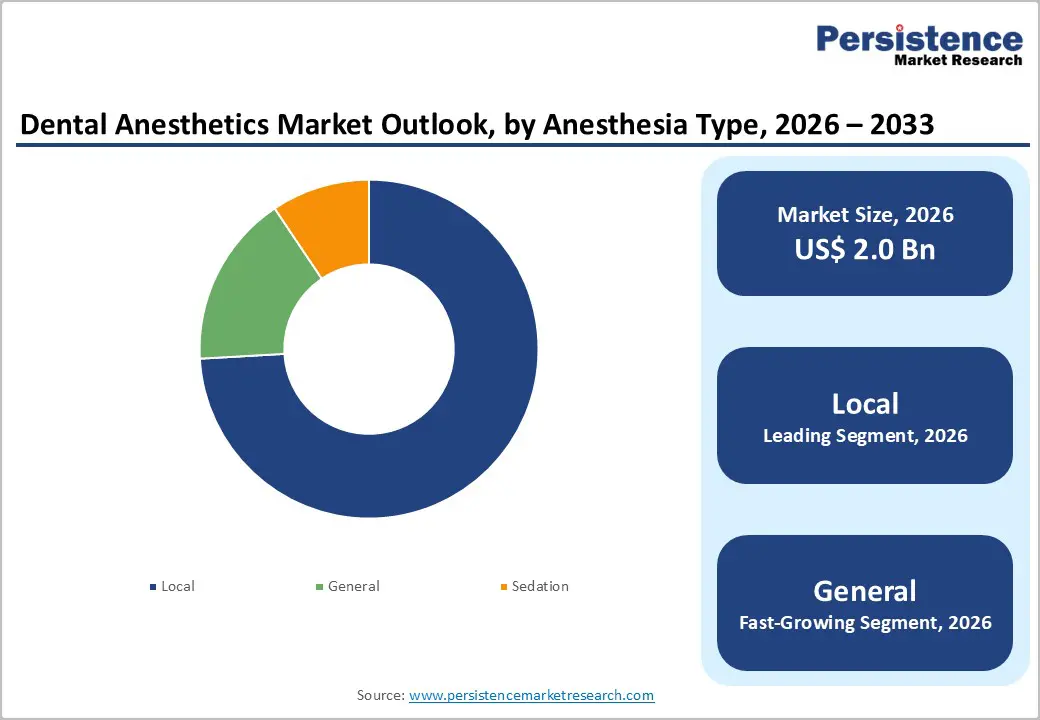
- Popular Anesthesia Type: Local anesthesia held the 74.1% share in 2025, driven by its widespread use in routine dental procedures such as fillings, extractions, and root canal treatments, along with its effectiveness in providing targeted pain control with minimal recovery time.
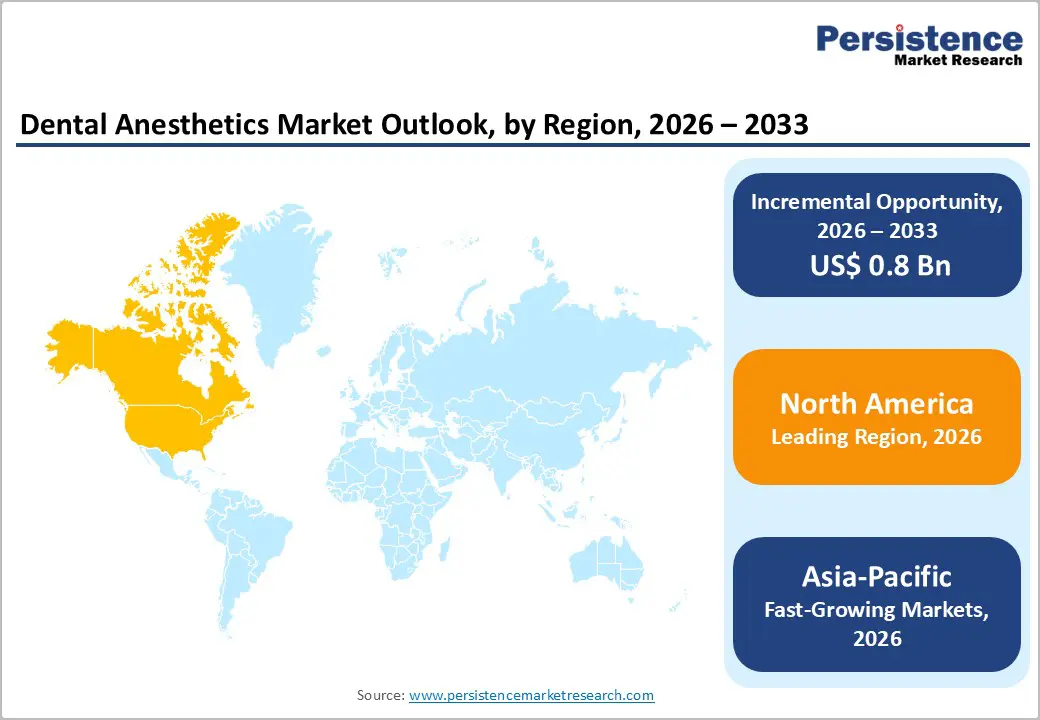
- Regional Leadership: North America led the dental anesthetics market in 2025 with 36.1% share with a significant share, supported by advanced dental infrastructure, high dental procedure volumes, strong presence of dental product manufacturers, and widespread adoption of modern anesthesia techniques.
- Growth Indicator: Growth is driven by increasing prevalence of dental disorders, rising number of dental surgeries and cosmetic procedures, growing oral health awareness, and technological advancements in safer and more effective anesthetic formulations.
- Market Opportunity: Opportunities exist in developing long-acting anesthetics, needle-free delivery systems, and expanding dental care access in emerging markets, particularly across Asia-Pacific and Latin America where dental healthcare infrastructure is rapidly improving.
| Key Insights | Details |
|---|---|
|
Global Dental Anesthetics Market Size (2026E) |
US$ 2.0 Bn |
|
Market Value Forecast (2033F) |
US$ 2.8 Bn |
|
Projected Growth (CAGR 2026 to 2033) |
5.1% |
|
Historical Market Growth (CAGR 2020 to 2025) |
4.2% |
Market Dynamics
Driver: Increasing Volume of Dental Surgeries and Cosmetic Procedures
The increasing global burden of oral diseases is a major factor driving the demand for dental procedures and consequently dental anesthetics. According to the World Health Organization (WHO), oral diseases affect nearly 3.7 billion people worldwide, making them among the most common health conditions globally. Untreated dental caries alone affects around 2.5 billion people, while severe gum disease impacts about 1 billion individuals globally. These conditions often require clinical interventions such as fillings, root canal therapy, periodontal surgery, and tooth extractions. Since most of these procedures involve pain management, dental anesthetics are essential in routine dental practice.
The growth in surgical and restorative dental treatments further accelerates anesthetic demand. In the United States alone, more than 15 million root canal procedures are performed annually, reflecting the high volume of complex dental treatments requiring anesthesia. Additionally, global dental care utilization is rising, with billions of patients seeking treatment for decay, gum disease, and tooth loss. Cosmetic dentistry procedures such as implants, veneers, and orthodontic treatments are also expanding as awareness of oral aesthetics increases. As dental clinics adopt advanced treatment technologies and surgical techniques, the need for reliable local and sedation anesthesia continues to grow, directly supporting expansion of the dental anesthetics market.
Restraint: Risk of Allergic Reactions and Side Effects from Anesthetic Agents
Although dental anesthetics are generally safe, concerns about adverse reactions and potential side effects can limit their use and influence patient acceptance. Some patients may experience complications such as dizziness, nausea, nerve injury, or hypersensitivity reactions during or after anesthetic administration. These risks require dentists to carefully screen patient histories and monitor patients during procedures. Studies evaluating adverse reactions during dental anesthesia have reported that approximately 0.5% of patients experienced some form of reaction during anesthetic administration, including vasovagal or stress-related responses. Even though many of these reactions are mild and reversible, they still contribute to clinical caution.
The presence of these risks often requires additional safety protocols and monitoring, increasing the complexity of dental procedures. Healthcare authorities emphasize careful administration and exposure control for certain anesthetic agents, such as nitrous oxide, used in dental sedation. For example, the U.S. Centers for Disease Control and Prevention (CDC) highlights occupational exposure risks to nitrous oxide and recommends strict ventilation and control systems in dental clinics to prevent adverse health effects. These safety considerations, along with patient anxiety regarding anesthesia complications, may slow adoption of certain anesthetic techniques and create regulatory and operational challenges for dental practices, acting as a restraint for the dental anesthetics market.
Opportunity: Growing Demand for Needle-Free and Painless Anesthesia Delivery
One of the most promising opportunities in the dental anesthetics market is the development of needle-free and painless anesthesia technologies. Dental anxiety remains a major barrier to dental care globally. Surveys indicate that approximately 36% of adults in developed countries experience dental anxiety, which often leads patients to delay or avoid dental visits. Fear of needles and injection-related pain is one of the primary reasons for this anxiety. As a result, innovations such as needle-free jet injectors, topical anesthetic gels, computerized anesthesia delivery systems, and nasal sedation technologies are gaining attention in modern dentistry.
Improving patient comfort can significantly increase dental treatment utilization and preventive care. According to global health data, oral diseases affect nearly 3.5–3.7 billion people worldwide, highlighting the massive population that may require dental interventions. Many of these patients avoid treatment due to fear or discomfort associated with injections. The introduction of painless anesthetic delivery systems can therefore expand access to dental care and increase acceptance of dental procedures. As dental clinics adopt patient-friendly technologies and minimally invasive treatment approaches, demand for advanced anesthesia delivery systems is expected to grow, creating significant opportunities for manufacturers developing innovative dental anesthetic solutions.
Category-wise Analysis
By Anesthesia Type Insights
Local anesthesia dominates the dental anesthetics market with 74.1% share in 2025, because most dental procedures require targeted pain control without affecting the patient’s consciousness. Local anesthetics such as lidocaine or articaine temporarily block nerve signals in a specific part of the mouth, allowing dentists to perform procedures like fillings, root canals, and extractions safely and efficiently. Clinical literature shows that local anesthesia is the most frequently used anesthesia method in dentistry due to its safety, effectiveness, and minimal systemic effects compared with general anesthesia.
The high global burden of oral diseases also contributes to the widespread use of local anesthesia. According to the World Health Organization (WHO), oral diseases affect nearly 3.7 billion people worldwide, making dental treatment one of the most common healthcare needs globally. Many routine treatments, such as fillings, periodontal therapy, and extractions, rely on localized numbness rather than general anesthesia. Surveys of dental practices indicate that around 80% of dentists routinely use local anesthesia during procedures, highlighting its central role in modern dental care.
Because it provides effective pain control with fewer risks and faster recovery, local anesthesia remains the dominant anesthesia type in dentistry.
By Delivery Mode Insights
Injectable delivery dominates the dental anesthetics market because it provides rapid and precise delivery of anesthetic agents directly near dental nerves. Injectable anesthetics allow dentists to perform infiltration or nerve-block techniques that produce deep and reliable numbness in specific teeth or oral tissues. This method is essential for procedures involving drilling, extraction, or root canal therapy, where strong and consistent pain control is required. As a result, injectable delivery remains the standard technique for administering local anesthesia in dental practice.
The high frequency of dental procedures further supports the dominance of injectable anesthesia. Healthcare data show that millions of dental treatments occur annually, including restorative procedures, extractions, and root canal therapies. For example, in the United States alone, over 15 million root canal procedures are performed every year, most of which require injected local anesthetics for effective pain management. Additionally, clinical surveys indicate that around 80% of dental procedures involve the use of local anesthetic injections, demonstrating their widespread adoption in dental clinics.
Due to their reliability, immediate onset, and ability to provide deep nerve blockage, injectable anesthetics remain the dominant delivery mode in dentistry.
Regional Insights
North America Dental Anesthetics Market Trends
North America dominates the dental anesthetics market primarily due to the high prevalence of oral diseases and strong utilization of dental services. According to the U.S. Centers for Disease Control and Prevention (CDC), almost 90% of adults aged 20 years and older have had cavities in their permanent teeth, demonstrating the widespread need for dental treatment in the region. Additionally, 1 in 5 adults aged 20–64 has at least one untreated cavity, which increases demand for restorative dental procedures such as fillings and root canals that require anesthetics.
North America also has a well-developed dental healthcare system and high dental visit rates. CDC data indicate that about 65.5% of U.S. adults had a dental exam or cleaning within the past year, reflecting strong access to dental services and routine care. The region also performs a large number of advanced procedures such as implants, cosmetic dentistry, and oral surgeries. Combined with high healthcare spending and widespread availability of dental clinics and specialists, these factors support strong adoption of dental anesthetics, making North America the dominant regional market.
Europe Dental Anesthetics Market Trends
Europe represents an important market for dental anesthetics due to the high prevalence of oral diseases and a strong network of dental healthcare systems. According to the World Health Organization (WHO), the European region recorded the highest prevalence of major oral diseases globally, with over 50% of adults affected by a major oral health condition in 2019. The region also reported around 335 million cases of dental caries in permanent teeth, highlighting the substantial need for dental treatments requiring anesthetic agents.
In addition, Europe has a large aging population and widespread access to dental care services, which increases the number of restorative and surgical dental procedures. Tooth loss and periodontal disease are also significant concerns, with about 25.2% of adults aged 20 or older experiencing tooth loss in the region. Many European countries have advanced dental infrastructure and trained dental professionals, supporting frequent dental visits and complex oral surgeries. These factors contribute to sustained demand for dental anesthetics, making Europe a key and stable regional market.
Asia-Pacific Dental Anesthetics Market Trends
Asia-Pacific is the fastest-growing region in the dental anesthetics market due to the rapidly increasing burden of oral diseases and improving access to dental healthcare. Globally, the World Health Organization estimates that oral diseases affect about 3.7 billion people, and a large portion of these cases occur in densely populated regions such as Asia. In the South-East Asia region alone, about 135 million children were estimated to have dental caries in primary teeth, highlighting the significant treatment demand in the region.
Economic growth, urbanization, and expanding healthcare infrastructure are also contributing to increased dental service utilization across countries such as China, India, and Southeast Asian nations. Rising awareness of oral health and cosmetic dentistry is encouraging more patients to seek professional dental treatment. Governments and public health organizations are also promoting oral health programs and preventive care initiatives. As dental clinics, hospitals, and specialized oral care centers expand across the region, demand for dental anesthetics is increasing rapidly, making Asia-Pacific the fastest-growing regional market.
Competitive Landscape
The dental anesthetics market is highly competitive, led by companies such as Dentsply Sirona, Septodont, Pierrel Pharma, Laboratorios Inibsa, and Zeyco. These players focus on developing safer anesthetic formulations, expanding dental product portfolios, investing in research and clinical innovation, and strengthening global distribution networks to meet rising demand for pain-free dental procedures.
Key Developments:
- In March 2026, following clearance from the U.S. Food and Drug Administration (FDA), the QuickSleeper5 digital dental anesthesia system was launched in the United States to enhance precision and patient comfort during dental procedures. The system, developed by Dentalhitec, uses a computer-controlled injection technique that allows dentists to administer anesthesia more accurately while minimizing pain and anxiety for patients.
- In March 2026, The Aspen Group reported strong financial and operational results in 2025, highlighting its continued investment in the future of retail healthcare. The company expanded its network of healthcare brands, including dental, medical, and wellness services, while strengthening its presence across the United States. These efforts supported patient access to affordable and convenient healthcare services through its growing retail-based care model.
Companies Covered in Dental Anesthetics Market
- Zeyco
- Laboratorios Inibsa
- Aspen Group
- Dentsply Sirona
- Pierre Pharma
- Septodont
- Dentalhitec
- Primex Pharmaceuticals
- Laboratorios Normon
- Others
Frequently Asked Questions
The global dental anesthetics market is projected to be valued at US$ 2.0 Bn in 2026.
Rising dental disorders, increasing dental surgeries, growing oral health awareness, and demand for pain-free dental treatments.
The global dental anesthetics market is poised to witness a CAGR of 5.1% between 2026 and 2033.
Needle-free anesthesia technologies, long-acting anesthetics, expanding dental care access, and rising cosmetic dentistry demand globally.
Zeyco, Laboratorios Inibsa, Aspen Group, Dentsply Sironam Pierre Pharma, Septodont.


