




- Medical Devices
- Dental Air Polishing Device Market
Dental Air Polishing Device Market Size, Share, and Growth Forecast, 2026-2033
Dental Air Polishing Device Market by Product Type (Tabletop Devices, Handheld Devices, Portable Devices, Integrated Dental Unit Systems), Powder Type (Sodium Bicarbonate Powder, Glycine Powder, Erythritol Powder, Other Powders), Clinical Use (Supragingival Cleaning, Subgingival Biofilm Removal, Periodontal Therapy, Implant Maintenance, Stain Removal), and Regional Analysis for 2026-2033

Dental Air Polishing Device Market Share and Trends Analysis
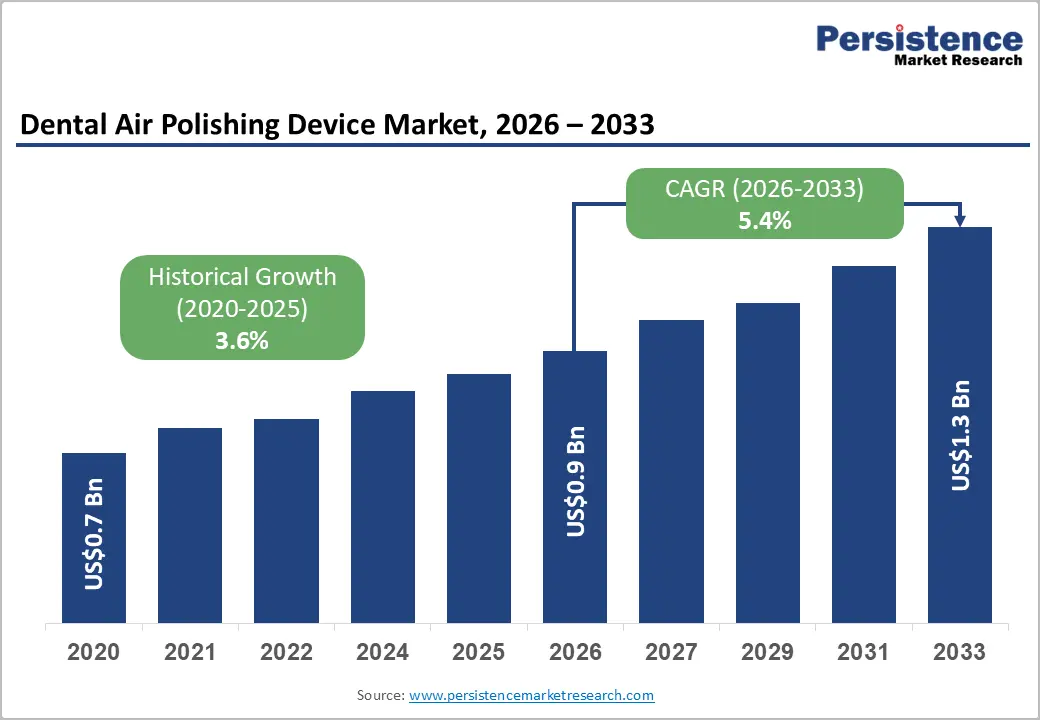
The global dental air polishing device market size is likely to be valued at US$ 0.9 billion in 2026, and is projected to reach US$ 1.3 billion by 2033, growing at a CAGR of 5.4% during the forecast period 2026–2033.
The market is growing due to the rising adoption of preventive dental care, increasing prevalence of periodontal diseases, and advancements in minimally invasive dental cleaning technologies. Dental professionals are increasingly using air polishing systems in routine prophylaxis procedures because they effectively remove plaque, biofilm, and surface stains while minimizing enamel damage and patient discomfort compared to traditional scaling methods. In addition, the expansion of dental clinics and group dental practices is increasing access to professional dental treatments. Growing demand for cosmetic dentistry procedures and the rapidly aging population, which is more vulnerable to oral diseases, are further strengthening the demand for advanced professional dental hygiene equipment globally.
Key Industry Highlights
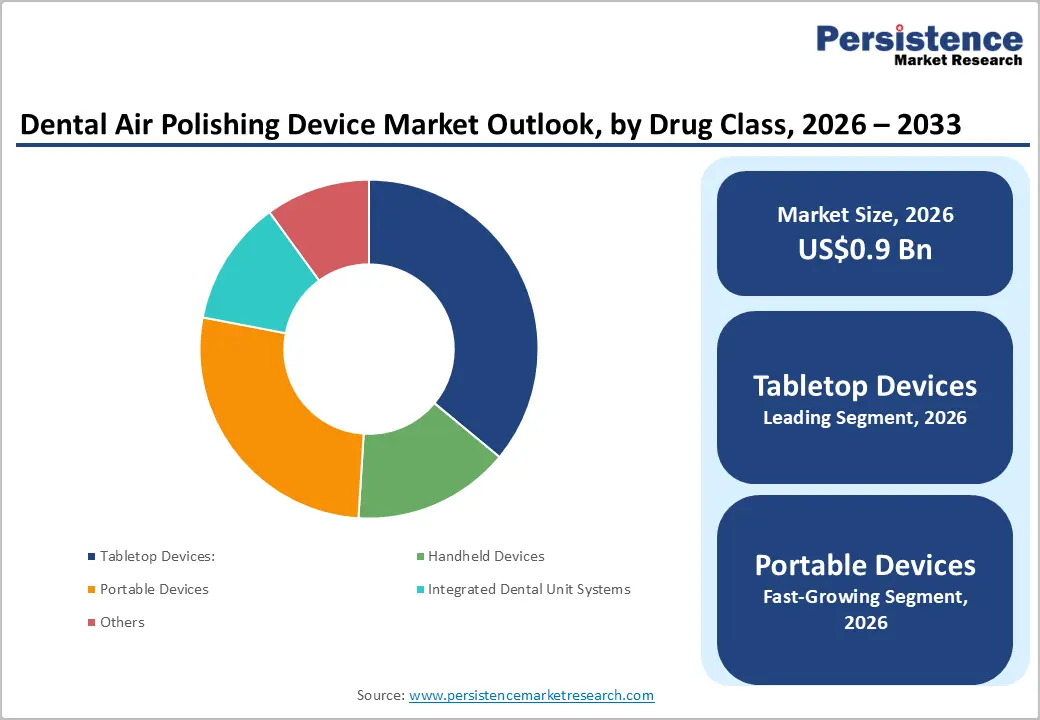
- Leading Product: Tabletop devices are projected to command about 38% revenue share in 2026, while portable devices are likely to grow the fastest at around 6.7% CAGR through 2033, driven by soaring demand for compact and mobile dental equipment.
- Dominant Powder Type: Sodium bicarbonate powder is expected to lead with roughly 46% share in 2026, while erythritol powder is anticipated to grow the fastest during 2026–2033, reflecting its increased use in minimally invasive periodontal procedures.
- Leading Clinical Use: Supragingival cleaning is projected to account for nearly 41% share in 2026, while implant maintenance is expected to be the fastest-growing application through 2033, driven by rising dental implant procedures.
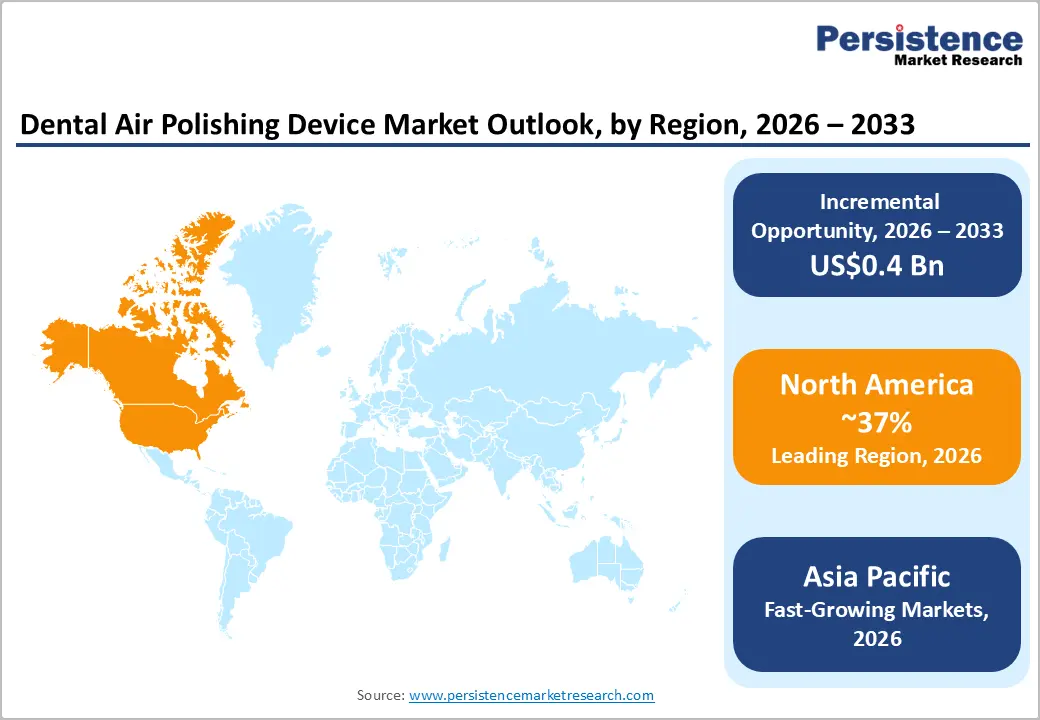
- Regional Leadership: North America is anticipated to dominate with around 37% share in 2026, while Asia Pacific is expected to record the fastest growth at roughly 6.6% CAGR through 2033, supported by expanding oral healthcare awareness.
- Competitive Outlook: Competitive dynamics are centered on product innovation, expansion of air polishing technology portfolios, and strategic geographic expansion into Asia Pacific and Latin America.
| Key Insights | Details |
|---|---|
|
Dental Air Polishing Device Market Size (2026E) |
US$ 0.9 Bn |
|
Market Value Forecast (2033F) |
US$ 1.3 Bn |
|
Projected Growth (CAGR 2026 to 2033) |
5.4% |
|
Historical Market Growth (CAGR 2020 to 2025) |
3.6% |
Market Factors – Growth, Barriers, and Opportunity Analysis
Increasing Global Burden of Periodontal Diseases and Preventive Dental Care Adoption
One of the most influential drivers of the dental air polishing device market is the rising incidence of periodontal and oral diseases worldwide. According to the World Health Organization (WHO), severe periodontal disease affects approximately 19% of the global adult population, representing over 1 billion cases globally. The Global Burden of Disease Study also identifies untreated dental caries and periodontal infections as among the most prevalent chronic health conditions. As oral diseases increasingly affect large populations across both developed and developing economies, healthcare providers are prioritizing preventive treatments and routine dental hygiene procedures.
Dental air polishing systems play a critical role in biofilm removal, plaque control, and periodontal maintenance therapy. These devices offer gentler and more efficient supragingival and subgingival cleaning compared with conventional prophylaxis techniques. With increasing awareness of preventive oral care and the expansion of routine dental hygiene programs across dental clinics, demand for air polishing devices and specialized polishing powders continues to rise. In 2025, the WHO renewed global focus on preventive oral health programs, encouraging countries to expand early dental care and hygiene services. Such policy initiatives strengthen routine professional cleaning demand, indirectly supporting the adoption of advanced dental air polishing systems.
Rising Demand for Minimally Invasive Dentistry and Expansion of Dental Care Infrastructure
Modern dentistry increasingly emphasizes minimally invasive and patient-friendly treatment approaches, which strongly supports adoption of dental air polishing technology. According to the American Dental Association (ADA), patient preference is shifting toward treatments that reduce discomfort, shorten chair time, and minimize enamel abrasion. Air polishing devices use pressurized air, water, and specialized powders to remove plaque and stains while preserving tooth structure. Compared with conventional rubber cup polishing methods, air polishing procedures can reduce cleaning time by 30–40%, improving operational efficiency in dental clinics.
The global expansion of dental clinics and preventive oral healthcare programs is strengthening equipment demand. The FDI World Dental Federation reports that dental service utilization continues to increase due to population growth, aging demographics, and improved oral health awareness. In July 2025, an increase in investment by major dental service organizations in North America was reported to expand multi-clinic dental networks, reflecting rising demand for preventive and cosmetic dental procedures. These investments encourage clinics to adopt modern dental equipment and hygiene technologies, including air polishing devices, to improve treatment efficiency and patient experience.
High Equipment Cost and Financial Pressure on Dental Practices
Despite their clinical advantages, dental air polishing devices require relatively high upfront investment compared with conventional dental prophylaxis equipment. Advanced systems integrated with dental units can cost significantly more due to precision airflow control systems, powder chambers, and sterilization requirements. These technical components increase manufacturing complexity and raise equipment prices, particularly for devices designed for high-volume dental clinics. As a result, many dental practices must carefully evaluate capital expenditure before investing in advanced air polishing systems. Budget allocation for equipment upgrades often competes with other operational priorities in dental clinics. Consequently, cost considerations can slow the immediate adoption of advanced dental cleaning technologies.
Small and mid-size dental clinics, particularly in emerging economies, often face financial constraints when upgrading to modern air polishing equipment. In addition to equipment cost, clinics must also purchase specialized polishing powders, which increases operational expenditure over time. These powders require regular replenishment and proper storage, adding recurring costs to dental practices. Financial pressure within the dental care sector also highlights these challenges. In March 2026, the UK Competition and Markets Authority launched a review of the private dentistry market following significant increases in treatment costs. Such cost pressures can limit equipment investment capacity among clinics, indirectly slowing adoption of air polishing systems.
Clinical Safety Considerations and Professional Training Requirements
Air polishing procedures require trained dental professionals to ensure safe and effective use during dental cleaning treatments. Improper application of high-pressure powder streams may lead to soft tissue irritation or subcutaneous emphysema, although such complications remain rare when procedures follow recommended clinical protocols. Dental practitioners must understand appropriate pressure settings, powder selection, and treatment distance to prevent patient discomfort. Clinical precision becomes particularly important when performing subgingival treatments or implant maintenance procedures. As a result, dental clinics must ensure that staff receive adequate training before implementing these devices. This requirement adds another step before full equipment utilization.
Dental associations and regulatory bodies recommend professional training before operating air polishing devices in routine dental procedures. This requirement increases the implementation timeline for new equipment in clinics, particularly when staff must complete specialized training programs. In addition, occupational safety authorities emphasize strict precautions for procedures that generate aerosols in dental settings. The U.S. Occupational Safety and Health Administration (OSHA) advises dental clinics to implement ventilation systems and high-volume evacuation tools to control aerosols during treatments. Compliance with these safety recommendations may require additional operational adjustments in dental clinics. These requirements can slow the adoption of advanced dental hygiene technologies, including air polishing devices.
Expanding Demand for Cosmetic Dentistry and Aesthetic Dental Treatments
The expanding cosmetic dentistry market presents significant growth opportunities for the dental air polishing device market. Cosmetic procedures such as stain removal, tooth whitening preparation, and aesthetic cleaning frequently rely on air polishing technology. According to the American Academy of Cosmetic Dentistry, cosmetic dental treatments continue to grow globally as patients increasingly prioritize dental aesthetics. Rising social awareness of dental appearance and the influence of digital media are encouraging more individuals to seek aesthetic dental procedures. Dental clinics are therefore expanding cosmetic service offerings to meet changing patient expectations. This trend directly increases demand for advanced professional dental cleaning equipment used in aesthetic dental care.
Air polishing devices are widely used for removing tobacco, coffee, and wine stains, making them a preferred tool in aesthetic dental treatments. Their ability to deliver quick and comfortable cleaning procedures improves patient experience during cosmetic dental visits. Industry trends further support this opportunity; Business Insider reported in 2025 that demand for minimally invasive cosmetic dentistry procedures such as “no-prep veneers” is increasing globally, reflecting a shift toward aesthetic treatments that preserve natural tooth structure. This trend highlights growing patient preference for conservative cosmetic procedures that require professional cleaning and polishing prior to treatment. As cosmetic dentistry demand increases in both developed and emerging markets, equipment sales for professional air polishing systems are expected to rise steadily.
Expansion of Dental Care Infrastructure in Emerging Markets
Emerging economies represent a strong opportunity for market expansion in the dental air polishing device market. Countries such as China, India, Brazil, and Indonesia are witnessing rapid growth in private dental clinics and dental tourism services. Government initiatives to improve oral healthcare access and rising disposable income are increasing demand for professional dental services. As dental infrastructure expands, clinics are investing in modern dental cleaning equipment, including air polishing devices, to attract patients seeking advanced treatments. Increasing urbanization and expanding middle-class populations are also contributing to higher dental service utilization. These trends collectively create favorable conditions for the adoption of advanced dental hygiene technologies.
Recent industry developments further support this opportunity. A Reuters report in 2026 highlighted the merger between Zenyum and MakeO Toothsi to create a large Asian consumer dental group operating across multiple countries, reflecting the rapid expansion of organized dental service networks in emerging markets. The combined group works with over 1,100 partner doctors across Asia, indicating the scale of dental service infrastructure being developed in the region. Growing investment in multi-country dental platforms demonstrates strong confidence in the long-term growth of dental care demand across Asia and other emerging regions. As organized dental networks expand and clinics upgrade technology, adoption of professional dental cleaning devices such as air polishing systems is expected to accelerate.
Category-wise Analysis
Product Type Insights
Tabletop Devices
Tabletop dental air polishing devices are expected to represent the leading product types, accounting for approximately 38% of the market revenue share in 2026. These systems are widely used in dental clinics and hospitals because they provide stable airflow, consistent powder delivery, and high treatment precision during professional prophylaxis procedures. Their larger powder chambers and adjustable pressure systems enable clinicians to conduct multiple cleaning sessions efficiently in high-volume practices. Growing adoption of structured biofilm removal protocols is also supporting segment growth.
In 2025, EMS Electro Medical Systems showcased its next-generation GBT Machine at the International Dental Show, enhancing the company’s Guided Biofilm Therapy protocol for minimally invasive biofilm management. Such technological advancements reinforce the dominance of tabletop systems in modern preventive dentistry.
Portable devices are projected to be the fastest-growing with an estimated 6.7% CAGR through 2033, driven by increasing demand for flexible, chairside prophylaxis equipment in smaller clinics and mobile dental services. These devices are compact, lightweight, and easy to integrate with existing dental units, allowing clinicians to perform quick stain and plaque removal procedures without large equipment setups. Portable systems are particularly useful in outreach dental programs and ambulatory care environments where mobility is essential.
Manufacturers are investing in ergonomic designs and cordless technologies to improve usability. In February 2026, HuFriedyGroup introduced the ‘PWR Air’ air polishing system at the Chicago Midwinter Meeting, designed to deliver efficient biofilm removal with improved portability and ergonomic handling. Such innovations are expected to accelerate adoption of portable air polishing solutions in modern dental practices.
Clinical Use Insights
Supragingival cleaning is set to dominate with nearly 41% of the dental air polishing device market revenue share in 2026. Dental professionals are increasingly integrating air polishing systems into routine prophylaxis procedures to remove plaque, biofilm, and surface stains efficiently while protecting enamel and soft tissues. The growing emphasis on preventive oral healthcare programs is driving clinics to adopt specialized powders and cordless air polishing systems that enhance clinical workflow and patient comfort.
In 2025, Dentsply Sirona introduced the ProphyAir 360 cordless system, which improves stain removal efficiency and reduces aerosol dispersion, reflecting the industry’s commitment to innovation in preventive dentistry. These developments are shaping clinical protocols and ensuring that supragingival cleaning remains the cornerstone of professional dental hygiene.
Implant maintenance is likely to become the fastest-growing clinical application through 2033, driven by the rising number of dental implant procedures worldwide. Air polishing technology is increasingly being used for subgingival biofilm removal and implant surface maintenance, providing minimally invasive treatment that reduces tissue trauma and improves patient outcomes. Advanced low-abrasive powders and precision delivery systems are enabling clinicians to clean delicate periodontal pockets effectively, supporting evidence-based periodontal therapy.
In April 2025, NSK Dental expanded its prophylaxis portfolio with the Perio-Mate Neo system, designed to enhance biofilm removal in both periodontal and implant maintenance procedures. As the adoption of dental implants grows, dental air polishing systems will have played a critical role in establishing new standards for implant maintenance and periodontal care globally
Regional Insights
North America Dental Air Polishing Device Market Trends
North America is expected to hold approximately 36% of the dental air polishing device market share in 2026. The region’s dominance is primarily supported by the United States, which has one of the most advanced dental care infrastructures globally. A strong network of dental clinics, dental service organizations, and specialized hygiene practices contributes to steady equipment demand. Preventive dentistry is widely emphasized across the region, encouraging routine professional cleaning procedures where air polishing systems are frequently used.
Rising interest in cosmetic dentistry, stain removal treatments, and implant maintenance further strengthens device adoption. High patient awareness regarding oral hygiene and regular dental visits also supports consistent procedural volumes.
Technological innovation and clinical adoption remain key drivers of regional expansion. The U.S. Food and Drug Administration (FDA) maintains strict regulatory standards for dental equipment safety and performance, encouraging manufacturers to introduce advanced technologies. For example, KaVo Dental introduced an upgraded prophylaxis system during the 2025 Chicago Midwinter Meeting, which is one of North America’s largest dental conference. The product launch highlighted improved ergonomics and precision for professional plaque removal procedures.
Additionally, large dental clinic networks across the United States continue investing in advanced hygiene equipment to improve treatment efficiency and patient comfort. Continuous research, product innovation, and early technology adoption further strengthen the region’s position.
Europe Dental Air Polishing Device Market Trends
Europe represents a well-established and technologically advanced market, supported by strong oral healthcare systems in Germany, the United Kingdom, France, and Spain. Preventive dentistry programs are widely integrated into national healthcare frameworks, encouraging patients to undergo routine dental hygiene treatments. Dental professionals across Europe are increasingly adopting minimally invasive biofilm management techniques, which support the use of air polishing systems in professional cleaning procedures.
Germany remains one of the largest dental technology markets in the region due to its strong manufacturing ecosystem and innovation capacity. The country hosts numerous dental equipment companies, specialized laboratories, and dental research institutes. Additionally, a large base of trained dental hygienists contributes to the widespread use of advanced prophylaxis technologies.
Regulatory oversight also plays a significant role in shaping the regional dental equipment landscape. The European Union Medical Device Regulation (EU MDR) enforces strict safety and performance standards for medical and dental technologies across member countries. Although the regulatory framework increases compliance requirements for manufacturers, it ensures high product reliability and patient safety. Industry innovation remains active across the region, with companies introducing new dental hygiene solutions.
For instance, Planmeca unveiled new digital dental treatment technologies and preventive care equipment at IDS 2025 in Cologne. Such international dental exhibitions highlight ongoing advancements in dental hygiene systems and prophylaxis tools. As a result, Europe continues to represent a stable and innovation-driven market for dental air polishing devices.
Asia Pacific Dental Air Polishing Device Market Trends
Asia Pacific is anticipated to be the fastest-growing market through 2033, projected to expand at a CAGR of approximately 7.8%. The region is experiencing rapid development in dental healthcare infrastructure across China, India, Japan, and Southeast Asia. Rising disposable incomes and expanding middle-class populations are increasing demand for preventive dental care and professional hygiene treatments. Governments and private healthcare providers are investing in modern dental clinics and specialized dental hospitals.
Urban populations are also becoming more aware of oral health and cosmetic dentistry procedures. Growing demand for professional plaque removal and stain treatment procedures is encouraging clinics to adopt advanced dental hygiene equipment.
The region is also witnessing strong investment and industry activity in dental technology. Asia Pacific has emerged as an attractive hub for dental equipment manufacturing due to cost-efficient production and expanding healthcare infrastructure. Major dental technology companies are strengthening their presence through partnerships, training programs, and product launches. For example, W&H Dentalwerk showcased its latest hygiene and prophylaxis technologies during AEEDC Dubai 2026, one of the largest dental industry exhibitions serving Asian and Middle Eastern markets, according to Dentistry Today event coverage.
Such international events highlight increasing demand for advanced dental hygiene equipment in emerging markets. Meanwhile, expanding dental tourism industries in countries such as India and Thailand are further driving equipment adoption. These developments position Asia Pacific as the fastest growing market for dental air polishing devices globally.
Competitive Landscape
The global dental air polishing device market structure is moderately consolidated, with major companies such as Dentsply Sirona, EMS Electro Medical Systems, NSK Ltd., and ACTEON Group holding a significant market share. These companies leverage strong distribution networks, established dental clinic partnerships, and diversified prophylaxis product portfolios. Continuous R&D investment supports innovation in biofilm management technologies and ergonomic device design. Their strong global presence helps maintain competitive leadership.
Alongside global leaders, specialized manufacturers such as KaVo Dental, W&H Dentalwerk, and HuFriedyGroup compete by focusing on niche innovations and regional expansion. These companies often emphasize portable devices, specialized polishing powders, and advanced prophylaxis tools for periodontal and implant care. Growing demand for preventive dentistry continues to create opportunities for emerging manufacturers. Competitive intensity is expected to increase as companies expand product portfolios and strengthen global distribution partnerships.
Key Industry Developments
- In February 2026, makeO Toothsi and Zenyum announced a strategic merger to form a major Asian consumer dental group. The combined entity aims to expand across 10+ countries in Asia and the Middle East, integrating Zenyum’s regional network with makeO’s manufacturing and clinical capabilities.
- In January 2026, Dentsply Sirona expanded its partnership with Benco Dental to distribute its full dental technology portfolio in the U.S. The agreement includes advanced solutions such as CEREC systems, Primescan intraoral scanners, and Axeos imaging technologies, supporting digital dentistry adoption.
- In January 2025, KKR invested US$ 250 million in Henry Schein, acquiring an initial 12% stake. The partnership focuses on strategic expansion and operational improvements, including a US$ 200 million cost-savings initiative to enhance efficiency and growth.
Companies Covered in Dental Air Polishing Device Market
- EMS Electro Medical Systems
- Dentsply Sirona
- NSK Ltd.
- KaVo Dental
- Acteon Group
- W&H Dentalwerk
- Mectron S.p.A.
- Hu-Friedy Group
- Bien-Air Dental
- Young Innovations
- Ultradent Products
- Ivoclar Vivadent
- Woodpecker Medical Instrument
- Morita Group
Frequently Asked Questions
The global dental air polishing device market is projected to reach US$ 0.9 billion in 2026.
Strengthening demand for preventive dentistry, increasing dental clinic adoption of minimally invasive cleaning technologies, and growing cosmetic dental procedures are driving the market.
The market is poised to witness a CAGR of 5.4% from 2026 to 2033.
Expanding dental care infrastructure, rising dental tourism, and increasing adoption of biofilm management technologies are creating major growth opportunities.
Dentsply Sirona, EMS Electro Medical Systems, NSK Ltd., and ACTEON Group are some of the key players in the market.


