




- Nutraceuticals & Functional Foods
- Corn Silk Extract Market
Corn Silk Extract Market Size, Share, and Growth Forecast 2025 – 2032
Corn Silk Extract Market by Product Type (Liquid Extract, Powder Extract, Capsule) Application (Pharmaceuticals, Nutraceuticals, Cosmetics) Distribution Channel (Online Stores, Supermarkets/Hypermarkets, Specialty Stores), and Regional Analysis for 2025-2032

Corn Silk Extract Market Size and Trend Analysis
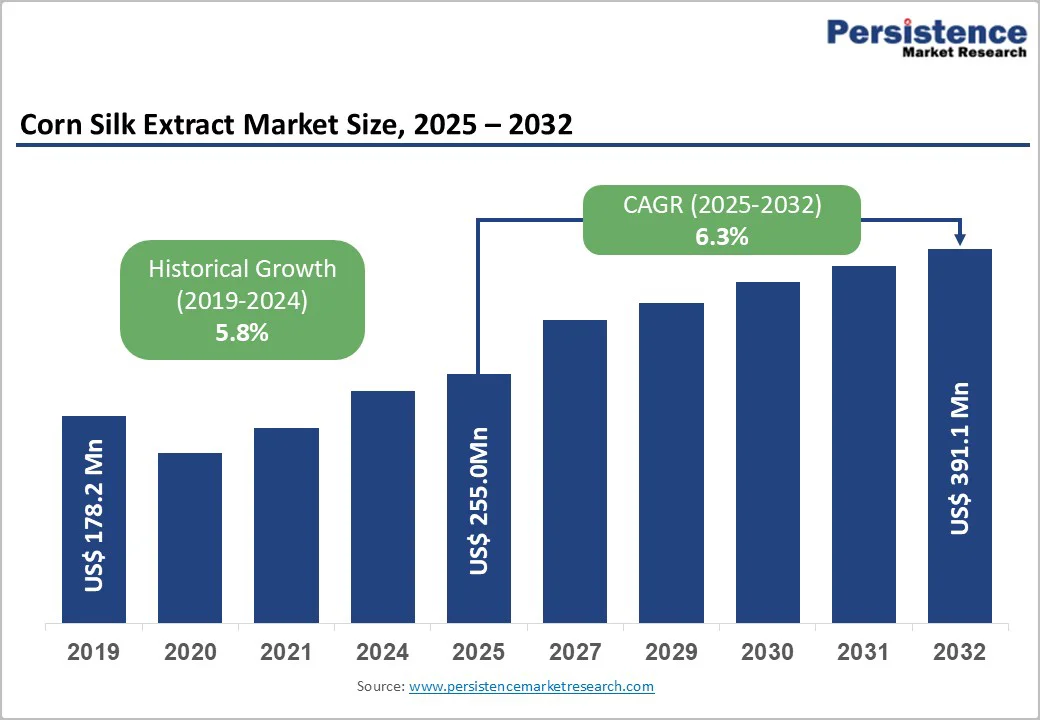
The global corn silk extract market size is likely to be valued at US$255.0 million in 2025 and is expected to reach US$391.1 million by 2032, growing at a CAGR of 6.3% during the forecast period from 2025 and 2032, driven by rising consumer awareness of natural and herbal health solutions, alongside increasing incorporation of corn silk extract in pharmaceuticals and nutraceuticals for urinary health, metabolic support, and anti-inflammatory applications. Growing demand for plant-based functional ingredients in cosmetics and personal care products, particularly in skin-soothing and antioxidant formulations, accelerates adoption. Advancements in extraction technologies, improved standardization, and expanding distribution through online retail channels are enhancing product accessibility and quality, while emerging applications in functional foods and beverages continue to broaden the market’s commercial potential.
Key Industry highlights
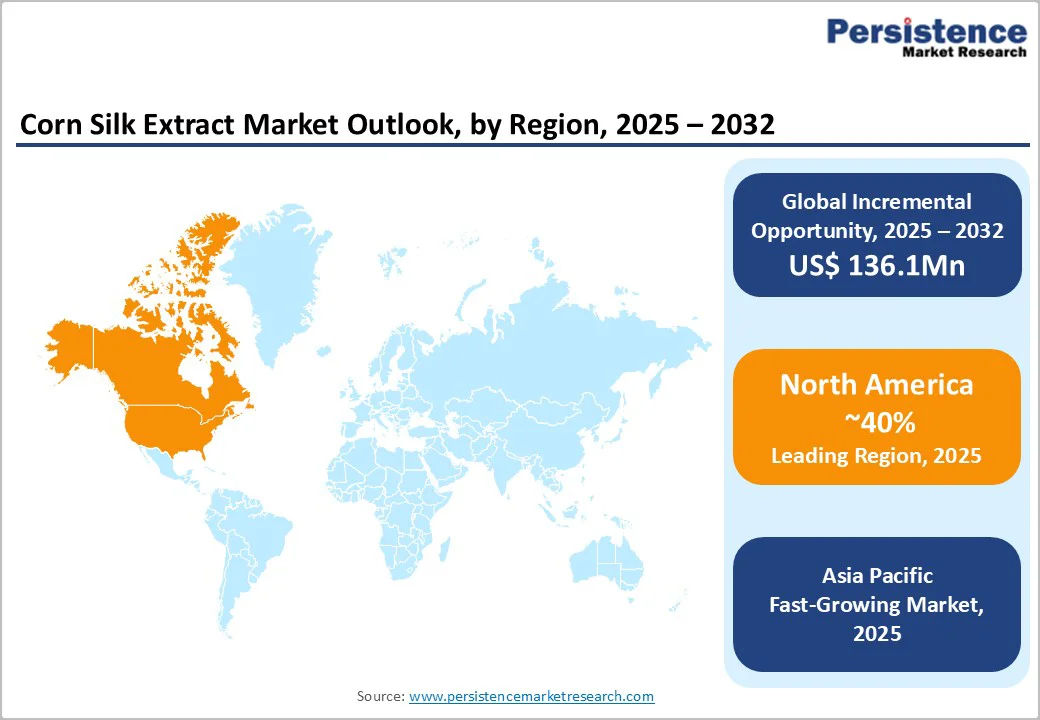
- Leading Region: North America leads the market with around 40% share, driven by strong nutraceutical adoption, high plant-based health awareness, and an expanding U.S. retail sector.
- Fastest-growing Region: Asia Pacific is the fastest-growing region, driven by strong herbal medicine traditions, rising middle-class wellness spending, abundant corn supply, supportive health policies, and emerging functional beverage innovations.
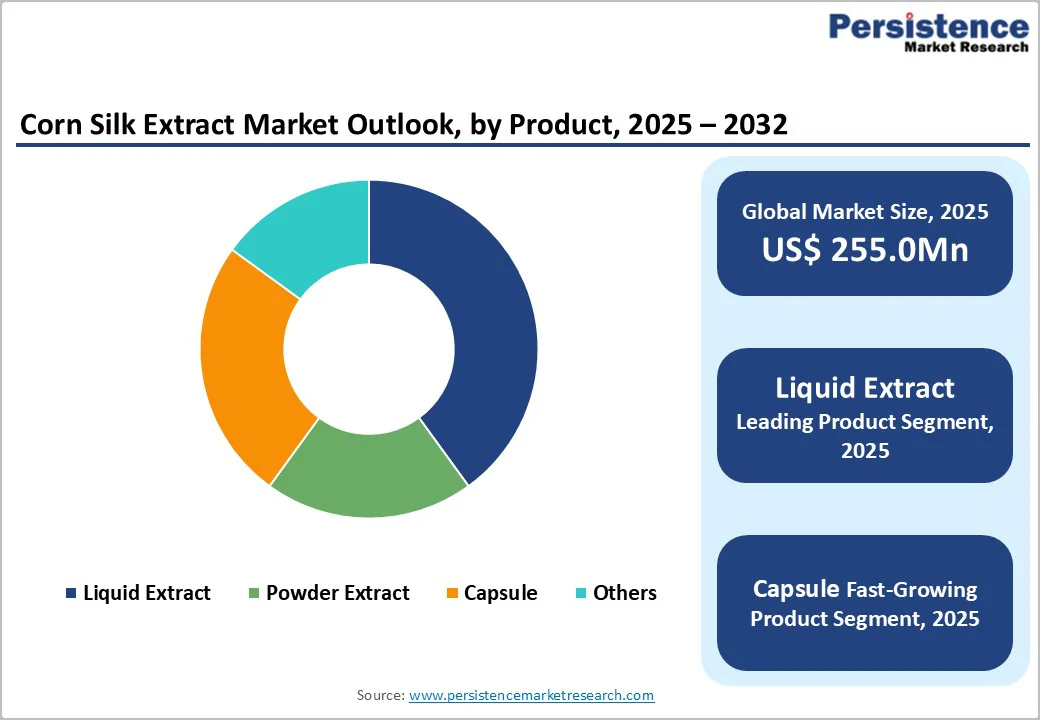
- Leading Product Type: Liquid corn silk extract leads the product type segment with 48% revenue share, due to its high bioavailability and versatile applications.
- Leading Application: Pharmaceuticals leads the market with over 41% revenue share, driven by strong clinical support for urinary tract, edema, and inflammation management.
- Leading Distribution Channel: Supermarkets and hypermarkets are the leading segment with about 44% revenue share, driven by mainstream acceptance of herbal products and strong retail partnerships.
| Report Attribute | Details |
|---|---|
|
Corn Silk Extract Market size (2025E) |
US$255.0 Mn |
|
Market Value Forecast (2032F) |
US$391.1 Mn |
|
Projected Growth CAGR (2025-2032) |
6.3% |
|
Historical Market Growth (2019-2024) |
5.8% |
Market Factors – Growth, Barriers, and Opportunity Analysis
Surge in Natural Health Product Demand
Consumers are increasingly turning to natural health products as they prioritize preventive care, steering away from synthetic pharmaceuticals toward botanical and plant-based wellness solutions. This shift is strongly backed by rising health consciousness, especially amid concerns over lifestyle diseases such as obesity, diabetes, and cardiovascular disorders. Consumers demand greater product transparency, clean?label formulations, and sustainable sourcing, elevating trust in natural supplements. Growing awareness of the long-term side effects of chemical-based drugs and increased endorsement of herbal remedies by wellness professionals further support this transition.
The plant?based supplement market alone is projected to grow significantly, underlining how preventive health strategies are increasingly built around natural ingredients. Retail and digital ecosystems are adapting rapidly to this consumer momentum. E?commerce platforms and online wellness channels are breaking down traditional access barriers, enabling broader distribution of natural health products. Personalized nutrition platforms and subscription-based supplement models are enhancing consumer engagement and repeat purchases. Influencer-led education and digital health content are accelerating awareness and trial of plant-based wellness solutions across younger demographics.
Supply Chain and Raw Material Fluctuations
The corn silk extract market faces significant challenges due to supply chain disruptions and raw material volatility. Corn silk, being an agricultural by-product, is highly dependent on corn cultivation cycles, weather conditions, and seasonal availability. Any adverse climatic events, pest infestations, or crop yield variations can directly impact the supply of raw material, leading to price volatility and potential production delays for extract manufacturers. Rising input costs, such as fertilizers, energy, and transportation, further strain raw material availability. Trade disruptions and geopolitical uncertainties can also affect cross-border sourcing of corn silk, especially for export-oriented producers.
Fluctuations in raw material quality and extraction yield can affect the consistency and standardization of corn silk extracts, which are critical for pharmaceutical, nutraceutical, and functional food applications. Manufacturers often need to invest in alternative sourcing, buffer inventories, and advanced processing technologies to mitigate these risks. Such measures raise production costs and can temporarily limit market growth, making supply chain stability a key restraint for the corn silk extract market. Smaller manufacturers are particularly vulnerable, as they may lack the financial flexibility to absorb cost increases. Maintaining compliance with stringent quality and traceability standards becomes more challenging amid irregular raw material supply.
Penetration of Emerging Economies and New Applications
Emerging economies such as China, India, and Latin America represent a huge growth opportunity for the corn silk extract market. In these regions, rising middle-class incomes and growing health awareness are fueling demand for botanical wellness products. The rising demand for plant-derived therapeutics is reflected in the broader botanical and plant-derived drugs market, which is growing rapidly as consumers and clinicians alike embrace natural alternatives. Expanding urbanization and improved access to organized retail and e-commerce platforms are accelerating product penetration. Supportive government initiatives promoting traditional and herbal medicine systems are strengthening market acceptance in these regions.
Corn silk extract is branching out beyond traditional herbal medicines into high-growth areas such as functional beverages, dietary supplements, and even personal care products. Innovation in extraction technologies is improving purity and potency, making corn silk more attractive for use in standardized nutraceuticals and clean-label wellness lines. Traditional medicine systems remain deeply rooted, and corn silk, an age-old herbal remedy, is being rediscovered in modern formulations. Growing interest from food and beverage manufacturers in natural functional ingredients is opening new commercial avenues.
Category-wise Insights
Product Type Analysis
Liquid corn silk extract is the leading product type in the market, holding 48% of the total revenue share in 2025. Its dominance is attributed to high bioavailability, rapid absorption, and ease of integration into various formulations. Liquid extracts are widely used in traditional medicine, pharmaceutical suspensions, and functional beverages, making them a versatile choice for manufacturers and consumers alike. For example, herbal tonics and diuretic syrups commonly incorporate liquid corn silk extract for faster therapeutic action. Leading brands focus on standardized concentrations, quality control, and flexible dosing options, which help maintain efficacy and consistency.
The capsule segment represents the fastest-growing product type driven by convenience, precise dosing, and portability. Capsules are particularly popular among health-conscious consumers following daily supplement routines in North America, Europe, and Asia Pacific. For example, plant-based capsule formulations targeting metabolic and detox support are gaining traction in online retail channels. Innovations such as extended-release formulas and enhanced bioavailability extracts are accelerating adoption, making capsules an attractive format for modern nutraceutical and functional wellness products.
Application Type Analysis
Pharmaceutical applications are anticipated to lead the market, accounting for over 41% revenue share in 2025, driven by robust clinical research validating their efficacy in managing urinary tract health, edema, and inflammation. Corn silk extract is widely incorporated into over-the-counter diuretic syrups and urinary health tablets, as well as prescription herbal formulations used alongside conventional therapies. It also holds a strong presence in traditional medicine systems such as Traditional Chinese Medicine (TCM), where it is prescribed for kidney and bladder-related conditions. Ongoing collaborations between pharmaceutical manufacturers and clinical research organizations are driving product standardization, dosage accuracy, and regulatory compliance.
The nutraceutical segment is the fastest-growing application segment, fueled by rising awareness of natural wellness solutions and preventive healthcare. Retailer-led educational initiatives and influencer marketing are accelerating adoption, particularly among younger, health-conscious consumers. For example, daily dietary supplements targeting detox and metabolic health increasingly feature corn silk extract, while functional beverages and herbal teas positioned for kidney support and hydration are gaining popularity. The extract’s antioxidant, anti-inflammatory, and diuretic properties make it well-suited for modern nutraceutical formulations focused on holistic health and lifestyle nutrition.
Distribution Channel Analysis
Supermarkets and hypermarkets stand as the leading segment, accounting for 44% revenue share in 2025, driven by mainstream consumer acceptance of herbal products and strong partnerships with nutraceutical brands, which facilitate wide product availability in developed markets. Enhanced visual merchandising, in-store promotions, and strategic product placement encourage both impulse and planned purchases, making these channels key for driving market penetration. For example, dedicated health-and-wellness aisles in large retail chains prominently feature herbal supplements and liquid extracts.
Online stores are the fastest-growing segment, fueled by increasing e-commerce adoption and digital retail innovations. Advanced logistics networks, cross-border e-commerce, and the convenience of home delivery are driving consumers, both urban and rural, toward online purchasing. Transparency in product information, competitive pricing, and a wide variety of options make online platforms increasingly attractive for health-conscious shoppers. For example, direct-to-consumer supplement brands selling through their own websites offer personalized recommendations, making online platforms increasingly preferred by health-conscious and digitally engaged consumers.
Regional Insights
North America Corn Silk Extract Market Trends
North America is emerging as the leading region, accounting for approximately 40% of the market share in 2025, driven by high consumer awareness of plant-based wellness, a mature nutraceutical industry, and supportive regulatory frameworks. Manufacturers use advanced extraction technologies to produce high-purity, standardized corn silk formulations for supplements and functional drinks, meeting growing U.S. and Canadian demand for clean-label, plant-based products. For example, Bio-Botanica Inc. and Naturex (a Givaudan company) focus on pharmaceutical-grade botanical extracts with consistent potency.
Growing incorporation of corn silk into functional beverages, herbal teas, and personal care products, leveraging its natural diuretic, antioxidant, and anti-inflammatory properties. The region’s strong retail and e-commerce infrastructure supports widespread distribution, from specialty supplement stores to online wellness platforms. Companies such as Gaia Herbs and Herb Pharm actively market liquid herbal extracts through specialty health stores and online platforms. Ongoing research and product innovation help North America maintain its lead in the corn silk extract market.
Europe Corn Silk Extract Market Trends
Europe is emerging as a strong regional player in the corn silk extract market, characterized by high consumer demand for clean-label, botanical ingredients and a rigorous regulatory environment. Countries such as Germany, France, and the U.K., all with long traditions of herbal medicine, are key markets for corn silk formulations, especially in dietary supplements and natural remedies. Europe values high-purity, standardized botanical extracts, with corn silk increasingly used in teas, nutraceuticals, and personal care products. Companies such as Martin Bauer Group and Amax NutraSource Europe focus on pharmaceutical- and nutraceutical-grade botanical extracts, supporting the integration of corn silk into teas, capsules, and wellness blends.
European manufacturers are increasingly integrating corn silk extract into functional beverages, herbal teas, and even clean?beauty products, playing to strong consumer interest in antioxidants and anti?inflammatory botanicals. Firms such as Rabenhorst GmbH are exploring botanical ingredients for functional drinks, while Weleda and similar natural personal care brands emphasize plant-based actives in skin-soothing formulations. Europe’s mature herbal industry, strict quality standards, and preference for natural, science-backed products make it a key market for corn silk extract with strong innovation potential.
Asia Pacific Corn Silk Extract Market Trends
Asia Pacific is the fastest-growing region in the corn silk extract market, driven by its strong herbal medicine traditions, rising health awareness, and expanding middle?class purchasing power. In countries such as China and India, corn silk has a long history of use in traditional remedies, and more consumers are turning to it as a preventive wellness ingredient. The region’s abundant agricultural base also supports affordable, large-scale production of corn by?products such as silk, making it easier for local manufacturers to scale extraction and reduce costs. Companies such as Xi’an Natural Field Bio-Technique and Nutra Green Biotechnology China play a key role in supplying standardized corn silk extracts to domestic and export markets.
Technological advancements in extraction are improving purity, consistency, and bioavailability, allowing wider application in functional beverages, dietary supplements, and natural cosmetics. Regional players such as Herbal Creations India and Shaanxi Jintai Biological Engineering are expanding extraction capacity to meet rising demand. Favorable government policies supporting traditional medicine systems, combined with sustainability initiatives that promote the use of agricultural by-products, are accelerating market growth. Asia Pacific continues to strengthen its position as both a high-growth consumption hub and a major production base for corn silk extract.
Competitive Landscape
The global corn silk extract market exhibits a moderately fragmented structure, driven by a mix of well-established multinational corporations, regional manufacturers, and specialized technology innovators. Major players invest heavily in R&D to advance fiber, diode, and ultrafast laser technologies that meet diverse industrial needs such as cutting, welding, marking, and micromachining. While large firms maintain comprehensive product portfolios and extensive distribution networks, smaller and regional companies are expanding their presence by focusing on cost-competitive solutions and localized service support.
The market is led by prominent players such as Mountain Rose Herbs, Herb Pharm, Nature’s Answer, Gaia Herbs, Nature’s Way, NOW Foods, Solaray, Swanson Health Products, Starwest Botanicals, and Bio-Botanica Inc., competing on product quality, formulation innovation, distribution strength, and regulatory compliance. Established brands focus on organic certifications, standardized bioactive content, and consumer trust through transparency, while Asian manufacturers emphasize cost-efficient production, high extraction yields, and bulk B2B supply for global nutraceutical companies. Firms including Xi’an Natural Field Bio-Technique Co., Xi’an Greena Biotech Co., Shaanxi Jintai Biological Engineering Co., and Hunan Nutramax Inc. are increasingly investing in R&D to enhance purity, consistency, and verified bioactivity.
Key Industry Developments:
- In December 2025, Botanic Healthcare commercially launched CornFit, a patented and standardized cornsilk-based nutraceutical extract (Patent No. 499416, Government of India), designed to support blood sugar management and weight maintenance, while promoting sustainable, circular use of agricultural byproducts for global dietary supplement and functional nutrition markets.
- In May 2025, the International Journal of Novel Research and Development suggested using corn silk as a natural additive in the dairy industry to improve health benefits and shelf life.
Companies Covered in Corn Silk Extract Market
- Mountain Rose Herbs
- Herb Pharm
- Nature's Answer
- Swanson Health Products
- Solaray
- NOW Foods
- Starwest Botanicals
- Gaia Herbs
- Nature's Way
- Bio-Botanica Inc.
- The Green Labs LLC
- Xi'an Greena Biotech Co., Ltd.
- Hunan Nutramax Inc.
- Xi'an Herbking Biotechnology Co., Ltd.
- Shaanxi Jintai Biological Engineering Co., Ltd.
- Xi'an Lyphar Biotech Co., Ltd.
- Changsha Vigorous-Tech Co., Ltd.
- Xi'an Sost Biotech Co., Ltd.
- Shaanxi Undersun Biomedtech Co., Ltd.
- Xi'an Natural Field Bio-Technique Co., Ltd.
Frequently Asked Questions
What is the projected size of the corn silk extract market from 2025 to 2032?
The key drivers include rising demand for natural health products, research-driven pharmaceutical usage, broader nutraceutical applications, and expanded digital retail channels.
Liquid extract leads with a 48% revenue share, due to its high bioavailability and versatile applications.
North America dominates, capturing over 40%, driven by strong nutraceutical adoption, high plant-based health awareness, and an expanding U.S. retail sector.
Emerging market expansion, new scientific validation, and integration into functional beverages and clean beauty are the key growth areas.


